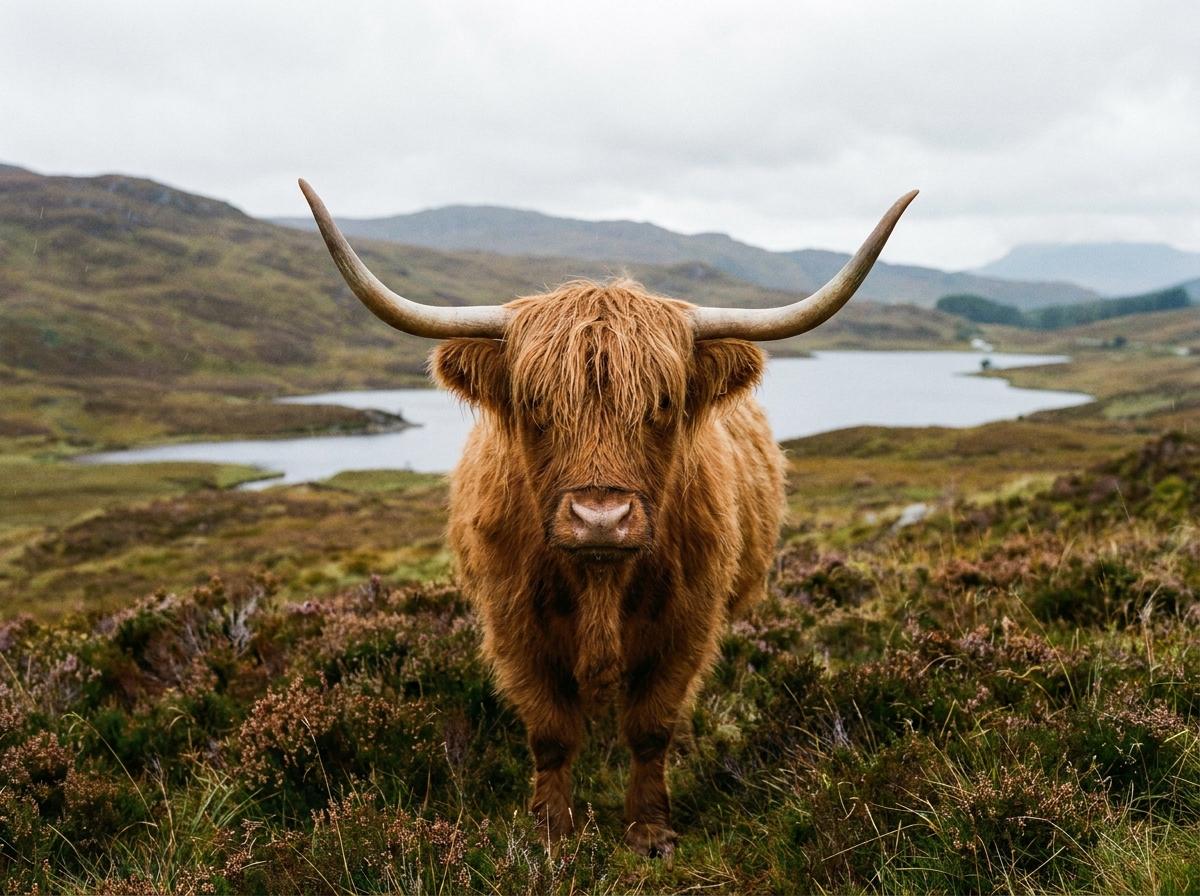
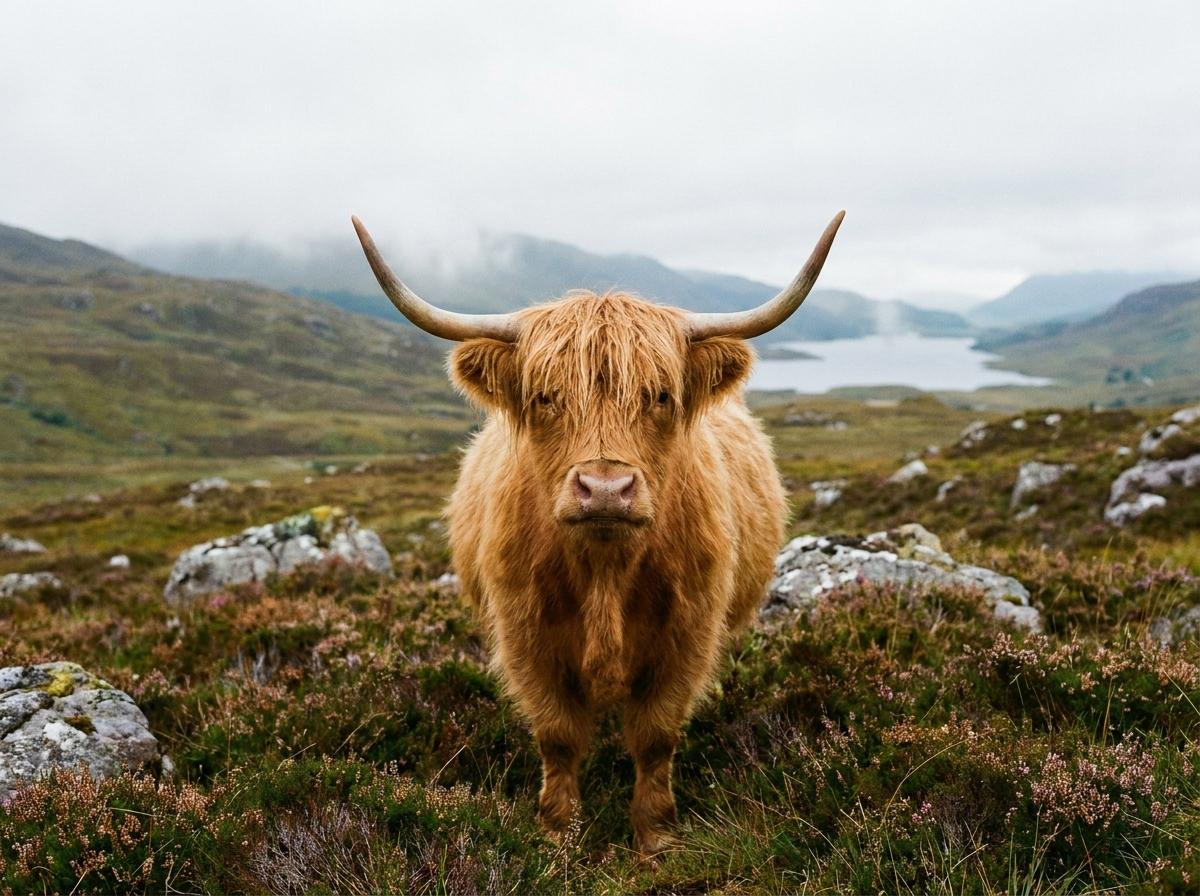
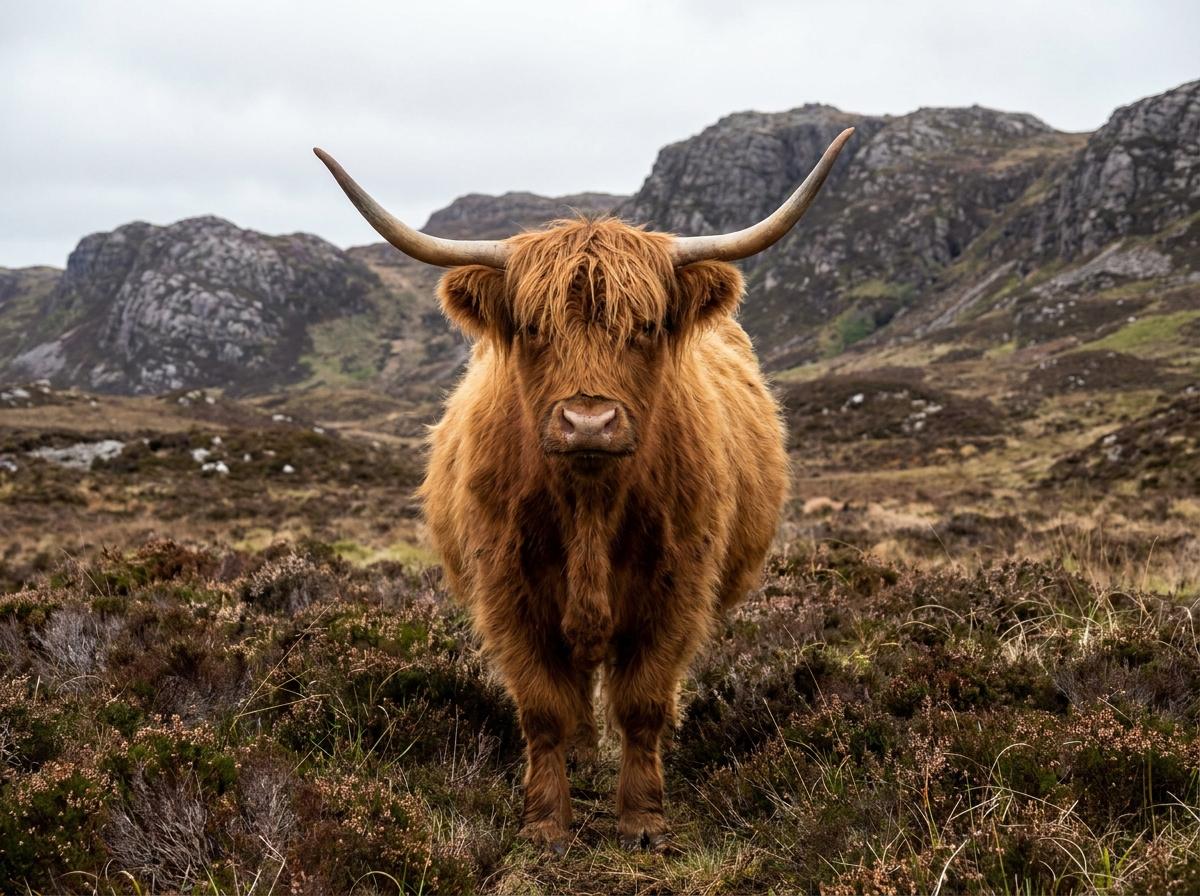
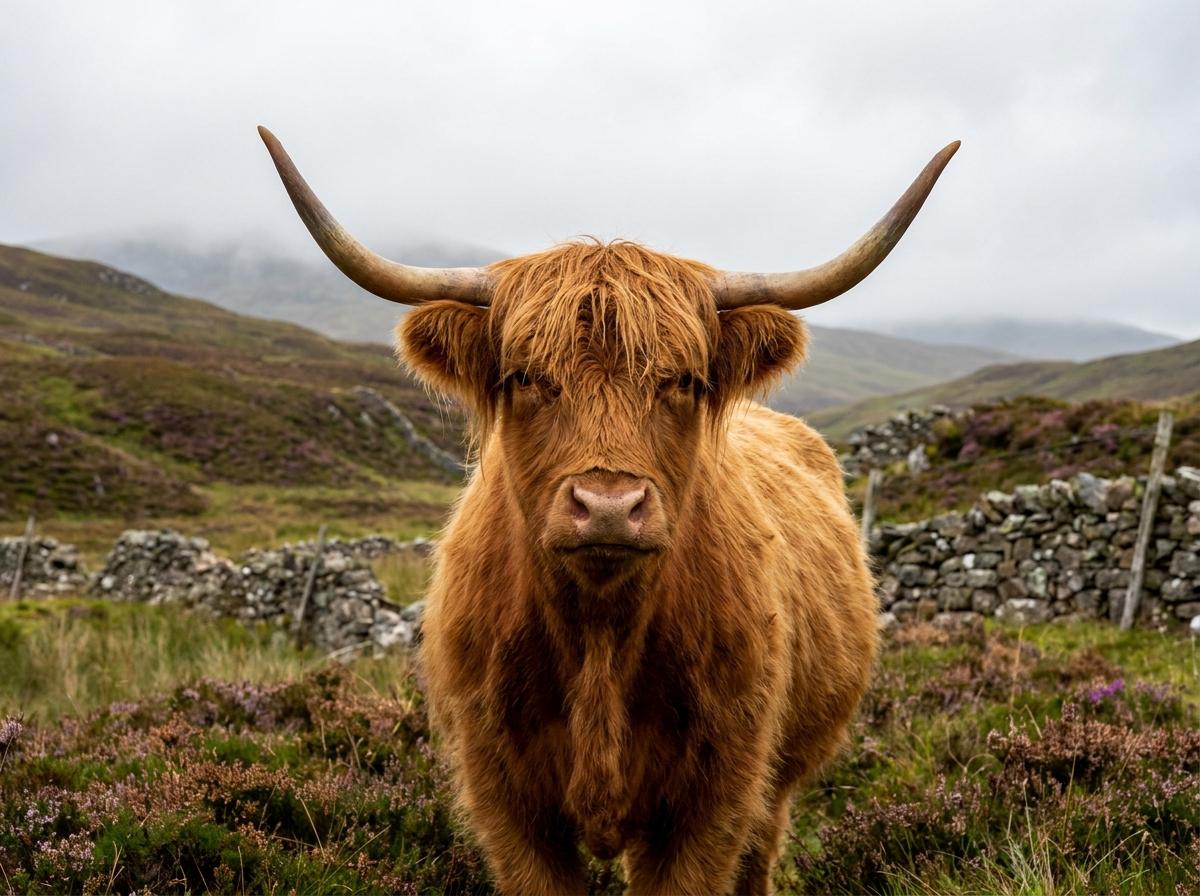
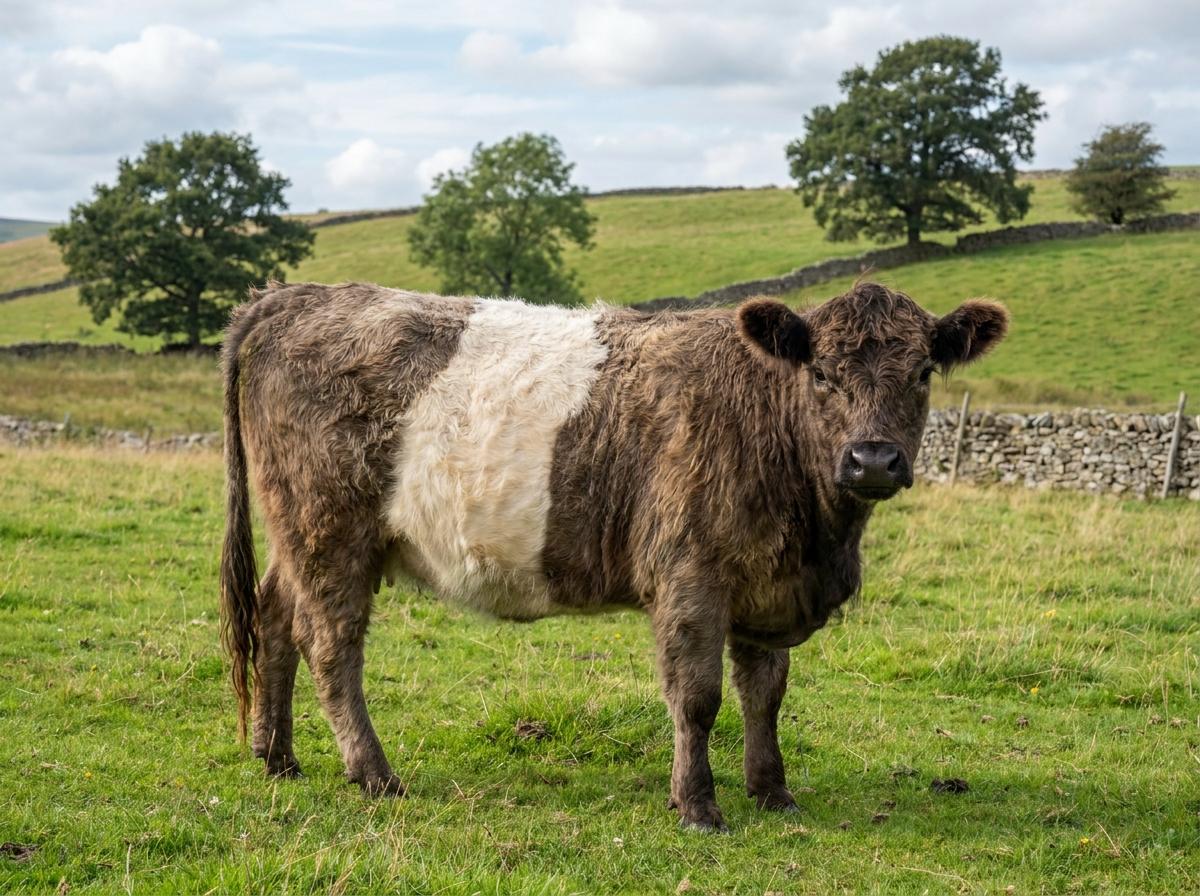
Beefalo
Author: Elliott Garber, DVM · Published
Beefalo are beef cattle bred to carry American bison ancestry. In the United States the breed’s herd book is kept by the American Beefalo Association (ABA), whose rules define a Fullblood Beefalo as exactly 3/8 (37.5 percent) bison and 5/8 domestic cattle by pedigree, with the cattle side drawn from any breed. Registered beefalo are raised, bred and sold much like other beef cattle, and the ABA markets them for lean, grass-raised beef.
That 3/8 figure is now contested. A whole-genome study published in 2024 sequenced semen from 47 registered beefalo bulls, most of it collected around the breed’s founding in the 1970s and 1980s, and found no detectable bison DNA in 39 of them and no more than 18 percent in the rest. So treat a beefalo as a registered cattle breed whose bison content you check rather than assume. Beefalo listings on the Creatures marketplace are rare, so the easiest way to hear about one is to set a free beefalo listing alert (no account needed to start). In the meantime you can browse beefalo breeders listed by state in the Creatures directory, and the free cattle pedigree chart maker, which lists Beefalo as a breed, will print a three-generation chart of any animal you are considering.

| What it is | A registered US cattle breed bred to carry American bison ancestry |
|---|---|
| Registry | American Beefalo Association, formed in 2008 by the merger of two older beefalo registries |
| Fullblood definition | Exactly 3/8 bison and 5/8 cattle of any breed, calculated from the pedigree |
| Other ABA classes | Purebred 34 to just under 37.5 percent bison; Percentage 17 to under 37.5 percent; Ancestry animals outside those bands |
| Origin | Developed in California in the early 1970s by D.C. “Bud” Basolo |
| Measured bison DNA | None detected in 39 of 47 registered beefalo sequenced in 2024; 2 to 18 percent in the other 8 |
| Fertility | Registered beefalo breed like cattle; first-cross bison x cattle bulls are sterile |
| Size and color | No breed standard for either; both follow the cattle in the pedigree |
Browse listings, public profiles, breeders, or add your animal.
What is a beefalo?
The name joins “beef” and “buffalo,” and in American usage the buffalo is the American bison, not the water buffalo of Asia. Federal meat rules keep the two animals apart: 9 CFR 352.1 defines bison as the American bison, “commonly known as the American bison or buffalo,” and uses “buffalo” as its term for the water buffalo and the African Cape buffalo. If you want the wild parent itself, Creatures has a separate page for the American bison.
The ABA describes the beefalo as a breed of cattle, not an exotic animal, and that is how most beefalo are kept: on pasture with the rest of a beef herd, worked with ordinary cattle equipment, and registered through a breed association like any other beef breed. Its own site says its registered producers run more than 100 farms in more than 35 states, with regional groups such as the Michigan Beefalo Breeders Association and national shows in Louisville, Kentucky and Sedalia, Missouri. So yes, beefalo are real: there is a registry, a herd book, shows and a beef market. What is open to question is how much bison is in them.
Two other words get mixed up with beefalo:
- Cattalo (also spelled catalo) is the older name for bison and cattle crosses. The same federal definitions describe a cattalo as a hybrid “with bison appearance” resulting from direct crossbreeding of bison and cattle, and count cattalo as bison for meat inspection purposes. The ABA itself treats animals with more bison than a Fullblood as cattalo or Ancestry animals, not beefalo.
- Bison hybrid is the plain description of any first or early-generation cross. These are the animals that carry real bison behavior and real fertility problems, as the sections below explain.
For the species-level basics of keeping a beef herd, from land and feed to calving, start with the Creatures cattle guide, which covers every breed.
Where beefalo came from
A century of failed crosses. Ranchers tried to put bison hardiness into cattle long before anyone said “beefalo.” Mossom Boyd in Ontario and Charles Goodnight in Texas both wrote up their bison hybrid experiments in the Journal of Heredity (in 1908 and 1914). Charles “Buffalo” Jones, whose founder bison herd reached northern Arizona in 1906, also tried crossing bison with cattle; the National Park Service says his attempts, like those of most other owners of founding bison herds, were mostly unsuccessful. Canada’s federal government ran its own long cattalo program at Wainwright, Alberta. The authors of a 2024 genome study in the journal eLife sum up this history: early twentieth-century breeders could not build a viable hybrid population because of reproductive problems. Agriculture Canada’s own centennial history, as they cite it, reported that cows inseminated with bison semen lost 77 percent of their calves and produced sterile male calves.
Basolo’s beefalo. The breed as it is registered today dates to the early 1970s, when Californian D.C. “Bud” Basolo established it through complex crossing of bison and cattle. He never revealed the pedigrees of his original beefalo. His foundation bull Joe’s Pride was recorded as 3/8 bison, 3/8 Charolais and 1/4 Hereford, and according to Guinness World Records he sold to the Beefalo Cattle Co. of Calgary, Alberta, on 9 September 1974 for $2.5 million, a record price for cattle at the time. The ABA also credits Jim Burnett, one of the breed’s founders, with the first successes in breeding fertile hybrids.
The registries. Several beefalo registries came and went over the following decades. The current American Beefalo Association was formed in November 2008, when American Beefalo International and the American Beefalo World Registry merged. The histories of those two registries go back well over 25 years before the merger, and the ABA says its members helped create the earliest beefalo registries. It keeps the herd book, registers and transfers animals, runs the national shows and publishes a producer list.
Beefalo, bison and cattalo: telling them apart
A registered beefalo should look like a beef cow or bull. The ABA says beefalo are visually quite distinct from cattalo and bison hybrids, and the 2024 genome study described below offers one reason: most of the registered beefalo it tested were genetically cattle.

Here is how the animals people confuse line up:
- American bison. A wild-type species with a massive head carried low, a high shoulder hump, short curved horns on both sexes, and a heavy woolly coat over the forequarters. South Dakota State University Extension’s guide to getting started with bison (March 2026) says bison are not domesticated, are larger and stronger than cattle, and can jump up to 6 feet high.
- First-cross hybrid or cattalo. Half bison in a first cross, and federal rules describe cattalo as having a bison appearance. The females can breed; the males are sterile.
- Registered beefalo. A cattle-type animal recorded as 3/8 bison or less. It has no fixed look of its own, because the cattle side can be any breed.
- Zubron. The European cousin, a cross of the European bison (wisent) with cattle. Our zubron guide tells the story of the Polish program, in which no hybrid male of any generation ever sired a calf.
- Dzo and yakalo. Crosses with the yak rather than bison: the dzo is a yak and cattle hybrid, and the yakalo a yak and bison cross.
The Grand Canyon “beefalo.” News stories in 2015 described “beefalo” damaging the Grand Canyon’s North Rim. The National Park Service’s page on the Kaibab Plateau bison herd sets this straight. The herd descends from Buffalo Jones’s founder herd, and genetic testing found cattle mitochondrial DNA (passed down through the mother) and about 1.6 percent cattle nuclear DNA, at the high end of the herds compared but close to several other conservation herds. The Park Service concludes that the animals are bison, not cattalo or beefalo. In fact a 2022 whole-genome study in Scientific Reports detected traces of cattle DNA in every bison genome it tested, a legacy of nineteenth-century ranch crossing. A little cattle DNA does not make a bison a beefalo.
The 3/8 rule: how the registry defines a beefalo
The ABA’s rules of registry (updated 12 February 2020) set out its classes. Every percentage is calculated “by breeding,” that is, from the parents’ recorded percentages, not measured from the animal’s DNA:
- Fullblood Beefalo: exactly 3/8 (37.5 percent) bison and 5/8 (62.5 percent) bovine. The bovine part may be any breed of cattle or any mix of breeds.
- Purebred Beefalo: at least 34 percent and up to 37.4999 percent bison.
- Percentage Beefalo: breeding stock of at least 17 percent and below 37.5 percent bison.
- Ancestry animals: bison and bison crosses of any other percentage (more than 37.5 or less than 17 percent), recorded as the gene pool for new lines.
- Beefalo Meat Animals: 17 through 37.5 percent bison with registered parents; the ABA says these meet USDA requirements for a “Beefalo Beef” label (more on that below).
The pedigree math. Each calf is credited with half of each parent’s bison fraction. A cow recorded as 3/4 bison bred to a cattle bull gives a calf recorded as 3/8: (3/4 + 0) divided by 2. A 1/2-bison parent bred to a 1/4-bison parent also gives 3/8: (1/2 + 1/4) divided by 2. Two Fullbloods give a Fullblood: (3/8 + 3/8) divided by 2. The catch is fertility. Keeping a herd at 3/8 means using 3/8 bulls, and the eLife authors point out that the pedigree routes proposed for building the breed rely on fertile early-generation hybrid males, which the historical crossing programs did not produce (more on that below).
What registration involves. Under the 2020 rules, every Fullblood nominee needs a DNA test verifying its parentage, and a bull’s AI calves can be registered only after he has been DNA-verified for bison markers at an ABA-approved laboratory. Registration certificates show the animal’s bison fraction and any bison markers detected. Registered animals (other than Meat Animals) carry an ear tattoo: a herd prefix plus an animal identification ending in an international year letter, which is P for 2026.
What the 2024 genome study found
The study behind the headlines is “Most Beefalo cattle have no detectable bison genetic ancestry” by Beth Shapiro (University of California, Santa Cruz) and colleagues including scientists from the USDA Agricultural Research Service. It was published as an eLife reviewed preprint in December 2024 and revised in June 2026.
What they tested. The team sequenced semen from 47 registered beefalo and 3 bison hybrids held in the USDA’s National Animal Germplasm Program, most of it collected in the 1970s and 1980s, around the time the breed was founded. The sample included animals from Basolo’s foundation herds and Joe’s Pride himself. Most of the beefalo were recorded in their paperwork as 37.5 percent bison.
What they found:
- 39 of the 47 beefalo had no detectable bison ancestry. Joe’s Pride was one of them.
- The other 8 carried 2 to 18 percent bison, well short of 37.5. None met the ABA’s 3/8 standard.
- The 3 bison hybrids did carry about the bison share their records claimed, so the methods can find bison DNA when it is there.
- Many beefalo carried zebu (humped Bos indicus) cattle ancestry, from 2 to 38 percent. Joe’s Pride, recorded as bison, Charolais and Hereford, came out at about 10.5 percent zebu. The authors suggest zebu crossing, the same ancestry behind breeds such as Brangus, may explain why some beefalo look a little like bison.
- Every beefalo carried a cattle Y chromosome, and wherever bison DNA turned up it was present in a single copy, never inherited from both parents. The authors read that as repeated backcrossing to cattle or to bison, not hybrids breeding with each other, and conclude that a stable bison and cattle hybrid population was never established.
The journal’s assessment rates the study “important” and its evidence “convincing,” while noting limits in sequencing depth and sampling. Earlier, smaller studies point the same way: a 1978 karyotype study found cattle Y chromosomes in all 12 beefalo bulls examined, and a 1986 blood-typing study found bison-type markers in only 1 of 148 Basolo beefalo, though the same study found some bison-type markers in later beefalo from outside the founding herds.
The association’s answer. The ABA rejects the study. In an official statement dated 12 February 2026, it calls the work flawed and biased, points to what it describes as USDA’s recognition of the breed and a 1985 “Beefalo Beef” label, argues that 47 animals may not represent today’s registry, says producers have kept adding new lines from fresh bison crosses, and invites the authors to work with it on a new study using verified ABA samples. The sampling point is fair as far as it goes, and the authors acknowledge they did not sample today’s herds exhaustively; they argue that founders are representative because herds are mostly built from Fullblood stock rather than fresh bison crosses.
What it means if you are buying. A registration certificate tells you what the pedigree says, not what the genome holds. If bison content matters to you, for meat marketing or for breeding, ask whether the animal or its sire has been DNA-tested for bison markers and what the result showed. If it does not matter to you, judge the animal as you would any beef cow or bull: on structure, temperament, fertility and records.
Are beefalo sterile?
Registered beefalo breed like cattle, and that is no surprise given what the genome study found. Male sterility is a problem of bison hybrids, not of registered stock that is mostly or wholly cattle: first-cross bulls are sterile, and the old crossing programs kept getting sterile bulls for several backcross generations.

First crosses. Hybrids between cattle and their wild relatives follow what geneticists call Haldane’s rule. The eLife paper notes that except for crosses of taurine and zebu cattle, the first-generation male offspring of these crosses are sterile. Hybrid females can breed, which is how the old programs produced their backcross generations. Its authors also cite Canadian government research reporting that no functional male carrying more than 12.5 percent bison ancestry was ever observed, and they see their own finding of little or no bison DNA in founding beefalo as consistent with that history. The zubron shows the same pattern with the European bison.
Registered beefalo. Beefalo cows calve and beefalo bulls sire calves the way other cattle do. Fertility is still individual, though. The ABA’s rules say plainly that it does not guarantee that breeding stock it transfers will be fertile, and they require a veterinarian’s certificate of fertility, or registered progeny, before a heifer born twin to a bull can be registered. Before you buy a herd bull, ask for a recent breeding soundness exam by a veterinarian; before you buy a cow, ask to see her calving record.
Due dates. We could not find a verified beefalo-specific gestation length. Use the free cattle gestation calculator, which defaults to 283 days with “Any breed” selected, as a planning figure, and confirm with your veterinarian’s pregnancy check. The calving guide covers the signs of labor and when to call for help, and on Creatures you can record the breeding on the cow’s profile so it projects the due date for you.
How big do beefalo get? Size, coat and color
There is no beefalo size standard. The ABA’s rules ask for performance records rather than measurements: a birth weight within 72 hours of birth, a weaning weight taken between 160 and 250 days and adjusted to 205 days, and a yearling weight taken within 40 days of the first birthday. Those adjusted weights are compared with herd mates of the same sex, birth window, bison percentage and management, so they tell you how a calf grew relative to its group, not how big the breed is.
In practice a beefalo’s frame follows its cattle ancestry. At least five-eighths of every pedigree is cattle, and going by the 2024 study usually far more of the genome. A beefalo bred mostly from big continental cattle such as Charolais will be built differently from one bred on moderate British breeds. The same goes for color and horns: the registry sets no color standard, so beefalo come in whatever colors their cattle ancestors carried.
If you are choosing the cattle side of a beefalo program, pick a cattle breed for the frame, color and maternal traits you want. Our breed guides to Red Angus, Shorthorn and Murray Grey are three places to start comparing.
To track a beefalo’s own size, weigh it. The free cattle weight calculator estimates live weight from heart girth and body length; it is built on cattle, so check the estimate against a scale before you use it for anything that matters, as our cattle scale guide explains. Weights recorded at birth, weaning and yearling also go straight onto the registration application, and a calf growth chart shows whether a calf is on track.
Beefalo meat and labeling
Most beefalo are raised for beef, and the meat is where the breed’s marketing lives.
The leanness claims. The ABA says USDA testing in the 1980s found beefalo meat far lower in fat, calories and cholesterol than conventional beef, and it quotes large percentages for each. We could not find the underlying USDA data published anywhere, so treat those figures as the association’s claims rather than independent findings. The association’s own site says a new meat study is pending. Judge any beefalo meat you buy by its nutrition label.
The label rules. The ABA’s registry rules say animals of 17 to 37.5 percent bison by pedigree meet USDA requirements to be labeled “Beefalo Beef,” and the eLife authors note that the breed received a special roll stamp for voluntary federal inspection in 1984. We could not find a beefalo entry in the current edition of the federal Food Standards and Labeling Policy Book (revised September 2025). Federal rules do treat cattalo as bison for exotic-animal inspection, and SDSU Extension notes that bison meat inspection is voluntary and carries fees. If you plan to sell meat labeled as beefalo, confirm the current rules with your processor and the USDA Food Safety and Inspection Service before you print a label.
Buying the meat. The ABA’s own buying advice is to make sure beefalo meat is packaged and USDA inspected, and to verify that a livestock seller’s animals are actually registered.
Raising beefalo
Day-to-day care for registered beefalo is beef cattle care. Feed, water, minerals, vaccination, parasite control and fencing all follow the cattle playbook. Like all cattle, beefalo are herd animals, so plan on more than one.

Grazing and feed. The ABA promotes beefalo as efficient grass converters that need less feed and veterinary care than other cattle; that is the association’s claim, and we found no independent trial to confirm it. Plan forage and winter feed as you would for any beef herd. Our guides to what to feed cattle and how many cattle per acre cover the numbers.
Fencing and facilities. For registered, cattle-type beefalo, good cattle fencing and a sound chute are enough; see our cattle fencing guide and chute and head gate guide. Animals with a lot of real bison in them are different. If you keep Ancestry animals, first crosses, or bison to start new lines, plan for bison facilities. SDSU Extension’s bison guide says a three-strand barbed wire fence good enough for cattle should not be expected to hold bison, suggests keeping the fence line at bison eye level (about 5 to 5.5 feet), and calls for handling pens and panels averaging at least 7 feet high, with larger sorting pens and custom squeeze chutes.
Health. Work out a vaccination and parasite plan with a veterinarian who treats cattle; our cattle vaccination schedule and guide to finding a large animal vet will help. If you keep the herd’s records on Creatures, a vaccination or medication record with a follow-up date creates a linked reminder, as described in reminders and upcoming care. Our cattle record keeping guide shows what to write down from breeding to sale.
Handling. A quiet beefalo cow handles like any other cow. A beefalo bull is still a bull: watch him work from a safe place, and do not walk into a pen to test an unfamiliar bull’s temper.
Registering beefalo with the ABA
Registration runs through the ABA’s forms and documents page. In outline:
- Who can register. Members and non-members both can, but non-members pay twice the member fee. Check the current fee schedule on the forms page before you send anything.
- What goes on the application. Sire and dam with their registration numbers and bison percentages, the calf’s tattoo, and performance data such as birth, weaning and yearling weights.
- DNA. Fullbloods need DNA parentage verification. Calves from AI need a sire already DNA-verified for bison markers, and embryo-transfer calves need verified sire and donor dam.
- Tattoo. The first owner tattoos the calf with the herd prefix and animal identification; the last character is the year letter (P for 2026).
- Transfer. When a registered animal is sold, the seller is expected to file and pay for the transfer unless the two of you agree otherwise. A registry transfer is not legal title, so get a bill of sale as well.
On Creatures, a registered beefalo’s profile can hold its registration number, tattoo, bison fraction, DNA results and pedigree. Our guide to checking cattle pedigree papers explains how to read a certificate, and pedigree, family and lineage shows how to link sire and dam. A bison grandsire you never owned can go in as a reference animal, so the bison side of the pedigree is documented too.
Buying beefalo
Start with the papers. The ABA’s own advice to buyers is to verify that any beefalo sold for breeding or market is registered with the association, and to ask for a picture of the registration papers before you buy. Then check:
- The class and fraction. Fullblood, Purebred, Percentage, Meat or Ancestry, and the bison fraction printed on the certificate.
- DNA. Whether parentage was DNA-verified, and whether the animal or its sire was tested for bison markers, with the result.
- The tattoo. That the tattoo in the ear matches the certificate, including the year letter.
- Fertility. A recent breeding soundness exam for a bull; a calving record for a cow; the fertility certificate the ABA requires for a heifer born twin to a bull.
- Performance records. Birth, weaning and yearling weights, which the ABA records with each registration.
- Temperament. Watch the animal being worked and loaded, not just standing in a pen.
- Health and movement papers. Vaccination and treatment records, and a certificate of veterinary inspection if the animal will cross a state line; our livestock health certificates guide explains when one is needed.
Animals over 3/8 bison. A first cross, a cattalo or a high-percentage Ancestry animal is a bison hybrid, not a beefalo, and should be handled and fenced like bison. Ask your state veterinarian how a bison hybrid is classified before you haul one, and check the meat-label rules before you sell its beef.
Price. We could not find a reliable published price range for beefalo. Creatures’ cattle auction price guide has no beefalo row, so it can only give the wider cattle market, and the free livestock value calculator is strongest where there are many auction comparisons, which beefalo lack. Our guide to what a cow costs covers current beef cattle prices and the yearly cost of keeping a cow, which is the same job with a beefalo.
Where to look. The Creatures directory lists beefalo breeders by state, the ABA publishes a producer list and an embryo and semen page, and the national shows are a good place to see registered beefalo side by side.
Frequently asked questions
What is a beefalo?
A registered US cattle breed bred to carry American bison ancestry. The American Beefalo Association defines a Fullblood as 3/8 bison and 5/8 cattle of any breed, calculated from the pedigree.
How much bison is in a beefalo?
On paper, 37.5 percent for a Fullblood and 17 to 37.5 percent for the other registered classes. In a 2024 genome study of 47 registered beefalo, mostly from the breed’s founding era, 39 had no detectable bison DNA and the other 8 had 2 to 18 percent. The ABA disputes the study.
Are beefalo sterile?
No. Registered beefalo breed like cattle. Sterility affects bison hybrid bulls: first-cross bulls are sterile, and Canadian research never recorded a functional bull carrying more than 12.5 percent bison. Hybrid females can breed.
What is the difference between beefalo, cattalo and bison?
Bison are the wild-type species. Cattalo are direct bison and cattle crosses that look like bison. Beefalo are cattle-type animals registered at 3/8 bison or less.
How big do beefalo get?
There is no breed size standard. A beefalo’s size follows the cattle breeds in its pedigree, so weigh your own animals rather than relying on a breed figure.
Is beefalo meat healthier than beef?
The ABA says USDA testing in the 1980s found it leaner, with fewer calories and less cholesterol. We could not find that data published, so compare the nutrition labels on the meat you buy.
Are the Grand Canyon bison beefalo?
No. The National Park Service says genetic testing, appearance and behavior show the Kaibab Plateau herd are bison, with about 1.6 percent cattle nuclear DNA left over from early crossing attempts.
What are the disadvantages of beefalo?
A small market and few buyers, no reliable price data, registered bison percentages that may not match the genome, meat-label rules you must confirm before selling, and the need for bison-grade facilities if you work with high-percentage hybrids.
Do this next on Creatures
Whether you are still looking for your first beefalo or already run a registered herd, Creatures keeps the search, the records and your farm profile in one place.
Get alerted. Beefalo listings are rare, so set a free beefalo listing alert and we will email you when one is posted. No account needed to start. See saving searches and using your watchlist for how alerts work.
Find breeders. Search the beefalo breeders listed by state or the full Creatures breeder directory, and check beefalo on the Creatures marketplace for new listings.
Add your beefalo. Already have one? Create a free beefalo profile with its ABA registration number, tattoo, bison fraction, DNA results and photos, no account needed to start. The walkthrough is in adding an animal to Creatures.
Keep the records. Add a weight, vaccination, breeding or calving record. The record sheet opens for any visitor to look around, and a free account saves what you enter. See adding a record and health and medical records.
List your herd. Breed registered beefalo? Create a free ranch or breeder profile so buyers looking for registered, DNA-verified beefalo can find you, no account needed to start. Read getting listed in the breeder directory and creating an organization and adding your team.
Plan and print. Work out calving dates with the cattle gestation calculator, print a three-generation chart with the cattle pedigree chart maker (choose Beefalo), and find names for this year’s calves with the cattle name generator.