Shorthorn
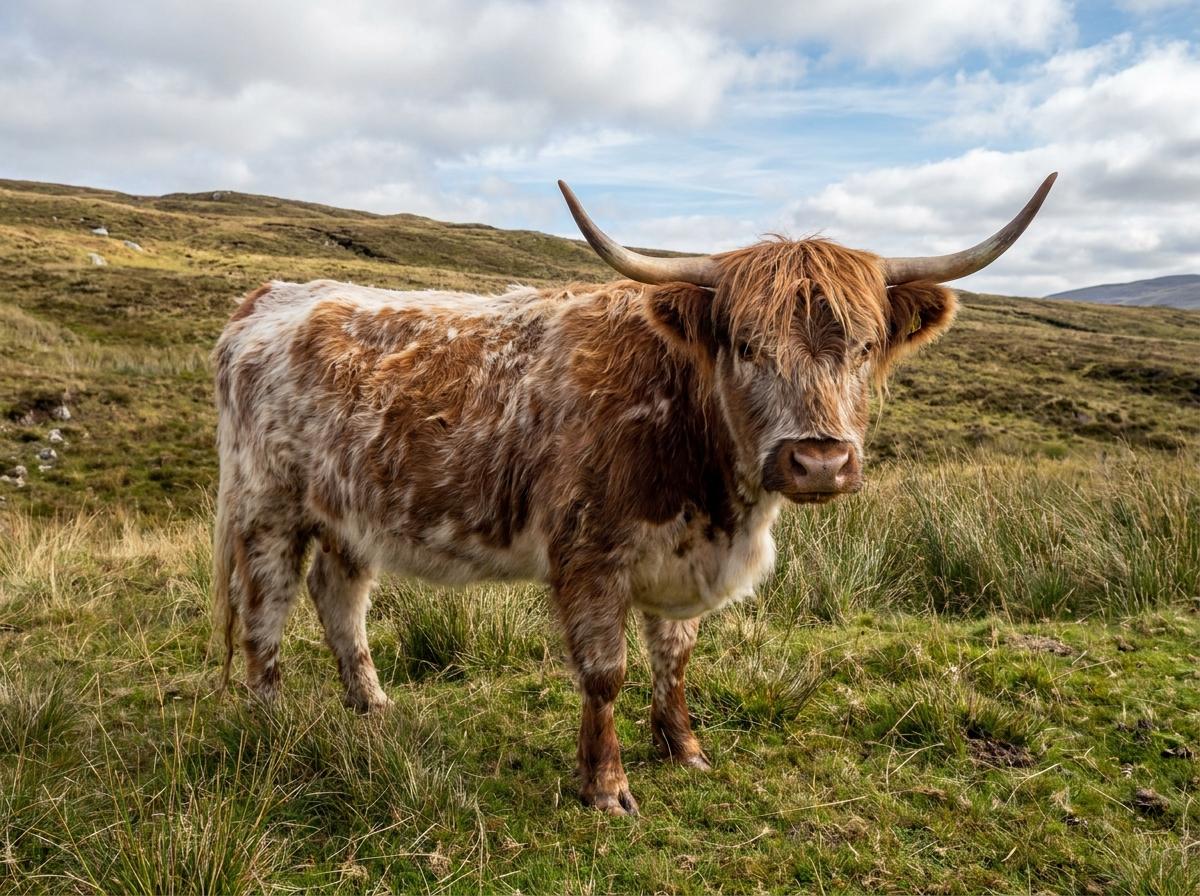
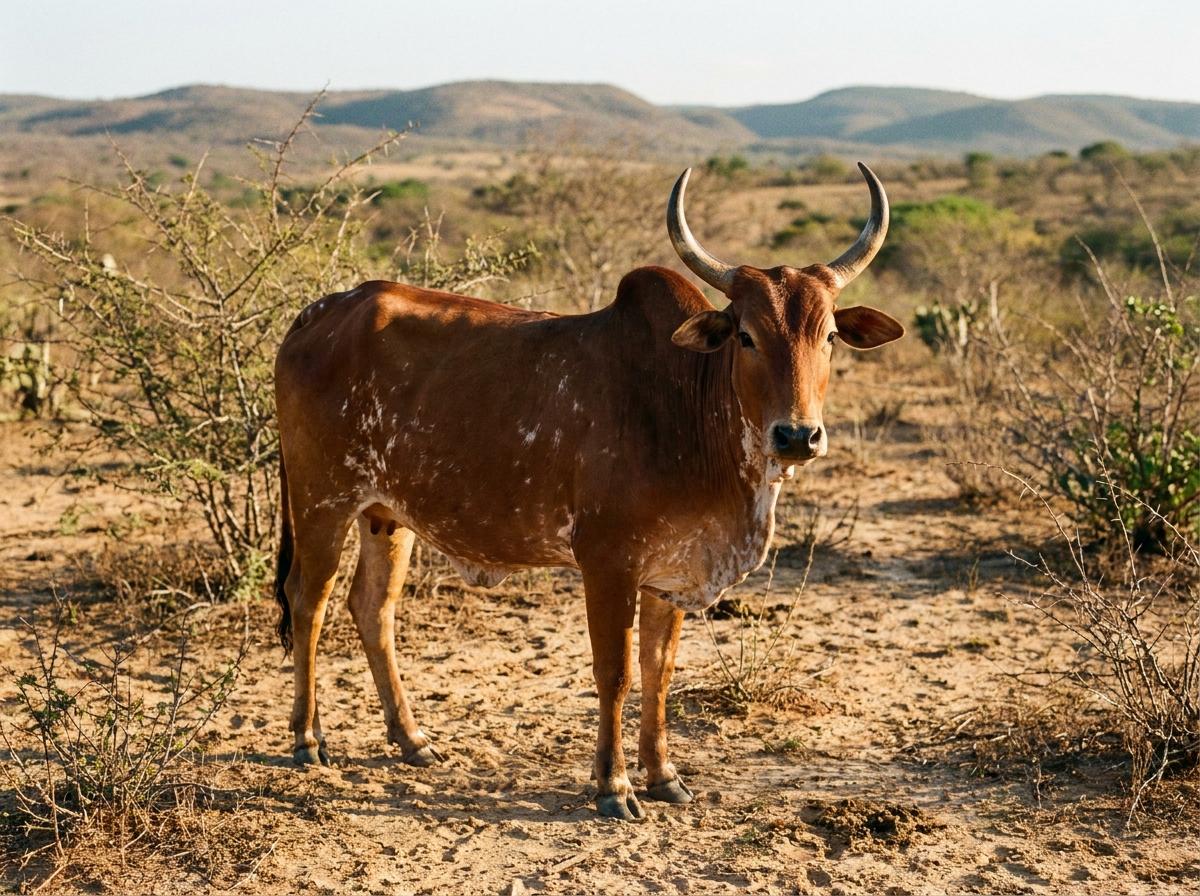
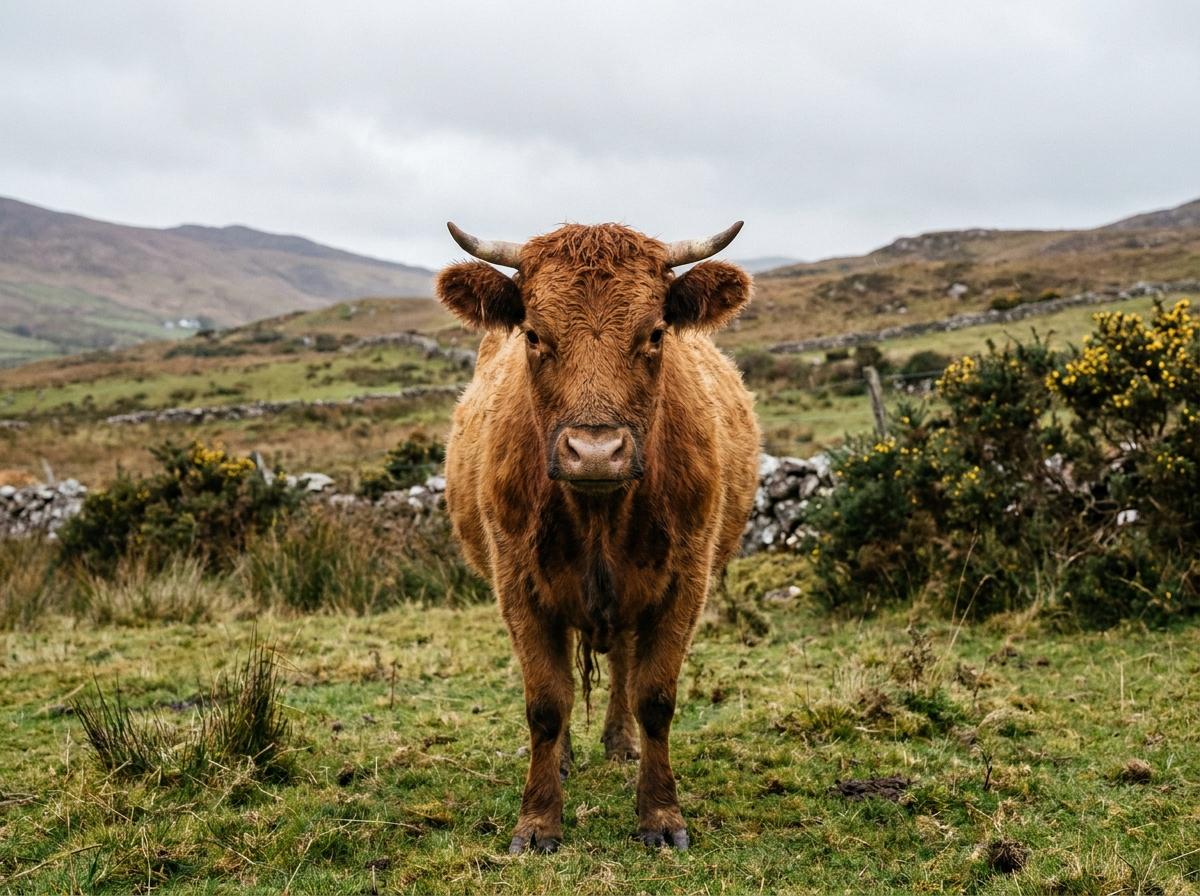
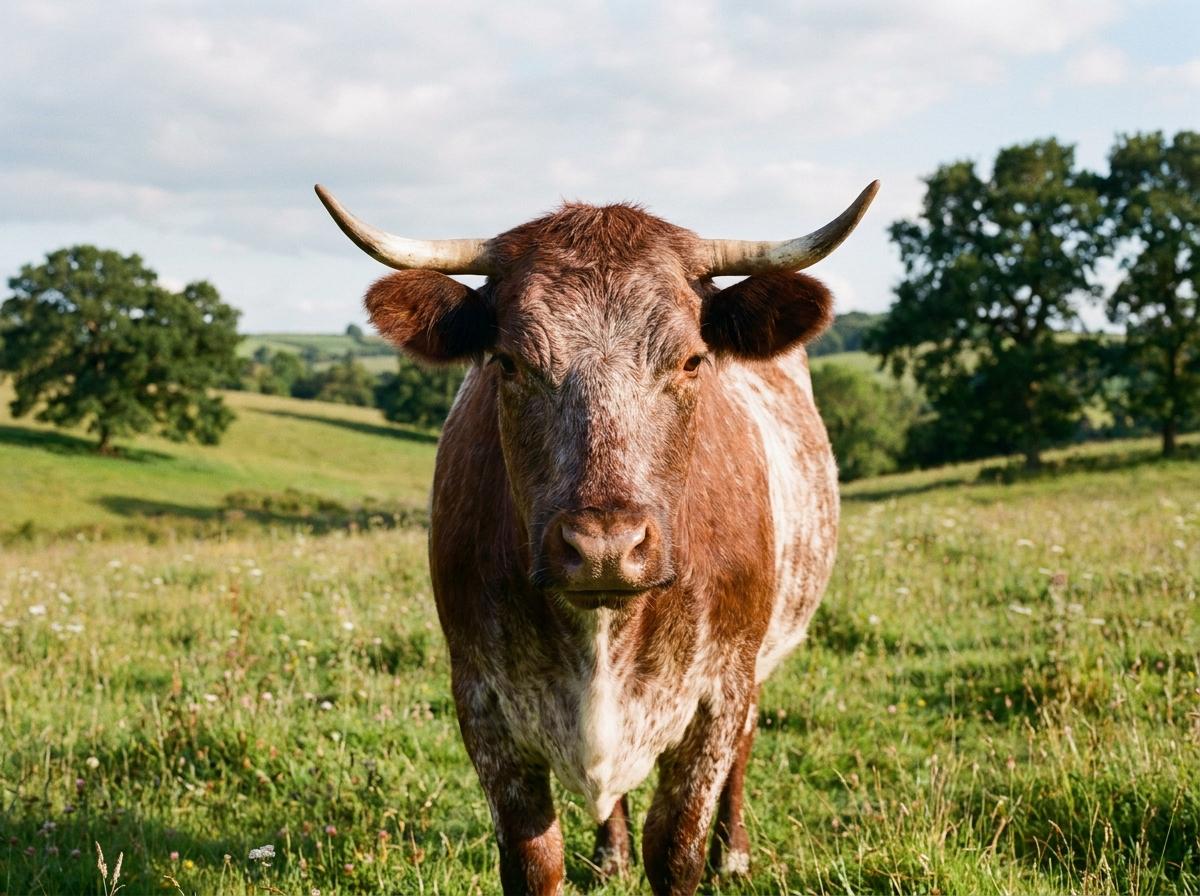
Shorthorn cattle are a British breed from the Tees River valley of northeast England, known to early American farmers as the Durham. They come in red, white, roan (a fine mix of red and white hairs over the whole body) or red and white patches, and they can be horned or polled. Shorthorn breeders published the first pedigree herd book for any cattle breed, Coates’s Herd Book, in 1822. In the United States the breed now runs in two registered lines: beef Shorthorns, recorded by the American Shorthorn Association (ASA), and Milking Shorthorns, recorded by the American Milking Shorthorn Society (AMSS).
People keep Shorthorns as maternal beef cows, as crossing sires, as grass-based dairy cows and as junior show cattle. Creatures lists nearly 1,700 Shorthorn breeders in its directory, with Ohio, Indiana and Iowa listing the most, but Shorthorns are rarely listed for sale on the Creatures marketplace. To hear when one is, set a free Shorthorn listing alert (no account needed to start).

| Origin | Tees River valley, northeast England; first imported to Virginia in 1783 as the Durham |
|---|---|
| First herd book | Coates’s Herd Book, 1822, the first pedigree herd book for cattle |
| US registries | American Shorthorn Association (beef; the ASA dates itself to 1872, other histories to 1882); American Milking Shorthorn Society (dairy, incorporated 1948) |
| Colors | Red, white, roan, or red and white |
| Horns | Horned or polled; the ASA dates Polled Shorthorns to 1881 in Minnesota |
| Size | Heritage Shorthorn cows 1,200 to 1,400 lb, bulls about 2,000 lb (Livestock Conservancy) |
| DNA tests (ASA) | TH, PHA and DS results required on AI sires and donor dams |
| Conservation | Heritage Shorthorn (Native) milking lines listed as Threatened by the Livestock Conservancy |
Browse listings, public profiles, breeders, or add your animal.
What is a Shorthorn?
“Shorthorn” names a family of related cattle more than one tidy herd book, which is why buyers get confused. These are the names you will meet:
- Durham. The breed’s early name, after County Durham. The ASA’s breed history says the cattle were already called Durhams when they reached Virginia in 1783, so a “red Durham” in an old record is simply a red Shorthorn. Today Durham Red is also a category in the ASA’s Appendix Registry (more on that below).
- Shorthorn or Beef Shorthorn. The beef line, registered in the US by the ASA and in Britain by the Beef Shorthorn Cattle Society.
- Milking Shorthorn or Dairy Shorthorn. The dairy and dual-purpose line, registered in the US by the AMSS. In Britain the dairy line is called the Dairy Shorthorn.
- Polled Shorthorn. Naturally hornless Shorthorns, which once had their own US herd book.
- Native or Heritage Shorthorn. Old-line Milking Shorthorns whose pedigrees stay clear of outside breeds. The AMSS marks them with an “N”.
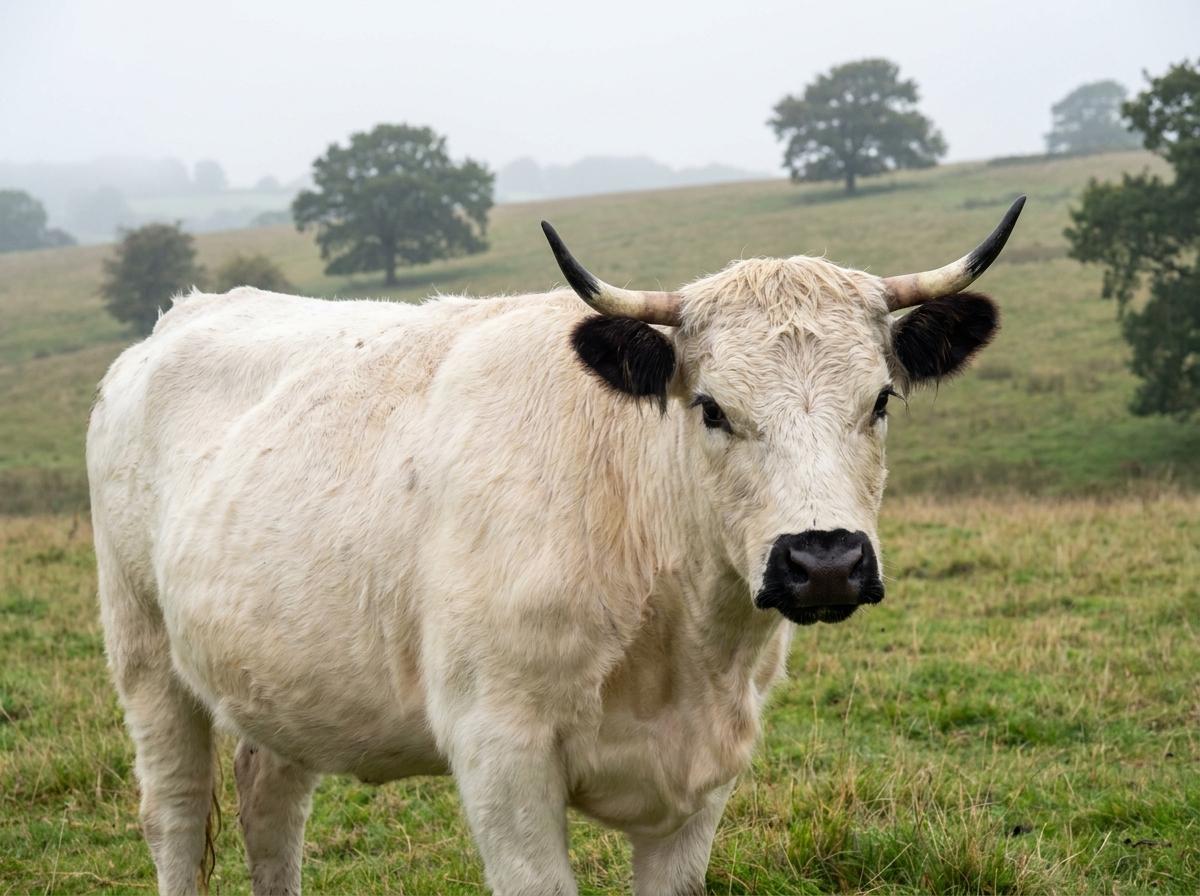
- Whitebred Shorthorn. A separate British breed. The Whitebred Shorthorn Association says it is “a completely separate breed” from the Beef and Dairy Shorthorn, kept mainly as a white crossing bull (see the Whitebred Shorthorn breed page).
The name itself is old. Oklahoma State University’s Breeds of Livestock reference, which reprints Briggs’s Modern Breeds of Livestock, says a superior short-horned type of cattle lived on the Yorkshire estates of the earls and dukes of Northumberland as early as 1580. “Short-horned” set them apart from other English types, including the long-horned cattle the breeder Robert Bakewell later made famous.
For the care, land and budget questions that apply to every breed, start with the Creatures cattle guide. This page sticks to what is particular to Shorthorns.
Where Shorthorns came from
Teeswater cattle. The ASA traces the breed to the northeast coast of England, in Northumberland, Durham, York and Lincoln, and to the valley of the Tees River, where large-framed cattle known as Teeswater cattle were developing by about 1600. The Livestock Conservancy adds that imported Dutch cattle were crossed with the native stock and selected for both meat and milk.
The Colling brothers. In the late 1700s Charles Colling at Ketton and his brother Robert at Barmpton, both near Darlington, began improving these cattle with the close line breeding that Robert Bakewell had used on his Longhorns. The Beef Shorthorn Cattle Society’s history says Robert bought a bull called Hubback for £8 after noticing the quality of his calves at the local market. Their combined bloodlines produced the bull Comet, bred by Charles Colling in 1804 and sold at the Ketton sale in 1810 for 1,000 guineas, the first 1,000-guinea bull on record. An engraving of Comet still appears on the British society’s pedigree certificates.
The Durham Ox. Publicity did the rest. The Livestock Conservancy’s Heritage Shorthorn page says a traveling exhibit of the “Durham Ox,” calved in 1796, made the breed famous early in the 1800s; the Ox weighed over 3,500 pounds at ten years old.
Bates, Booth and the Scotch Shorthorn. Thomas Bates bred his cattle for milk and the Booth family bred theirs for beef, and the split between the two goals runs through the rest of the breed’s history. Later a Scottish breeder, Cruickshank, developed the beef-type “Scotch Shorthorn,” and the Livestock Conservancy notes that by 1900 the Scotch type was the most sought after in America.
The first herd book. In 1822 George Coates published the first herd book, listing 710 bulls and 850 cows; it became the first pedigree herd book for cattle in the world. The Shorthorn Society of Great Britain and Ireland, formed in 1874, bought its copyright and still publishes Coates’s Herd Book.
Arrival in America. Shorthorns reached Virginia in 1783. Oklahoma State credits a Mr. Gough of Maryland and his partner, a Mr. Miller of Virginia, with early imports, and the Livestock Conservancy says the largest numbers arrived after 1820 and settled first in Ohio and Kentucky. Pioneers used them for meat, milk and draft. The ASA says the American Shorthorn Herd Book of 1846 was the first herd book published in the US for any breed, and it dates its own founding, by breeders from nine states, to 1872; the AMSS and Oklahoma State give 1882 for the American Shorthorn Breeders’ Association, which took over the herd book in 1883.
“The great improver.” The Beef Shorthorn Cattle Society says more than 40 breeds now carry Shorthorn genetics. A few with pages on Creatures: the Maine-Anjou, which began when the Count de Falloux crossed imported Durham cattle onto French Mancelle cows in 1839; the Illawarra, an Australian dairy breed with Shorthorn among its foundation bloodlines; and the Murray Grey, which Oklahoma State traces to a roan Shorthorn cow that produced only grey calves when bred to Angus bulls on the Sutherland family’s Thologolong property in Australia from 1905.
Shorthorn colors: red, white and roan
The registries’ color classes cover red, white, roan, and combinations of red and white. The Beef Shorthorn Cattle Society’s breed characteristics list red, white or roan and call black markings undesirable.

The ASA’s color guide defines five registration colors:
- Red. Predominantly red, with no white on the legs. Some white is allowed on the underline in front of or behind the navel, but white that climbs above the line where the side meets the underline, or any white on the head, takes the animal out of the red class.
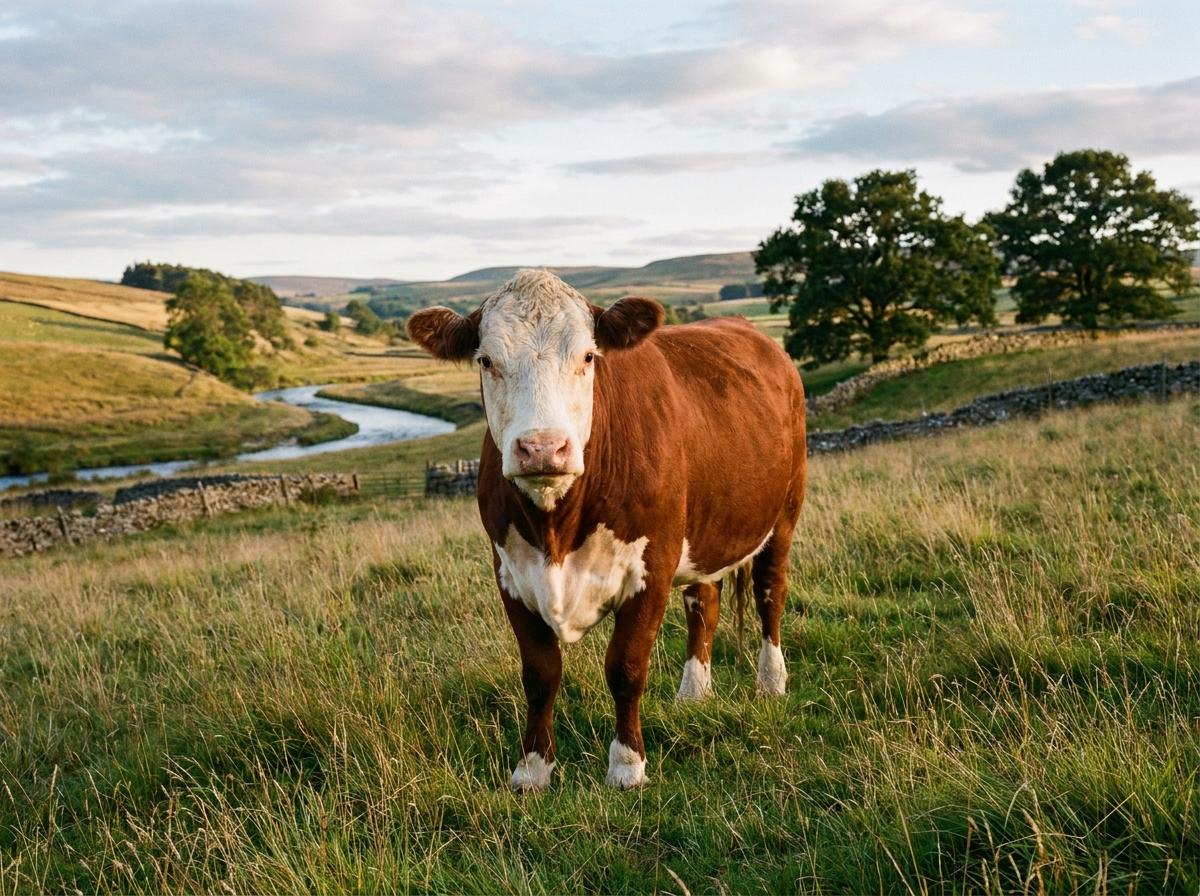
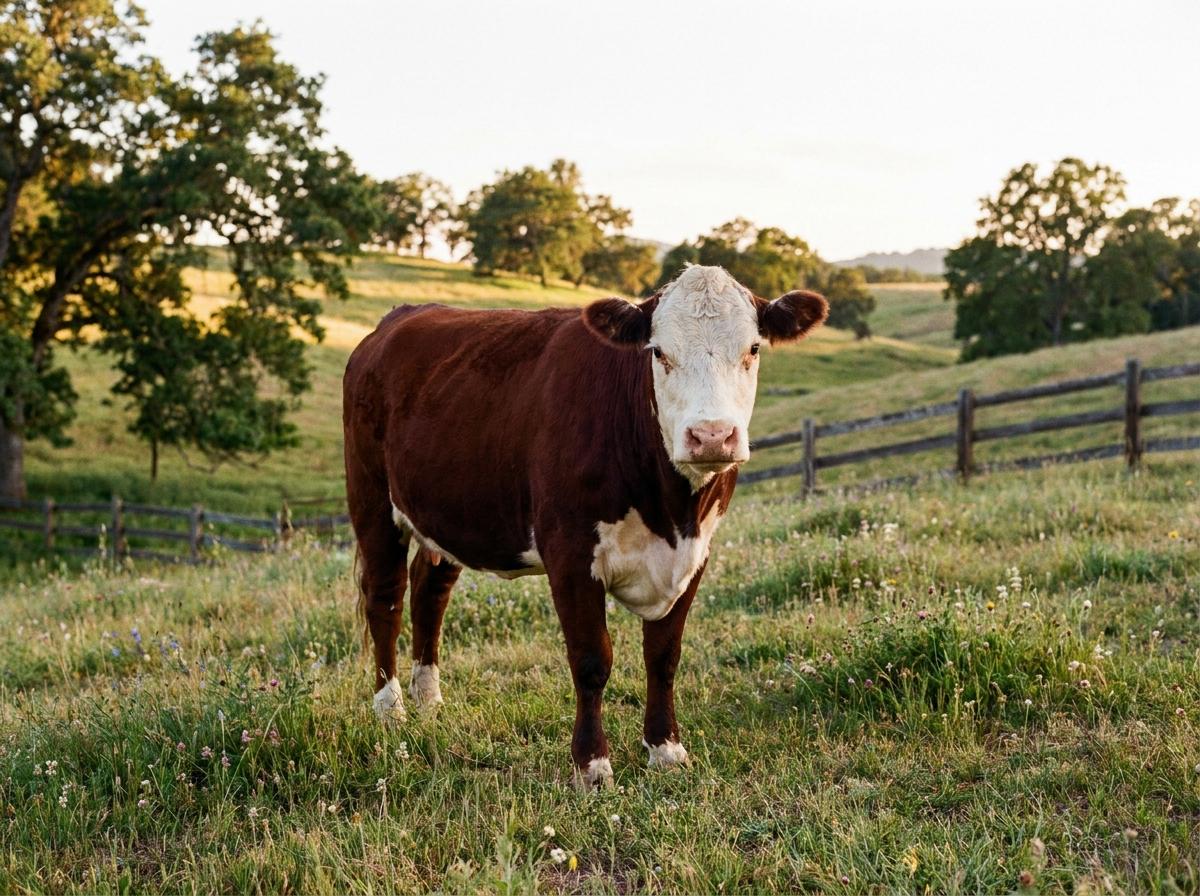
- Red with white marks. A red body with white marks above that line, white on one or more legs, or white on the face or forehead.
- Red and white. At least 30 percent red or white, with the rest the opposite color, in a splotched pattern.
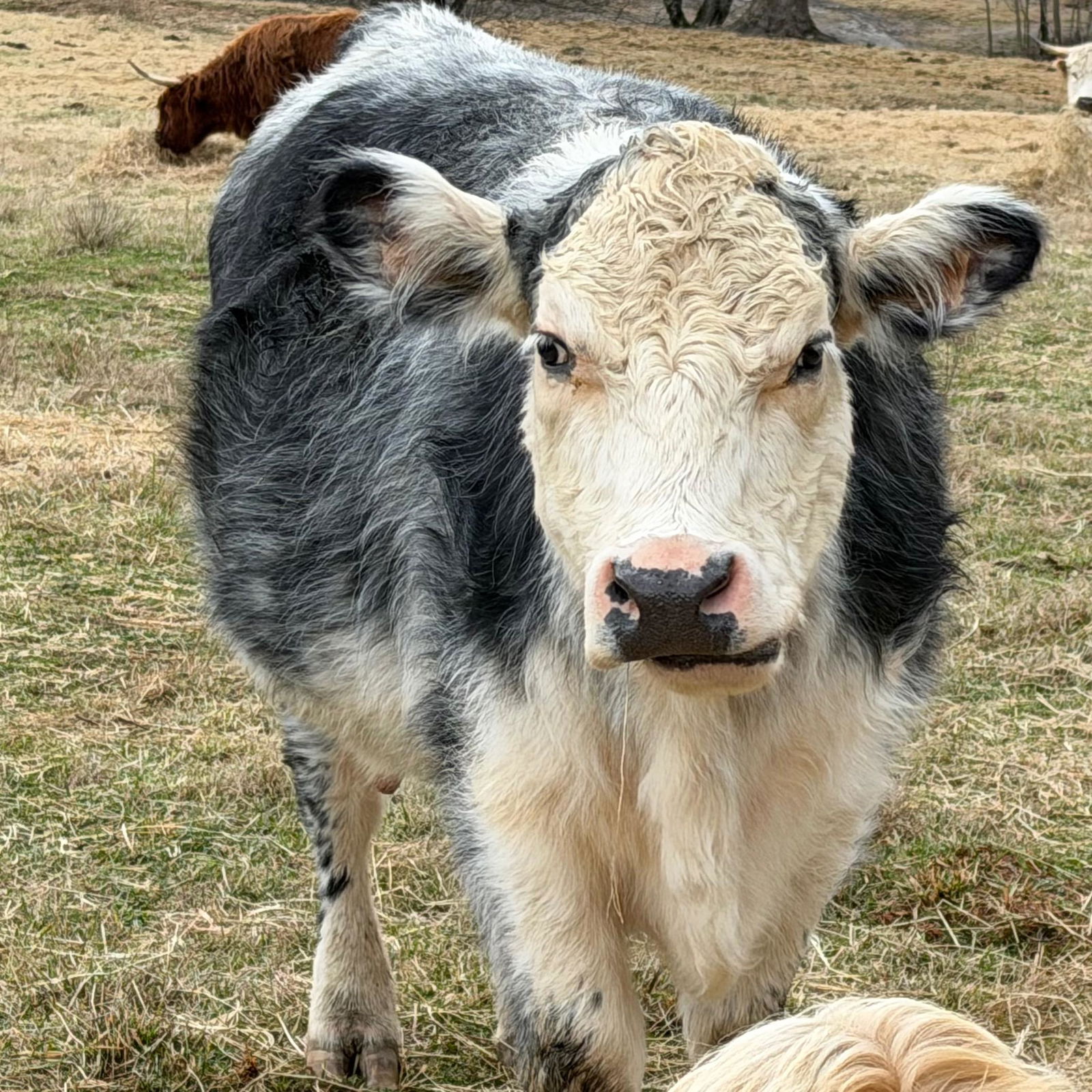
- Roan. Red and white hairs mixed over the entire body. Dark roans carry more red hair than white, light roans more white than red, and a “redneck roan” has a red head, neck and front end with a lighter roan body.
- White. White from head to toe. A white Shorthorn usually still has darker red hairs around the nostrils, around the eyes, in and around the ears and in the switch of the tail, and still counts as white.
The AMSS uses similar classes for Milking Shorthorns, adding “red, little white” and “white, little red” (white with no more than 25 percent red) in its registration rules.
How roan inheritance works
Roan is a single-gene trait. Scientists were studying how Shorthorn coat color is inherited by 1906, and a 1908 paper in Nature already treated it as a Mendelian character. In 1999 a University of Saskatchewan team reported a single change in the gene for mast cell growth factor, now called KITLG, that their data suggested is responsible for roan in both Shorthorn and Belgian Blue cattle. A 2026 study that put the same single change into mice saw no change in coat color or uterus, and its authors say the change may not be the cause (or that mice may simply respond differently), so the exact causal change is still open. The inheritance is not in doubt: solid-colored and white animals are homozygous (two copies of the same version of the gene) and roans are heterozygous (one of each). The Online Mendelian Inheritance in Animals entry lists the trait as incomplete dominant.
That makes the color of a calf predictable on average, using simple Punnett squares. Call the colored version R and the white version W, so a red Shorthorn is RR, a roan RW and a white WW:
- Red bred to white: every calf is roan (RW).
- Roan bred to roan: on average 1 red to 2 roan to 1 white, or 25, 50 and 25 percent.
- Roan bred to red: on average half roan and half red.
- Roan bred to white: on average half roan and half white.
- Red bred to red, or white to white: the calves match the parents.
Three cautions. These are averages over many calves, not a promise for one calf. A very light roan can pass for white and a very dark roan for red, so look at the animal’s parents and calves before you assume its type. And the white patches on a red and white Shorthorn are a different pattern from roan, so the roan ratios do not predict them.
Blue roans. The same gene works on a black background. Belgian researchers who mapped the roan gene in 1996 describe Belgian Blue cattle in which one black and one white copy give the breed’s “blue” mix of black and white hairs. So a white Shorthorn bull on black cows gives calves with mixed black and white hair. That is the logic of the Blue Grey: the Whitebred Shorthorn Association says its white bulls are used principally on Galloway cows to breed the Blue Grey, and on Highland cows to breed the Cross Highlander (see our Highland cross guide).
A fertility caution for white heifers. The same 1996 paper calls the roan locus “a major determinant” of white heifer disease and gives its white version a critical role in it. The 2026 study in the Journal of Veterinary Medical Science describes the disease as a congenital reproductive defect seen in white heifers of certain breeds, naming Belgian Blue and Shorthorn. We found no reliable figure for how often it affects Shorthorns. Still, if you buy a white heifer as a future cow, have your veterinarian examine her before you count on her, and ask the seller whether her dam and sisters have calved.
Horned and polled Shorthorns
Shorthorns were horned first. According to the ASA, breeders in the 1870s noticed naturally hornless calves turning up in horned herds, and Polled Shorthorns trace to 1881 in Minnesota. The American Polled Durham Association formed in 1889 to record them, and it merged with the ASA in 1923, so horned and polled cattle now share one herd book.
Polled is dominant to horned, a finding that dates to 1906, according to the OMIA entry on horns and polledness. So a polled animal can carry a hidden horned copy: two such carriers will, on average, produce one horned calf in four. The same entry notes that hornless cattle growing scurs (small loose horn growths) carry only one polled copy. If you need a bull that will sire only polled calves, ask for his DNA result rather than judging by his head. The ASA offers a horn and poll test as an add-on to its genomic panel, and the AMSS registers every animal as horned or polled.
Heritage Shorthorns are mostly horned, according to the Livestock Conservancy. Horned or not, any adult Shorthorn is a large animal that needs proper handling equipment; our cattle chute and head gate guide covers what a small herd needs.
Beef Shorthorns, Milking Shorthorns and Heritage lines
The two US Shorthorn registries record cattle that trace to the same foundation animals. Oklahoma State’s Milking Shorthorn page describes the Milking Shorthorn as a segment of the Shorthorn breed rather than a separate breed, with pedigrees that trace to the same foundation animals as the beef type. What split them was selection, for beef or for milk.

In the US, Milking Shorthorn breeders formed a club inside the Shorthorn association in 1912 to promote milk recording, according to the AMSS. The ASA’s timeline dates the split of the herd book into beef and milking books to 1948, the year Oklahoma State gives for the AMSS’s incorporation. Oklahoma State adds that the Milking Shorthorn was declared a dairy breed in 1969 and joined the Purebred Dairy Cattle Association in 1972.
Beef Shorthorns and the ASA Appendix Registry
The ASA keeps the main herd book plus an Appendix Registry, running since 1973, which includes ShorthornPlus and Durham Red cattle. The ASA says the program documents Shorthorn influence in commercial cattle, including crosses with related and non-related breeds. On the ASA’s own blood determination chart, an animal of 15/16 (93.75 percent) Shorthorn or higher is classed as purebred. So “registered Shorthorn” can mean a purebred or a percentage animal: read which herd book and which percentage the papers show.
British Beef Shorthorns took a different path. The Beef Shorthorn Cattle Society says beef breeders started their own section of the herd book in 1958, sanctioned the use of Maine-Anjou blood in 1976 to add muscling, and closed the herd book to outside blood in 2001 except through its grading register. Imported genetics come with that history.
Milking Shorthorns and the AMSS
US Milking Shorthorns are a small dairy breed today. In the Council on Dairy Cattle Breeding’s 2021 herd averages, the latest table it publishes, the 16 Milking Shorthorn herds on milk recording averaged 14,743 pounds of milk at 3.68 percent fat and 3.13 percent protein. That is a small sample. The Livestock Conservancy explains the breed’s place: it could not match the Holstein for volume, but it is forage efficient and long-lived, and its meatier bull calves and cull cows are worth more than those of other dairy breeds. Our Jersey guide sets the CDCB figures beside the other dairy breeds.
The AMSS herd book is open to outside breeds through graded levels. Its own explainer on herd book levels gives the example of a Holstein cow bred to a full herd book bull: the calf gets a “GE” (Genetic Expansion) prefix, and further crosses to herd book animals, with the right colors, lead back to full herd book status. Animals with a prefix cannot be shown as American Milking Shorthorns. The AMSS also records two recessives first traced in Holsteins, HCD (haplotype cholesterol deficiency) and CVM (complex vertebral malformation), and requires male offspring of known or suspected carriers to be tested before registration is complete.
The two societies cooperate: under a double registry program, eligible animals can be registered with both the AMSS and the ASA.
Native and Heritage Shorthorns
In 1998 a group of Milking Shorthorn breeders, worried that Genetic Expansion would erase the old lines, started a movement to mark pure pedigrees, and the AMSS announced the program in 2000. The AMSS’s breed page explains that “Native” animals carry an “N” after their registered name. Qualifying pedigrees go back to English Dairy Shorthorns imported before the Illawarra and Genetic Expansion era, or to Canadian lines clear of outside influence; animals from the grade-up program begun by James J. Hill in 1915 are excluded. The AMSS office can confirm any registered animal’s status.
The Livestock Conservancy calls these cattle the Heritage Shorthorn (Native) and lists them as Threatened on its Conservation Priority List. It describes them as medium to large, docile, fertile, easy calving and long-lived, mostly horned, and suited to grass-based dairying, with cows weighing 1,200 to 1,400 pounds and bulls about 2,000. It adds that some lines carry A2/A2 genetics. A2 status is a DNA result for an individual animal, not a breed trait, so ask for the test; the ASA offers an A2 test as an add-on to its genomic panel. A separate group, the Heritage Shorthorn Society, also works to preserve Shorthorns that trace clear to the 1822 herd book.
Size, temperament and what Shorthorns are used for
Size. We found no published weight standard from either US registry, and modern beef Shorthorns vary by line and by how they are fed. The Livestock Conservancy’s Heritage Shorthorn figures above are the clearest published numbers. For your own animals, weigh them, or estimate with the free cattle weight calculator; our guide to measuring cattle for weight shows where to put the tape.
Build. The Beef Shorthorn Cattle Society’s breed characteristics describe the beef type: a wide muzzle, a strong neck and broad shoulders, a deep body with a good spring of rib, an underline running parallel to a long, firm topline, a long, wide, square rump with a slight slope from hooks to pins, and feet with good depth of heel. Milking Shorthorns are built finer; the AMSS text reprinted by Oklahoma State says the breed has become more dairy and more angular, with improved udders.
Growth and calving, compared. The best independent breed comparison comes from the USDA’s Meat Animal Research Center in Nebraska, which compares calves sired by bulls of 18 breeds. In its 2026 across-breed table, the center’s estimated breed-of-sire averages for 2024-born animals, which predict how calves compare when bulls of different breeds are bred to cows of a third breed, put Shorthorn-sired calves at 89.0 pounds at birth, against 84.9 for Angus, 84.2 for Red Angus and 87.0 for Hereford, and at 498.9 pounds at weaning (Angus 544.9). On maternal weaning weight, the weaning weight of calves out of a sire’s daughters, which reflects their milk, Shorthorn (516.6 pounds) sat close to Angus (520.4). These are model estimates for conditions like the center’s, and individual bulls within a breed vary. The practical point: if you plan to breed first-calf heifers, pick a Shorthorn bull on his calving ease and birth weight EPDs, not on the breed name.
Temperament. The ASA lists good disposition among the breed’s traits, and the AMSS and the Livestock Conservancy both call Shorthorns docile. Disposition is also recorded: the ASA asks members to score cattle on the Beef Improvement Federation’s six-point disposition scale, from 1 (docile, exits the chute calmly) to 6 (very aggressive), at calving, weaning and yearling time. Ask a seller for those scores. A docile breed reputation never makes a bull safe to treat casually.
Uses. The ASA’s selection indexes show what beef breeders select for: $CEZ for calving ease, $BMI for crossbreeding on British-breed cow herds, $CPI for cow productivity and $F for feedlot and carcass value. Shorthorns are also a youth breed: the American Junior Shorthorn Association dates to 1968, and the first National Junior Shorthorn Show was held in 1973. If you are starting a junior project, our halter training guide is the place to begin.
Lifespan. The Livestock Conservancy calls Heritage Shorthorns long-lived and productive much longer than most modern dairy cattle. For what that means in years, see our guide to how long cows live.
Genetic conditions and DNA testing
The ASA tests for three inherited conditions, described in its genetic conditions sheet:
- Tibial hemimelia (TH). A lethal recessive. Affected calves are born with severe deformities, including twisted hind legs with fused joints, large abdominal hernias or skull defects, and cannot stand to nurse.
- Pulmonary hypoplasia with anasarca (PHA). A lethal recessive. Affected calves are born dead with underdeveloped lungs and heavy fluid swelling.
- Digital subluxation (DS). Not lethal. Cattle with two copies (shown as DSH in the registry) usually show a malformation of the rear pasterns, and every calf they sire or produce is at least a carrier (DSC). The ASA adds that DS sits on the same chromosome as PHA, and a calf from a PHA carrier mated to a DS carrier is likely to have deformed hind legs below the hock if it inherits both unfavorable copies.
For a simple recessive like TH or PHA, a carrier bred to a non-carrier produces no affected calves, while two carriers produce, on average, one affected calf in four. That is why the results matter on both sides of a mating.
The ASA’s DNA page sets the rules: AI sires and donor dams must have a parentage genotype plus TH, PHA and DS results before their calves can be registered, and natural-service sires born on or after January 1, 2022 need the ASA’s 100K genomic test. The ASA accepts results only from its approved lab, Neogen. When you buy breeding stock, ask for the actual results tied to each animal’s registration number, not a verbal “he’s clean.”
Buying Shorthorn cattle
Start by deciding which Shorthorn you want: a beef cow or bull, a Milking Shorthorn for the pail, or Native stock for a conservation herd. The paperwork, prices and sellers differ for each.
Check the registry, and the initials. “ASA” on cattle papers can mean the American Shorthorn Association or the American Simmental Association. Our guide to checking cattle pedigree papers uses the Simmental ASA as its example, and the same checks apply here. Confirm which association issued the certificate and which herd book, full or appendix, the animal is in. The ASA’s online registry, linked from shorthorn.org, lets non-members search for animals.
Match the tattoo to the papers. The ASA’s tattoo rules require a herd tattoo in at least one ear before an animal can be registered, and the registration of any animal found tattooed differently from its certificate is null and void. Read the tattoo yourself, with the animal safely restrained, before you load it. Get the transfer of ownership done at the sale; an ASA registration can carry up to three owners.
Read the genetics. Ask for the DNA results above, plus EPDs and indexes. The ASA’s EPD primer explains each one and adds a useful caution on accuracy: a yearling bull’s EPDs start as roughly his parents’ average, below 0.20 accuracy, and genomic testing can lift that to about 0.40, while high accuracy comes only from many recorded calves. To compare a Shorthorn bull’s birth weight EPD with an Angus bull’s, the 2026 across-breed table says to add 4.0 pounds to the Shorthorn figure.
Ask what happened at calving. The ASA records calving ease on a six-point scale, from 1 (unassisted) through hard pulls and caesareans to malpresentations and stillbirths. A seller who records these can tell you how a cow’s calvings went and how a bull’s calves were born.
For a bull, ask for a breeding soundness exam. Have a veterinarian examine any herd bull before purchase. The Beef Shorthorn Cattle Society sets minimum scrotal circumferences in its breed characteristics: 32 cm for bulls 12 to 18 months old, 34 cm at 18 to 24 months and 35 cm over 24 months.
Ask about health. Get the herd’s vaccination and testing history in writing and plan the newcomers’ first weeks with your veterinarian. Our cattle vaccination guide explains what a typical schedule covers.
Price. Few Shorthorns pass through the public auction records Creatures tracks. The cattle auction price guide counted 13 qualifying Shorthorn sales and 17 Milking Shorthorn sales through August 25, 2026; that is too few for a Shorthorn breed guide, though the Milking Shorthorn median was $2,800 a head. For current price ranges by type of cow, see how much a cow costs; as that guide notes, registered and top-end animals sell well above commercial ranges.
Where to look. Breeders listed in the Creatures directory, state Shorthorn associations, the ASA and AMSS, and junior and open shows, where you can see many Shorthorns side by side and talk with the people who bred them.
Caring for Shorthorns
Shorthorns need what all cattle need: other cattle, forage, clean water, shade, sound fences, and a veterinarian who knows cattle. The Creatures cattle guide covers land, feed, care and the yearly budget in full, with sources; here is the short version, plus the breeding and record points that matter for a Shorthorn herd.

The basics, in brief. Plan on at least two cattle, shade and a clean water tank for summer heat, perimeter fences at least 54 inches high, and a pasture-and-hay diet judged by body condition, with cows fed to calve at a score of 5 to 6 on the 1 to 9 scale. The cattle guide linked above gives the sources, and our guides to stocking rate, cattle waterers, cattle fencing and what to feed cattle go deeper.
Breeding and calving. Cattle carry a calf for about 283 days. The free cattle gestation calculator has no Shorthorn preset, so leave the breed on “Any breed”: it adds 283 days to the breeding date and shows a 275 to 290 day window. Our cattle gestation guide explains the breed and calf-sex effects, and the calving guide covers the signs of labor and when to call for help. On Creatures you can record a breeding on the cow’s profile and it projects the calving date and window.
Records. Registration numbers, tattoos, DNA results, calving ease scores, weights and vaccinations are much easier to hand to a buyer when they live in one place. Our cattle record keeping guide lists what to keep from breeding to sale, and the free cattle pedigree chart maker prints a three-generation pedigree with registration numbers and colors (choose Shorthorn or Milking Shorthorn in the breed list). It is a record you make, not an official registry pedigree, which still comes from the ASA or AMSS.
Shorthorns and their neighbors
If you are weighing a Shorthorn against other breeds, a few comparisons come up again and again. The Red Angus is the red strain of the Angus, registered in the US by its own association because the American Angus Association registers only black cattle; our Black Angus guide covers the black herd book. The Murray Grey traces, by its founding story, to a roan Shorthorn cow bred to Angus bulls, though the Australian breed society’s own history names only the Angus herd. The Maine-Anjou began with Durham cattle crossed onto French Mancelle cows and was itself later used in British Beef Shorthorns. And the beefalo, a cattle breed registered as part American bison by pedigree, is a different project altogether.
Frequently asked questions
Are Shorthorn cattle good for beef?
Yes. Beef Shorthorns are bred for maternal ability, growth and carcass merit, and the ASA’s indexes are built for cow herds, crossbreeding and the feedlot. In the USDA research center’s breed-of-sire estimates, Shorthorn-sired calves come out a little heavier at birth and lighter at weaning than Angus-sired calves, with similar maternal weaning weight, so pick individual bulls on their EPDs.
What colors are Shorthorn cattle?
Red, white, roan, or red and white. The ASA registers five color classes: red, red with white marks, red and white, roan, and white. Roan, a mix of red and white hairs, comes from one red and one white copy of the roan gene.
Are Durham cattle the same as Shorthorns?
Yes. Durham was the breed’s early name, after County Durham in England, and the name the first American imports carried in 1783. Today Durham Red is also a category in the ASA’s Appendix Registry.
What is the difference between Shorthorn and Milking Shorthorn cattle?
Both descend from the same foundation cattle. Beef Shorthorns are registered by the American Shorthorn Association and selected for beef; Milking Shorthorns are registered by the American Milking Shorthorn Society and selected for milk, and the herd books split in 1948. Native, or Heritage, Shorthorns are old-line Milking Shorthorns whose pedigrees are kept clear of outside breeds.
Do Shorthorn cattle have horns?
Some do. The breed was originally horned, Polled Shorthorns date to 1881, and both are registered today. Polled is dominant, so a polled Shorthorn can still carry a horned copy; a DNA test tells you which.
How big do Shorthorn cattle get?
Neither US registry sets a weight standard. The Livestock Conservancy puts Heritage Shorthorn cows at 1,200 to 1,400 pounds and bulls at about 2,000 pounds; beef lines vary with breeding and feeding.
Is roan only found in Shorthorns?
No. The same gene is behind roan in Belgian Blue cattle, where it produces a “blue” mix of black and white hairs, and a white Shorthorn bull on black cows, as in the Blue Grey cross, gives calves with that same black and white mix.
Do this next on Creatures
Whether you are looking for your first Shorthorns or already breeding them, Creatures keeps the search, the herd records and your farm profile in one place.
Get alerted. Shorthorns are rarely listed for sale on Creatures, so set a free Shorthorn listing alert and we will email you when one is posted. No account needed to start. See saving searches and using your watchlist for how alerts work.
Find breeders. Search the Shorthorn breeders listed by state or the full Creatures breeder directory, and check Shorthorns on the Creatures marketplace for new listings.
Add your animal. Already keep Shorthorns? Create a free Shorthorn profile with the registration number, tattoo, color and photos, no account needed to start. The walkthrough is in adding an animal to Creatures.
Keep the records. Add a DNA result, calving, weight or vaccination record. The record sheet opens for any visitor to look around, and a free account saves what you enter. See adding a record and health and medical records.
List your herd. Breed registered Shorthorns? Create a free farm or breeder profile so buyers looking for tested, registered Shorthorns can find you, no account needed to start. Read getting listed in the breeder directory and creating an organization and adding your team.
Plan and print. Work out calving dates with the cattle gestation calculator, print a pedigree with the cattle pedigree chart maker, and find names for this year’s calves with the cattle name generator.