Murray Grey
Author: Elliott Garber, DVM · Published
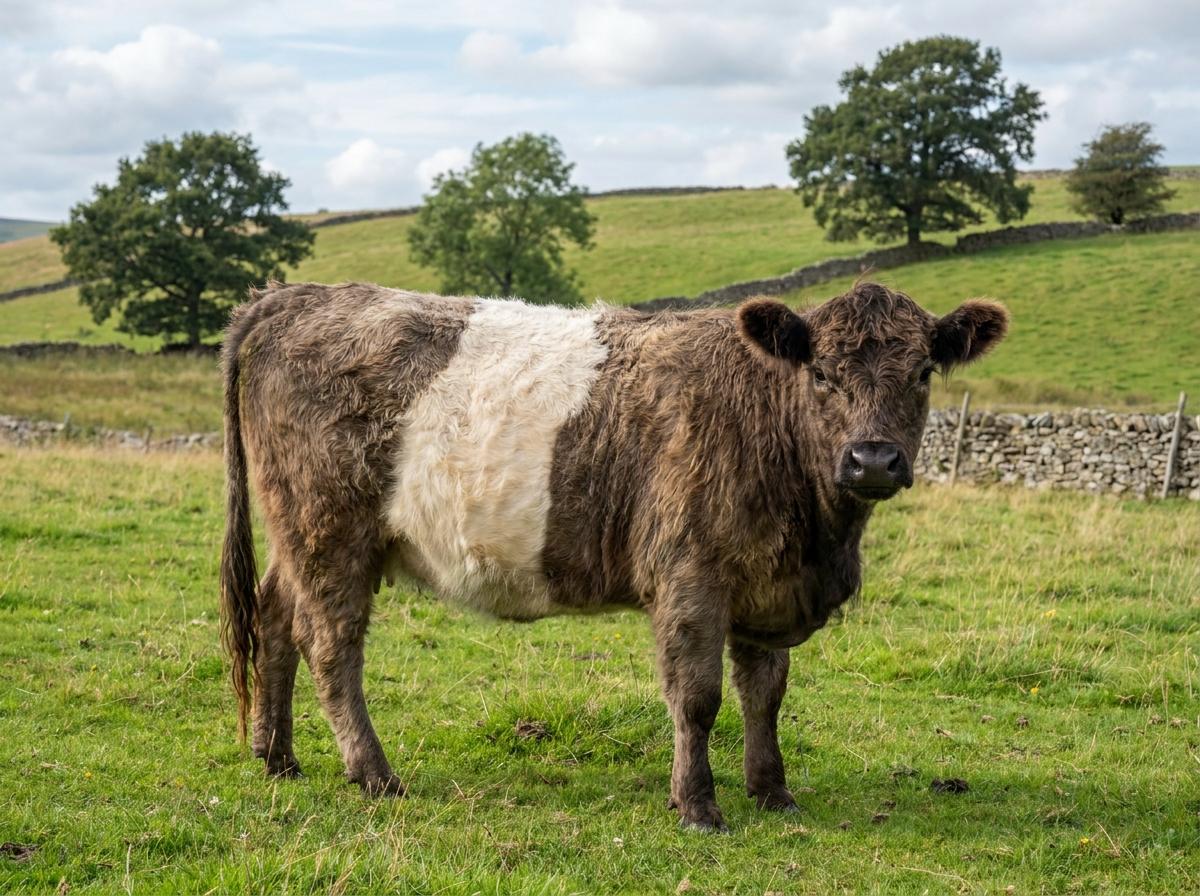
Murray Grey cattle are a naturally polled Australian beef breed with a silver to dark grey coat over dark skin, and some are black. They began on the Sutherland family’s Thologolong property on the upper Murray River, on the border of New South Wales and Victoria, where grey calves appeared in the early 1900s from Angus bulls and, in the breed’s founding story, a roan Shorthorn cow. For purebred registration, both the Australian breed society and the American Murray Grey Association require a polled head and dark pigment on the muzzle and hooves, and the Australian standard also asks for a docile disposition. The breed is raised for beef, as purebreds and in crossbreeding, and you will often see the name spelled Murray Gray.
Murray Grey listings on the Creatures marketplace are rare, so the easiest way to hear about one is to set a free Murray Grey listing alert (no account needed to start). In the meantime you can browse Murray Grey breeders listed in the Creatures directory, and our cattle guide for beginners covers the costs, land and daily care that every beef breed needs.

| Origin | Thologolong, upper Murray River valley, Australia; first grey calves dated to 1905 |
|---|---|
| Ancestry | Aberdeen Angus bulls and, by tradition, a roan Shorthorn cow |
| Registries | Murray Grey Beef Cattle Society (Australia); American Murray Grey Association (US, founded 1971) |
| Coat | Silver, grey or black; the AMGA also describes dun shades; white only on the underline |
| Skin and pigment | Dark skin, dark muzzle and dark hooves; white hooves are not accepted |
| Horns | Naturally polled; scurs bar US purebred registration |
| Type | Moderate-framed, smooth beef cattle with refined bone |
| US purebred | At least 7/8 Murray Grey for females and 15/16 for bulls |
Browse listings, public profiles, breeders, or add your animal.
What is a Murray Grey?
A Murray Grey is a polled beef animal with the build of a moderate British breed and a coat that runs from silver to charcoal. The name records both the color and the place: the Murray River valley where the first greys were bred. Heritage Victoria’s register entry for the Thologolong homestead says the breed became known as “the gentle builders of beef,” a nickname that sums up what breeders selected for: temperament and meat.
Three things identify a purebred on sight. The head is naturally polled, with no horns or scurs. The coat is a shade of grey (or black). And under that coat the skin is dark, so the muzzle, the skin around the eyes and the hooves are dark too. A grey animal with a pink nose or white hooves would not meet either registry’s purebred standard.
Three kinds of cattle are easy to mistake for one: other grey breeds, roans, and the Murray Grey’s own Brahman cross, the Greyman. Each is covered below. For the species basics that apply to every breed (land, fencing, feed, health and costs), start with the Creatures cattle guide.
Where Murray Greys came from
A grey calf in an Angus herd. The Murray Grey Beef Cattle Society’s history of the breed places the first grey calves in 1905, in a herd of black Angus in the upper Murray Valley on the New South Wales and Victoria border, and says they were an embarrassment at first. Then local cattlemen noticed that these odd calves grew quickly, converted feed well and carried good carcasses. The American Murray Grey Association’s Breeder’s Handbook tells the founding story as a legend: a light roan Shorthorn cow bred to an Aberdeen Angus bull at the Sutherland family’s Thologolong property produced a grey calf, and she went on to have 12 off-color calves in her lifetime. The early greys were nicknamed “mulberries.”
Helen Sutherland’s eight cows. The Victorian Heritage Database entry for Thologolong Homestead, which sits on the Murray about 80 km upstream of Albury and Wodonga, credits Helen Sutherland with turning those animals into a breed. Its history says mulberry-colored cattle had been turning up in the Angus herd of her husband’s cousin, Peter Sutherland, since before the First World War. In 1932, when the family dispersed its Angus stud, she had eight of the mulberry cows bought for her. Self-taught in genetics, she ran a planned program, and by 1940 she was using four different bulls over the eight purest cows, split into pairs. The Gadd family, upriver, bought bulls from her before the Second World War and developed their own greys, which helped the breed spread.
A society and a herd book. A committee of the original Murray Grey Beef Cattle Society met at the Walwa Hotel in October 1962, according to the society’s account of a 2012 history tour, and Helen Sutherland’s stud was registered under the Thologolong name that same year. The society says the breed has since spread from Thologolong across Australia and to New Zealand, Asia, North America and Europe.
To North America. The AMGA’s handbook says Murray Greys reached the United States as imported semen in 1969. The first half-blood calves were born in 1970, nine cattlemen organized the American Murray Grey Association in September 1971, and the first live imports arrived in 1972. By 1977 the association reported 570 breeders, 163 purebreds and 8,900 percentage cattle, a sign of how the American herd was built: by breeding up from other cattle, starting with that imported semen. The AMGA, now run from Carrollton, Ohio, calls itself the original American Murray Grey registry.
Murray Grey colors: silver, grey, black and dun
The two main registries describe the color a little differently, and the difference matters when you read a sale catalog.

- Australia. The Murray Grey Beef Cattle Society’s regulations (updated July 2026) say purebred and grading-register animals must be silver, grey or black.
- United States. The AMGA bylaws say a purebred must be “some shade of grey ranging from light silver to black,” with white allowed only on the underline. The AMGA handbook is broader: it describes Murray Greys as ranging from light silver through shades of dun, from light tan to dark chocolate brown, to black.
- Calves. According to the AMGA handbook, calves are born a cool silvery grey to an even blue, and the coat warms in tone as they mature. So a calf and its dam can look like different colors.
- Marks that are allowed. The handbook says small, circular patches of off-color hair (“birth marks”) and a dappled pattern under the coat are normal and are not discriminated against. White patches above the belly are another matter: they make a purebred ineligible for registration.
How the grey is inherited. The Australian society’s article Coat Colour Matters explains the color this way: the base body color is black, and a diluting gene reduces the pigment in the hair. One copy of the grey gene gives a grey coat, two copies give silver, and a black Murray Grey has none. Grey is dominant to black. The society does not name the gene, and we found no published study that identifies the Murray Grey’s dilution variant, so treat this as the breed society’s working model. If it holds, simple Punnett math gives these averages (G is the grey gene, g is no grey gene):
- Silver (GG) bred to black (gg): every calf is Gg, so grey.
- Grey (Gg) bred to black (gg): about half the calves grey and half black.
- Grey (Gg) bred to grey (Gg): about one in four silver, two in four grey, and one in four black.
That would explain why black calves turn up in Murray Grey herds, and the Australian standard accepts them.
Grey is described as dilution, not roan. The founding cow in the story was a roan Shorthorn, and a roan Shorthorn bred to black cattle can throw blue-roan calves, with black and white hairs mixed, that can look grey from a distance; our Shorthorn cattle guide explains roan. The Australian society describes the Murray Grey coat differently, as black hair diluted by the grey gene described above, and it does not mention roan.
Red is not a Murray Grey color. The Australian regulations require any registered Angus used to breed Murray Greys to be tested free of the “Red Gene Factor,” and the AMGA handbook lists red carriers among the recessive traits that can still turn up in American herds bred up from other cattle. If you want to understand how red hides in a black animal, our Red Angus guide covers it.
Other grey cattle. Grey is not unique to this breed. A 2020 study in the journal Genes, Fifteen Shades of Grey, compared 15 grey breeds from the steppe and the Mediterranean, among them Hungarian Grey, Italian Podolian, Chianina, Marchigiana, Romagnola and Piedmontese. It describes calves born fawn that turn grey, with bulls usually darker than cows, and concludes that grey in those breeds has a complex genetic basis. The Murray Grey was not in that study and has a different history, from British Angus and Shorthorn stock.
The breed standard in brief
Beyond color, the two registries describe a moderate, smooth, easy-moving beef animal. In summary:
- Head. Naturally polled, with good length from eye to muzzle, a strong jaw that is neither undershot nor overshot, and clear, alert eyes set wide apart (Australian standard). The AMGA wants a strong, broad face and muzzle in both sexes.
- Horns and scurs. The AMGA bylaws require purebreds to be naturally polled with no scurs. Its handbook adds that calves born with scurs cannot be registered, and that cattle showing scurs or signs of scur removal should be disqualified from showing.
- Skin and pigment. The Australian standard calls for loose, supple, dark-pigmented skin. Pink skin is allowed only on the underbody, never on the legs; white hooves are not acceptable and black hooves are preferred; the muzzle must be dark, not flesh-colored or spotted. The AMGA requires dark pigment around the eyes, on the muzzle and on the hooves, grey teat ends on females, and says calves with pink skin or hooves cannot be registered.
- Body. The AMGA asks for “moderate” size with enough length and thickness to be balanced, a strong heart girth and spring of rib, a straight topline with little slope from hooks to pins, and muscle in the rear quarters and loin. It describes Murray Greys as refined of bone and says it does not discriminate against fine-boned cattle.
- Feet and legs. Sound feet and legs, short strong pasterns and a free, open stride. The AMGA lists cow hocks and sickle hocks as undesirable.
- Bulls and females. Bulls masculine, with significant scrotal development; females feminine but with strength and capacity, able to rear their calves.
- Temperament. The Australian standard says animals must be of a docile disposition.
Why the pigment rule matters. The society says the dark skin its cattle inherited from their Angus ancestors helps protect against eye cancer, photosensitivity and sunburned udders. The Merck Veterinary Manual on ocular tumors in cattle supports part of that: lack of pigmentation is a documented risk factor for ocular squamous cell carcinoma, which Merck calls the most common tumor of cattle, and eyelid pigmentation is highly heritable and may go with fewer eyelid tumors. Merck also says pigment has limited effect on tumors of the conjunctiva and third eyelid, and that the peak age of onset is 8 years. So pigment lowers one risk; it does not remove the need to look at an older cow’s eyes.
Papers: how Murray Greys are registered
If you are paying for registered cattle, the certificate is the product, so it pays to know what each herd book records.
The Australian herd book. The Murray Grey Beef Cattle Society keeps several registers: Purebred, Grading, Greyman, Commercial, Composite and a UK register for members of the UK Murray Grey Association. The Grading register is how cattle are bred up, and its only outside breed is black Angus: a registered Angus with a known pedigree can enter at the base grade, and the society publishes grades by Murray Grey blood percentage. Its regulations require:
- the sire of every calf born after 1 July 2013 to be DNA typed by the society’s approved laboratory;
- new sires with DNA submitted after 1 January 2024 to be tested for the myostatin gene;
- applications before the animal is 12 months old, with a DNA sample for any animal over 24 months;
- registration certificates that display codes for the animal’s DNA test results for the genetic conditions the society recognizes.
The American herd book. The AMGA keeps an open herd book. Under its bylaws:
- Percentage registration is open to females with 3/8 to under 7/8 Murray Grey blood and bulls with at least 1/2, provided one parent is a registered or recorded Murray Grey.
- Purebred registration starts at 7/8 Murray Grey blood for females and 15/16 for bulls, and only purebreds must meet the color and polled rules.
- Cattle bred up from a registered Angus base go into an “International Evaluation Purebred” category that the handbook says can be exported to Australia, New Zealand and Great Britain. Cattle bred up from other bases are “North American Purebreds.”
- Every registering member has a herd name prefix and a unique tattoo, and transfers are due within 45 days of the sale. A bred female’s transfer should carry the service sire and breeding date.
- A heifer born twin to a bull cannot be registered unless a veterinarian states she is intact or safe in calf. The Merck Veterinary Manual says over 90 percent of heifers born co-twin to bull calves are sterile (freemartins).
The AMGA describes itself as the original American registry, which tells you it is not the only one. Ask which herd book issued a certificate, and check the animal’s tattoo against it. Our guide to checking cattle pedigree papers explains how to match an animal to its certificate, and the free cattle pedigree chart maker lists Murray Grey in its breed menu and prints a three-generation chart from the details on the papers.
Genetic conditions to ask about
Both registries now require some genetic testing, and the test status belongs in the deal.
Alpha-mannosidosis. The University of Sydney’s OMIA entry on alpha-mannosidosis in cattle describes an autosomal recessive storage disease and reports that the same mutation causes it in Angus, Murray Grey and Brangus from Australia. A carrier looks normal; the disease shows only in calves that inherit two copies. The AMGA handbook describes affected calves with head tremors, incoordination, aggression, nervousness and failure to thrive, and says most die soon after birth or within the first year. OMIA calls the carrier-testing program that began in New Zealand in 1974 the classic textbook case of controlling a disease like this. In the US, AI sires collected after 1 January 1999 must have a negative test on file, carriers are not eligible for registration, and from 1 January 2026 any animal descended from a known carrier needs a negative test before it can be registered.
Contractural arachnodactyly (CA, “fawn calf syndrome”). The AMGA handbook describes calves born in a crouched, fawn-like posture that are taller and more slender than their siblings; most recover their appearance by 4 to 6 months but stay lighter framed and lighter muscled. Since 1 January 2026, AMGA bylaws require offspring of known CA carriers to be tested before registration; a positive animal can still be registered, with its status shown publicly in the AMGA pedigree database. In Australia, the sires of calves registered from mid-2013 to the end of 2017 had to be tested for CA.
Myostatin (double muscling). The Australian society lists the myostatin variant nt-821 among its recognized conditions and now requires new sires to be tested. The AMGA handbook says Murray Greys can carry the NT821 variant and that very few affected animals have appeared, but that carriers exist. It quotes a list of effects in fully double-muscled cattle that includes reduced fertility and an increased likelihood of calving difficulty.
The rest of the list. The Australian society also recognizes arthrogryposis multiplex (AM), neuropathic hydrocephalus (NH), a condition it lists as developmental disorder (DD), and Pompe’s disease. Ask for the actual laboratory report tied to the animal’s ID or tattoo, not a line in an ad that says “DNA tested.” If you keep the animal on Creatures, log each report as a test result on its profile, so the result goes with the animal’s records when you transfer it to a buyer.
Murray Greys for beef and crossbreeding
Both associations sell the breed on beef. The Australian society says Murray Greys calve easily, milk well, grow quickly, fatten on grass, finish economically in feedlots and carry the genetics for marbled beef without excess fat, and that they have a long record in Australian steer and carcass competitions. The AMGA’s home page says they produce premium, tender, marbled beef even on grass alone. Those are breed-society claims, and they describe the breed at its best. What you actually buy is one herd’s genetics, so ask for that herd’s carcass figures and breeding values.
Crossbreeding. The society’s crossbreeding page says Murray Grey bulls are used across Australia over European, Bos indicus and other British cattle, and lists the benefits breeders hope for: fewer calving problems, better temperament, fertility and meat quality among them. Because grey is dominant in the society’s model, a silver bull on black cows should sire grey calves, and a grey bull roughly half grey ones.
Greyman. The Murray Grey crossed with Brahman has its own name. According to the society’s Greyman page, the Greyman was developed in Queensland in the 1970s to suit Queensland conditions, and its herd book was absorbed into the Murray Grey society in the mid 1990s. A registered Greyman carries between 25 and 75 percent Murray Grey blood, with the rest Brahman, and its standard calls for silver grey or black color, a polled head, dark pigment, an ample dewlap and hooded eyes. A grey animal with Brahman features is more likely a Greyman or another Brahman cross than a purebred Murray Grey. If you are weighing a Brahman composite, our Brangus guide covers an American Angus and Brahman composite.
Heat. The society says Murray Greys tolerate heat well and credits their lighter coat, pointing to an Australian summer feedlot trial in which its cattle gained fastest of the breeds tested. We could not open that paper to check the figures, so read it as the society’s claim. Shade and water still matter for every color of cattle.
Square Meaters. Small-frame Murray Greys have a following of their own. The AMGA handbook describes the Square Meater as a separate breed developed in Australia in the 1990s by selecting pre-1970s-style Murray Greys with frame scores of 1 to 3, aimed at cattle that finish at 900 to 1,100 pounds and do well in grass programs. AMGA members can have qualifying registered cattle endorsed as Square Meaters by submitting shoulder heights; for a 24-month-old, the handbook’s ranges are 45 to 50 inches for bulls and 43 to 47 inches for females.
The drawbacks. Most of the downsides are practical rather than built into the cattle:
- A small North American population. The AMGA handbook says American and Canadian Murray Greys did not develop their own EPDs, partly because there were so few of them, and the US herd was largely bred up from other cattle. Fewer registered bulls means fewer choices, and recessive traits the handbook names (red carriers, horns or scurs, and white markings) can still appear.
- Testing to manage. Alpha-mannosidosis, CA and myostatin status all need checking on breeding stock.
- Black-hided markets. The American Angus Association’s live animal specification, which USDA’s Agricultural Marketing Service publishes for beef programs claiming Angus influence, qualifies cattle either by documented Angus parentage (one registered Angus parent or two registered Angus grandparents) or by appearance, and the appearance route requires a solid black main body. A grey calf can only qualify through papers, so if you sell into an Angus-based program, check its rules before you buy grey bulls. Our Black Angus guide explains how Angus papers and branded-beef eligibility differ.
Choosing a Murray Grey bull
A bull decides the coat color, the polled status and half the genetics of every calf, so this is where most of the breed checks belong.

Look for the breed points. A naturally polled head with no scurs, dark skin around the eyes, a dark muzzle, dark hooves and no white above the underline. Then watch him walk: the AMGA wants a free, open stride on sound feet and legs, without cow hocks or sickle hocks.
Ask for breeding values. The AMGA reports breeding values through Group BREEDPLAN, the evaluation it shares with the Murray Grey associations of Australia and New Zealand, and its handbook says more than 500,000 Murray Greys are recorded in that data. The University of Georgia’s Bull Buyer’s Guide (revised 2024) explains why to use them: a bull’s EPD for a trait is a more accurate estimate of his genetic worth than his own weight or ratio, and EPDs compare bulls only within a breed. The AMGA makes the same point about Murray Grey figures, which cannot be compared with other breeds’ EPDs.
Ask for a breeding soundness check. The UGA guide advises asking for a physical and semen examination on any bull 12 months or older, a scrotal circumference of at least 30 cm at one year, and not expecting a yearling bull to breed more than 20 to 25 cows. It also suggests keeping a new bull in an isolation paddock for 30 days before he joins the herd. The AMGA’s own customary-sale checklist adds a trichomoniasis test for bulls that are not virgins, a health certificate if he is traveling, and a brand inspection where your state requires one.
Ask for the genetic reports. A negative alpha-mannosidosis result is required for AMGA AI sires, and his CA and myostatin status are worth having in writing. If you would rather not keep a bull at all, our guides to bull semen prices and what artificial insemination costs cover the alternative.
Polled is not the same as safe. A docile breed reputation does not make any mature bull safe to handle loose. Work him through proper facilities; our cattle chute and head gate guide covers the equipment.
Caring for Murray Greys
A Murray Grey needs what any beef animal needs: good forage, clean water, minerals, a vaccination program, sound fencing and herd mates. The cattle guide covers the species basics, and these guides go deeper: what to feed cattle, how many cattle per acre, cattle fencing, cattle waterers and the cattle vaccination schedule.

Body condition decides rebreeding. Montana State University Extension’s body condition score guide uses a 1 to 9 scale, from 1 (emaciated) to 9 (very obese), and puts the ideal at 5 to 6. At a 5, one or two ribs show; at a 6, none do and there is some fat in the brisket and flanks. For a breed sold on easy fleshing on grass, this is the number to watch, and the cattle guide covers feeding a thin cow up before calving. Track weights with the free cattle weight calculator, and see our guide to measuring cattle for weight for where to put the tape.
Sun and eyes. Dark pigment is part of the breed’s sun protection, but keep shade available and look at older cows’ eyes and eyelids when you handle them; any growth or sore that does not heal is one for your veterinarian.
Calving. The society describes Murray Greys as easy calving, which is a breed tendency, not a promise for any one heifer. Use the free cattle gestation calculator for a due date (it has no Murray Grey preset, so leave the breed on “Any breed”), our cow gestation chart for the details, and our calving guide for the signs of labor and when to call for help. On Creatures you can record the breeding on the cow’s profile and it projects the calving date for you.
No dehorning. Purebred Murray Greys are polled, so there are no horns to remove. Percentage calves are another matter, because the AMGA handbook warns that horns and scurs can still appear in bred-up herds.
Buying Murray Greys
Decide what you need first. A purebred bull for a registered herd, percentage heifers for a commercial herd, and a steer for the freezer need different paperwork and carry different prices. Know whether you want Australian-recorded, International Evaluation or North American purebred status before you start calling breeders.
Check the animal against the standard. Polled with no scurs or scur scars, dark muzzle and hooves, no pink on the legs, no white above the underline, sound feet and a calm temperament when the cattle are moved.
Check the papers. Ask which herd book issued the certificate, match the tattoo and birth date to it, and make sure the transfer will be filed (the AMGA expects it within 45 days). For a bred cow or heifer, get the service sire and breeding date on the transfer. For a heifer born twin to a bull, ask for the veterinarian’s statement the AMGA requires.
Get the health and test records. A written vaccination and deworming history, genetic test reports for alpha-mannosidosis, CA and myostatin where they apply, a breeding soundness exam and trichomoniasis test for a used bull, and a pregnancy check for a bred female if you are paying for one. The AMGA’s sale checklist also lists a bill of sale, a health certificate for travel and a brand inspection where required. Our livestock sale listing checklist covers the same records from the seller’s side.
Price. We could not find a reliable published price range for Murray Greys in the US. Creatures’ cattle auction price guide has no Murray Grey row (as of October 2026, none of the qualifying auction records it draws on carry that breed name). Price them against cattle of the same sex, age, breeding status and registration in your area, and use our guide to what a cow costs for the general beef cattle market. The free livestock value calculator works from public auction sales, so it is most useful for the breeds with the most records.
Where to look. The Creatures directory lists Murray Grey breeders by state, the AMGA keeps a member directory, and the Australian society lists studs worldwide. A breed show or a production sale is the best place to see a run of Murray Greys side by side.
Frequently asked questions
Are Murray Grey cattle polled?
Yes. Both the Australian society and the AMGA require purebreds to be naturally polled, and the AMGA will not register a calf born with scurs. Percentage cattle bred up from other breeds can still throw horns or scurs.
What colors do Murray Greys come in?
Silver, grey or black under the Australian rules. The AMGA bylaws say some shade of grey from light silver to black, with white only on the underline, and its handbook also describes dun shades from light tan to dark chocolate brown. Calves are born silvery grey to blue and warm in color as they mature.
Where did Murray Grey cattle come from?
The upper Murray River valley on the New South Wales and Victoria border in Australia. Grey calves appeared in the Sutherland family’s Angus herd at Thologolong, the first dated to 1905, and Helen Sutherland developed them into a breed from 1932.
What two breeds make a Murray Grey?
Angus and, by the breed’s founding story, Shorthorn. The story credits a roan Shorthorn cow (a light roan, in the AMGA’s telling) bred to Aberdeen Angus bulls, though the Australian society’s own history mentions only the Angus herd. Angus is still the breed used to grade up: in Australia, black Angus is the only outside breed allowed in the grading register.
Are Murray Greys docile?
Docility is part of the Australian breed standard, and both registries promote the breed’s temperament. Handle any bull with proper facilities regardless of breed.
What is the difference between a Murray Grey and a Greyman?
A Greyman is a Murray Grey and Brahman composite developed in Queensland in the 1970s, with 25 to 75 percent Murray Grey blood. It is recorded by the Australian Murray Grey society in its own register.
What are the disadvantages of Murray Grey cattle?
Mainly practical ones: a small population of registered cattle and bulls in North America, genetic tests to manage on breeding stock, recessive red, scurs or white markings in bred-up herds, and grey calves that cannot qualify for black-hide beef programs on appearance alone.
Do this next on Creatures
Whether you are still looking for your first Murray Greys or already raising a herd, Creatures keeps the search, the records and your farm profile in one place.
Get alerted. Murray Grey listings are rare, so set a free Murray Grey listing alert and we will email you when one is posted. No account needed to start. See saving searches and using your watchlist for how alerts work.
Find breeders. Search the Murray Grey breeders listed by state or the full Creatures breeder directory, and check Murray Grey cattle on the Creatures marketplace for new listings.
Add your cattle. Already have Murray Greys? Create a free Murray Grey profile with registration number, tattoo, color and photos, no account needed to start. The walkthrough is in adding an animal to Creatures.
Keep the records. Add a genetic test, vaccination, weight or breeding record. The record sheet opens for any visitor to look around, and a free account saves what you enter. See adding a record and health and medical records.
List your herd. Breed registered Murray Greys? Create a free herd or breeder profile so buyers looking for polled, tested Murray Greys can find you, no account needed to start. Read getting listed in the breeder directory and creating an organization and adding your team.
Plan and name. Print a three-generation chart with the cattle pedigree chart maker (Murray Grey is in its breed list), work out calving dates with the cattle gestation calculator, and find names for this year’s calves with the cattle name generator.