Braford
Author: Elliott Garber, DVM · Updated
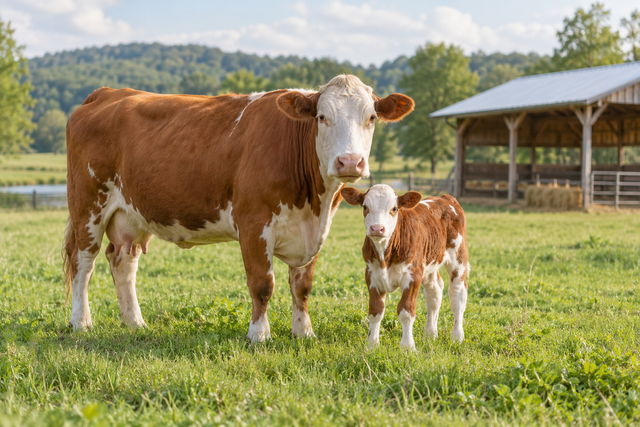
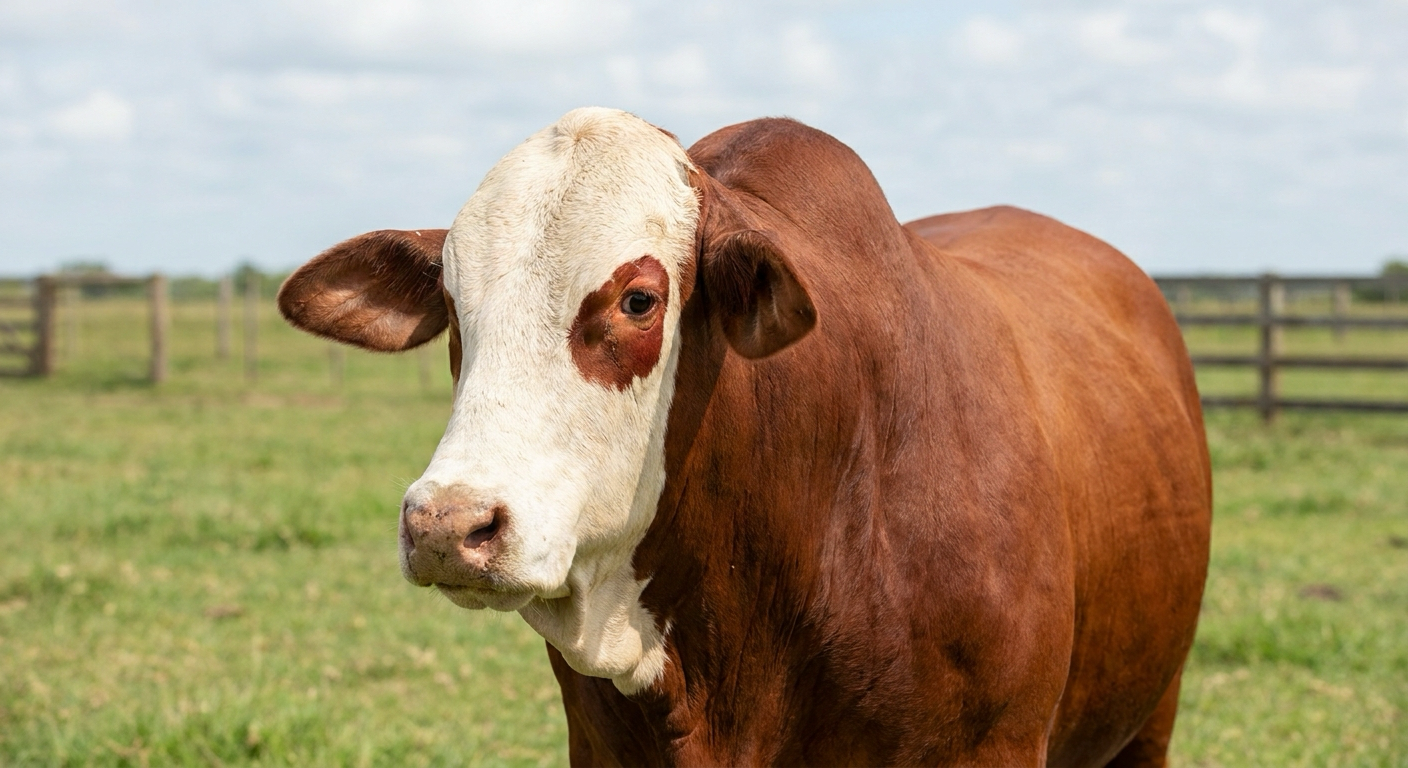
Braford cattle are a beef composite of Brahman and Hereford, bred to combine the Hereford’s red body, white face and beef with Brahman adaptation to hot, humid, tick-prone country. In the United States, United Braford Breeders registers cattle that are 3/8 Brahman and 5/8 Hereford as Braford. The breed was developed independently in Florida and in Queensland, Australia, and both versions are still bred today.
If you are planning a calving season or tracking a bull’s growth, the free Creatures cattle gestation calculator gives a calving date from a breeding date, and the cattle weight calculator turns a heart girth and body length into a weight estimate, both with no account needed.
| Ancestry | Brahman x Hereford composite |
|---|---|
| US definition | 3/8 Brahman, 5/8 Hereford; 32.5 to 42.5 percent Brahman also qualifies (UBB) |
| Australian definition | Brahman characteristics visible, indicative of 1/4 to 3/4 Brahman |
| US registry | United Braford Breeders, formed 1994 |
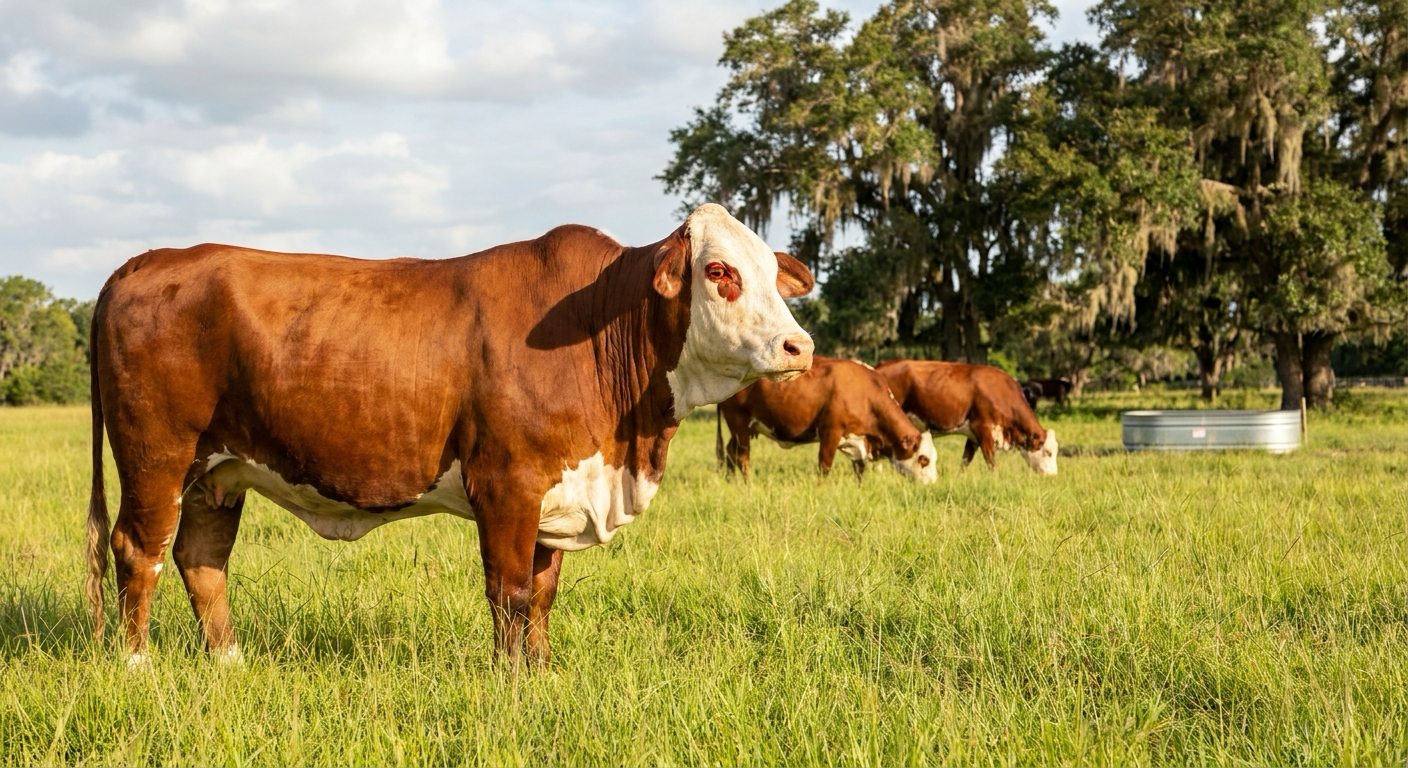
| Look | Red with Hereford-style white face, loose skin and dewlap, often a hump |
| Mature weight (Australia) | Bulls about 750 to 900 kg; cows about 500 to 650 kg |
| Horns | Polled and horned cattle both exist |
| Bred for | Beef cows and bulls for hot, humid or tick country |
Browse listings, public profiles, breeders, or add your animal.
Two origins: Florida and Queensland
In the United States, the breed’s story starts on one ranch. United Braford Breeders’ history of the breed says Alto Adams Jr. began using Hereford bulls on Brahman cows of mainly Partin and Hudgins breeding on his St. Lucie County, Florida ranch in 1947. The calves were good, but the Hereford bulls had serious problems with feet, eyes and general survival in that climate. Adams experimented with different Brahman and Hereford percentages, kept the Braford bulls that sired the calves he wanted, and those cattle became the recognized foundation herd. Adams Ranch held its first registered Braford sale in Fort Pierce, Florida, on December 14, 1979.
Two US registries followed: the International Braford Association, chartered in 1969, and the American Braford Registry, which the American Hereford Association formed in 1985 to breed 3/8 to 5/8 Brafords on modern Brahman and Hereford bloodlines (later the American Braford Association). The two merged on June 1, 1994, to form United Braford Breeders (UBB), which describes itself as the only organization registering Braford cattle in the United States.
In Australia, the Australian Braford Society says Brafords were first developed in 1946, when Brahman genetics were introduced into a Hereford herd in Central Queensland to combat heavy losses from cattle tick and eye cancer. The society was formed in Rockhampton in 1962.
Both stories describe the same problem: Hereford cattle struggling in hot, humid, insect-heavy country, and Brahman genetics brought in to fix it. Braford sits among several Brahman-influenced American composites, including Brangus (Brahman and Angus), Beefmaster, Santa Gertrudis and Simbrah. Compare them on the cattle hub before you settle on one.
What makes a Braford a Braford
The US rules: percentages and generations
UBB’s registration rules define the breed by ancestry, so the paperwork matters as much as the look:
- Braford: cattle that are 3/8 Brahman and 5/8 Hereford. Cattle from UBB’s breeding-up program within 5 percentage points of that mix, meaning 32.5 to 42.5 percent Brahman, are also recognized as Braford.
- Percentage cattle: Brahman and Hereford crosses that do not qualify as Braford, with their percentages printed on the certificate.
- Braford Plus: a Braford or F1 Braford crossed with Angus or Red Angus, for example 3/16 Brahman, 5/16 Hereford and 1/2 Angus.
- Generations: first- and second-generation Brafords are labeled as such on the certificate; third generation and beyond carry no generation label.
Every registered animal must be out of registered parents, be registered by the member who bred it, and carry permanent identification by fire brand, freeze brand or tattoo. If you brand, our cattle brands guide and the free cattle brand designer help you plan a brand that reads cleanly. Applications also record whether the animal is horned, polled or scurred; UBB registers it as horned if the breeder leaves that blank.
Because a Braford’s status depends on its ancestors’ percentages, a written pedigree is the most useful document a seller can give you. The free cattle pedigree chart maker lets you type out a bull’s sire and dam lines and print the chart, and our guide to checking cattle pedigree papers explains what to compare.
The Australian standard: what to look for
The Australian Braford Society standard of excellence is written around appearance. It asks for Brahman inheritance that is evident in the animal, indicative of 1/4 to 3/4 Brahman, and lists the features a buyer can see:
- Braford color with Hereford markings; brindling and excessive freckling disqualify.
- A short, sleek coat and loose, pliable skin with a loose dewlap. A hump is desirable.
- Medium to large ears, straight or drooped.
- Well-shielded eyes, with red pigmentation around them highly desirable. A black nose is undesirable.
- Heavy, smooth muscling, with double muscling a disqualification.
- Polled or dehorned; the society’s FAQ notes that the breed has both polled and horned cattle.
- A moderate sheath in bulls; a pendulous one disqualifies.
The eye pigment point ties back to the breed’s origin: eye cancer was one of the losses the Queensland breeders set out to reduce, and the standard rewards red pigment around the eyes. Look for it when you choose a bull.
Size and performance
The Australian Braford Society’s FAQ gives average mature weights of 750 to 900 kg (about 1,650 to 1,980 pounds) for bulls and 500 to 650 kg (about 1,100 to 1,430 pounds) for cows, with calves averaging 25 to 30 kg (about 55 to 66 pounds) at birth. US cattle in different environments and programs can differ, so ask a seller for the weights of the actual animal and its parents.
UBB frames the breed around moderate, functional cattle for commercial herds in southern production environments, rather than extremes. The Australian society says most of its members have chosen not to use BREEDPLAN, though individuals can still submit data. So, depending on the breeder, performance records may be on paper, in a breeder’s own system or not kept at all. Ask what has been weighed, when, and by what method.
For your own herd, regular weights tell you more than a sale catalog. Use a scale when you can; between scale days, the cattle weight calculator gives a tape-based estimate, and our guide to measuring cattle for weight shows where to put the tape safely.
Breeding, calving and genetic tests
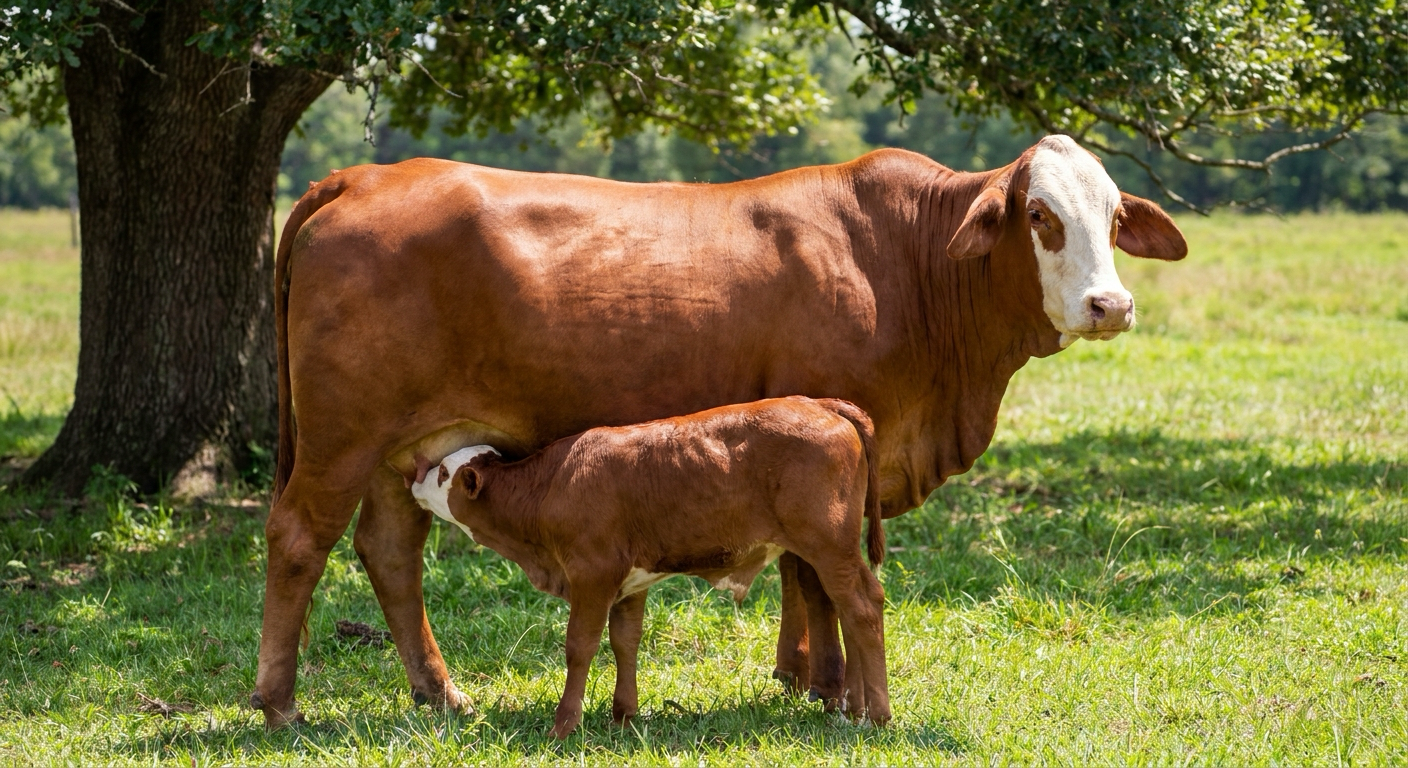
Plan calving with the cattle gestation calculator, and read our cattle gestation guide for why the due date is a window, not a day. The calving guide covers the signs of labor and when to call a veterinarian. A cow that has been straining for a long time without progress needs help now.
Two genetic points come with the Brahman side of the pedigree:
- Pompe disease. Glycogen storage disease type II, also called Pompe disease, is an autosomal recessive disorder documented in Brahman cattle. A 2018 study in Pesquisa Veterinária Brasileira found the E7 mutation in 7.3 percent of 276 purebred Brahmans tested in Brazil. A carrier looks normal; the risk comes from mating two carriers. The Australian Braford Society’s registration guidance includes a section on Pompe disease testing. Ask whether a bull has been tested and record the result with him.
- Composite stability. Breeding Braford to Braford keeps the 3/8 to 5/8 balance; breeding back to straight Brahman or Hereford changes the percentage, and the calves are registered as percentage cattle in the US system. Decide which program you are running before you buy a bull.
UBB registers calves from artificial insemination and embryo transfer, with conditions: out-of-herd AI sires must be AI-permitted and DNA typed, and ET donor cows must be permitted and DNA typed before their calves can be registered. If you plan to buy semen, our bull semen cost guide and cattle AI cost guide cover the numbers.
Buying Braford cattle
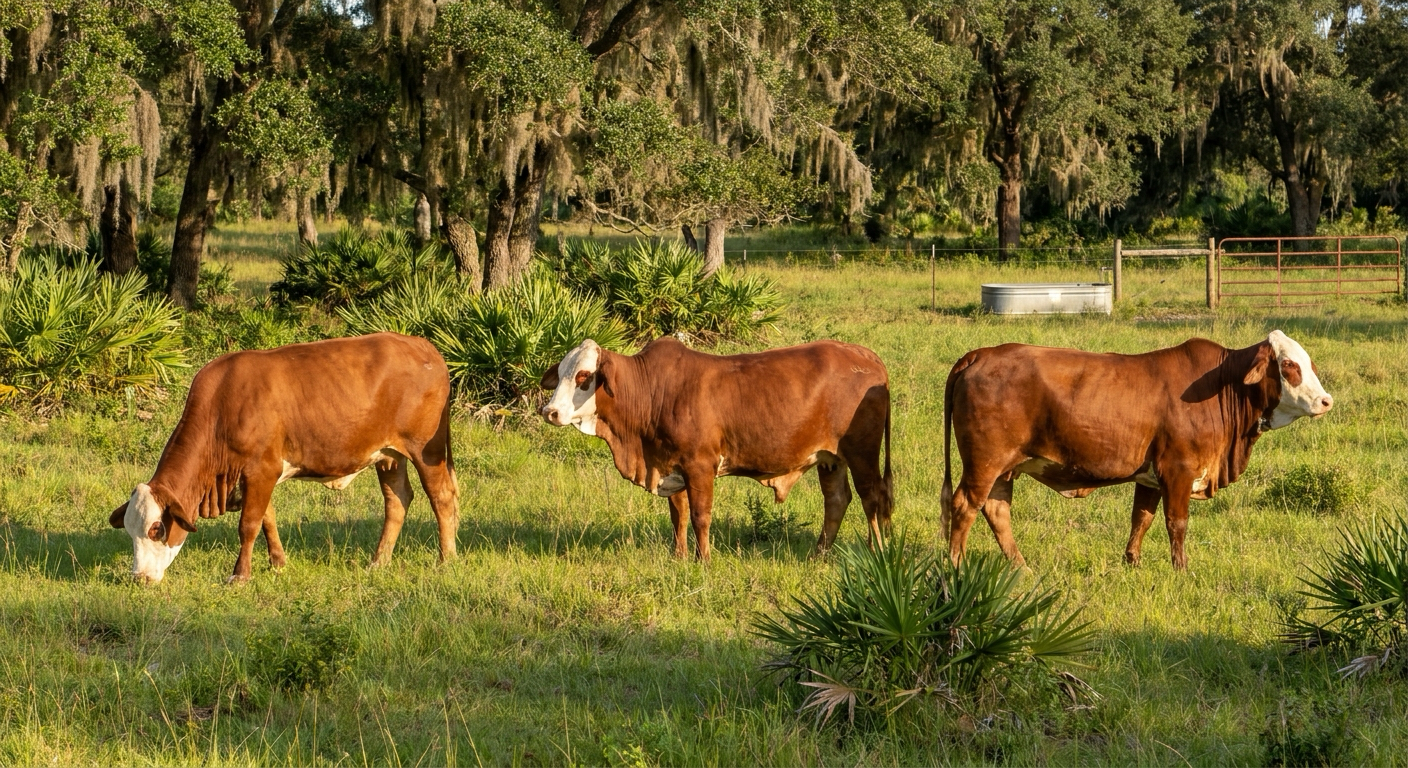
Questions to ask before you buy:
- Is the animal registered with UBB as Braford, percentage or Braford Plus? What generation, and what is its exact Brahman percentage?
- Where are the brand or tattoo, and do they match the certificate?
- Is it horned, polled or scurred, and how is that recorded?
- Has the bull had a breeding soundness exam, and is there a Pompe test result?
- What are the weights of the animal and its dam, and how were they taken?
- What vaccinations has it had? Our cattle vaccination guide explains the usual program, which your veterinarian should set.
- For females, what bull is she bred to, and on what date? UBB rules require sellers to complete the service information on a female’s certificate at transfer.
For price context, our guide to how much a cow costs compares beef breeding stock, commercial cows and calves. Ask several breeders for dated prices on comparable cattle rather than relying on a single number. Once the cattle are home, our cattle record keeping guide covers what to track from breeding to sale, and the cattle fly control guide helps in the humid climates where Brafords are usually kept.
Frequently asked questions
What two breeds make a Braford?
Brahman and Hereford. In the US, United Braford Breeders defines a Braford as 3/8 Brahman and 5/8 Hereford, accepting 32.5 to 42.5 percent Brahman through its breeding-up program.
Who registers Braford cattle?
United Braford Breeders in the United States, formed in 1994 from two earlier registries, and the Australian Braford Society in Australia, founded in 1962.
Are Braford cattle polled?
Both polled and horned Brafords exist. UBB records horned, polled or scurred status on each registration.
How big are Braford cattle?
The Australian Braford Society gives average mature weights of about 750 to 900 kg for bulls and 500 to 650 kg for cows.
Why do Braford breeders value red eye pigment?
The Australian breed was developed partly to reduce eye cancer losses in Herefords, and its standard calls red pigmentation around the eyes highly desirable.
Do this next on Creatures
Braford listings are uncommon, so an alert and a few breeder calls usually come first. Listings and directory entries do not establish registration status, Brahman percentage or health.
Get told when one is listed. Set a Braford listing alert, with no account needed to start. See saving searches and using your watchlist.
Call breeders. Search the breeder directory for cattle operations and ask about registered Brafords. Directory entries are a starting point, not an endorsement.
Browse what is listed. Check Braford cattle on the marketplace, then ask for the evidence above.
Give each animal a profile. Add your Braford with its brand or tattoo and registration number. No account is needed to start; a free account keeps it. See adding an animal to Creatures.
Keep the herd records. Add a record for a breeding, a weight or a test result. The sheet opens for visitors; a free account saves it. See recording a breeding and identification and registration papers.
Raise Brafords? Create your ranch’s profile, no account needed to start, then read getting listed in the breeder directory and creating an organization and adding your team.