






Louie
Cattle
$2,100

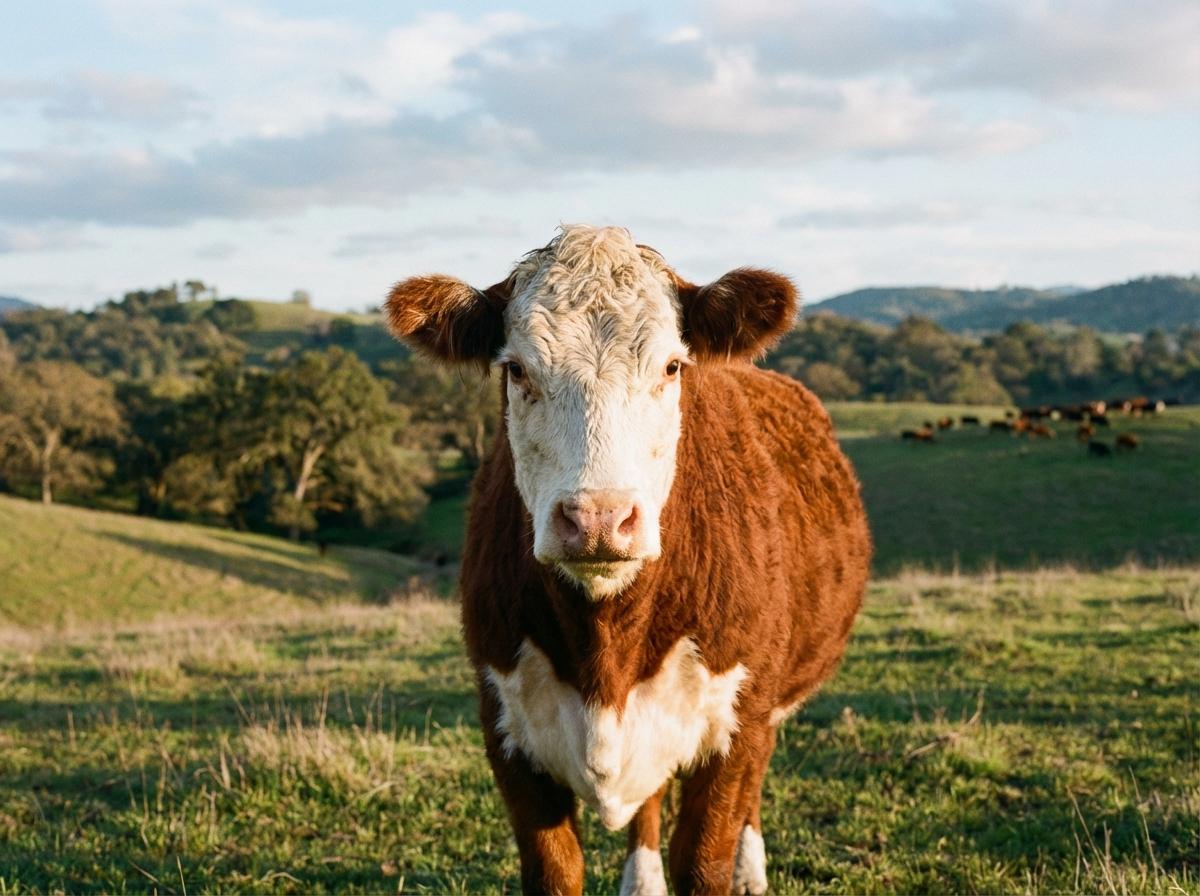
Cattle pregnancy averages 283 days. Enter a date to estimate calving.
| Average used by this calculator | 283 days (about 9.3 months) |
|---|---|
| Window shown by this calculator | 275 to 290 days after breeding |
| Due date formula | Breeding date + 283 days |
| Birth is called | Calving |
| Breed effect | Gestation length varies by breed |
| Calf sex effect | Bull calves tend to have slightly longer gestation |
| Breed | Type | Days used by this calculator | Versus 283 days |
|---|---|---|---|
| AngusUS Angus records (Gilleland et al., 2021) | Beef | 279 | -4 |
| HerefordGeorgia Hereford Association planning chart (2021), page 43 | Beef | 285 | +2 |
| CharolaisCanadian Charolais Association planning chart (2023) | Beef | 286 | +3 |
| LimousinLimousin-sired dairy-cross records (McGuirk et al., 1998) | Beef | 288 | +5 |
| SimmentalSimmental-sired records (Wray et al., 1987) | Dual-purpose | 284 | +1 |
| HolsteinUS Holstein cow records (Norman et al., 2009) | Dairy | 279 | -4 |
| JerseyUS Jersey cow records (Norman et al., 2009) | Dairy | 280 | -3 |
| BrahmanApproximate Bos indicus preset (Thomas and Locke, 2018) | Beef | 292 | +9 |
| HighlandHighland Cattle Society handbook (2021), page 18 | Beef | 280 | -3 |
These planning presets combine different study populations and association date charts, not one comparative trial. Sire-breed studies may describe crossbred calves. Windows are planning settings, not clinical limits.
A breeding date gives an estimate, and gestation length varies by breed and calf sex. Use the breed option when you know the breed, then plan checks with your veterinarian.
Signs develop at different times; watch for progress rather than treating one sign as a due date.
| Breeding date | The calculator starts its estimate from the date you enter. |
|---|---|
| From day 28 | NDSU says ultrasound or a blood antigen test can diagnose pregnancy after the last possible breeding. |
| Around day 40 | NDSU says transrectal palpation usually needs about 40 or more days after breeding. |
| Days 275 to 290 | This calculator shows its Calving Planning Window around the 283-day average. |
This cattle calculator uses a 283-day average after breeding. Nebraska Extension calls 283 days common for most breeds, while actual gestation varies by breed and calf sex.
Enter the breeding date above. The calculator adds its 283-day average and shows a 275 to 290 day Calving Planning Window, then adjusts the estimate if you select a supported breed.
Yes. Nebraska Extension says gestation varies by breed. The breed table on this page shows the exact day count the calculator applies for each breed and links its source; some are study averages, others are association planning charts.
The University of Minnesota advises intervention if stage one exceeds six hours without progress, or if a cow makes no clear progress for 30 minutes in stage two. Its threshold for a heifer in stage two is 60 minutes. Call your veterinarian for help.
The single due date uses the exposure midpoint as a reference. The planning window runs from the first exposure date plus the minimum gestation setting to the last exposure date plus the maximum. These are planning estimates, not clinical limits.
Male (+1 day) and twin (-4 days) adjustments approximate contrasts in dairy-cattle studies, not individual predictions. The first-calf setting (-1 day) approximates dairy parity differences summarized by LIC. These adjustments have not been validated together for every breed.
For embryo transfer, enter the transfer date and select the documented embryo age in days to subtract; morphology stage codes are not ages. Ask your veterinarian to confirm the appropriate inputs.
Reviewed by Elliott Garber, DVM · Last reviewed



