Cattle Artificial Insemination: How to AI a Cow, Heat Detection and Timing
Author: Elliott Garber, DVM · Published
Cattle artificial insemination (AI) means placing thawed frozen semen from a chosen bull into a cow or heifer during her heat, so she can conceive without that bull on the place. Whether it works comes down to four things you control: cows in good enough condition to cycle, heat detection, timing, and semen handling by a trained inseminator. Once a cow is bred, put the service date into the free cattle gestation calculator to see when that calf is due.
Sources checked November 14, 2026. The timing rules and heat signs below come from the Merck Veterinary Manual and from university extension work in Missouri, Oklahoma, South Dakota and Pennsylvania. This guide plans the program. It does not teach the insemination technique and gives no synchronization drugs or doses: learn the technique hands on at an AI school, and set any synchronization protocol with your veterinarian.
If you already know how cows act in heat, our cow heat cycle guide covers the cycle in detail. This page puts heat detection to work in a full AI season, from getting cows ready to recording which straw went into which cow.
| Surest heat sign | She stands still when other cattle mount her |
|---|---|
| Heat length | About 18 hours on average, ranging from 8 to 24 (University of Missouri) |
| Watching for heat | About 30 minutes at least twice a day, early morning and last light |
| When to breed | 12 to 18 hours after standing heat starts with conventional semen (the AM/PM rule) |
| Sexed semen | Later: about 18 to 24 hours after standing heat starts |
| After thawing | Use the straw right away; SDSU says deposit within 15 minutes |
| After breeding | Avoid moving cows from day 4 to day 42; watch for a return to heat |
| Who sets drugs and protocols | Your veterinarian, never a borrowed schedule |
Is AI the right call for your herd?
AI gives you bulls you could never buy or keep. Merck’s breeding-programs chapter puts it in two lines: AI offers “a selection of bulls with known genetic potential” and carries “less risk of disease transmission than with the introduction of new bulls to the farm.” It also says AI is far more common in dairy than in beef herds, because handling and labor cost more on a beef operation.
That labor is the honest trade. Oklahoma State’s AI fact sheet warns that if any part of management slips, conception falls enough to “cancel many of the benefits the technique offers.” Nutrition, health, facilities and the person reading heats all have to hold up at once. A bull does his own heat detection. With AI, you do.
Run the money before the season, not after it. Our cattle AI cost guide works through cost per pregnancy, technician fees and synchronization, and the bull semen cost guide covers what a straw sells for. Many herds AI the heifers or a top group of cows and let a cleanup bull cover the rest.
Get cows and heifers ready before the season
Cows have to be cycling before AI can work. The Oklahoma State heat detection test counts a beef cow as eligible only once she is at least 50 days past calving, free of reproductive problems and in adequate body condition. A thin cow or one that calved late in the season is a poor bet for the first AI pass, whatever semen goes in.
Heifers need size as well as age. Merck says to breed heifers by size and age at puberty, at about 65 to 70 percent of projected mature body weight. The Oklahoma State fact sheet expects a high share of replacement heifers to be cycling at about 13 to 14 months and 65 percent of mature weight. Weigh them rather than guess: the cattle weight calculator gives a tape estimate between scale days. Some herds develop heifers to lower weight targets; our sister guide on breeding heifers compares them and covers heifer development in detail.
Then work down the SDSU Extension AI checklist before the first heat:
- Inventory your semen and plan which bull goes on which cow or heifer.
- Check the liquid nitrogen level and book a refill before the season starts. Our frozen semen storage guide covers tank care and straw handling.
- Write down which canister each bull’s straws sit in.
- Plan prebreeding vaccinations with your veterinarian (our cattle vaccination guide explains the stages) and a breeding soundness exam for any cleanup bull.
- Body condition score the cows and adjust rations to hit your target.
- Set up facilities so cattle can be handled more than once without stress.
A breeding box or chute you can work quietly matters more than it sounds. The cattle chute guide covers layouts that keep a cow calm.
Who does the insemination
AI is a hands-on skill. Oklahoma State says supervised training is essential, because without it “valuable AI equipment and semen could be seriously damaged,” and because poor technique risks injury to the cow and to you. Semen companies run AI schools that cover three things: insemination technique on live cows, semen handling and thawing, and reproductive management.
When you choose a school, the same fact sheet lists the National Association of Animal Breeders’ recommended minimums: six hours of live cow practice over at least three sessions, at least two cows per student per course with access to ten or more practice cows, and no more than eight students per instructor. A school is only the start. Newly trained people, the fact sheet notes, usually see lower conception rates until they have bred a good number of cows, and regular practice keeps the skill.
Semen placement is where inexperience shows. Oklahoma State reports that dye studies found up to 70 percent of cows were inseminated in the wrong place. That is why many herds hire a trained technician for at least the first seasons. Compare a technician’s fee with the cost of open cows while you learn, then decide.
Heat detection sets your conception rate
Merck states it flatly: “Failure to detect estrus is a major reason for unsuccessful AI.” The Oklahoma State fact sheet calls detection the most limiting factor in an AI program. You can buy the best bull in the tank, but a straw put into a cow at the wrong time is wasted.
The University of Missouri’s estrus detection guide (reviewed July 2026) gives the numbers you plan around. Standing heat lasts about 18 hours on average, ranging from 8 to 24 hours. It returns every 17 to 24 days, depending on the cow, and ovulation comes about 30 hours after standing heat begins.
What to look for
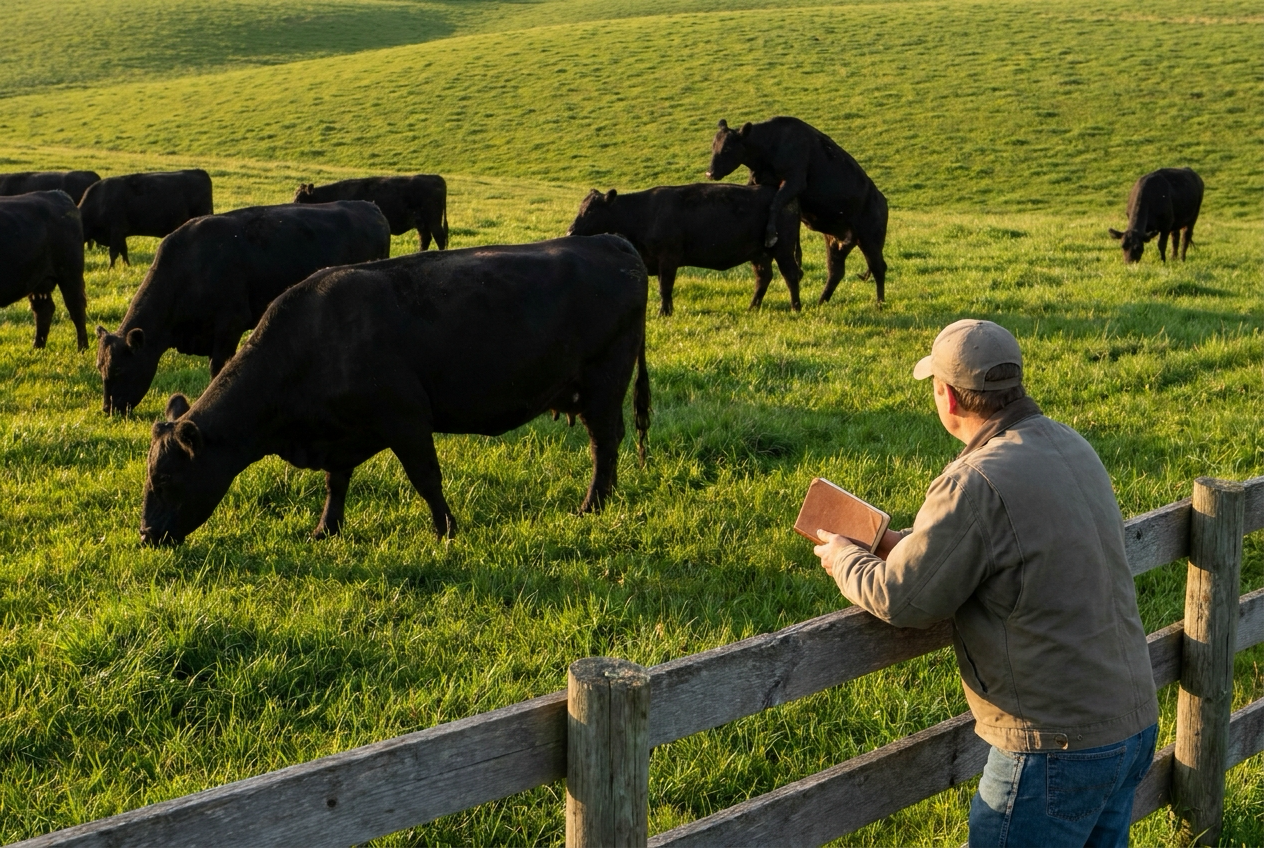
The surest sign is a cow that stands still while other cattle mount her. Extension specialists at Oklahoma State list secondary signs that tell you a cow is coming into heat or just went out of it:
- She mounts other cows, even when neither will stand.
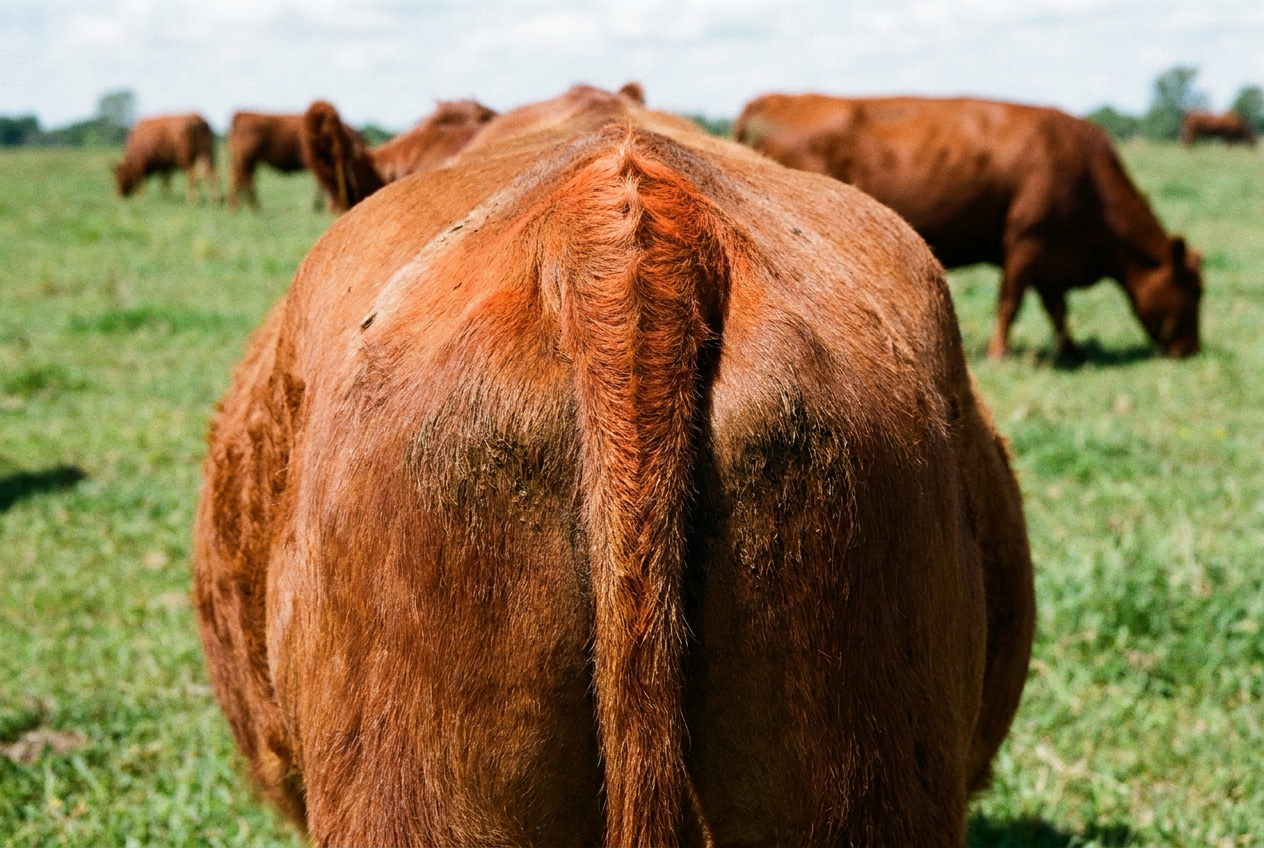
- Her tailhead hair is roughed up or her rump is muddy from being ridden.
- She is restless: bawling, pacing the fence, head-butting, sniffing or licking other cattle.
- Clear, stringy mucus hangs from the vulva or is smeared on her rump or pin bones.
Penn State Extension adds that mucus alone should not be used to call a heat. Bloody mucus often appears two to three days after heat, the Oklahoma State sheet adds. Note it and watch that cow closely 17 to 21 days later.
When and how long to watch
Watch the cattle carefully for about 30 minutes at least twice a day, and more often when you can. SDSU’s checklist gives the same 30 minutes twice daily. The best times, per Oklahoma State, are early morning and the last daylight in the evening. Watching at the feed bunk does not work well, because hungry cattle care more about feed than about each other.
The hardest part is the clock. Oklahoma State reproduces Cornell data showing when cows show heat signs:
| 6 a.m. to noon | 22 percent of cows |
|---|---|
| Noon to 6 p.m. | 10 percent |
| 6 p.m. to midnight | 25 percent |
| Midnight to 6 a.m. | 43 percent |
Many of the cows that stand overnight show secondary signs at the previous evening’s check, which is one more reason the last-light look matters.
Heat detection aids
Aids help you catch the heats that happen while you sleep. They support watching; they do not replace it.
- Tail chalk or paint. Oklahoma State describes a strip two to three inches wide along the tailhead, rubbed and ruffled forward when a cow has been ridden. It is cheap. Missouri notes it works better in dairy settings than on big beef pastures.
- Pressure-activated detectors. Missouri says Kamar detectors need about three seconds of pressure from a mounting animal to change color, and Estrotect-type scratch patches need several mounts; count a cow in standing heat when more than half the coating is gone. Low branches and rubbing posts can cause false reads.
- Marker animals. The Oklahoma State fact sheet describes chin-ball markers worn by a marker animal, which leave streaks on cows that were mounted.
Check your own detection rate
Heat detection rate, in the Oklahoma State definition, is the share of eligible cows you actually see in heat, and 80 to 85 percent should be achievable. Its 24-day test is simple: list the eligible cows, record every heat for 24 days, then divide cows seen in heat by cows eligible. Seeing 15 of 50 is 30 percent, too low for good AI results. Seeing 40 or more of 50 means a good AI program is possible.
The second check uses your records. Divide 21 days by the average interval between recorded heats. An average of 25 days gives 21/25, or 84 percent. Both checks only work if every heat goes into a record the day you see it.
When to breed: the AM/PM rule
Sperm need time in the cow before they can fertilize, so you breed before ovulation, not at it. Missouri recommends AI about 12 to 18 hours after standing heat starts with conventional semen. Merck puts the best window between the last half of standing heat and 6 hours after it ends.
In practice that becomes the AM/PM rule. Merck and SDSU both use it: a cow first seen standing in the morning is bred that afternoon or evening, and a cow first seen in the afternoon or evening is bred the next morning.
| First seen standing in the morning | Breed that afternoon or evening |
|---|---|
| First seen standing in the evening | Breed the next morning |
| Conventional semen | About 12 to 18 hours after standing heat starts (Missouri) |
| Sexed semen | About 18 to 24 hours after standing heat starts (Missouri) |
| Irregular checks | Breed soon after you see standing heat (Penn State) |
Sexed semen goes in later because, Missouri explains, it has a shorter fertile life in the reproductive tract. Penn State’s advice for herds that cannot check heats regularly is to breed as soon as they see standing heat.
Heat detection or fixed-time AI
Synchronization uses a veterinarian-planned series of treatments to bring a group into heat close together. SDSU’s checklist covers both routes. With heat detection after synchronization you still watch and breed by the AM/PM rule. With fixed-time AI, the whole group is bred at a set hour, and the protocol, not a sighted heat, sets the timing.
Merck notes that a fixed-time approach reduces how much you depend on spotting heats. Synchronization also shortens the number of days you need to watch, according to Oklahoma State. SDSU’s checklist notes that insemination timing differs under fixed-time protocols and when using sexed semen.
Choose and run a protocol only with your veterinarian. This guide does not name products, drugs or doses, and you should not borrow another herd’s schedule. The plan depends on whether you are breeding cows or heifers, their condition and the semen you use.
Breeding day: a calm cow and careful semen
Most of breeding day is preparation and handling. SDSU’s checklist puts the nitrogen tank, thawing setup and breeding kit near the cow and out of direct sunlight, and brings the cow up with low-stress handling. Identify the mating, then find that bull’s straw using your inventory sheet.
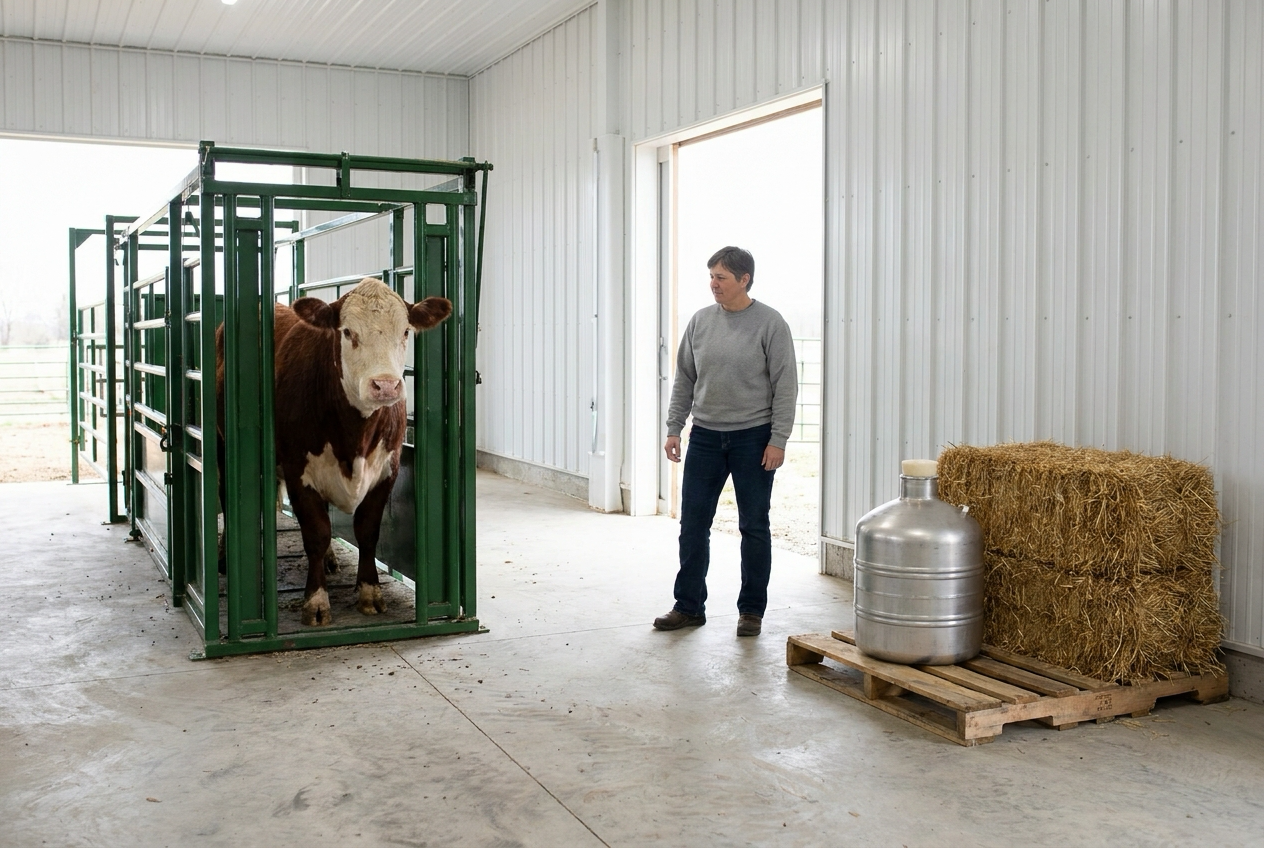
Thawed semen does not wait. Merck says sperm “do not survive for long after thawing,” so the semen should be used straight away, thawed quickly without overheating and handled the way the AI center recommends. SDSU’s checklist thaws straws in 94 to 98 degrees F water for at least 45 seconds, protects them from sun and temperature swings, and deposits the semen within 15 minutes. Follow the semen supplier’s own thawing instructions and what your AI school taught you; they can differ by product.
After breeding, SDSU’s checklist says to check the bull information printed on the straw, write it in the breeding record and update the tank inventory. That one habit links every calf back to its sire. It also tells you which bull to reorder and which canister is running low.
After breeding: protect the pregnancy and plan calving
SDSU advises moving cows within 4 days of breeding or waiting until 42 days after, to cut the risk of early embryo loss. Plan pasture moves and shipping around that window.
Watch every bred cow for a return to heat about one cycle later. Missouri’s 17 to 24 day cycle range is your watch window. A cow that comes back into heat was not settled: rebreed her or let the cleanup bull cover her, and record the date either way. Our sister guide on the cattle pregnancy check covers confirming who caught and when to check.
Enter each service date into the cattle gestation calculator to see the expected calving date. It uses 283 days by default and shows a planning window. The cow gestation chart explains breed differences. Planning the herd’s whole calendar is the subject of our sister guide on the calving season, and the calving guide covers the birth itself and when to call your veterinarian.
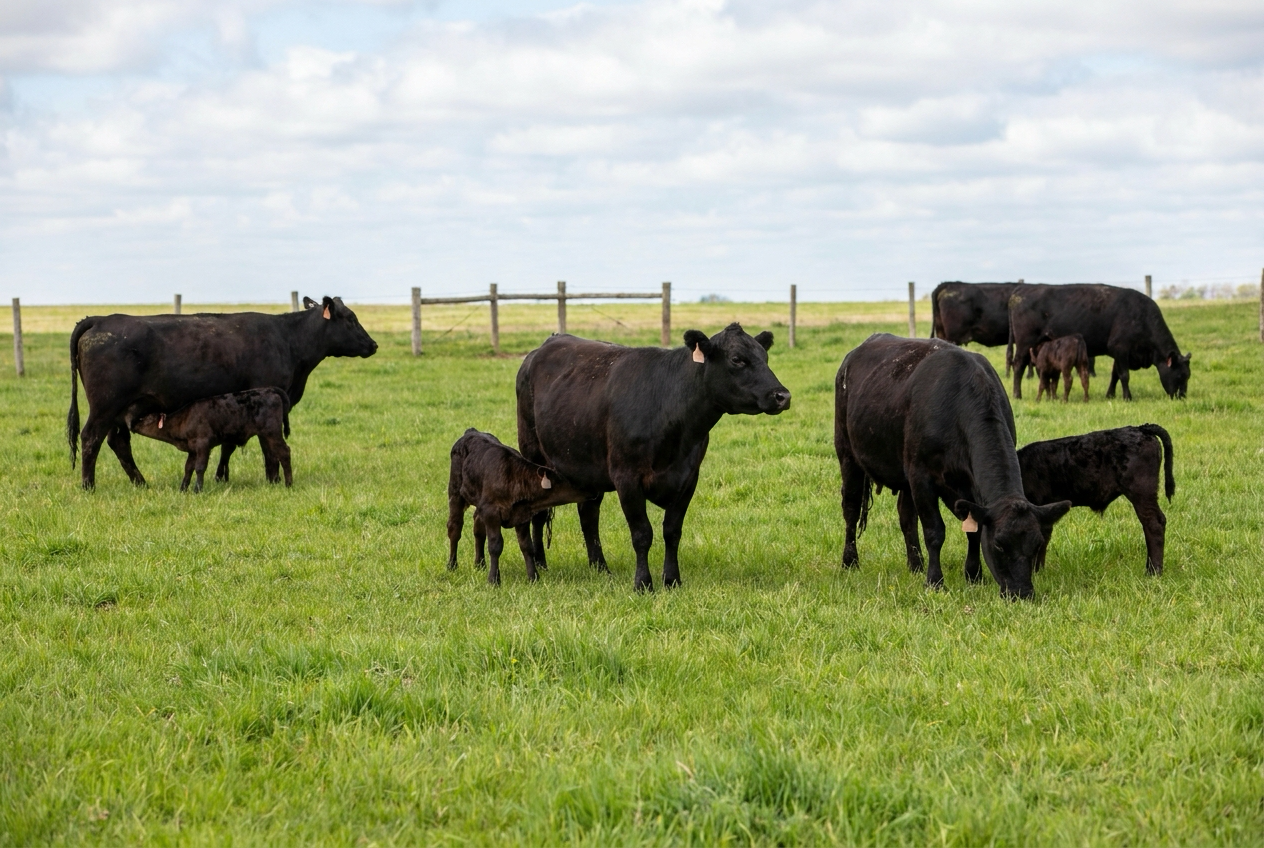
Choosing the next bull is easier with sire data in hand. Our sister guide on cattle EPDs explains expected progeny differences, and checking cattle pedigree papers covers registration and parentage.
Recording AI breedings on Creatures
An AI season produces a lot of small facts that matter later: who was in heat and when, which straw went into which cow, who came back into heat, and who was confirmed. Creatures keeps them on each animal’s record, so a calf’s sire, dam and breeding date stay together. The calculator works without an account. Saving records needs a free account.
Here is how the season looks on Creatures:
- Add each cow or heifer with her ear tag or other identifiers. How to add an animal shows the fields.
- Log heats as you see them. The Breeding and Reproduction record has an Estrus and Heat Tracking category, so your 24-day detection test and heat intervals come from dated entries, not memory.
- Record the breeding. Choose the Artificial Insemination category, set the service date, and pick the sire from Creatures or type his name if he is not on the platform. Turn on “Track due date and reminders” and Creatures projects the calving date. Recording a breeding walks through it.
- Link the straw. If you keep your tank in the Genetics inventory, you can tie the straw you used to the breeding, so the sire and the straw stay connected.
- Breed a group at once. After a synchronized or fixed-time day, the herd breeding page records many females together, with a due-date override if you need one.
- Follow up. Log the pregnancy check as Pregnant, Open or Not sure. The Breeding dashboard shows who is due soon or overdue, and the projected reminders are the same ones you see in Care. Breeding reminders explains what Creatures schedules for you.
Care also includes starter protocols for preseason cattle breeding and estrus synchronization of cows and heifers, for use with your veterinarian’s plan. A starter is a scheduling template, not a treatment recommendation. Your veterinarian decides what your herd uses.
Two limits are worth knowing. Creatures does not have an EPD tracking screen, so keep a bull’s EPD sheet on his record as a document if you want it alongside the breeding. And recording a breeding, a sire or a registration number on Creatures does not register a calf or certify parentage: the breed association does that. The cattle pedigree chart maker builds a free pedigree chart from the ancestors you enter, which helps when you plan a mating, and pedigrees and lineage explains how family links work on a profile. For what else to keep through the year, see our cattle record keeping guide. The cattle hub has every cattle guide.
Cattle AI questions
How do you AI a cow?
A trained inseminator performs the insemination itself; it is a hands-on skill learned on live cows at an AI school. Your part is to spot standing heat, coordinate the timing with the inseminator using the AM/PM rule above, and record the service date and sire once she is bred. Oklahoma State reports that dye studies found up to 70 percent of cows inseminated in the wrong place, which is why the procedure belongs with someone trained.
How long after a cow is in heat should she be bred?
With conventional semen, about 12 to 18 hours after she first stands to be mounted, which is the AM/PM rule. With sexed semen, Missouri suggests about 18 to 24 hours. If you cannot check heats regularly, Penn State says to breed soon after you see standing heat.
Can I artificially inseminate my own cattle?
Yes, many producers do after attending an AI school. Conception rates are usually lower while you are learning, and regular practice keeps them up. Some herds hire a technician until the owner has bred enough cows to be consistent.
What is a good AI conception rate?
Rates vary widely with heat detection, cow condition, semen handling and the inseminator, so treat any single number with caution. Track your own herd: count cows confirmed pregnant to each AI service. Our cattle AI cost guide shows how the rate turns into cost per pregnancy.
How long can semen sit after thawing?
Not long. Merck says to use it immediately after thawing, and SDSU’s checklist deposits it within 15 minutes.
Do I still need a bull?
Many beef herds run a cleanup bull after one or two AI passes to cover cows that did not settle. If you do, SDSU’s checklist includes a breeding soundness exam for him before the season, and records tell you later which calves are AI calves and which are his.
Do this next on Creatures
Start with the cows you are breeding this season, then the breeding records, then the farm.
- Add your cow or heifer with her ear tag and breeding history. Guest signup can start in this flow. How to add an animal shows the fields.
- Record a heat or an AI breeding with the sire and service date. The form opens for visitors; a free account is needed to save it. How to add a record explains each step.
- Create your ranch’s profile so the herd, the people who check heats and your breeding records sit under one farm. Getting listed in the breeder directory explains the public profile.
- Save a cattle listing search if you are looking for replacement heifers or a cleanup bull, and get an email when matching listings appear. Saved searches and your watchlist explains the alert.
- Browse cattle listings to compare animals for sale. What is listed changes from week to week.
- Browse the breeder directory to find cattle programs rather than a single animal.