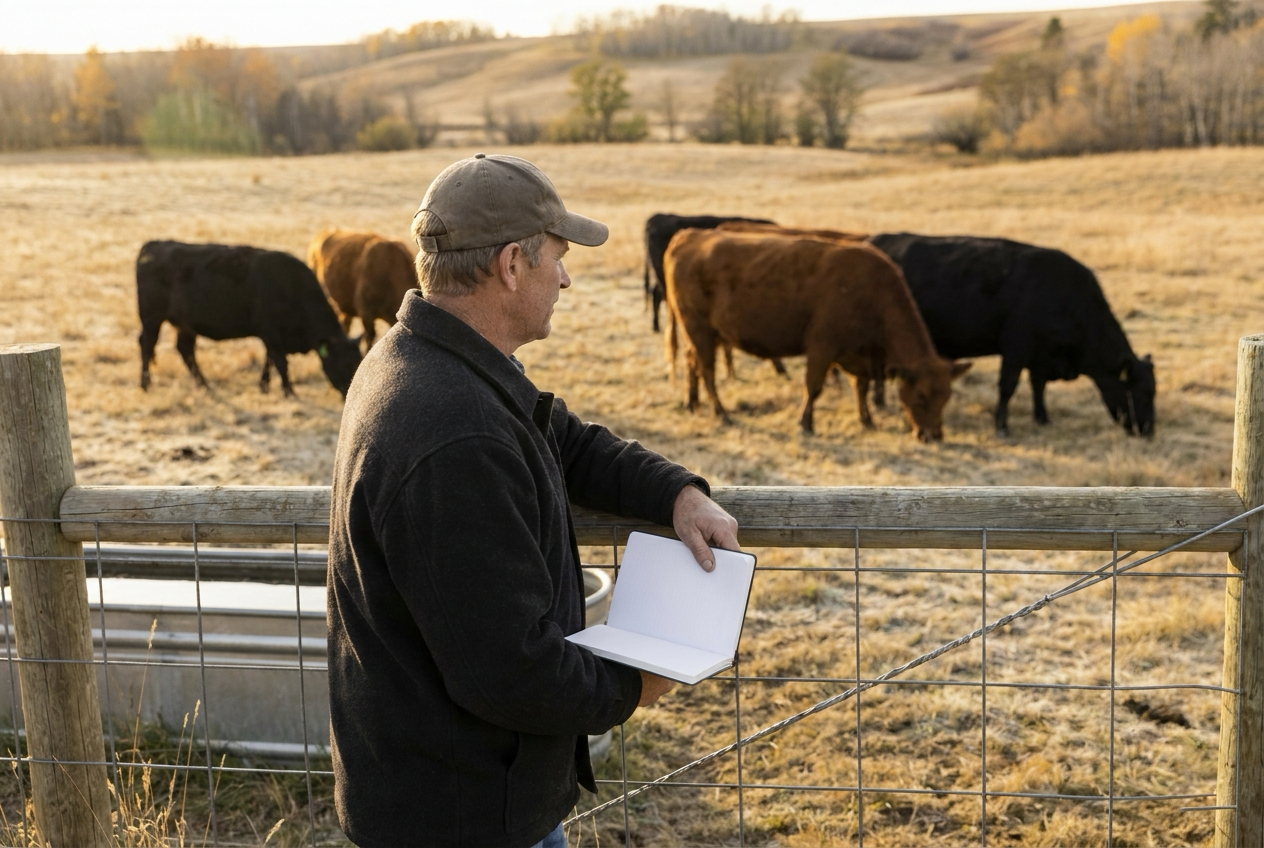
Cattle Pregnancy Check: Palpation, Ultrasound and Blood Tests for Cows
Author: Elliott Garber, DVM · Published
A cattle pregnancy check is done one of three ways: rectal palpation by a veterinarian from about 35 to 40 days after breeding, transrectal ultrasound from about 28 days, or a blood test for pregnancy-associated glycoproteins (PAG) from about 28 days in cows, once she is far enough past her last calving. Looking at a cow, or noticing that she has not come back into heat, is a clue rather than a confirmation. Once the check says pregnant, the cattle gestation calculator turns the breeding date or the bull exposure window into a calving date.
Sources checked November 14, 2026. This guide covers methods, timing and records. Palpation, ultrasound and blood sampling are done by your veterinarian or a technician they trust, and decisions about open cows, resynchronization and abortion investigations belong with that veterinarian. Nothing here is a drug dose or a hormone protocol.
Why check at all? University of Georgia Extension’s pregnancy diagnosis bulletin puts it plainly: an open cow costs as much to keep for a year as a bred one and returns no calf. Knowing which cows are open lets you sell or rebreed them on your schedule, sort the bred ones by expected calving date, and feed each group for what it actually is.
| Rectal palpation | From about 35 days (Wisconsin) to 40 days or later (Georgia), depending on the examiner |
|---|---|
| Ultrasound | From about day 26 in heifers and day 28 in cows; most herds book 30 to 35 days or later |
| Blood test (PAG) | From about day 25 in heifers and day 28 in cows, and 60 to 90 days or more after calving |
| Fetal sex | Ultrasound only, from about 55 to 60 days, best between 60 and 90 |
| Beef herd timing | Merck suggests 45 to 60 days after the breeding season ends |
| Not proof alone | No return to heat, a bigger belly or a filling udder |
| Record | Cow ID, exam date, method, result, estimated stage, who checked |
How to tell if a cow is pregnant without a test
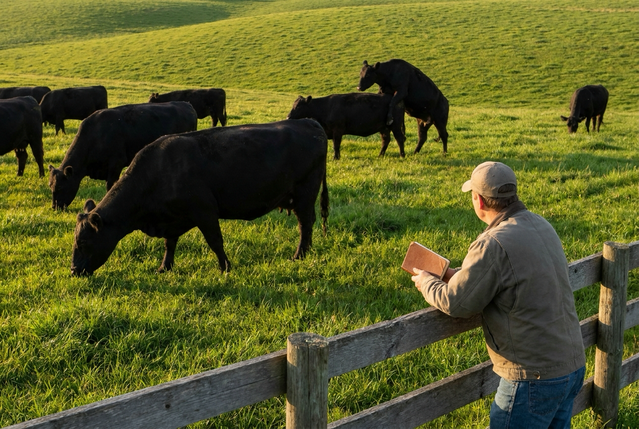
The oldest sign is that she does not come back into heat. A cow cycles about every three weeks, so University of Wisconsin Extension treats the absence of heat every three weeks as evidence that she conceived, but it adds that failing to see heat is not enough to confirm pregnancy on its own. Heats get missed, especially at night and in large pastures, and some cows stop cycling for reasons that have nothing to do with a calf. The cow heat cycle guide covers what to watch for after breeding.
A late return is worth writing down. Kansas State’s pregnancy loss bulletin says an interval of 30 days or more from breeding to the next heat indicates that embryonic death has occurred, and that bull activity in the breeding pasture can seem to pick up when it should be tapering off.
Belly size, a filling udder and a relaxed tailhead are late-pregnancy changes. They tell you a cow is getting close to calving (the calving guide covers those signs), not whether a cow bred last month caught. Fat cows and big-framed cows fool experienced eyes, so use these signs to plan a check, not to replace one.
Three ways to preg check cattle
Every method below needs a trained person and a safe way to restrain the cow. Ask your veterinarian which method fits your herd, the time since calving and what you need to learn beyond pregnant or open.
| Palpation result | At the chute; pregnant or open, plus a broad stage estimate |
|---|---|
| Palpation limits | Depends on examiner skill; no fetal sex; harder in fat cows |
| Ultrasound result | At the chute; live embryo, twins, fetal age and, later, sex |
| Ultrasound limits | Needs equipment and an experienced operator; very early scans miss more |
| Blood test result | Usually from a lab, about a day or more after sampling |
| Blood test limits | No fetal age or sex; recently calved cows can test falsely pregnant |
Rectal palpation
The veterinarian feels the uterus and its contents through the rectal wall. Wisconsin Extension says skilled veterinarians can diagnose pregnancy beginning about 35 days after breeding, and that accuracy comes with experience. Georgia’s bulletin puts the range at 40 to 60 days after breeding, depending on the examiner, and recommends waiting at least 40 days after bull removal before a palpation check.
Palpation gives you an answer at the chute, and the same exam lets the veterinarian assess the uterus and ovaries. It estimates fetal age only broadly and cannot tell you fetal sex. Wisconsin notes that cows with a lot of pelvic fat are harder to palpate.
Transrectal ultrasound
An ultrasound probe shows the embryo or fetus on a screen. Georgia gives day 26 in heifers and day 28 in cows as the earliest accurate diagnosis, while noting that commercial exams are usually booked no earlier than 30 to 35 days, because scanning earlier raises the risk of calling a pregnant cow open. The Merck Veterinary Manual says ultrasound can identify open cows earlier, at 28 to 32 days after breeding.
Ultrasound can show what palpation cannot. Wisconsin lists dead embryos, twins, ovarian problems and uterine changes. It also gives the most accurate fetal age, which Georgia says holds up to about day 100 of gestation, after which the fetus is too large for the image. Fetal sex can be read from about 55 to 60 days (Wisconsin) and is most reliable between days 60 and 90 (Georgia). If you sell bred heifers by calf sex, or you need to separate AI from bull-bred pregnancies, that timing matters when you book the scan.
Twins change the picture. Wisconsin notes that twins lower the reliability of a positive call and that pregnancy loss is about three times higher in cows carrying twins than in those carrying one calf.
Blood pregnancy test for cattle
A blood test measures pregnancy-associated glycoproteins, proteins the placenta releases into the cow’s blood. Merck says their concentration rises quickly between days 24 and 28 of gestation. Georgia notes that commercial labs accept samples from about 25 days after breeding in heifers and 28 days in cows, and that cows must be at least 60 to 90 days past calving, depending on the test, because PAG from the last pregnancy can linger and give a false positive. Follow the specific lab’s instructions on both limits.
Georgia reports true-positive rates of 98 to 99 percent with false positives of 1 to 5 percent. Errors come from mislabeled tubes, poor sample handling, sampling too soon after calving, and embryos lost before the sample. Kansas State adds that a blood test cannot distinguish a live pregnancy from embryonic loss that happened shortly before the sample, and Merck notes that PAG results often benefit from confirmation by a veterinarian.
Most blood tests go to a laboratory: Wisconsin estimates 24 to 36 hours from sample to result, so open cows are sorted after the herd is back out, not at the chute. You also get no fetal age or sex. The trade is that sampling can fit into a day you are already handling cattle, and your veterinarian can show you how samples should be taken, labeled and shipped for the test they prefer. In dairy herds, Wisconsin also describes milk PAG tests, which run at lower levels than blood tests and have their own timing after calving.
When to preg check cattle
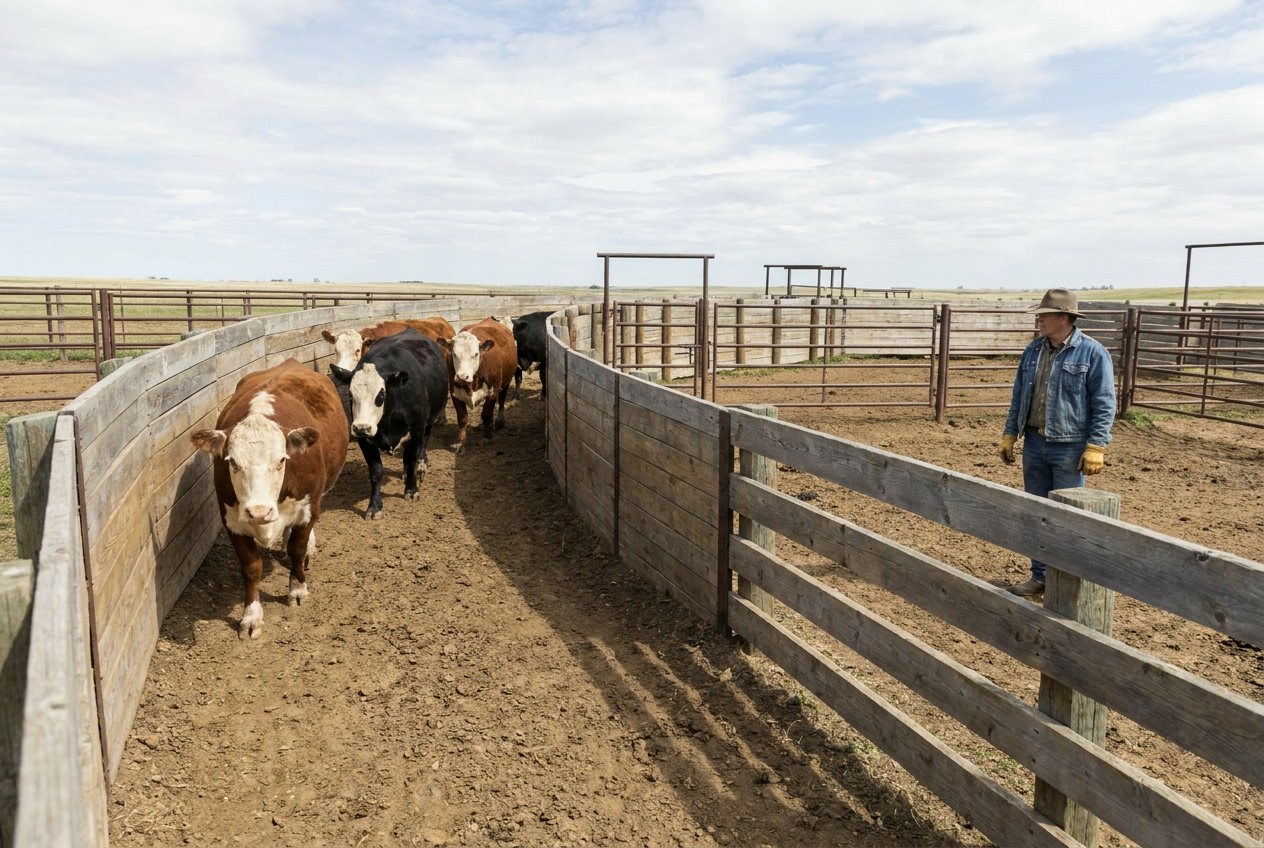
The answer depends on how you bred. Merck suggests checking beef cows shortly after the breeding season, about 45 to 60 days after it ends, and an early ultrasound check about 50 days after the season starts when cows seem to be returning to heat or a bull problem is suspected. Georgia’s bulletin breaks it down by breeding system:
- Bulls only, one breeding season: ultrasound or blood tests can start 28 to 30 days after the bulls come out; palpation should wait at least 40 days.
- AI followed by cleanup bulls: turn bulls in no sooner than 10 to 14 days after AI so the two kinds of pregnancy stay distinguishable, and make the final check at least 30 days after the bulls are removed. With a season of 60 days or less, one ultrasound check about 30 days after the season ends (around 90 days after AI) can separate AI-sired and bull-sired pregnancies by fetal age.
- Staging calving groups: Kansas State suggests timing the check so pregnancies can be staged accurately, usually within 100 days of the start of the breeding season. Late-bred cows can still be sold as bred, which Kansas State notes is worth more than selling them open.
Dairy herds check each cow on her own schedule after service. Your veterinarian sets the herd-check routine, the earliest check and any recheck.
Plan the day around the cattle. Quiet handling through a well-built facility (the cattle chute guide covers the equipment) makes a palpation or scan faster and safer for everyone. Check that every cow’s ear tag is readable before she reaches the chute, because a result attached to the wrong cow is worse than no result. If you are synchronizing and breeding by AI, the cattle artificial insemination guide covers that side, and breeding heifers covers first-calf timing.
What to do with the result
Pregnant. Put the expected calving date on her record. With a known AI or hand-mating date, the cattle gestation calculator uses an average of 283 days and shows a window of 275 to 290 days after breeding, with breed, calf sex and first-calf heifer settings. For pasture-bred cows, enter the bull exposure window, or use the veterinarian’s fetal age estimate. Group cows by expected calving date so late-pregnancy feeding and the calving watch match each group; the cow gestation chart and the calving season guide cover that planning. Highland breeders can use the Highland cow gestation calculator.
Open. Decide with your veterinarian whether to cull her, resynchronize and rebreed her, or examine her further. Georgia notes that cull cows make up 15 to 30 percent of sales revenue in many cow-calf operations, so when you sell matters. A high share of open cows is a herd problem worth a veterinary workup (bull fertility, nutrition, disease), not just a list of cows to ship.
Not sure. Book a recheck rather than guessing. An early scan or a borderline blood result is a reason to look again, not to record a firm answer.
A pregnant result can still change
Kansas State’s bulletin says cows diagnosed early, at 30 to 60 days, will show more embryonic loss than cows checked around weaning, and calls that normal attrition, not a result of the exam itself. It treats fewer than 2 percent lost between a weaning-time diagnosis and calving as a normal level. If you find an aborted fetus, or a cow called pregnant fails to calve, record at least the date and the cow’s ID and call your veterinarian about what to collect for the diagnostic lab.
The same bulletin warns that some modified-live vaccines given to pregnant cows that were not vaccinated with the same product in the previous year carry a high abortion risk. Knowing pregnancy status before working cows is one reason to keep the check records current; plan vaccines with your veterinarian using the cattle vaccination schedule guide.
Recording pregnancy checks on Creatures
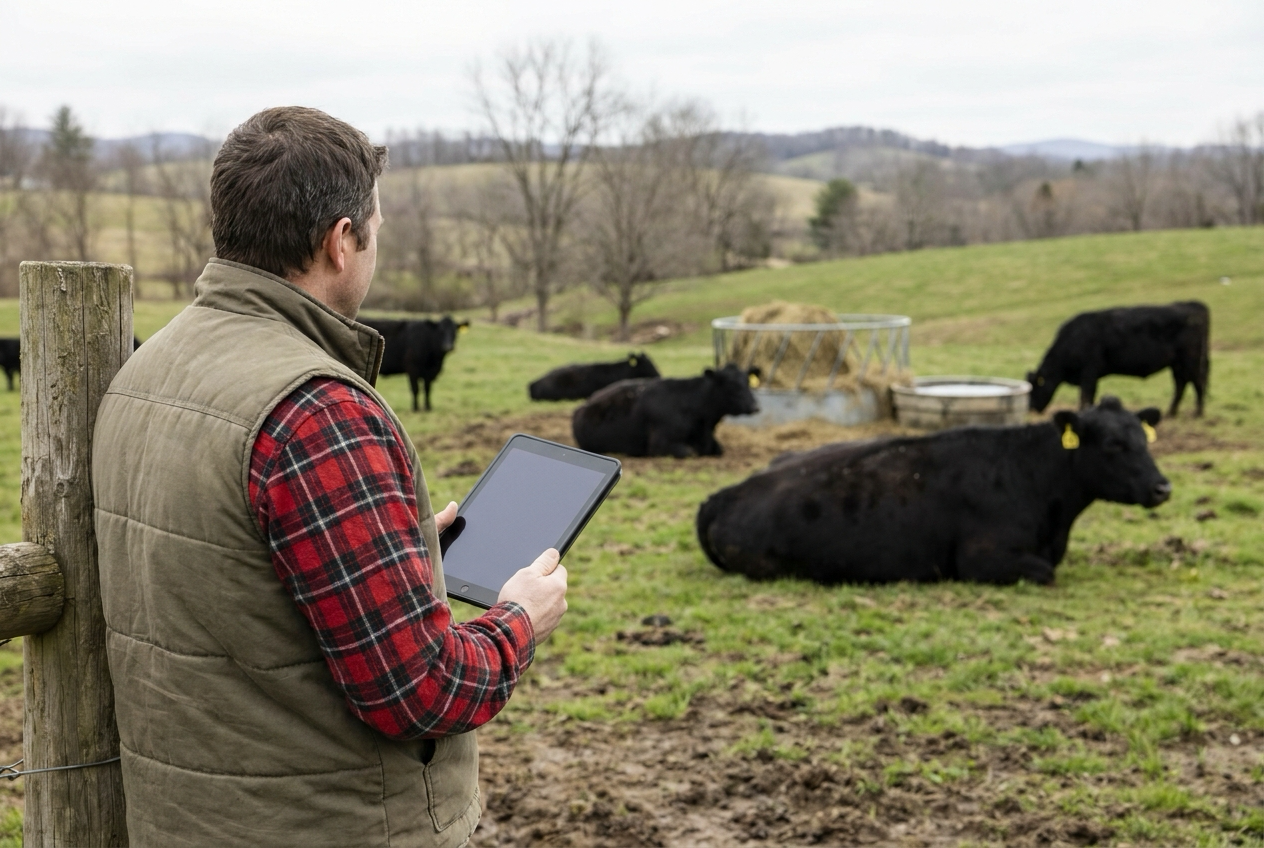
Creatures keeps the breeding, the check and the calving on each cow’s profile, so the result is still there when you sort cows, sell one, or wonder why she was late.
- Record the breeding first. Record a breeding on the cow with the method (natural mating, pen breeding or artificial insemination), the sire (picked from your animals or typed as a name, or left as unknown) and either the service date or the first and last days of bull exposure. Leave “Track as breeding cycle” on and she gets a projected due date, a due window and reminders.
- Get the check reminder. For cattle, a tracked breeding adds a Pregnancy check reminder for about days 28 to 50 after service, with an optional fetal sexing reminder for about days 55 to 85. Reminders and upcoming care explains where those show up.
- Record the result. Add a Breeding and Reproduction record with the Pregnancy Check category: the exam date, the result (Pregnant, Open or Not sure), and an optional count if the veterinarian saw twins. If you do not know the service date, enter the veterinarian’s “how far along” estimate in days, weeks or months and Creatures projects the due date from it. Tracking pregnancy and progress covers corrections and notes.
- Open cows close out cleanly. Saving an Open result offers to end that breeding, which clears its remaining reminders, so you are not reminded to watch an open cow for calving.
- Whole groups at once. On a group, a pregnancy check record lets you enter each cow’s result, and a count where needed, in her own row, so a chute day goes in as one entry instead of forty.
- Lab blood tests. Keep the lab result as a Test Result record (pregnancy test) with the sampling date and report date. Health and medical records shows those fields.
Tracked pregnancies then appear on the breeding dashboard, which lists cows due soon and overdue, so your calving list builds from the checks themselves. When she calves, record the birth and the calf gets its own profile linked to her. The gestation calculator works without an account; the record form opens for visitors, and a free account saves it.
A preg check result is also selling evidence. Buyers of bred cows and heifers ask who checked her, when, by what method and what stage was found; the livestock sale listing checklist covers what to include. The cattle record keeping guide covers the rest of the herd file, and the cattle species page links every cattle guide. Sheep producers can compare the scanning routine in the sheep pregnancy scanning guide.
Frequently asked questions
How soon can you preg check a cow?
By ultrasound, from about day 28 in cows and day 26 in heifers, though most herds book scans at 30 to 35 days or later. By blood test, from about day 28 in cows and day 25 in heifers, if she is 60 to 90 days or more past calving. By palpation, from about 35 to 40 days, depending on the examiner.
How accurate is a blood pregnancy test for cattle?
Georgia Extension reports true-positive rates of 98 to 99 percent and false positives of 1 to 5 percent, and Wisconsin found blood PAG very good at identifying open cows. Most errors come from sampling too soon after calving, mislabeled tubes and embryos lost before the sample. Ask your veterinarian to confirm a surprising result.
Can you tell if a cow is pregnant by looking at her?
Not reliably in early pregnancy. Not coming back into heat is the earliest clue, but heats are easy to miss. A large belly and a filling udder appear late, close to calving. A palpation, ultrasound or blood test gives a real answer.
Is there a cow pregnancy test you can do at home?
Blood tests let a producer submit samples to a lab rather than hold cattle for the veterinarian, but sampling still needs training and safe restraint, and the lab’s rules on days since breeding and days since calving apply. Talk to your veterinarian before you start, and keep palpation and ultrasound with trained people.
Can a preg check tell you the calf’s sex?
Ultrasound can, from about 55 to 60 days and most reliably between 60 and 90 days. Palpation and blood tests cannot. Record a sexing result as the veterinarian’s call, then confirm it at calving.
How much does it cost to preg check cattle?
Prices depend on your veterinarian, the method, the farm call and how many head go through. Ask for a per-head price for each method before the season. For scale, Georgia’s bulletin works an example in which leaving open cows unidentified adds about $82 of cost per calf.
Do this next on Creatures
Start with the cows you just checked, then the calving season they set up.
- Add a cow’s profile with her ear tag and breeding history, so each check result has somewhere to live. Guest signup can start in this flow. How to add an animal shows the fields.
- Record a breeding or pregnancy check with the exam date and result. The form opens for visitors; a free account saves it. How to add a record walks through it.
- Create your ranch’s profile so several people can work from the same herd records and buyers can find your program. Getting listed in the breeder directory explains the public profile.
- Save a cattle listing search if you are replacing open cows, and get an email when matching cattle are listed. Saved searches and your watchlist explains the alert.
- Browse cattle listings to compare bred cows and heifers with their records. What is listed changes week to week.
- Browse the breeder directory to find cattle programs near you rather than a single animal.