Cattle EPDs: What Expected Progeny Differences Mean and How to Use Them
Author: Elliott Garber, DVM · Published
An EPD (expected progeny difference) predicts how an animal’s future calves will perform, on average, compared with calves of other animals evaluated by the same breed association. If one Angus bull has a weaning weight EPD of +70 lb and another +50 lb, their calves out of similar cows under the same management should average about 20 lb apart at weaning.
That one subtraction is most of what you need. The rest is knowing which EPDs matter for your herd, how much trust to put in each number, and keeping the sire and dam behind every calf straight. The free cattle pedigree chart maker lays out a bull’s or heifer’s ancestry before you start comparing numbers.
EPDs come from each breed association’s national cattle evaluation, which pools pedigrees, performance records and, increasingly, DNA. Nobody sets an EPD by eye, and no one bull’s own weight tells you what his EPD is.
| What it is | A prediction of the average difference in an animal’s future calves |
|---|---|
| Units | The trait’s own units: pounds, percent, centimeters or dollars |
| How to use it | Subtract one animal’s EPD from another’s for the same trait |
| Compare within | One breed only, unless you apply across-breed adjustment factors |
| Accuracy | About 0 to 1; closer to 1 means the EPD is less likely to move |
| Ranking | Breed percentile tables show where a value sits in the breed |
| Built from | Pedigree, contemporary group records and genomic tests |
| Not a guarantee | EPDs predict averages, not any single calf |
What an EPD actually predicts
University of Kentucky’s extension fact sheet on EPD trait definitions and percentile tables defines an EPD as a prediction of how an animal’s future progeny are expected to perform relative to the progeny of other animals in the same database. Three things follow from that.
First, an EPD is stated in the units of the trait. Birth, weaning and yearling weight EPDs are in pounds. Calving ease is a difference in the percentage of unassisted births. Scrotal circumference is in centimeters. A value can be positive or negative, and negative is not automatically bad: a lower birth weight EPD is often what you want on a bull for heifers.
Second, an EPD is about averages. University of Missouri Extension’s guide to using beef sire summaries is blunt that EPDs do not predict the performance of an individual calf. A bull with a strong weaning weight EPD will still sire some light calves. Across a calf crop, the difference shows up.
Third, an animal’s own weight is not its EPD. The Kentucky example puts two university bulls side by side and notes that their actual birth, weaning and yearling weights should not drive the decision. An actual weight mixes genetics with the cow’s milk, the pasture, the weather and the calf’s age. The EPD strips out as much of that as the evaluation can, using the rest of the herd and the bull’s relatives as the yardstick.
Bulls are not the only animals with EPDs. Registered females carry them too, and the same percentile tables show where a cow or heifer ranks in her breed.
How to compare two bulls with EPDs
Take the same trait for both animals and subtract. Missouri’s example uses two bulls with weaning weight EPDs of +70 and +50 lb: calves by the first are expected to average 20 lb heavier at weaning, assuming comparable cows and management. The same logic works for every EPD. A calving ease direct difference of 5 means about 5 percentage points more unassisted births in first-calf heifers bred to the higher bull.
Do this only within one breed. Each breed association runs its own evaluation on its own genetic base, so a Hereford weaning weight EPD of +60 and an Angus EPD of +60 do not mean the same thing. University of Nebraska beef geneticist Matt Spangler explains in UNL BeefWatch that one breed’s EPDs are inherently not comparable to another’s.
When you do need to compare across breeds, for example choosing between a Red Angus and a Simmental bull for a crossbreeding program, use the across-breed adjustment factors from the USDA’s Meat Animal Research Center (USMARC). The 2026 table, reprinted by the American Angus Association, covers 18 breeds and was calculated from each breed’s national evaluation as of January 2026. You add the breed’s factor to that animal’s within-breed EPD to put it on an Angus base. The factors cover birth, weaning and yearling weight, maternal milk and the main carcass traits, not every EPD, and USMARC warns they are for comparing animals across breeds, not for ranking breeds against each other. Factors change every year, so use the current table rather than an old printout.
Breed hubs on Creatures cover each breed’s background and registry: Black Angus, Red Angus, Hereford and Simmental.
The EPDs you will see on a sire summary
Breeds use slightly different names and abbreviations, and some report traits others do not. These are the American Angus Association’s EPD and $Value definitions, which most other breeds resemble closely.
| CED (calving ease direct) | Percent unassisted births when his calves are out of first-calf heifers; higher is easier |
|---|---|
| BW (birth weight) | Pounds; his effect on calf birth weight |
| WW (weaning weight) | Pounds; his effect on weaning growth |
| YW (yearling weight) | Pounds; his effect on yearling growth |
| SC (scrotal circumference) | Centimeters; scrotal size in his sons |
| HP (heifer pregnancy) | Percent; his daughters’ chance of conceiving as first-calf heifers |
| CEM (calving ease maternal) | Percent unassisted births when his daughters calve as first-calf heifers |
| Milk | His daughters’ milk and mothering ability, seen in their calves’ weaning weights |
| MW (mature weight) | Pounds; his daughters’ mature cow weight |
| Doc (docility) | Yearling temperament in his calves; higher is calmer |
| CW, Marb, RE, Fat | Carcass weight, marbling, ribeye area and backfat in his calves |
Kentucky’s fact sheet makes two practical points about this list. Use calving ease direct rather than birth weight when the breed reports both, because CED is the trait you actually care about. And the maternal EPDs (CEM, Milk, mature weight, heifer pregnancy, stayability) only matter if you keep replacement heifers. If every calf leaves at weaning, a bull’s milk EPD does nothing for your bottom line.
Accuracy, possible change and genomic EPDs
Every EPD comes with an accuracy (ACC), on a scale from about 0 to 1. Accuracy reflects how much information sits behind the number: the animal’s own records, its relatives, its progeny and any genomic test. Kentucky’s fact sheet notes that young bulls with little information may show a letter code instead of a number, and the Angus association labels provisional EPDs on young animals with an “I” for interim.
Low accuracy does not mean a bad bull. It means the EPD is more likely to move as his calves are recorded; Missouri’s guide notes that as records accumulate, the chance of a large change drops. The same guide puts it plainly: don’t confuse a high-accuracy bull with a genetically superior bull. A proven AI sire with 0.95 accuracy on a middling EPD is a safe bet on that middling number; a yearling bull with 0.30 accuracy might end up better or worse than his current value.
Genomic-enhanced EPDs (GE-EPDs) fold DNA test results into the evaluation. Missouri’s guide says they raise accuracy before progeny records exist, which is why a tested yearling bull often carries noticeably higher accuracy than an untested one of the same age. A DNA test adds information, so it can move an EPD either way.
A reasonable way to use accuracy: for a low-accuracy young bull, ask for a bit more on the traits you care about to cover the chance it slides. For a high-accuracy sire, take the number nearly at face value. Our bull semen cost guide covers what a straw costs once you have a shortlist.
Percentile ranks and dollar indexes
A raw EPD means little until you know the breed’s spread. Is +55 on weaning weight good? Each breed publishes a percentile breakdown table that answers it: find the trait column, and the table shows the EPD value at the top 1, 5, 10, 20 percent and so on. Kentucky’s fact sheet recommends these tables in particular for anyone buying into a breed they don’t know well. The values change as each breed’s evaluation is rerun, so check the current table on your breed association’s site (for Angus, the percentile breakdowns page) instead of remembering last year’s average.
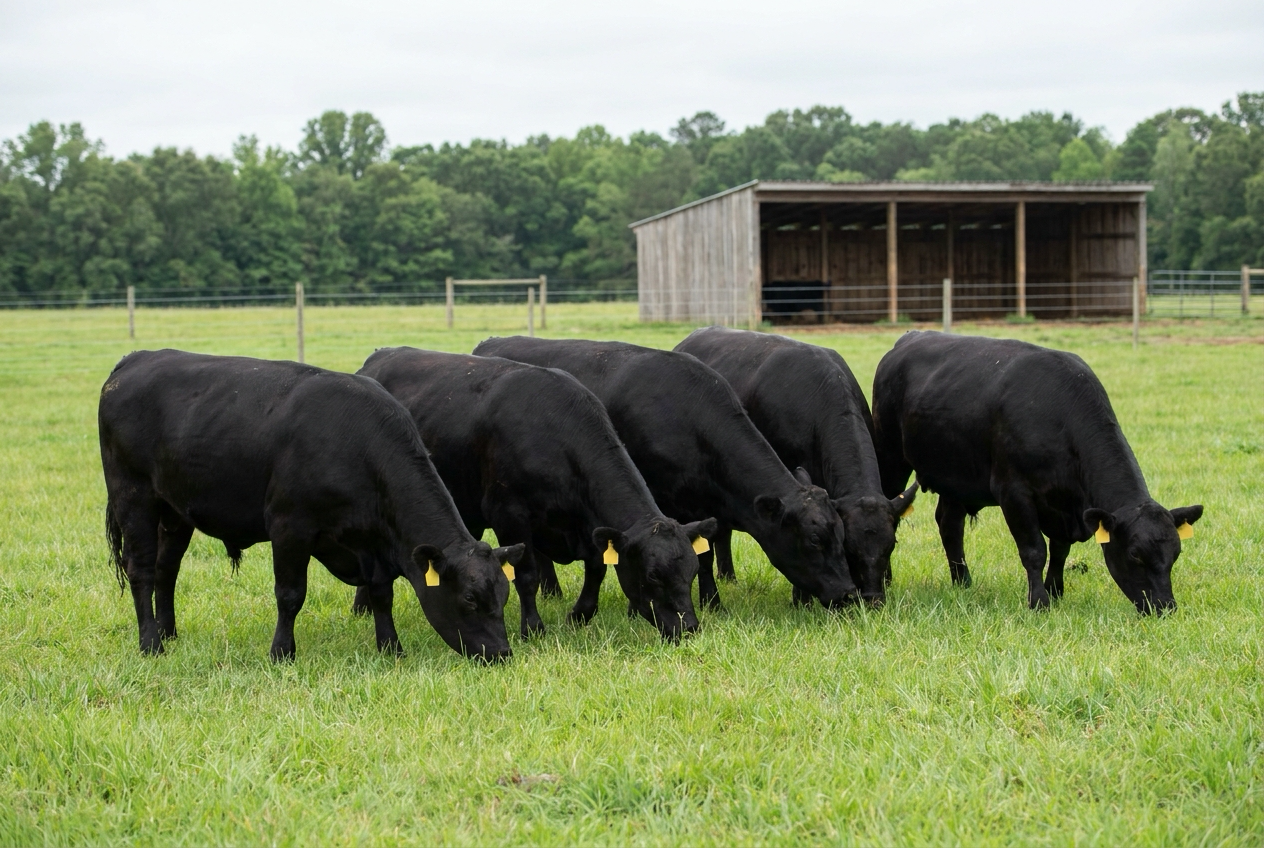
Selection indexes combine several EPDs into one number weighted by economics. Missouri’s guide groups them as maternal, production and terminal indexes; Angus calls its versions $M (profitability from conception to weaning with replacement heifers kept), $W (birth to weaning), $B (a terminal index for postweaning and carcass traits) and $C (combining the traits in $M and $B). Angus states that its $Values depend on the economic assumptions built into each one. Pick the index that matches how you market calves: a cow-calf operation keeping its own heifers leans on a maternal index, while someone retaining ownership through the feedlot leans on a terminal index.
Pick the EPDs that match your herd
Start from your marketing plan and your cows, then pick two to four traits that matter, rather than chasing every column.
- Breeding heifers. Calving ease direct comes first. Our guide to breeding heifers covers the rest of the heifer plan, and the cattle gestation calculator turns a breeding date into a calving window.
- Selling calves at weaning. Weaning weight EPD, with calving ease and birth weight kept within sensible limits for your cows.
- Keeping replacement heifers. Add the maternal set: milk matched to your feed resources (more milk is not always better on limited forage), heifer pregnancy, calving ease maternal and mature weight.
- Retaining ownership or selling on a grid. Yearling weight and the carcass EPDs, or a terminal index.
If you are choosing AI sires, the same comparison works across a semen catalog, and high-accuracy sires take most of the guesswork out. The companion guide to cattle artificial insemination walks through timing and technique, and the cattle AI cost guide covers the budget.
EPDs do not replace the eye test or a vet. Missouri’s guide lists structural soundness, feet and legs, reproductive soundness and disposition as things to evaluate before buying a bull, and Kentucky pairs EPDs with a breeding soundness exam. A bull with ideal numbers who can’t walk to the back of the pasture or fails his breeding soundness exam is no use to you. Book that exam with your veterinarian before the season.
The records behind every EPD
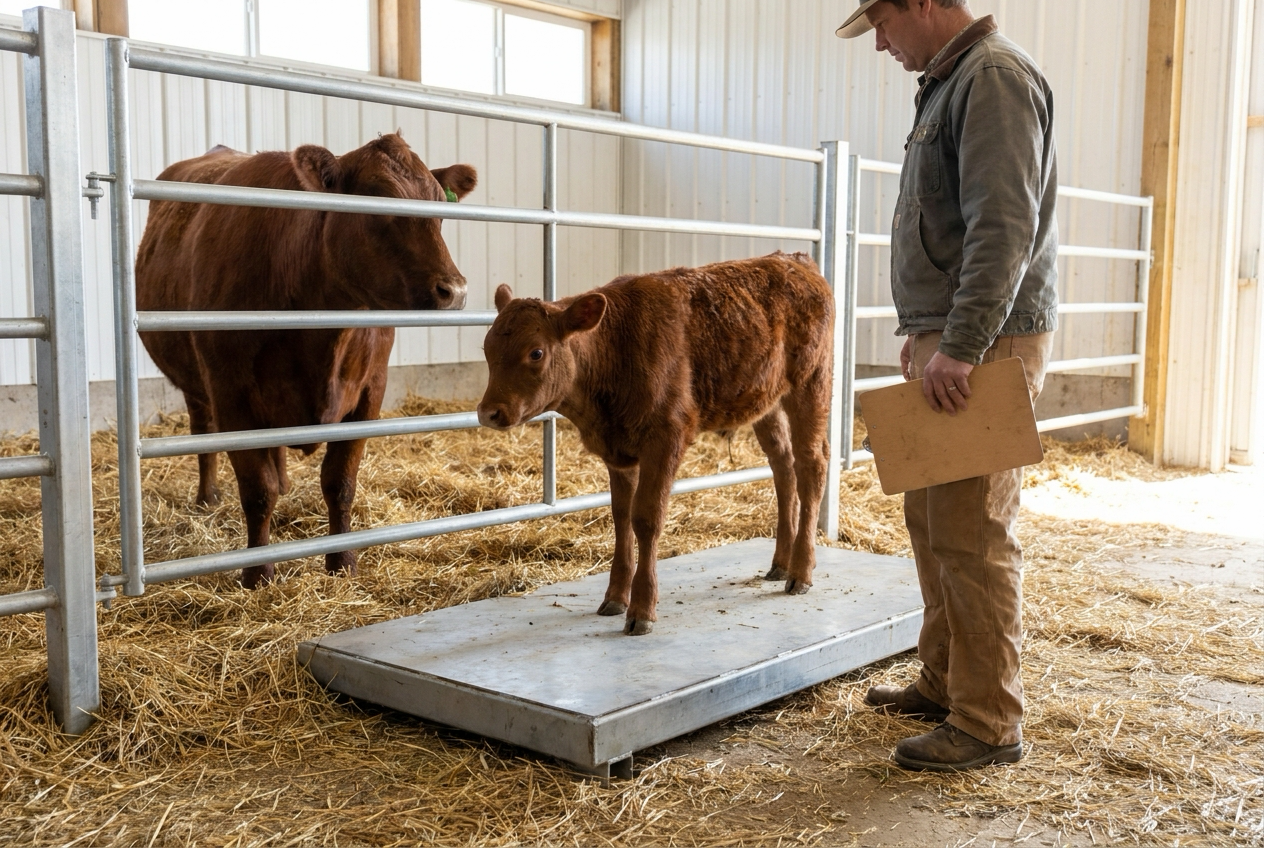
EPDs are only as good as the data breeders send their association. The Beef Improvement Federation’s guideline on contemporary groups defines a contemporary group as same-sex calves born within a relatively short window and managed the same way since birth. Calves are compared within their group, so the pasture, the cow’s age and the weather cancel out as far as possible.
That has three practical consequences for a seedstock breeder:
- Every record needs its group. BIF says every piece of performance data should have the proper contemporary group attached. A weaning weight with no group, pasture or weigh date attached is far less useful.
- A group of one adds nothing. BIF states that single-animal contemporary groups add no information to the evaluation. A calf you creep-fed separately or pulled into the show string is a different group, so record it that way honestly rather than hiding the difference.
- Weigh the whole group. Weigh every calf in a group on the same day, including the light ones. Leaving out poor calves shifts the group average and blunts the comparison between sires.
The core weights are birth weight, weaning weight and yearling weight, plus scrotal circumference on yearling bulls and any ultrasound carcass scans your breed collects. BIF’s weaning weight guideline adjusts weaning weights to a standard 205 days, recommends weighing calves between 160 and 250 days of age, and says the whole contemporary group should be weighed on the same day. The age adjustment needs each calf’s real age, so record the actual birth and weigh dates rather than rounding. The calf growth chart guide covers reading a weight trend, weighing cattle compares scales and tape estimates, and weaning calves covers the weaning day itself.
Submit those records through your breed association’s own performance program, on its schedule and forms. That is the only route by which they reach an EPD.
Keeping EPDs and performance records on Creatures
Creatures is where you keep the working records for each animal; your breed association is where EPDs are calculated. Creatures does not calculate EPDs, does not have an EPD tracking screen today, and saving a record does not submit anything to a breed association.
Here is what you can do now:
- Weights with their context. Add a Physical Measurement record, choose Weight and enter the value and date. Under the extra fields, set Measurement Context to Birth, Weaning or Yearling so the record says which weight it is. For a whole contemporary group, weigh or measure a whole group at once so every calf gets the same weigh date. If you are between scales, the free cattle weight calculator gives a tape estimate from heart girth and body length; that is a management estimate, not a weight to report to a breed association.
- Other measurements EPDs draw on. The same record type has Scrotal Circumference, Frame Score, Pelvic Area and Calving Ease Score (on the BIF 1 to 5 scale) for cattle.
- The EPD printout. Save the current EPDs as an Other record on the animal, titled with the breed and evaluation date, with the figures and accuracies copied into the description. Update it when the breed releases a new run, and keep the old one: you can see how a young bull’s numbers moved.
- Pedigree and registration. Record sire and dam on the profile so the pedigree builds itself, and add a registration record with the association and number. The cattle pedigree papers guide explains how to check what a certificate says.
- Breedings. A breeding record with the AI or natural-service sire projects the due date and sets calving reminders; see recording a breeding.
The add-record form opens for anyone; a free account saves it. The growth and identity records guide shows each field. For the bigger picture of what to keep from breeding to sale, see the cattle record keeping guide.
When you sell a registered bull or heifer, buyers will ask for the EPDs, the date they were pulled and the registration number. Having them on the animal’s profile, alongside its weights and pedigree, saves a scramble. The livestock sale listing checklist covers the rest of what buyers ask for.
Questions breeders ask about EPDs
What does a negative EPD mean?
It means that animal’s calves are expected to be below the breed’s evaluation base for that trait, not that the animal is poor. A birth weight EPD of -1.0 lb is often exactly what a heifer bull should have. Compare it with the other bulls you are considering and with the breed’s percentile table.
Can I compare an Angus EPD with a Hereford or Simmental EPD?
Not directly. Each breed uses its own base. Add the current USMARC across-breed adjustment factor for each breed to put both on an Angus base, and only for the traits the table covers.
Why did my bull’s EPD change?
New information came in: his calves were weighed, relatives were recorded, he was genotyped, or the breed updated its evaluation. Lower-accuracy EPDs move more. That is the system working, not an error.
How many calves does a bull need before his EPDs are reliable?
There is no single cutoff, because accuracy depends on how many progeny and relatives are recorded and whether genomic data is included. Read the accuracy figure next to each EPD rather than counting calves.
Do commercial cattle have EPDs?
An unrecorded commercial animal has none, because EPDs come from breed association evaluations of recorded animals. Commercial producers use EPDs by buying bulls and semen that carry them.
More guides for cattle breeders are on the cattle species page.
Do this next on Creatures
Choosing a bull or recording this year’s calf crop? Start with the animals you will weigh and breed, then keep their numbers with them.
- Add your bull, cow or calf with its registration name and ear tag. The adding an animal guide walks through the form.
- Add a birth, weaning or yearling weight, or save the latest EPD printout as an Other record. The form opens for visitors; a free account saves it. See adding a record.
- Create your ranch profile so buyers can find your herd. The breeder directory guide explains the listing.
- Save a cattle listing alert to hear when new bulls and heifers are listed.
- Browse cattle listings and ask each seller for current EPDs with their accuracies.
- Browse the breeder directory to contact seedstock producers about their bulls.