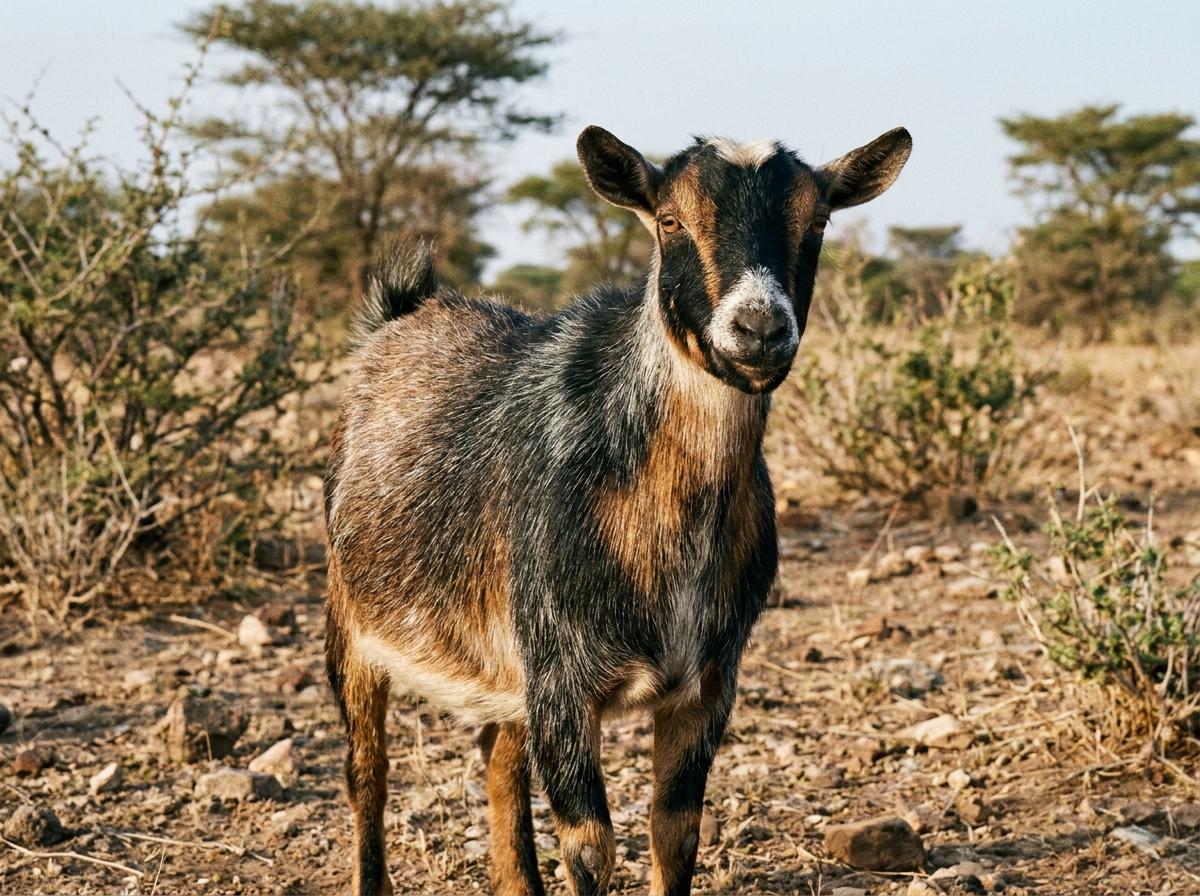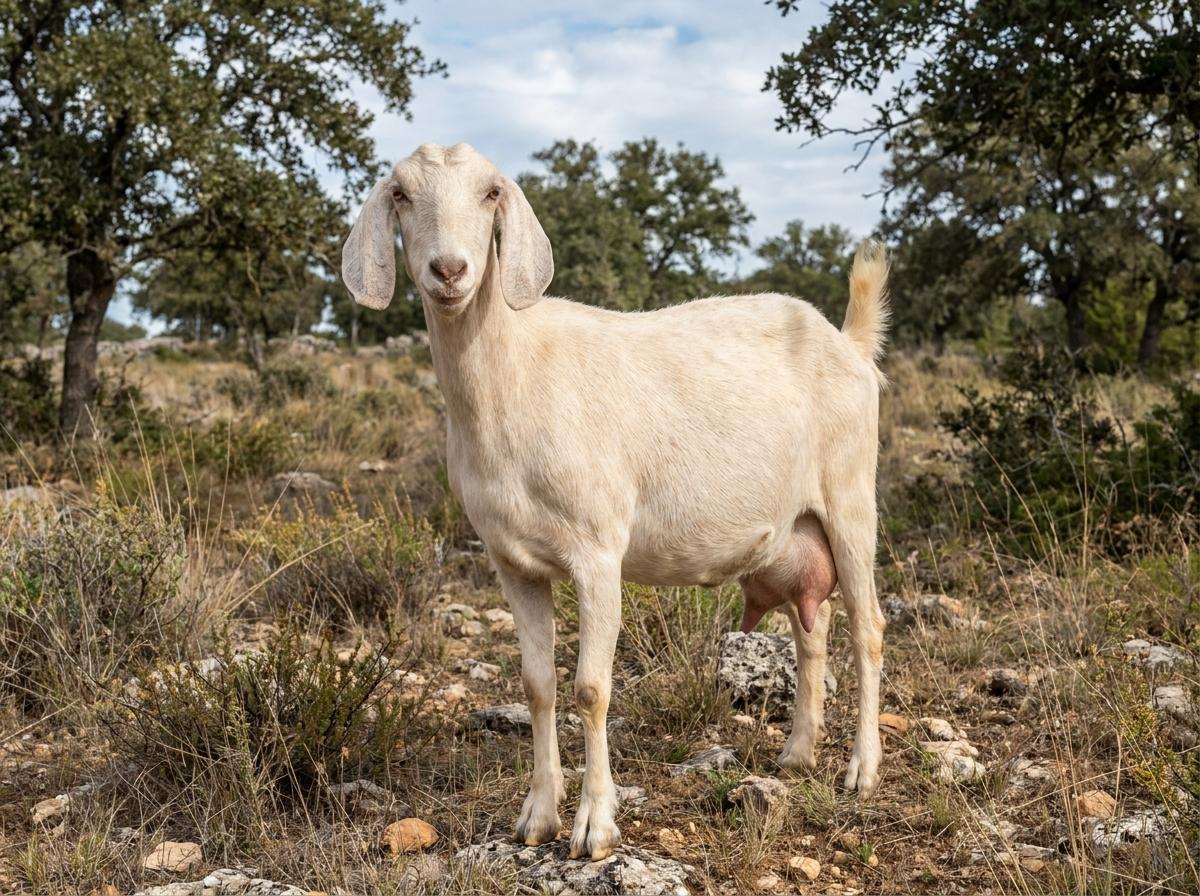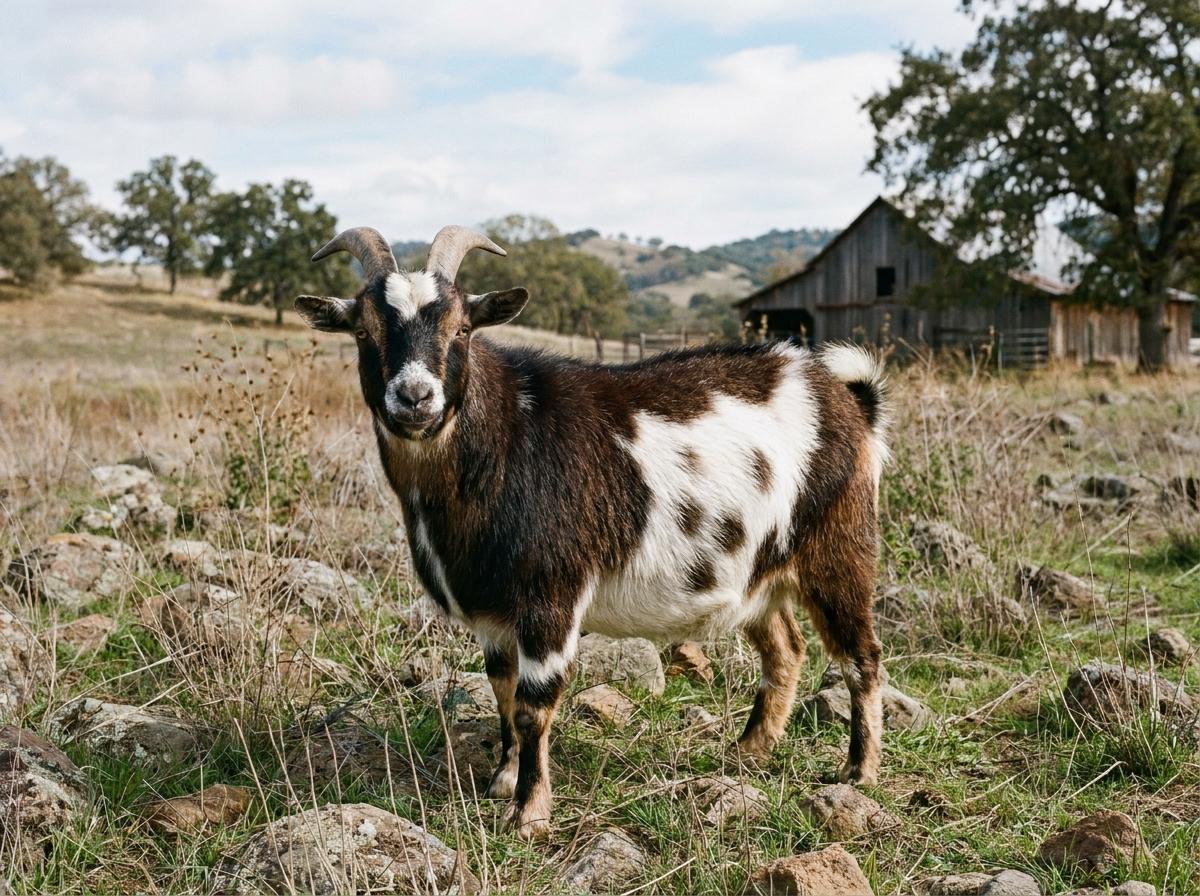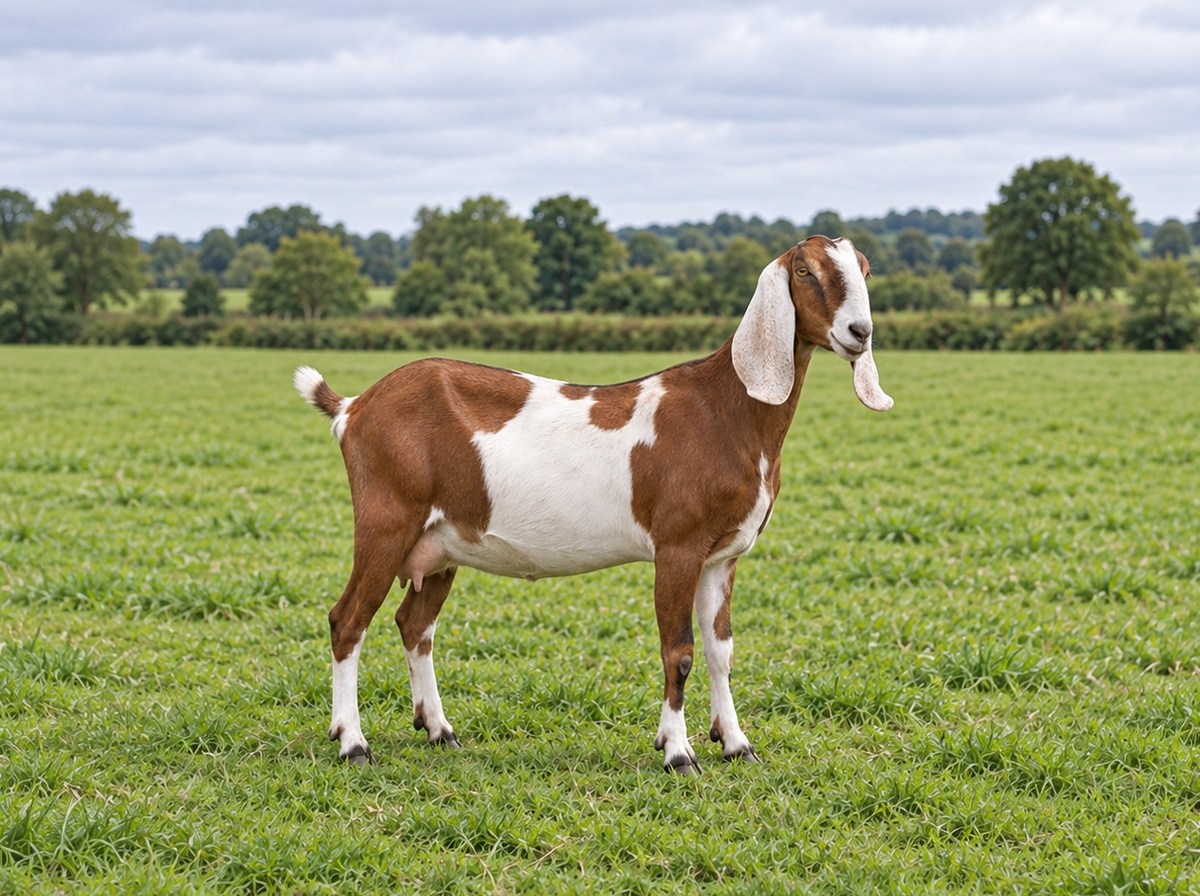
Goat
Capra hircus
Author: Elliott Garber, DVM · Published
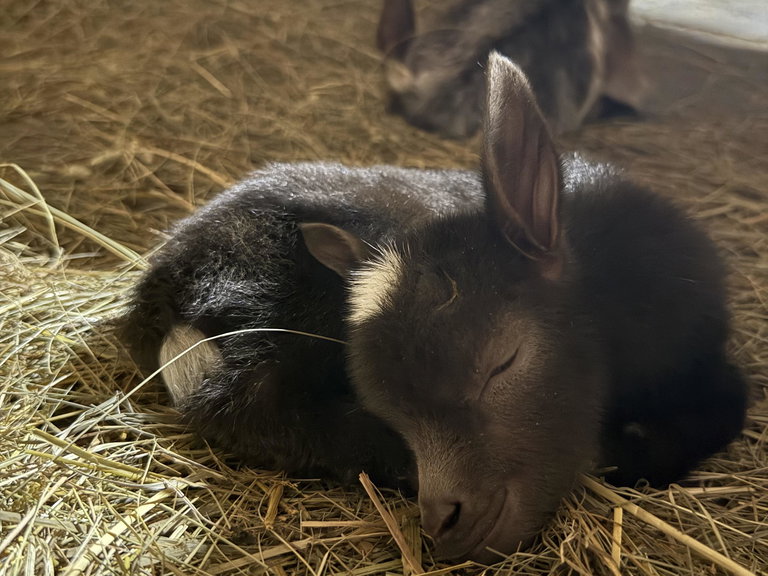
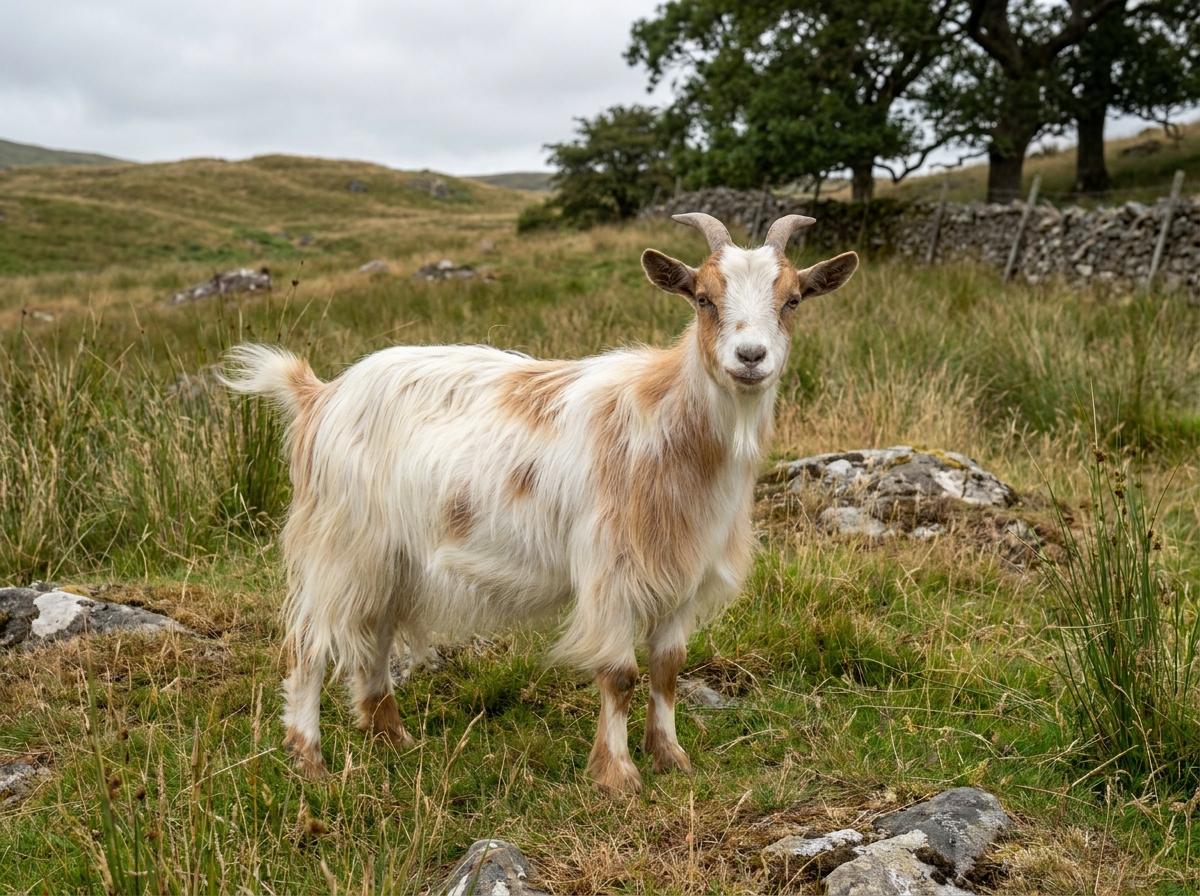
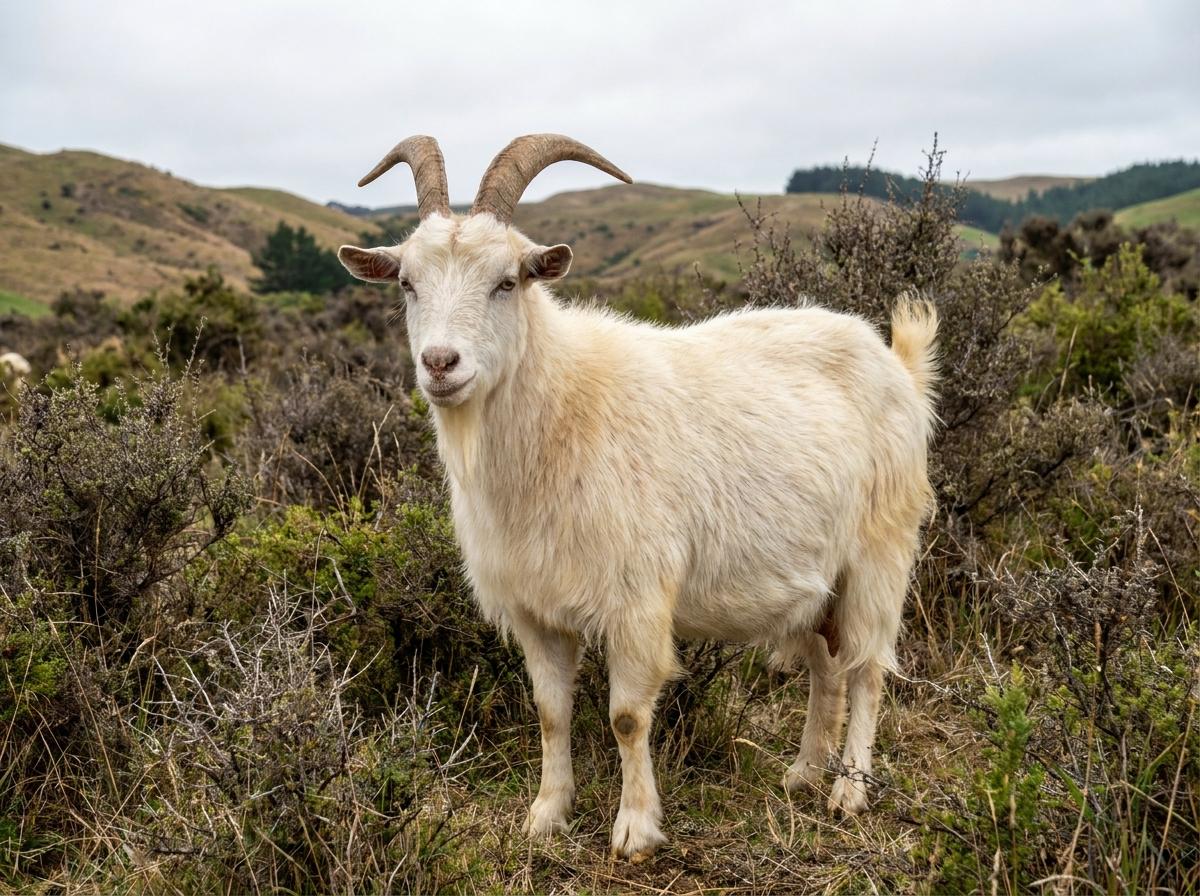
Goats are small, hardy ruminants kept for milk, meat, fiber and, more and more often, as farm companions. The domestic goat, Capra hircus, was one of the first animals people domesticated, about 10,000 years ago in the Middle East, and today’s breeds sort into four practical types: dairy, meat, fiber and miniature or pet goats. The American Dairy Goat Association alone keeps herd books for nine dairy breeds. A doe carries her kids for about 150 days, a well-kept goat usually lives 10 to 15 years, and every goat needs at least one other goat for company. Looking for a doe, a buck or a pair of wethers? Start with the goat breeders and farms listed in the Creatures directory, or check goats for sale on the Creatures marketplace.
Below, the breeds come first, sorted by the job a goat does: milk, meat, fiber or company. Prices, lifespan, housing, feeding, health, breeding and kidding, buying and the records a goat keeper actually uses follow, with a link at each step to the detailed goat guide on that topic. Five free goat tools turn up along the way: the goat gestation calculator for kidding dates, the goat weight calculator for tape-measure weights, the goat pedigree chart maker, the Nigerian Dwarf goat coat color calculator and the goat name generator.

| Species | Domestic goat (Capra hircus), domesticated from the wild goat (Capra aegagrus) about 10,000 years ago |
|---|---|
| Main types | Dairy, meat, fiber, and miniature or pet goats |
| Breeds | About 750 living breeds reported to FAO worldwide; ADGA keeps herd books for 9 dairy breeds |
| Adult size | Nigerian Dwarf does 17 to 22.5 in at the withers; standard dairy does at least 26 to 30 in and 120 to 135 lb (ADGA minimums) |
| Diet | Forage and browse first, about 1.8 to 2% of body weight in dry matter a day, plus clean water and a loose mineral made for goats |
| Gestation | About 150 days (145 to 155) |
| Lifespan | 10 to 15 years is the usual extension figure; the oldest on record lived 22 years 5 months |
| Social needs | Herd animals: keep at least two |
| Price (mid-2026) | Pet wethers often $150 to $350; registered dairy stock $500 to $1,000 or more |
Browse listings, public profiles, breeders, or add your animal.
Goat breeds and types
The closest thing to a world count of goat breeds is FAO’s global breed databank, which holds about 750 living goat breeds reported by national governments, 667 of them local breeds found in a single country, and the world kept roughly 1.1 billion goats in 2023, about 45 percent of them in Asia and 43 percent in Africa, according to FAO’s latest status and trends analysis, which uses country data to August 2025. The United States is a small goat country by comparison: USDA counted 2.51 million goats and kids on January 1, 2026, of which 2.01 million were meat and other goats, 415,000 milk goats and 89,000 Angoras. Each goat breed on Creatures has its own hub with breeders, listings and public profiles, and the A to Z breed list lower on this page opens all of them, the rare ones included.
For choosing a goat, the job comes first: milk, meat, fiber or companionship. Size comes next, and only then the breed. In the United States, breed registries do much of the sorting. The American Dairy Goat Association keeps herd books for nine breeds: Alpine, Guernsey, LaMancha, Nigerian Dwarf, Nubian, Oberhasli, Saanen, Sable and Toggenburg. The American Goat Society registers most of the same dairy breeds plus the Pygmy, the American Boer Goat Association registers Boers, and the National Pygmy Goat Association keeps the Pygmy herd book. The Pygora, the Kinder and the miniature dairy breeds have smaller registries of their own; to find the association for any breed, search the Creatures registry directory by species.
| Dairy, standard size | Alpine, Saanen, Sable, Toggenburg, Oberhasli, Nubian, LaMancha, Guernsey |
|---|---|
| Dairy, small | Nigerian Dwarf, miniature dairy breeds such as the Mini LaMancha and Mini Alpine, Kinder |
| Meat | Boer, Kiko, Spanish, Savanna, Kalahari Red, Myotonic |
| Fiber | Angora for mohair, cashmere goats, Pygora |
| Small and pet | Pygmy, Nigerian Dwarf, and wethers of any breed |
| Heritage and rare (US) | San Clemente Island, Arapawa, Spanish, Myotonic, Oberhasli |
| Main US registries | ADGA and AGS (dairy), ABGA (Boer), NPGA (Pygmy) |
Dairy goats
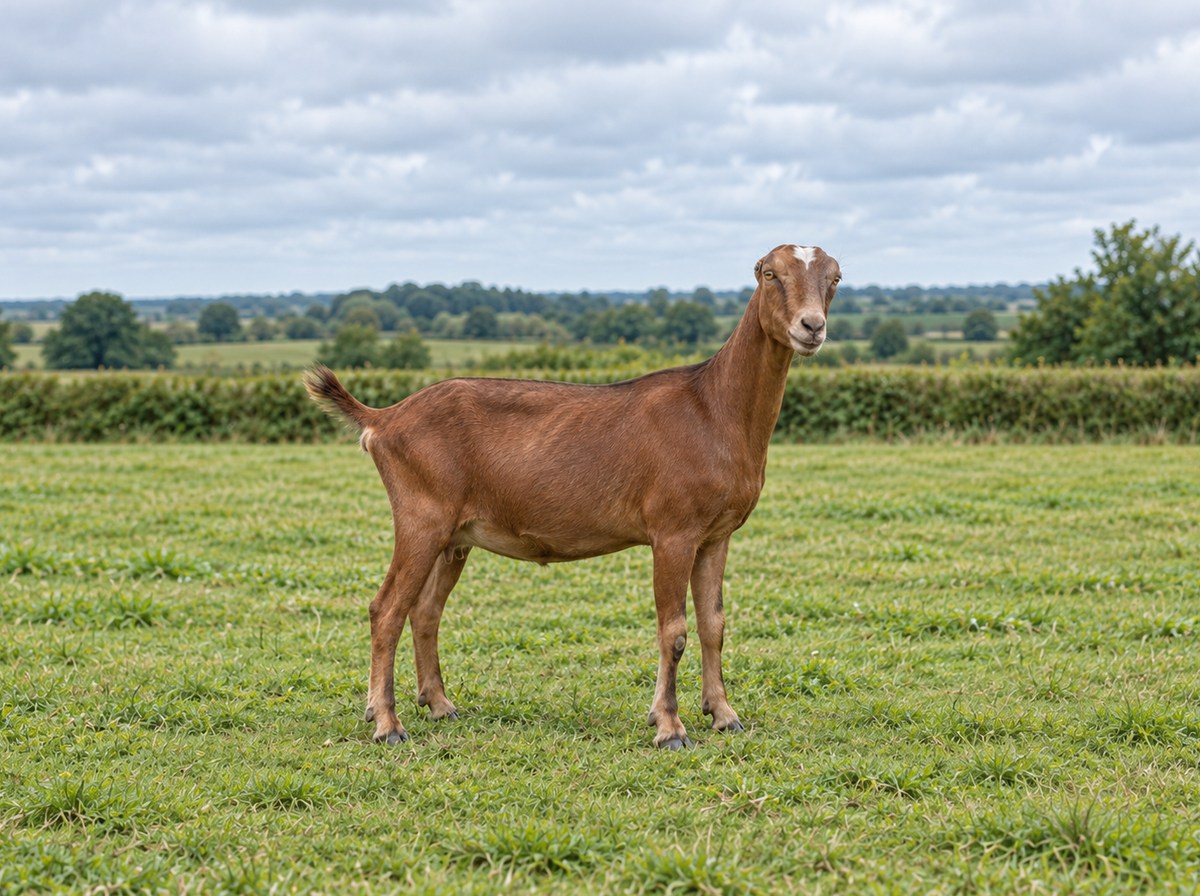
A dairy doe is lean and angular rather than blocky, with a long neck, a deep body and, when she is in milk, a large, well-attached udder. Most of the standard breeds are big animals. ADGA’s breed standards set minimums of 30 inches at the withers and 135 pounds for Alpine, Nubian, Saanen and Sable does, 28 inches for LaMancha and Oberhasli does, and 26 inches and 120 pounds for the Toggenburg, the smallest of the full-size breeds. Bucks are taller and heavier again.

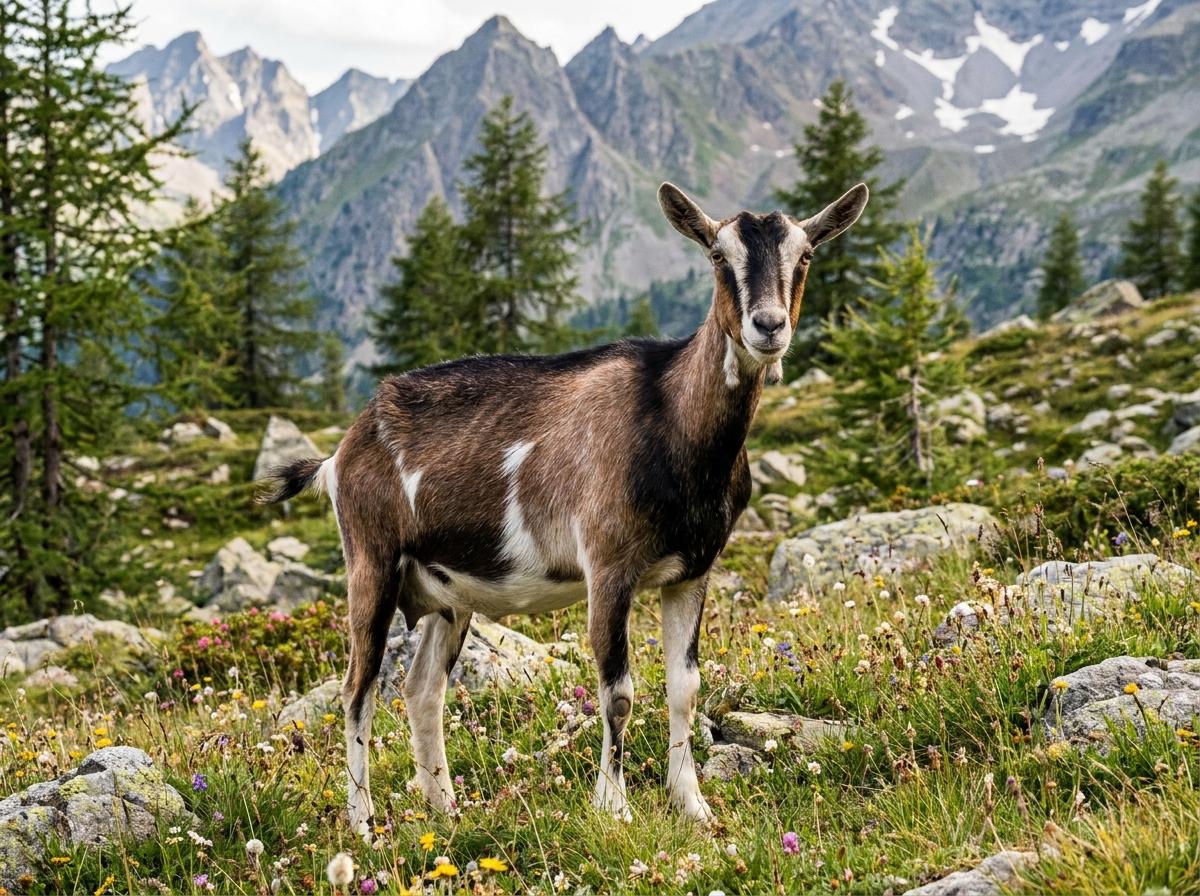
The Alpine-type breeds, developed for milking in the valleys of the European Alps, share erect ears and a straight or dished face. The Saanen is solid white or cream, comes from the Saanenland and Obersimmental of the canton of Bern, and is, in ADGA’s words, a favorite in commercial dairies for its high production and calm temperament. The Sable matches the Saanen in type, milk and temperament but may be any color except solid white or cream. The Toggenburg, from the Toggenburg valley in the canton of St. Gallen, is solid fawn to dark chocolate with white “Swiss” markings on the face, ears and legs, and it was among the first purebred dairy goats imported into the United States and registered. The Oberhasli is bay with black markings, a pattern called chamoisée, and its does may be solid black. At home the same chamois-colored stock lives on as the Chamois Colored goat, which the Swiss goat breeders’ federation says grew from two regional strains, the hornless Oberhasli-Brienzer type and the horned Bündner type, and which is now Switzerland’s largest herd-book breed. The Alpine (registered by AGS as the French Alpine) comes in many colors and patterns and has a reputation for hardiness in any climate.
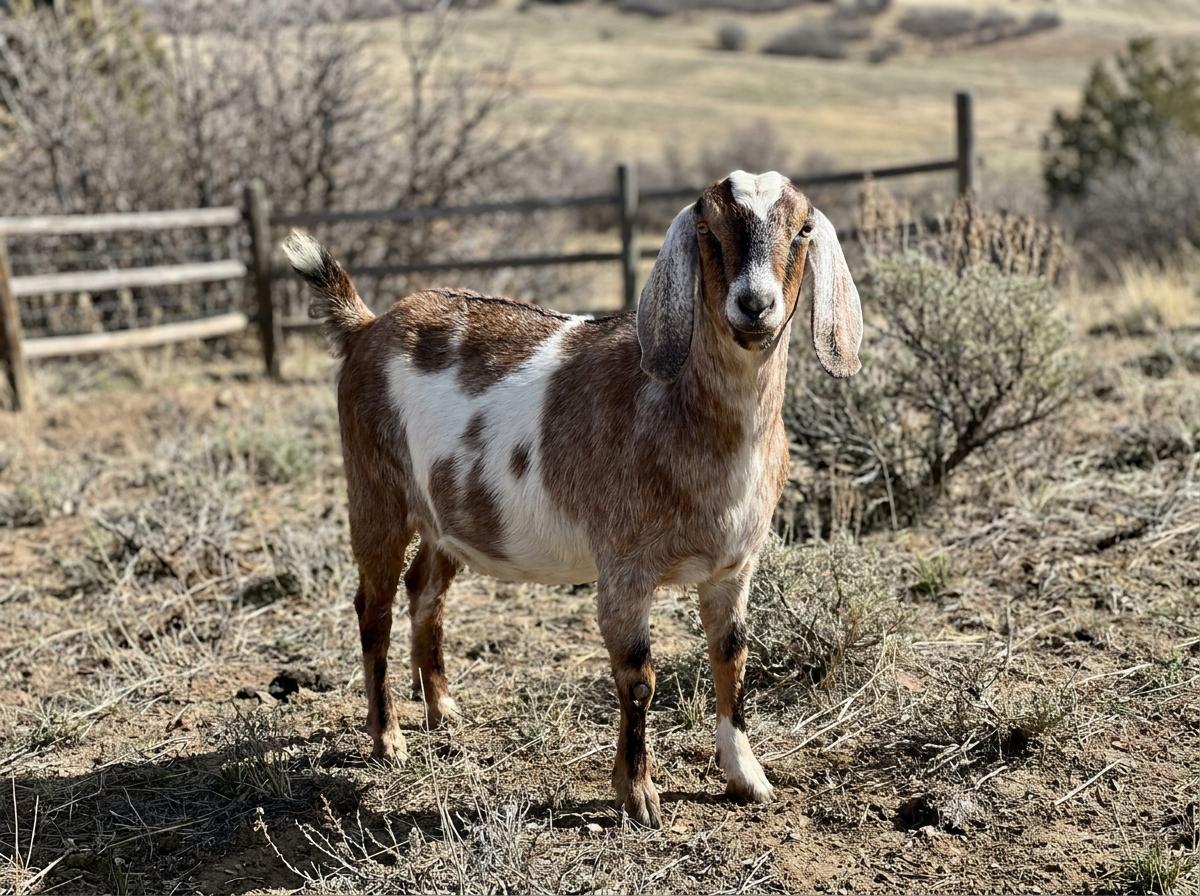
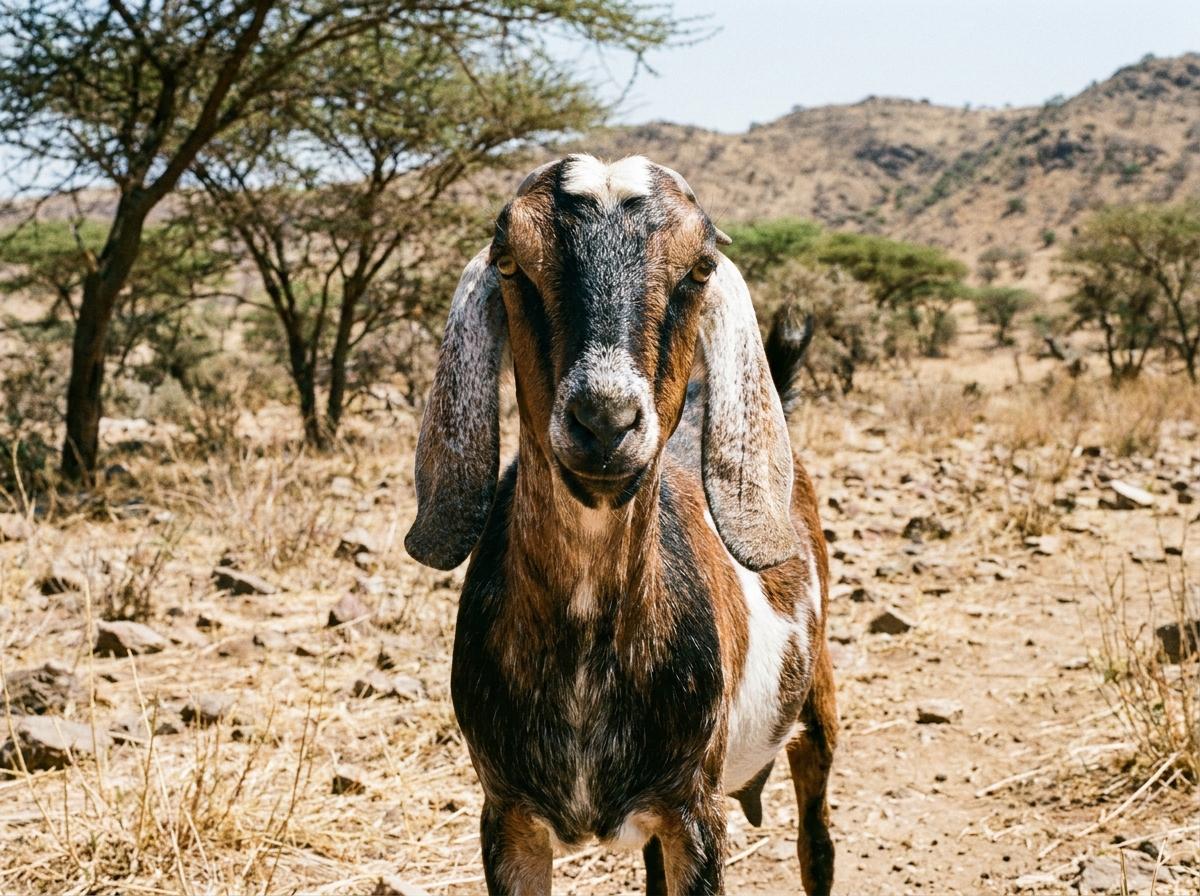
The other big dairy breeds look nothing like the Swiss goats. The Nubian has a strongly convex “Roman” nose and long, pendulous ears that hang at least an inch below the muzzle, and its milk is known for high butterfat and protein. Despite the name, it was developed in England by crossing British goats with bucks of African and Indian origin, which is the story our Nubian origin article tells, and Oklahoma State University’s breeds reference notes that it has a longer breeding season than the Swiss breeds. The LaMancha was developed in Oregon from short-eared goats of Spanish type, and its tiny ears are the breed’s signature: ADGA allows bucks ears no longer than one inch and does ears up to two. The gold-colored Guernsey, ADGA’s ninth breed, must be some shade of gold from pale cream to deep russet; the rare Golden Guernsey of the Channel Islands is recognized in Britain by the British Goat Society. Britain also has dairy breeds of its own, including the black-and-white British Alpine, developed in Great Britain in the early 1900s, and the British Toggenburg.
A dairy doe is a daily commitment. She has to kid to come into milk, and once she is milking she has to be milked every day. The goat milking machine and stand guide covers the equipment by herd size, and the goat shows guide explains how dairy goats are judged if you want to show.
Meat goats
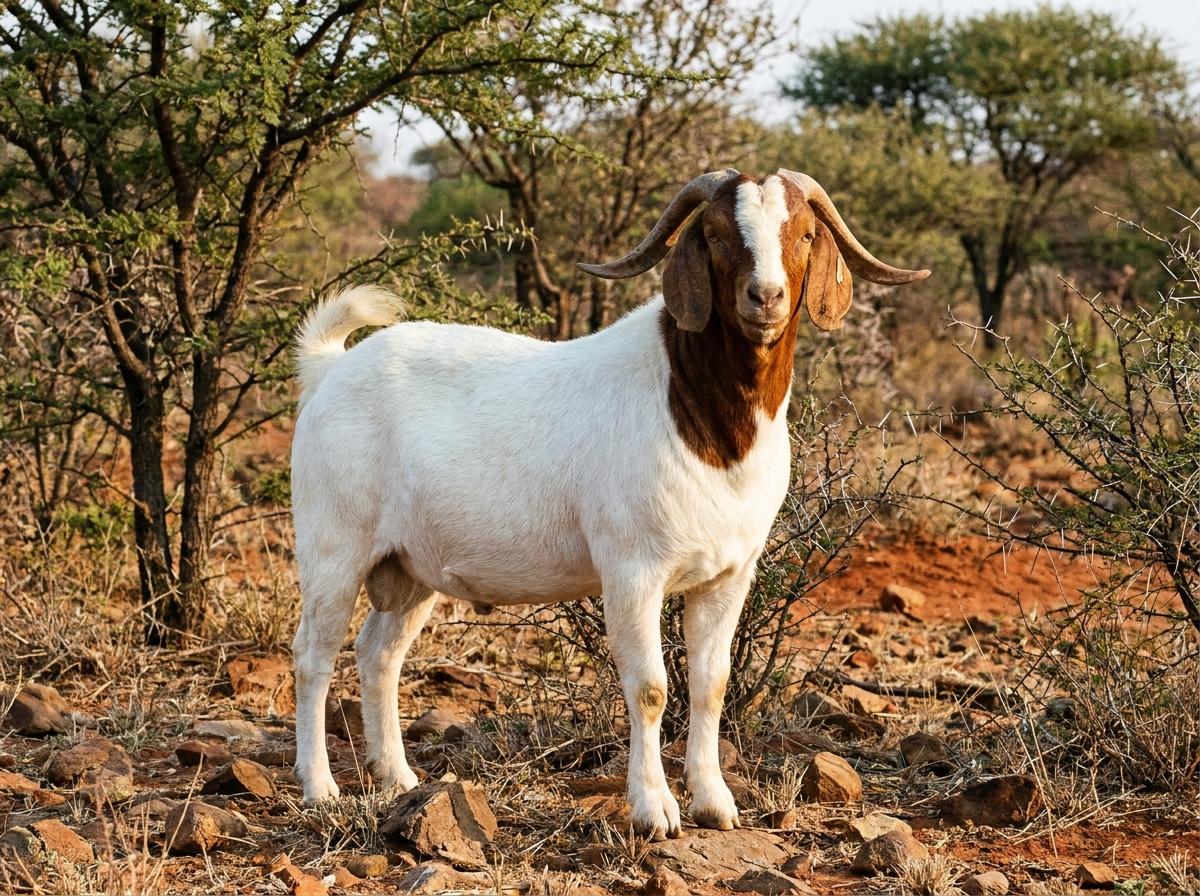
Meat breeds are built for muscle and growth, and much of the US meat goat herd is crossbred. The Boer is the breed most American meat goat operations measure themselves against. It was developed by Dutch farmers in South Africa in the early 1900s and reached the United States in 1993, and the American Boer Goat Association, founded the same year, now has more than 7,000 members and registers more than 45,000 head a year. The association credits the breed with rapid growth, excellent carcass quality, a docile temper and high fertility. The Kiko was bred in New Zealand by Garrick and Anne Batten of Nelson, who crossed hardy feral does with Anglo-Nubian, Toggenburg and Saanen bucks and selected for survival and growth on hill country until the herd was closed in 1986; “kiko” is the Māori word for flesh or meat, and the breed reached the United States in the 1990s, according to Oklahoma State University’s breeds reference.
The Spanish goat is the old American landrace. The Livestock Conservancy traces it to goats the Spanish brought to the Americas from the 1500s onward; for more than 300 years they were the only goats known across the southern United States, and they range from 50 to 200 pounds today, with the largest number of herds in Texas. Crossing Spanish goats with Boers gives strong hybrid vigor, which is also why pure Spanish goats have become scarce. South Africa has also produced the white Savanna, whose black skin, horns and hooves protect it from the sun and which reached the United States in the late 1990s, and the Kalahari Red, a red-coated, long-eared meat goat. The Myotonic goat, better known as the fainting or Tennessee Fainting goat, carries myotonia congenita, an inherited condition in which the muscles stiffen when the goat is startled. The Livestock Conservancy’s Myotonic breed history traces the breed to four “stiff” goats brought to central Tennessee in the 1880s, and it is careful to say this is not a true faint but a muscle response unrelated to the nervous system; the repeated contractions are part of why the breed is so heavily muscled.
Fiber goats
Fiber goats are kept for their coats. The Angora grows mohair, long lustrous locks that are usually shorn twice a year. It takes its name from the old district of Angora (today Ankara) in Asia Minor, and in the United States it is mostly a Texas animal: USDA’s January 2026 report counted 53,000 of the country’s 89,000 Angoras in Texas and put 2025 mohair production at 430,000 pounds, about 5.1 pounds per clip. Angoras are less prolific than other goats and fragile right after shearing, when a cold rain can kill them, so they need shelter at shearing and kidding time.
Cashmere is a fiber rather than a single breed. It is the fine undercoat that some goats grow beneath their coarse outer hair, and US labeling rules reserve the word cashmere for dehaired undercoat fiber that averages 19 microns or finer. Goats selected for it are called cashmere goats (Cashmere and Australian Cashmere on Creatures), and some goats of other breeds, the San Clemente Island and the Myotonic among them, grow it too. In the Himalaya, Nepal’s Chyangra is a cashmere goat whose down is sold as pashmina, and a study of Chyangra goats in Mustang measured it at about 15 microns, among the finest cashmere. The Pygora, a cross of registered Angora and Pygmy goats developed by Katharine Jorgensen in Oregon, has had its own herd book since the Pygora Breeders Association formed in 1987. Every fiber goat needs regular shearing or combing, which is real recurring work.
Miniature, small and pet goats
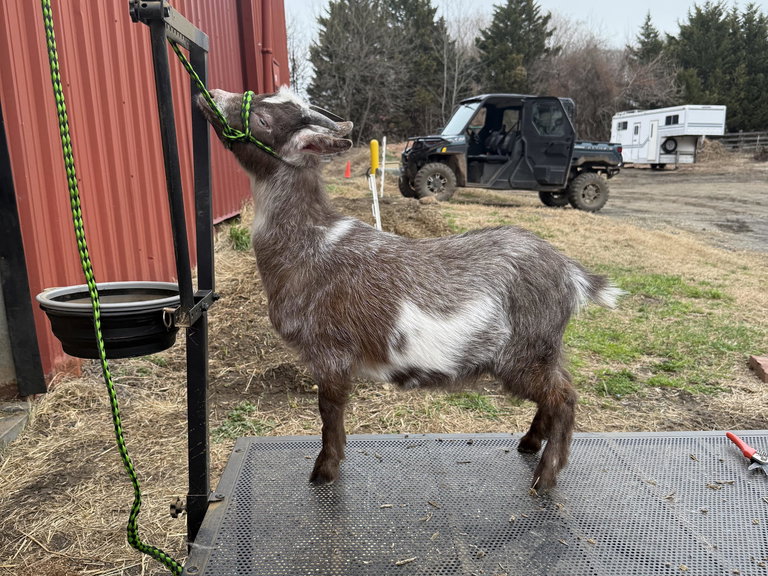
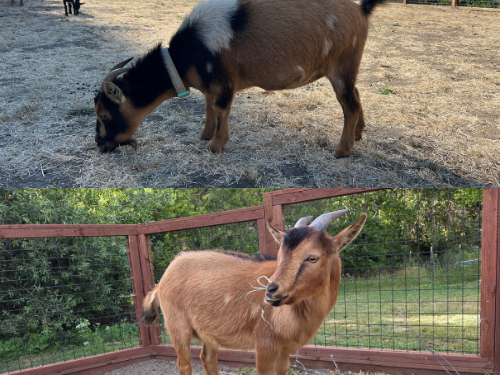
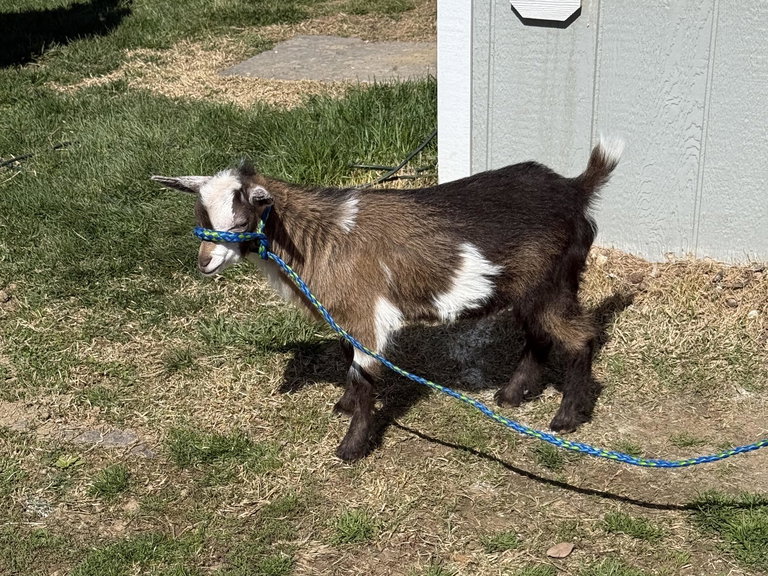
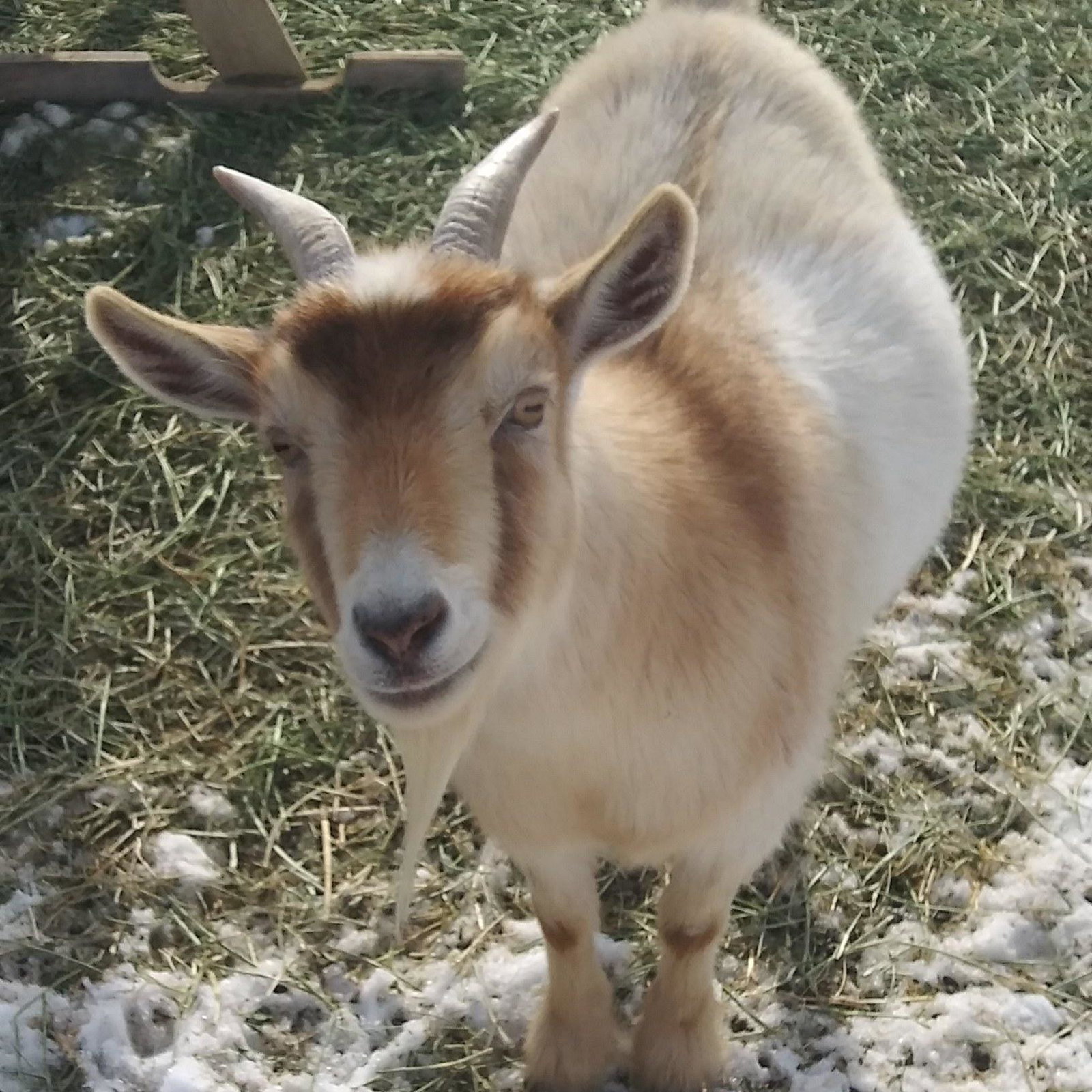
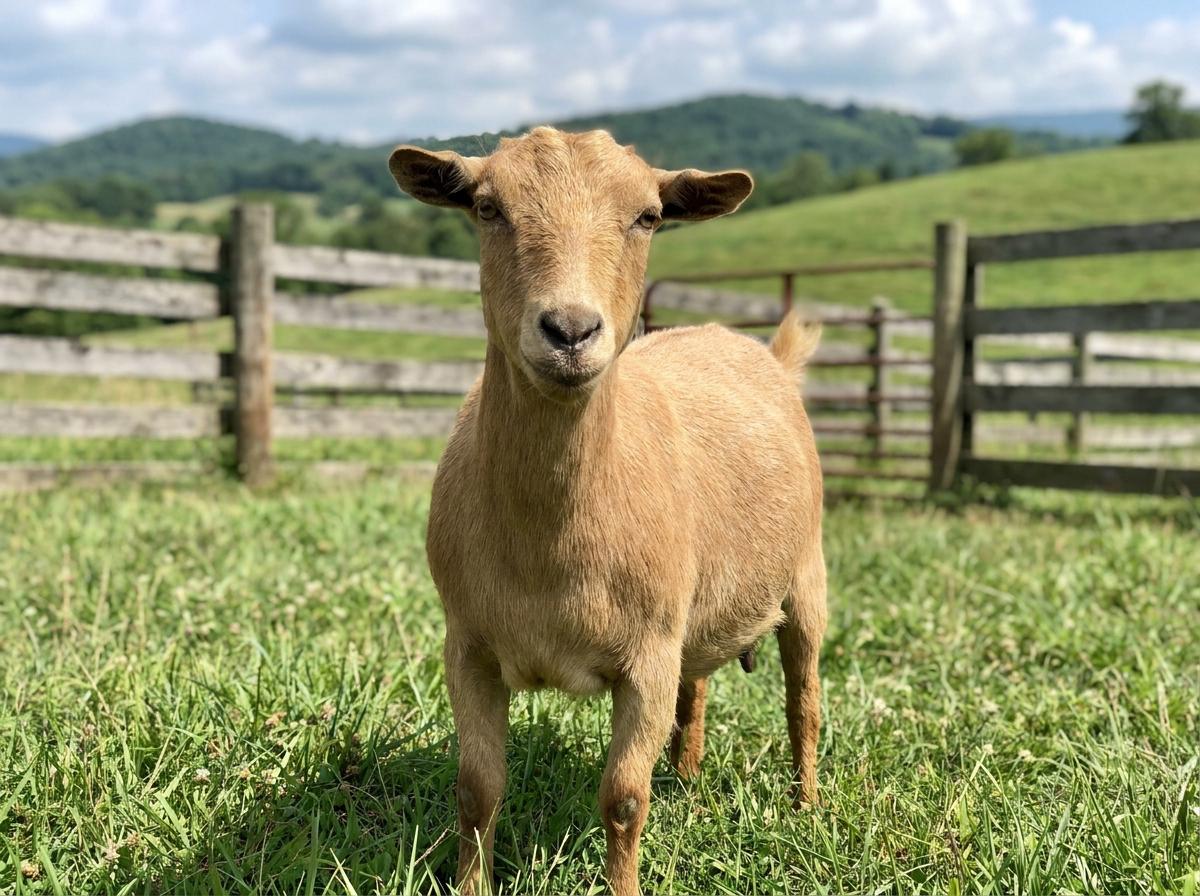
Small goats are the fastest way into goat keeping for many families, because they are easier to handle and need less space and feed. The two small breeds most people meet are easy to confuse and are not the same thing. The Nigerian Dwarf is a miniature dairy goat of West African origin, developed in the United States, with the proportions of a full-size dairy breed. ADGA, which calls it the only miniature dairy breed it registers, sets does at 17 to 22.5 inches at the withers and bucks at 17 to 23.5 inches, with 75 pounds as an average weight, and its milk is high in butterfat. The Pygmy is built the other way: the National Pygmy Goat Association’s breed standard describes a genetically small, cobby, compact and full-barreled goat, and it sets adults (12 months and older) at 16 to 22 3/8 inches at the withers for does and 16 to 23 5/8 inches for bucks. Our Pygmy goat guide covers the breed’s colors, how it is measured and what to check before buying.
Miniature dairy breeds sit in between. The Miniature Dairy Goat Association describes them as new breeds made by crossing a full-size dairy doe with a Nigerian Dwarf buck and then breeding the offspring forward: first and second generations are registered as Experimental, the third to fifth as American, and the sixth generation and beyond as Purebred if they meet the breed standard. The association’s own pitch is that a mini can often give about two-thirds the milk of a standard dairy goat on about half the feed. Mini breeds include the Mini LaMancha, the one with the most breeders listed on Creatures, the Mini Alpine, the Mini Oberhasli, the Mini Nubian, the Mini Saanen and the Mini Toggenburg. Because the generation number changes what you are buying, the Mini LaMancha and Mini Alpine guides both explain how to read it. The Kinder is a small dual-purpose breed with Pygmy blood: the first three Kinder does were born in Snohomish, Washington, in 1986 from Nubian does bred to a Pygmy buck.
Wethers, castrated males, are the classic pet goat, because they are calm, cheap and produce neither milk nor kids. Small does of any breed make good pets too. Size changes the fence and the feed bill, but not the basics: a pet goat still needs a companion, a fence built for goats, hoof care, vaccinations and a parasite plan, and a pet wether needs a diet that guards against urinary stones (see the feeding section below).
Heritage and rare goats
Some of the most interesting goats in North America are also the rarest. Two goat breeds sit in the critical category of The Livestock Conservancy’s Conservation Priority List, the San Clemente Island and the Arapawa, while the Myotonic, the Spanish and the Oberhasli are listed as recovering. The San Clemente Island goat descends from goats taken to that island off southern California, now owned by the US Navy, in 1875; after a court fight over the Navy’s removal program, about 3,000 were trapped and returned to domestication, and a 2007 DNA study found them genetically distinct from the other breeds tested, according to the Conservancy’s breed history. They are small to medium, fine-boned and deer-like, usually red or tan with black markings. The Arapawa comes from feral goats on Arapawa Island in New Zealand, and the Conservancy put the US population at about 150 to 200 animals as of 2011. If you want to help a rare goat breed, buy registered heritage stock, record every pedigree and register the kids you breed.
Goat breeds around the world
Most of the world’s goats live in Asia and Africa, and the subcontinent alone is home to dozens of distinct breeds. FAO’s reference on the goat breeds of India describes the Jamnapari of Uttar Pradesh as one of the largest goats in India, typically white with tan patches and a highly convex nose, and widely used to improve other breeds for milk and meat. The Beetal of the Punjab, kept on both sides of the India and Pakistan border for milk and meat, is second only to the Jamnapari in size but more prolific. The Barbari is a small, highly prolific milk and meat goat from Uttar Pradesh and Rajasthan, the black Zalawadi of Gujarat carries long, upward-twisting horns and long, leaf-shaped ears, and the Black Bengal of West Bengal is a very small, prolific meat goat. In Pakistan, the Kamori is a large milk goat from Sindh, usually reddish brown or spotted, and the Nachi of the Punjab is named for its dancing gait.
In the Near East, the Damascus goat, also called the Shami, is a reddish-brown dual-purpose breed native to Syria and neighboring countries, as FAO’s profile of the breed in Cyprus describes; our Damascus goat breed guide explains the striking show type behind many viral photos. The Hejazi of Arabia is a usually black, long-haired meat goat. Europe has kept its mountain and landrace breeds alive through conservation programs: the Valais Blackneck of southwestern Switzerland is black in front and white behind, the Peacock goat of Graubünden and Ticino reverses that split and adds dark facial stripes, the Rove goat from near Marseille carries huge lyre-shaped horns and clears brush in Provence, the Dutch Landrace was rebuilt after falling to two known animals in 1958, and the Russian White is a white, Saanen-like dairy goat shaped partly by imported Swiss stock.
What goats cost to buy and keep
The purchase price depends mostly on what the goat is for. The How Much Does a Goat Cost? guide, which checks meat-goat prices against USDA auction reports from mid-July 2026 and pet and dairy prices against breeder asking prices recorded the same month, puts a pet wether at about $150 to $350, a grade dairy doe or commercial meat goat at roughly $200 to $600, and a registered dairy or show goat from proven lines at $500 to $1,000 or more. Whatever the price per goat, plan to buy at least two.
For registered and show stock, auction results are a better guide. The Creatures goat auction price guide (September 2026 release) draws on 988 qualified per-head sales from 152 public catalog auctions up to August 19, 2026: the median was $1,200, and the middle half sold between $750 and $2,100. About four in five of those records are Boers, which have their own Boer auction price guide (median $1,300), and a separate crossbred goat price guide covers crossbred sales, mostly young males, at a median of $800. These are catalog sales of breeding and show animals, not sale-barn prices for commercial kids. To price one particular goat, try the free livestock value calculator, which turns the same auction data into a directional market range. Treat both as market context, not an appraisal of your goat.
Over a goat’s life, upkeep costs far more than the purchase. Fencing and shelter are usually the largest one-time cost, often more than the goats themselves, and the cost guide’s planning figure for feed is about $20 to $40 per goat per month, more in winter and more for a milking doe. The Merck Veterinary Manual notes that feed is often a herd’s largest expense. With the fence and shelter built, the cost guide puts a goat’s yearly upkeep at a few hundred dollars, covering feed, minerals, the annual CD&T vaccine, hoof trims every 6 to 8 weeks and parasite testing; keep a reserve for unplanned vet visits on top. If you are weighing goats against other small livestock, the sheep guide and the pig guide cover the same ground for those species.
How long goats live
A healthy goat that is never culled usually lives into its low to mid teens. Washington State University extension teaches 10 to 15 years as the average lifespan. The oldest goat on record, according to Guinness World Records, was McGinty, a Pygmy goat on Hayling Island in England, who lived 22 years and 5 months and died in 2003; the AnAge longevity database gives 20.8 years as its record for a goat in captivity. Most goats never get that far, because they leave the herd once they stop earning their keep. In a study of New Zealand dairy herds, does that left the herd did so at an average of 1,644 days, about four and a half years old, after a median of three lactations.
Pets are the goats most likely to reach those ages, because they are kept for life, so expect a pet goat to be with you for ten years or more. The things that most often cut a goat’s life short are the barber pole worm, urinary stones in wethers and bucks, and the late-pregnancy and kidding problems covered below. How Long Do Goats Live? goes through each one, along with how to age a goat by its teeth.
Goat care basics
Goats need company, a fence that actually holds them, dry shelter, forage and clean water, and a veterinarian before they need one. Get those five right and most of the rest follows, and a written routine helps anyone who feeds for you: the farm care plan template turns daily and weekly goat chores into a plan helpers can follow.
Company: never keep one goat
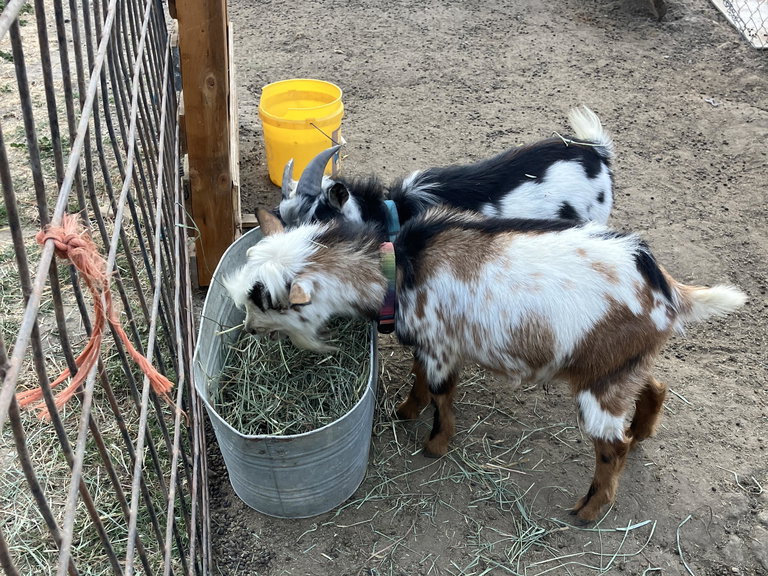
A goat is a herd animal. Alabama Cooperative Extension’s advice for pet goats is to keep them in pairs or groups, and a goat kept alone is a stressed, noisy goat. Every herd sorts itself into a pecking order, and the Merck Veterinary Manual adds three practical points: introduce new goats to a small herd in pairs so a newcomer is not driven out alone, give lower-ranking goats room to get away, and remember that goats with horns almost always dominate goats without them, so think hard before mixing horned and disbudded animals. A goat’s best companion is another goat. If you keep goats alongside other livestock, can goats and chickens live together covers the most common mix.
Housing and shelter
An elaborate barn is not necessary, but a dry, draft-free, well-ventilated shelter is. Merck asks for clean, uncrowded shelter that protects goats from weather extremes, with enough ventilation to prevent overheating and ammonia buildup, and dry bedding that is replaced when soiled. Alabama extension adds that goats dislike getting wet and will head for cover in a storm, and it describes the typical shelter as three-sided, which protects goats from the weather while keeping air moving.

Heat is a bigger risk than cold. University of Missouri extension puts the comfort zone for dairy goats at 55 to 70°F, notes that temperatures above 80°F seriously reduce feed intake and milk, and traces most pneumonia in goat housing to poor ventilation. For space, UMass extension recommends at least 10 to 15 square feet of bedded area per mature goat in open housing, another 25 square feet per goat for exercise, and kidding pens of at least 4 by 5 feet. Because goats like to climb and prefer to lie on hard, dry surfaces, a raised platform or two is good enrichment. Goat Shelter and Housing goes through layouts and bedding.
Fencing
Every weak spot in a fence gets climbed, leaned on or squeezed through, and Missouri extension points out that a goat fence has two jobs: keeping goats in and dogs out. Its recommendation is a 4-foot woven wire fence topped with an electric wire 12 inches above it, or an all-electric fence with five wires to a height of 36 inches. Merck warns that in urban and suburban areas the greatest predator risk often comes from neighbors’ dogs, and that anything a goat can climb should be kept away from the fence line. Mesh size matters too: horned goats and kids can push their heads through large openings and get trapped. Goat Fencing: Electric Netting vs Woven Wire vs Cattle Panel compares the options. Local zoning can restrict goats, so confirm they are allowed on your property first; Livestock Zoning Laws explains lot sizes, animal limits and setbacks.
Feeding, water and minerals
Feed goats forage first. Goats are browsers as well as grazers, and Alabama extension calls them selective browsers that prefer shrubs and leaves to grass. The Merck Veterinary Manual’s goat nutrition chapter asks for a diet built mainly on good forage or browse: hay, pasture or range. On average goats eat 1.8 to 2 percent of their body weight in dry matter a day, and a 110-pound (50 kg) goat drinks 2 to 4 gallons of water a day at maintenance, more in heat, pregnancy and lactation. Grain is for animals that genuinely need the energy, such as a doe late in pregnancy or early in lactation; Merck notes that a pet doe on moderate forage likely needs none, and that overfeeding starches is a common cause of disease on small hobby and pet farms. Feed hay off the ground in racks or feeders: goats dislike eating from the ground, and Merck notes that feeding directly from the ground in confinement raises the risk of disease. What to Feed Goats walks through each stage of life, and the goat hay feeder guide covers feeders that cut waste.
Offer a loose mineral made for goats along with salt; Merck prefers loose minerals to blocks. Goats are less sensitive to copper toxicity than sheep, Merck notes, so the copper level that suits one species is wrong for the other: do not feed goats a mineral made for sheep, and do not let sheep share the goats’ mineral. Loose Minerals for Goats explains copper, selenium and regional needs. Watch for three feeding emergencies in particular:
- Grain overload. A goat that gorges on grain, say after getting into the feed room, can develop lactic acidosis, which can be fatal. Introduce any concentrate gradually.
- Bloat. A rumen that cannot release its gas is an emergency; Bloat in Goats covers the causes, prevention and what to do.
- Urinary stones in wethers and bucks. Merck calls diet the most important tool for prevention: a calcium-to-phosphorus ratio of about 2 to 1, little grain, low magnesium and plenty of fresh water. A male goat straining to urinate is an emergency.
Weight matters for feeding and for dosing, and most owners do not have a livestock scale. Measure the heart girth and body length with a tape and the free goat weight calculator converts them to an estimated weight; How to Measure a Goat for Weight shows where to put the tape. How Much Does a Goat Weigh gives typical weights by breed and age.
Health basics
Find a veterinarian who treats goats before you bring any home. Vets who see goats can be hard to find in many areas; How to Find a Large Animal Vet explains where to look. You also need that vet relationship to buy most antibiotics: since June 11, 2023, medically important antibiotics once sold over the counter require a prescription, and FDA lists goats among the species affected. The core of a goat health program is short:
- Vaccines. CD&T, which protects against Clostridium perfringens types C and D (enterotoxemia) and tetanus, is the vaccine every goat gets. Tufts’ farm animal service gives it to weanlings twice, a month apart, then once a year, and also treats rabies vaccination as core in its area, so ask your vet about rabies where you live. Merck advises boosting does 4 to 6 weeks before kidding so their colostrum protects the kids. The goat vaccination schedule lays out the timing.
- Parasites. The barber pole worm (Haemonchus contortus) is a primary concern for most sheep and goat producers in the Southeast and South Central United States, University of Arkansas extension notes, and it has developed resistance to nearly all available dewormers. So treat only the goats that need it, and decide which ones with FAMACHA (a card that matches lower-eyelid color to the degree of anemia), fecal egg counts and your vet’s advice. Goat Deworming: FAMACHA, Fecal Egg Counts, and When to Treat explains how.
- Hooves. Goat hooves keep growing, and Cornell’s 4-H goat program says to plan on trimming about every 6 to 8 weeks; Goat Hoof Trimming covers tools and technique.
- Disease testing and quarantine. Caprine arthritis encephalitis (CAE), caseous lymphadenitis (CL) and Johne’s disease are the chronic, contagious diseases buyers should ask about by name. Merck lists physical examinations and quarantine among the practices that keep these diseases out of a herd, so keep new arrivals apart from your goats and talk to your vet about testing.
- Moving goats. Under the USDA scrapie rules, a goat that crosses a state line generally needs official identification to its flock of birth and a certificate of veterinary inspection if it is sexually intact (at any age) or a wether 18 months or older; goats headed to slaughter and moves between an owner’s own premises follow different rules. Check with the state veterinarian where the goat is going, and see Livestock Health Certificates.
Learn what normal looks like for each of your goats, because early signs are easy to miss. A goat that isolates itself, goes off feed, limps or loses weight is telling you something, and Merck advises taking any goat that shows those signs or behaves oddly out of the herd for a closer look. Note what you saw and when, and phone your vet sooner rather than later.
Breeding and kidding
Most goats are seasonal breeders. Merck’s breeding chapter describes them as short-day breeders that cycle as the days shorten in fall, with differences between breeds and longer seasons near the equator; the Nigerian Dwarf and the Nubian are known for breeding over a longer part of the year. A doe comes into heat about every 21 days and stays in heat for about 36 hours on average, and she shows it plainly: tail flagging, more bleating, a swollen vulva and discharge. Does reach puberty at 6 to 9 months, but Merck advises waiting until a doeling weighs 60 to 65 percent of her mature weight before breeding her. In season, bucks develop a strong odor and urinate on their own faces and legs. Keeping bucks in their own pen, as Alabama extension advises for pet herds, is also how you control when does are bred.

A doe is pregnant for about 150 days, with a normal range of 145 to 155, according to Merck. First-time does usually have one or two kids, and in later kiddings triplets and quadruplets are not unusual. Enter the breeding date in the free goat gestation calculator to get a due date and kidding window; it has presets for Nigerian Dwarf, Pygmy, Mini Nubian, Mini LaMancha and Boer, plus an exposure-window mode for a buck that ran with the does. The goat gestation guide explains what shifts the date. If the buck was in with the does for weeks, record the exposure window rather than a guessed date, as Goat Breeding Exposure Records explains. Goat Breeding: Heat Cycles, Signs, and Timing covers heat detection and hand breeding.
The last six weeks of pregnancy are the risky stretch. Merck warns that underfeeding does in late pregnancy leads to pregnancy toxemia and low blood calcium, that does carrying multiples need proportionally more energy, and that both obesity and thinness should be avoided. For kidding, give the doe a clean, dry, draft-free pen and disturb her as little as possible, because a stressed doe can hold back labor. Once strong contractions begin, the first kid should be born within about an hour; if not, call your veterinarian. The goat kidding guide covers the stages and exactly when to call for help, and the goat kidding calendar lays out the preparation week by week.
Kids should stand and nurse within about 30 minutes of birth, and a kid that cannot nurse needs colostrum by bottle: Merck’s guideline is at least 10 percent of its body weight in good colostrum within the first 24 hours. Bottle-Feeding Baby Goats takes over from there. Disbudding, if you choose it, is done in the first days of life: Merck gives day 3 to 5 for standard-breed bucklings, 3 to 7 for doelings, and by day 14 for Nigerian Dwarfs and Pygmies. Disbudding Goat Kids explains the why, the when and the how.
Two genetic and management cautions save a lot of grief. First, in European dairy breeds the polled (naturally hornless) gene is closely linked to an intersex condition, and Merck notes that many breeders reduce it by never breeding two polled goats together. Second, buck kids mature early: Oklahoma State University’s breeds reference warns that Nigerian Dwarf bucklings have been known to be fertile as young as 7 weeks, so separate buck kids from does and doelings in good time.
Buying a goat
Decide what the goat is for before you look at a single ad, then learn the vocabulary sellers use. A doe is a female and a buck an intact male; a wether is a castrated male, the usual pet; a kid is a young goat of either sex, and a young female or male is often listed as a doeling or buckling. A registered goat is entered, with its sire and dam, in a breed association’s herd book, and Cornell notes that most associations want a permanent tattoo on the goat before they register it. A grade or unregistered goat may be every bit as healthy, but it costs less and comes without papers.
The safest goats to buy are the ones whose history you can check, which points to these sources:
- Breeders and small farms. A farm visit shows you the herd, the dam and sire, how the goats are housed and what records are kept. Search the goat breeders and farms in the Creatures directory by breed and state; most entries are compiled from public sources, so contact each farm and ask your questions yourself.
- Breed associations and goat clubs. Registries and local clubs know who raises good stock in your area, and registered goats come with papers. Cornell’s 4-H advice for a first goat is to buy from the person who raised it and to choose a breed that is popular locally, so a buck is easy to find later.
- Auctions and sale barns. Goats at auction are often exposed to diseases from other farms during the sale, and you cannot ask the breeder anything. Experienced keepers buy there with a quarantine plan; a first-time buyer should treat it as advanced mode.
- Online listings. The Creatures goat marketplace lists goats from sellers who have passed verification. There are not many goat listings yet, so for a particular breed, save an alert and wait for a match to be posted.
- Rescues and sanctuaries. Some small-ruminant rescues and farm sanctuaries rehome goats, often adults with a known temperament. Ask the same health questions you would ask a breeder.
Ask every seller the same questions: the herd’s CAE, CL and Johne’s testing status (in writing), the vaccination and deworming history, recent FAMACHA scores or fecal results, the birth date, registration papers and tattoo if the goat is registered, its scrapie identification, whether it is horned, disbudded or naturally polled, and for a wether, when and how he was castrated. Then look the goat over: bright eyes, a full coat, some flesh over the ribs and spine, trimmed hooves, an even walk and easy breathing. Walk away from a seller who will not discuss disease testing, who is happy to sell you one goat on its own, or whose herd has limping goats, swollen knees, coughs or bottle jaw. Where to Buy a Goat covers each check in detail, and Goats for Sale: A Buyer’s Guide adds a checklist for the day you visit. Before pickup day, read Livestock Transport for moving goats safely, including across state lines.
Records to keep from day one
Goat records are short-interval records. Parasite treatments, hoof trims and weights only tell you something as a series, and a doe’s kidding history is the argument for or against keeping her. Every record hangs on permanent identification, so give each goat an ear tag or tattoo, plus the official scrapie ID most goats need to cross a state line. Cornell’s identification fact sheet warns that collars and tags can come off and collars can catch on fences, which is why registries rely on tattoos. Then log each of these the day it happens:
- date of birth, dam and sire, registration number and tattoo;
- each breeding or buck exposure window, and each kidding: the date, how many kids and how it went;
- CD&T vaccinations and every booster, with dates;
- dated FAMACHA scores and fecal egg counts, plus each dewormer given, with the product, the dose and the withdrawal date from your vet;
- every hoof trim, weight and body condition score;
- milk records for any doe in milk;
- each purchase, sale, move and health certificate.
Filled-in examples for each of these are in Goat Record Keeping, and Livestock Record Keeping adds the herd-level records. If your children show goats, the 4-H livestock record book guide is the place to start.
Registered goats add a pedigree. How to Read Goat Registration Papers walks through an ADGA certificate, and the free goat pedigree chart maker prints a three-generation pedigree with registration numbers for a buyer or a show, no account needed. If you raise Nigerian Dwarfs, the Nigerian Dwarf goat coat color calculator predicts the colors a pairing can produce. Naming a new kid? The goat name generator suggests names, and the farm name generator does the same for a herd or farm name.
A free Creatures profile for each goat keeps its ID, pedigree, photos and all of the records above in one place, reminds you when boosters, hoof trims and kidding dates come due, and can be transferred to a buyer with the goat’s history attached. The help center covers adding a record, health and medical records and recording a breeding, and the breeding dashboard article shows where bred does appear as kidding nears (Expecting, Due soon, Overdue).
Frequently asked questions
What are the main types of goats?
Dairy, meat, fiber, and miniature or pet goats. Dairy breeds such as the Alpine, Nubian, Saanen and LaMancha are kept for milk, meat breeds such as the Boer, Kiko and Spanish for growth and carcass, and fiber goats such as the Angora for mohair or cashmere. Small breeds such as the Nigerian Dwarf and Pygmy, and wethers of any breed, are the usual pets.
How many breeds of goats are there?
FAO’s global breed databank holds about 750 living goat breeds reported by countries around the world. In the United States, the American Dairy Goat Association keeps herd books for nine dairy breeds, and separate associations register the Boer, the Pygmy and other breeds.
What is the scientific name of a goat?
The domestic goat is Capra hircus, in the genus Capra with the wild goats and ibexes. It was domesticated from the wild goat, Capra aegagrus, about 10,000 years ago in the Middle East.
What is a baby goat called?
A baby goat is a kid, and a young female or male is often called a doeling or buckling. An adult female is a doe, an intact male is a buck, and a castrated male is a wether. (Nanny and billy are informal names you will rarely see in a sale listing.)
How long do goats live?
Washington State University extension teaches 10 to 15 years as the average, and the oldest goat on record (Guinness World Records) lived 22 years 5 months. Many dairy and meat goats leave the herd much younger, but a pet goat kept for life can reach its teens.
How much does a goat cost?
A pet wether usually costs about $150 to $350, a grade dairy or commercial meat goat roughly $200 to $600, and a registered dairy or show goat $500 to $1,000 or more. You need at least two, and fencing, shelter and feed cost more over the years than the goats themselves.
Can you keep just one goat?
You should not. Goats are herd animals, and extension advice is to keep them in pairs or groups, so plan on at least two goats from the start.
What do goats eat?
Mostly forage: browse, pasture and good hay, plus clean water and a loose mineral made for goats. Goats eat about 1.8 to 2 percent of their body weight in dry matter a day, and grain is only for animals that need the extra energy, such as does late in pregnancy or in milk.
How long is a goat pregnant?
About 150 days, with a normal range of 145 to 155 days after breeding. The free goat gestation calculator works out a kidding date and window from the breeding date.
What is the difference between a Nigerian Dwarf and a Pygmy goat?
Both are small, but the Nigerian Dwarf is a miniature dairy breed with the proportions of a full-size dairy goat, while the Pygmy is a cobby, full-barreled breed. ADGA allows Nigerian Dwarf does up to 22.5 inches at the withers, and the National Pygmy Goat Association allows adult Pygmy does up to 22 3/8 inches.
Do this next on Creatures
Whether you are choosing your first pair of goats, bringing new ones home or already kidding out a herd, these are the useful next steps, in the order most readers need them.
Get told when the right goat is listed. Goat listings are still few, so set a free goat listing alert and Creatures emails you when matching goats are posted, no account needed to start. Here is how saved searches work.
Find breeders by breed and state. Search the Creatures breeder directory, or go straight to goat breeders and farms, and ask each one about CAE, CL and Johne’s testing before you visit.
See what is for sale now. Browse goats on the Creatures marketplace, where sellers pass verification before they can list, and ask every seller for the herd’s testing, vaccination and deworming records.
Brought goats home? Create a free profile for each goat with its tag or tattoo, birth date, breed and photos, no account needed to start. The walkthrough is in adding an animal to Creatures.
Keep the records that matter. CD&T boosters, FAMACHA scores and fecal counts, dewormers and withdrawal dates, hoof trims, weights, breedings and kiddings: add a record. The record sheet opens for any visitor to look around, and a free account saves what you enter. See adding a record and reminders and upcoming care for boosters and due dates.
Raise or sell goats? Dairies, meat goat farms and breeders can create a free farm or breeder profile so buyers searching for goats can find you, no account needed to start. See getting listed in the breeder directory, adding your team and how seller payout works, and use the breeder directory profile checklist to describe your herd clearly.
Use the free goat tools. Work out a kidding date with the goat gestation calculator, estimate weight with a tape and the goat weight calculator, print a goat pedigree chart, predict Nigerian Dwarf kid colors with the coat color calculator, check auction prices in the goat price guide, or find a name in the goat name generator.