Alpine
Author: Elliott Garber, DVM · Published
Alpine goats are dairy goats with upright ears, a straight facial profile and varied coat patterns. They can be appealing for a home or commercial dairy, but owning a milking doe means committing to feed, hygiene, breeding decisions and dependable daily care.
The free goat pedigree chart maker can organize the family history supplied with a doe. Treat measured milk records and original registration papers as separate evidence.
Set an Alpine search alert for new matching listings. Current supply may be empty; the Alpine breeder directory is another route to contact sources and ask about availability.

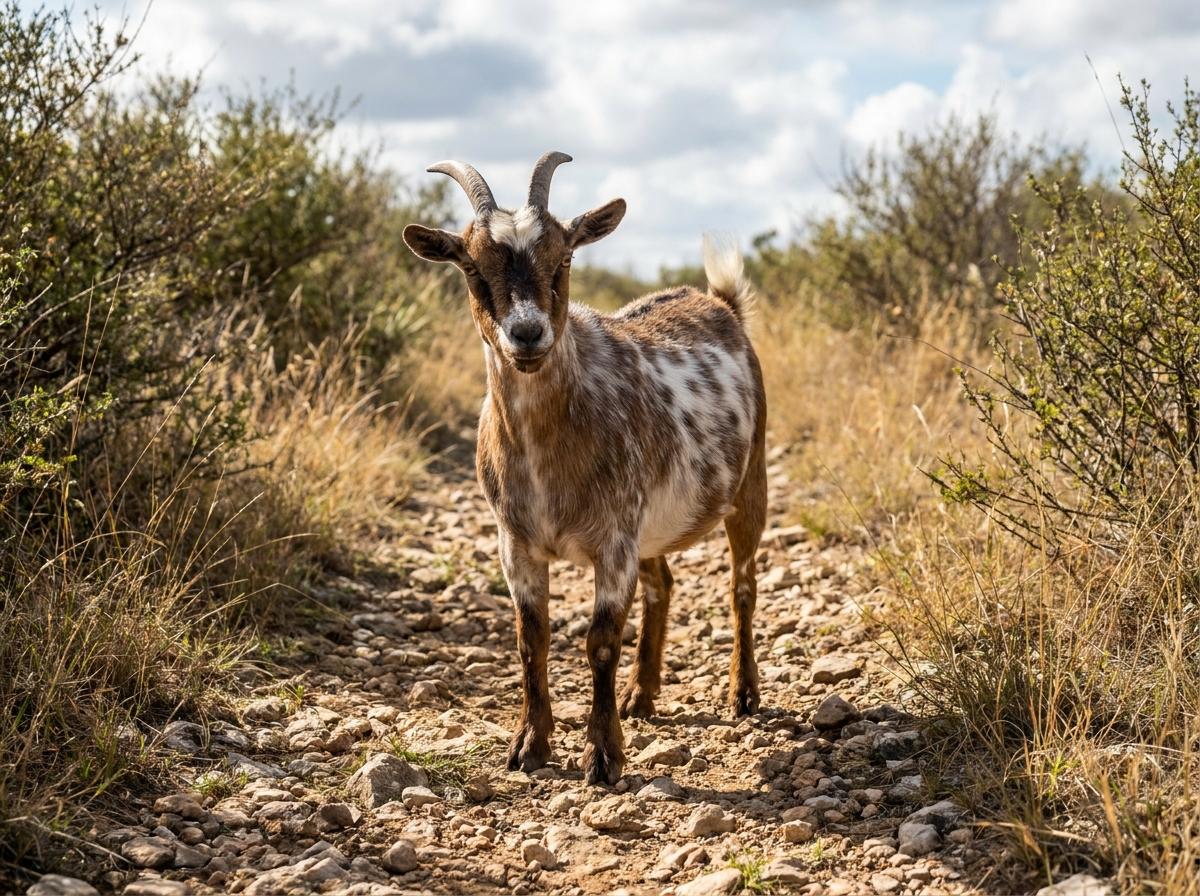
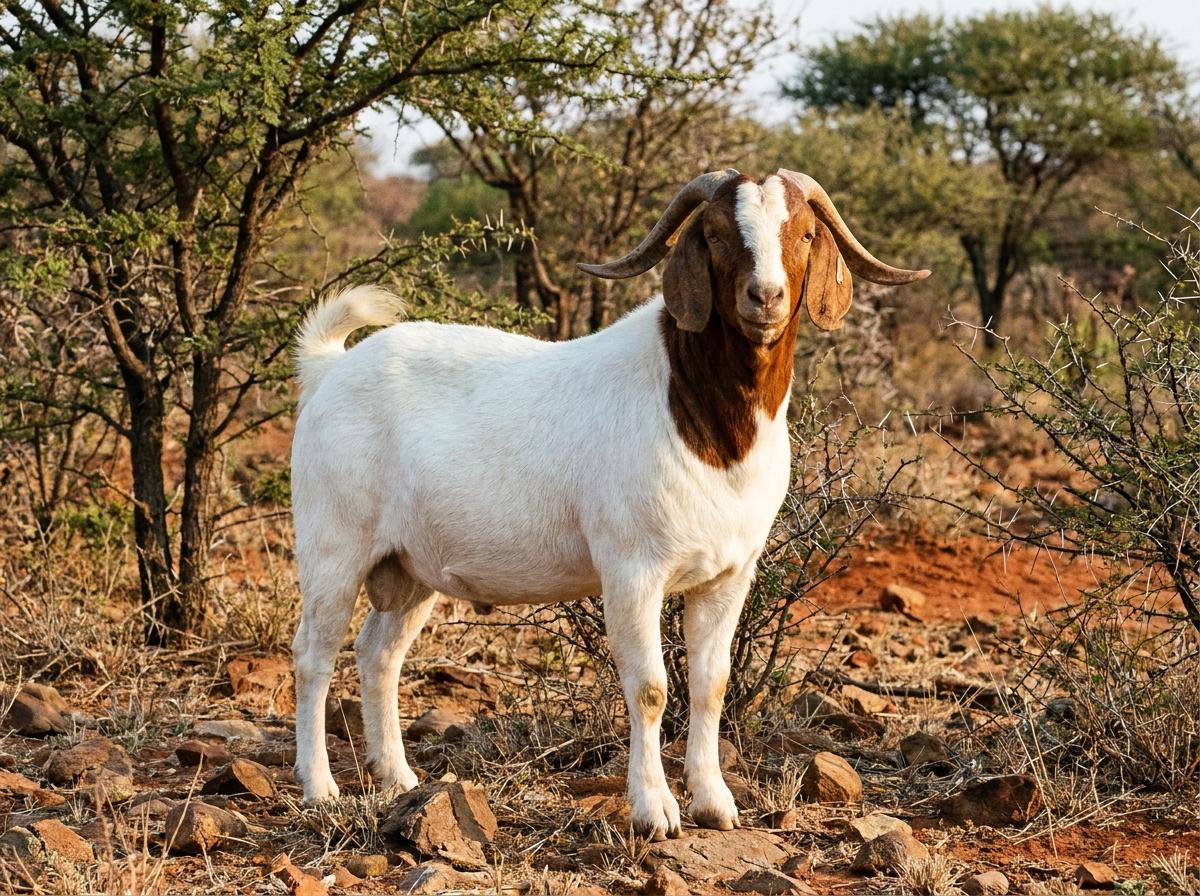
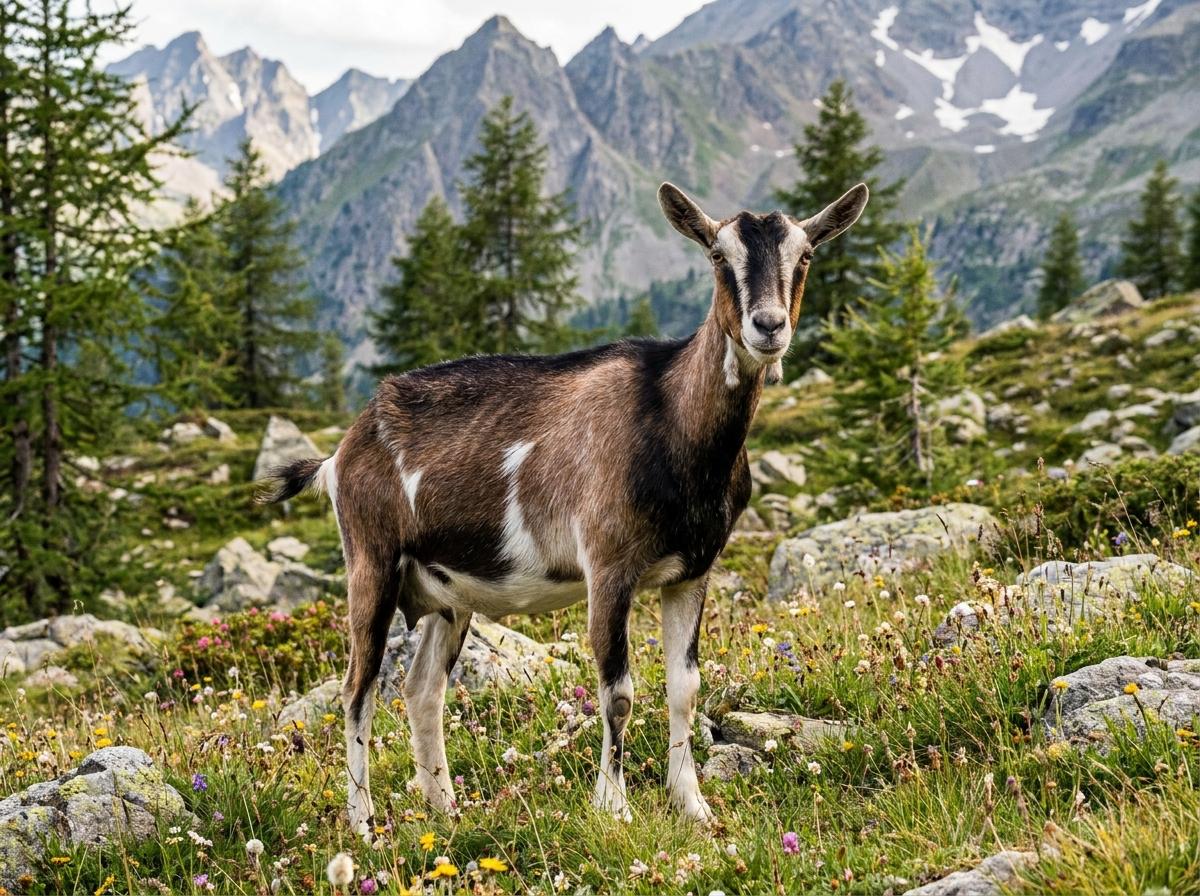
AI-generated illustration.
| Origin | French dairy goat |
|---|---|
| ADGA adult doe minimum | 30 inches; 135 pounds |
| ADGA adult buck minimum | 32 inches; 170 pounds |
| Features | Erect ears, straight face, varied coat patterns |
| Registry categories | Purebred, American, Experimental or Recorded Grade |
| Buying priority | Individual milk, health and kidding records |
Browse listings, public profiles, breeders, or add your animal.
Alpine size, French roots and coat patterns
Alpine goats are a French-origin dairy breed. The American Dairy Goat Association (ADGA) standard gives adult does at least 30 inches tall and 135 pounds, and bucks at least 32 inches and 170 pounds. Erect ears, a straight facial profile and short to medium hair are identifying features. This is a substantial dairy goat, not a miniature breed.
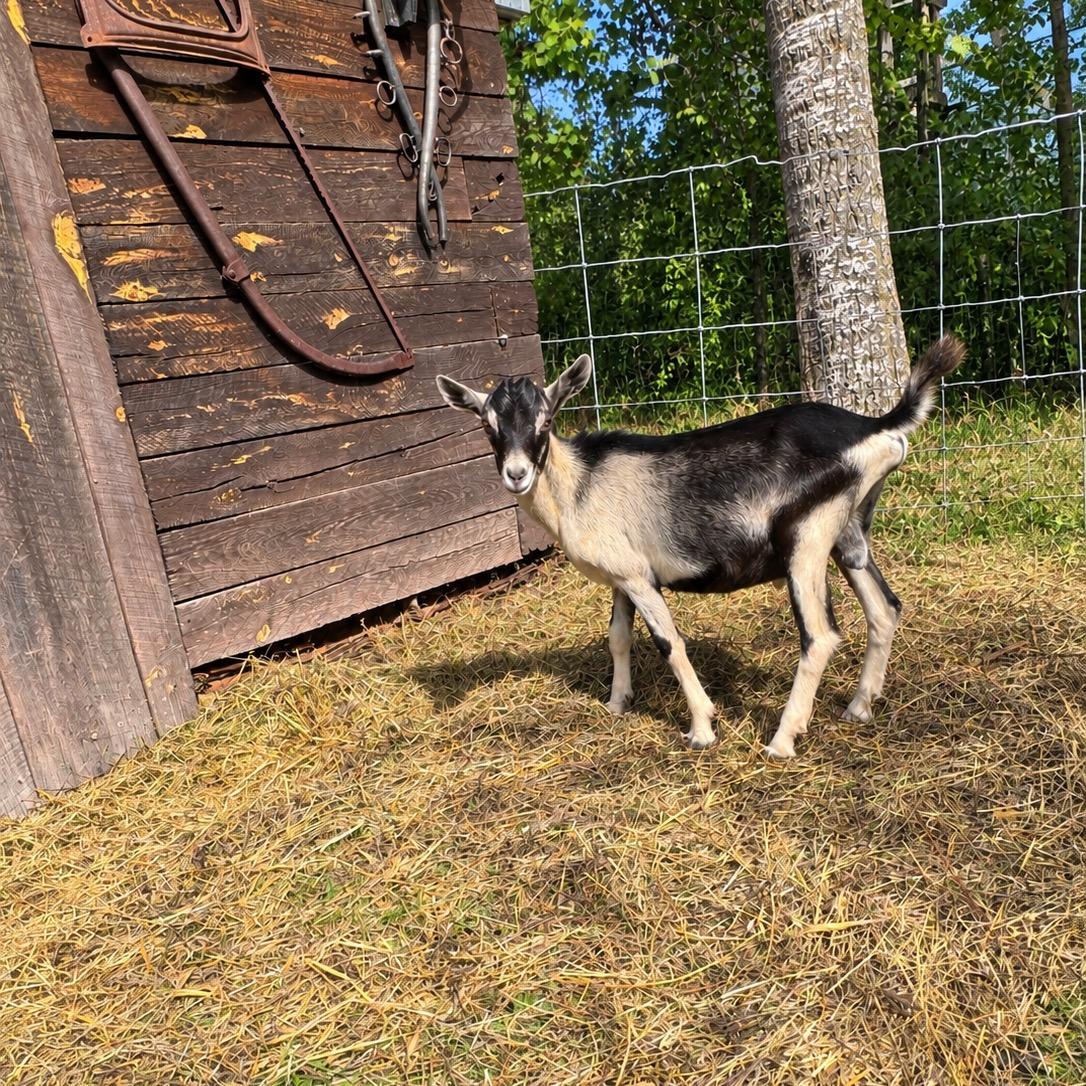
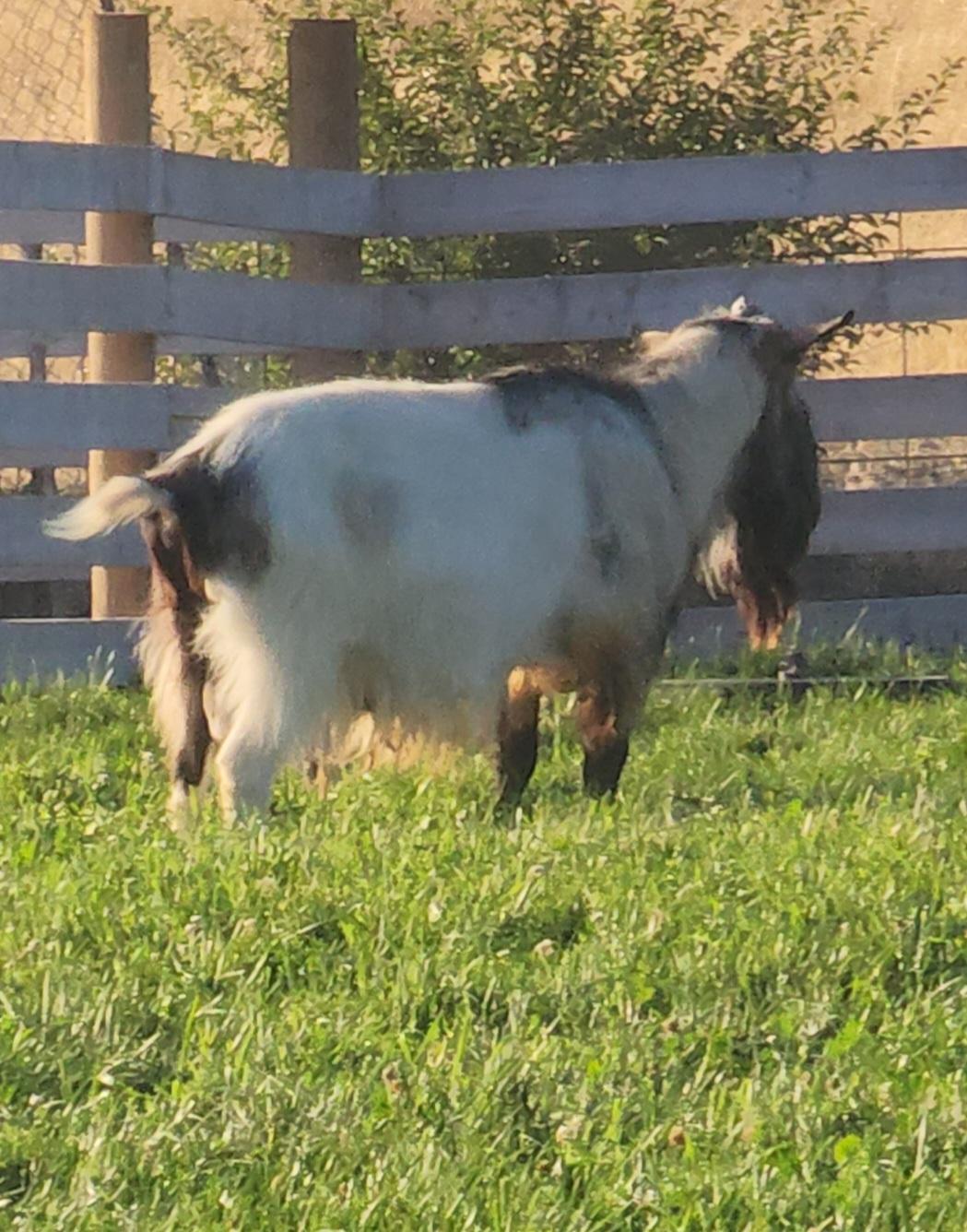
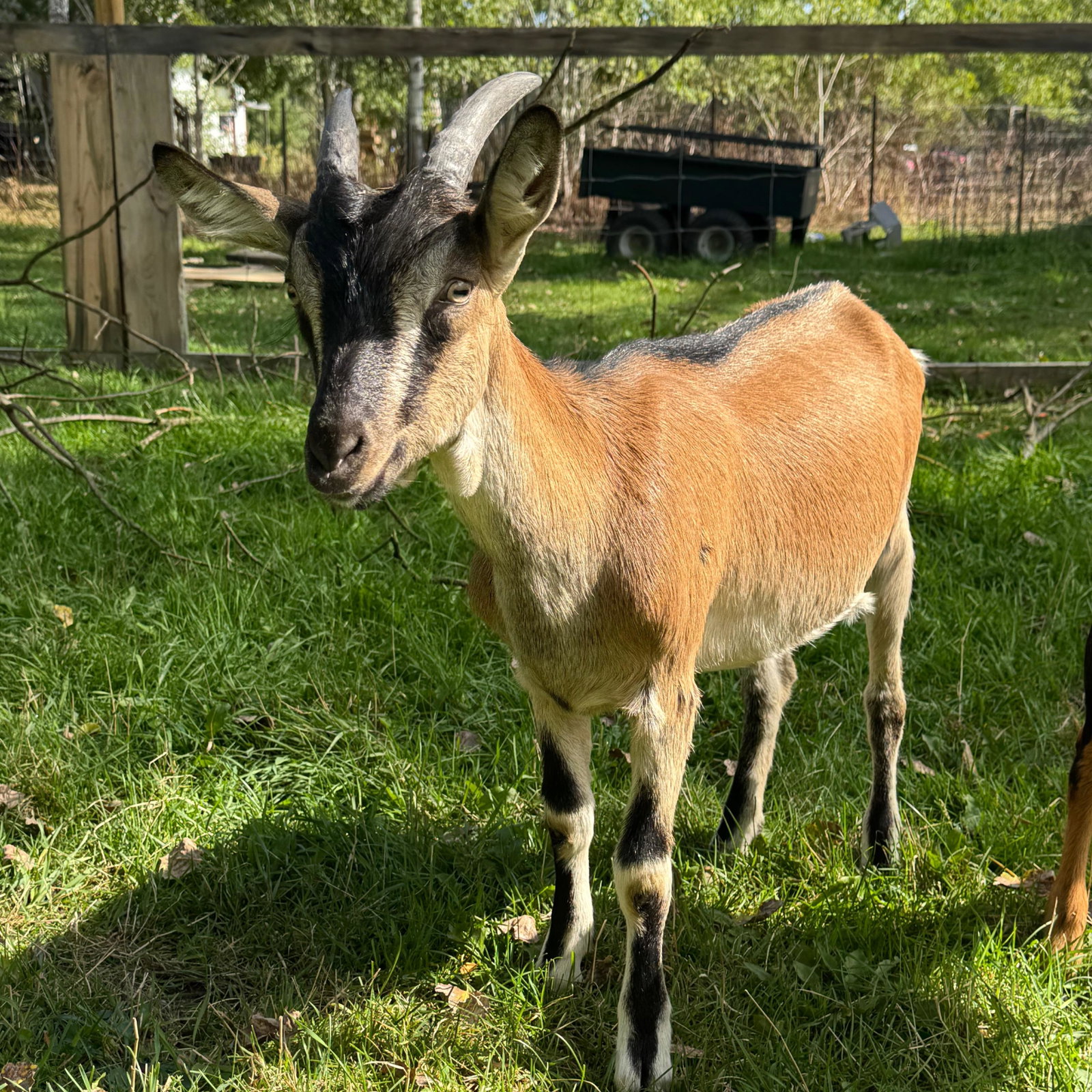
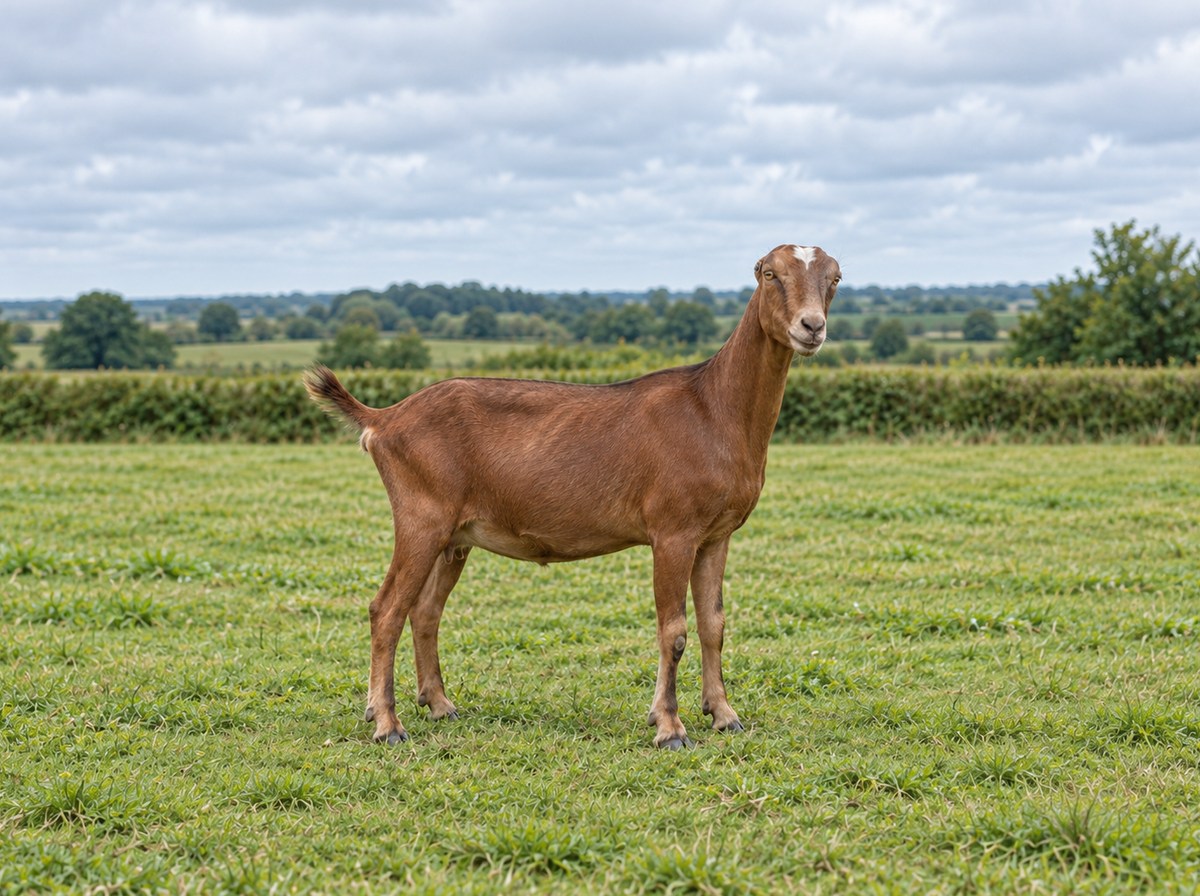
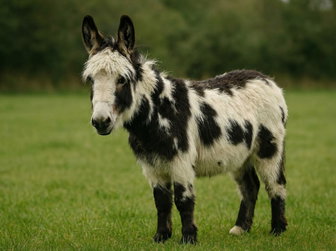
Brown with black markings is the familiar chamoisee pattern, but it is only one Alpine appearance. ADGA’s pattern descriptions also identify cou blanc, with white front quarters and black hindquarters; cou clair, with a lighter front and black hindquarters; cou noir, with black front quarters and white hindquarters; sundgau, black with white markings; and pied, spotted or mottled. Two-tone and broken chamoisee patterns add further variation. The illustrations here show one pattern, not the breed’s full color range.
What the registration category tells you
ADGA uses Alpine as the breed name; “French Alpine” is also a familiar name. Purebred, American, Experimental and Recorded Grade describe different records, not coat colors. ADGA’s explanation of its herdbooks distinguishes Purebred animals that meet the breed standard and come from a Purebred sire and a Purebred dam of the same breed, American animals from a qualifying grading-up pedigree, Experimental crosses between recognized breeds, and Recorded Grade females. American status requires a qualifying pedigree through three generations for does and four for bucks.
Read the actual certificate, verify transfer eligibility with ADGA and keep the original alongside the goat pedigree. The British Alpine guide concerns a related name that should not be assigned merely because a goat is black and white.
Choose by measured milk history
For a doe in milk, request the current daily routine and available production records, with dates and stage of lactation. A peak yield is not a promise of steady output. For a young doe, distinguish her own record from the performance of her dam or other relatives.
Penn State’s dairy-goat production table, using 2019 DHIR records, reports Alpine averages of 2,715 pounds of milk, 3.3% fat and 2.9% protein. These were 275- to 305-day records, not adjusted for age, with a wide range among does. They provide scale for planning, not a promise of gallons each day from a newly purchased doe.

AI-generated illustration.
See the actual milking routine
Watch the doe being milked in her usual setting. Ask whether she knows hand or machine milking, who normally handles her and how she responds to unfamiliar people. A quiet doe in one routine may need patient adjustment to another.
The goat milking-machine guide helps compare equipment; learn the complete process with an experienced keeper and your veterinarian or dairy adviser. Preparing the animal, recognizing abnormal milk, cleaning equipment and recording concerns are all part of milking. Do not treat the act of collecting milk as the whole job.
Arrange relief care before purchase. A trained backup person needs the routine, feed details and veterinary contact information. Think through water, power and equipment failures as well as holidays. A lactating animal’s needs continue when your plans change.
Feed the doe, not the stereotype
Alpines need a balanced diet appropriate to condition, age and reproductive stage. Good forage is central, but a lactating doe’s total ration deserves individual assessment. Get the seller’s feed details by product and weight, then have your adviser plan changes to available supplies.
Penn State’s goat-feeding resources provide a useful starting point for forage and feed management. Do not assume that browsing weeds supplies every nutrient or that goats can safely eat any plant on a property.
Goats need more copper than sheep; Penn State notes that most sheep mineral products do not provide enough for goats. Use a goat-appropriate ration reviewed by your nutrition adviser, and keep it inaccessible to sheep, for whom excess copper can be fatal. The goat loose-mineral guide explains the questions to ask without guessing a supplement dose.
A free goat weight estimate can be a starting point for a size discussion. Record it as an estimate and use an actual scale weight when accuracy is needed; it should not determine a medication dose or replace a feeding assessment.
Housing, company and daily observation
Plan compatible goat companions, secure goat-proof mesh fencing, dry shelter and reliable clean water. Open rails alone may leave escape gaps. Inspect gaps, latches and places where a goat could become trapped. Design feeding space so lower-ranking animals can eat rather than simply adding more feed to a contested corner.
Ask whether a hornless goat is naturally polled or was disbudded, and obtain the history of the procedure. The disbudding guide explains the welfare and veterinary questions. Provide safe opportunities to move and explore. Before introducing unfamiliar goats, discuss separation and health checks with your veterinarian. A seller’s apparently healthy group still needs a receiving plan suited to your herd.
Learn the doe’s normal appetite, movement, interaction and milking behavior. Record changes promptly. The guide to health and medical records explains how to keep dated observations and veterinary documents on Creatures; diagnosis and treatment decisions belong with your veterinarian.
Health reports and breeding plans
Ask specifically about caprine arthritis-encephalitis (CAE), caseous lymphadenitis (CL) and Johne’s disease, all identified in Penn State’s dairy-goat guidance. Review actual reports with your veterinarian: animal or group sampled, date, test and laboratory matter. Negative results have limits and are not a lifetime disease-free guarantee. The goat buying guide explains the disease-test questions to raise before a visit.
For a breeding doe, request kidding dates, assistance, kid-rearing history and any udder-health problems. If she is offered pregnant, ask for the service sire, dates and confirmation details. Plan facilities and veterinary support before the expected kidding period.
You do not need to keep a buck simply because you keep does. Discuss suitable breeding arrangements with an experienced adviser, and include biosecurity and transport in that decision. If your aim is companionship, nonbreeding goats may suit it without a dairy or breeding program.
Keep the service date or exposure range with the sire record. The goat gestation calculator helps plan the kidding watch, while veterinary findings and the doe’s history guide care.
What does an Alpine goat cost to keep?
Use the goat cost guide to compare kids, proven milkers and the continuing costs of a dairy group.
Compare goats of similar age, registration, training and production status. A bottle kid, young doeling that has not yet kidded and established milker are different purchases. Ask which records and transfer steps come with the price.
Budget for companions as well as the desired doe, then include forage, supplements, fencing, shelter, hoof care, veterinary support, milking equipment, cleaning supplies and relief labor. If any of those depend on somebody else’s availability, arrange them before the goat arrives.

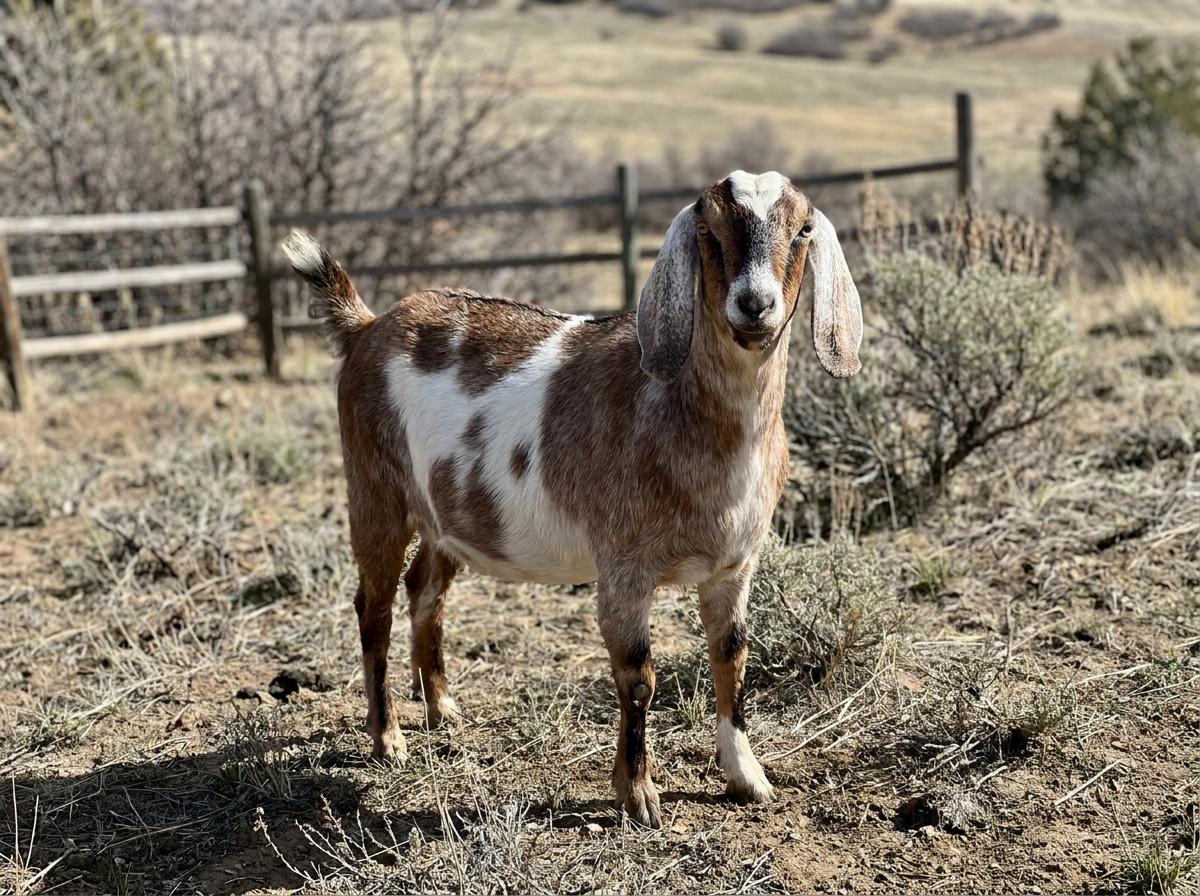
AI-generated illustration.
If size is part of your choice, compare the Mini Alpine guide, then ask for the same individual milk and care evidence rather than assuming a smaller goat means proportionally less work.
Goat or cow for a small dairy?
The goat overview helps with the broader species decision. Compare Brown Swiss cattle and Holstein cattle if you are weighing goats against a cow. The facilities and output differ, but either option needs a complete daily-care and backup plan.
Alpine questions
Are all Alpine goats brown with black markings?
No. The breed includes varied colors and patterns. Confirm identity and registration independently of color.
Is a doe’s advertised daily yield permanent?
No. Ask when it was measured and where she is in lactation, and review the feeding and health context.
Can a single Alpine be kept just for occasional milk?
Plan compatible goat company and a dependable milking routine. Milk production brings ongoing care obligations; it is not an occasional-use feature of ownership.
Do this next on Creatures
Keep the animal’s identity, original documents and your dated observations together. Choose the next step that matches where you are in the process.
- Set up an Alpine search alert. Get notified when new listings match, with help from the saved-search guide.
- Check current Alpine listings; supply may be empty or change. Ask for the evidence relevant to your intended purchase.
- Start an Alpine profile. No account is needed to start. The animal-profile guide explains the details.
- Add a care or breeding record. The form opens for visitors; a free account saves the record. Read the record guide before adding documents.
- Start a breeder or farm profile. The directory guide explains how a breeder listing works.
- Explore Alpine breeders to compare sources and prepare a careful introduction to the seller.