Pygmy
Author: Elliott Garber, DVM · Published
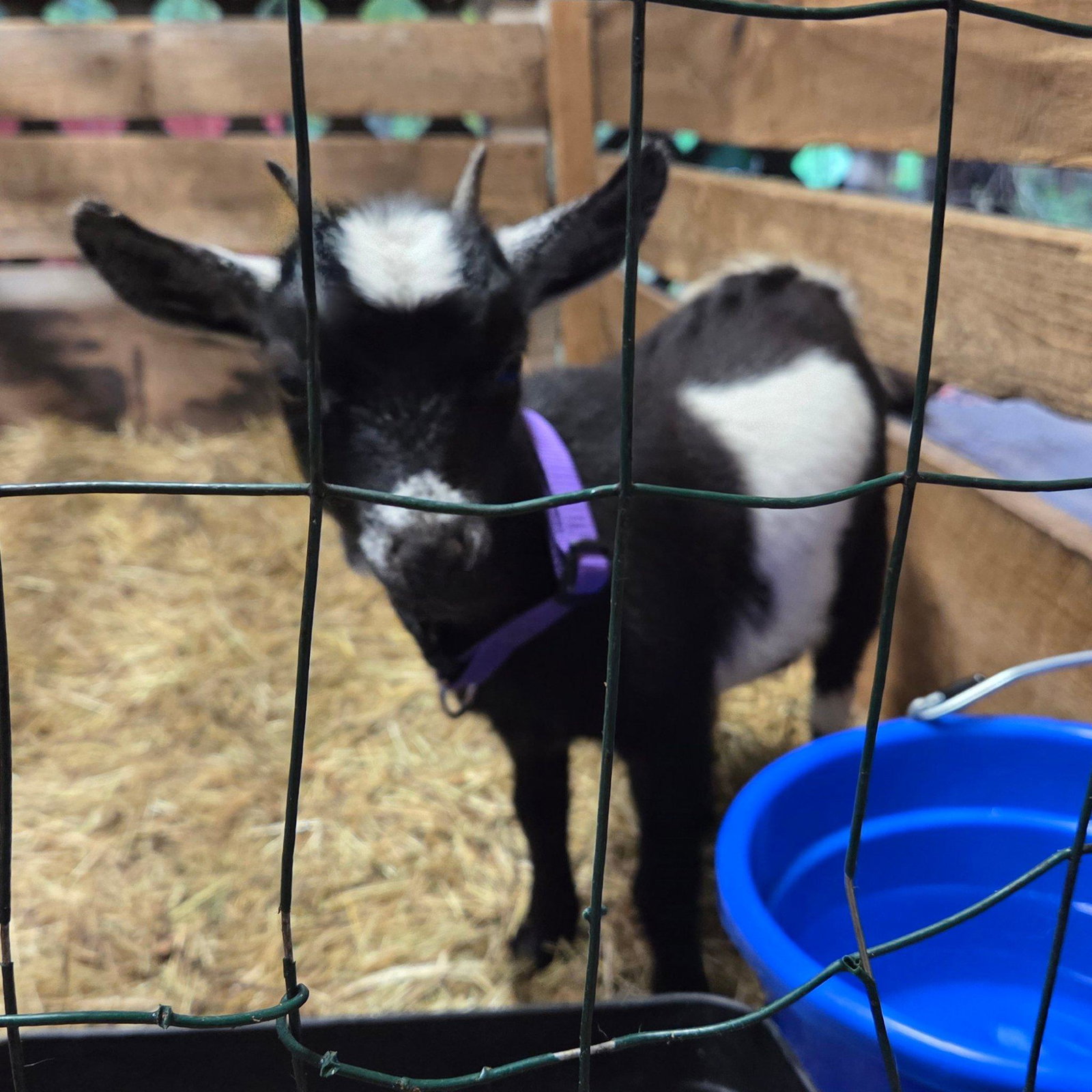
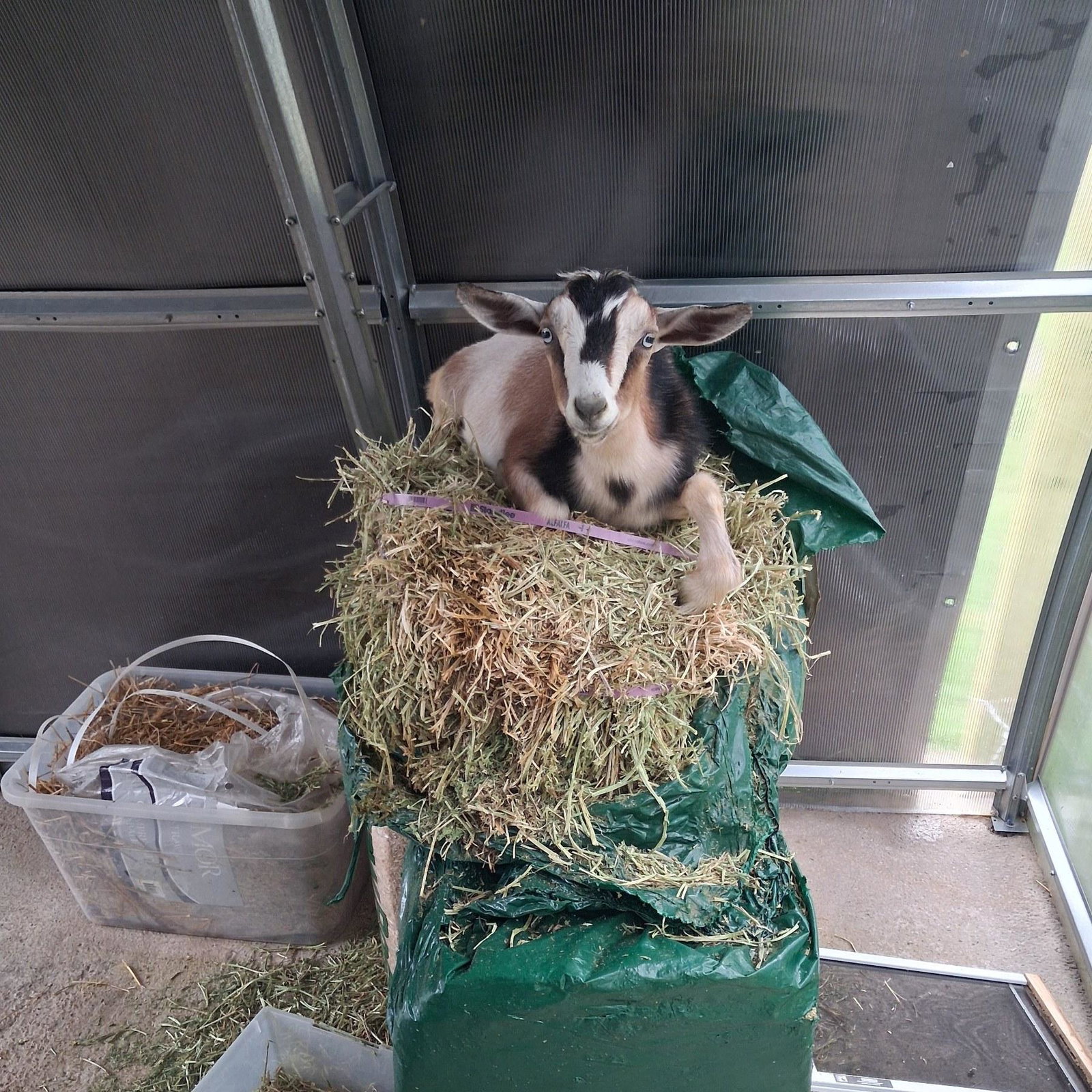
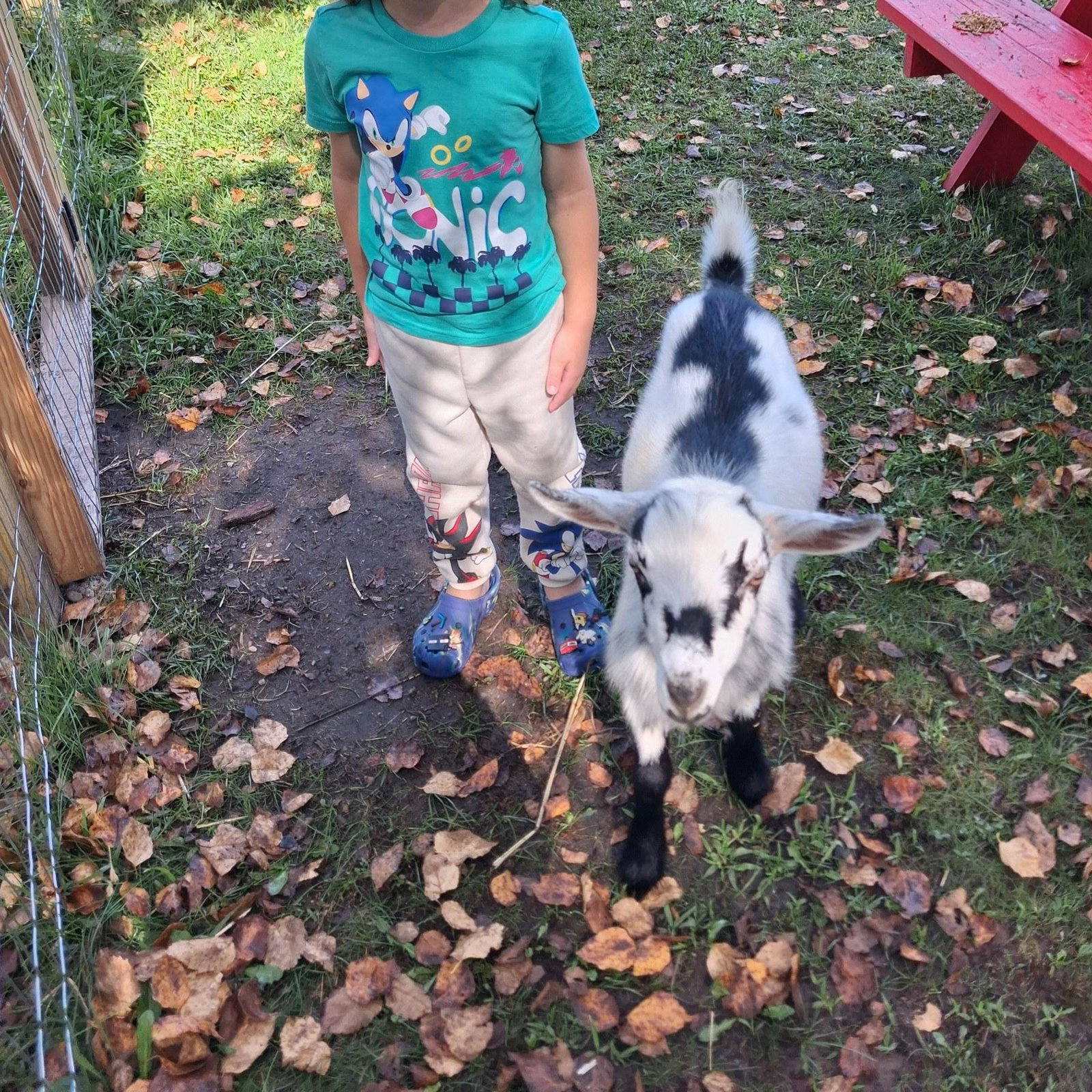
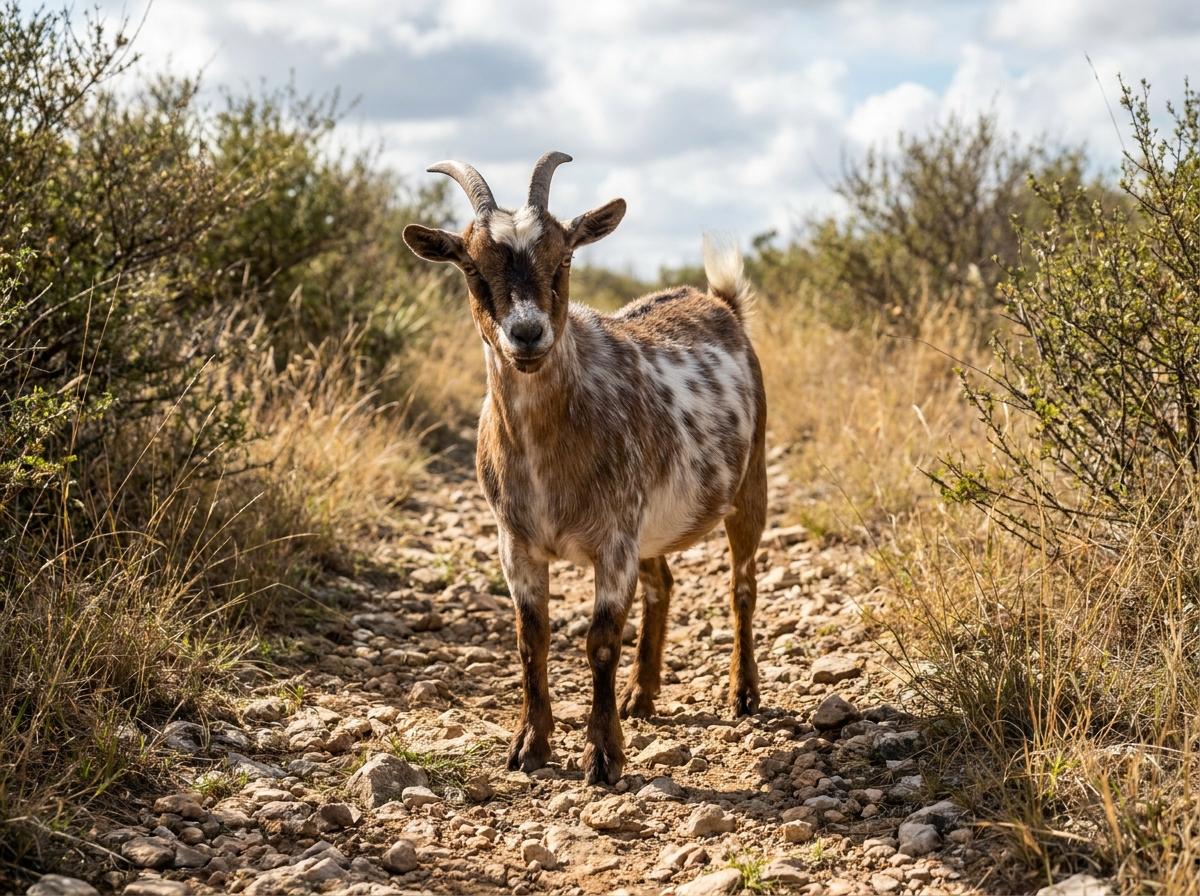
A Pygmy goat is a small, cobby goat with short legs, a short broad head and a wide, deep barrel, descended from the dwarf goats of West Africa. Under the National Pygmy Goat Association (NPGA) breed standard, a full-grown doe stands 16 to 22 3/8 inches at the withers and a full-grown buck 16 to 23 5/8 inches. That is almost exactly the height range of the Nigerian Dwarf, so size alone will not tell you which breed you are looking at. A Pygmy is built heavier for its height, carries a fuller coat, and in the NPGA herd book comes in only a handful of color patterns.
Pygmies are kept mostly as companions, youth and show goats, and browsers on small places, and they need the same care as any goat, starting with a second goat for company. Pygmy listings on the Creatures marketplace are rare, so the quickest way to hear about one is to set a free Pygmy listing alert (no account needed to start). In the meantime you can browse Pygmy breeders listed in the Creatures directory.

| Origin | West African dwarf goats, brought to the US through European zoos (first documented US shipments 1959) |
|---|---|
| Registries | NPGA (founded 1976) and AGS in the US; Canadian Goat Society; Pygmy Goat Club in the UK |
| Adult height (NPGA) | Does 16 to 22 3/8 in; bucks 16 to 23 5/8 in, measured at the withers |
| Build | Cobby and compact: short legs and head, wide deep barrel, heavy bone |
| NPGA colors | Caramel with black or brown markings; grey, brown or black agouti; black; solid black |
| Horns | Genetically horned; disbudding is allowed |
| Gestation | 145 to 155 days; the NPGA calculates to 150 |
| Lifespan | Often into the teens with good care (NPGA) |
Browse listings, public profiles, breeders, or add your animal.
What is a Pygmy goat?
In the United States the breed is registered simply as the Pygmy goat. The NPGA’s own site speaks of preserving the American Pygmy Goat, and you will also hear it called the African Pygmy, a nod to where its ancestors came from. Oklahoma State University’s Breeds of Livestock reference notes that the breed was originally called the Cameroon Dwarf goat.
The NPGA breed standard (revised January 2020) describes a goat that is genetically small, cobby and compact, with legs and head short relative to body length. Its body circumference, compared with its height and weight, is proportionately greater than in the dairy breeds. The standard even says the barrel should give an “impression of perpetual pregnancy,” which matters more than it sounds: a well-made Pygmy doe looks round whether she is bred or not.
“Pygmy” is not a general word for any small goat, although it often gets used that way. The NPGA’s buying guide makes the point bluntly: the reason to buy a registered Pygmy is that a year later your pet wether is still a small goat, not a much larger grade dairy wether. If size matters to you, papers are how you know.
For the care basics every goat needs, whatever its breed, start with the Creatures goat guide, which covers the whole species and its breeds.
Where the Pygmy goat came from
West African roots. The Pygmy descends from the West African Dwarf goat, the small goat of West Africa’s humid forest and savanna zones. A 2011 review in Parasites and Vectors describes these goats as valued at home for their high fertility, prolificacy and tolerance of trypanosomosis, a tsetse-borne disease. That is the background, not a promise about any Pygmy in your barn: North American Pygmies need ordinary parasite control like every other goat.
Through European zoos. According to Oklahoma State University, Cameroon dwarf goats were exported from Africa to zoos in Sweden and Germany, and from there reached England, Canada and the United States. In 1959 the Rhue family in California and the Catskill Game Farm in New York received the first documented shipments of Pygmy goats from Sweden. Offspring of those goats, and of earlier imports, went to zoos, medical research and a few private owners. The Livestock Conservancy’s Nigerian Dwarf page puts the wider window of small African goat imports to the US between the 1930s and the 1950s, mostly as zoo exhibition animals that later became popular companions.
One foundation, two breeds. The same Livestock Conservancy page explains that the Pygmy and the Nigerian Dwarf share that foundation. Breeders selected the Pygmy for small size and stocky conformation, and the Nigerian Dwarf to resemble a miniature dairy goat with a more slender body. The American Goat Society recognized the Pygmy in 1976, and the National Pygmy Goat Association was founded the same year. The NPGA sets the breed standard, keeps the herd book, licenses judges and sanctions Pygmy shows, and it has affiliated clubs in the US, Australia and Europe.
How big do Pygmy goats get?
This is the question most people searching for the breed want answered, and the NPGA standard answers it precisely. It sets height limits at the withers by age, with an allowable margin of error of 1/8 inch:
- Under 6 months: no minimum; does up to 18 1/2 inches, bucks up to 18 5/8 inches.
- 6 to 12 months: does 13 3/4 to 20 3/8 inches; bucks 14 1/2 to 20 3/4 inches.
- 12 months and older: does 16 to 22 3/8 inches (about 41 to 57 cm); bucks 16 to 23 5/8 inches (about 41 to 60 cm).
The standard also limits front cannon length (the bone between knee and pastern), which keeps the legs short in proportion: adult does 2 7/8 to 4 1/2 inches, adult bucks 3 to 4 5/8 inches. The yearling figure is easy to misquote: 20 3/8 inches is the cap for a doe between 6 and 12 months, not for an adult.
How the NPGA measures. The goat stands on a firm, flat surface in a normal pose, head neither pulled up nor pushed down, front legs square under the shoulders. A right-angle device is set level across the withers and perpendicular to the floor. Cannons are measured with calipers with the knee and pastern sharply bent. Stretching a goat’s head up or setting the legs back changes the reading, which is why the standard spells out the stance.
Other registries, other numbers. The American Goat Society’s breed descriptions cap mature Pygmy does at 22 1/2 inches and bucks at 23 1/2 inches. In the UK, the Pygmy Goat Club’s breed standard treats females as mature at 24 months and males at 30 months, and sets mature heights of 17 to 21 inches (432 to 533 mm) for females and 17 to 22 inches (432 to 560 mm) for males.
Weight. None of these standards sets a weight, and published figures disagree. A Washington State University Extension 4-H study sheet gives 40 to 70 pounds as an average adult weight and 2 to 4 pounds for a newborn kid. Because Pygmies vary so much in condition, track your own goat’s weight over time rather than chasing a breed number. The free goat weight calculator estimates live weight from heart girth and body length, and our goat weight guide explains when a tape is close enough and when you need a scale.
Pygmy goat colors and markings
Color is where the NPGA standard is strictest. Since a 2013 revision, the NPGA’s color choices for registration come down to seven options, and breeders no longer assign a light, medium or dark shade.

The seven fall into three patterns, caramel, agouti and black:
- Caramel with black markings and caramel with brown markings. A body anywhere from white through cream to dark tan. The sides and backs of the socks, the dorsal stripe and (on bucks) the martingale, the band across the shoulders, are accented in black or brown to match the class name, and the face is accented in black in both. A caramel must have a vertical stripe of body color running down the front of each darker sock.
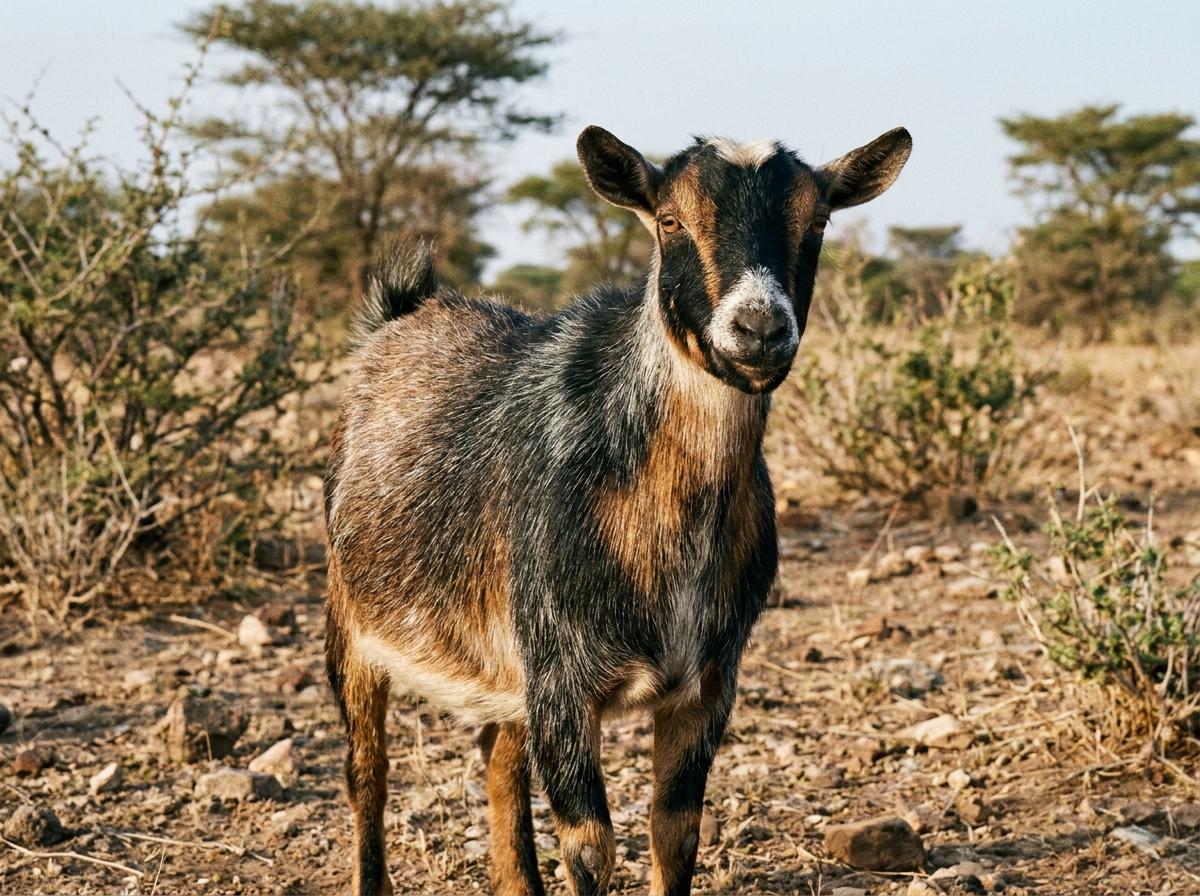
- Grey agouti, brown agouti and black agouti. Light and dark hairs mixed through the coat, from a pale salt-and-pepper silver to nearly solid. Agoutis have solid stockings darker than the body (from the knee down in front and the hock down behind), and a face and forehead darker than the body.
- Black. Solid black except for white accents on the muzzle, crown, eyes and ears. The tail may be accented in white.
- Solid black. All black, with no white accents on the head. Like every class, it may carry the optional white barrel patches or bellyband described below.
Every color except solid black has the same required accents: muzzle, crown, eyes and ears distinctly marked in white. The standard also allows, as optional markings, white patches or a bellyband anywhere on the barrel between the point of the elbow and the stifle.
What falls outside the NPGA colors. No solid color other than black is accepted, so a solid brown or solid white goat does not fit an NPGA class, and neither does one with white socks or spotting off the barrel. Under the standard, applications from goats that look non-conforming are referred to an NPGA committee before registration. The other registries are looser. The American Goat Society accepts any pattern, color or combination of colors. The UK Pygmy Goat Club accepts all colors and markings except light Swiss-type stripes on the face, which disqualify a goat from its herd book.
Pygmy vs Nigerian Dwarf
These two get confused constantly, and since the height standards almost match, the difference has to be read from the rest of the goat. Here is how the NPGA Pygmy standard compares with the Nigerian Dwarf as described in the American Dairy Goat Association’s breed standards:
- Purpose. The Pygmy is a compact, meat-type miniature kept mostly as a companion and show goat. The Nigerian Dwarf is a dairy breed, the only miniature dairy breed ADGA registers.
- Height. Pygmy does 16 to 22 3/8 inches and bucks 16 to 23 5/8 inches (NPGA). Nigerian Dwarf does and bucks at least 17 inches, with does no taller than 22.5 inches and bucks no taller than 23.5 inches (ADGA).
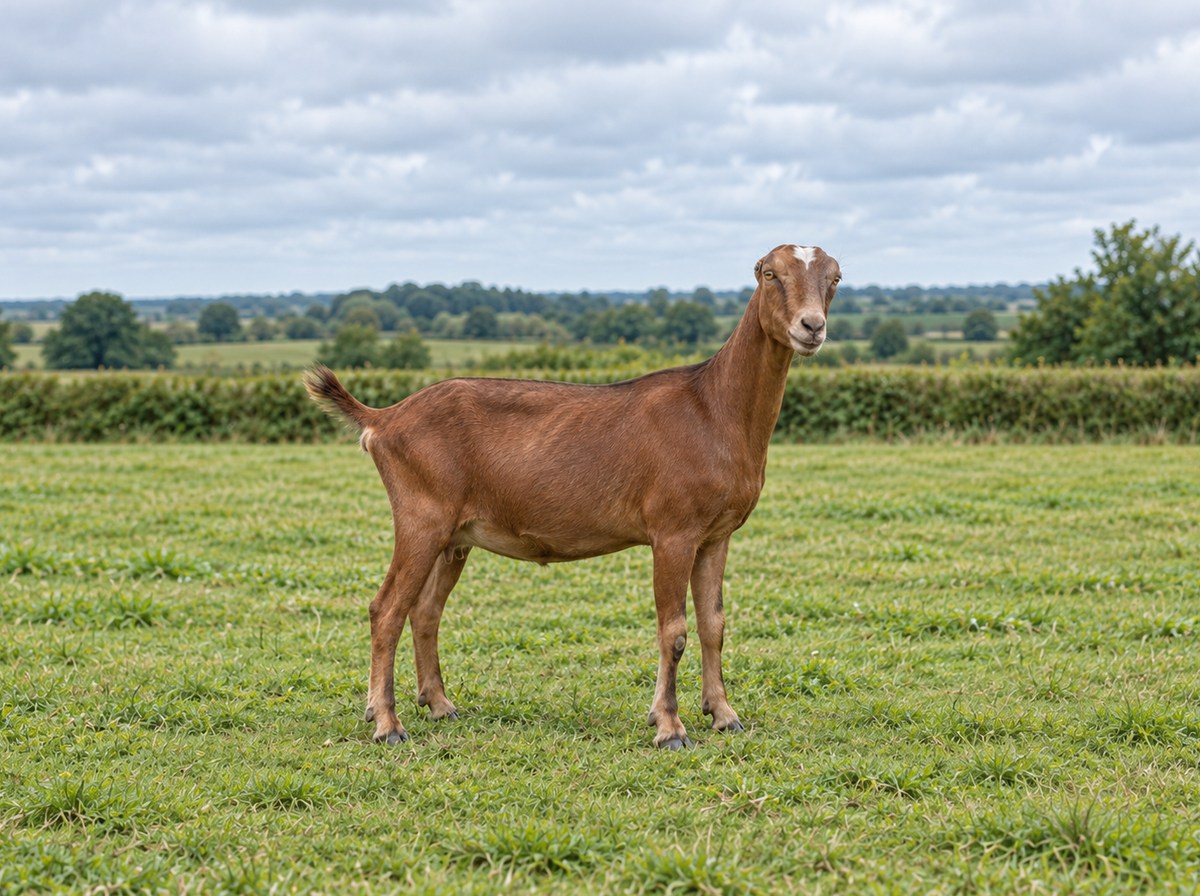
- Body. The Pygmy is cobby, full-barreled and heavy-boned, with short legs relative to body length. The Nigerian Dwarf has a slimmer, finer-boned dairy frame.
- Coat. The Pygmy has a full coat of straight, medium-long hair, and adult bucks grow a long beard and a cape-like mane. ADGA describes Nigerian Dwarf hair as short and fine.
- Color. The Pygmy has the short NPGA list above. Many color combinations are common in Nigerian Dwarfs, and the free Nigerian Dwarf goat coat color calculator shows how they are inherited.
- Registries. Pygmies are registered by the NPGA, the American Goat Society and the Canadian Goat Society, but not by ADGA.
If what you really want is a small goat for milk, a Nigerian Dwarf or one of the miniature dairy breeds such as the Mini LaMancha or Mini Alpine is the better fit. The American Goat Society does describe Pygmy milk as high quality, often with exceptionally high butterfat, but Pygmies are not selected for yield, and many owners never milk at all.
Breeds with Pygmy blood. Two newer American breeds, the Kinder and the Pygora, started from Pygmy crosses. The Kinder Goat Breeders Association says its first Kinder does were born in Washington in 1986 from Nubian does bred to a Pygmy buck, and that the first Kinders were registered in 1989 as a dual-purpose milk and meat goat. The Pygora Breeders Association describes the Pygora as a fiber goat founded by crossing NPGA-registered Pygmies with registered Angoras. Neither is a Pygmy, and neither belongs in a Pygmy herd book.
The breed standard in brief
Beyond size and color, the NPGA standard describes the ideal Pygmy head to hoof. In summary:
- Head. Short to medium long with a somewhat dished profile, a rounded muzzle, a broad forehead, and bright brown eyes set well apart. The bite must be even, neither overshot nor undershot.
- Ears and horns. Medium-sized, firm, erect ears. The breed is genetically horned, and disbudding or dehorning is permitted.
- Body. A short, well-muscled neck, a strong level back, a broad deep barrel, a large heart girth and a well-muscled chest.
- Legs and feet. Short, heavy-boned, wide-set legs, straight from the front and rear, with short strong pasterns and deep-heeled feet.
- Does. A firm, rounded, small to medium udder, high and tight in its attachments, with two even teats.
- Bucks. Abundant hair: a full, long, flowing beard and a mane that drapes across the shoulders like a cape. Two fully descended testicles of about equal size.
The NPGA’s buying guide lists the faults worth checking before you pay show-goat prices: an overbite or underbite, extra, split or blind teats, undescended testicles, a Roman nose or crooked face, weak or missing breed markings, and genetic hornlessness. Some of these disqualify a goat from competition. The standard itself notes that registration is not a guarantee a goat is free of disqualifying faults, so look for yourself. If you plan to show, our guide to goat shows explains how the ring works, and the NPGA requires a licensed NPGA judge at its sanctioned shows.
Temperament and what Pygmies are kept for
The NPGA standard calls the breed hardy, agile, alert and animated, good-natured and gregarious. The British Goat Society’s Pygmy page says they are generally quiet and docile, with the variation you would expect in any goat, and that they are kept mainly for enjoyment, interest and companionship.
In practice most Pygmies are pets and companion animals, youth and 4-H projects (their size makes them easy for children to handle), show goats, and small-acreage browsers. Washington State University’s 4-H material classes the Pygmy as a meat breed, which describes its type more than its everyday use. If you want a goat raised for meat, the Boer is the breed built for that job.
Two cautions. Pygmies are herd animals that need outdoor space and other goats, not house pets. And they are still goats: they climb, test fences, strip bark from young trees, and find the one gap in the gate.
Caring for Pygmy goats
A Pygmy needs everything a full-size goat needs, scaled down: company, dry shelter, real fencing, forage, minerals, hoof care, and a veterinarian who treats goats. The small size lowers the feed bill and the barn footprint, not the list of jobs.

Company. Keep at least two. The NPGA says Pygmies are happier in a herd or with another goat as a friend, and the British Goat Society advises against keeping a single Pygmy at all. A wether makes an easy companion for a doe or a buck.
Housing. In its short breed overview, the NPGA suggests that a draft-free 8 by 10 foot shed with raised places to sleep and eat will house four adult Pygmies. An NPGA Memo article on Pygmy housing suggests roughly 15 to 20 square feet per goat inside, no crowding, good ventilation without drafts, built-in hay mangers that keep hay off the floor, and raised sleeping shelves about two feet up, which Pygmies love to jump onto. How much barn you need depends on your climate: a basic shed can do in a mild region, while a cold northern winter calls for a substantial barn. Our goat shelter and housing guide covers ventilation, bedding and layout.
Fencing. The NPGA recommends an outdoor enclosure with fencing at least 4 feet high, attached to the shelter so the goats can come and go. The British Goat Society adds that Pygmies should not be tethered. For fence types and costs, see our goat fencing guide.
Feeding. Build the diet on hay and browse. The British Goat Society suggests fiber should make up about 80 percent of a Pygmy’s diet by weight, with hay as the main feature and only small amounts of a low-protein goat mix. Grain is where pet Pygmies get into trouble: it drives weight gain, and in males it raises the risk of urinary stones (more on that below). Our goat feeding guide covers forage and concentrates, and the loose minerals guide explains why goats need a goat mineral rather than a sheep one, and what your region may lack.
Judging condition by hand, not by eye. The rounded Pygmy barrel fools people both ways: a fat goat looks normal, and a thin goat hides under a full winter coat. Langston University’s body condition scoring factsheet says condition cannot be scored by looking; you have to feel the loin over the spine behind the ribs, the fat pad on the breastbone, and the ribs themselves. It uses a 1 to 5 scale and says most healthy goats score 2.5 to 4. Feel your goats every couple of weeks and adjust the feed before the change shows.
Hooves. The NPGA’s buying guide says hooves need trimming about every 8 weeks, and that any breeder should be able to show a new owner how. Our hoof trimming guide walks through tools and technique.
Health care. Plan vaccination and parasite control with a local veterinarian, and find that vet before you need one; the NPGA warns that not many vets treat goats. Our guides to the CD&T vaccine schedule and goat deworming with FAMACHA and fecal egg counts cover the routine. If you keep records on Creatures, a vaccination or medication record with a follow-up date creates a linked reminder, as described in reminders and upcoming care. Pygmy kids are disbudded young if you do not want horns; read our disbudding guide and leave the procedure to someone experienced.
Does, bucks and wethers
Which sex you buy shapes everything from housing to feeding, because does, bucks and wethers live very different lives.

Wethers (castrated males) are the classic pet Pygmy: usually the least expensive to buy, and free of breeding behavior. Their one serious risk is urinary stones. The Merck Veterinary Manual says obstructive urolithiasis is most common in wethers, bucks and rams, and that males castrated early have the highest rate of urethral blockage. Stones form most readily on high-grain or legume diets. Merck recommends a high-forage diet with limited grain and pellets, plenty of water, and a calcium to phosphorus ratio of about 2 to 2.5 to 1 across the whole ration, and notes that delaying castration to at least 8 weeks has been shown to widen the urethra in calves and lambs. Merck’s goat breeding chapter, on the other hand, recommends castrating kids soon after birth (standard-size kids within the first 7 to 10 days, smaller breeds a few days later) and using anesthesia for older kids, so weigh both with your veterinarian. A wether that strains, stops eating or seems dull is an emergency: call your vet right away.
Does are the other easy choice. A pair of does, or a doe and a wether, is a common starter herd. Breeding a doe is a decision, not a default, and is covered below.
Bucks are strong for their size and carry the familiar buck odor in the breeding season. An NPGA Memo article written in defense of the buck still advises against keeping one as a pet, says children should not be given a buck to care for, and warns never to tease a buck or let it play butting games. It recommends a Pygmy wether as company so the buck is not kept alone and frustrated. The British Goat Society’s advice is simpler: do not keep an entire male unless you can house him separately from the does.
Breeding and kidding Pygmy goats
Pygmies mature early. The NPGA says does are usually bred for the first time at about 12 to 18 months but can conceive as young as two months if buck kids are left with them, and an NPGA veterinarian’s article on normal values advises separating buck kids from doe kids by two months of age. The Merck Veterinary Manual adds that does should weigh 60 to 65 percent of their mature body weight before breeding, whatever their age.
Gestation. The NPGA gives a Pygmy gestation of 145 to 155 days and calculates due dates at 150, the same planning figure Merck gives for goats in general. Pick Pygmy in the free goat gestation calculator for a due date and window, and see our goat gestation guide for a month-by-month kidding chart.
Season. Merck describes goats as short-day breeders with differences between breeds, and notes that breeding seasons are longer near the equator. The NPGA describes Pygmy does as able to kid every nine to twelve months, while Washington State University’s 4-H material gives August to mid-March as the Pygmy breeding season. So plan for fall and winter breeding, and do not assume a doe cannot cycle outside it. Our goat heat and breeding guide covers heat signs and timing.
Litter size. The NPGA says Pygmy does bear one to four kids, and WSU’s 4-H material gives twins as typical. Kids nurse almost immediately, start nibbling hay and grain within a week, and are weaned by about three months, according to the NPGA.
Late pregnancy and kidding. Overweight Pygmy does carrying more than one kid are at real risk of pregnancy toxemia in the last weeks, so keep a breeding doe at a moderate condition score all year; the Merck Veterinary Manual describes the early signs. Our goat kidding guide covers the signs of labor and when to call for help, and the Creatures goat guide covers breeding care that applies to every breed. On Creatures you can record the breeding on the doe’s profile, and it projects the due date and the kidding window for you.
Pygmy goats in the UK
The UK Pygmy is its own breed with its own society. The Pygmy Goat Club’s account of how it began dates its first newsletter to 15 May 1982. At the time, small goats in Britain went by a string of regional names (African, Cameroon, Nigerian, Sudanese and others), many had been crossed, and the British Goat Society had declined a 1981 request to register them. The founders decided the types were too mixed to separate and adopted a single standard based on the American one.
Today’s Pygmy Goat Club standard differs from the NPGA’s in useful ways. Heights are measured on mature goats (17 to 21 inches for females, 17 to 22 inches for males), almost any color is allowed, and the disqualifications include Swiss-type face stripes, a Roman nose or pendulous ears, and being polled (genetically hornless). Wethers and females with mouth or teat defects can go on a separate Pet Record register. The club announced that from 1 February 2026 every goat must be registered by one year of age, and transfers of ownership must be completed within a month, so ask a UK seller about both.
In England, the rules for keeping sheep and goats apply to a pet or hobby goat exactly as they do to a farm: you need a county parish holding (CPH) number for the land and a herd mark from the Animal and Plant Health Agency, goats must be identified, movements reported, and a holding register kept. Wales, Scotland and Northern Ireland have their own versions of these rules.
Buying a Pygmy goat
Start with registration. Under the NPGA’s rules and regulations, only the offspring of two NPGA-registered parents can be registered (wethers can also qualify through a separate certification procedure). Each registered goat gets a unique tattoo number, and registration applications go in with photos. The NPGA tattoo year letter for 2026 is V. Ask to see the certificate itself, make sure the transfer to you is signed, and check that the goat’s tattoo matches the papers. Our guide to reading goat registration papers is written around ADGA certificates but explains the same parts, and the free goat pedigree chart maker prints a three-generation chart for your records.
Tattoos as official ID. USDA APHIS lists the NPGA among the registries whose tattoos it approves as official scrapie identification (approval runs to 1 April 2031). Its scrapie identification fact sheet (APHIS-24-006) says a registration tattoo can take the place of an official ear tag when the goat travels with a copy of its registration certificate listing the current owner, or the certificate plus a completed transfer dated within 60 days. A tattoo cannot be the only ID for a goat moving to slaughter or through a livestock market, and some states are stricter, so check with your state veterinarian before you haul.
Ask about size and history. Ask how tall the sire and dam measure, using the NPGA method. For a breeding doe, the NPGA says a registered doe that has produced a live kid should carry a progeny sticker on her papers; ask about any kidding trouble, including C-sections. For a buck, ask how many does he settled last year.
Ask the NPGA’s questions. Its buying guide is a good checklist:
- Age. Kids should be at least 8 weeks old before weaning unless you plan to bottle feed, and the author’s own herd keeps kids until 12 weeks.
- Feed. What the goat eats now, and enough of the same feed and hay to switch it gradually over 7 to 10 days.
- Vaccination and deworming. A written record of what has been given, and the schedule the breeder recommends.
- Herd testing. Whether the herd is tested for caprine arthritis encephalitis (CAE), tuberculosis, brucellosis, caseous lymphadenitis (CL) and Johne’s disease.
- Know-how. Whether the breeder will show you how to trim hooves, and which vet they use.
Why the disease questions matter. The Merck Veterinary Manual explains that CAE spreads mainly through infected colostrum and milk, that there is no vaccine or specific treatment, and that herds control it with AGID or ELISA blood testing, heat-treated colostrum and pasteurized milk. Merck’s page on other common goat diseases says CL spreads through pus from abscesses and advises never bringing in a goat with swollen lymph nodes or abscesses, and that goats usually catch Johne’s young, by the fecal-oral route, with fecal PCR recommended to find infected animals. The NPGA has published a Johne’s health alert for Pygmy owners. It points out that ELISA cut-offs were set for cattle and describes an infected Pygmy buck whose report read “negative,” so ask for the numeric test results and have your own veterinarian read them.
Price. We could not find a reliable published price range for Pygmy goats. Expect pet wethers at the low end and registered does from show lines at the high end. Creatures’ goat auction price guide has no Pygmy row at all; most of the goat auction records behind it are Boer goats. Our guide to what a goat costs covers purchase prices and the yearly budget, and where to buy a goat covers choosing a seller and quarantining new arrivals.
Where to look. The Creatures directory lists Pygmy breeders by state, the NPGA publishes a registered breeders list and a list of affiliated clubs, and a sanctioned show is the best place to see well-made Pygmies side by side and meet the people who breed them.
How long do Pygmy goats live?
The NPGA’s buying guide says Pygmies can live well into their teens and are usually productive, meaning able to safely kid or sire kids, until about 9 or 10 years old. The oldest goat on record, according to Guinness World Records, was a Pygmy named McGinty who lived 22 years and 5 months on Hayling Island in England and died in 2003; that is an outlier, not a planning figure. The NPGA figure fits the species picture: our goat lifespan guide explains why 10 to 15 years is a fair planning figure for a goat kept as a pet rather than culled for production, and why breed-by-breed lifespan tables found online rarely have a source. A long life is one more reason to keep good records from the start: vaccinations, hoof trims, weights and kidding history are much easier to track over a decade or more when they live in one place. Our goat record keeping guide shows what to record.
Frequently asked questions
How big do Pygmy goats get?
Under the NPGA standard, adult does (12 months and older) stand 16 to 22 3/8 inches at the withers and adult bucks 16 to 23 5/8 inches. The American Goat Society caps mature does at 22 1/2 inches and bucks at 23 1/2 inches, and the UK Pygmy Goat Club allows 17 to 21 inches for mature females and 17 to 22 inches for males.
How much does a full-grown Pygmy goat weigh?
No registry sets a weight. One Washington State University Extension 4-H sheet gives 40 to 70 pounds as an average adult weight, but body condition varies a lot, so judge your goat by feel and track its own trend.
What is the difference between a Pygmy goat and a Nigerian Dwarf?
They share an origin and nearly the same height limits, but the Pygmy is a cobby, heavy-boned, full-coated goat in a few NPGA colors, while the Nigerian Dwarf is a finer-boned miniature dairy breed with short hair and many color combinations.
What colors are Pygmy goats?
The NPGA registers caramel with black markings, caramel with brown markings, grey agouti, brown agouti, black agouti, black, and solid black, all but solid black with white accents on the muzzle, crown, eyes and ears. The American Goat Society accepts any color, and the UK club accepts any color except Swiss-type face stripes.
Can you keep just one Pygmy goat?
No. Goats are herd animals; the NPGA says Pygmies are happier with another goat, and the British Goat Society advises against keeping a single Pygmy.
Do Pygmy goats have horns?
Yes, both sexes are genetically horned. Disbudding young kids is permitted under the NPGA standard, and genetic hornlessness is treated as a fault (a disqualification in the UK).
What is an African Pygmy goat?
The same breed. “African Pygmy” is a common name that points to the breed’s West African dwarf goat ancestry; in the US the breed is registered as the Pygmy goat.
Do this next on Creatures
Whether you are still looking for your first Pygmies or already raising a herd, Creatures keeps the search, the records and your farm profile in one place.
Get alerted. Pygmy listings are rare, so set a free Pygmy listing alert and we will email you when one is posted. No account needed to start. See saving searches and using your watchlist for how alerts work.
Find breeders. Search the Pygmy breeders listed by state or the full Creatures breeder directory, and check Pygmy goats on the Creatures marketplace for new listings.
Add your goat. Already have a Pygmy? Create a free Pygmy profile with her NPGA registration, tattoo, color and photos, no account needed to start. The walkthrough is in adding an animal to Creatures.
Keep her records. Add a vaccination, hoof trim, weight or kidding record. The record sheet opens for any visitor to look around, and a free account saves what you enter. See adding a record and health and medical records.
List your herd. Breed registered Pygmies? Create a free herd or breeder profile so buyers looking for registered, tested Pygmies can find you, no account needed to start. Read getting listed in the breeder directory and creating an organization and adding your team.
Plan and name. Work out due dates with the goat gestation calculator (choose Pygmy), and find names for this year’s kids with the goat name generator.