

Kamori
Author: Elliott Garber, DVM · Updated
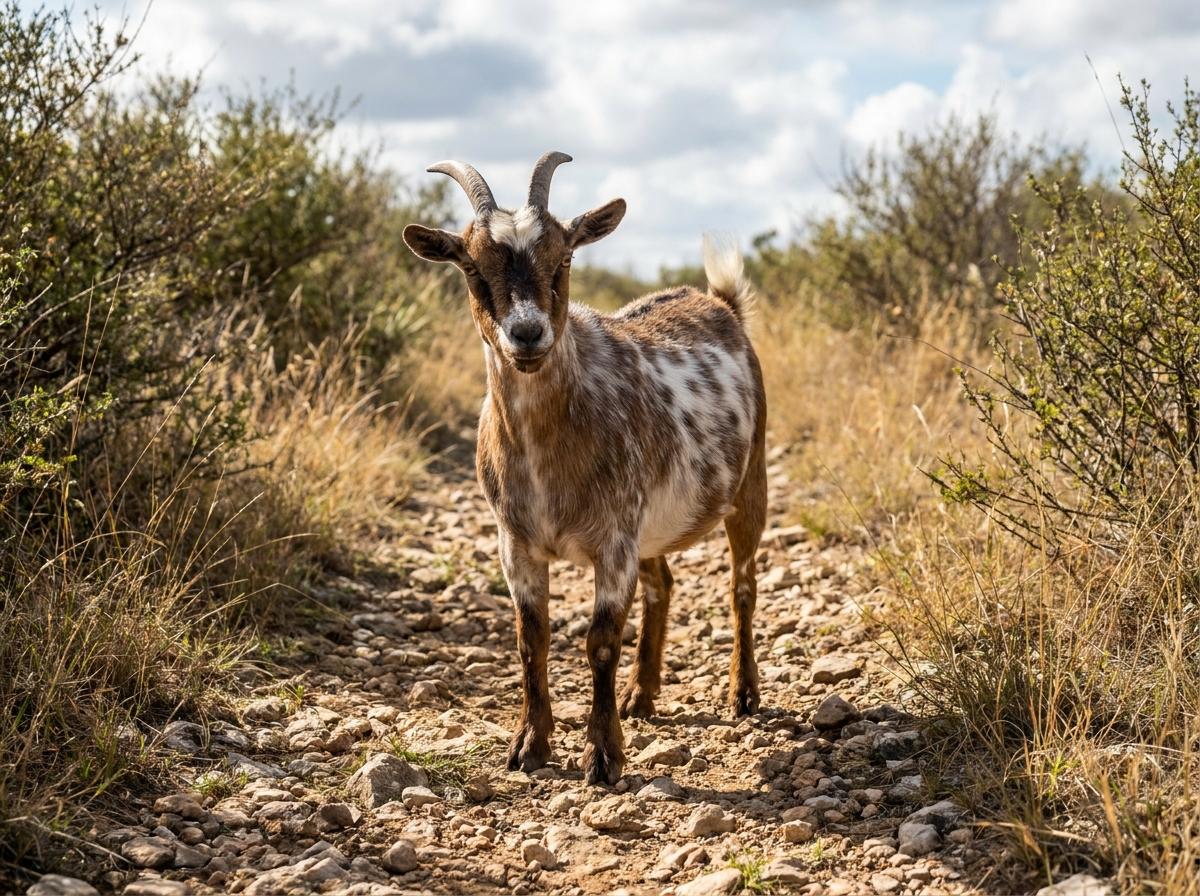
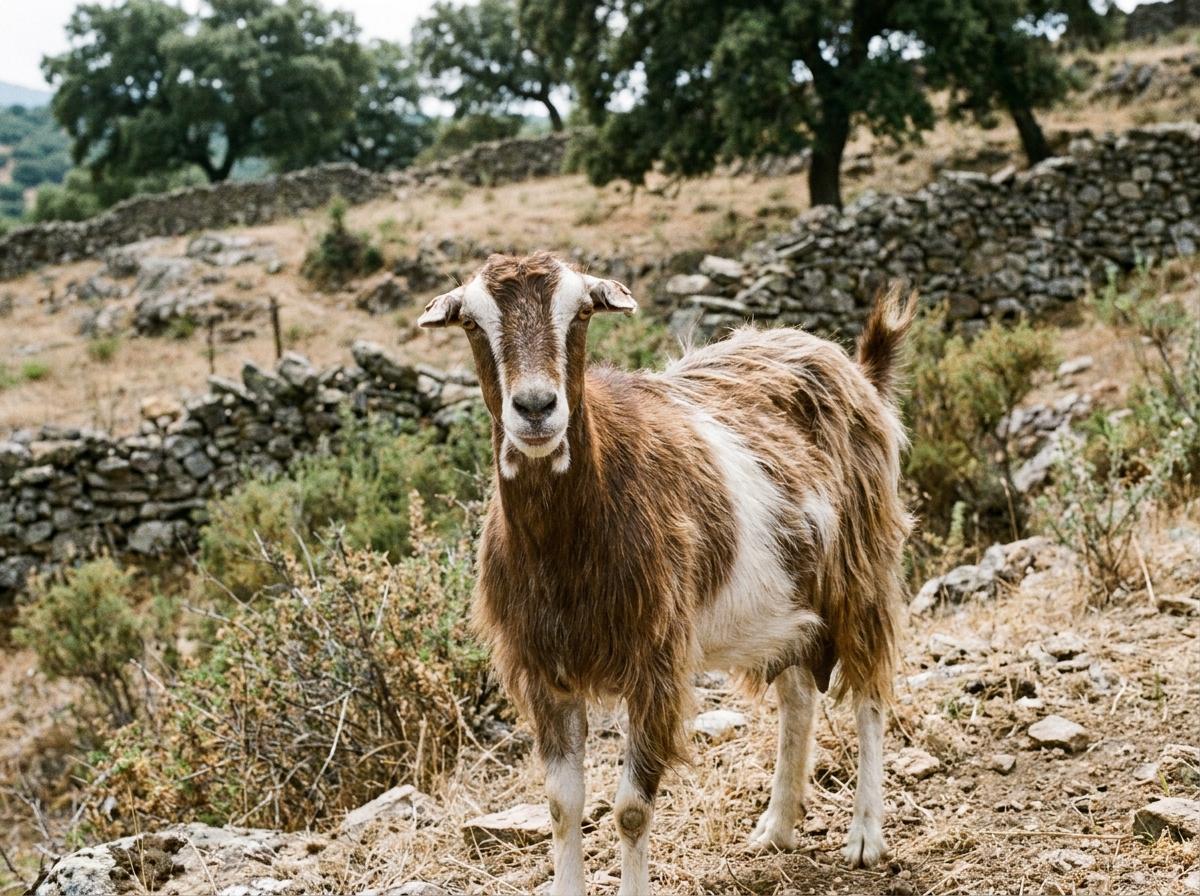
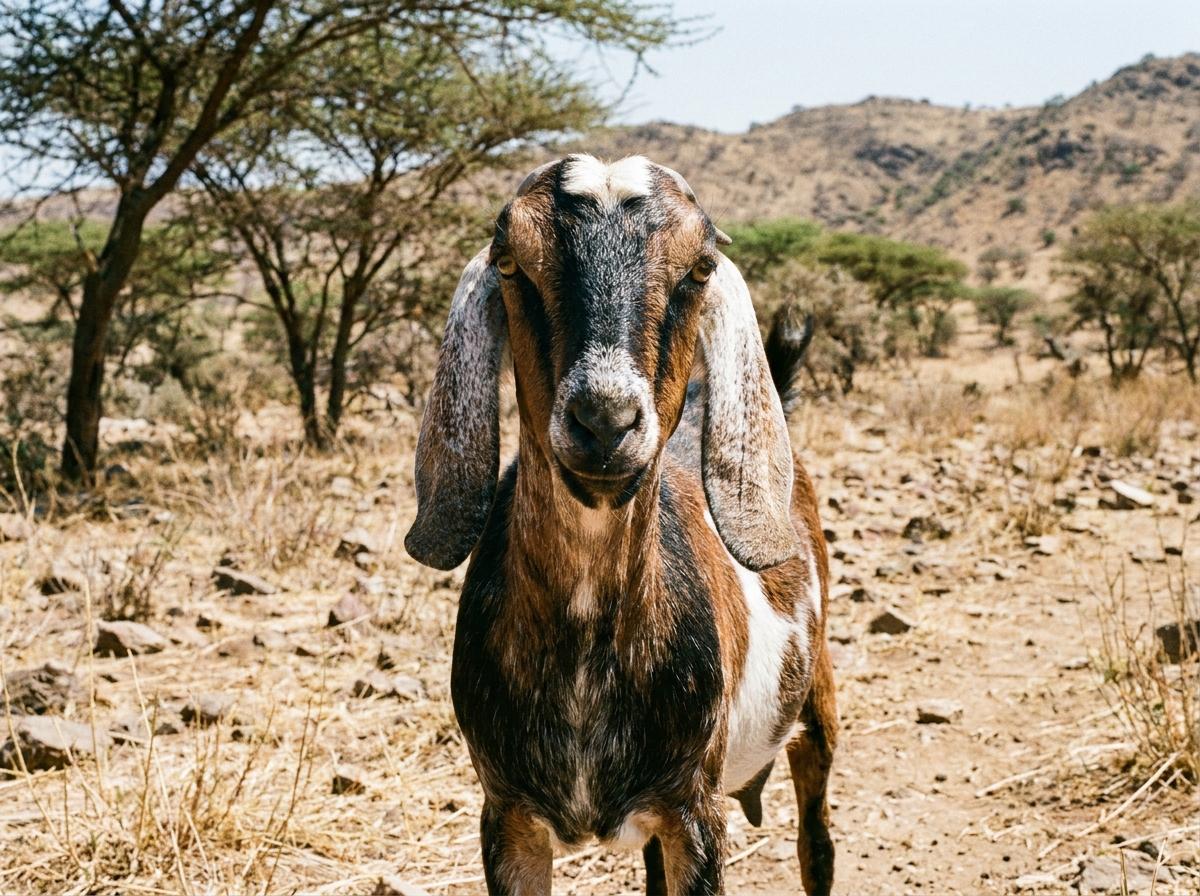
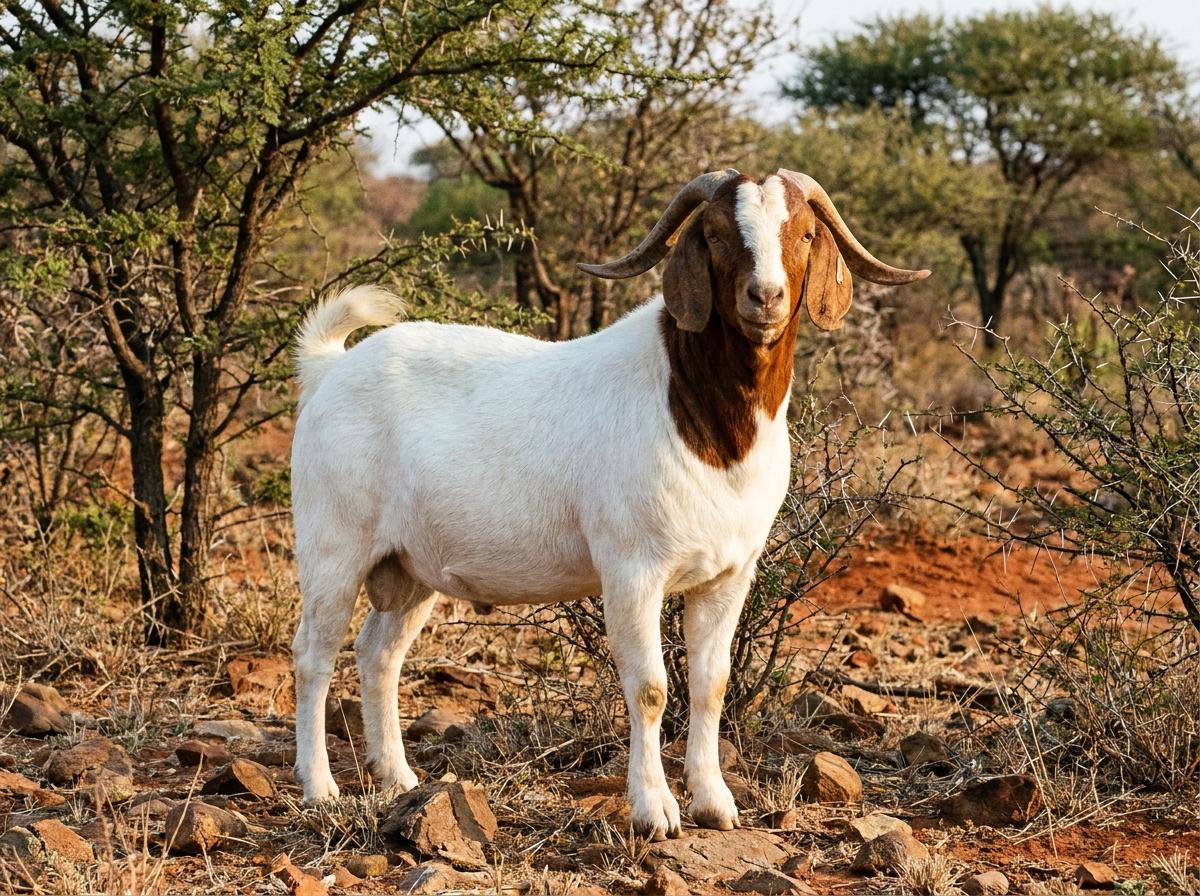
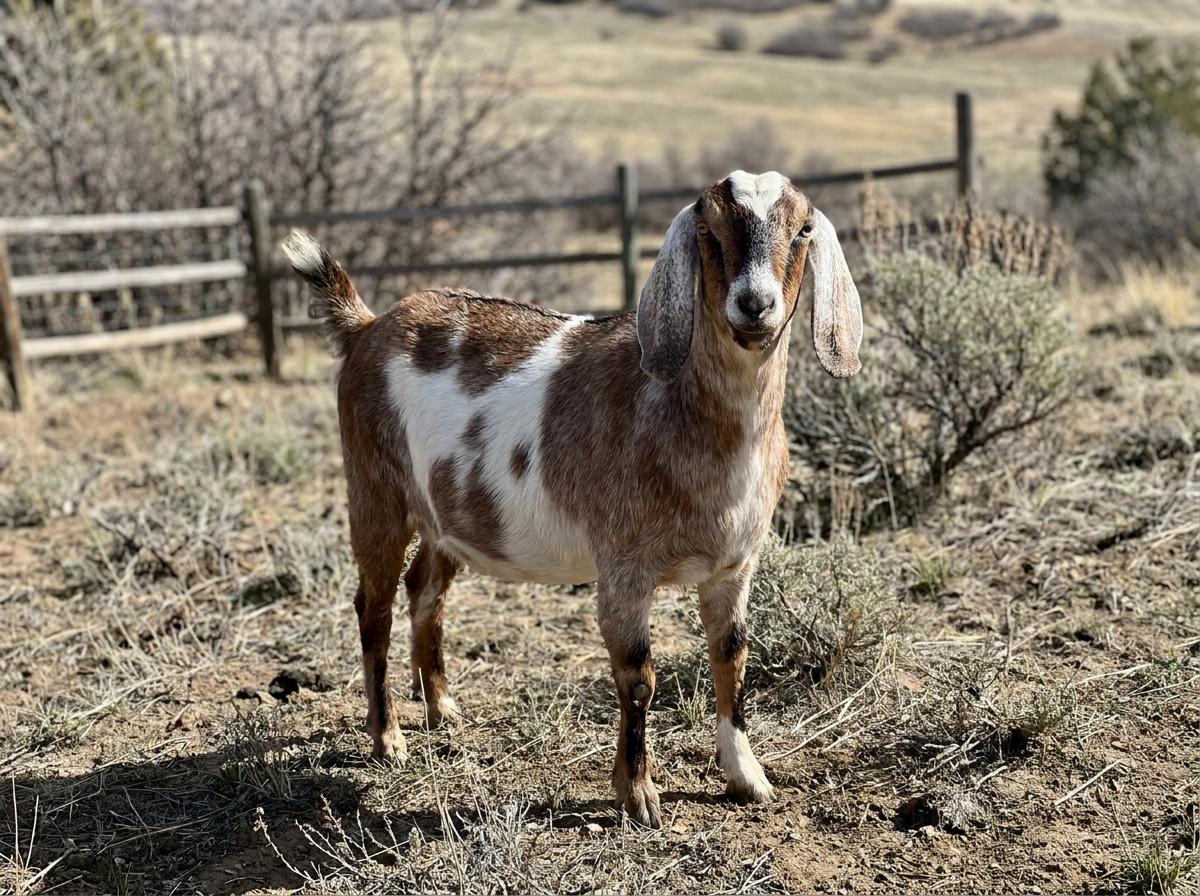
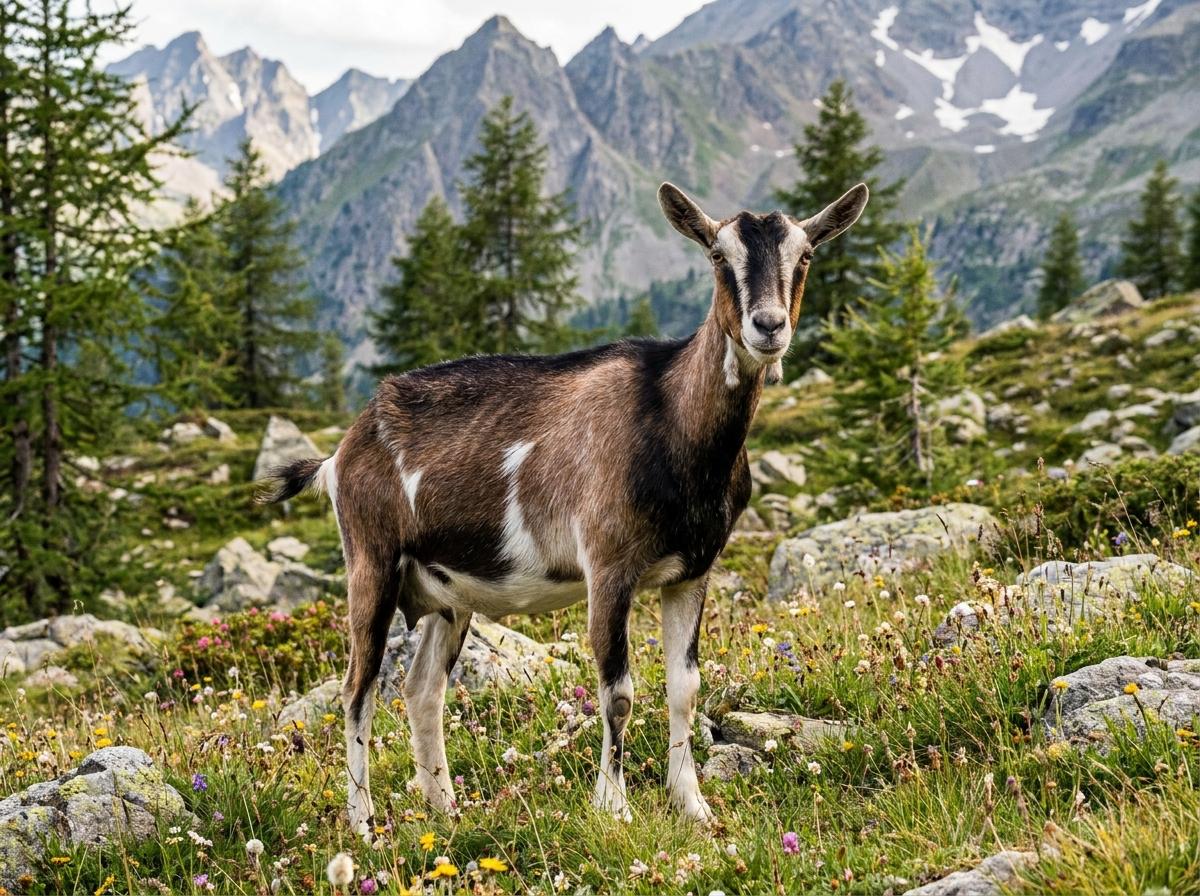
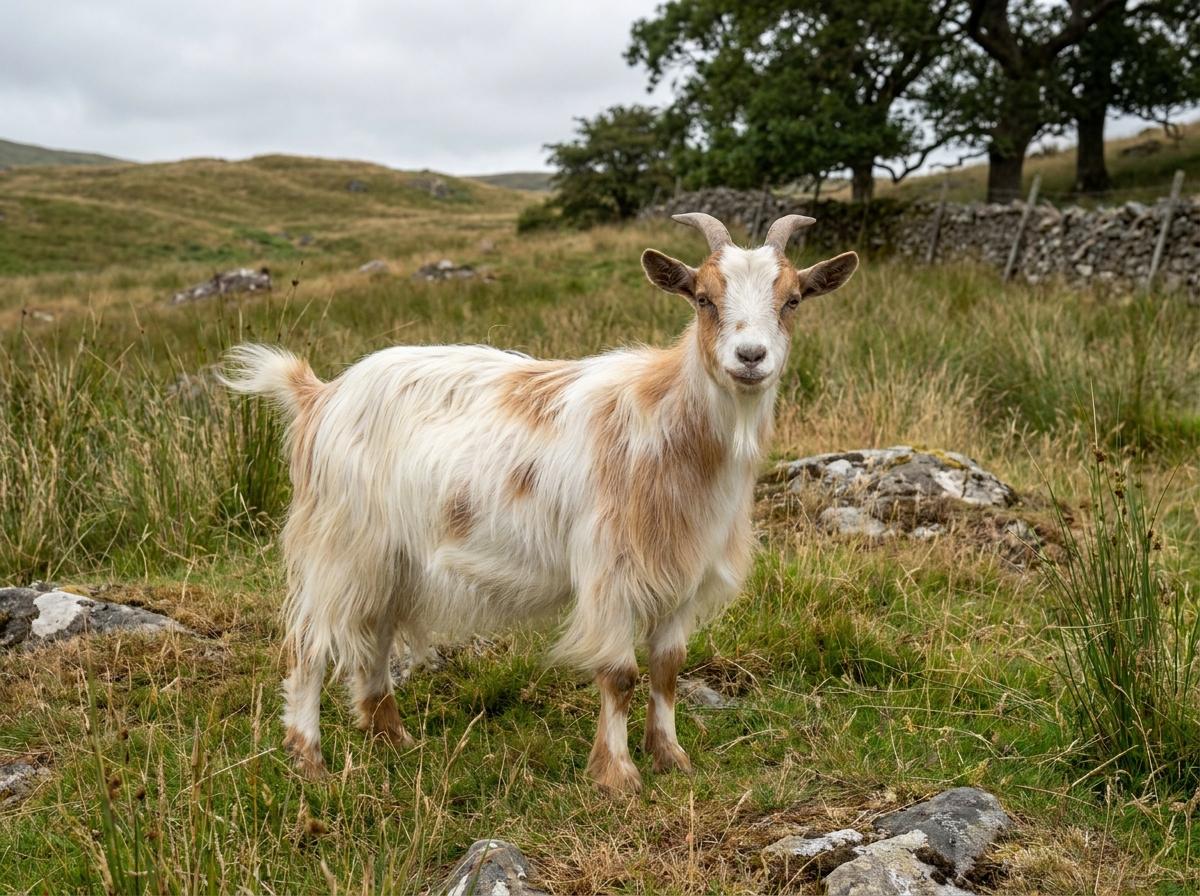
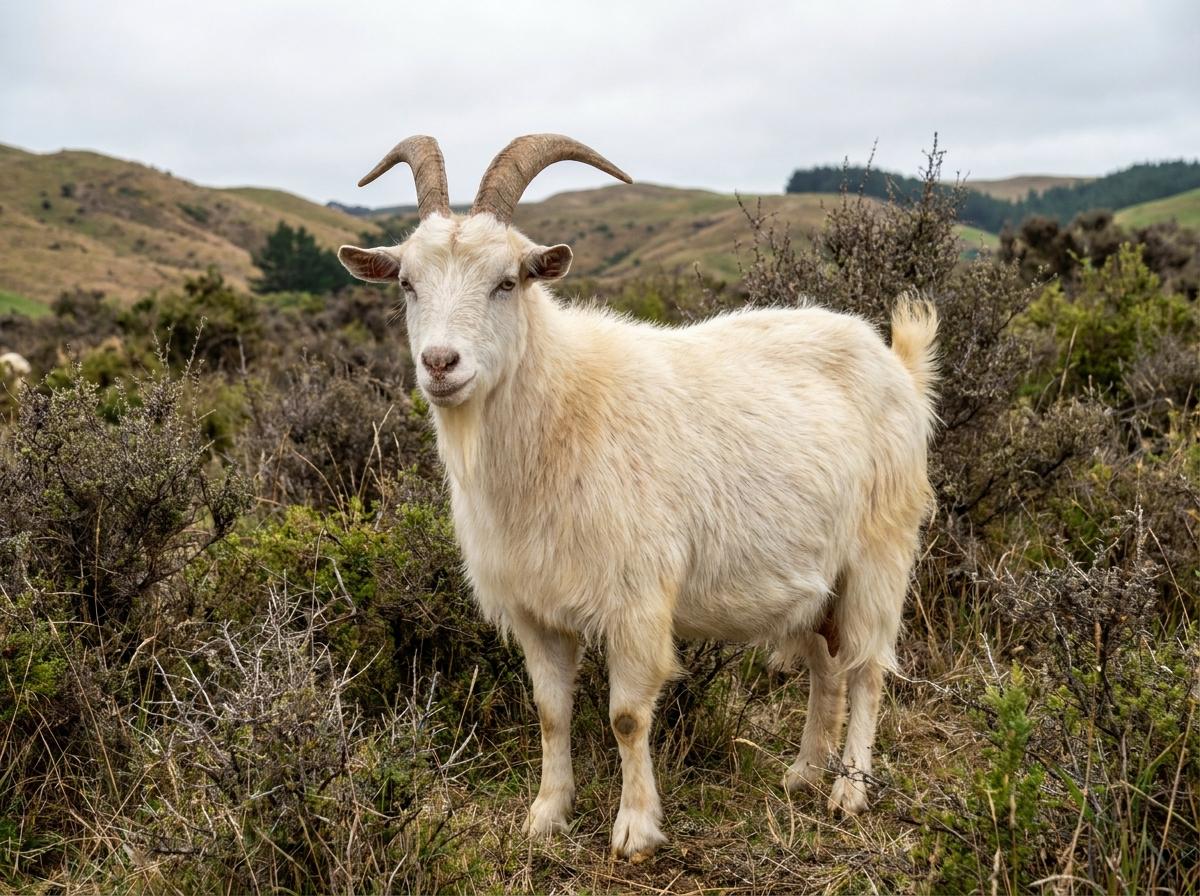
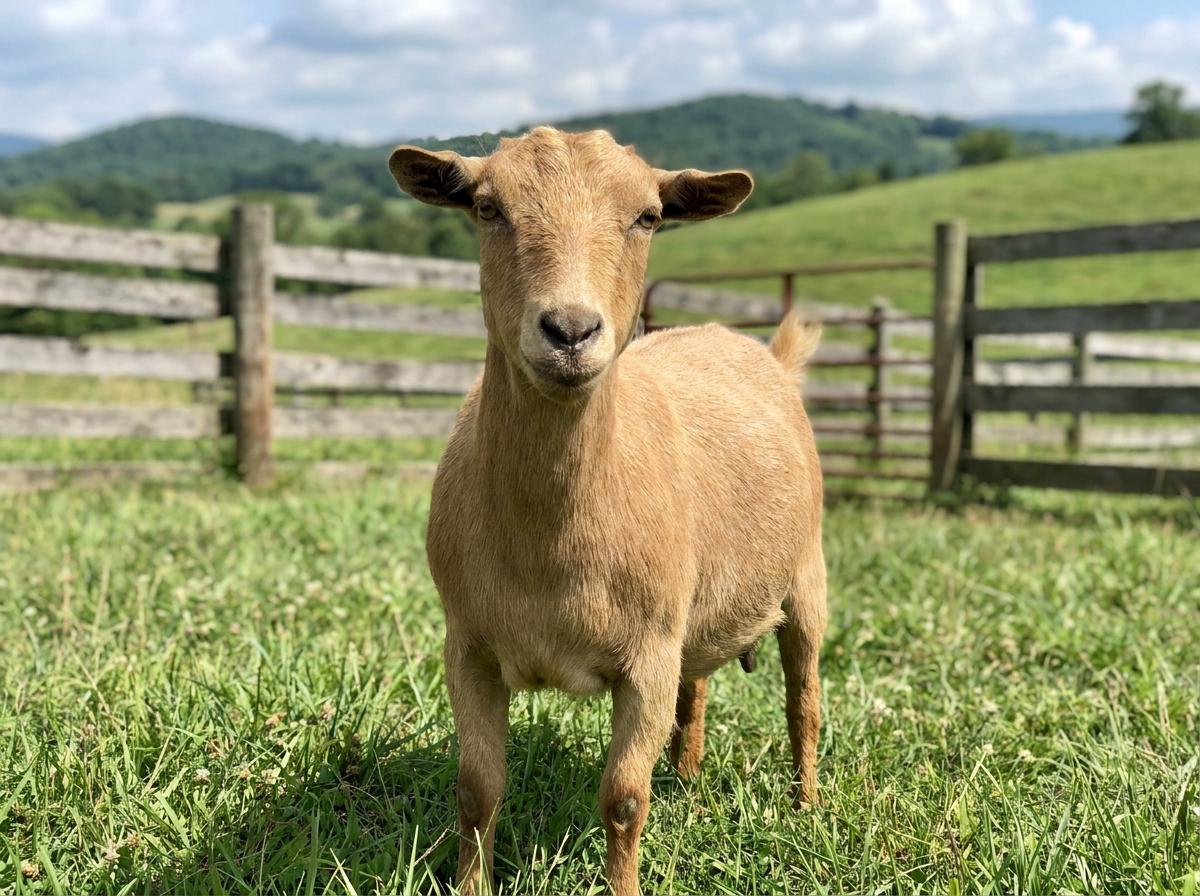
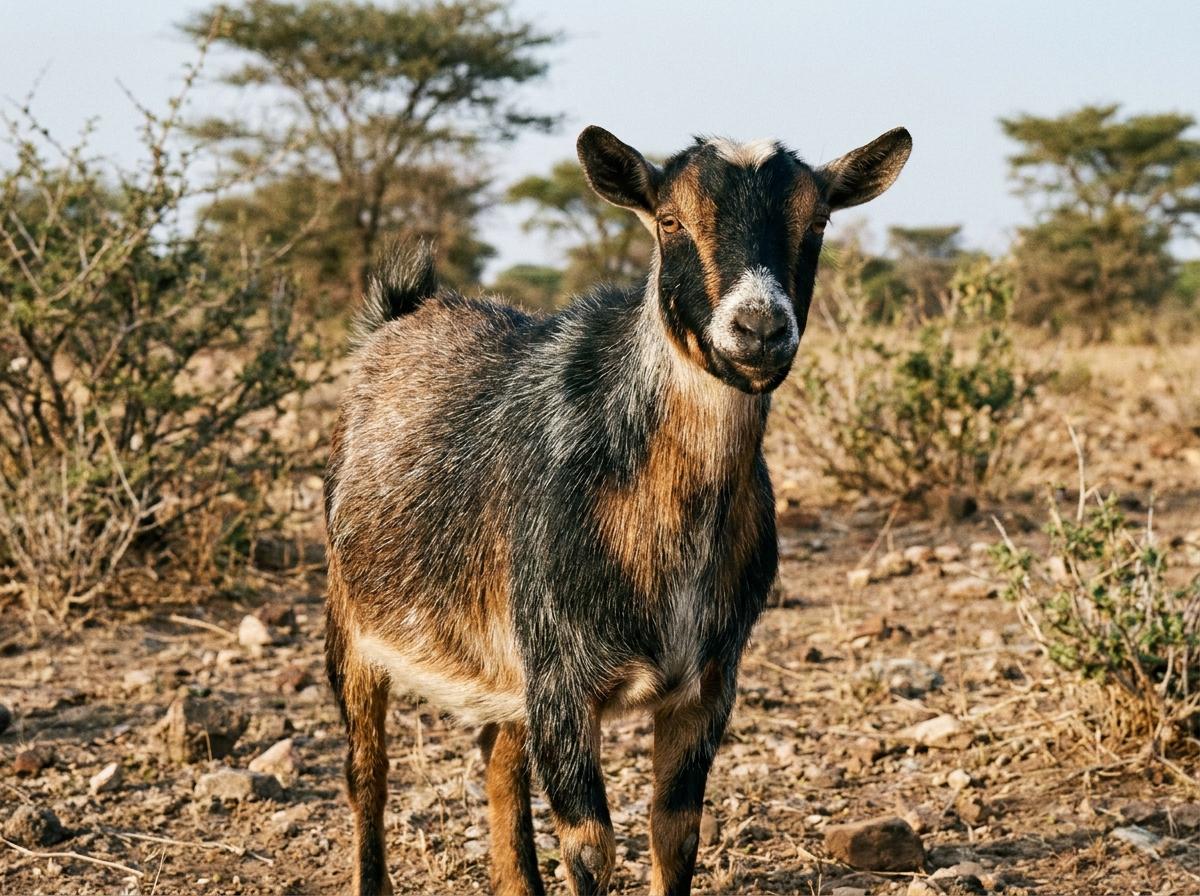
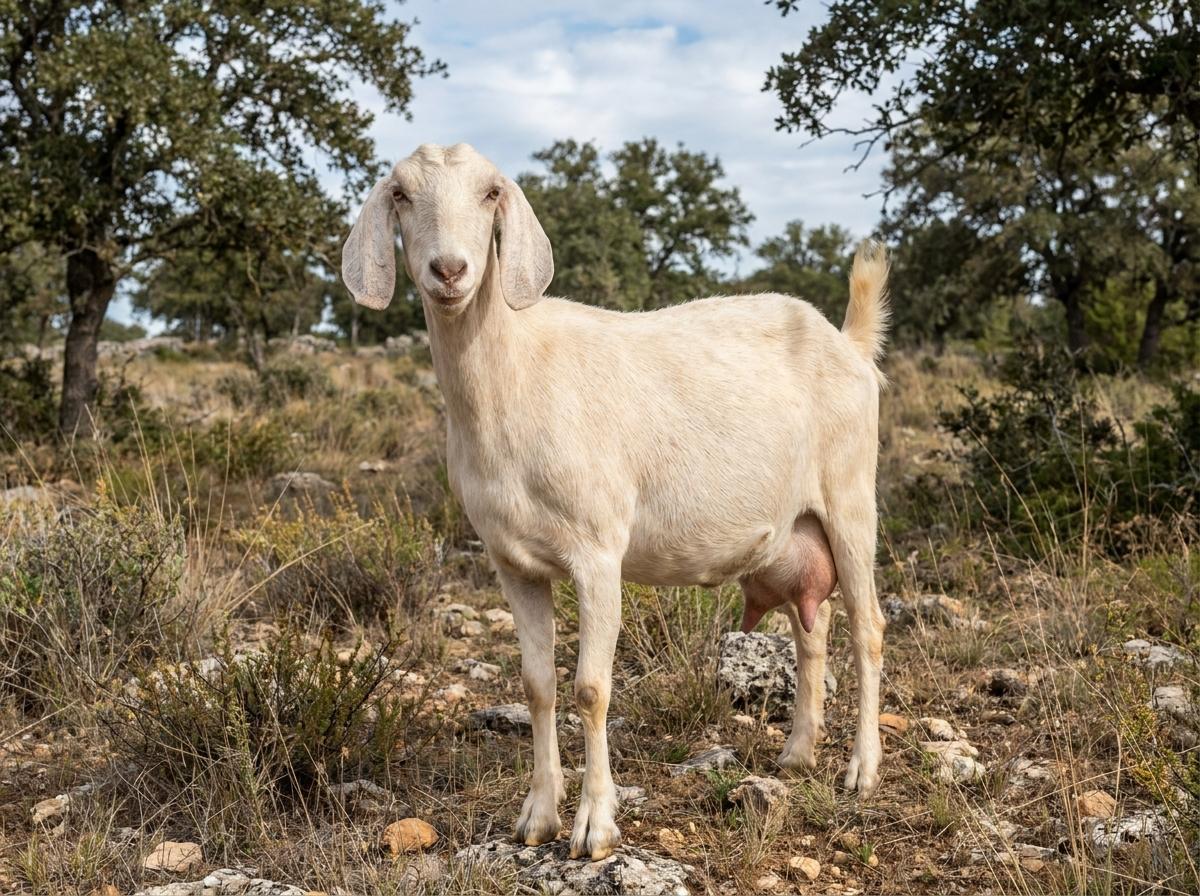
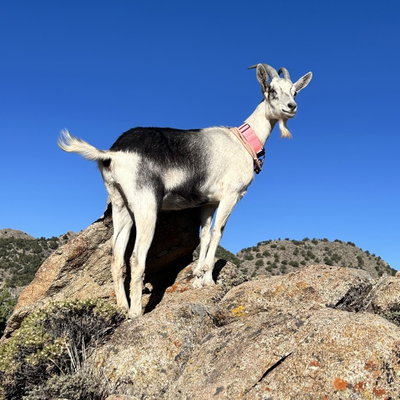
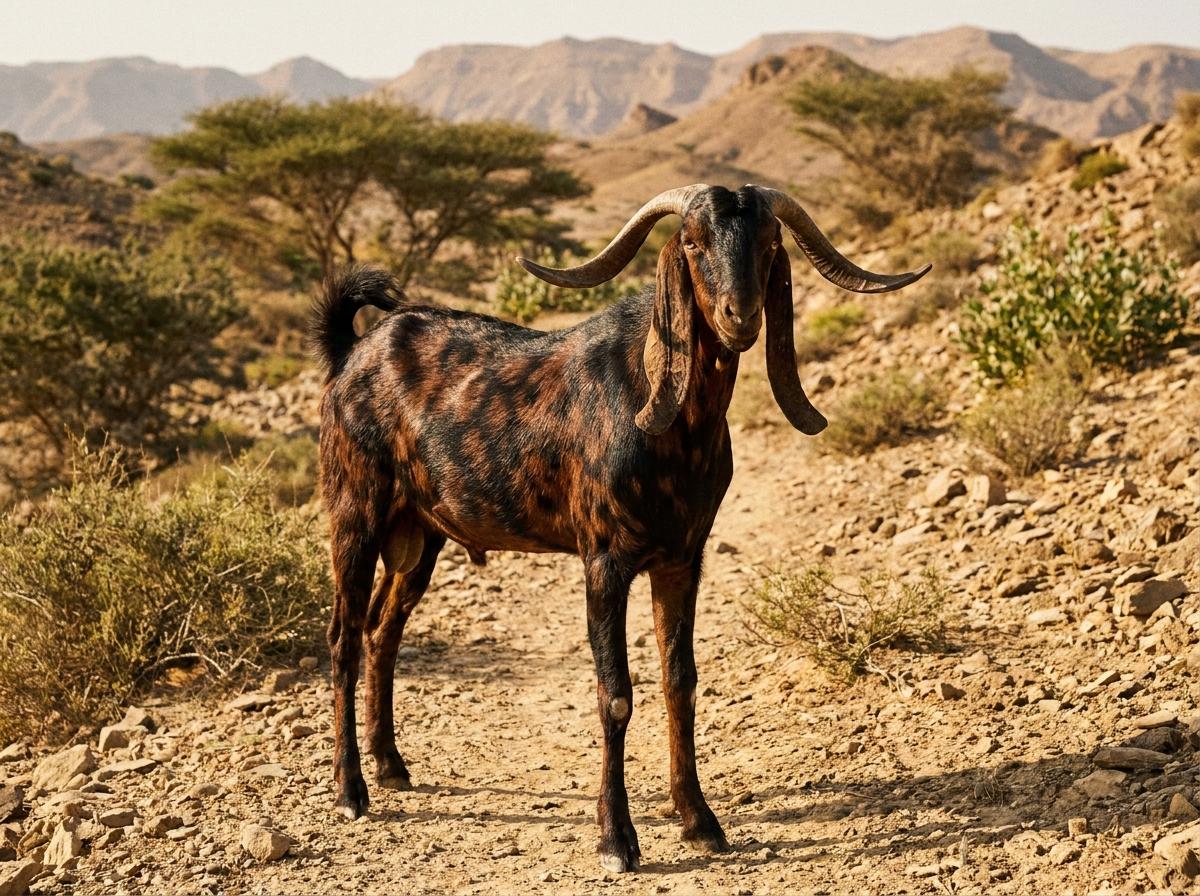
The Kamori is a tall, long eared dairy goat from Sindh province in southern Pakistan: a big, long legged animal with a stretched neck, a long face, ears that hang loose and straight down below the muzzle, and a short glossy coat of dark chocolate brown scattered all over with paler speckles. In Sindh it is a working milk goat and a status animal at once, photographed, shown and sold for real money before Eid al-Adha. To see how it sits against other dairy and meat goats, start at the Creatures goat species page.

| Origin | Sindh, Pakistan. FAO gives the breeding tract as Hyderabad, Nawabshah and Larkana |
|---|---|
| Coat | Short and glossy, dark brown, speckled all over with paler coffee and darker patches |
| Horns | Small and backswept, in both sexes |
| Height at withers | About 88 cm (35 in) measured; FAO gives 90 cm for males, 85 cm for females |
| Adult weight | About 70 kg (154 lb) for bucks, 48 kg (106 lb) for does, in measured farm records |
| Milk yield | 2 to 2.7 litres a day where weighed, over roughly 110 days. FAO gives 204 litres per lactation at 4.7 percent fat |
| Litter size | About 1.42 kids per kidding. Singles and twins, not a triplet breed |
| Availability | Common in Sindh and expensive there. Live import into the United States is prohibited |
Browse listings, public profiles, breeders, or add your animal.
What a Kamori goat is
The Kamori is an indigenous Pakistani breed, and the reference population lives in Sindh, the hot arid province along the lower Indus. Work on the breed’s genome describes it as a medium to large milk breed found mainly in the Nawabshah, Dadu and Larkana districts, famous for its long ears and long neck and for a coat that is usually dark brown with small dark or coffee coloured patches over the whole body (Saif et al., Gene Reports, 2022). Everything else follows from it being a big dairy goat kept where summers are punishing.
One disagreement to note before going further. FAO’s Domestic Animal Diversity Information System, which this page leans on for most of its breed record, describes the Kamori as uni coloured, red brown, black or white, with no mention of speckling at all. Every other description, the genomic literature included, and every photograph show the speckled coat. Where the two conflict on what the animal looks like, this page follows the literature and the pictures.
Two details keep getting lost. The breed carries small horns in both sexes, which the same FAO record lists alongside “very long ears” as its notable visible traits. And Sindhi writers reach for the same simile every time: a well marked Kamori looks like it is wearing an ajrak, the block printed shawl that is the province’s emblem. The phrase “kamori bakri” is not a separate animal either. Bakri is Urdu for goat.
One thing to understand before you read any numbers. The Kamori has no international herdbook and no written breed standard, and the Pakistani university research, government reporting and breeder knowledge that describe it do not always agree. So the figures below carry their provenance, and where the record disagrees with itself, this page says so.
Kamori or Damascus? Telling the two long eared goats apart
Search for either breed and you will meet the other one. Both are large, both have long pendulous ears, both come from hot dry country, and both are long faced dairy animals. Four things separate them.
The coat is the giveaway. A Damascus is predominantly reddish brown and mostly long haired, often with neck tassels, and white body spotting is recorded as uncommon. A Kamori is the opposite animal to look at: short, smooth and glossy, dark chocolate rather than red, speckled with small paler patches over the whole body, head, neck and legs. On a Damascus, spotting is the exception. On a Kamori, it is the breed.
The Kamori is taller on the same mass. A 2024 survey of ten indigenous Sindh breeds measured 48 Kamori and put mean height at the withers at 88.2 cm, the tallest of all ten (Ijaz et al., Journal of Animal and Plant Sciences, 2024). That agrees with FAO’s 90 cm for males and 85 cm for females, against 80 and 72 cm for the Shami in Syria. FAO’s weights for the two are within a couple of kilograms of each other, 55 and 39 kg against 57 and 40 kg, which makes it a like for like comparison, though note those Kamori weights are the stale 1986 figures the size section below tells you to discount against current farm records. On the numbers as FAO holds them, the Kamori is the longer legged animal rather than the bigger one.
Horns and litters. Small horns in both sexes are recorded for the Kamori. The Damascus occurs both horned and polled, which FAO’s record confirms without giving frequencies, and in goats it is polledness, not horns, that is tied to intersexuality: the polled allele is the risk allele, and polled to polled matings can throw sterile intersex offspring. Worth knowing because a lot of breed writing has it backwards, FAO’s Damascus monograph included, even though both of the papers it cites for that sentence are studies of polledness. So a hornless head is a breeding question on a Damascus in a way a Kamori’s small horns are not. Prolificacy splits them too, though less dramatically than the figures in circulation suggest. Average litter size is 1.42 for the Kamori against about 1.80 across the Damascus breed, and it is worth being careful which Damascus number you are quoted: the 2.27 to 2.62 range that gets passed around belongs to a selected Cyprus dairy herd, not to the breed. So the Damascus is the more prolific of the two, but neither is a triplet breed, and anyone selling a “Kamori type” on a promise of routine triplets is quoting nothing at all.
The ears are the one thing nobody has measured. That 2024 survey recorded height, body length, heart girth, chest and pubic bone length on 48 Kamori, and no ear dimension at all. Every authoritative source describes Kamori ears only in words. Popular accounts say about a foot, which may well be right, but nothing measured stands behind it. Damascus ears, by contrast, are measured in FAO’s monograph at 27 to 32 cm. If a seller quotes you an exact Kamori ear length, ask where the figure came from.

One caveat on the roman nose, which both breeds get described as having. Kamori heads in photographs do carry a long, gently convex profile, but FAO’s Kamori record says nothing about the head at all. The Damascus convexity is the documented one, and the Gulf show version pushes it into an extreme shortened, domed face, so a goat with a dramatically foreshortened face is a Damascus show type rather than a Kamori. The two also do not overlap where it counts. The Damascus is a Near Eastern breed, held by FAO under Syria and documented at length in an FAO monograph on the Cyprus population, and it has been exported well beyond that region; what it is not is a Pakistani breed. The Kamori is recorded only in Pakistan. Read this page alongside the Damascus goat profile and the Black Bengal, the small and extraordinarily prolific South Asian goat at the other end of the size range. The Nachi of south Punjab is the other Pakistani goat with its own show culture, judged on its prancing walk.
Where the breed comes from, and the Gulabi myth
Sindh runs along the lower Indus, and its goat population is unusually varied. The 2024 survey worked across ten districts, from Hyderabad and Dadu down to Thatta and Badin, and separated out ten distinct indigenous breeds: Kamori, Tapri, Bugi Tori, Pateri, Kachan, Jattan, Lohri, Chappar, Barri and Thari. The Kamori came out largest and tallest of the ten, and among the two highest yielding. It is also crossed: Kamori by Pateri gives a popular hybrid that keeps much of the coat and appearance at less than the purebred price, so “Kamori looking” and “Kamori” are not the same purchase.
A correction is due here, because the mistake circulates widely and is wrong in both halves. You will read that the Pateri is the product of crossing Kamori with Gulabi. The Pateri is not a cross at all: it is a breed in its own right, recorded separately by FAO and measured separately in the 2024 survey, with the earliest first kidding of the whole group at 12.5 months. And the Gulabi is not a recognised breed. It appears nowhere in FAO’s registry of Pakistani goat breeds and in no peer reviewed paper, and is best understood as a market name for a large composite show goat.
How big is a Kamori?
Across the 2024 survey’s 395 animals, the Kamori recorded the highest mean body weight at 67.6 kg, the greatest heart girth at 89.8 cm and the longest body at 78.7 cm, against 33.9 kg for the lightest breed in the same study. That is not a sampling accident: genomic work groups the Kamori with the Beetal and the Dera Din Panah as Pakistan’s large bodied breeds and finds it among the breeds sharing an LCORL haplotype under selection. Two caveats those authors make themselves, and this page repeats rather than hides: they describe the large versus medium split as arbitrary, based on their own experience plus FAO wither heights, and the same haplotype turns up in two medium sized breeds too. Read it as consistent with the Kamori being a big goat, not as the explanation for it.
Sexed figures come from a different kind of study. A semi intensively managed flock of 30 animals at the Livestock Experimental Station at Khudaabad recorded adult weights of 70.2 kg for males and 47.8 kg for females (Bughio et al., Journal of Applied Sciences, 2001). Plan around those: mature bucks near 70 kg, does near 48 kg, on a tall long framed skeleton.
Two figures to discount. FAO lists 55 kg for males and 39 kg for females, well under every Pakistani farm record, because that column comes from the 1986 national breed survey rather than current stock. And popular sources put Kamori height at two to two and a half feet at the shoulder, which is 61 to 76 cm against a measured 88 cm.
How much milk does a Kamori give?
Milk is the point of the breed, and it is where the published record disagrees with itself most sharply. Four figures circulate, and the spread is explained almost entirely by who did the measuring.
About 1.5 litres a day. The long standing general figure, traceable to Pakistan’s national country report on animal genetic resources prepared for FAO.
About 2 litres a day, measured. The Khudaabad station flock averaged 1.98 litres a day across 30 does under semi intensive management.
About 2.7 litres a day, measured over five years. Sindh Agriculture University Tandojam analysed five years of records on 136 goats at the Kamori Goat Farm at Khudabad in Dadu, milk weighed weekly morning and evening, and recorded 2.73 litres per doe per day over a lactation of 112.8 days (Kunbhar et al., Pakistan Journal of Agriculture, Agricultural Engineering and Veterinary Sciences, 2016). Largest measured sample, strongest single number.
About 3.5 kg a day, reported. In the 2024 Sindh survey the Kamori and the Tapri came out top of the ten breeds, at 3.50 and 3.54 kg a day, farmer reported rather than weighed, and gathered from ten farmers per breed rather than by measuring ten animals. The paper contradicts itself on which of the pair is ahead, its table and running text putting the Tapri fractionally in front and its abstract calling the Kamori highest. At four hundredths of a kilogram that is noise either way.
The honest working range for a well managed doe is therefore 2 to 2.7 litres a day, bracketed tightly by the two measured studies. Yield climbs with parity, so a first freshener will not give you her mature best, but the two papers disagree about where the peak sits: the Khudaabad flock peaked in its fifth lactation, while the Sindh Agriculture University study puts peak production at the third to fourth, and does so by citing the general goat literature rather than its own 136 does. Lactation is short. Kunbhar’s five year mean is 112.8 days. Bughio’s 106.6 days (2002) is usually quoted beside it as a matching result, but the two are not the same measurement: 106.6 is that flock’s best parity, its third lactation, so its overall mean is lower still. Both sit well under the FAO cap of 138, and the survey’s farmer reported 6.7 months is the outlier to distrust.
On total yield per lactation there is exactly one directly sourced number, and this page will not manufacture a second. The FAO record gives 204 per lactation at 4.7 percent milk fat, printing no unit against the 204; litres is the only reading its other figures allow, but that is this page reading it, not FAO saying it. Everything else quoted as a lactation total is somebody’s daily rate multiplied by somebody else’s lactation length, and depending which pair you pick that arithmetic yields anything from about 210 to about 700 litres. A range that wide is not information. Weigh your own does.

Kidding, kids and growth
Two independent studies agree that the Kamori is a slow starter. At Khudaabad, age at first kidding averaged 565.7 days, close to 19 months; the 2024 survey put first heat at 11.8 months and first kidding at 16.8. Either way this is a late maturing breed, noticeably later than the Damascus, where productive life can begin at 13 to 16 months. Budget an extra season for carrying a doe kid to her first lactation. Kidding intervals then sit around eight months on the 2024 survey’s figure, with the Khudaabad flock’s longest recorded interval running to about nine.
On litter size, plan for singles and twins. Khudaabad recorded roughly half of all kiddings as singles and just under 40 percent as twins, the 2024 survey reported twinning at first and second kidding at 23 and 21 percent, and the FAO average is 1.42 kids per kidding. Three sources, one answer. That same FAO record calls the breed highly prolific with twins and triplets born frequently, which its own 1.42 average contradicts, so the note is the part to ignore.
One number deserves a flag rather than a soft landing. The Khudaabad flock lost 10.7 percent of kiddings to abortion or stillbirth. That was a research station under semi intensive management, not a neglected village herd, and it is not a low figure. Read it as a reason to take late gestation nutrition, mineral status and clean kidding seriously.
Growth is good. Khudaabad recorded birth weights of 3.12 and 2.83 kg for males and females and weaning weights of 15.8 and 14.2 kg, and the 2024 survey put weaning at 15.0 kg by about 4.3 months on pre weaning growth near 115 g a day. Kids putting on frame that fast are part of why a dairy breed also sells well as a meat and sacrificial animal.

Keeping a Kamori well
A tall dairy goat in a hot climate is a higher input animal than a hardy brush goat. All medical decisions belong with a veterinarian who can examine the animal.
Heat, shade and water. Sindh summers are severe, and the breed is adapted to them rather than immune to them. Continuous shade, real ventilation and constant clean water are not optional for a lactating doe. Heat stress shows up as lost milk before it shows up as anything dramatic.
Feeding for the frame and the udder. An animal carrying 88 cm of height and a working udder cannot hold condition on thin grazing, and the gap opens fastest in late pregnancy and early lactation. Build a ration that meets real energy and protein demand, keep minerals in front of the herd, and watch body condition through the dry period rather than after kidding.
Protect the ears. Those ears are the breed’s signature and they are structurally vulnerable. Smooth fittings, uncrowded pens, no protruding wire or sharp edges at head height.
Udder, feet and parasites. In a heavy milker, udder attachment and teat placement decide how many lactations she stays sound, and a tall heavy framed goat needs dry footing and regular hoof care. Build a parasite plan for your own climate with your vet, then write everything down. Kidding dates, litter sizes, milk weights and treatments let you cull and breed on evidence, and all of it fits on a free animal profile on Creatures.
Is the Kamori endangered?
You will see the breed called endangered, sometimes in the Pakistani press. The census does not support that, and the distinction matters if you are buying. FAO’s population record puts the Kamori at about 5.3 million head for 2006, up from roughly 3.8 million in 1996, which makes it one of the country’s most numerous goat breeds rather than a rare one. FAO labels the 1996 figure a breed level census and gives the 2006 one no such label, so the older number is the firmer of the two. Its recorded risk status is unknown, with no in vivo conservation programme in place, so endangered is not a designation anyone official has applied.
The purebred is what is genuinely under pressure, and there is real evidence for that. Genotyping seven indigenous Pakistani goat breeds on a 50K SNP chip, Kumar and colleagues found the Kamori falling on both sides of the line (Animal Genetics, 2018): some Kamori sat inside one of four fairly distinct clusters, while other Kamori grouped with the populations the authors read as the result of admixture. A breed appearing in both places is what dilution looks like in the data. A companion survey of about a hundred Sindh goat farmers, across the same ten districts, found crossbreeding “uncontrolled and widespread (76%)” (Khan et al., Journal of Animal Science, 2018). The Kamori by Pateri cross is the visible commercial face of that. So read the endangered headlines as being about purebred Kamori rather than about goats called Kamori.
Conservation work does exist. The Government of Sindh runs the 82 acre Kamori Goat Farm at Dadu as one of five provincial livestock farms whose stated purpose is to conserve local breeds and to reproduce high quality animals using modern methods. The Sindh Agriculture University study above puts that job more concretely, describing the farm as supplying genetically superior bucks to private goat farmers, and it is where those five years of milk records come from. Worth knowing that the document setting out the farm’s size and purpose is a 2025 tender to hand all five farms to private operators, so the arrangement may not stay as described.
What a Kamori costs, and why the headline figures mislead
Inside Pakistan the Kamori sells at a real premium over an ordinary local goat. That is not marketing: it reflects size, milk, coat quality and standing as a prestige purchase, and the cheaper Kamori by Pateri hybrid exists precisely because the purebred costs more than many buyers want to pay.
What this page will not give you is a typical price, because there is no defensible one to give. No academic or government source publishes Kamori prices, and the Pakistani papers that cover Eid livestock markets do not name goat breeds at all. The one breed attached figure in reputable press shows why to be careful. Reporting from a livestock exhibition at the Karachi Expo Centre in March 2014, the Express Tribune described a Kamori belonging to an owner from Hala, said it looked as though it were wearing an ajrak, and put its price at around 600,000 rupees with more than six litres of milk a day.
Look at what that one sentence contains. The animal was a show exhibit. The price and the milk figure are the reporter’s own assertion rather than anything the owner is quoted as saying, so there is no completed sale behind either. And the milk claim is roughly double the highest peer reviewed figure for the breed. For scale, a Karachi seller told Dawn ahead of Eid in June 2025 that ordinary sacrificial goats were going for roughly 43,000 to 45,000 rupees, with the top of his range at 50,000 to 70,000. That is one seller in one city rather than a market survey, which is rather the point: even the sober figures here are anecdote. That gap between a working animal and an owner quoted show animal is the whole story. The eye catching Kamori figures circulating on social media belong to exceptional show and Eid animals photographed at their best, and they are no more a guide to what a milking doe trades for than a champion’s auction price is a guide to the cost of a commercial dairy cow.
Can you buy a Kamori goat in the United States?
Realistically, no, and the reason is regulatory rather than commercial. United States import rules on foot and mouth disease are written as a free list rather than a banned list. 9 CFR 94.1 states that APHIS “considers foot-and-mouth disease to exist in all regions of the world except those declared free of the disease by APHIS,” and that importing any ruminant originating in a region where the disease exists is prohibited. Pakistan is not among the regions declared free, so a live Kamori cannot lawfully be brought into the United States by a private buyer, whatever paperwork a seller offers. The free list itself lives on the APHIS website rather than in the regulation, and APHIS revises it, so check it there before acting on anything a seller tells you. For what it is worth from the other direction, the World Organisation for Animal Health’s 2025 list of members recognised as FMD free does not include Pakistan either, nor any of its neighbours.
Be sceptical of any animal advertised as a Kamori in North America. It is far more likely to be a look alike or a loosely labelled crossbred than an imported purebred, and it should not carry a purebred premium. If the look and the dairy character are what drew you in, the honest alternative is a large long eared dairy breed you can buy and register where you live, and the Nubian is the obvious starting point. Browse what is genuinely listed on the Creatures goat marketplace and search farms in the Creatures breeder directory.
What to check before you buy
- Establish what the animal actually is. Purebred Kamori, Kamori type and Kamori by Pateri hybrid are three purchases at three prices. Ask, and look for consistency in coat, ears, neck and frame.
- Judge the working traits first. For a milking doe, udder attachment, teat placement and sound feet and legs matter more than a perfect speckle pattern. Check the ears for old tears while you are there.
- Ask for records. Kidding dates, litter sizes, milk weights and treatments tell you what a glamour photograph cannot, and a late first kidding should be priced in.
Frequently asked questions
How much milk does a Kamori goat give per day?
Between 2 and 2.7 litres in the two studies that weighed it, over a short lactation of around 110 days. The general figure quoted for the breed is about 1.5 litres, and farmers surveyed in 2024 reported up to 3.5 kg.
What does a Kamori goat cost in Sindh?
Nobody publishes a defensible figure, and this page will not invent one. No academic or government source prices the breed, and the Pakistani papers covering Eid livestock markets do not name goat breeds. What is reliable is the direction: a Kamori sells at a real premium over an ordinary local goat, which is why the cheaper Kamori by Pateri hybrid exists. Treat the six figure numbers on social media as exceptional show and Eid animals, because that is what they are.
Are Kamori goats endangered?
Not by the numbers. FAO’s record puts the population near 5.3 million for 2006, and the recorded risk status is unknown with no conservation programme in place. The purebred is what is under real pressure: a 50K SNP study found Kamori samples splitting between a distinct cluster and an admixed group, and a survey of about a hundred Sindh farmers found crossbreeding uncontrolled and widespread at 76 percent.
Can I import a Kamori goat to the United States?
No. Under 9 CFR 94.1, APHIS treats foot and mouth disease as present in every region it has not declared free, and importing ruminants from such a region is prohibited. Pakistan is not on the free list.
Do this next on Creatures
Creatures is the records, marketplace and directory layer for all of this, whether you keep Kamoris in Sindh or a herd somewhere else entirely.
Compare the breed. Line the Kamori up on the Creatures goat species page, then read the sister profiles for the Damascus goat and the Black Bengal goat.
Add your goat. Keeping Kamoris or Kamori type goats? Create a free animal profile. No account needed to start; the walkthrough is in adding an animal to Creatures.
Record the milk and the kiddings. This breed’s published figures disagree, so your own records beat anyone else’s averages. Add a milk, kidding or health record. The sheet opens for any visitor; a free account saves what you enter. See adding a record and health and medical records.
Find stock. Browse goats on the marketplace and search trusted breeders and farms in the Creatures breeder directory, with saving searches and using your watchlist if you are new to it.
Get told if anything changes. Read the availability section above first, because genuine Kamori stock does not turn up outside South Asia and an alert cannot change that. If you want to be told rather than keep checking a page that will stay empty, set a free Kamori goat listing alert.
List your farm. Run a herd? Create a free organisation profile so buyers can reach you, then read getting listed in the breeder directory and creating an organization and adding your team.