Boer
Author: Elliott Garber, DVM · Updated
The Boer goat is the meat breed almost every American goat operation ends up measuring itself against. It was developed in South Africa, arrived in the United States in 1993, and now anchors a registry with more than 7,000 members that records over 45,000 head a year. If you already own Boer goats, you can start a free animal profile and keep registration numbers, tattoos, weights and health history in one place instead of in a drawer.

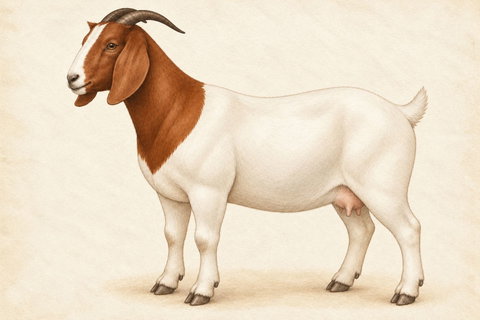
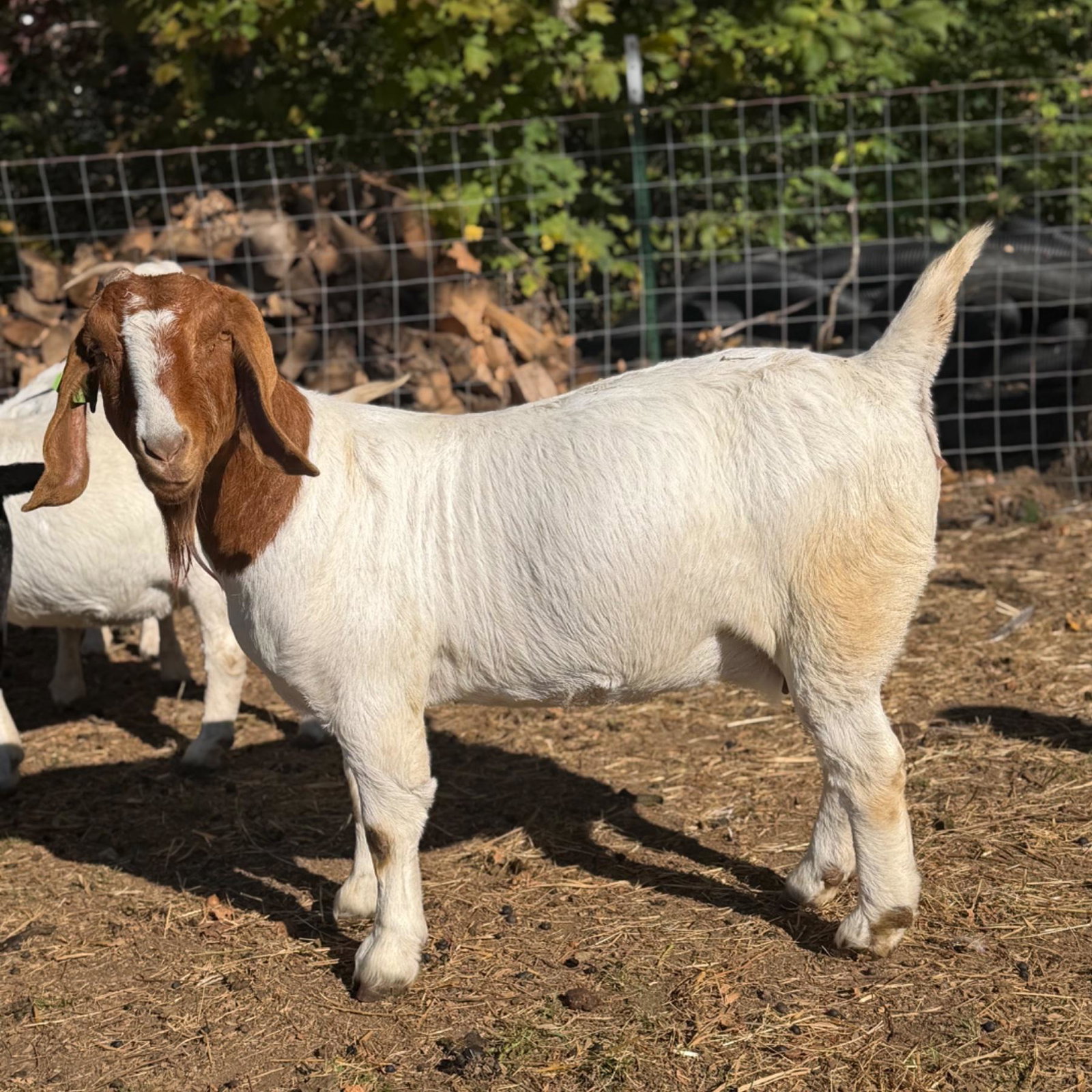
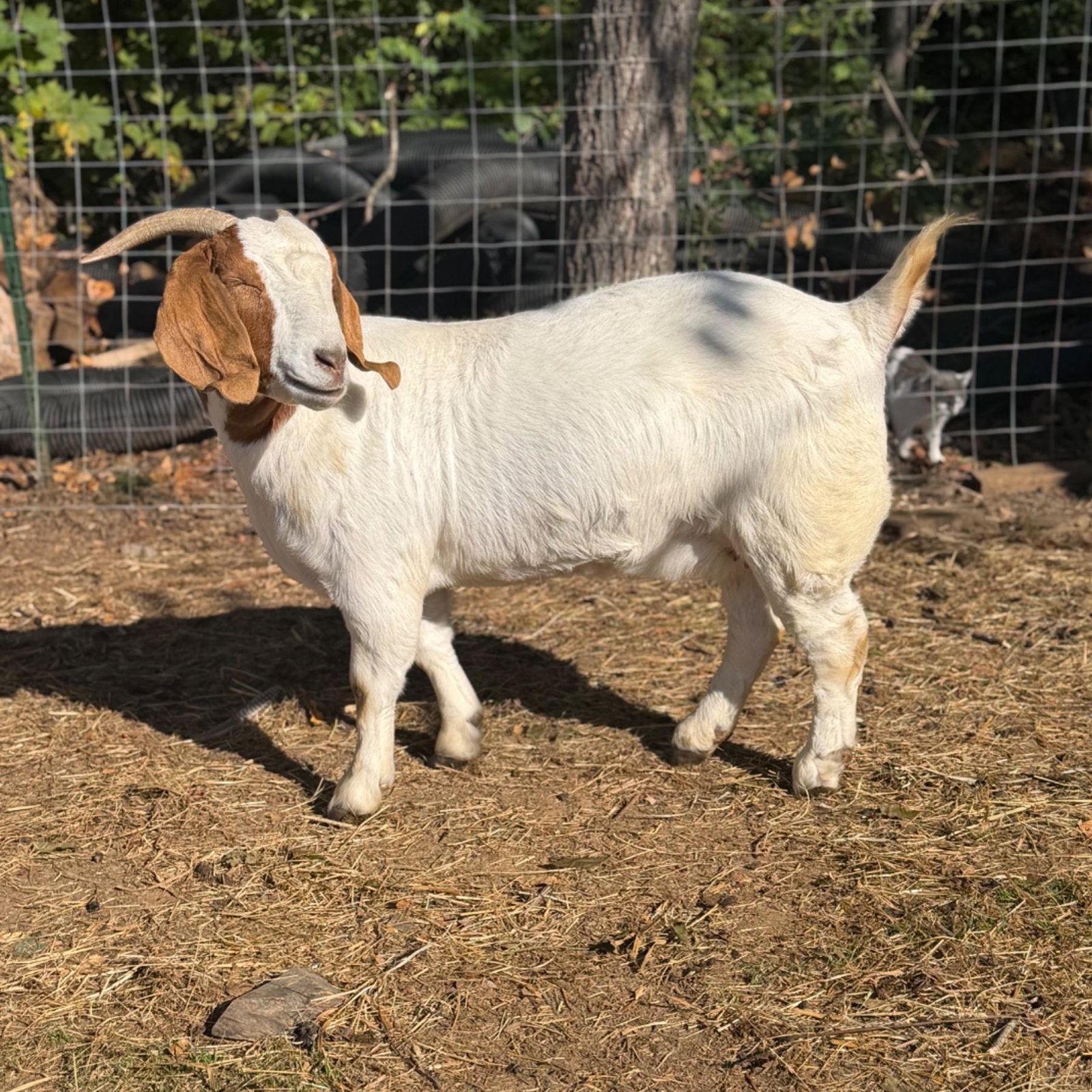
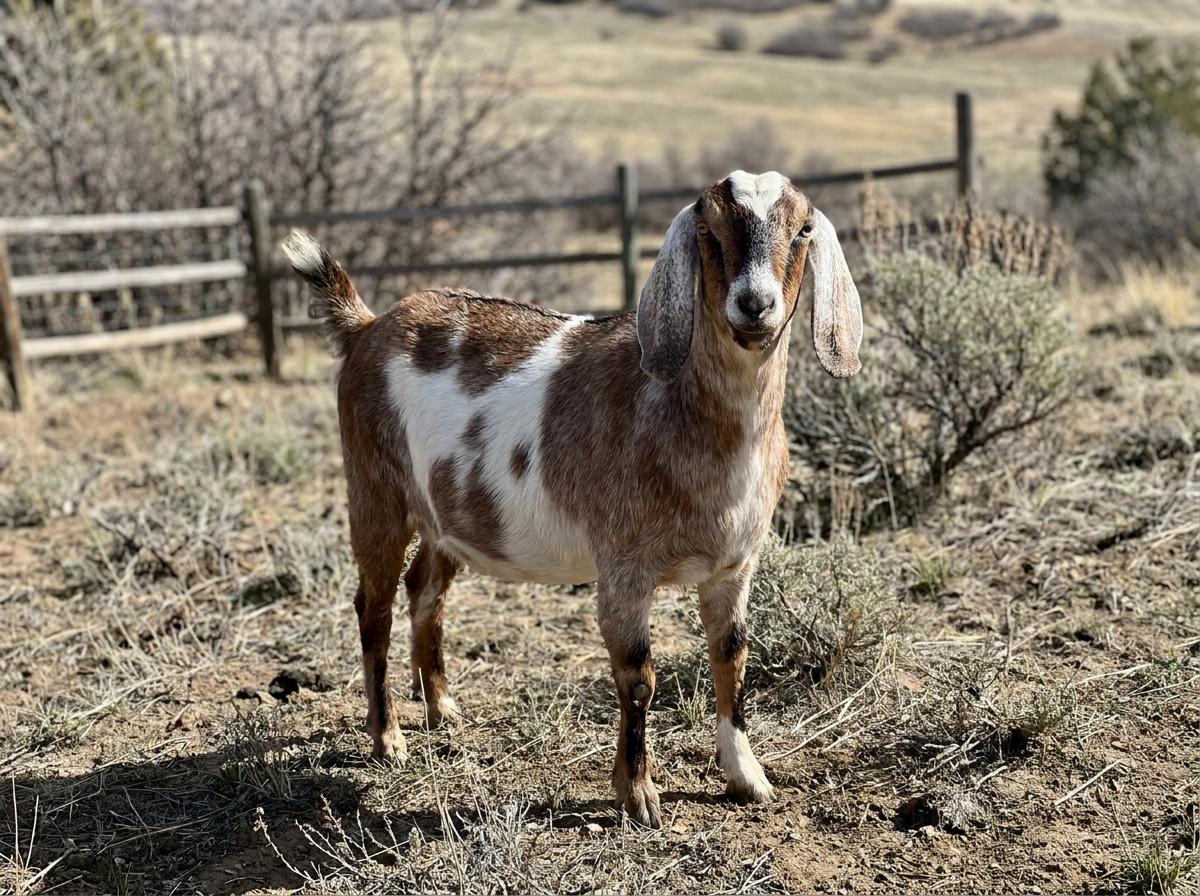
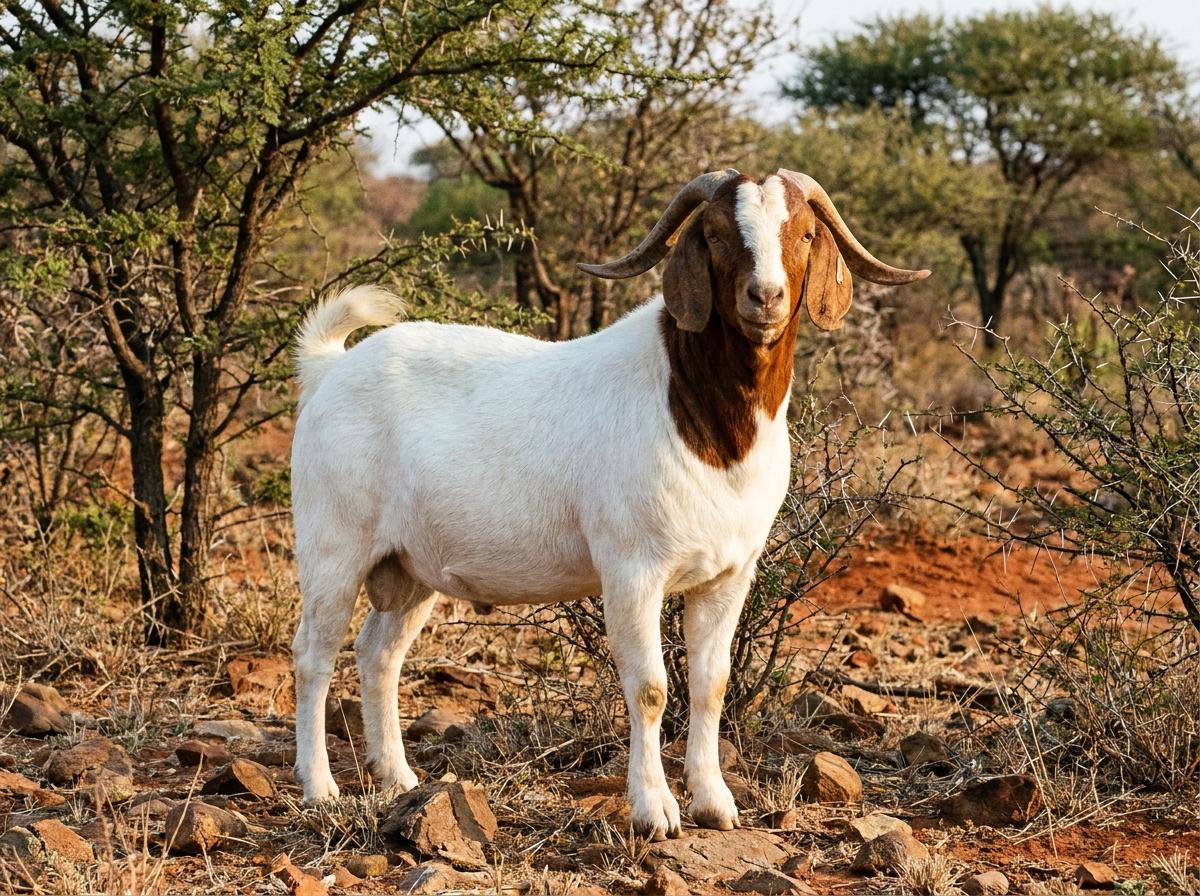
The short version: Boer goats are large, docile, fast growing meat goats with a white body and a red head. They breed out of season, and they are the breed most often used to add carcass weight to other goats. Boer does carry kids for about 150 days; see the goat gestation period and kidding date chart. They are also, like every goat, badly exposed to a single blood sucking stomach worm, and the show wether side of the breed carries a specific and preventable urinary problem. Everything below comes from the registry’s own published documents, from university extension, and from the Merck Veterinary Manual, with the marketing claims left out.
| Origin | South Africa, developed by Dutch farmers in the early 1900s (ABGA) |
|---|---|
| Arrived in the US | 1993, the same year the American Boer Goat Association was founded |
| Purpose | Meat, and improving the carcass of other goats through crossbreeding |
| Mature weight | Does 190 to 230 lb, bucks 200 to 340 lb (ABGA) |
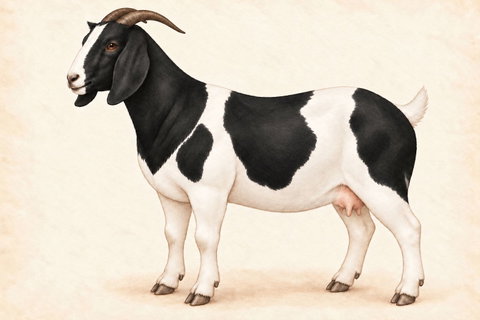
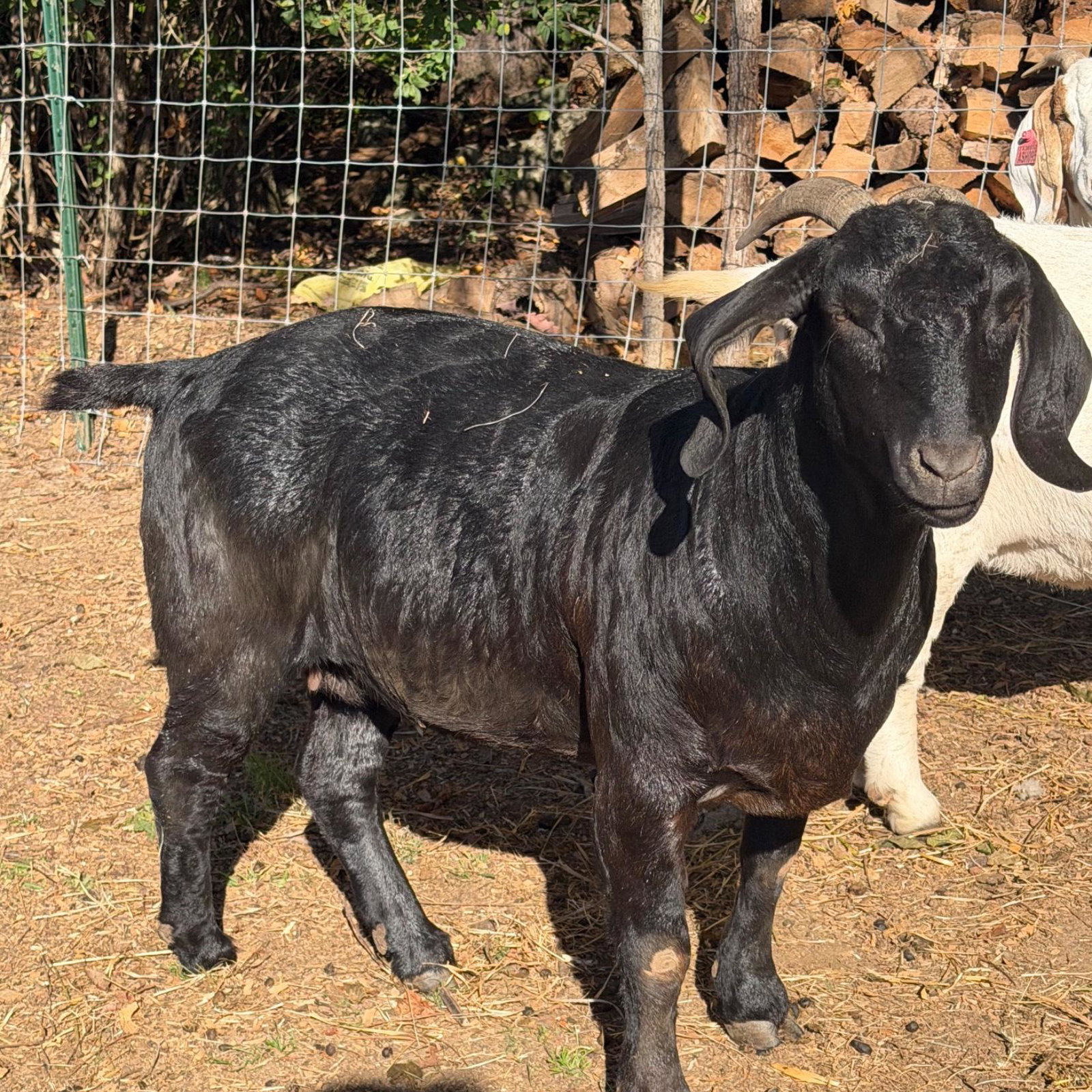
| Classic markings | White body, red head and ears. Other colours are registrable and are not faults under the standard |
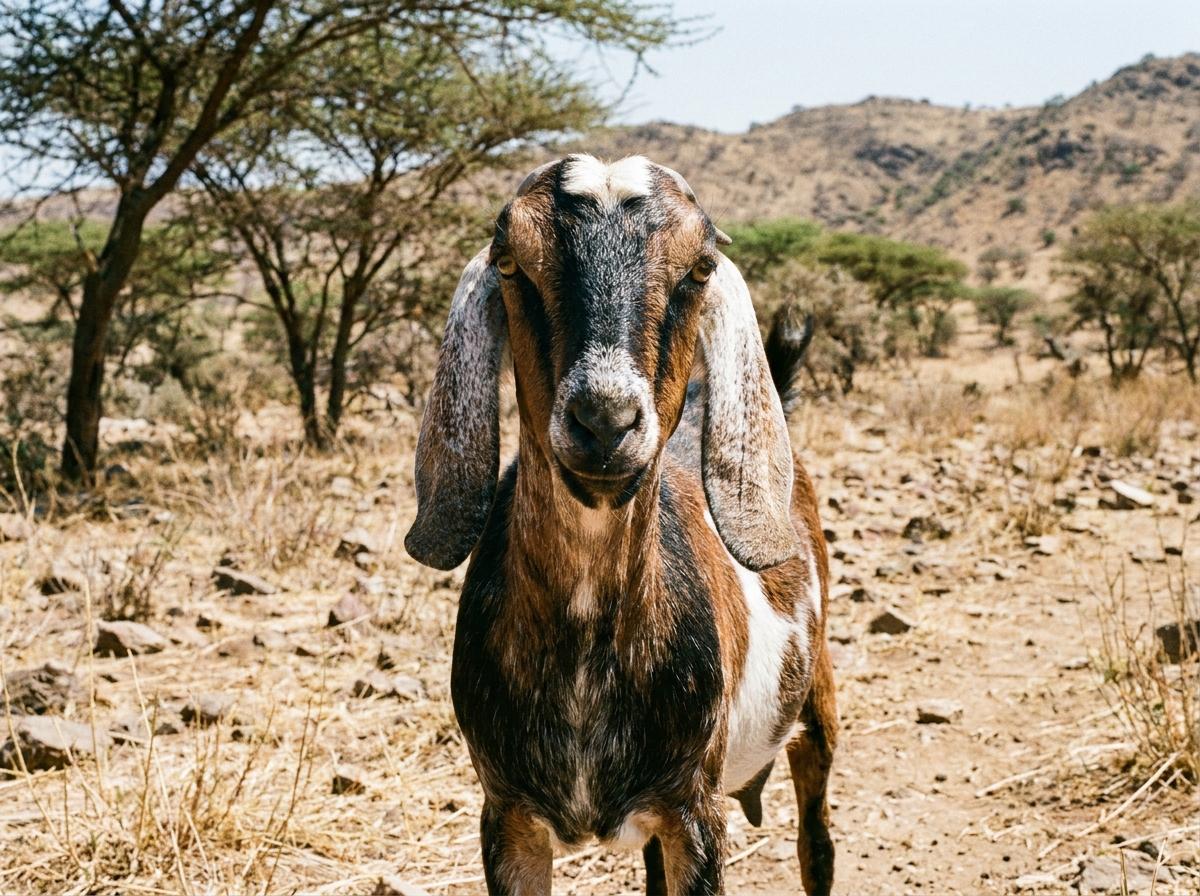
| Ears | Long, smooth and pendulous. Folded, crimped, elf or gopher ears are disqualifications |
| Breeding season | Polyestrous, able to breed year round (Penn State Extension) |
| Main health watch | Haemonchus contortus, urinary calculi in wethers, coccidiosis in kids, copper balance |
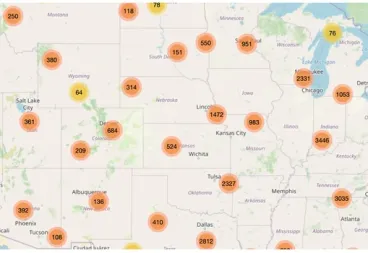
Browse listings, public profiles, breeders, or add your animal.
Where the Boer goat came from
The American Boer Goat Association’s own history is brief and worth taking at face value: the breed “was developed by Dutch farmers in South Africa in the early 1900s”, the goats were “brought to the United States in 1993”, and ABGA was founded that same year. The name follows the Afrikaans word for farmer.
What those breeders selected for explains the animal you will meet. They wanted a goat that put on meat quickly on rough ground, bred readily, and raised its own kids without help. Penn State Extension describes the result plainly: the Boer is “the predominant meat goat breed”, the animals are “heavily muscled and produce a lean carcass”, and they are polyestrous, meaning they can breed throughout the year, with many does rebreeding while still nursing under good management.
That last trait is the one people underestimate. A doe who cycles in October and again in May is a different management problem from a seasonal dairy breed, and buck kids mature early: Penn State advises sorting weaned kids by sex because many meat goat kids reach puberty by four months.
What the ABGA breed standard actually says
This is where most Boer goat pages go wrong, so it is worth being precise. The ABGA Breed Standards document is a public PDF, twenty five pages, revised 22 July 2025, linked from the association’s governing documents page, and nothing in it sits behind a membership wall. It contains four separate standards, for Percentage Does, Fullblood Does, Fullblood Bucks and Percentage Bucks.

Critically, almost every section ends with two separate lists: Faults and Disqualifications. They are not the same thing, and a trait on one list does not carry the consequence of the other. Here is what sits where, from the Fullblood Doe standard.
The ideal head has a Roman nose “consisting of a gentle curve”, wide nostrils, brown eyes and a “well-formed mouth with well-opposed jaws”. Ears “should be smooth and pendulous with no folds or pinches at the base of the ear canal”. Horns should be “dark, round, strong, of moderate length, positioned well apart, and have a gradual backward curve before turning outward symmetrically”.
Against that ideal, the standard lists as faults: a dished or concave forehead, bulging or wild eyes, flat or straight or wild type horns carried too far off the back of the head, horns too close together or growing too tight to the head or neck, erect or airplane ears, a jaw too pointed, a shallow lower jaw, and twisted, crooked or overlapping permanent teeth.
It lists as disqualifications: a wry or twisted face, cleft palate, blue eyes, naturally polled, dehorned, an ear folded lengthwise from the ear canal to the tip, an ear crimped or narrowed at the base, elf or gopher ears, a shortened lower jaw (parrot mouth), and several specific dental failures.
So an upright ear is a fault and a folded or crimped ear is a disqualification. That is why “bad ears” is not a useful phrase when you are looking at a goat.
The polled and dehorned disqualifications carry a qualifier that is easy to miss: they appear in the Fullblood standards. The Percentage standards instead say that “Percentage does may be polled (hornless) or have disbudded horns”, and the same allowance appears for Percentage bucks. A hornless goat is not automatically outside the standard. It depends which herd book the animal is in.
The bite rules matter if you buy adult animals. The front of the upper dental pad must touch all incisors, at any point above the gum, until the goat is 24 months old; after that an allowance of up to a quarter inch beyond the pad is permitted. Failing the first rule, or protruding more than a quarter inch after 24 months, is a disqualification, not a fault.
The feet and legs section shows the standard’s logic clearly. Knock knees, buck knees, calf knees, bowlegs, pasterns too short or too long, sickle hocks, post legs and splayed toes are all faults. The disqualifications are functional: “any foot or leg fault that adversely affects the animal’s gait or causes lameness”, and pasterns “too weak or ‘down’ while on the move or standing”. A structural deviation is marked down. One that has made the animal lame is out.
The reproductive sections are equally concrete. A doe’s udder should have “the floor of the udder at or above the level of the hocks”, with no more than two functional teats per side, and any structure “that prevents a newborn kid from nursing unassisted” is a disqualification. Bucks need two well formed testicles of equal size in a single scrotum with a distinct epididymis; a split in the scrotum’s apex of no more than one inch is “permitted but not preferred” and listed as a fault, while a split over one inch is a disqualification.
Pigmentation, which is not colour
The Skin and Coverings section carries the requirement people most often garble. Boer goats under 6 months “are required to have at least 50% pigmentation on the hairless area under the tail”, including around the anus and, in does, the vulva. From 6 months the requirement rises to at least 75%, and in both cases “100% pigmentation is preferred”. Falling below the threshold for the animal’s age is a disqualification, and the same numbers appear in all four standards. The document gives no reasoning, so this page will not invent one; what it does is treat pigmented skin in the bare, sun exposed area under the tail as a measurable requirement with an age threshold.
Colour: what registers, and where colour genuinely counts
One sentence settles most arguments. The Coloration section reads, identically in all four standards: “The traditional Boer goat is white bodied with a red head, but no preference is given to any hair color.”
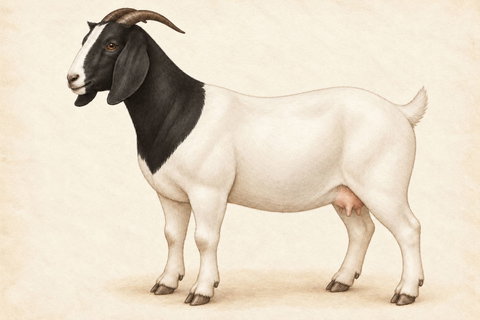
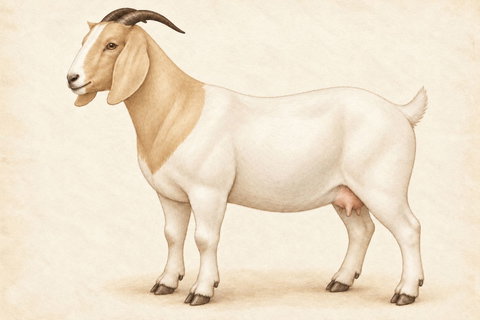
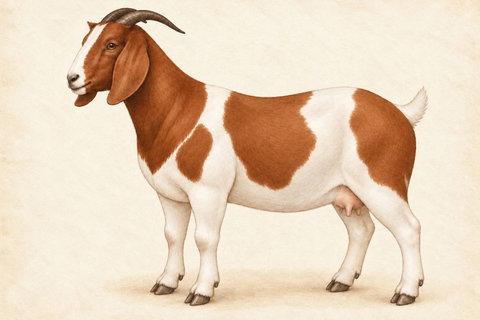
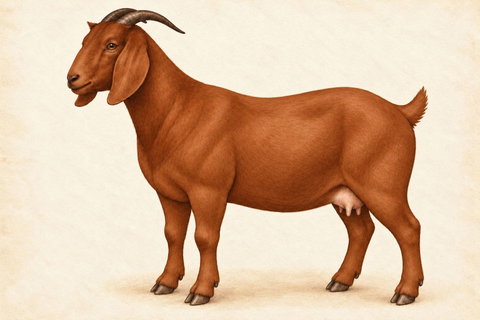
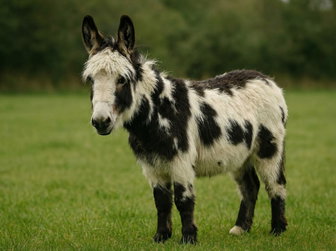
Colour is not a fault and not a disqualification. A red Boer, a paint, a dapple or a black headed goat is judged on the same head, body, leg, skin and reproductive criteria as a traditional animal, and herd book placement turns on percentage of Boer blood rather than coat pattern. Penn State says the same from outside: Boer goats “typically have a white body and a red head, although coat color patterns can vary greatly”. If you are looking specifically at red animals, Creatures has a separate Red Boer goat page.
Colour counts in exactly one place. ABGA’s Ennobled Herdbook, its recognition programme for outstanding animals, has Traditional and Non Traditional classifications. The association’s own account is that its policies were drafted in 1995 and approved in 1996, and that “in 2004, ABGA added the Non-Traditional classification to recognize animals that do not meet the color requirements of a Traditional animal”. Only Purebred and Fullblood goats are eligible for ennoblement at all, and show placings earned by non traditional animals before 1 July 2004 do not count toward ennoblement points. That is the whole of colour’s role: which ennoblement classification an eligible animal competes in.
The herd books, and which registries still exist
ABGA maintains what its rules call the American Boer Goat Herd Book, made up of three herd books, with exact percentage bands:
- Fullblood animals “must have originated from 100% Fullblood stock, either imported or American born”.
- American Purebred does need a minimum of 93.75% and less than 100% Boer blood.
- American Purebred bucks need a minimum of 96.875% and less than 100%, and are “eligible to be shown in the same classes as Fullblood Boer goats”.
- American Percentage does need a minimum of 25% and less than 93.75%, and percentage bucks a minimum of 25% and less than 96.875%.
Bucks below 25% Boer blood cannot be registered, and wethers at least 6.25% Boer are eligible for a Record of Pedigree rather than registration. There is also a route in for good goats with no paperwork: under the Native on Appearance programme, does otherwise ineligible that have the appearance of a Boer goat can be accepted and are granted 12.5% Boer blood.
Be careful with the other registries named in older articles, because the situation has changed and this page checked rather than repeated it. The American Boer Goat Association is unambiguously active: its site, standards, rules and ennoblement records all load, and its rules carry updates through April 2026. The United States Boer Goat Association ran its own registry, judges’ handbook and online pedigrees, and archived captures from 2023 show all of it intact, but the domain it used is no longer under its control and today serves an unrelated business. The International Boer Goat Association was reported to have closed in 2013 with its registry moving to ABGA, and its former address now fails to load. Because neither body could be reached at a working address of its own, this page links to neither. If a seller says an animal is registered with either, ask to see the certificate and verify it with the issuing body before paying a registered price.
Size, growth, and the numbers worth trusting
ABGA states that mature does can weigh between 190 and 230 pounds and mature bucks between 200 and 340 pounds. Those are the registry’s own figures.
Growth rate is where the internet gets loudest and the sourcing thinnest. Penn State reports that “under favorable nutritional conditions, meat goats gain at a rate of around 200 grams (0.45 pounds) per day from birth to 100 days of age”, and notes that meat goat growth rates are generally slower than sheep. That figure is for meat goats as a class, not Boer goats specifically, and it is conditioned on favourable nutrition.
You will also meet confident carcass and dressing percentage claims, including on the registry’s own promotional pages, which assert among other things that the Boer “has the highest dressed weight percentage of any mutton breed”. No study is cited for it, so it is not repeated here.
What is genuinely useful is that ABGA runs a structured way to get real numbers. Under Rule 1200, a performance test must be open to buck kids only, run 60 to 90 days, start with bucks under 6 months, and be “conducted under the supervision of a disinterested agency, such as a State Agricultural Institution, State Extension Agency”. The report must carry each animal’s start and end weights and calculated average daily gain, used for ranking. When buying breeding stock, an average daily gain from a supervised test is worth far more than a number in a sale advert, so ask whether a buck has been performance tested.
Show wethers, honestly
Much American Boer activity is youth showing through the Junior American Boer Goat Association, and much of that is market wethers. It is a genuinely good programme and also where the breed’s least attractive pressures show, so it deserves a straight description. If you are helping a child with a market goat project, the goat show guide walks through weights, fitting and showmanship.
Wethers are castrated males. They are not registered in the herd books, but a wether at least 6.25% Boer can carry a Record of Pedigree. ABGA runs a separate approved judges track for market goats and wether dams, with applicants required to be members in good standing, at least 21 years old, and to pass a background check.
The pressures are visible in what the rules forbid. ABGA’s code prohibits altering an animal’s conformation or structure surgically, with narrow exceptions for removing horns and, in wethers, removing testicles. It prohibits “artificial coloring that alters the natural color of a goat”, prohibits attaching objects to an animal, and prohibits inhumane or unethical treatment, “including striking animals, using electrical contrivance, or other similar methods”. Rules like those exist because the behaviour they name has happened. If you are helping a child into this programme, that list is a fair description of the line and a good reason to choose a mentor carefully.
The other honest thing about show wethers is medical: a heavily fed, castrated male goat is the highest risk animal in the goat world for a blocked urethra.
Crossbreeding: what a Boer buck is actually for
Beyond purebred breeding, the commonest American use of a Boer is as a terminal sire over does of another type. Penn State supplies the relevant half of the logic: dairy goat carcasses “are generally much lighter muscled than meat goat carcasses”, while the Boer is heavily muscled and produces a lean carcass.
Put a Boer buck over dairy does and you keep the dam’s milk and mothering while adding muscle to the kids going to market. Put him over hardy range does and you add carcass to animals already selected for survival. Penn State describes the Kiko, from New Zealand, as selected for survivability and growth rate, with no common coat colour, consistently producing a lean, well muscled goat of large frame that survives under widely differing climatic conditions. Spanish and Savanna goats occupy similar ground as hardy, low input bases, and Nubians are the dual purpose dairy breed most often crossed this way.
Two cautions. A Boer cross doe kid may be registrable as American Percentage if the paperwork supports it, but a cross is not a shortcut to a Fullblood. And crossing for muscle does not import parasite resilience: moving toward Boer influence means planning for more parasite management, not less.
Feeding, fencing, and pasture
Goats are browsers before they are grazers, and a Boer will strip a hedge line before it grazes the sward under its feet. Creatures has a full goat feeding guide covering forage, hay, grain and browse, so this page adds only the pasture specific part.

On minerals, the Merck Veterinary Manual’s goat nutrition chapter advises adjusting macromineral supplements toward a 2:1 calcium to phosphorus ratio and a 4:1 potassium to magnesium ratio. Copper deserves its own note, because goats and sheep genuinely differ and the difference matters. Merck’s nutritional diseases chapter states that “goats have relatively high copper requirements compared to other species”, recommends a dietary copper to molybdenum ratio of 6:1 to 10:1, and warns explicitly that commercial sheep feeds containing sodium molybdate “should not be fed to goats, as these products can lead to copper deficiency in goats”. If you run sheep and goats together, that sentence is the reason to buy two mineral products. Goats can also suffer copper toxicosis, so this is a balance to manage, not a nutrient to load up on.
On fencing, Penn State is blunt that goats require tight fencing, and describes a five or six strand high tensile fence with electrified first, third and top wires as an effective goat tight fence. Woven wire may be used, but the guidance is to run a single electric strand inside it to stop goats climbing the fence or getting their heads stuck, because a goat’s horns can become entangled and severely harm the animal.
On stocking, Penn State suggests most Pennsylvania pastures support roughly 1,000 pounds of animals per acre, or about six to seven does. On grazing, the parasite angle matters most: moving goats every four to five days, and off a pasture before the grass is shorter than four inches, helps prevent internal parasite infection.
Health: the three things that actually matter
Nothing here replaces your veterinarian, and every treatment decision, especially any deworming plan, should be made with one who knows your farm. If you do not have one yet, start with how to find a large animal vet.
Barber pole worm. Haemonchus contortus is, in Merck’s words, “the most common pathogenic GI parasite in small ruminants”. It is a blood feeder in the abomasum, females are capable of producing up to 10,000 eggs per day, and heavy infections can kill quickly. Diarrhoea is not the characteristic sign; anaemia is. Merck describes FAMACHA scoring as “an important tool in the diagnosis, monitoring, and control of haemonchosis in herds of goat and sheep”. FAMACHA is a colour card matching the lower eyelid membrane to an anaemia score, it requires training to obtain and use, and it detects anaemia rather than worms. Merck also records that H. contortus “has become resistant to many anthelmintics, requiring alternatives in parasite control programs”, which is why treating every animal on a calendar is no longer recommended. Ask your veterinarian about faecal egg counts, FAMACHA training, and preserving refugia rather than reaching for the drench gun on a schedule. One of the alternatives has a sting in it: copper oxide wire particle boluses can reduce H. contortus burden in goats, but Merck warns that repeated administration raises the risk of copper toxicosis, because goats accumulate excess copper in the liver. A veterinary decision, not a routine.
Urinary calculi. This is the show wether problem. Merck’s urolithiasis chapter describes obstructive urolithiasis as “a substantial cause of morbidity and death in male ruminants” and “most common in wethers, bucks, and rams, with commercial, exhibition, and pet animals at risk”. In small ruminants the stone typically lodges in the vermiform appendage, the narrow urethral process at the tip of the penis, or at the distal sigmoid flexure.
Two points are commonly misreported, so they are stated exactly as the source does. First, on castration timing, Merck’s sentence is that “delaying castration until at least 8 weeks has been shown to have a positive impact on urethral diameter in calves and lambs”. The demonstrated effect is in calves and lambs; Merck publishes no proven goat specific age, and neither does this page. Second, and more importantly, Merck’s goat nutrition chapter puts the priority elsewhere: although early castration and genetic predisposition “are often discussed as causes of this disease, diet is the most important management tool that can be used to minimize risk”. Bucks, buck kids and wethers should be fed a diet low in magnesium with a calcium to phosphorus ratio of about 2:1, grain minimised to keep phosphorus low, and fresh clean water always available. Where grain or pelleted feed is fed anyway, Merck advises holding the total ration at 2 to 2.5 parts calcium per part phosphorus, noting that raising the ratio predisposes to calcium carbonate stones while lowering it predisposes to phosphatic ones. Show and feeder animals are at highest risk for phosphatic stones. A wether straining, dribbling or crying while trying to urinate is an emergency, not a wait and see. This page publishes no lifespan figures for the breed; how long goats live covers them by sex and by use, wethers included.
Coccidiosis in kids. Merck describes coccidiosis in goats as “a complex, multifactorial problem” whose expression depends on stress, environment, contamination and exposure, and says that in many countries it is the most common cause of diarrhoea in indoor goat kids over four weeks old. Goats develop some but not total immunity, and the goal Merck describes is a balance: enough oocyst exposure to build immunity without causing clinical disease. Weaning, transport and show season are all stress points where kids break.
Buying a Boer goat
Price varies far too much by region, season, pedigree and show record for a number to be meaningful, and no sourced national figure exists, so this page will not invent one. Commercial percentage does sell for a fraction of what a proven show doe or an ennobled bloodline buck brings, and the gap can be an order of magnitude.
What you can control is what you ask. Ask for the registration or Record of Pedigree certificate and check the herd book and percentage against the bands above. Ask whether a buck has been through a supervised performance test and what his average daily gain was. Ask what the farm’s parasite programme is and whether they FAMACHA score. Ask to see the dam’s udder, since teat structure is a disqualifying trait and it is heritable. Watch feet and pasterns while the animal moves, because that is where the standard draws its own line between fault and disqualification.
You can browse Boer goats on the Creatures marketplace and find farms in the breeder directory, which filters trusted breeders by species and state.
Keeping the records a Boer goat generates
A registered Boer goat produces more paperwork than most livestock: a certificate with a herd book and percentage, tattoos in both ears, a scrapie or federal identification tag, DNA results on some animals, performance figures, show placings, and a health history that will matter at the next sale.

Creatures is the records, marketplace and directory layer for keeping that together. It is not a veterinary service, and nothing here replaces your vet. On a free animal profile you can record registration numbers and identifiers, and add records across thirteen types including vaccination with an administered by field and a next due date, examination, medication, test results, and physical measurement so weight and body condition build a real curve. Medical record types, including test results, medication, examination and surgery, are private by default. You can set reminders for boosters and rechecks and subscribe to them as a calendar feed, download a printable packet of an animal’s records to take to the clinic, and import a vet PDF or lab report back into the record history after a visit.
For a meat operation the weight curve pays for itself. A doe’s kids weighed at the same age every year tells you whether she is earning her place better than any impression will.
Frequently asked questions
Can a paint or red Boer goat be registered? Yes. The ABGA standard states that no preference is given to any hair colour, and herd book placement depends on percentage of Boer blood, not coat pattern. Colour only separates Traditional from Non Traditional classification in the ennoblement programme.
Is a hornless Boer goat a disqualification? It depends on the herd book. Naturally polled and dehorned are both disqualifications in the Fullblood standards. The Percentage standards explicitly allow polled or disbudded animals.
How big do Boer goats get? ABGA gives mature does at 190 to 230 pounds and mature bucks at 200 to 340 pounds.
Are Boer goats good for beginners? They are docile and hardy, which helps. The honest caveats are that they need genuinely goat tight fencing, they will breed year round if you let them, and they need a real parasite plan rather than a calendar drench.
What is the difference between a fault and a disqualification? A fault is a deviation from the ideal that a judge marks down. A disqualification puts the animal outside the standard. ABGA lists them separately in almost every section, and most sections also disqualify “any extreme occurrence” of a listed fault.
What is ennoblement? ABGA’s recognition programme for outstanding Purebred and Fullblood animals, with Traditional and Non Traditional classifications since 2004.
Do this next on Creatures
Whether you are buying your first Boer doe or managing a herd of two hundred, these are the practical next steps.
- Add your goat and start its record. Create a free Boer goat profile with registration numbers, tattoos and identifiers. No account is needed to start. See adding an animal to Creatures and your animal’s profile page.
- Log weights, vaccinations and vet visits. Add a record. The form opens for visitors and a free account saves it. Guides: adding a record and health and medical records, which covers what stays private.
- Never miss a booster or a recheck. Set due dates and subscribe to the calendar feed. See reminders and upcoming care.
- Get told when a Boer goat is listed. Save a Boer goat search and get an email when one appears. No account needed to start. See saving searches and your watchlist.
- Selling Boer goats? Create a breeder profile so buyers can find you. No account needed to start. See getting listed in the breeder directory and creating an organization and adding your team.
- Browse what is available. Boer goats on the marketplace, or the wider goat marketplace.
- Find farms near you. Browse the breeder directory and filter trusted breeders by species and state.
- Read more. The goat species hub covers every breed on Creatures, and the goat feeding guide goes deeper on forage, hay and grain.