Beetal
Author: Elliott Garber, DVM · Updated
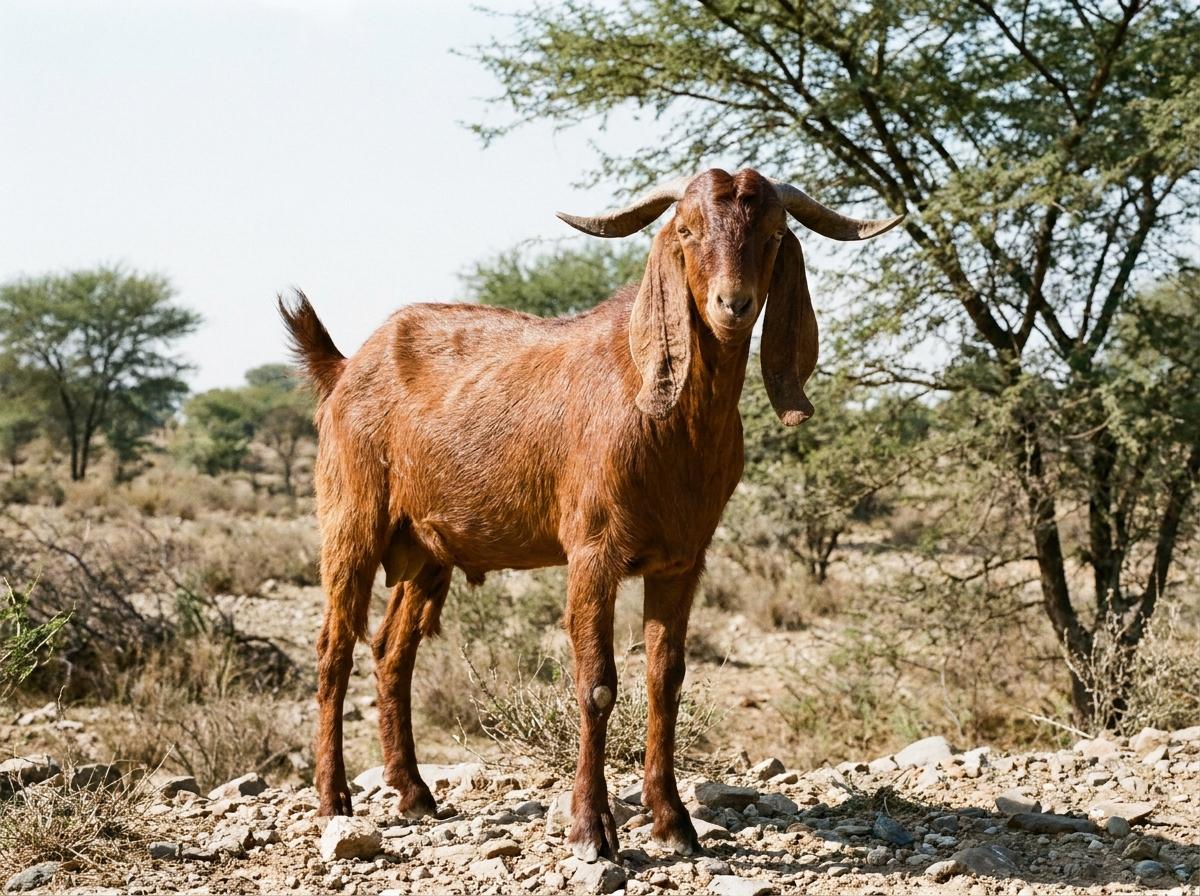
The Beetal is a large, long-eared goat from the Punjab, the farming region split between Pakistan and India in 1947, and it is kept on both sides of that border for milk and meat. It is easy to recognise: a tall frame, a short glossy coat, a convex Roman nose and broad, flat ears that hang well below the jaw. In India it is a registered national breed; in Pakistan it is one of the country’s most widespread goats and, according to a University of Agriculture, Faisalabad judging guide, the most highly priced goat at Eid festivals. Outside South Asia it is very hard to find, and live import into the United States is not permitted.
This guide covers where the Beetal comes from, the strains Pakistani breeders recognise, what it looks like, what the milk and growth figures actually say, why the Eid al-Adha market shapes the breed, and how to keep one in heat. It ends with an honest buying section. If you want to see whether any Beetals are listed right now, the Beetal goat marketplace page is the place to check, and a free listing alert (covered at the end) is the practical way to hear if one appears.

| Origin | Punjab region: Punjab province, Pakistan, and the Indian states of Punjab and Haryana |
|---|---|
| Registration | Registered Indian breed (ICAR-NBAGR, home tract Punjab); no herdbook outside South Asia that we could find |
| Main use | Dual purpose, milk and meat; in Pakistan the heavy sacrificial buck for Eid al-Adha is a major goal |
| Strains | Pakistani breeders recognise Faisalabadi, Makhi-Cheeni, Nuqri, Nagri, Rahim Yar Khan and Gujrati types |
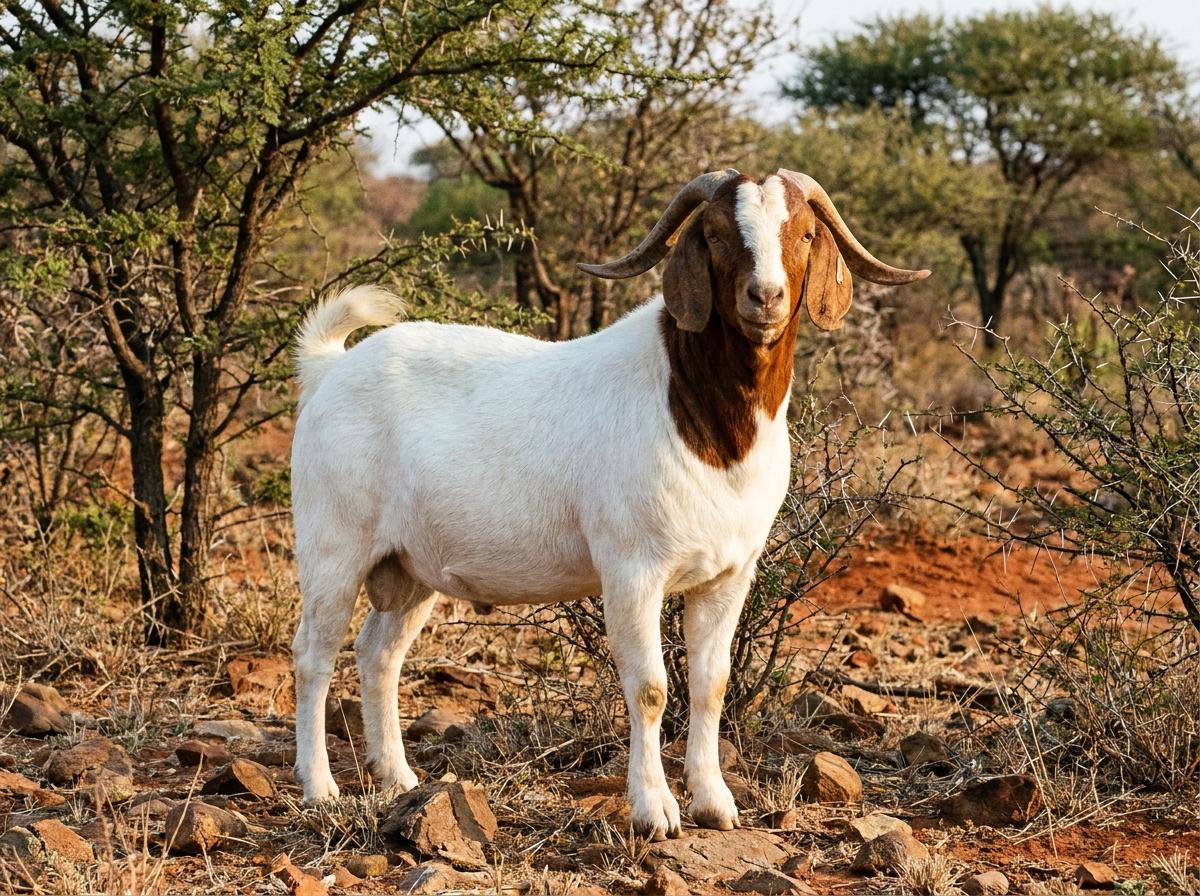
| Look | Tall frame, short glossy coat, Roman nose, flat drooping ears about 25 to 45 cm long, small horns or none |
| Size | Indian farm records: about 35 kg does and 59 kg bucks; Pakistani show stock: about 60 kg does and 100 kg bucks |
| Milk | Recorded lactations of roughly 150 to 270 litres, depending on the source and the herd |
| US availability | Essentially none; live goats from India and Pakistan cannot be imported |
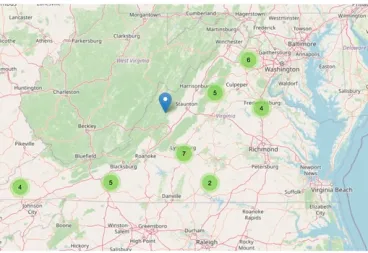
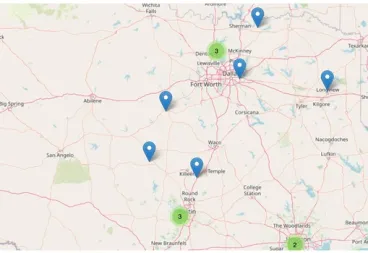
Browse listings, public profiles, breeders, or add your animal.
What is a Beetal goat?
The Beetal is an indigenous South Asian goat bred for both milk and meat. In India it is one of the goat breeds registered by the ICAR National Bureau of Animal Genetic Resources, which lists it with Punjab as its home tract under accession number INDIA_GOAT_1600_BEETAL_06003. In Pakistan, a 2024 review of the goat sector counts 36 indigenous goat breeds among roughly 80 million goats and names the Beetal first among the predominant ones, singling it out (with the Kamori) as a dual-purpose milk and meat breed. A 2020 data paper from researchers at the University of Agriculture, Faisalabad and the University of Göttingen describes it as the third most abundant goat breed in Pakistan.
Two sources carry most of the weight on this page. For India, the standard reference is R.M. Acharya’s Sheep and Goat Breeds of India, published by the Food and Agriculture Organization of the United Nations as Animal Production and Health Paper 30, which pulls together measurements from Indian farm and field studies. For Pakistan, it is Judging and Selection in Beetal Goats by M. Sajjad Khan of the University of Agriculture, Faisalabad and A.M. Okeyo of the International Livestock Research Institute (2016), written from the goat shows held in Pakistan since 2011. The two describe somewhat different populations, and they do not always agree. Where they differ, we show both.
The Pakistani guide is frank that much older writing on the breed is out of date. They call textbook descriptions of a “massive head” and large spiralled horns “beyond reality,” note that the livestock department’s own booklet contains errors, and argue that the breed is best described strain by strain.
For the wider family of goats on Creatures, the goat species page lists every breed with its own page, including the Beetal’s Punjab neighbour the Nachi and the Sindh breed the Kamori.
One breed, two countries
The Beetal predates the modern border. Its range is the Punjab plains, which were divided between Pakistan and India at partition, and both countries treat it as their own.
In India, Acharya records the breed throughout the states of Punjab and Haryana, with true-bred animals found in the Gurdaspur, Amritsar and Ferozepur districts of Punjab. Acharya’s account, published in 1982, already noted that surveys by India’s National Dairy Research Institute had found both the number of flocks and the number of goats per flock falling in Punjab, mainly because more land had come under irrigated crops and there was less natural vegetation to browse. Acharya’s text says there is “need for conserving this breed.”
In Pakistan, Khan and Okeyo say Beetals are found all over Punjab province, with different strains concentrated in different districts (see below). The breed has also been taken into other provinces to cross with and upgrade local goats, and it has been used in poverty-reduction and nutrition programmes because it produces both meat and milk.
You will sometimes see “Amritsari Beetal” used informally, after the Amritsar district. We did not find a breed registry or research source that defines an Amritsari strain, so treat the name as a place description rather than a recognised type.
Genetically, the Beetal is one of the larger Pakistani breeds. A 2020 genome study in Genes classed it as large-sized and found that it shares a selection signature at the LCORL locus, a region linked to body size in many mammals, with four other Pakistani breeds including the Nachi and the Kamori.
The Beetal strains of Pakistan
In Pakistan, coat colour is the single most important feature for telling Beetal strains apart, and each strain has its own home districts. Khan and Okeyo describe them this way:
- Faisalabadi (also called Lyallpuri, or Desi in central Punjab). Black and white spotted; red in place of black is accepted, but splashed colour is a fault. Found mostly in Faisalabad, Sahiwal, Okara, Lahore, Sheikhupura, Gujranwala, Jhang, Sargodha, Toba Tek Singh and Khanewal.
- Makhi-Cheeni. “Makhi” means fly and “cheeni” a mixture of colours: a light background splashed with light or dark brown. Lighter animals are called Phikki-Cheeni, darker ones Ratti-Cheeni, and animals with black instead of brown Kali-Cheeni. Spotting disqualifies. Concentrated in Bahawalpur, Bahawalnagar and Muzaffargarh.
- Nuqri (also Rajanpuri). White, with a pinkish muzzle and ears preferred, which is why it is sometimes called “ghulabi,” meaning pinkish. Found mainly in Dera Ghazi Khan, Rajanpur and Bahawalpur. Nuqris also have the longest ears, around 40 cm.
- Nagri. Dark brown laced with black or very dark brown, a colour called “loha.” Found in Faisalabad, Okara, Sahiwal and Pakpattan.
- Rahim Yar Khan (RY Khan). White is a disqualification, and the bridge of the nose tends to be more pronounced than in the Faisalabadi strain.
- Gujrati. Found in Gujrat, Sargodha, Mandi Bahauddin, Jhelum and Sialkot.
The most detailed study of breeding goals covers four of these. That 2020 survey of 162 experienced breeders of the Faisalabadi, Makhi-Cheeni, Nuqri and RY Khan strains found that breeders ranked appearance and other subjective traits above production traits when choosing breeding stock. That matters if you are ever buying: a beautifully marked Beetal is not necessarily a high-producing one.

What a Beetal goat looks like
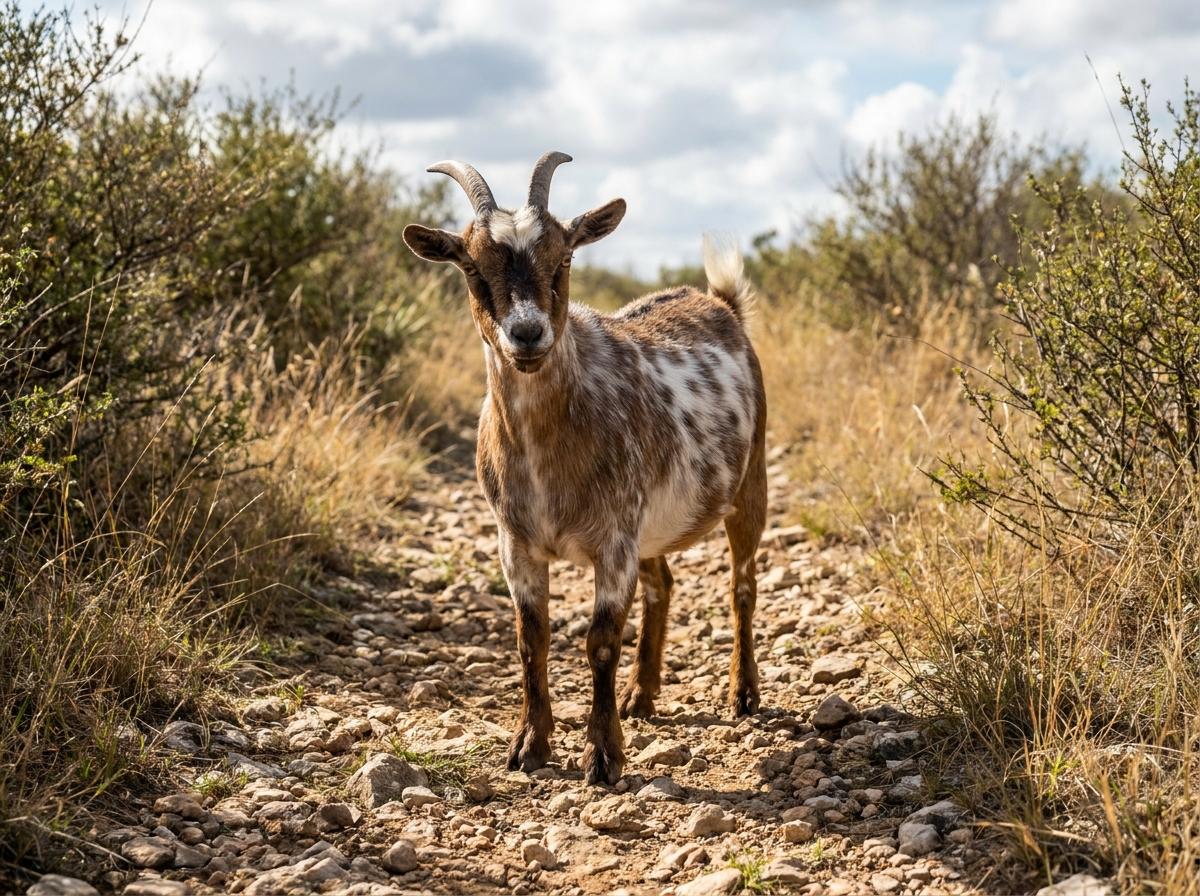
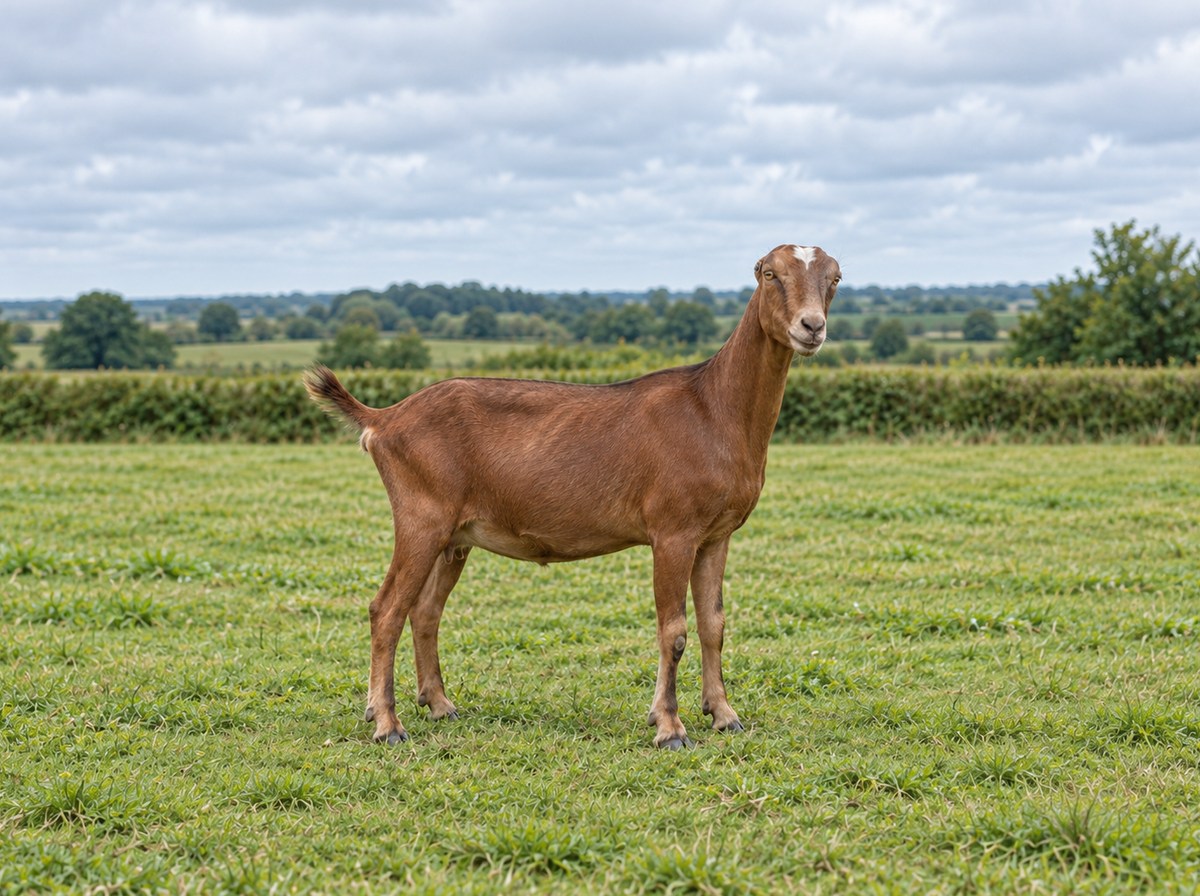
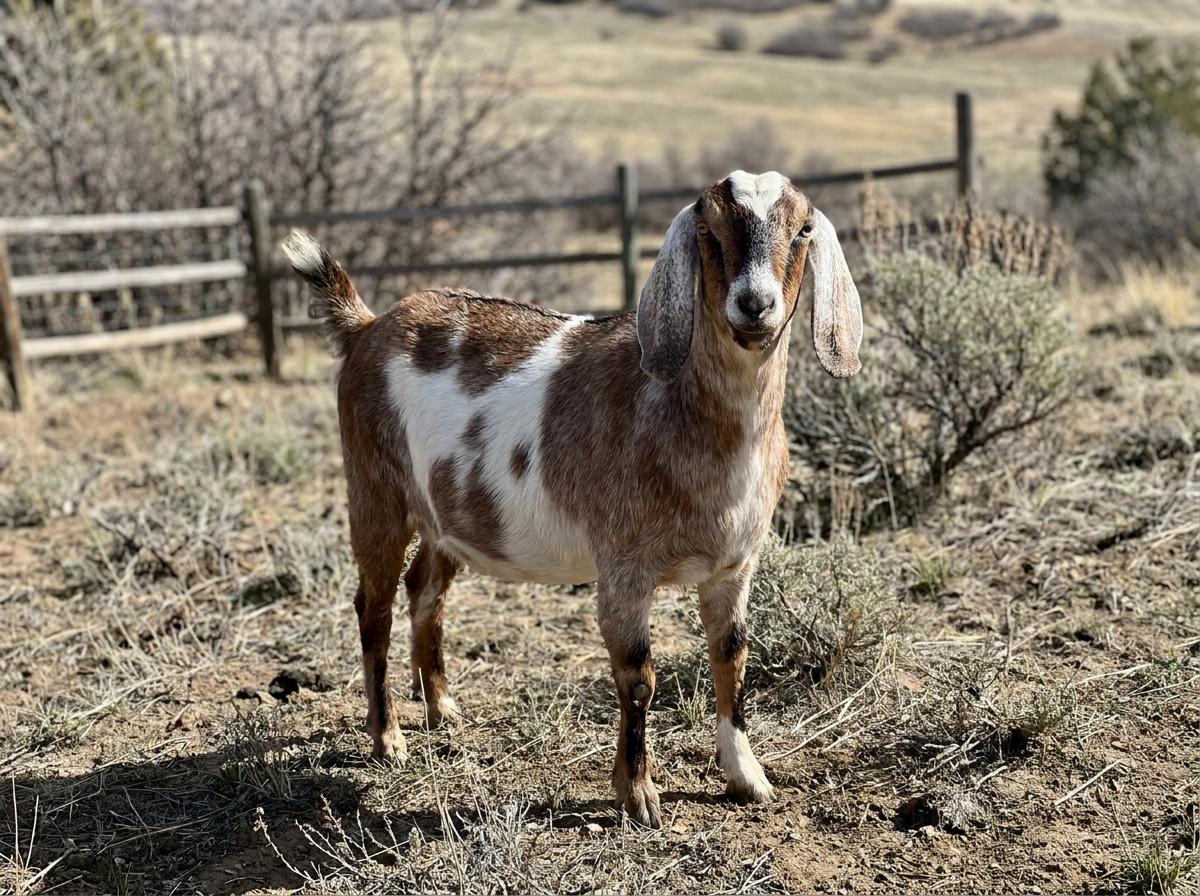
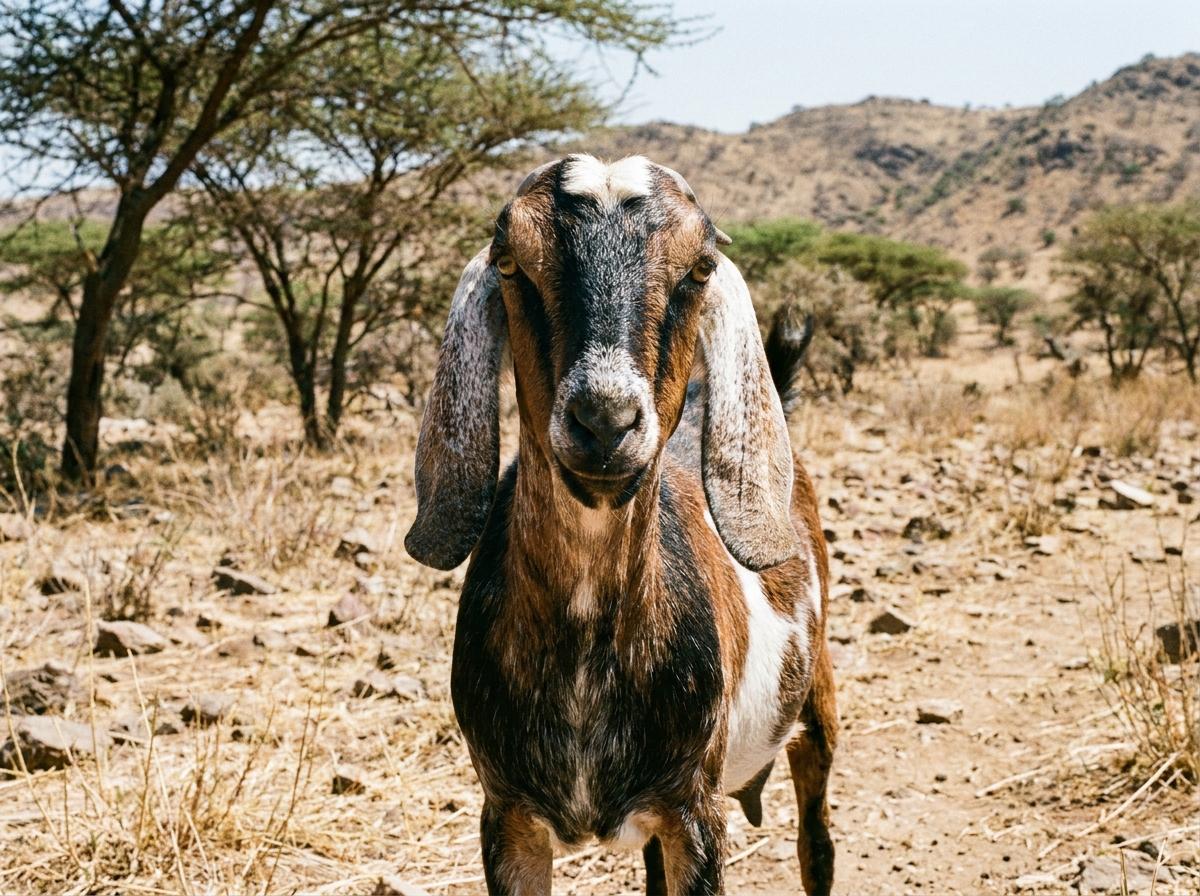
Standing still, a Beetal is a tall, well-fleshed goat with a long neck, long body and very long ears. Here is what the two main sources describe.
- Nose. Convex, a true Roman nose. Acharya notes it is not as prominent as the Jamnapari’s. Khan and Okeyo say the bridge of the nose ranges from slight to highly prominent, and in males may end abruptly (a “cut nose”). A dished face is a fault.
- Ears. Long, flat and drooping. Acharya records an average ear length of about 25 cm in Indian animals; Khan and Okeyo give a range of 25 to 45 cm in Pakistan, from about 30 cm in RY Khan goats to about 40 cm in Nuqris. Erect ears are a fault.
- Coat. Short and lustrous in both sources. Excessive hair on the legs, especially in males, is not wanted; trimming is acceptable, and males are often trimmed.
- Colour. In India, predominantly black or brown with white spots of differing sizes; a National Dairy Research Institute survey found 92.6 percent of animals in the home tract were black and 7.4 percent brown. In Pakistan, colour depends on the strain, from black-and-white spotted to solid white.
- Horns. Here the sources disagree. Acharya describes thick, medium-sized horns carried horizontally with a slight backward and upward twist, averaging about 12 cm. Khan and Okeyo say Pakistani Beetal horns are generally small and stumpy, that big horns are a fault, and that polled (hornless) animals are common in both sexes.
- Head and throat. A proportionate head, not a massive one. Wattles are not allowed, beards are not preferred, and some bucks carry a dewlap.
- Tail. Small and thin, hanging or bending upward with a tuft at the end, but never curled fully over the back as in the Teddy or Nachi. Many RY Khan and Nuqri breeders shave the tail.
- Build. Smooth withers that blend into the back, with no dip behind them (a contrast with the Nachi), a deep and wide chest, and a slightly curved, strong back.
Size: why the published numbers differ
The Beetal is a big goat, but how big depends on which animals were measured.
- Indian farm and field records summarised by Acharya put adult bucks at about 59 kg and 92 cm at the withers, and adult does at about 35 kg and 77 cm.
- A 2024 Pakistani review table gives 35 to 45 kg, citing older references alongside Khan and Okeyo.
- Khan and Okeyo’s judging guide puts adult breeding animals anywhere from 30 to 120 kg. At a recent Nuqri show, does averaged 60 kg and bucks 100 kg (from 58 animals), with the same averages in RY Khan goats. Height at the shoulder averages 90 cm in does and 105 to 110 cm in bucks. Fattened males can reach 230 kg or more.
Without a scale, the goat weight calculator estimates weight from heart girth and body length, which is a useful check on any seller’s claimed weight.
The likeliest explanation for the spread is the same one that applies to the Nachi: older figures describe ordinary village and farm goats, while the recent Pakistani numbers describe well-fed show and sacrificial stock. The guide puts the Beetal at about the Nachi’s height and much taller than the small Teddy goat.
Milk: what the numbers say
The Beetal is kept for milk as well as meat, and it is often described as one of the better dairy goats of the region. Acharya calls it “a good dairy breed,” second to the Jamnapari in size but more prolific and more adaptable to different conditions and to stall-feeding.
The recorded figures vary more than most breed summaries admit:
- India. Acharya’s summary of farm records gives an average lactation of about 177 kg over about 187 days, across nearly 4,000 lactations. Yield rose from about 153 kg in the first lactation to about 195 kg in the second and third, then tailed off.
- Pakistan, older textbook figure. A 2024 review reproduces a figure of 272 litres over a 140-day lactation, about 2 litres a day, the highest of the Pakistani dairy breeds in its table (Abdullah et al., 2024).
- Pakistan, second figure in the same review. Its breed table gives about 157 litres in a 150-day lactation.
Treat any single number as indicative. These come from different herds, decades and recording methods, and the same review notes that in Pakistan goats are usually not milked commercially at all: most goat production is for meat, and there are no retail goat dairy products.
The judging guide is candid about the Beetal udder. Beetals generally lack strong fore udders, wide high rear udders are rare, uneven udder halves are “a major problem” in the breed, and most does have long, bottle-shaped teats because breeders rarely select against them. Teats that hang below the hocks are prone to injury. For anyone breeding for milk, those are the traits to watch.
Growth, kidding and meat
The Beetal is prolific. Acharya’s farm records show a kidding percentage of about 176, with 52.6 percent of births twins and 6.5 percent triplets (from nearly 2,500 kids), and Khan and Okeyo say multiple births are common. The same Indian records give an age at first kidding of about 559 days in farmers’ flocks, and a kidding interval of close to a year. To project a due date from a breeding, use the goat gestation calculator; the goat gestation guide explains how long goats carry, with a kidding date chart and a pregnancy timeline, and the goat kidding guide covers the signs of labour and when to call a vet, which matters in a breed where twins are the norm.
Kids average about 2.8 kg at birth and about 22 kg at 12 months in the Indian farm data, with a dressing percentage of about 50 percent at nine months of age. Those are modest numbers compared with the heavy Pakistani show and sacrificial animals, which reflects how differently the two populations are fed and selected.

The Eid al-Adha market
In Pakistan, the Beetal’s economics are tied to Eid al-Adha, the festival at which Muslims sacrifice an animal. A 2024 review of the Pakistani goat sector notes that goats sell at good prices as sacrificial animals during the festival, that special annual markets are organised for Eid al-Adha with sales peaking in those days, and that many male kids are kept back for sale or slaughter at Eid.
The judging guide puts it plainly: for Beetals in Pakistan, an obvious objective is prime meat, “especially from males for sacrificial purpose.” The goal is an attractive male that grows fast to sacrificial age, which the guide gives as one year, and such males come from does with good mothering ability. The guide calls the Beetal “the most priced goat at Eid festivals” and dates the raising of sacrificial bucks of extraordinary weight to roughly the decade before its 2016 publication. Keepers choosing kids to fatten past 100 kg look partly at the strength of the front legs, which they read as a sign the animal will be able to carry that weight.
A few practical points follow for anyone judging a Beetal bred for this market:
- Weight is not the same as soundness. Khan and Okeyo warn that goats with poorly structured legs develop movement problems that worsen with age, especially if they are walked long distances every day or made to stand for long hours in poorly built pens overnight, and that growth suffers too.
- Show preparation is not genetics. The guide tells judges not to rank animals that have been made to look better than they genetically are, because those temporary improvements are not passed on, and says every placing should be informed by authenticated performance and pedigree data. Our guide to goat shows explains how judged dairy and market goat classes run in the US, and the goat pedigree guide shows how to read registration papers and keep herd pedigrees; the free goat pedigree chart maker builds a printable chart from your own records.
- Marked animals fetch more. Breeders select heavily on colour and appearance, so price at an Eid market says more about looks and weight than about milk or fertility.
Heat, housing and care
The Beetal’s home tract is hot. Acharya’s climate figures for the breed’s Indian range give average monthly maximum temperatures ranging up to about 41 degrees Celsius, with annual rainfall around 70 cm. Acharya also describes the breed as more adaptable than the Jamnapari to different conditions and to confinement. Adaptable is not the same as immune to heat, though: a 2026 study in Tropical Animal Health and Production found that grazing in the hot, humid summer significantly raised respiration rate and rectal temperature in Beetal goats, along with changes in blood chemistry and heat-shock gene expression.
Good Beetal husbandry is mostly good goat husbandry, with a few breed-specific emphases:
- Shade, water and timing. Give reliable shade and clean water at all times, and in hot weather move grazing to the cooler parts of the day. The study above is a reminder that simply walking out to graze in summer heat is a measurable load.
- Room and a dry, well-built shelter. Beetals are large goats, and the judging guide singles out long hours standing in poorly constructed pens as a cause of worsening leg problems, so give space to lie down on dry bedding. See goat shelter and housing for layouts and space planning.
- Feet. The judging guide rewards well-trimmed hooves because they are more comfortable and help weight distribution, and warns that overgrown hooves risk lameness and joint problems. The 2024 review notes hoof trimming is widely neglected in Pakistan, leaving many animals with deformed and split hooves that can lead to foot rot in wet weather. Check and trim the feet of any animal you buy. Our goat hoof trimming guide covers tools and technique.
- Udders and teats. Check udders regularly for heat, hardness or lumps, since the review also notes that mastitis checks are often overlooked. Long teats that hang low are prone to injury.
- Handle the bucks with care. The guide describes tying a string around a buck’s sheath to prevent mating as a practice that can cause injury, and marks down damaged sheaths. Separate bucks instead.
- Feed for size. A goat that can exceed 100 kg needs feed to match. The Pakistani review identifies scarce high-quality feed in the dry season as a main limit on goat productivity.
- Keep records. Kidding dates, litter size, milk weights, hoof trims and treatments are exactly the evidence that separates a productive Beetal from a merely handsome one.
Parasite control, vaccination and any health concern should be planned with a local veterinarian who knows goats.

Beetal goats for sale: the honest picture
In Pakistan and India, Beetals are bought and sold locally through village markets, fairs, breeders and, in Pakistan, the seasonal Eid markets. We could not find a reliable, current, published price for the breed. A pet-quality doe and a fattened Eid buck are not in the same market, and prices move sharply around the festival, so we will not quote a number. For general goat budgets outside the home tract, see how much a goat costs.
In the United States, live import is effectively closed. Federal rules at 9 CFR 94.1 prohibit importing any ruminant that originates in a region where foot-and-mouth disease exists, and USDA APHIS treats the disease as present everywhere except the regions it has declared free. Neither India nor Pakistan is on the APHIS list of foot-and-mouth-free regions. Semen and embryo imports follow separate rules that we have not verified for this breed, so check directly with APHIS before assuming any route is open.
Elsewhere, we found no breed society or herdbook for the Beetal outside South Asia. Other countries set their own import rules, and we have not checked each one.
What this means in practice:
- Be sceptical of any “Beetal” offered outside South Asia. Ask where the animal came from, how it entered the country and what paperwork shows it. Long ears and a Roman nose are not proof of Beetal breeding; plenty of other goats share them.
- Inside the home tract, judge function as well as looks. Check the legs and feet, the udder and teats of a doe, both testicles of a buck, and ask about kidding history and milk records if the seller has them.
- Know what you are buying for. An animal selected for Eid weight and colour is not the same as one selected for milk.
For most readers outside South Asia, the realistic choice is a related or similar breed you can actually buy, and our guide on where to buy a goat covers how to find a trustworthy source. The Nubian shares the Roman nose and long, drooping ears and is widely kept in the US. The Jamnapari and the Damascus are the long-eared dairy goats most often compared with the Beetal, though neither is easier to import. If what you want is a productive dairy goat with a long recorded history, the British Toggenburg is a very different breed from a very different place, and a good contrast in how dairy goats are recorded and registered.
The Barbari guide offers another South Asian breed comparison using verified parentage, production records and local conditions.
Frequently asked questions
Where does the Beetal goat come from?
The Punjab region, which is now split between Pakistan and India. In India, true-bred Beetals are associated with the Gurdaspur, Amritsar and Ferozepur districts of Punjab. In Pakistan, they are found throughout Punjab province, with different strains in different districts.
Is the Beetal a dairy goat or a meat goat?
Both. Indian sources treat it mainly as a dairy breed that is also important for meat, while in Pakistan the heavy sacrificial male for Eid al-Adha is a major breeding goal and goats are rarely milked commercially.
How much milk does a Beetal give?
Recorded averages run from about 157 to 272 litres per lactation depending on the source, with Indian farm records averaging about 177 kg over 187 days. Treat any single figure as indicative.
How big do Beetal goats get?
Indian records put does at about 35 kg and bucks at about 59 kg. Well-grown Pakistani show stock is much heavier, with does averaging about 60 kg and bucks about 100 kg, and fattened Eid males can exceed 230 kg.
What are the Beetal strains?
Pakistani breeders recognise Faisalabadi, Makhi-Cheeni, Nuqri, Nagri, Rahim Yar Khan and Gujrati types, told apart mainly by coat colour and home district.
Can I buy a Beetal goat in the US?
Realistically, no. US rules prohibit importing ruminants from regions where foot-and-mouth disease exists, and neither India nor Pakistan is on the USDA list of free regions. Treat any US “Beetal” with caution and ask for proof of origin.
Do this next on Creatures
Whether you are following the breed from abroad, keeping Beetals in Punjab, or running a herd of other long-eared dairy goats, Creatures is the records, marketplace and directory layer that keeps it in one place.
Get alerted. Beetal listings are rare, so the useful tool is an alert: set a free Beetal goat listing alert and we will email you when one is posted. No account needed to start. See saving searches and using your watchlist for how alerts work.
Check the market. Look at Beetal goats on the Creatures marketplace, and search goat breeders and farms in the Creatures breeder directory.
Add your goat. Keeping Beetals? Create a free Beetal goat profile in a few minutes, no account needed to start. The walkthrough is in adding an animal to Creatures.
Record kidding, milk and hoof care. Add a kidding, milk or health record. The record sheet opens for any visitor to look around, and a free account saves what you enter. See adding a record and health and medical records.
List your farm. Breed Beetals or other South Asian goats? Create a free farm or breeder profile so buyers looking for the breed can find you, no account needed to start. Read getting listed in the breeder directory and creating an organization and adding your team.
Plan and name. Work out due dates with the goat gestation calculator, and try the goat name generator for your next kid.