Nubian
Author: Elliott Garber, DVM · Updated
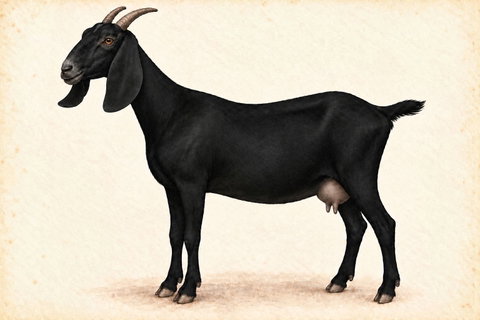
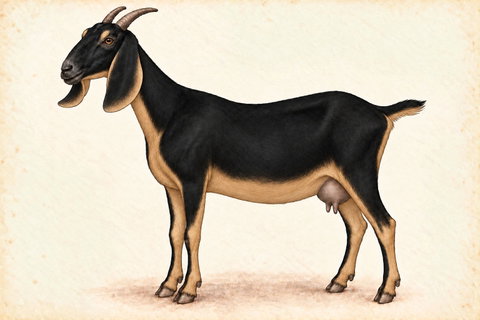
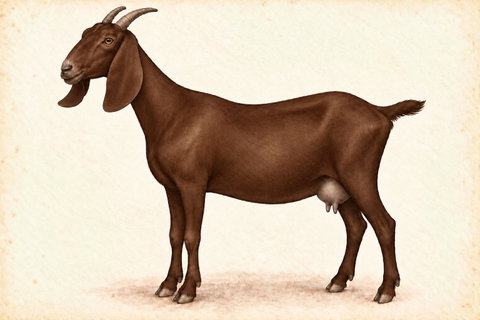
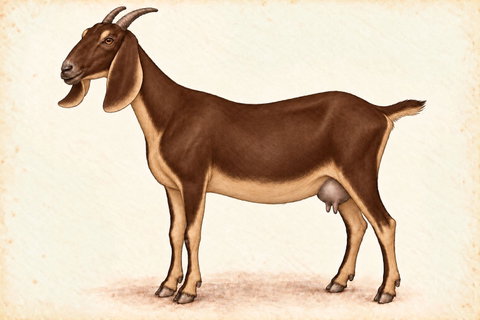
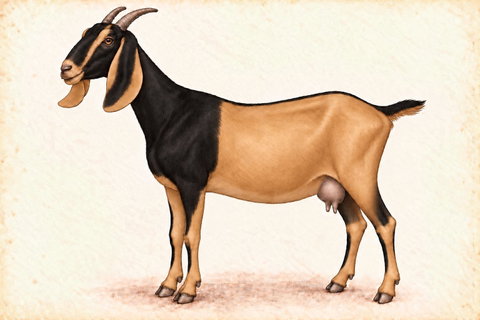
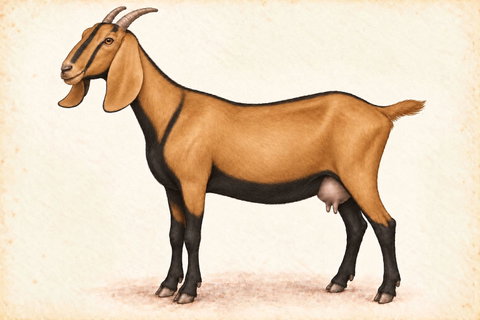
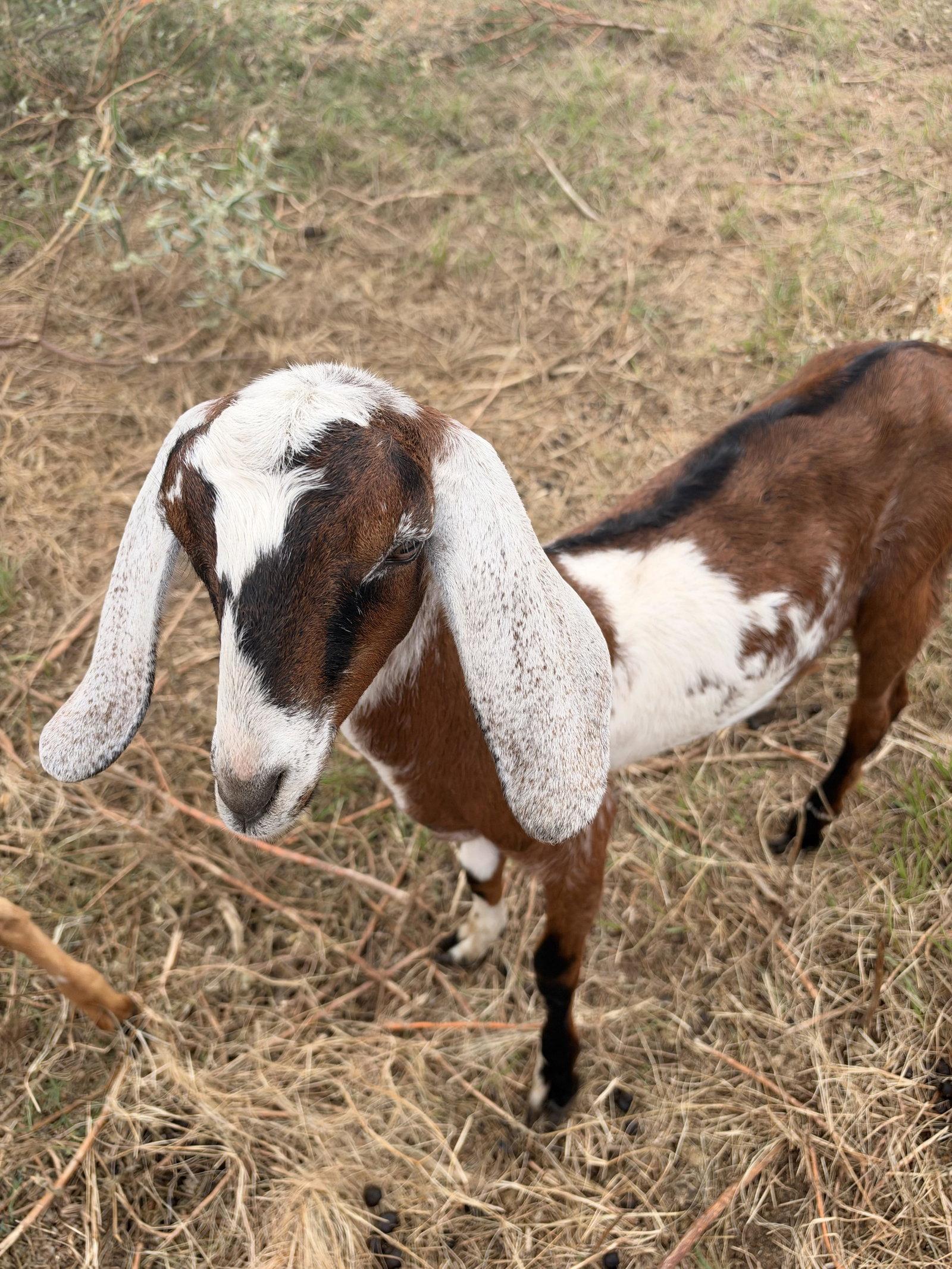
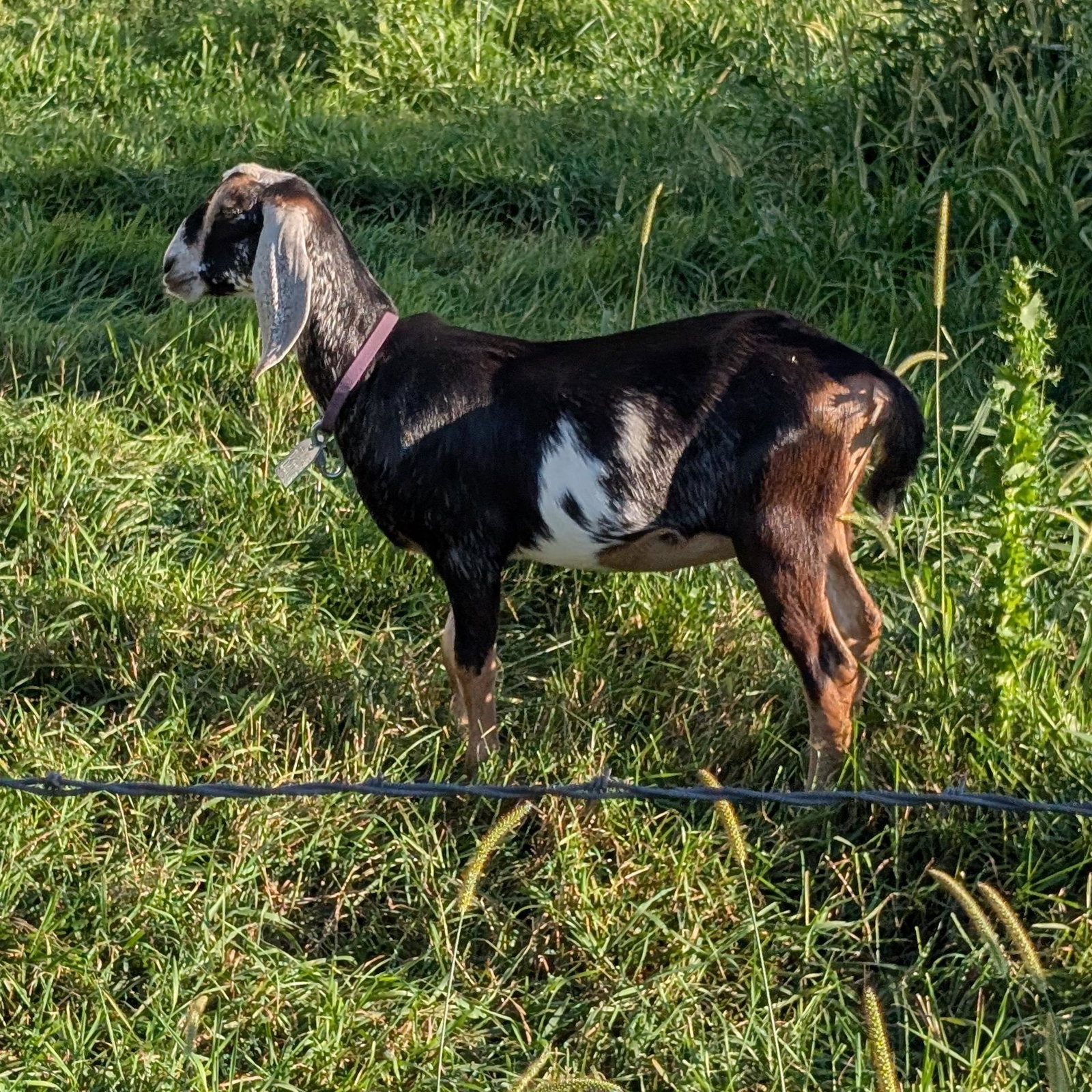
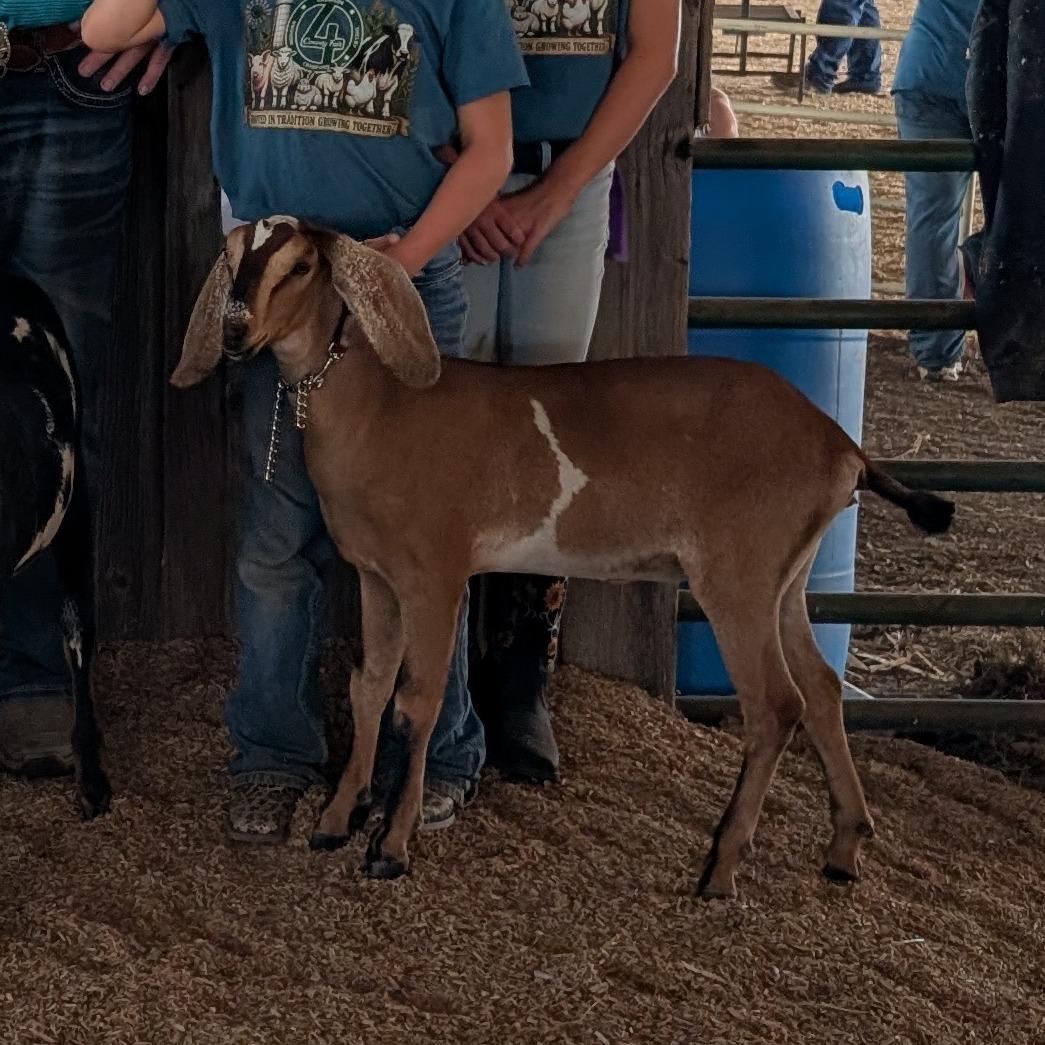
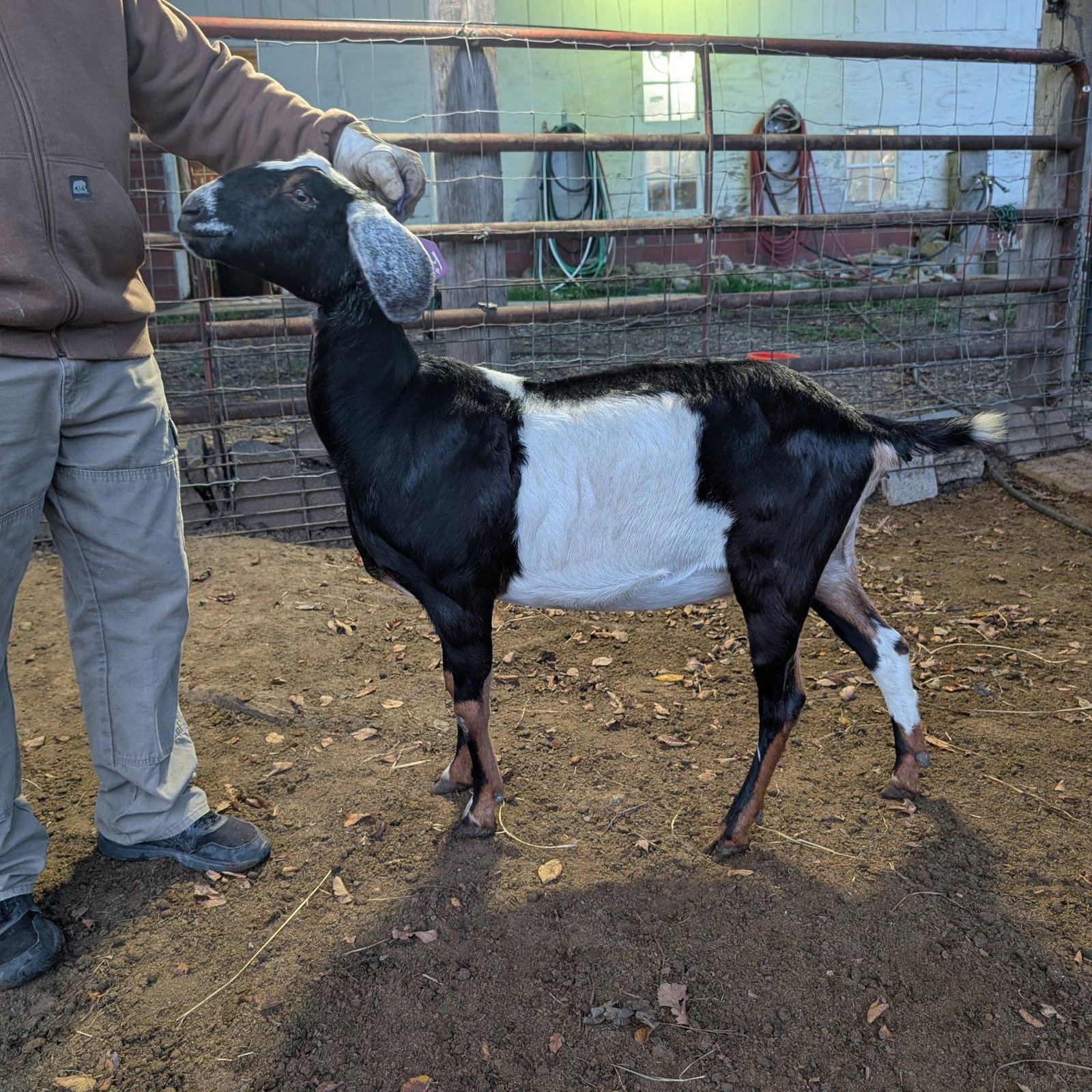
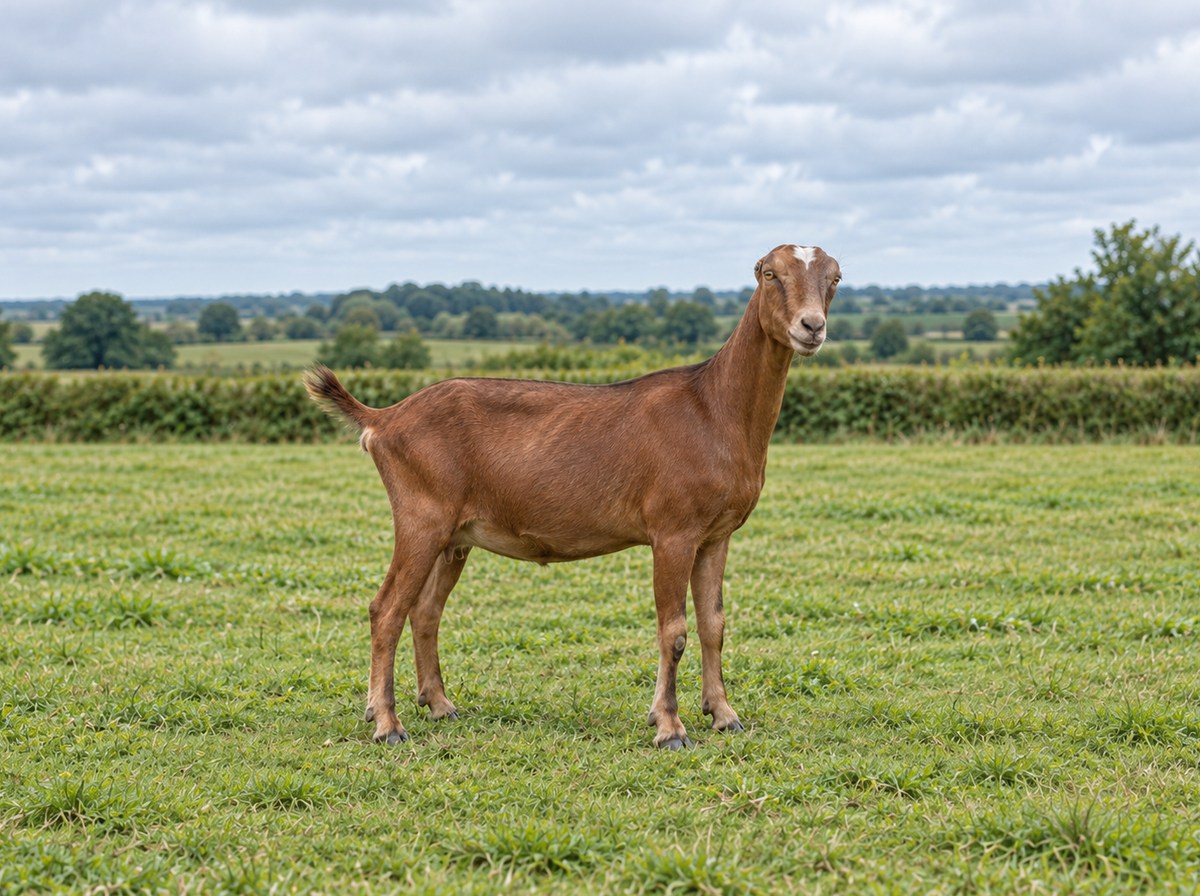
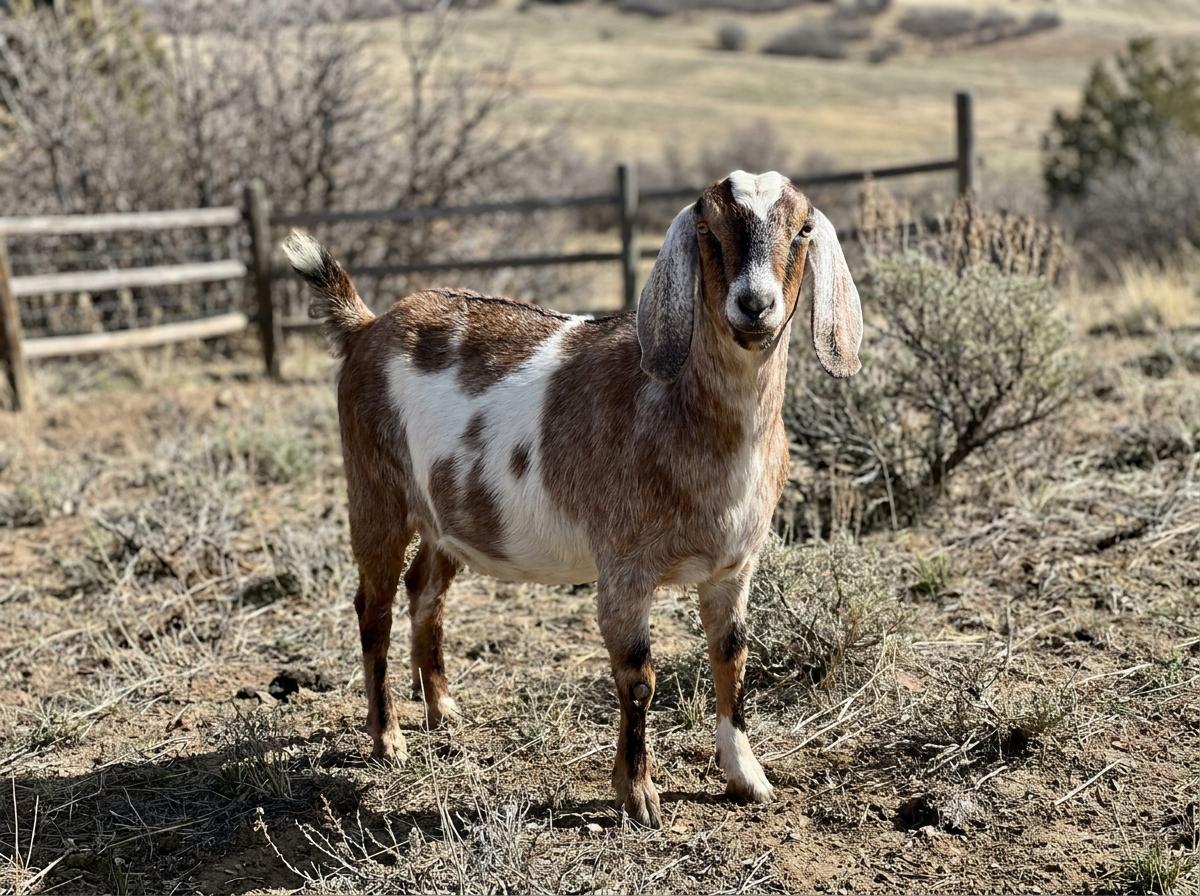
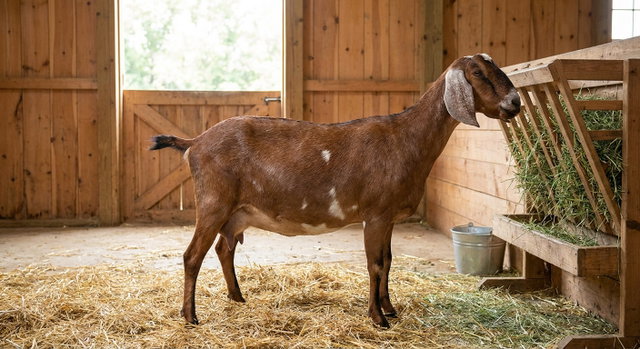
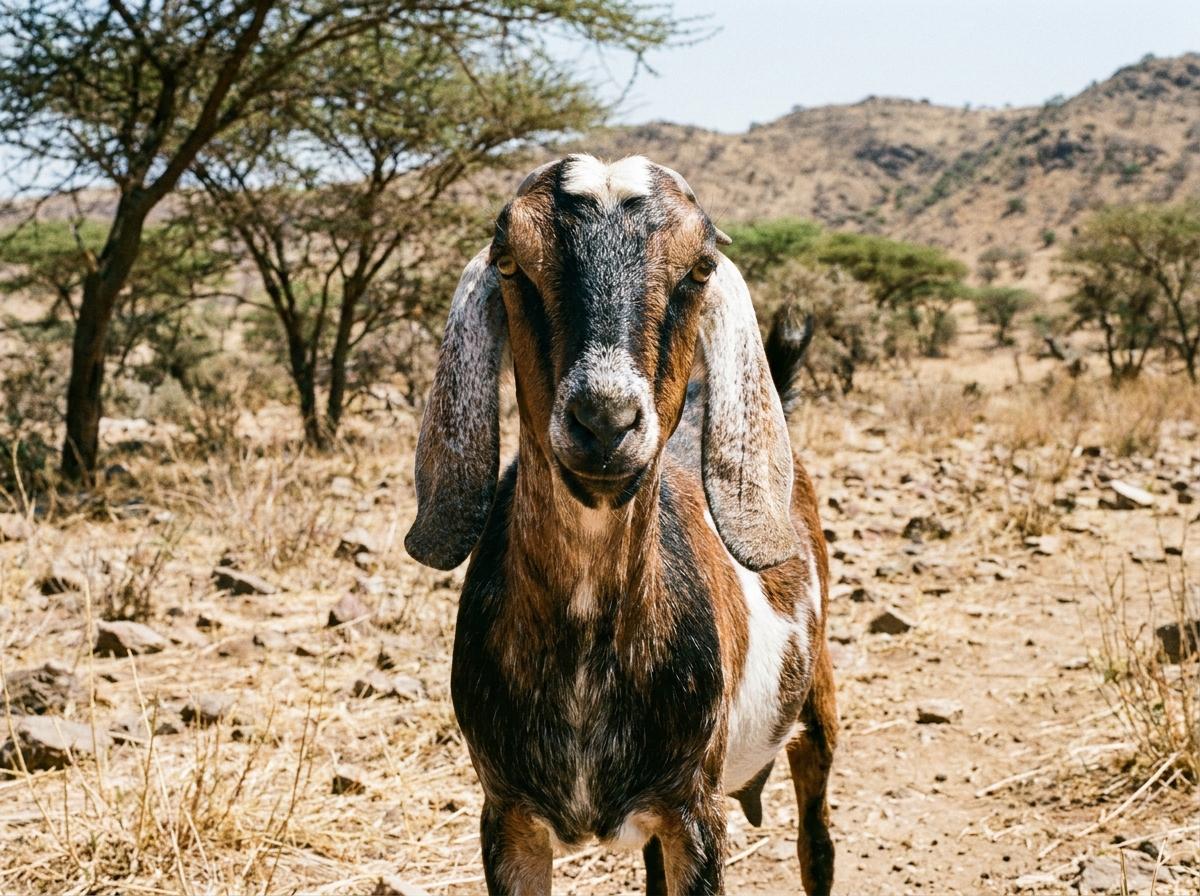
A Nubian goat is a large dairy goat you can pick out from across a field: long, wide ears that hang below the muzzle, a strongly convex “Roman” nose, a tall frame, and a short glossy coat in any color or pattern. Known as the Anglo-Nubian in Britain and Australia, it was built in England from British goats crossed with Middle Eastern and Indian stock, and it is kept today for milk that runs higher in butterfat and protein than the Swiss breeds, with less volume per lactation.
This guide covers what the registries actually require, how much milk to expect (with dated herd figures), the breed’s famous voice, care in heat and cold, health tests to ask about, and how to buy a good doe. If you already have a doe due to kid, the free goat gestation calculator gives you the due date and the 145 to 155 day window in a few seconds, and you can compare the Nubian with other breeds on the goat species page.
| Also called | Anglo-Nubian (Britain, Australia and many other registries) |
|---|---|
| Origin | Great Britain, from native goats crossed with Middle Eastern and Indian stock |
| Use | Dairy, with more flesh than the Swiss dairy breeds |
| Minimum size (ADGA) | Does 30 in and 135 lb; bucks 32 in and 170 lb |
| Head and ears | Strongly convex profile; pendulous ears reaching at least 1 in below the muzzle |
| Color | Any color or pattern, solid or spotted; short, fine, glossy hair |
| Milk (US DHI herds, 2021) | 1,484 lb milk, 71 lb fat and 56 lb protein per doe-year on average |
| Gestation | 145 to 155 days, average 150 |
Browse listings, public profiles, breeders, or add your animal.
What is a Nubian goat?
The Nubian is a standard-size dairy breed registered in the United States by the American Dairy Goat Association (ADGA) and the American Goat Society (AGS). Outside North America the same breed usually goes by its older name, Anglo-Nubian, and Creatures keeps a separate Anglo-Nubian breed page for animals listed under that name. Cornell’s 4-H dairy goat fact sheet puts it plainly: in the United States, Anglo-Nubians are referred to simply as Nubians.
ADGA’s own breed description says the head “is the distinctive breed characteristic,” and that is the quickest way to tell a Nubian from the upright-eared Swiss breeds (Alpine, Saanen, Toggenburg, Oberhasli). The AGS standard describes the breed as “a relatively large, proud dairy goat of mixed origin,” known for high-butterfat milk, for being “quite vocal,” and for often carrying more muscle than the Swiss breeds (AGS breed standards).
Two things the Nubian is not. It is not a single landrace imported from Nubia (the historic region along the Nile in Egypt and Sudan), and it is not a meat breed, even though the extra flesh makes cull animals more useful than a fine-boned Saanen. It is a composite dairy goat built on purpose, and the ears and nose are the visible evidence of that history.
Where the Nubian came from
The Dairy Goat Society of Australia’s breed page gives the clearest registry account of the breed’s origins (DGSA, Anglo Nubian). The Anglo-Nubian was developed in Great Britain from Middle Eastern and Indian stock, crossed first with native British goats and later with imported Swiss breeds. The Middle Eastern animals were Nubians from Egypt and Zariby goats from Eritrea; the Indian ones were Jumna Pari (today usually spelled Jamnapari) and Chitral goats.
According to the same source, lop-eared goats with mottled or solid coats and an arched head were already appearing at Britain’s first goat show in 1875. Importations continued until 1904 to keep the eastern character in the breed, and in 1910 the Anglo-Nubian was entered in the British herd book. In Australia, every Anglo-Nubian descends from just ten animals imported in 1954, with crossbreeding used to build numbers.
That mixed foundation explains a lot about the modern goat: the heat tolerance of hot-climate ancestors, the long ears shared with breeds such as the Jamnapari, the Beetal and the Damascus, and the dairy udder of the British and Swiss side. For the full story of how the name came about, read the true Anglo-Nubian origin story on the Creatures learning center.
How to recognize a Nubian
Three features define the breed, and every registry standard leans on the same ones.
- The head. ADGA describes the facial profile between the eyes and the muzzle as “strongly convex, often referred to as a ‘Roman nose'” (ADGA breed standards). A straight profile is listed as a fault in the Australian standard, and a dished face disqualifies an animal from the Mini Nubian purebred herdbook.
- The ears. ADGA calls them pendulous, “hanging down and flaring out and forward at their rounded tip and extending at least one inch below the muzzle.” AGS adds that the ears lie close to the head at the temple and form a “bell” shape at the tip, with thin, well defined cartilage. The Australian standard faults short, stiff ears.
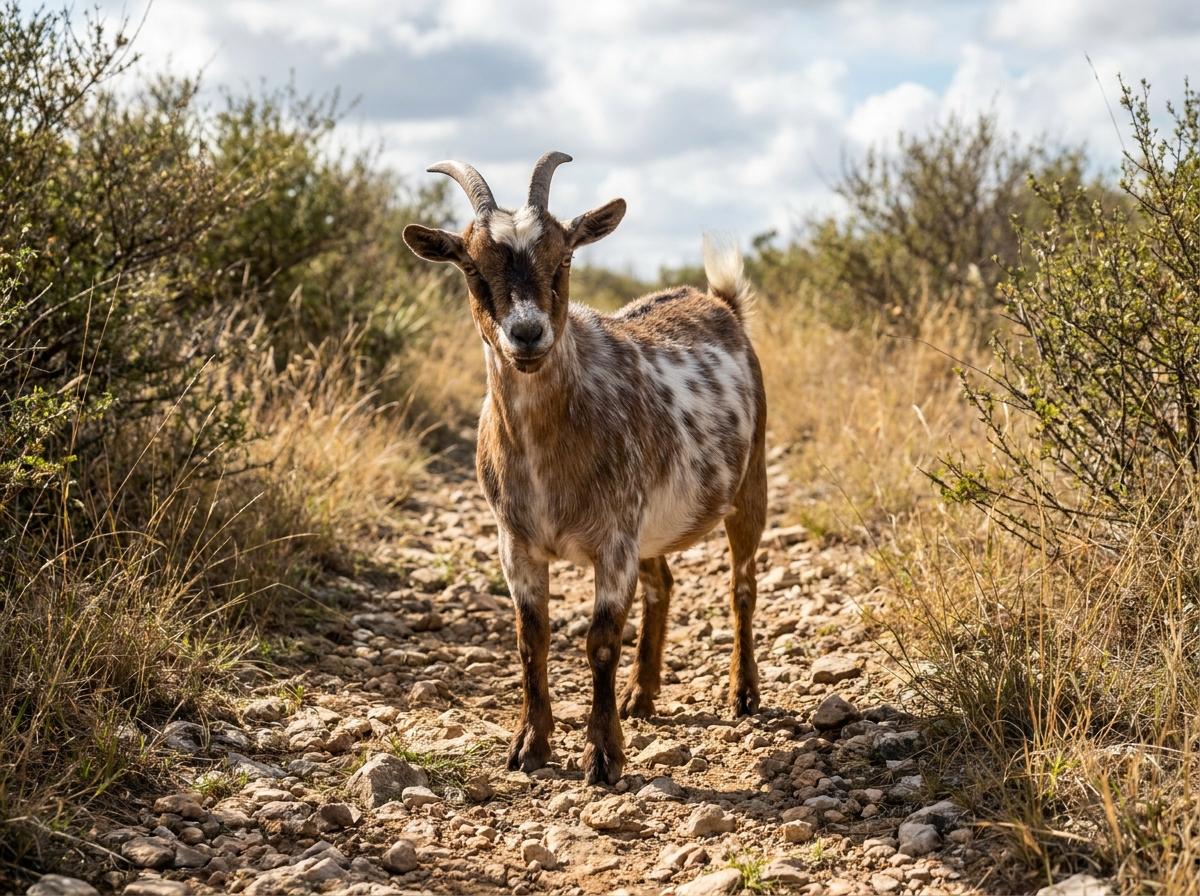
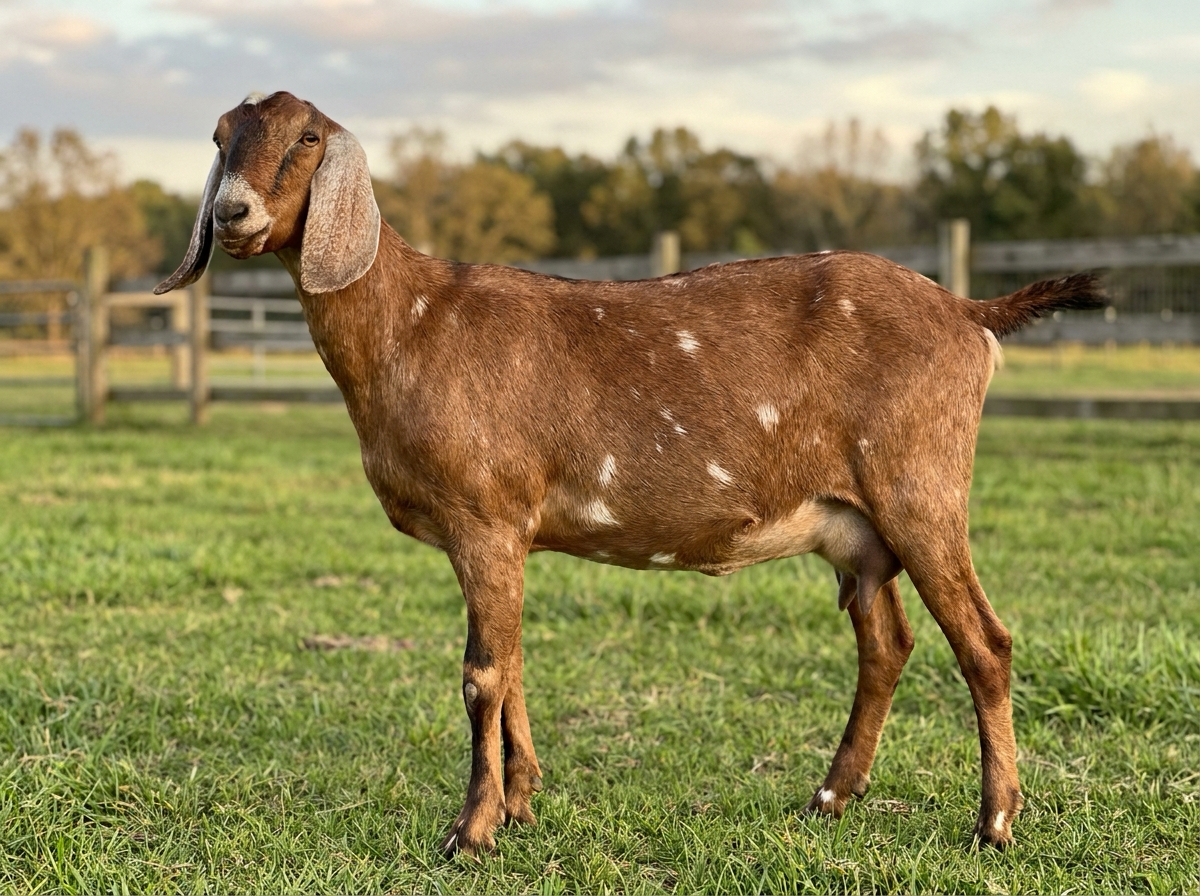
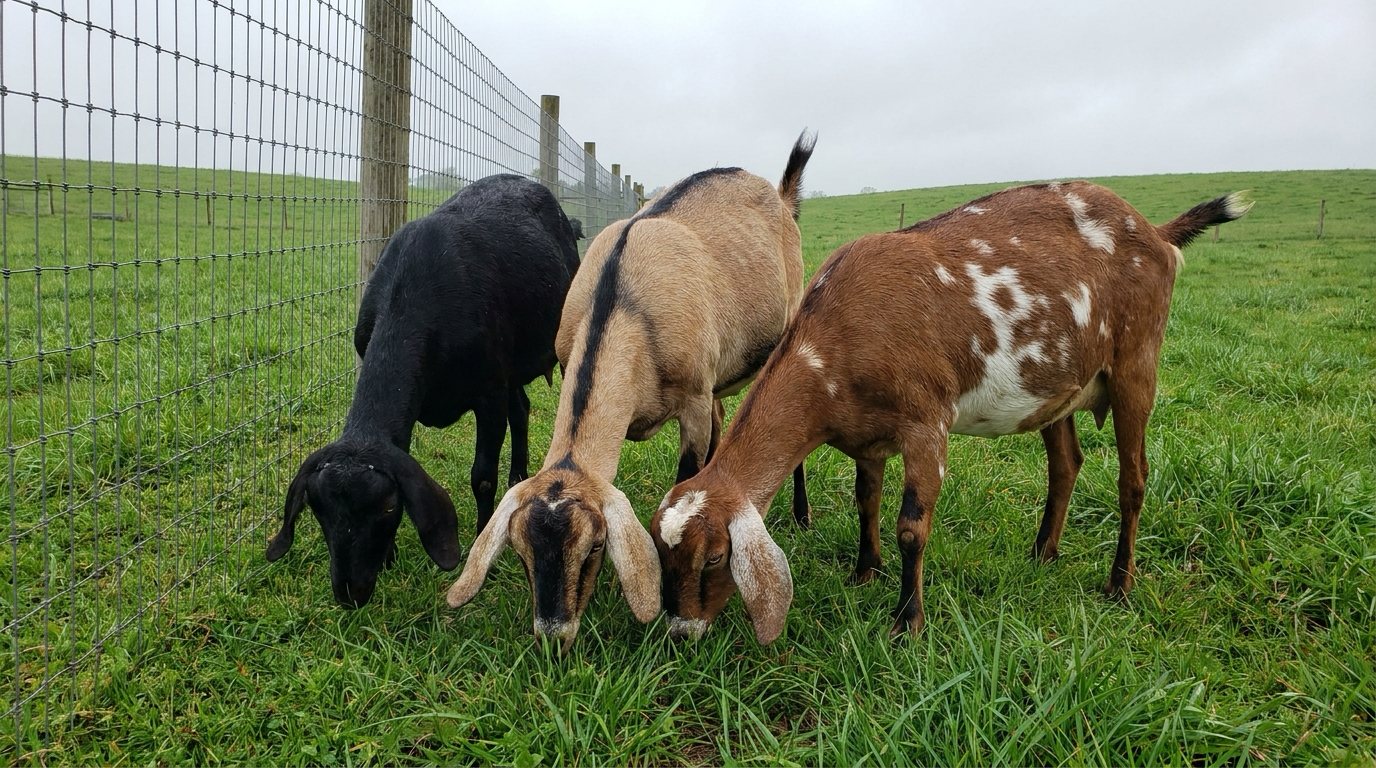
- The coat. Short, fine and glossy, in any color or pattern. You will see solid black, red, tan and cream, black and tan, moon spots, roan and broken patterns. The Australian standard adds two limits: the goat should not carry full Swiss markings, and Boer coloring (a white body with a colored head) disqualifies.
Height and weight standards
The numbers below are registry minimums or ideals, not averages, and the registries do not agree on every figure. Read them as the floor a show or registry goat should meet, not a promise about any individual animal.
- ADGA (US): does at least 30 inches and 135 pounds; bucks at least 32 inches and 170 pounds.
- AGS (US): does at least 30 inches and 135 pounds; bucks at least 32 inches and 160 pounds.
- DGSA (Australia): ideal size does 81 cm (32 inches), bucks 94 cm (37 inches), with no weight given.
Sources: ADGA breed standards, AGS breed standards, DGSA Anglo Nubian standard. ADGA notes that the complete technical description, including disqualifications, is in its Guidebook, so a buyer planning to show should check the current Guidebook rather than a summary.
For weighing your own goats without a livestock scale, the free goat weight calculator estimates weight from a tape measurement, and the guide to measuring a goat for weight shows where the tape goes.
How much milk does a Nubian give?
Less than the Swiss breeds, but richer. The most useful public figures come from the Council on Dairy Cattle Breeding (CDCB), which publishes herd averages for goats enrolled in Dairy Herd Improvement (DHI) milk testing. In its 2021 table of DHI goat herd averages by breed, Nubian herds (73 herds, 1,022 doe-years) averaged:
- 1,484 lb of milk per doe-year
- 71 lb of butterfat, which works out to roughly 4.8 percent
- 56 lb of protein, roughly 3.8 percent
For comparison, the same table shows Alpine herds at 2,473 lb of milk and 85 lb of fat, Saanen herds at 2,522 lb and 92 lb, and the all-breed average at 1,955 lb and 74 lb. So the Nubian herds produced about 40 percent less milk than the Alpine herds but only about 16 percent less butterfat. That concentration is the breed’s appeal for anyone making cheese or butter at home.
Older and smaller samples tell the same story. A Purdue animal sciences student fact sheet quotes ADGA averages for 2010 lactations of 1,835 lb of milk at 4.6 percent fat and 3.7 percent protein (Purdue student fact sheet, Nubian). The differences between those figures come from which herds tested and how records were counted, which is a good reminder that a breed average is a starting point, not a forecast for the doe in front of you. Individual does and family lines vary widely, and the only number that tells you what a particular goat can do is her own test record.
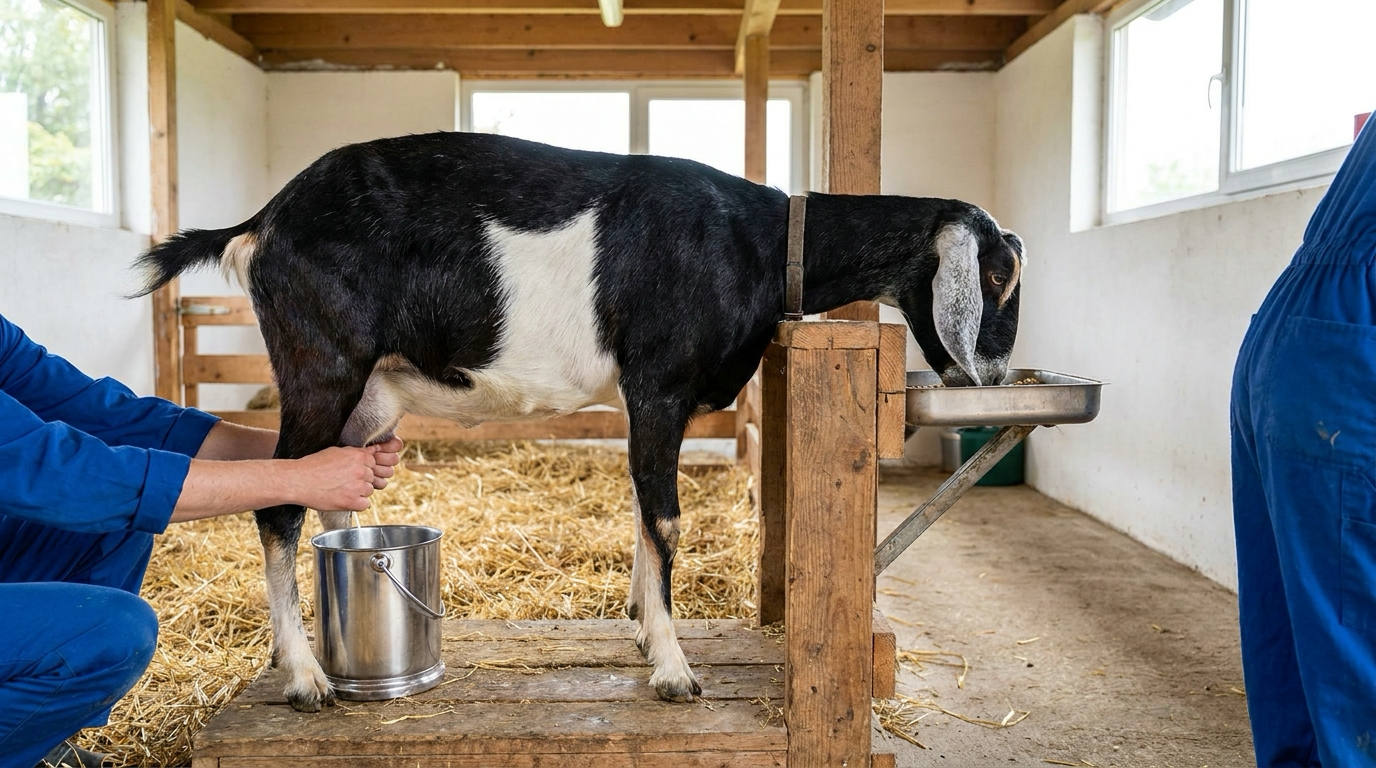
If you milk, keep the record yourself. On Creatures each goat has a Milk tab where you can log milkings, track lactations and dry-off dates, and import lab results from a test day, all free with a signed-in account. A milking stand also matters more than people expect with a breed this tall; the goat milking machine and stand guide covers stand height and when a machine is worth buying.
Temperament and the Nubian voice
Nubians are generally friendly, people-oriented goats, and they are loud. That is not folklore: the AGS breed standard itself says the breed is “noted for being a quite vocal breed,” and a Purdue student fact sheet observes that even Nubian kids “sound like they are complaining.” Expect a doe to call at feeding time, when she is in heat, when she is separated from her herd and sometimes for no reason you can find.
If you live close to neighbors, keep that in mind before you buy. Some lines are quieter than others, and a buyer can ask to visit at feeding time to hear the herd. The same Purdue student sheet says the breed tends to be “a little bit more stubborn” than other dairy goats. Neither trait is a welfare problem; both are reasons to meet the animals before committing.
Care: climate, housing, feed and fencing
The Nubian’s hot-climate ancestry shows. Cornell’s fact sheet notes the breed’s heat tolerance, and the Australian society says the breed is “well suited to Australian conditions” because it was bred from hot-climate goats. That does not mean a Nubian can do without shade and water. It means they tend to keep eating and milking in summer heat when some Swiss-type does slow down.
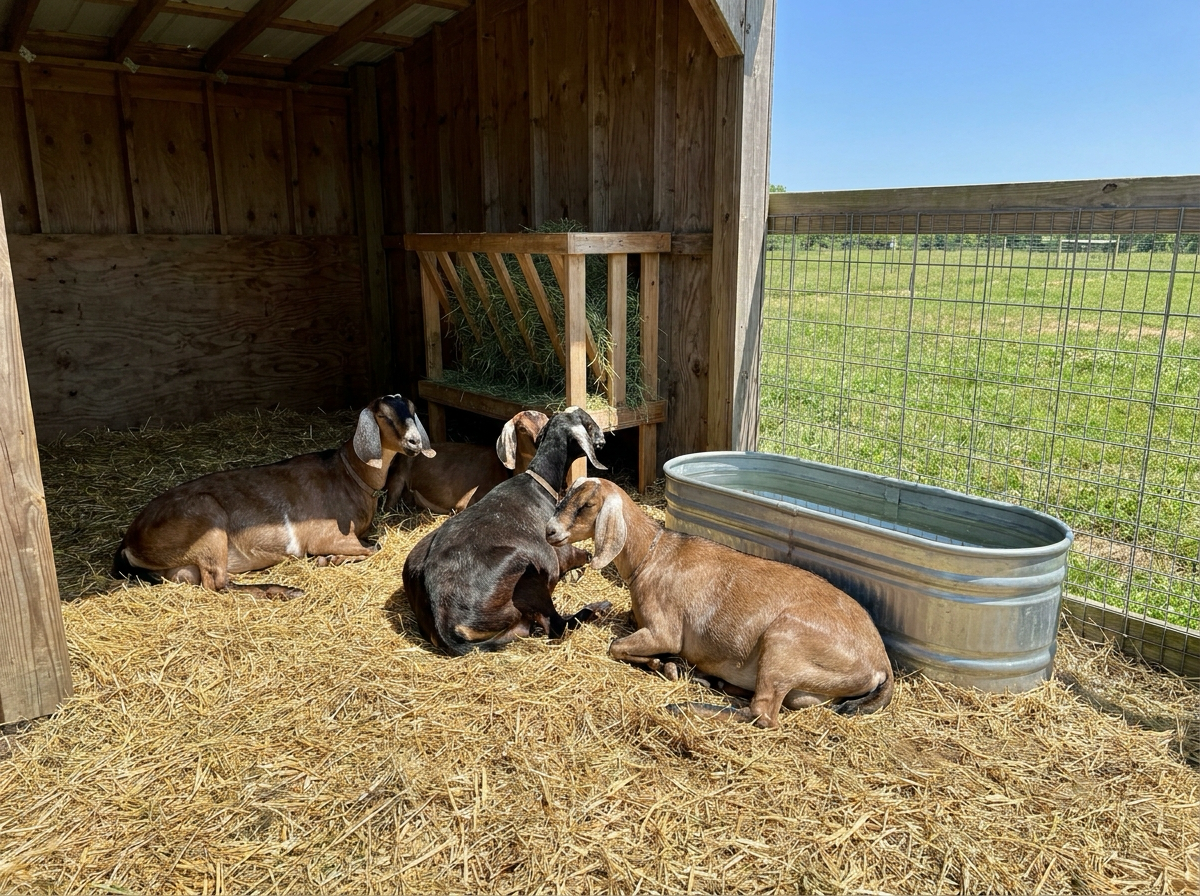
Heat tolerance is not cold tolerance. A short-coated goat still needs a dry, draft-free shelter with clean bedding in a northern winter. The goat shelter and housing guide covers space per goat and ventilation.
Feeding. A milking doe of this size needs good hay or pasture, a balanced concentrate while she is in milk and late pregnancy, clean water at all times and a loose mineral suited to your region. The goat feeding guide and the loose minerals guide go through rations and copper and selenium. A hay feeder that keeps hay off the ground cuts both waste and parasite exposure; see goat hay feeders that cut waste.
Fencing and predators. Nubians are tall enough to lean over or climb a weak fence, so plan for sturdy woven wire, cattle panel or well-maintained electric netting (goat fencing compared). In coyote or dog country, many goat keepers use a livestock guardian dog; the Akbash is a Turkish guardian breed worth reading about if you are weighing that option.
Health: what to test for and what to watch
Nubians share the health risks of every dairy goat. None of the points below replaces a veterinarian who can examine your herd, and treatment and vaccination decisions belong with that vet.
- Caprine arthritis encephalitis (CAE). The Merck Veterinary Manual says the main route of infection is kids drinking infected colostrum or milk, that there is no specific treatment, and that control relies on regular blood testing of the herd plus raising kids on heat-treated colostrum and pasteurized milk (Merck, CAE). Ask any seller for the herd’s recent CAE test results and how the kids were raised.
- Other herd tests. Caseous lymphadenitis (CL) and Johne’s disease are the other two tests buyers commonly ask about. The where to buy a goat guide explains what each test shows and what a clean herd history looks like.
- Internal parasites. Barber pole worm, a blood-feeding stomach worm that causes anemia, does best in warm, wet weather, and a heat-tolerant breed is often kept exactly where it thrives. FAMACHA eye scoring, done with a card after hands-on training, helps decide which animals need treatment; read the FAMACHA scoring guide and the goat deworming guide. On Creatures you can walk the herd and record each goat’s score in an eye-score round using your own card.
- Routine care. Ask your vet about a vaccination plan (CD&T for kids, does and bucks), and keep up with hoof trimming. The Australian standard expects a Nubian to be “polled or neatly disbudded,” and the disbudding guide explains why many dairy herds disbud and when it is done.
Keep every test, treatment and vaccination on the goat’s record so it travels with her if she is sold. The help article on health and medical records shows how test results and follow-up reminders work.
Breeding and kidding
Goat gestation is 145 to 155 days, averaging 150, according to the Merck Veterinary Manual. Alabama Cooperative Extension gives a doe’s estrous cycle as 18 to 22 days, with standing heat lasting 24 to 48 hours, and says doelings can be bred once they reach roughly 60 to 70 percent of mature body weight and are in good condition (ACES, reproductive management of dairy goats and sheep). With a large breed like the Nubian, waiting for size rather than age is the safer rule.
Once you have a breeding date, enter it in the goat gestation calculator for a due date and kidding window, then read the goat kidding preparation timeline and the signs of labor in goats. If the buck ran with the does for a few weeks, record the exposure window rather than guessing a single day; the guide to goat breeding exposure records shows how. On Creatures, recording a breeding projects the due date and puts the kidding on your Breeding dashboard.
Registration buyers will ask about parentage, so keep pedigrees from the start. The free goat pedigree chart maker builds a printable chart without an account, and the guide to reading ADGA pedigree papers explains what the abbreviations on registration papers mean.
Nubian, Mini Nubian, or another dairy breed?
Mini Nubian. The Miniature Dairy Goat Association (MDGA) describes the Mini Nubian as a mid-sized goat “of mixed Nigerian Dwarf and Nubian origin,” standing between 23 and 31 inches (MDGA Mini Nubian standard). Animals move up through Experimental, American and Purebred herdbooks by generation (F1, F3 and F6), and American and Purebred animals must carry between 30 and 70 percent of each parent breed. The American and Purebred herdbooks set a maximum height of 29 inches for does and 31 inches for bucks, and purebred animals must have a convex nose and pendulous ears that reach at least the end of the mouth. If a full-size Nubian is more goat than you can handle, see the Mini Nubian breed page.
Swiss breeds. If your main goal is volume, an Alpine, Saanen or Toggenburg will usually fill the pail faster, as the CDCB figures above show. If you want butterfat and protein for cheese, or you farm somewhere hot, the Nubian earns its place. Many small dairies keep both.
Small or fiber breeds. A Mini LaMancha is a smaller, quieter dairy option. If you were drawn to goats for fiber rather than milk, the Pygora is a fleece breed with its own registry and a very different job.
Buying a Nubian
Finding a Nubian is one job; finding a good one is another. Buy on records and structure, not ears and color.
- Ask for milk records. A doe from a herd on DHIR or another official milk test has a documented lactation; her dam’s and sisters’ records tell you even more. Remember the breed average above when you judge them.
- Ask for herd health test results. CAE, CL and Johne’s results for the herd, with dates, and how kids were raised.
- Check the udder, feet and legs in person. A well attached udder with good teat placement and sound, straight legs carry a heavy doe through years of milking. Check the bite, too.
- Confirm registration and identity. If you are paying for papers, confirm the registry (ADGA, AGS or another), that the tattoo or other ID on the goat matches the certificate, and that the transfer will be signed over.
- Meet the herd. Listen to the noise level, watch how the goats handle, and see how they are housed.
Price. We do not publish a “typical” Nubian price, because registered show stock, grade family milkers and auction kids sell for very different amounts and no dated public price series exists for the breed. For context, Creatures’ goat auction price guide summarizes public auction records for goats as a whole (not Nubians alone), and the goat cost guide breaks down purchase price and the real yearly budget. The free livestock value calculator gives a starting estimate for a specific animal.
Frequently asked questions
Are Nubian goats good for beginners?
They can be, if you plan for their size and voice. A Nubian doe is a big, strong dairy goat that needs good feed, sturdy fencing and a milking routine, and she will tell the neighbors when breakfast is late. Many first-time owners do well with a pair of does from a tested herd.
How big do Nubian goats get?
ADGA sets minimums of 30 inches and 135 pounds for does and 32 inches and 170 pounds for bucks. Many mature animals are larger than the minimum.
Is a Nubian the same as an Anglo-Nubian?
Yes. Anglo-Nubian is the British name and is still used in the UK and Australia; in the United States the breed is registered as Nubian.
How much milk does a Nubian goat give a day?
The 2021 CDCB herd average of 1,484 pounds per doe-year works out to about 4 pounds (roughly half a gallon) a day if you spread it over a whole year. Does give more at peak and less late in lactation, and output varies so much between does that her own test record is the only reliable number.
Why are Nubian goats so loud?
Vocal behavior is a recognized breed trait; the AGS breed standard calls the Nubian “quite vocal.” Individual goats and lines vary.
What is the difference between a Nubian and a Mini Nubian?
A Mini Nubian is a Nubian crossed with a Nigerian Dwarf and bred forward over several generations. MDGA caps American and Purebred Mini Nubians at 29 inches for does and 31 inches for bucks.
Do this next on Creatures
Here is what each option does, in the order most Nubian readers need them.
Get alerted to new Nubians. Set a free Nubian goat listing alert and Creatures emails you when one is listed. No account needed to start. See saving searches and using your watchlist.
Browse what is listed now. Open Nubian goats on the marketplace to see current listings.
Find breeders and farms. Search the Creatures breeder directory for goat farms near you, then ask each one for milk records and herd test results.
Add your Nubian. Already have one? Create a free profile for your Nubian with photos, registration details and pedigree. No account needed to start. The walkthrough is in adding an animal to Creatures.
Record milk, health and breedings. Add a record for a test result, vaccination, weight or breeding. The record sheet opens for any visitor, and a free account saves what you enter. See adding a record.
List your herd. Breed Nubians? Create a free farm profile so buyers searching for the breed can reach you. Read getting listed in the breeder directory and creating an organization and adding your team if others help run the farm.