
Toggenburg
Author: Elliott Garber, DVM · Updated
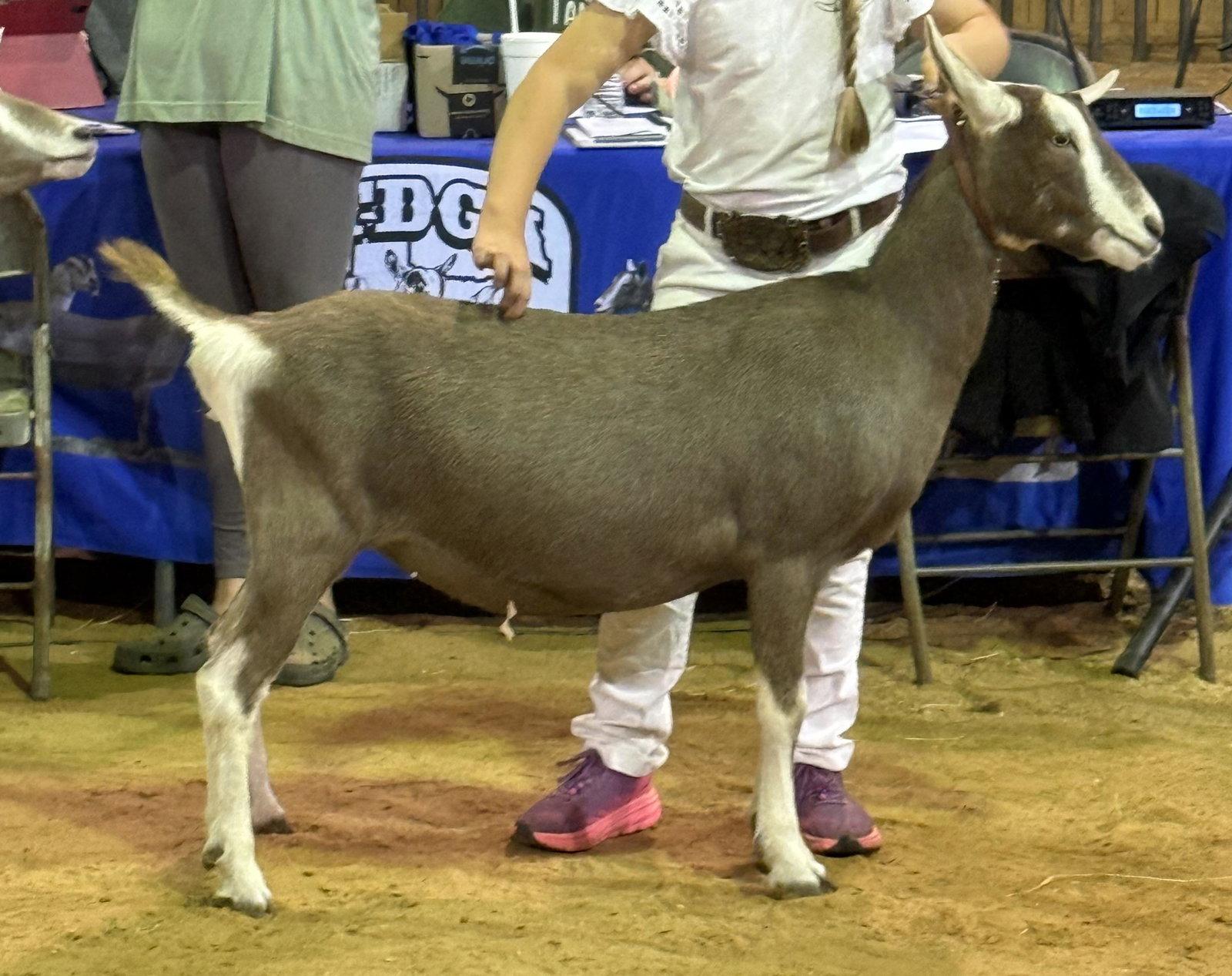
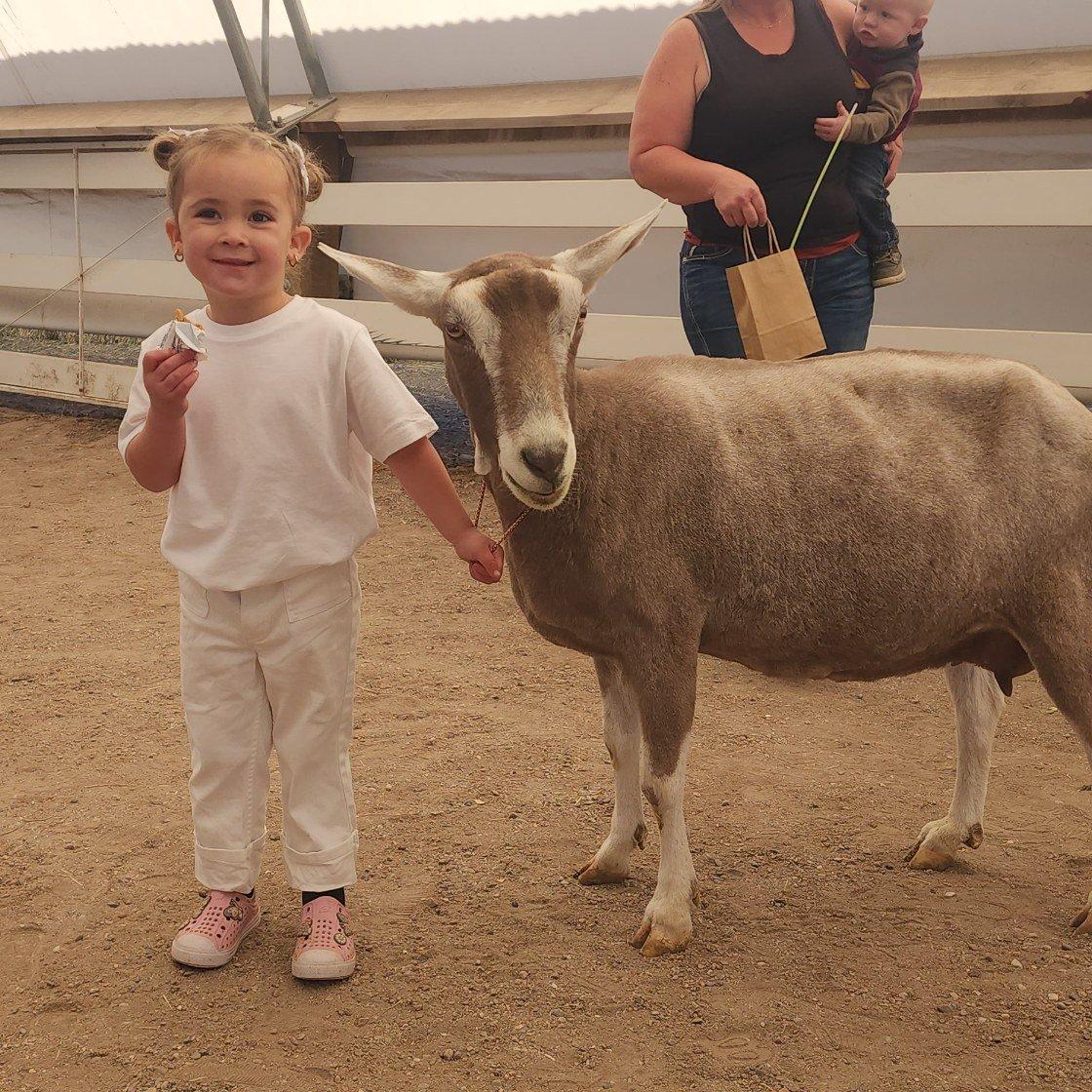
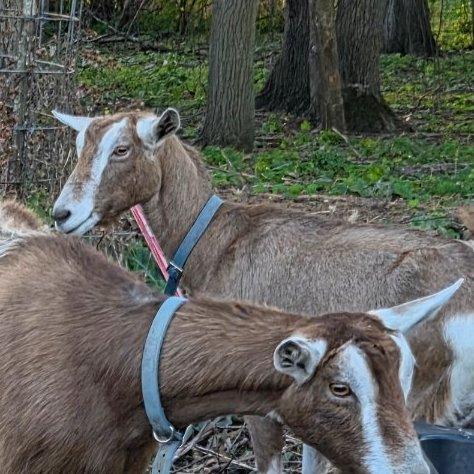
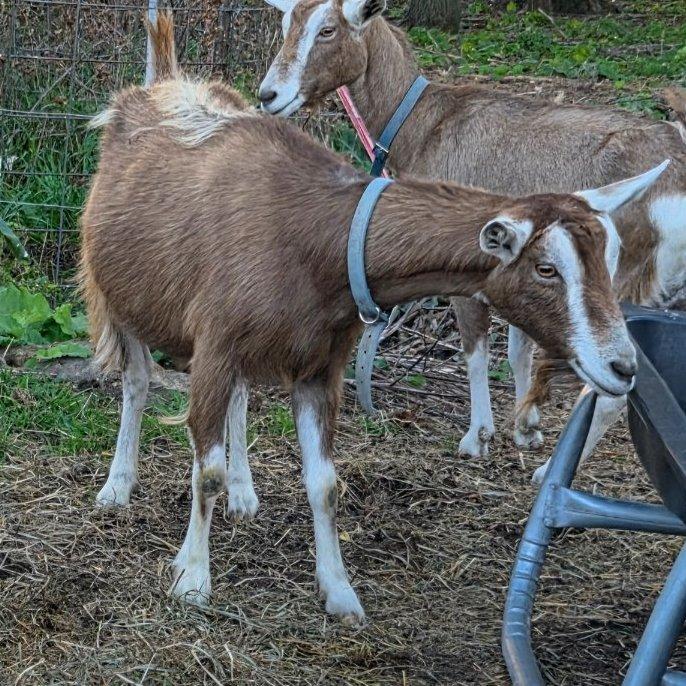
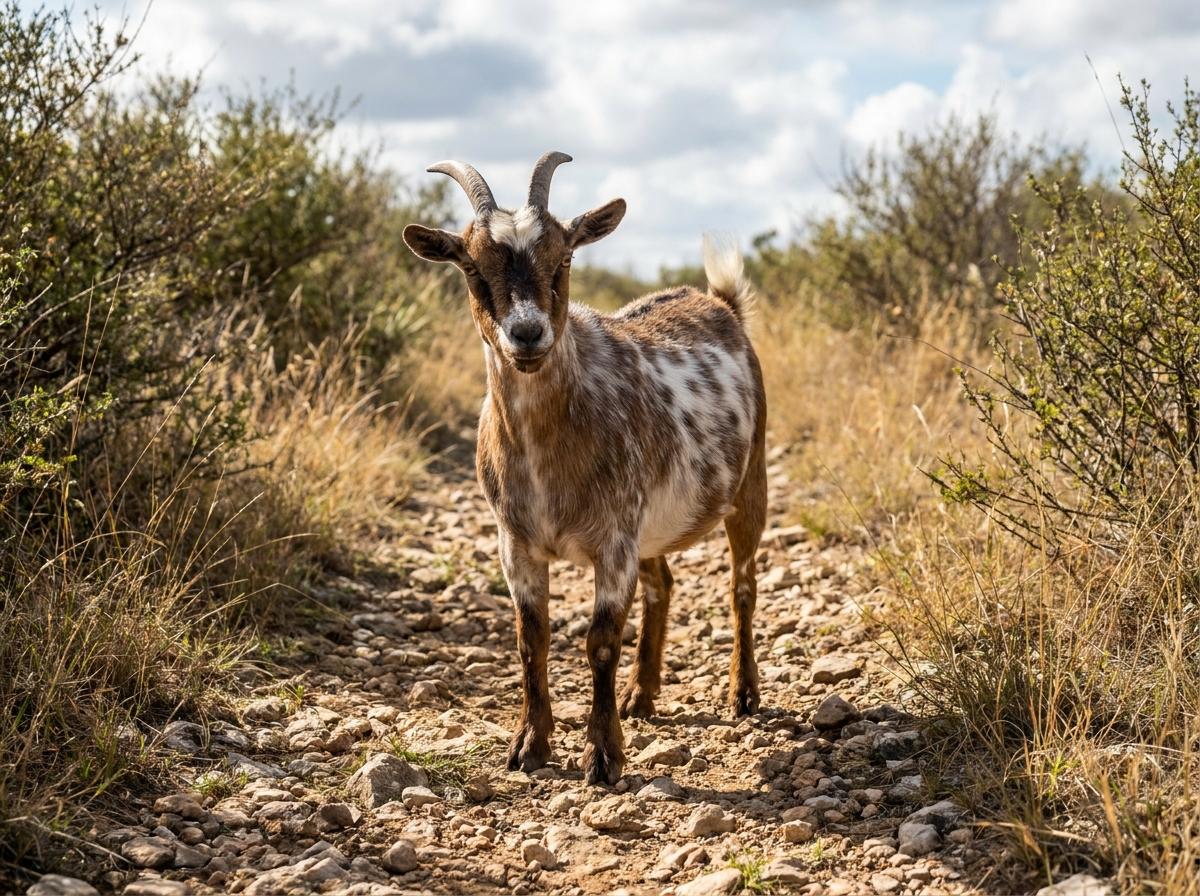
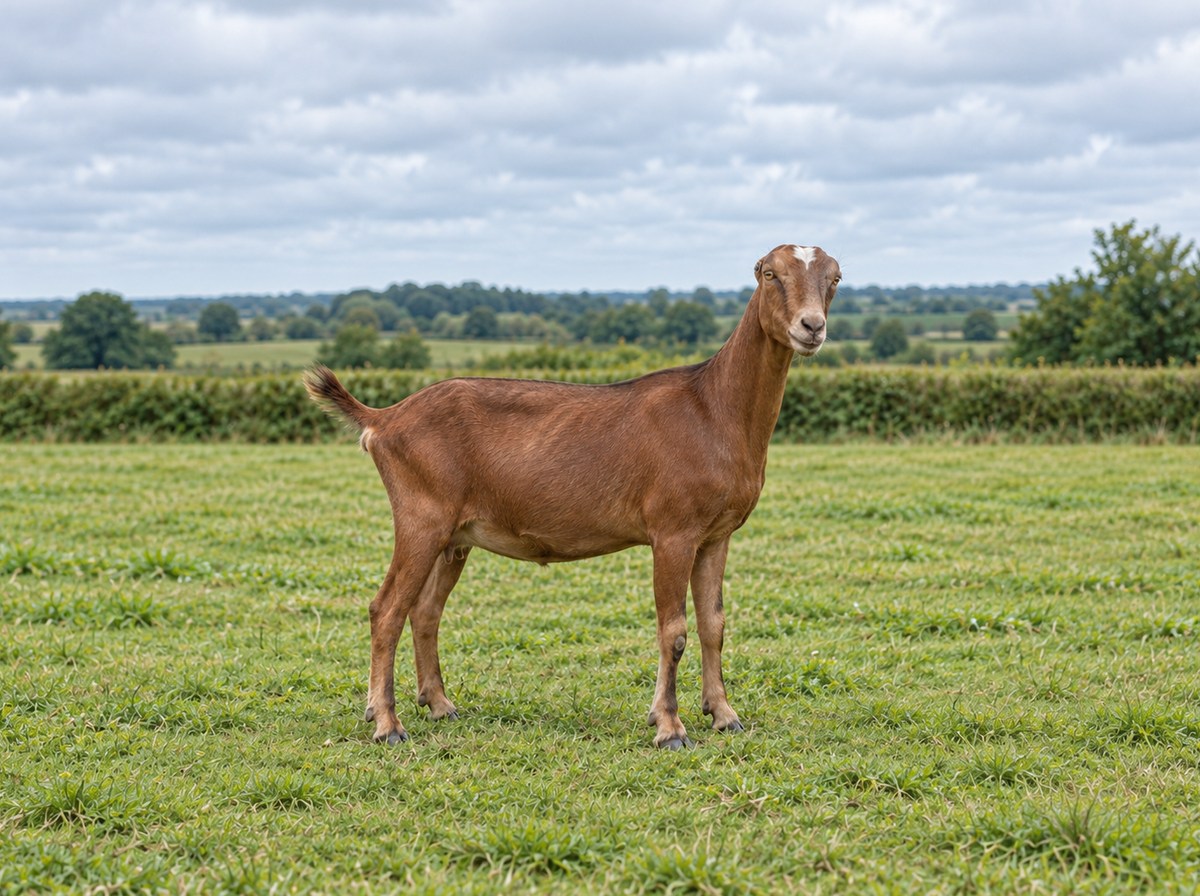
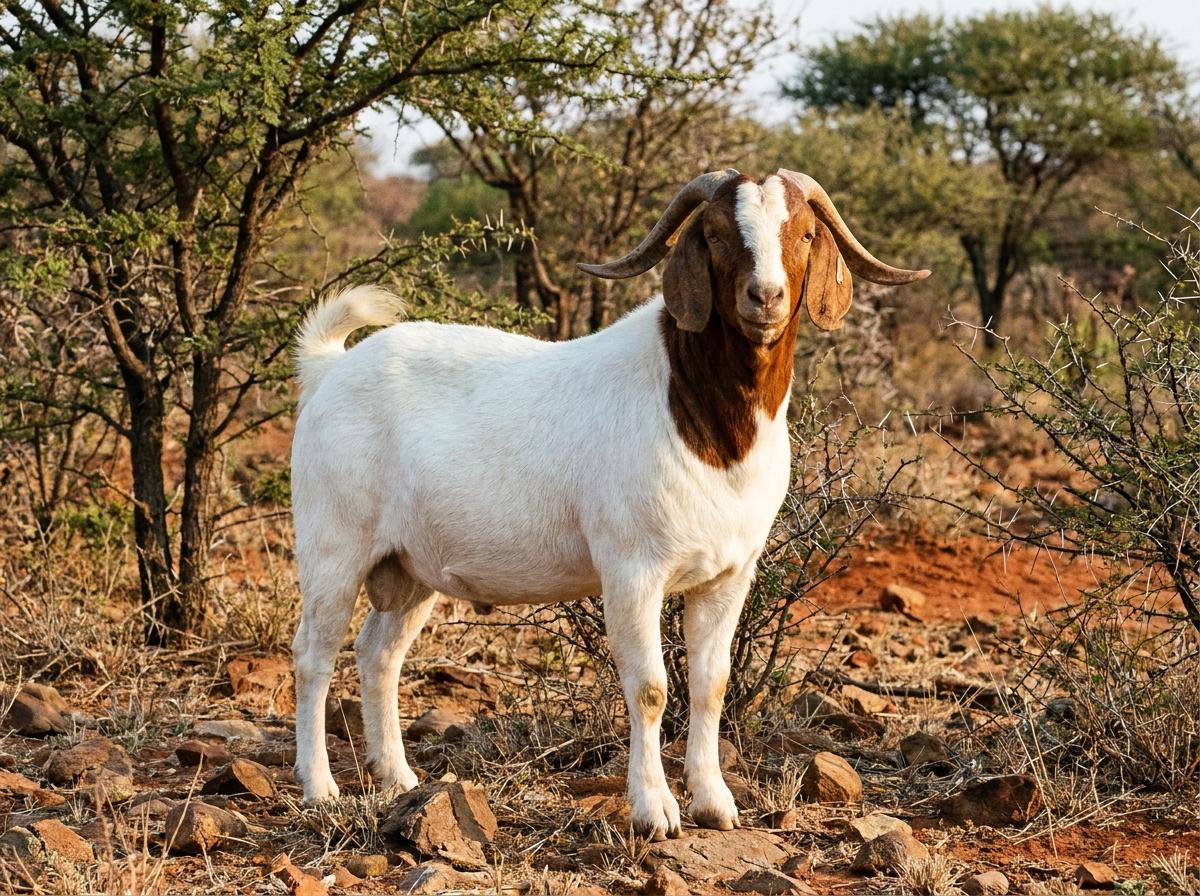
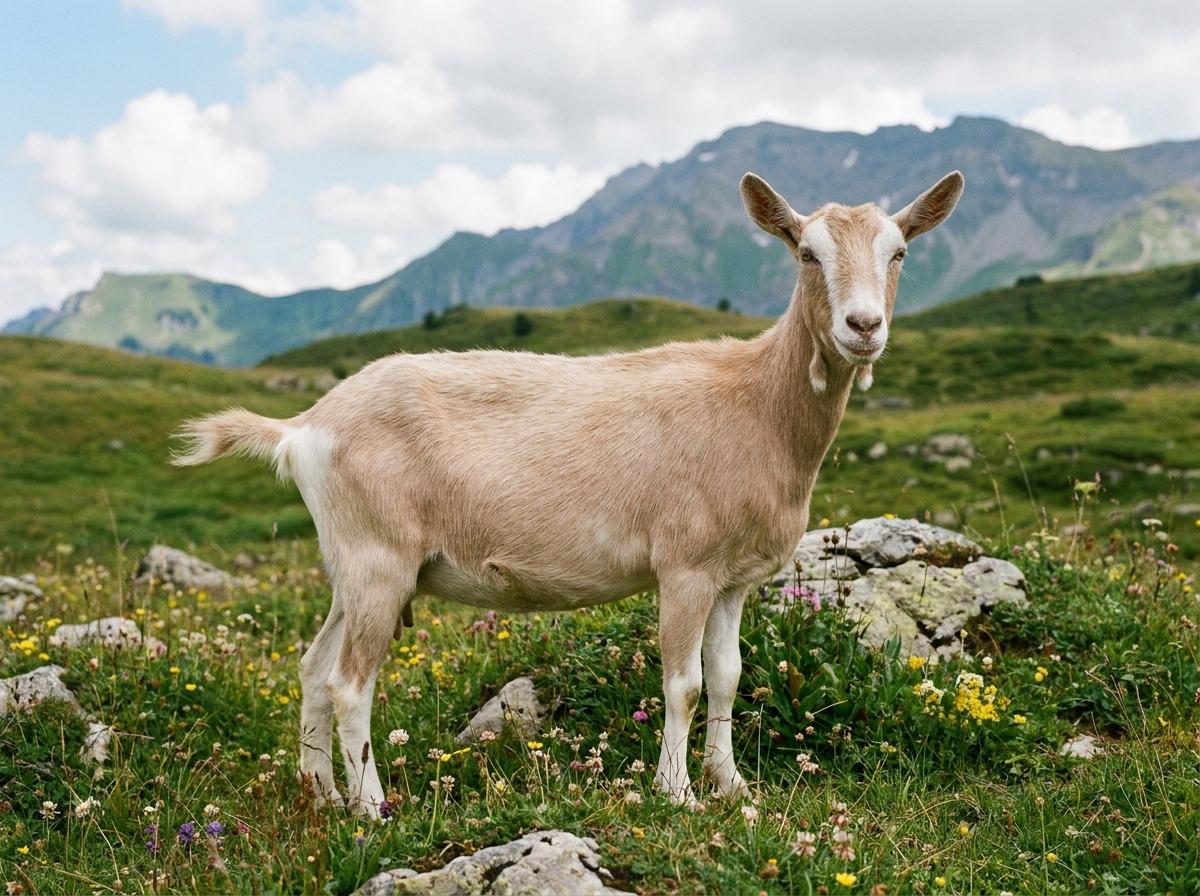
A Toggenburg is a solid brown Swiss dairy goat wearing a fixed set of white markings: a white stripe down each side of the face from above the eye to the muzzle, white ears each carrying a small dark spot, white lower legs, and white either side of the tail. The body colour runs anywhere from light fawn to dark chocolate, the ears are erect and carried forward, and the face is straight or slightly dished, never Roman. It carries the lowest height minimum ADGA sets for a full size breed, and it is one of the best documented dairy goats anywhere, with more than a century of continuous pedigree and milk records behind it. Toggenburg listings on the Creatures marketplace show what is for sale right now.

| Also called | Toggenburger, Toggenburgerziege, Chevre du Toggenbourg, “Togg” among keepers |
|---|---|
| Origin | Toggenburg valley, canton of St. Gallen, Switzerland |
| Primary use | Dairy |
| Doe size (ADGA minimum) | At least 26 in (66 cm) at the withers and 120 lb (54 kg), the lowest height minimum ADGA sets for a full size breed |
| Buck size (ADGA minimum) | At least 28 in (71 cm) and 150 lb (68 kg) |
| Coat and markings | Solid light fawn to dark chocolate (Swiss and British standards also allow grey shades) with white face stripes, white ears with a dark spot, white lower legs and white beside the tail |
| Ears and face | Erect, carried forward; bridge of the nose straight or dished, never Roman |
| Milk (US) | 2,237 lb per lactation at 3.1 percent fat and 2.9 percent protein (2019 DHIR breed average, range 1,090 to 3,840 lb) |
| Milk (Switzerland) | 606 kg over a 220 day standard lactation at 3.4 percent fat and 2.8 percent protein (2025 mature does) |
| Registry | ADGA in the US, British Goat Society in the UK, SZZV in Switzerland |
| How common | 1,562 US registrations in 2025 (under 3 percent of ADGA’s total); 2,936 in the Swiss herd book in mid 2025 |
Browse listings, public profiles, breeders, or add your animal.
How to identify a Toggenburg
The Toggenburg is one of the easiest dairy goats to name on sight, because the standard demands a specific body colour and a specific set of white markings together. Miss one and you are probably looking at something else.
The ADGA breed standard puts the body colour as “solid, varying from light fawn to dark chocolate with correct white or cream markings,” and adds that does may also be black with those same markings. The white marking set, spelled out in full in the standard as published by the National Toggenburg Club, is:
- White ears with a dark spot. Each ear is white with a dark spot near the centre. The ears themselves are erect and carried forward.
- Two white facial stripes. One runs down each side of the face from above the eye to the muzzle, leaving a band of body colour down the bridge of the nose. This is the single most diagnostic feature.
- White hind legs from the hocks down, and white forelegs from the knees down. A dark vertical stripe below the knee is acceptable.
- A white triangle on each side of the tail.
- A white spot may be present at the root of the wattles, or in that area on a goat without wattles. This one is permitted rather than required, so its absence proves nothing.
Cream markings instead of pure white are allowed but not preferred. That same full standard is also stricter about black than the ADGA summary suggests: black colour in a doe is listed as a serious defect, and a black doe with otherwise correct markings can still be registered, but her registration number carries a B suffix. Tricolour and piebald coats are disqualifications, as are pendulous ears and LaMancha ears. Bucks are held to a stricter line on white than does: a black buck, a white stomach on a buck, or large white spots on a buck all disqualify. The facial line may be dished or straight and never Roman, so a convex nosed goat with drooping ears is a Nubian or a cross, not a Toggenburg.

The three standards disagree about colour, and that is worth knowing
Outside North America the picture is wider than “fawn to chocolate.”
The Swiss breed standard issued by the Schweizerischer Ziegenzuchtverband, the federally recognised body that keeps the Swiss herd book, gives the colour as hellbraun bis mausgrau, light brown through to mouse grey, with white markings on the head, limbs and tail. The British Goat Society says colour “can range from mid-brown to shades of grey or fawn, with white Swiss markings.” Britain also has its own larger, browner derivative with a separate herd book section, the British Toggenburg.
So a grey Toggenburg is perfectly correct in its home country and in Britain, and would look wrong to an American judge. If you are importing genetics or buying abroad, read the standard that governs the herd book the animal is actually in.
Telling a Toggenburg from the lookalikes
The trap is a brown goat with erect ears, because there are several. Check the marking set as a whole, not the colour:
- A brown, erect eared goat with no facial stripes is likely a Chamois Colored goat or an Oberhasli, both of which carry black markings rather than white ones.
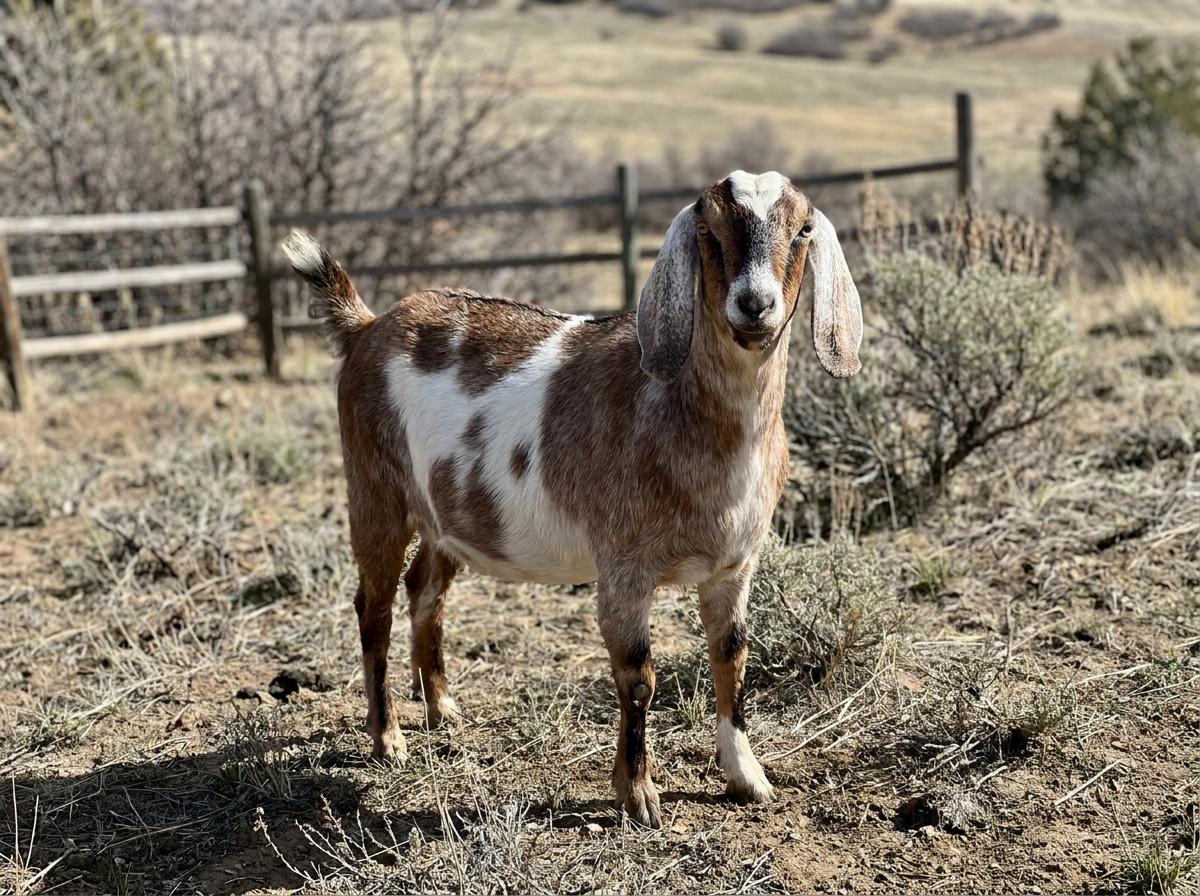
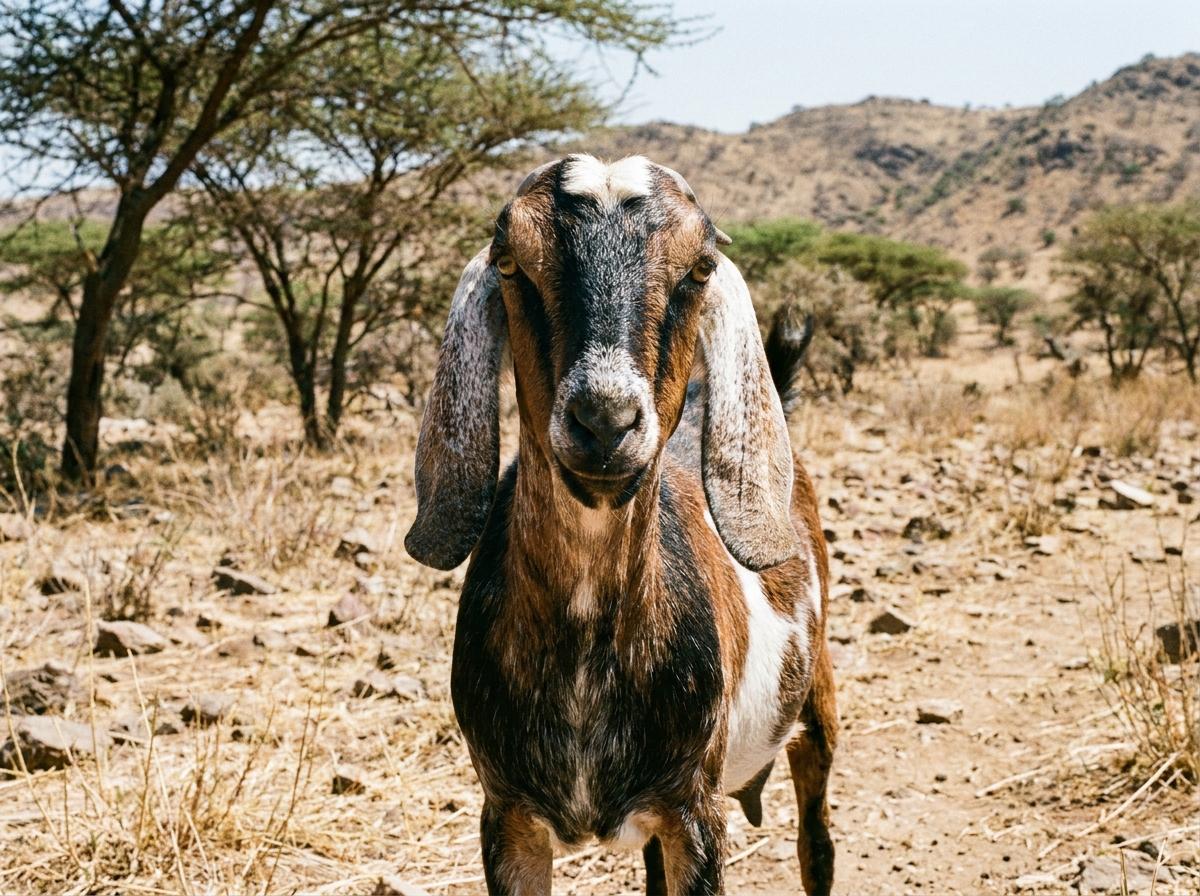
- A brown goat with drooping ears and a convex nose is a different type altogether, closer to a Damascus goat in head shape.
- A brown, horned, unmarked goat with no fixed face pattern may be a landrace type such as the Dutch Landrace.
- Toggenburg white markings sit in fixed places. Random white patches on the body are faults, not breed markings.
Horns are not a breed identifier. Toggenburgs are born horned or naturally polled, and the Swiss standard accepts both plus disbudded animals.
Size: the lowest full size height minimum in the ADGA standard
ADGA’s minimums for a Toggenburg doe are 26 inches at the withers and 120 lb; for a buck, 28 inches and 150 lb. Beside the other breeds on the same page the gap is real. A Saanen, Alpine, Nubian or Sable doe must reach 30 inches and 135 lb. An Oberhasli doe must make the same 120 lb but stand two inches taller, and a LaMancha doe 28 inches at 130 lb. Only the Nigerian Dwarf, a miniature with a 22.5 inch ceiling, is smaller.
Worth one caveat. ADGA lists no height or weight minimum at all for the Guernsey, so ADGA’s own standard cannot rank those two breeds against each other, and the Guernsey Goat Breeders of America publishes exactly the same 26 inch and 120 lb doe minimum while calling the Guernsey the smallest of the standard sized dairy breeds. The defensible claim is the one this page makes: the Toggenburg carries the lowest minimum ADGA itself states. Calling it the smallest full size dairy goat in the country goes further than the evidence does.
Two inches sounds trivial until you are lifting does onto a stand twice a day. Plenty of smallholders pick the breed for exactly that reason.
The Swiss numbers look different because they measure something different. The SZZV standard sets 75 cm at the withers and 55 kg for does, 85 cm and 75 kg for bucks, but that table sits under a heading for maximum exterior marks, and the standard labels the weights as minimums for that score rather than for registration. Roughly 29.5 inches for a doe against a 26 inch American minimum is a target compared with a threshold, not a contradiction. Expect a well grown mature doe to sit between the two.
Milk: what a Toggenburg actually gives
Volume and components in the United States. Penn State Extension publishes the ADGA DHIR breed averages, and the 2019 figures put the Toggenburg at 2,237 lb of milk at 3.1 percent fat and 2.9 percent protein. The recorded range is wide: 1,090 lb at the bottom, 3,840 lb at the top. That spread matters more than the average when you are buying, because it is the difference between a doe who pays for her hay and one who does not.
Against her stablemates in that same table, a Toggenburg sits in the middle of the pack for volume (Alpine 2,715 lb, Saanen 2,702 lb, LaMancha 2,298 lb, Nubian 2,018 lb, Oberhasli 1,995 lb) and at the bottom for butterfat. At 3.1 percent she tests below every other breed on the list, and well below the Nubian’s 4.9 percent. That means fewer pounds of cheese per gallon, which is the main reason a cheesemaker might look elsewhere.
The butterfat reputation is American, not universal. The Swiss goat breeders association publishes its own annual production evaluation, and its 2025 figures show mature Toggenburg does averaging 606 kg over a 220 day standard lactation at 3.4 percent fat and 2.8 percent protein. In the same Swiss table the Saanen averages 697 kg at 3.2 percent fat, so on Swiss test the Toggenburg tests higher in fat than the Saanen, not lower. What holds in both countries is the comparison to Nubian type genetics: Swiss recorded Anglo Nubians came in at 4.4 percent fat against the Toggenburg’s 3.4 percent, though on a very small recorded population, because the Swiss herd book held just 10 Anglo Nubians in mid 2025 against 2,936 Toggenburgs. Treat “low butterfat” as a description of the American population under American recording, not as a fixed breed trait.
British figures. The British Goat Society puts its recorded pure Toggenburgs at an average 24 hour yield of 3.61 kg at 3.70 percent butterfat and 2.71 percent protein, from 195 performances in BGS milking trials.

The ceiling. The highest recorded milk yield for any goat belongs to a Toggenburg. Guinness World Records credits Western-Acres Zephyr Rosemary, owned by Katrina Western of Chico, Texas, with 4,086 kg (9,010 lb) in 365 days between 13 April 1997 and 15 April 1998, along with 366 lb of butterfat and 276 lb of protein. That is the top of the breed under exceptional management, not a forecast for the doe in the trailer.
Lactation habits. Penn State puts the average dairy goat lactation at 284 days with peak production four to six weeks after kidding. Toggenburgs have a keeper reputation for persistent lactations, and some does milk through an extra year without rebreeding. That is useful for year round milk from a small herd, but it varies by line, so ask for the doe’s actual monthly weights.
Flavour. Many keepers say Toggenburg milk carries a stronger flavour than milk from the other Swiss breeds. The mechanism sits in the milk rather than in the breed label: a Journal of Dairy Science review of goat milk lipid synthesis and lipolysis puts goaty flavour down to the release of branched, medium chain fatty acids, and finds that lipolysis shifts with diet, with stage of lactation and with how well the doe is fed, as well as across genotypes. Handling does the rest. Penn State notes that browsing goats take up aromatic compounds from plants that carry through into the milk, and that milk has to be cooled straight after milking and held under 40F or quality falls away. So breed is only part of it. Taste before you buy, and taste milk handled the way you plan to handle yours.
Toggenburg vs British Toggenburg
Search from the UK and you will meet two herd book entries that look like the same goat. They are not.
The Toggenburg is the original Swiss breed. Its section of the British Goat Society herd book opened in 1905, the first breed to get one. The BGS describes it as smaller in stature than its British counterpart, wide across the head at eye level with a dished face, and silky coated with fringing.
The British Toggenburg is a separate breed developed in the United Kingdom. The BGS calls for a brown and white goat with Swiss markings, medium brown being ideal, with lighter and darker shades acceptable, and describes the breed as strong, robust and long lived with sound dairy conformation. Its recorded average 24 hour yield is 4.54 kg at 3.69 percent butterfat and 2.72 percent protein, drawn from 600 performances in BGS milking trials.
So the British Toggenburg is the bigger, higher yielding animal, and the pure Toggenburg is the rarer original. One more detail matters if you breed: registered pure Toggenburgs may be used with British Toggenburgs and the progeny can still be registered as British Toggenburgs, but the BGS states that grading up into the Toggenburg section is not possible at all. The gate only swings one way, which is why pure Toggenburg numbers stay small. The British Alpine is the same idea in black.
In North America none of this applies: the British Toggenburg is not an ADGA breed.
Where the breed came from, and how old it really is
The breed is named for the Toggenburg district of the canton of St. Gallen in north eastern Switzerland. Selection through the nineteenth and twentieth centuries fixed the colour, the markings and the dairy conformation. The Swiss herd book is kept today by the Schweizerischer Ziegenzuchtverband, founded in 1906 and recognised by the Swiss federal government as the breeding organisation for the breed.
The Toggenburg is routinely called the oldest registered dairy goat breed. Two parts of that reputation check out cleanly in the registries’ own records:
- Its section of the British Goat Society herd book opened in 1905, and the BGS states it was the first breed to have its own section.
- ADGA says Toggenburgs “were among the first purebred dairy goats to be imported into the United States and registered,” and the ADGA historical record is specific: William A. Shafor of Hamilton, Ohio imported four Toggenburgs from England on 11 July 1893, and a doe kid born in 1898 from two of them became Registration Number 1 when the American Milch Goat Record Association opened its books in 1904.
The frequently repeated claim that a Swiss herd book existed for the breed from 1890 is a different matter. It appears in reference works, but we could not confirm it against a Swiss primary source, and the Swiss association itself dates from 1906. Treat 1890 as reported rather than documented. The honest version is still impressive: few goats anywhere have a longer continuous paper trail.
How common is a Toggenburg today?
Well established, but not numerous, and the trend is worth knowing before you plan a herd.
In the United States, ADGA’s 2025 annual report records 1,562 Toggenburg registrations (1,281 does and 281 bucks) out of 54,284 registrations across all breeds. That is under 3 percent of the year’s total. For scale, the Nigerian Dwarf took 24,944 and the Nubian 11,652. Among the full size breeds the Toggenburg sits fifth, just ahead of the Oberhasli and behind the Saanen. It remains a fixture in the show ring: the same report counts 242 Toggenburgs at the 62nd ADGA National Show in Grand Island, Nebraska in July 2025.
In Switzerland, the SZZV herd book held 2,936 Toggenburgs on 1 June 2025 (165 males and 2,771 females), the third largest of the Swiss breeds behind the Chamois Colored and Saanen and narrowly ahead of the Bündner Strahlen goat. That is down from 3,229 a year earlier, and from 3,157 in 2015, the first year of the association’s continuous published series. An older 2014 column shows 4,240, but every breed in that table drops sharply between the 2014 and 2015 columns, which reads as a change in how the herd book was counted rather than a collapse. The 2025 fall is real enough on its own: 11 of the 14 breeds in that table lost ground, and the herd book shed 1,283 goats overall.
For a buyer that is practical rather than alarming. There is a functioning registry, an active breed club (the National Toggenburg Club, which calls itself the oldest breed club in the United States), and shipped semen if you need an outcross. There are also fewer herds within driving distance than for a Nubian, so expect to travel, to wait for a kid crop, or to set a listing alert and be ready when one appears.
Care and management
Toggenburg care is dairy goat care. A few things are worth calling out.
Housing and climate
Dry, draft free shelter with clean bedding, and enough feeder space that a low ranking doe can get out of the way of a bossy one. Fencing matters more than architecture with a goat this agile. The coat is soft and fine, short or long, often with a fringe along the back and thighs (Swiss breeders call it the Mäntelchen, the little coat), and the breed handles cold well.
On heat, be careful with the folklore. Toggenburgs are widely described as preferring cool conditions, and that fits their origin, but we found no controlled study ranking this breed against others for heat tolerance, and Toggenburgs are milked commercially in hot countries. What is measurable is that heat stress cuts yield in dairy goats generally, so the answer in a hot climate is real shade, moving air, constant clean water and early handling, not avoiding the breed.
Feeding
A milking doe cannot run on browse alone. She needs good forage, clean water at all times, free choice minerals formulated for goats (not sheep minerals, which lack copper), and concentrate matched to her production. Underfeeding through late pregnancy and early lactation is the classic route to lost condition and metabolic trouble. Build the ration with your extension service, then adjust to the doe’s body condition rather than to a chart.
Breeding
Like the other Swiss breeds, Toggenburgs are seasonal breeders that cycle as day length shortens. Penn State gives dairy goat gestation as 145 to 155 days, averaging 149, with sexual maturity at four to five months and young does bred at 70 to 80 lb, usually seven to ten months old.
Swiss herd book data for 2025 fills in the rest. Across 2,433 Toggenburg does that kidded, the average was 1.5 kids born alive per kidding, so singles and twins are the norm and triplets happen. Age at first kidding averaged 491 days, about 16 months. The interval between kiddings from the second litter onward averaged 394 days, the tightest of any Swiss breed in that table, so the breed rebreeds on a genuinely annual cycle when it is managed well.
Health
Nothing exotic, but nothing optional either: a parasite plan built for your climate and pasture, regular hoof trimming, clean kidding and milking hygiene, and the vaccinations your veterinarian recommends for your region. In a milking herd udder health is the priority, and consistent routine plus clean equipment prevents most mastitis.
Ask any seller about herd testing status for caprine arthritis and encephalitis (CAE) and for Johne’s disease. The Merck Veterinary Manual gives the chief route of transmission as kids ingesting infected colostrum or milk, treats the AGID and ELISA blood tests as reliable enough for herd control programmes, and bases control on isolating kids at birth, heat treated colostrum, pasteurised milk, twice yearly herd testing, and segregating then culling positive animals. A herd that tests and can show you the results is telling you something about the whole operation. Any medical decision belongs with a veterinarian who can examine the animal.
Keep your own records from day one: kidding dates, milk weights, treatments, hoof work, test results. You can add health and care records to an animal profile on Creatures and have the whole history in one place when it is time to breed or sell.

Cost and what to check before you buy
There is no reliable published market price for the breed and we will not invent one. The shape of the market is consistent, though. Unregistered or pet quality animals change hands for a low few hundred dollars. Registered stock costs more. Proven milkers, linear appraised animals and does out of strong production lines command the most, and the premium tracks the paperwork rather than the coat. That is the right way round here: a plain doe with two thousand documented pounds behind her is worth more to a dairy than a beautifully marked doe with nothing on paper.
Before you hand over money:
- Get the registration papers in your hand. In the US that means ADGA or American Goat Society. In the UK, confirm which section of the British Goat Society herd book the animal sits in, because Toggenburg and British Toggenburg are different breeds with different sizes and yields.
- Ask for milk records, not milk stories. DHIR test data, linear appraisal scores, or at minimum honest daily weights across a real lactation. This breed has been production tested for over a century; a serious seller has the numbers.
- Look at the udder and the feet in person. Udder attachment and teat placement decide how long a doe can work, and sound legs decide whether she gets to the feeder. A show quality coat will not carry a badly attached udder.
- Ask about herd health testing. CAE and Johne’s status, and what the testing routine actually is.
- Check the marking set against the standard if showing or breeding registered stock matters, remembering that cream markings pass and body patches do not.
- Match the goat to your schedule. Any doe in milk is a twice a day commitment, and that is a bigger decision than the breed.
When you find her, browse current Toggenburg listings and look for established herds in the Creatures breeder directory.
Frequently asked questions
How much milk does a Toggenburg goat give?
About 2,237 lb per lactation at 3.1 percent fat and 2.9 percent protein on the 2019 ADGA DHIR breed average, with recorded individuals ranging from 1,090 to 3,840 lb. Swiss mature does average 606 kg over a 220 day standard lactation. The all time record for any goat, 9,010 lb in 365 days, is held by a Toggenburg.
What are the characteristics of a Toggenburg goat?
Solid coloured from light fawn to dark chocolate, with two white facial stripes, white ears carrying a dark spot, white lower legs and white beside the tail. Ears erect and forward, face straight or dished, coat soft and fine. Does stand at least 26 inches under the ADGA standard, the lowest full size minimum ADGA states.
What is the difference between a Toggenburg and a British Toggenburg?
They are separate breeds with separate British Goat Society herd book sections. The Toggenburg is the original Swiss animal; the British Toggenburg was developed in the UK and is larger and higher yielding (4.54 kg per 24 hours against 3.61 kg in BGS trials). Pure Toggenburgs may be bred to British Toggenburgs with the progeny registered as British Toggenburg, but not the reverse.
Why is Toggenburg butterfat considered low?
Because of the American record. On 2019 ADGA DHIR data the breed tests at 3.1 percent fat, the lowest of the six breeds Penn State lists. Swiss recording puts Toggenburgs at 3.4 percent against the Saanen’s 3.2 percent. Either way, Nubian type genetics test far higher, so a cheesemaker chasing yield per gallon has better options.
Are Toggenburgs good for beginners?
Yes, with the usual dairy caveat. Hardy, moderately sized, easy to handle and well documented makes a forgiving first milker. The real question is whether you are ready to milk twice a day for most of the year.
Do Toggenburg goats have horns?
They can be born horned or naturally polled, and the Swiss standard accepts both. Most US dairy goats are disbudded as kids for safety in the milking herd, so a hornless Toggenburg is usually disbudded rather than genetically polled.
Are Toggenburgs rare?
Not rare, but not common either. ADGA registered 1,562 in 2025, under 3 percent of its total, and the Swiss herd book held 2,936 in mid 2025. Expect fewer herds near you than for a Nubian or Nigerian Dwarf.
Do this next on Creatures
Creatures is the records, marketplace and directory layer for the whole job, from comparing dairy breeds to keeping a milking herd’s numbers straight.
Find stock. Browse Toggenburg goats on the marketplace and search trusted breeders and dairies in the Creatures directory. New to it? Start with saving searches and using your watchlist.
Get alerted. Toggenburgs come up for sale far less often than the mainstream breeds, so set a free Toggenburg listing alert and we will tell you when one is posted. No account needed to start.
Add your goat. Already keeping Toggenburgs? Create a free animal profile in a few minutes, no account needed to start. The walkthrough is in adding an animal to Creatures.
Track milk, kiddings and health. This is the breed of records, so keep yours properly. Add milk weights, kidding dates and health records. The record sheet opens for any visitor to look around, and a free account saves what you enter. See adding a record and health and medical records for the full how to.
List your herd. Running a dairy or a breeding herd? Create a free organization profile, then get listed in the breeder directory so buyers looking for recorded Toggenburg stock can reach you. Working with family or staff? See creating an organization and adding your team.
Sell with confidence. Planning to sell kids or milkers? Read how seller payout works before you list, and compare the breed against the rest of the field on the Creatures goat species page.