

Damascus
Author: Elliott Garber, DVM · Updated
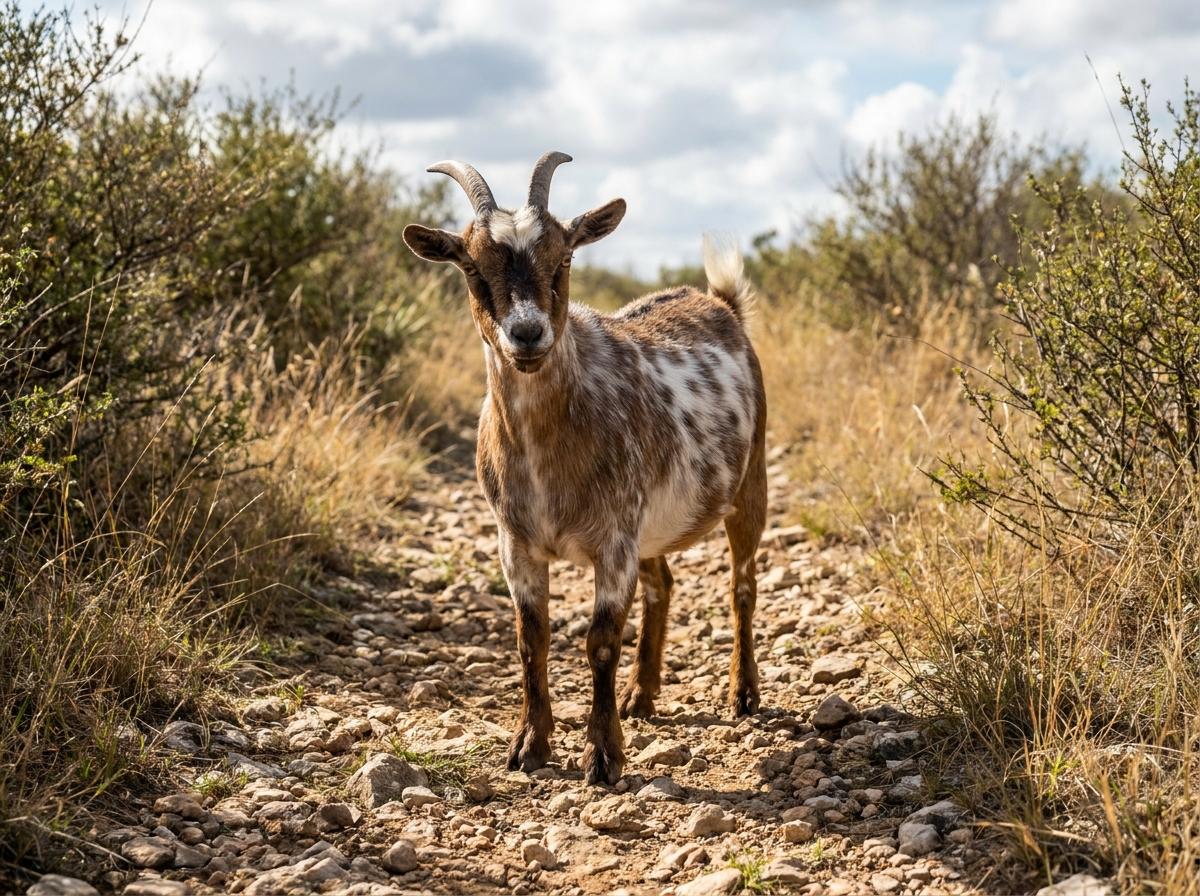
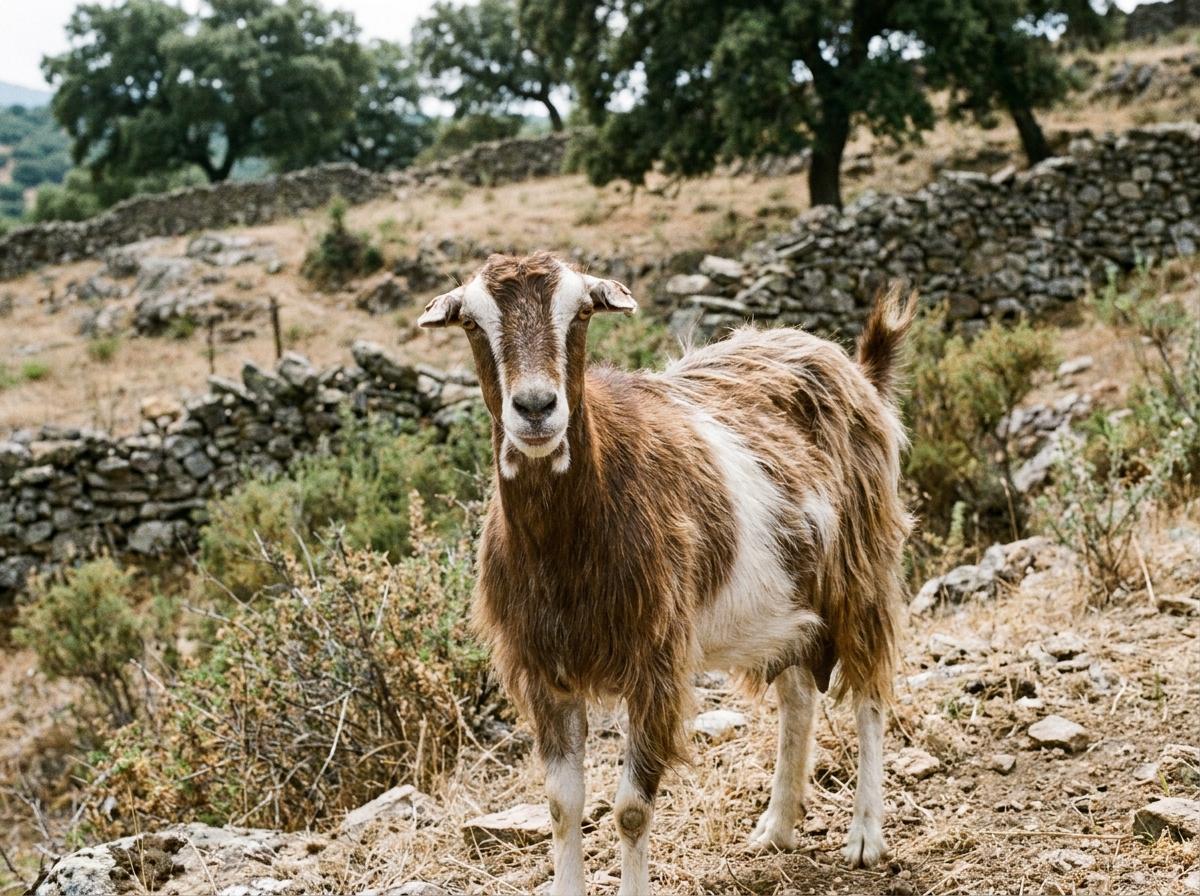
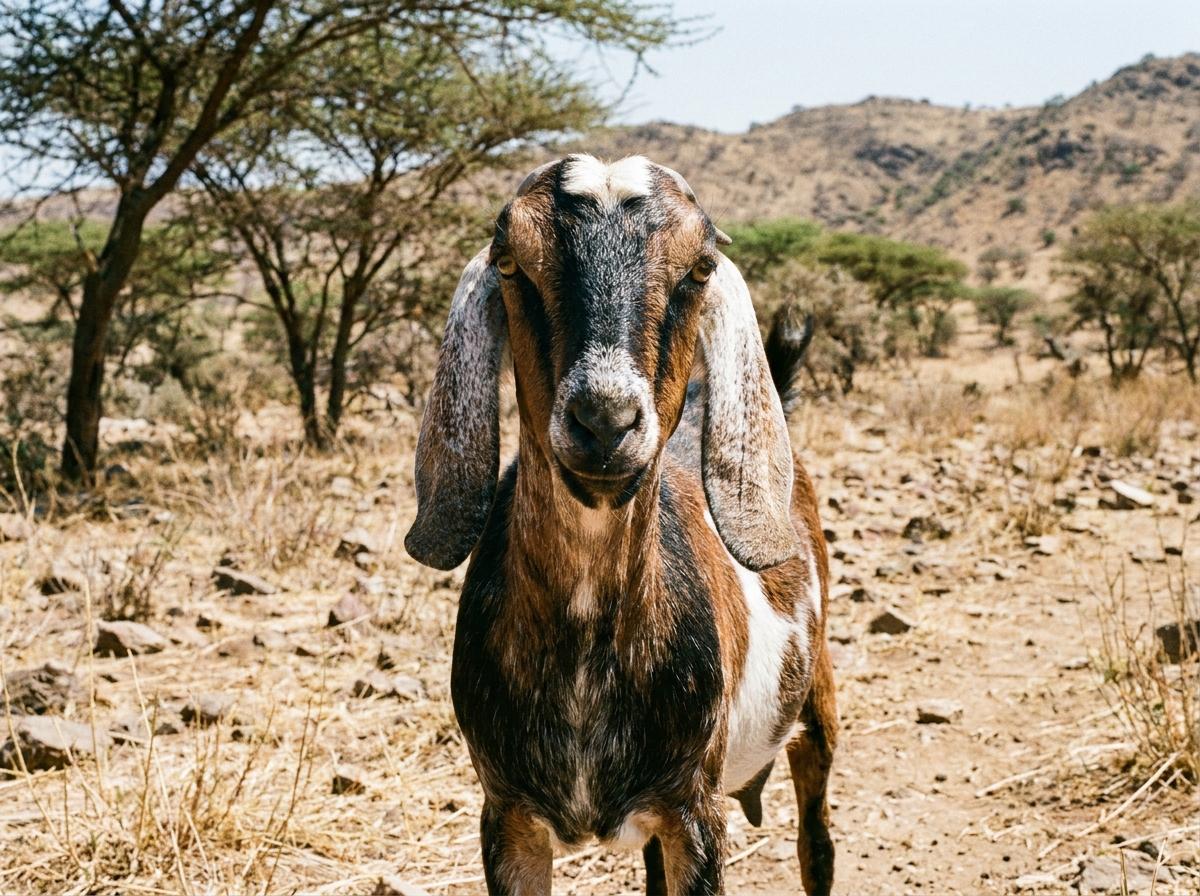
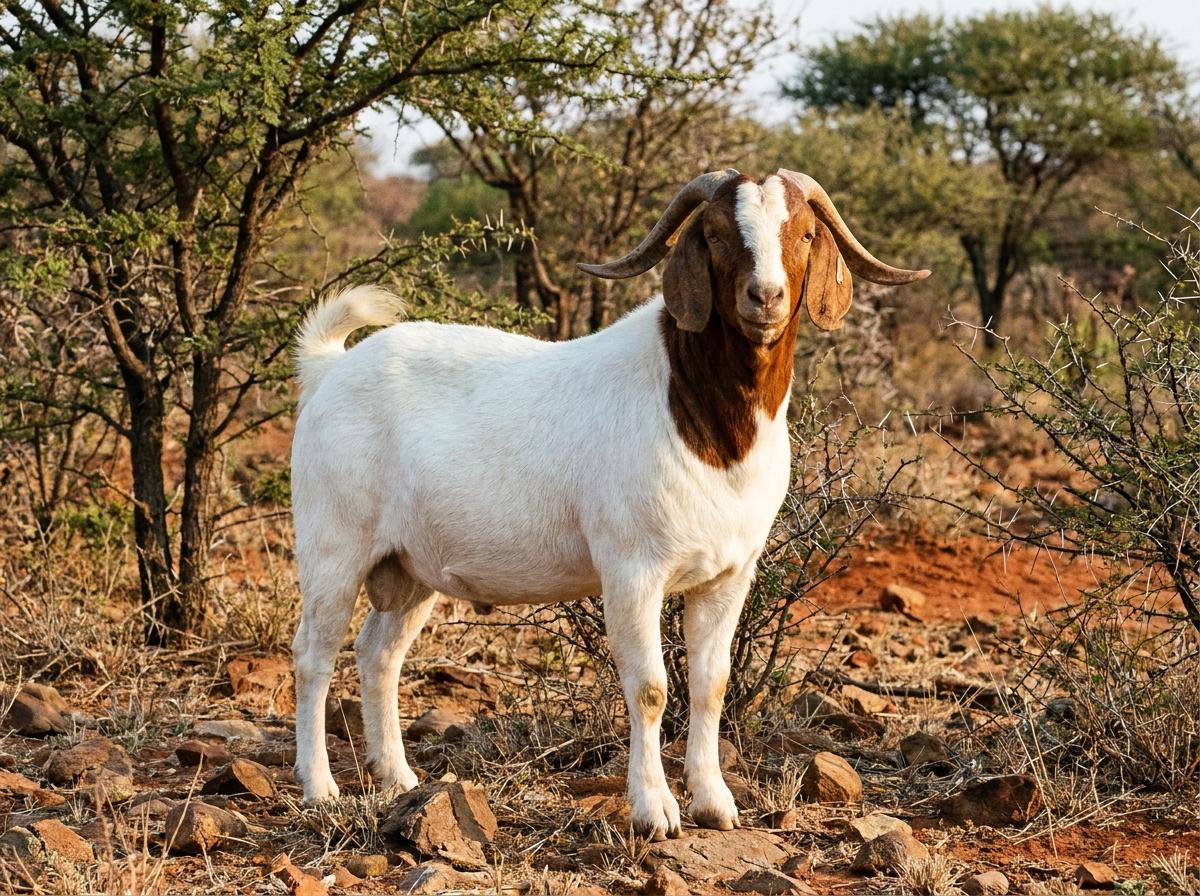
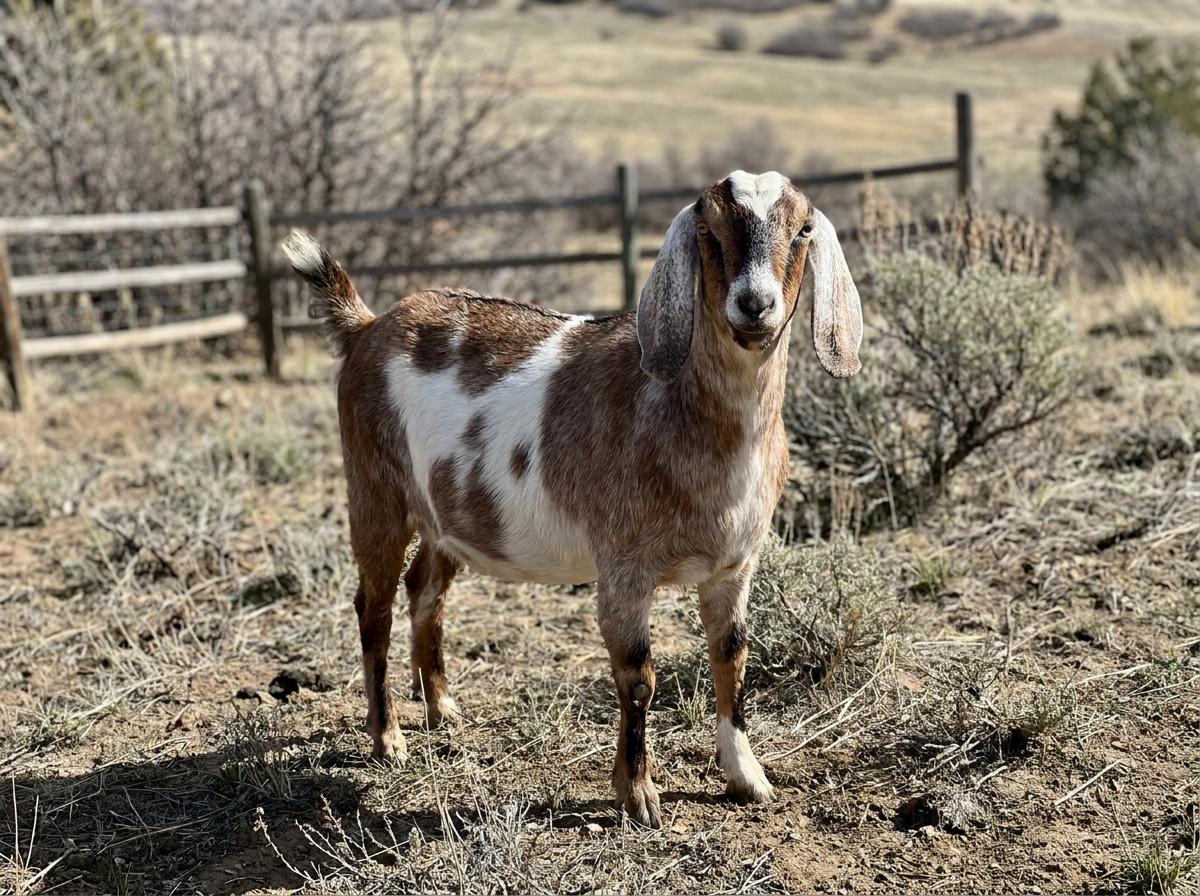
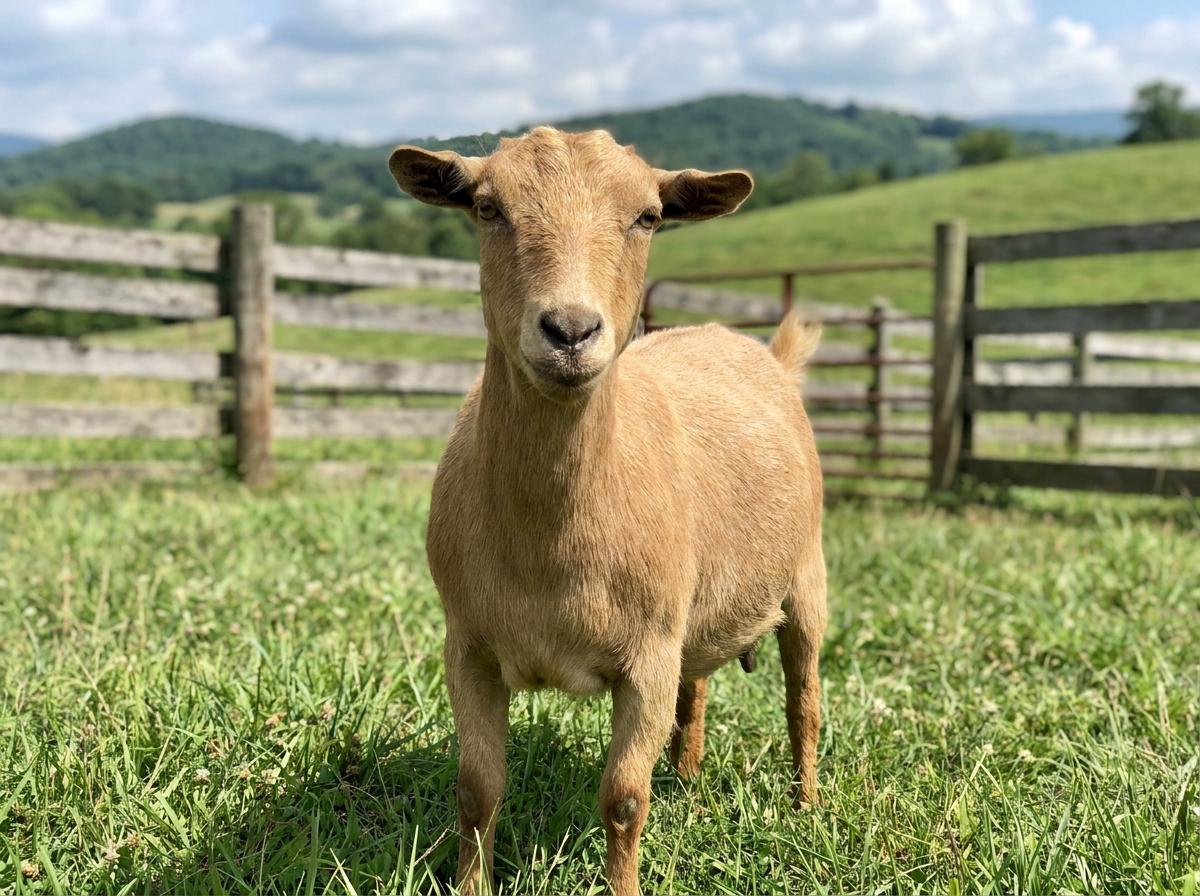
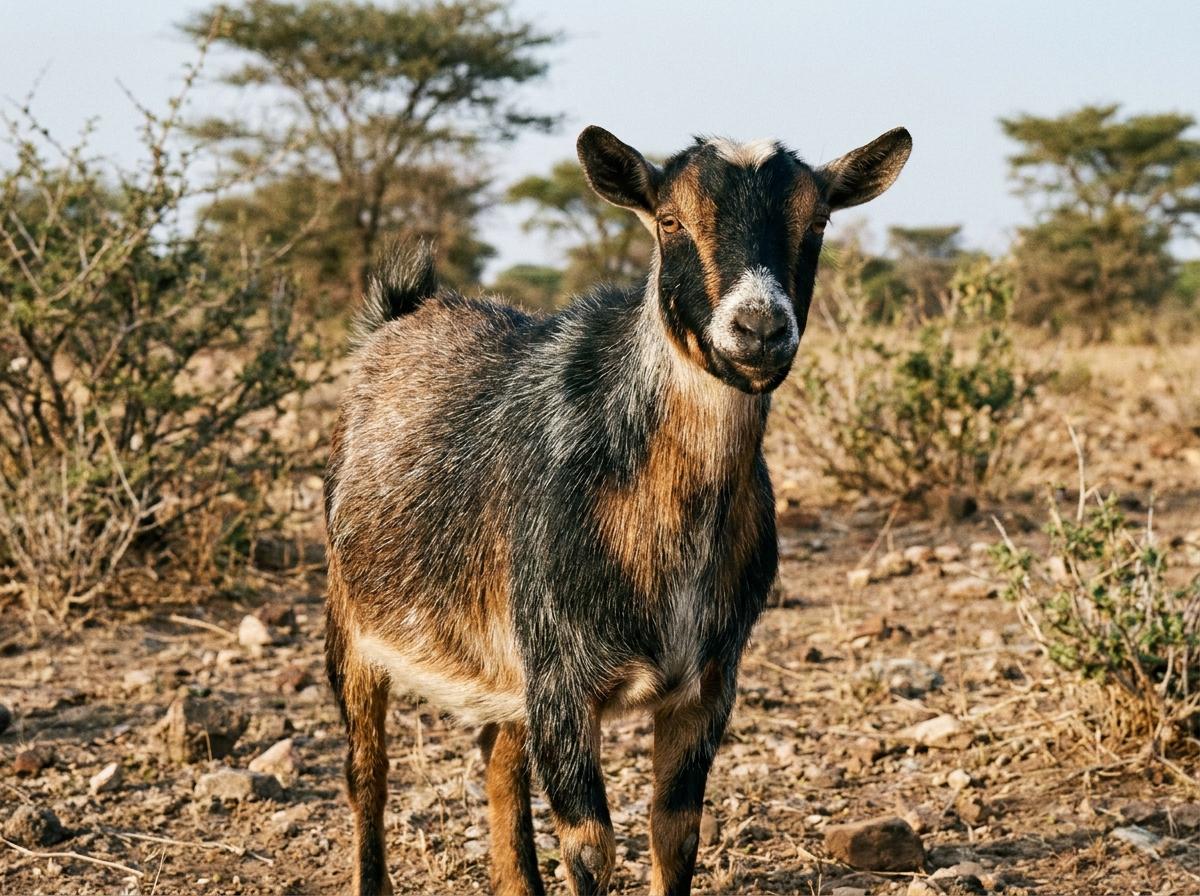
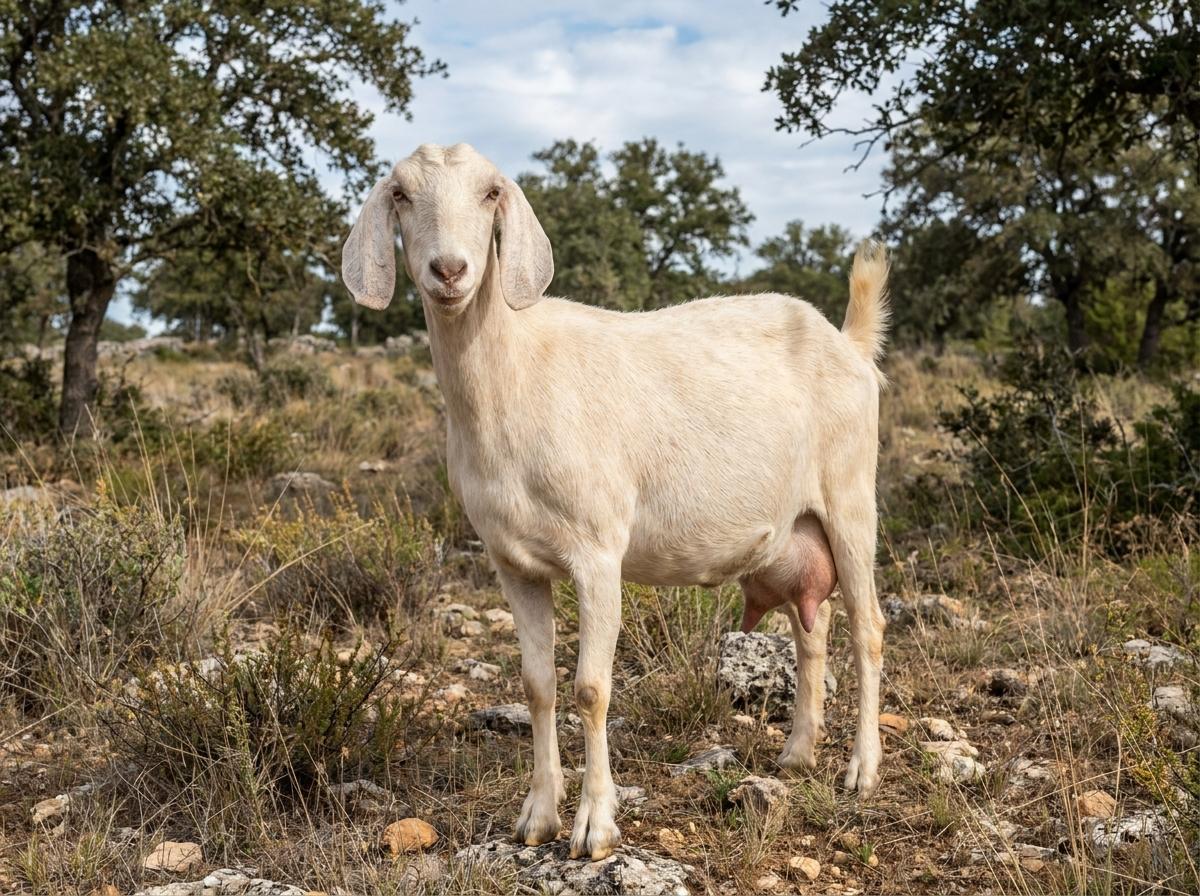
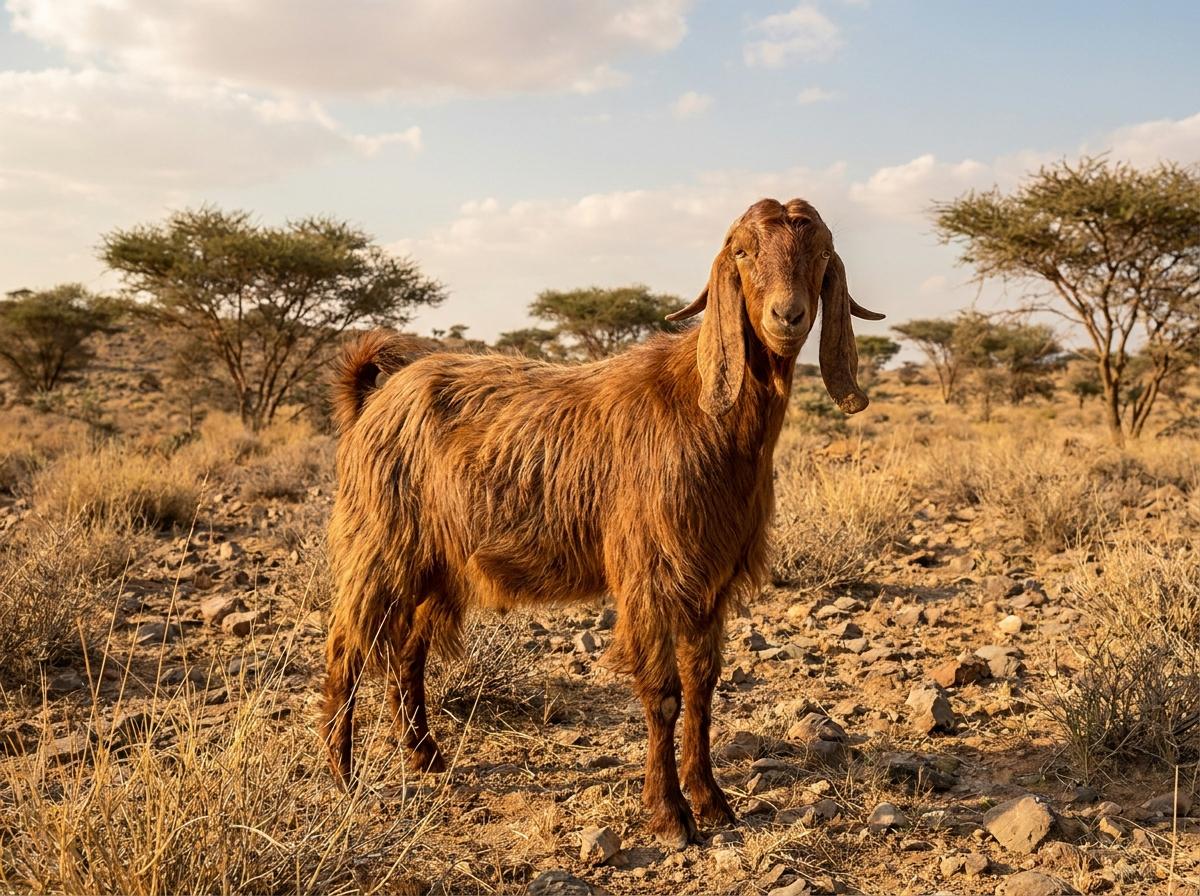
The Damascus goat is a large, reddish brown dairy breed from the Near East, known through most of its home range as the Shami. It is a working milk animal first: tall and deep bodied, with ears close to a foot long that hang well below the jaw, a long head with a convex Roman profile, and a habit of throwing twins. If you arrived here from a photograph of a goat with a startlingly short, domed face, that animal is real and it is the same breed, but it is a competition type produced by a specific kind of selection, and it is not what a Damascus goat on a dairy farm looks like.

This page is the breed reference: where the Damascus comes from, how big it actually gets, what it produces, and what is realistic if you want one. For day to day husbandry, our complete Damascus goat care and breed guide covers housing, rations, minerals, vaccination and parasite management in detail, and you can see how the breed sits alongside others on the Creatures goat species page.
| Also called | Shami, Damascene, Aleppo, Halep |
|---|---|
| Origin | Syria and the wider Near East, with the improved dairy line developed in Cyprus |
| Main use | Dairy first, plus meat and breeding stock |
| Height at withers | About 78 cm (31 in) in the improved Cyprus population; FAO records roughly 72 cm for does and 80 cm for bucks in Syria |
| Adult weight | Cyprus population about 65 kg (143 lb) for does and 75 kg (165 lb) for bucks; FAO records about 40 kg and 57 kg in Syria |
| Milk yield | Commonly 200 to 350 kg sold per lactation; one selected Cyprus herd averaged 640 to 732 kg over a 305 day lactation |
| Litter size | About 1.8 kids per kidding across the breed, rising above 2.2 in selected herds |
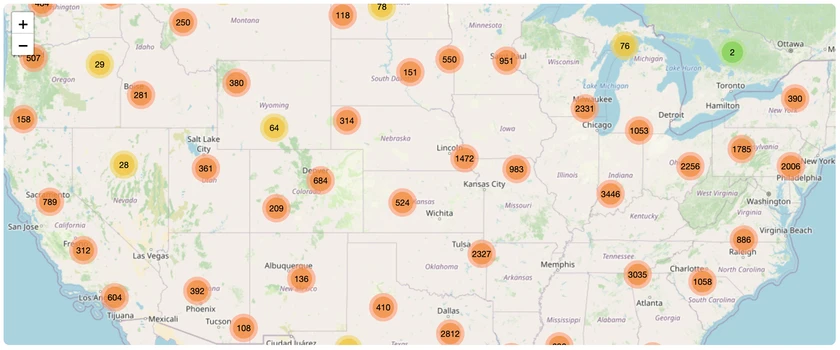
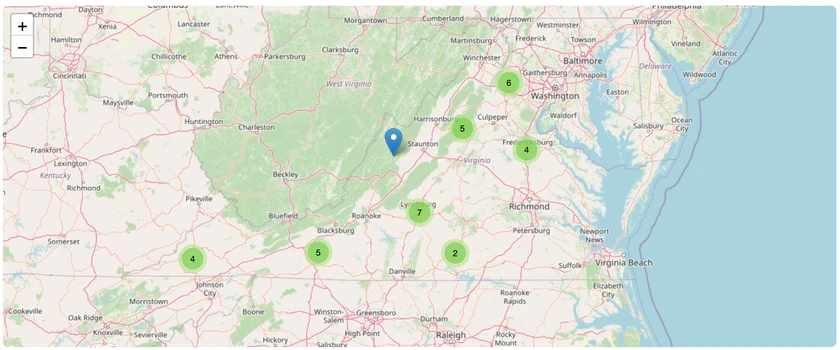
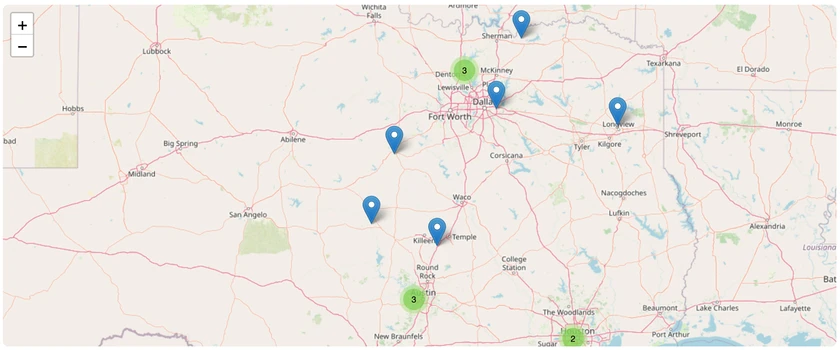
| Availability in the US | Very limited. Not among the breeds the American Dairy Goat Association registers, and live imports are tightly controlled |
Prices, listings and breeder contacts for the breed live on the Damascus goat page in the Creatures marketplace.
Browse listings, public profiles, breeders, or add your animal.
Shami, Damascene, Aleppo: one breed, several names
The breed is native to Syria and the neighboring Near East and takes its English name from the city of Damascus. Across the region it is usually the Shami, from Bilad al Sham, the historical name for greater Syria. You will also meet it as the Damascene, or as Aleppo or Halep after Syria’s second city. All of those point at the same animal.
One name deserves a caveat. Damascus goats are sometimes recorded as Baladi, which is simply the Arabic word for local. That label gets applied to a range of indigenous goats across the Arabic speaking world, so a “Baladi” goat is not necessarily a Damascus. Treat it as a regional description rather than a breed name.
Beyond Syria the breed spread through Lebanon, Jordan, Iraq, Turkey, Egypt and the Gulf, and it has been used repeatedly as an improver: a large, heavy milking animal crossed onto smaller local goats to lift yields. The FAO breed monograph on the Cyprus population notes that one Cypriot farm alone exported Damascus stock to more than fifteen Middle Eastern and Gulf states over twenty years.
Why the size and milk figures you find never agree
Search the breed and you will get two sets of numbers that contradict each other. This is the single most confusing thing about the Damascus, and it has a clean explanation: there are two populations behind the name, and reputable sources describe both.
The Syrian and regional village population. FAO’s Domestic Animal Diversity Information System, in its breed data sheet for the Shami in the Syrian Arab Republic, records average weights of 40 kg for does and 57 kg for bucks, with wither heights of 72 cm and 80 cm. DAD-IS serves those records through a search application rather than at a fixed address per breed, so there is no stable URL to send you to; search Syrian Arab Republic, goat, Shami. These are ordinary farm goats kept under ordinary regional conditions.
The improved Cyprus population. Damascus goats were imported to Cyprus about seven decades before FAO’s 2006 monograph was published, so in the 1930s, to upgrade the island’s local goats. Cypriot breeders then ran a selection program for milk and meat that had been going for over forty years by the time that monograph appeared. The animals it describes measure 78 cm at the withers with a body circumference of 97 to 99 cm, and weigh about 65 kg for does and 75 kg for bucks. On one recorded commercial farm, mature does ran 60 to 80 kg and bucks 80 to 100 kg.
So the honest answer to “how big is a Damascus goat” is that a village doe in Syria and a selected Cyprus doe are both correctly called Damascus goats and differ by roughly half again in body weight. Neither figure is wrong. Anyone quoting a single number without saying which population it describes is flattening a real difference. The same gap runs through every production figure below, so we have labeled each one.

The head, the ears and the horn question
Three features identify the breed at a glance, and none of them depend on which population an animal comes from.
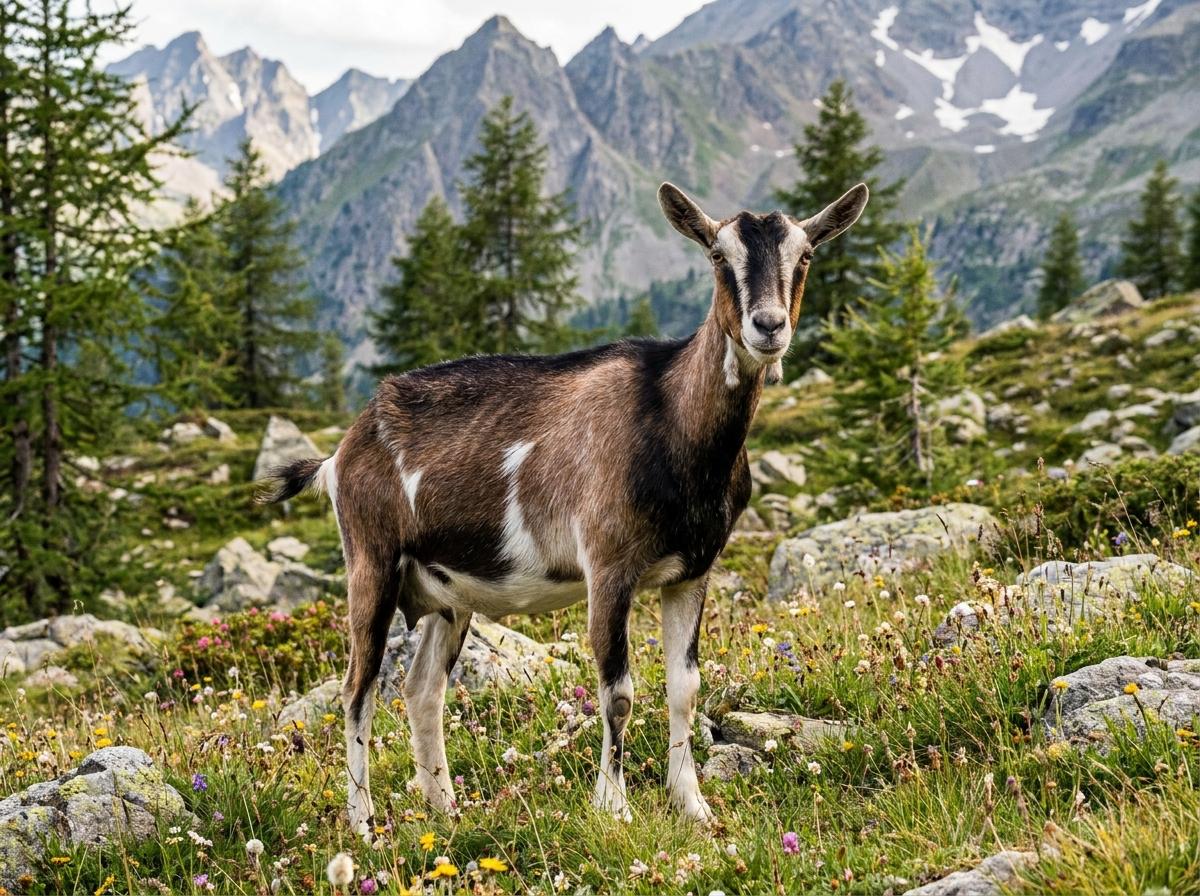
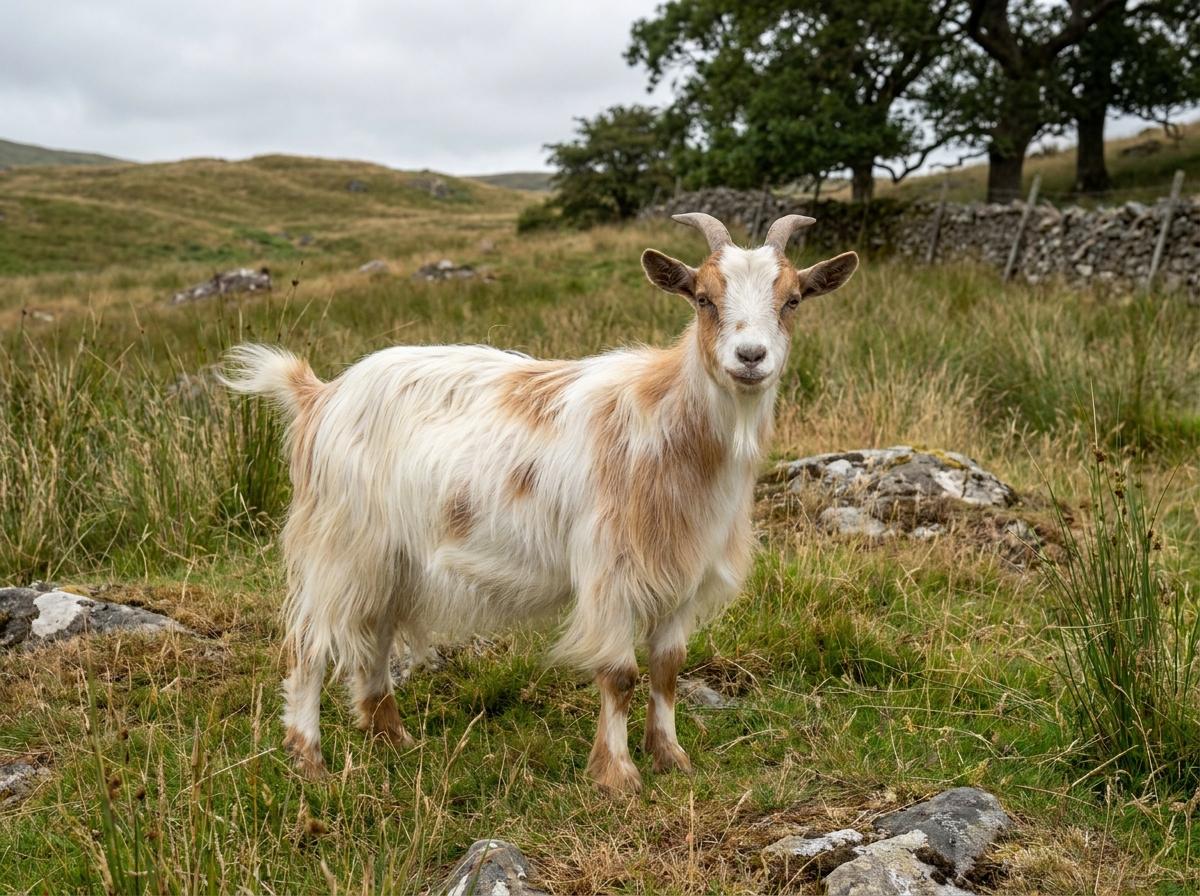
The ears are long and pendulous, measured in the FAO monograph at 27 to 32 cm. They hang loose and straight down, well past the line of the jaw, and on a mature animal they swing when it moves. The head is long with a convex profile, the trait usually called a Roman nose. On a working animal this is a smooth continuous curve from between the eyes to the muzzle, not a shortened or domed face. The coat is predominantly reddish brown and mostly long haired. White spots on the body, legs and face turn up but are not common, and a black coat is very rare, appearing through a recessive gene. Many animals also carry wattles, the small skin tassels on the throat.
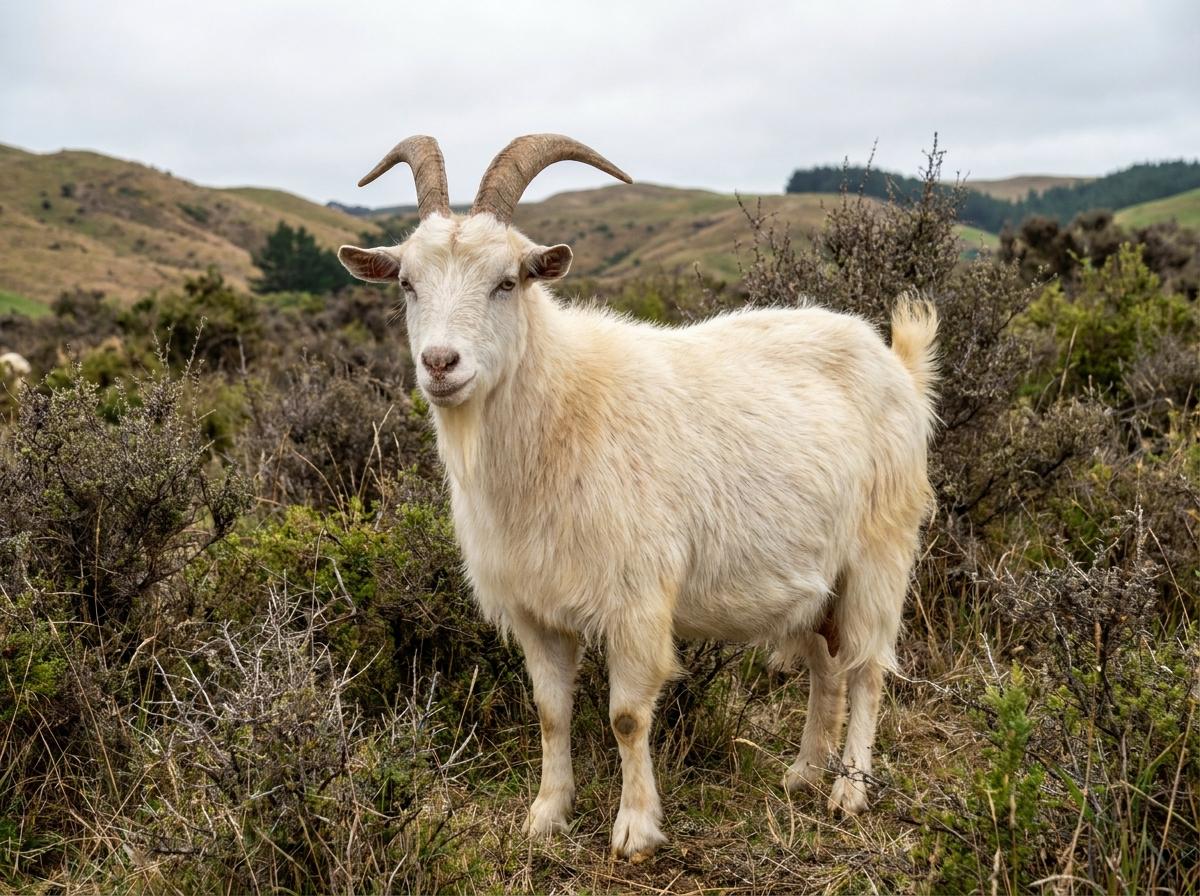
Horns are the point most breed summaries get wrong, and the source everyone quotes is where the mistake starts. Damascus goats are usually hornless. The FAO monograph states that in this breed the presence of horns in both sexes is associated with intersexuality, citing Hancock and Louca, and that sentence inverts the evidence in its own reference list. Both papers it points to are studies of polledness, meaning the absence of horns: Hancock and Louca 1975 is Polledness and intersexuality in the Damascus breed of goat, and Constantinou, Louca and Mavrogenis 1981 is The effect of the gene for polledness on conception rate and litter size in the Damascus goat. Those two titles are printed in the same PDF as the sentence they are supposed to support.
The genetics behind them is settled and is not particular to this breed. It is called polled intersex syndrome, and it travels with the polled allele, the one that takes the horns away, so the hornless animal is the one carrying it. Genetically female kids that inherit polled from both parents are the ones affected, with reproductive development running anywhere from nearly normal female to nearly male, and they are sterile. A horned goat carries at least one horned allele, so it cannot be homozygous polled at all.
That reverses the practical advice you will read elsewhere. In a breed where most animals are hornless it is easy to mate polled to polled without thinking about it, and that pairing is the one worth raising with your veterinarian before you plan a season. A horned Damascus is not the animal to interrogate.
The competition goats with the extreme faces
Most people meet this breed through a photograph of an animal with a very short, broad, heavily domed face, usually captioned as an ugly goat or a monster goat. It is worth being accurate about what that is, because the mockery in those captions gets the story backwards.
Those animals come out of goat beauty competitions in the Gulf, where prized goats are bred, judged and traded seriously. Reporting from the Riyadh goat markets in 2007 set out what buyers there pay for: rounder faces, larger eyes, floppier ears and a bigger animal overall. Generations of breeding toward that ideal have produced heads far more extreme than anything you will meet on a dairy farm. Within that tradition these are valuable animals kept with great care. They are not accidents and they are not neglected.
They are also not the animal you would buy to milk, and there is one documented reason to take that seriously rather than treat it as a matter of taste. A 2021 review of brachycephaly in domestic animals lists the Shami among the Roman nosed goat breeds and describes the brachycephalic goat skull as having short, convex nasal bones with shortened upper jaw bones, so the lower jaw projects past the upper and the lower incisors sit exposed. That condition, brachygnathia superior, has been described as a birth defect that occurs more often in goat breeds selected for a Roman nose, particularly where the convexity is pronounced, and the survey behind that observation looked at congenital anomalies in Shami herds. The review is careful to say the point is qualitative, drawn from a small number of museum skulls rather than a measured study, and nobody has examined the extreme Gulf show animals directly. Read it as a real signal, not a settled number.
Two practical things follow. Selection pressure on the head is not free, so a head bred to win in a ring is not automatically a head that serves a productive animal. And the exaggeration is widely reported to develop with age, with kids looking fairly ordinary and the dramatic face arriving at maturity, though that has been described in the press rather than measured in a study. If your interest is milk and kids, judge the udder, the bite, the feet and the legs, and treat the face as a breed marker rather than a target.
Milk, kids and why the breed is valued
Productivity is the whole reason the Damascus exists in its improved form, and FAO calls it one of the best dual purpose breeds of the Middle East under semi intensive and intensive systems.
Milk. Commercial milk sold per doe per lactation commonly runs 200 to 350 kg, depending on management and feeding. Total production including the milk a doe’s kids drink before weaning is a different and larger figure, in the region of 350 to 650 kg, and the two get quoted interchangeably far too often. Lactations typically run five to nine months after weaning, and lactations of up to a year are not rare. The milk is rich by goat standards, with fat between 3.8 and 4.5 percent and protein between 4.0 and 4.8 percent, which is part of why it suits cheesemaking.
The ceiling is much higher than the average. On the Cyprus commercial farm documented in the FAO monograph, does milked twice daily on a standardized 305 day lactation averaged 640 kg in 2000 and 732 kg by 2003. Those are herd averages after sustained culling and replacement, not typical animals, and the monograph is explicit that this breed needs an improved feeding and management environment to express its potential. A Damascus doe on sparse browse will not produce anything like it.
Kids. Prolificacy across the breed averages about 1.80 kids per doe per kidding, which FAO describes as among the highest in the region. Twins are the norm and triplets are common. In the selected Cyprus herd the annual figures ran between 2.27 and 2.62 kids per kidding, and rose with parity, from 1.92 in first fresheners to 2.60 by the fourth. Kids are born heavy, between 3.5 and 5.5 kg, with recorded farm means of about 4.4 kg for males and 3.9 kg for females.

Reproduction. The breed is a seasonal breeder, with the natural season running from late August into mid December. Does reach first heat young, between 220 and 270 days, at which point they already weigh 42 to 54 kg, and productive life can begin at 13 to 16 months. Fertility is recorded at 80 to 90 percent, and ovarian activity returns roughly 43 days after kidding. Early maturity is an advantage, but it also means a decision about when a young doe first kids gets made whether or not you make it deliberately.
Temperament
Keepers consistently describe Damascus goats as calm, people oriented and straightforward to handle, which fits an animal managed at close quarters and milked twice a day for months at a stretch. We would flag that as practitioner consensus rather than a measured trait, because the published work on this breed concerns production and reproduction rather than behavior. The usual caveats apply: temperament tracks handling and socialization more than breed, and an intact buck in rut is a different animal from a doe or a wether regardless of what the breed page says.
Climate, health and how long they live
The Damascus is productive in warm, dry conditions. The Cyprus herd documented by FAO sits in a coastal district where summer temperatures run 28 to 35 degrees Celsius at 40 to 60 percent humidity, and it milks well there, which is a fair description of the breed’s comfort zone. What the published record does not support is the stronger claim, which circulates a lot, that this is an exceptionally heat hardy goat that will outlast desert breeds. It is a productive dry country dairy animal, and that is a different thing. Shade, ventilation and constant clean water still matter, and they matter more in a heavy milker than in a hardy brush goat.
On health, there is no meaningful body of breed specific disease literature, which is itself worth stating plainly. The Damascus gets the same herd health plan any dairy goat gets, built with a veterinarian who can see the animals: parasite management suited to your climate and grazing, hoof care, clean kidding and milking hygiene, and the core vaccinations recommended for your area. Our care and breed guide works through that program step by step.
Four points are genuinely breed shaped. Udder health carries more weight in a doe selected for heavy yield than in an average goat, and udder attachment and teat placement are what determine how long she stays in the milking string. Those long ears are vulnerable in cramped or badly finished housing, so smooth fittings and uncrowded pens are worth the money. The polled intersex link described above belongs in your breeding decisions rather than your show notes, and it points at polled to polled matings, not at horned animals. And check the bite: an upper jaw shortening defect called brachygnathia superior has been reported more often in goat breeds selected for a Roman nose where the convexity is pronounced, and the survey behind that finding was carried out in Shami herds, so a correct bite is worth looking at deliberately rather than assuming. All medical decisions belong with your veterinarian.
Lifespan is a question the record simply does not answer for this breed. There is no authoritative breed specific figure, so the species expectation is the best available guide and should be read as exactly that: Animal Diversity Web, the University of Michigan Museum of Zoology’s reference database, gives domestic goats as typically living to about fifteen years in captivity, with one recorded individual reaching twenty two. Productive life is a separate and much shorter thing, and it is a management decision rather than a biological limit: on the documented Cyprus farm, does were bred for an average of six years before being sold on or used for meat, and bucks stayed in the breeding system for a maximum of two.
Keeping one, in brief
A high output dairy goat is a high input animal, and that is the honest headline. Damascus goats need dry, draft free shelter with clean bedding, sound footing for a heavy frame, and enough space that animals are not crowded or bullied. They need a ration that actually supports lactation, because a doe bred for heavy milk and multiple kids cannot run on poor forage without losing condition and running into trouble around kidding. They need constant clean water and appropriate free choice minerals, and goats need a goat or cattle mineral rather than a low copper sheep formulation.
That is the shape of it. The full care guide has the detail, including ration building, mineral programs, the CD and T vaccination schedule and parasite management, all referenced to university extension guidance.

What they cost and how hard they are to find
Inside the Near East, Damascus goats are ordinary commercial livestock and trade on the things productive dairy stock always trade on: milk records, udder and leg conformation, kidding history and breeding value. There is no single published market price for a working Damascus doe, and we are not going to invent one.
The enormous figures attached to this breed online come from the Gulf show circuit rather than the farm gate. Saudi press reporting from the Riyadh goat markets in 2007 gives the scale: breeders there put exceptional animals between 30,000 and 100,000 Saudi riyals, and named 250,000 riyals, around 67,000 US dollars at the pegged rate, as the highest price anyone had reportedly paid. Those are traders describing their own market rather than audited sale records, and they are talking about show stock, not milking does. A fair share of the viral stories about a goat selling for a fortune involve other Gulf breeds entirely, the Najdi in particular, which runs its own pageants. Check which breed is actually in the photograph before you draw a conclusion about this one.
For buyers in the United States the practical situation is scarcity, and it is worth being blunt about why. The Damascus is not among the dairy breeds registered by the American Dairy Goat Association, so there is no US herdbook, no national breed club and no published standard to buy against. Live goat imports are separately controlled by USDA APHIS, which requires an import permit and veterinary health certification and restricts ruminant imports from regions it has not recognized as free of foot and mouth disease. That category covers most of the breed’s home range. Fresh genetics are therefore hard to bring in by design rather than by oversight.
What that means in practice: expect a very small pool of sellers, a premium for genuine stock, and real work confirming that an animal advertised as Damascus is what the advertisement says. Ask what the seller means by the name, ask for photographs of the parents, and ask for production records. If you are shopping, a saved listing alert is usually more effective than repeat searching, because stock appears rarely and moves fast.
If you want to compare the Damascus against other regionally developed goats before committing, the Black Bengal is the small, extremely prolific South Asian counterpart, and the Kamori is a Pakistani dairy breed with its own distinctive long eared look.
Frequently asked questions
Is the Damascus the same animal as the Shami goat?
Yes. Shami is the name used across most of the breed’s home region, and Damascene, Aleppo and Halep refer to the same breed. Baladi is looser: it means local in Arabic and gets applied to several indigenous goats, so it is not a reliable synonym.
How big does a Damascus goat get?
It depends which population you mean, which is why published figures disagree so much. Syrian village animals run around 72 cm and 40 kg for does; the improved Cyprus line runs 78 cm and about 65 kg. Both sets of numbers, and where they come from, are in the size section above.
How much milk does a Damascus goat give?
Commonly 200 to 350 kg per commercial lactation. Higher figures usually include what the kids drink before weaning, so they are not comparable, and the section above sets out which is which.
Is the viral flat faced goat a real Damascus goat?
Yes, but it is a competition type. Gulf goat beauty contests prize a rounder face, larger eyes and floppier ears, and generations of selection toward that ideal produced the extreme domed heads in those photographs. Working dairy Damascus goats carry the same long ears and convex profile in much more moderate form.
Do Damascus goats have horns?
Usually not. The FAO monograph ties horns to intersexuality, but the two papers it cites are studies of polledness and the established genetics runs the other way: polled intersex syndrome travels with the polled allele, so it is the mating of two hornless animals, not the horned one, that is worth discussing with your veterinarian.
How long do Damascus goats live?
There is no breed specific figure in the literature. Animal Diversity Web gives the species expectation as about fifteen years in captivity, and that is the best available guide. Working life is shorter and is a management choice: on the Cyprus farm in FAO’s monograph, does were bred for an average of six years before leaving the herd.
Can I buy a Damascus goat in the United States?
Rarely and with difficulty. The breed is not registered by the American Dairy Goat Association and has no US herdbook, and live imports need a USDA APHIS permit and health certification and are restricted from most of the breed’s home range. Genuine stock is scarce and priced accordingly.
Do this next on Creatures
Whether you are identifying the breed, hunting for stock, or already milking Damascus does, Creatures is where the records, the listings and the breeders live.
Go deeper on care. The complete Damascus goat care and breed guide covers housing, feeding, minerals, vaccination and parasites step by step.
Find stock. Browse Damascus goats on the marketplace and search trusted breeders and farms in the Creatures breeder directory.
Get told when one appears. Stock is scarce, so set a free Damascus goat listing alert rather than checking back. No account needed to start. Here is how saving searches and using your watchlist works.
Add your goat. Already keeping the breed? Create a free animal profile in a few minutes. No account needed to start, and the walkthrough is in adding an animal to Creatures.
Keep the milk and kidding records. Open a record on Creatures to log yields, kiddings, treatments and weights. The sheet opens for any visitor to look through, and a free account is what saves what you enter. See adding a record.
List your herd. Running a dairy or breeding program? Create a free organization profile so buyers searching a breed this hard to find can reach you, then read getting listed in the breeder directory and creating an organization and adding your team.
Sell with confidence. Planning to sell kids or breeding stock? Read how seller payout works before you list.