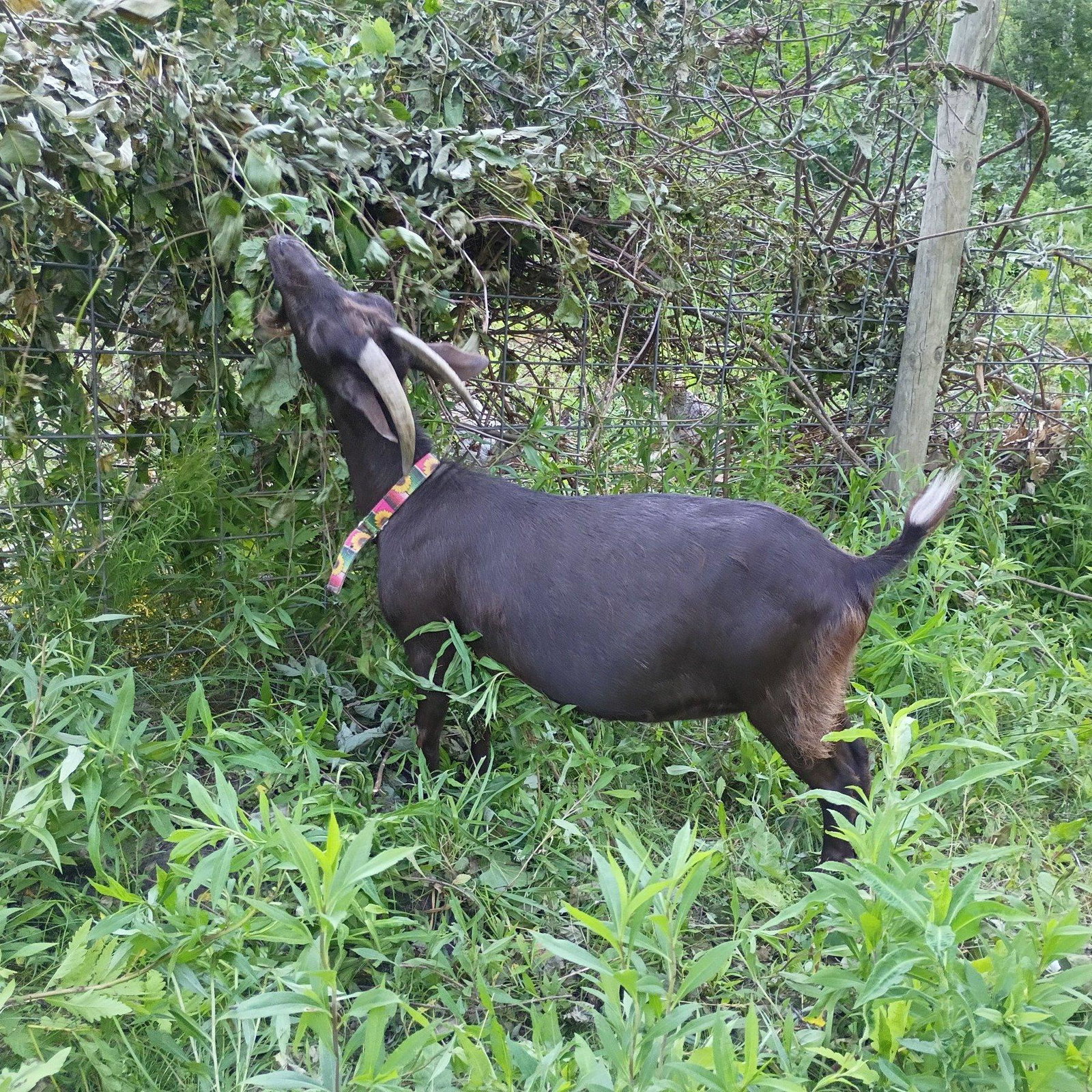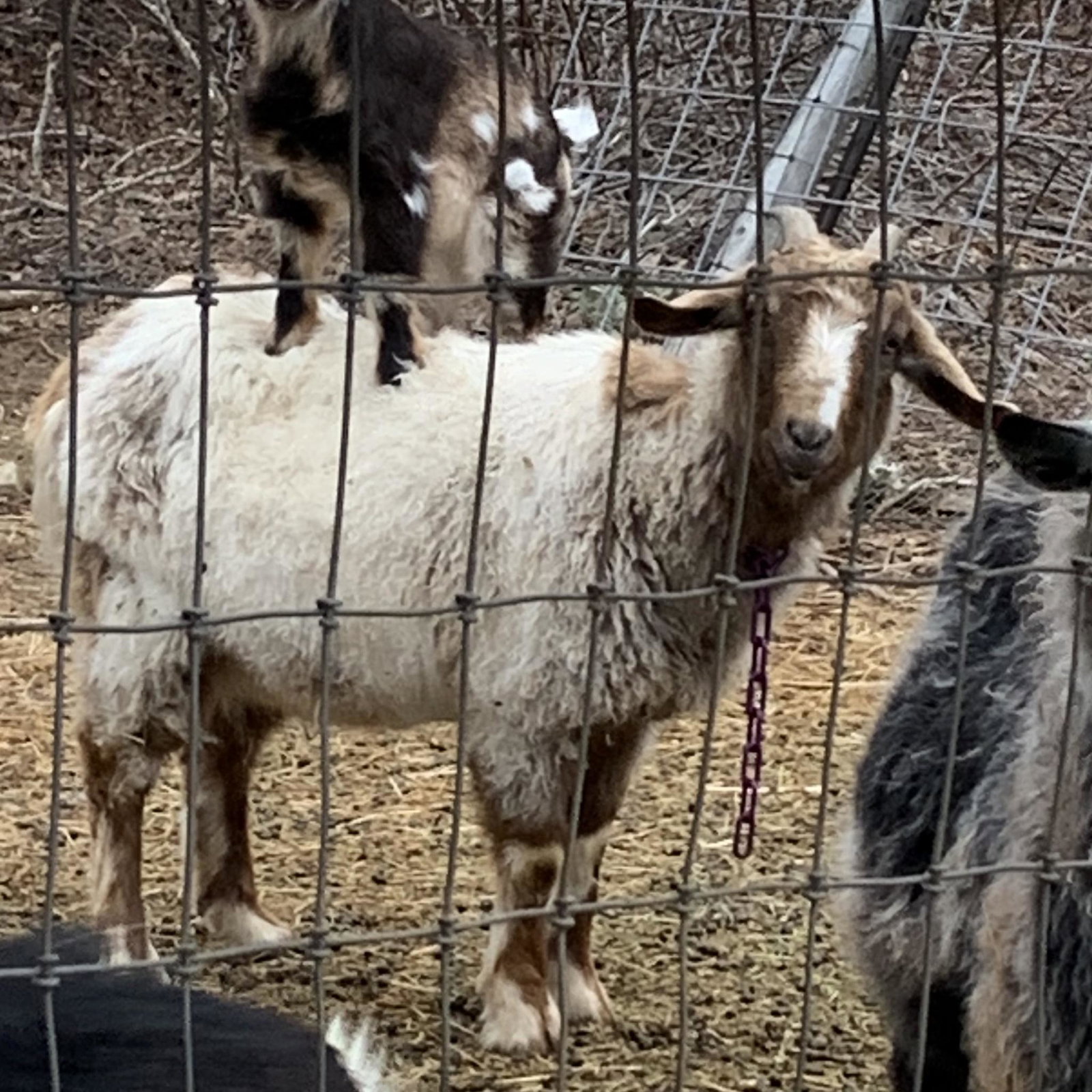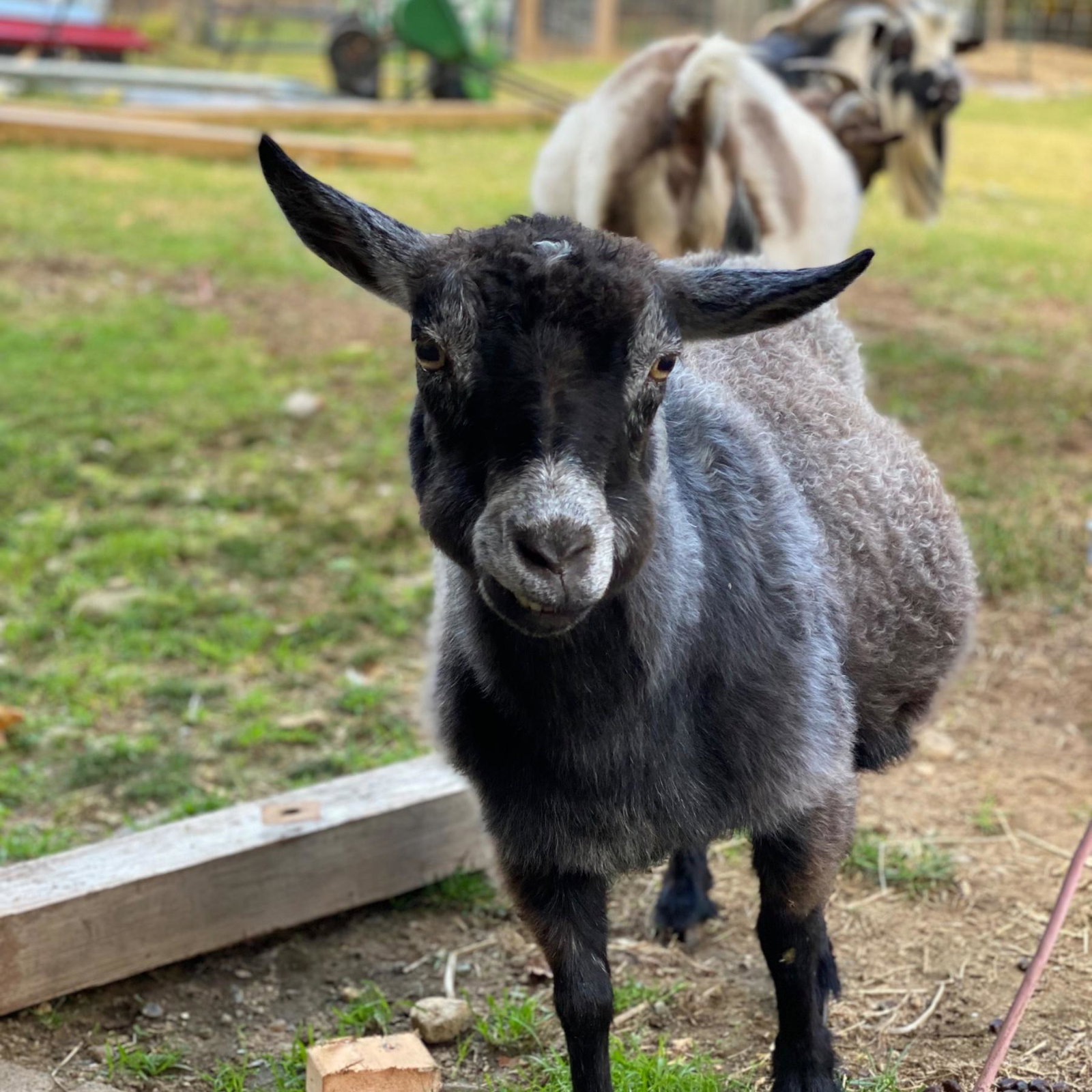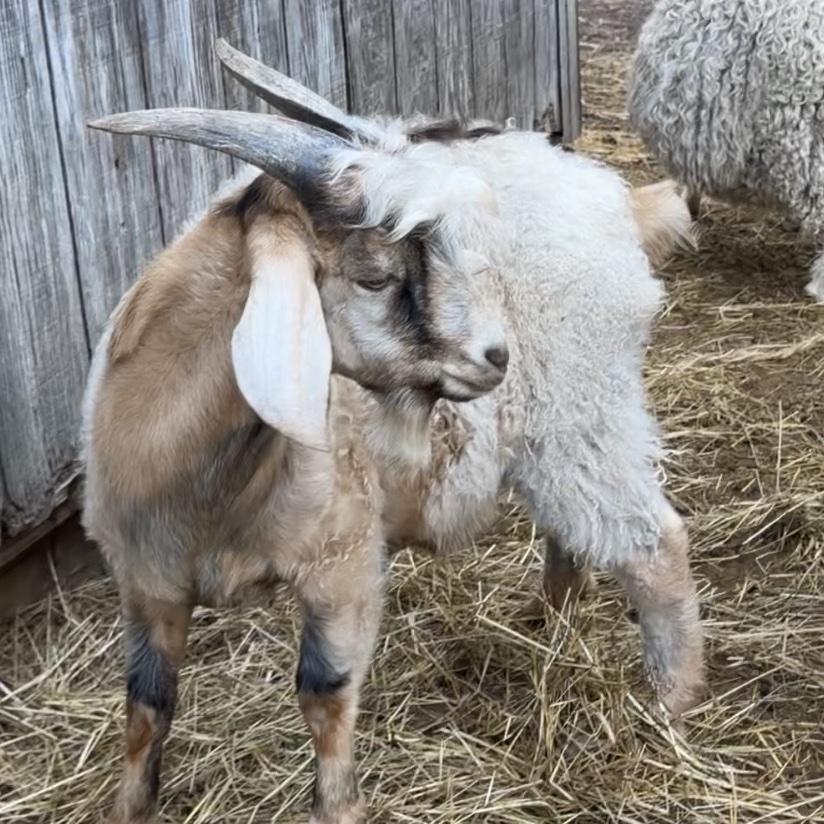
Pygora
Author: Elliott Garber, DVM · Published
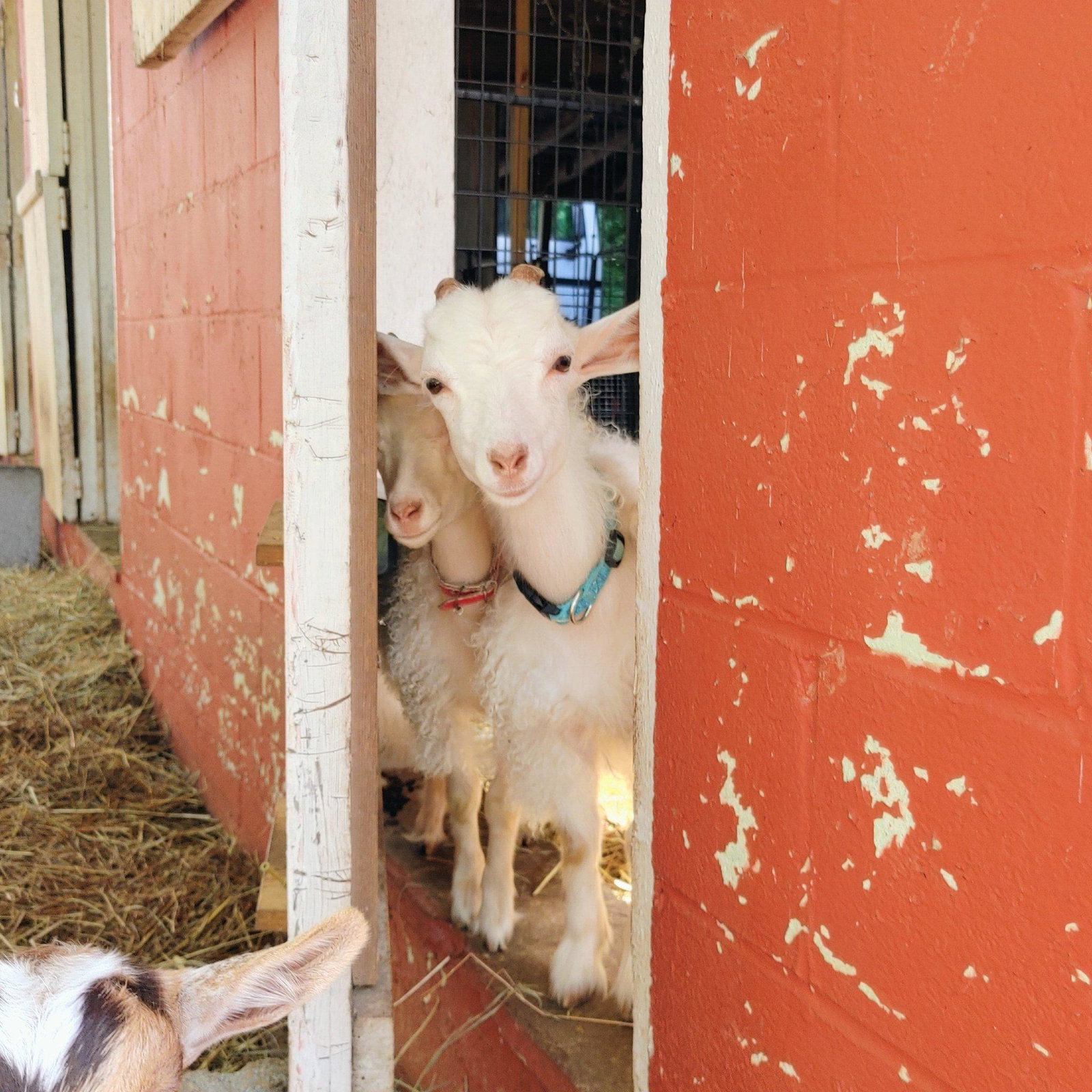
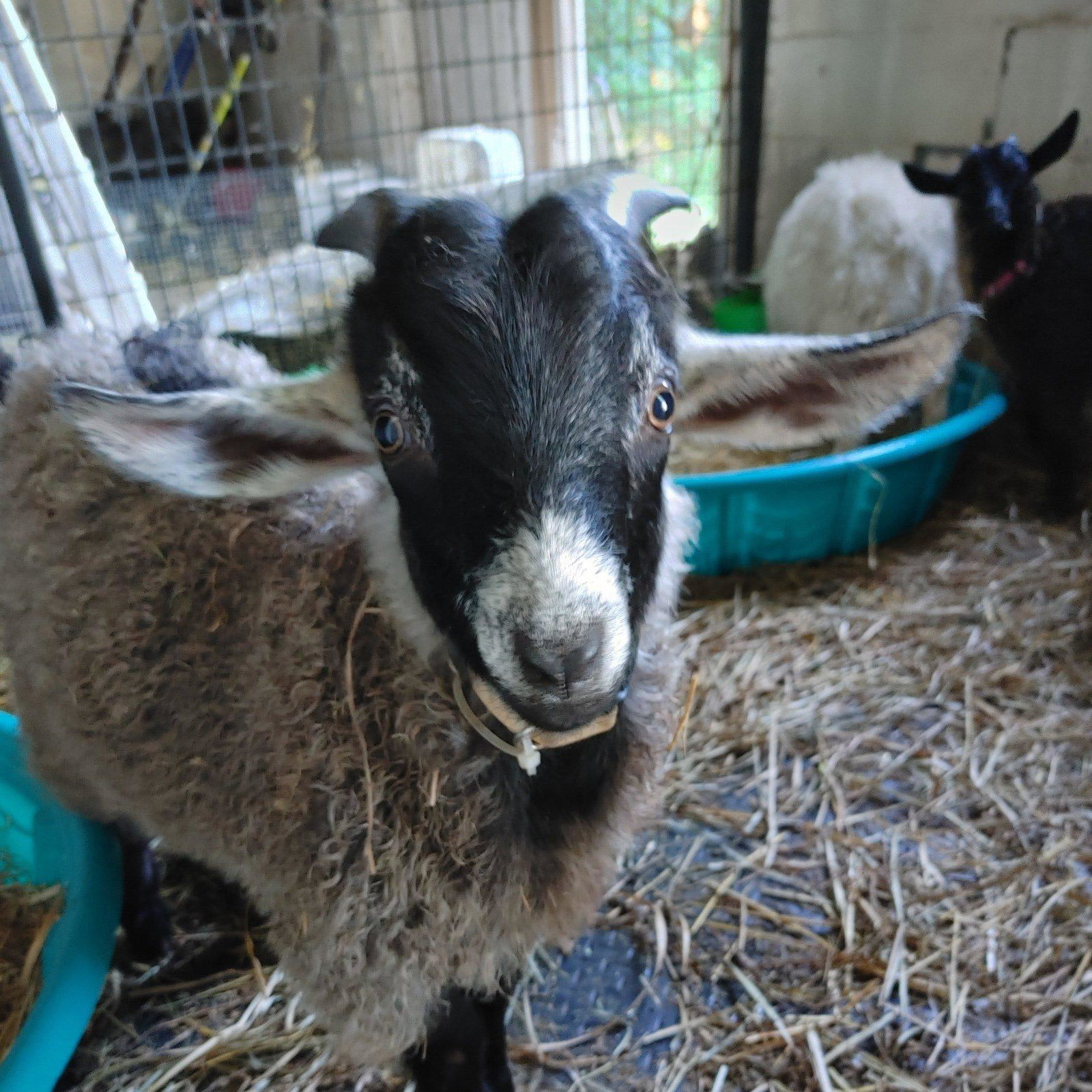
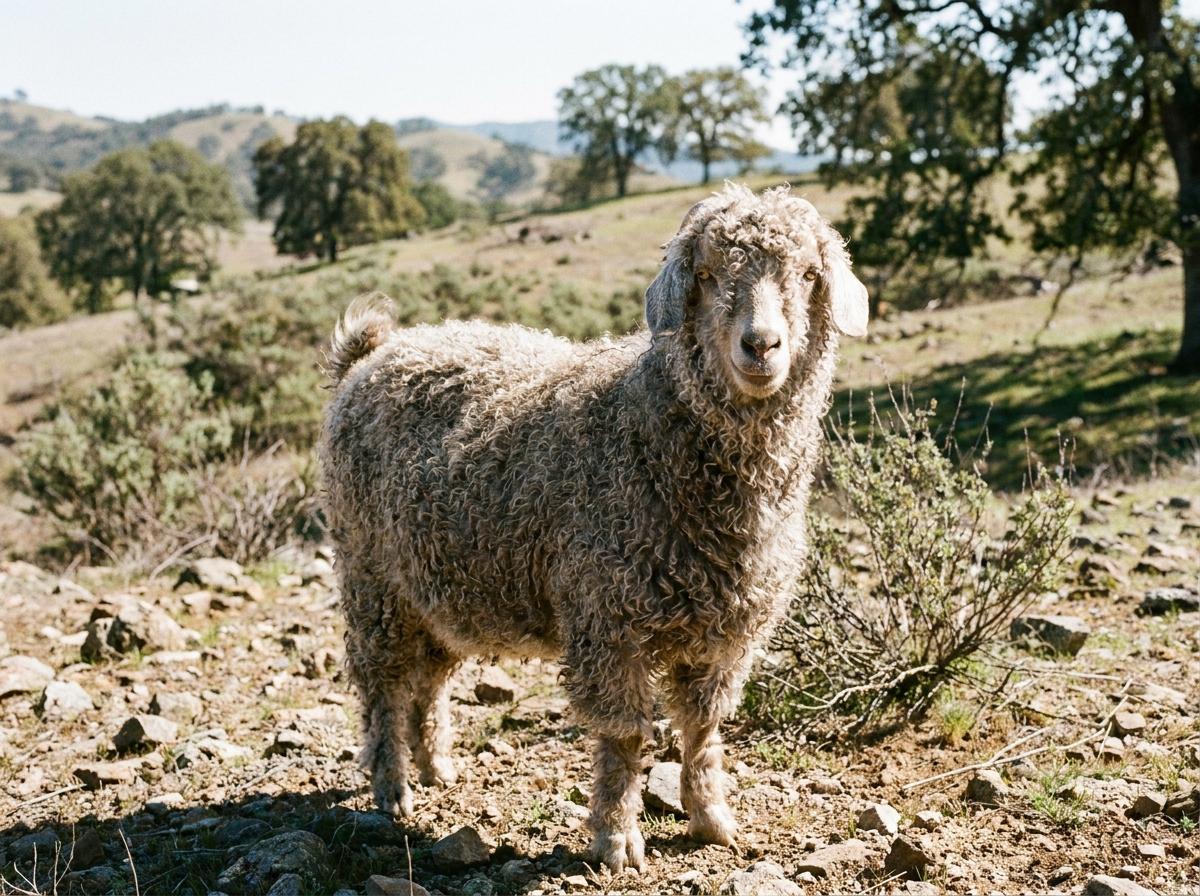
A Pygora goat is a fiber goat developed in Oregon from registered Pygmy and Angora goats, bred to grow fine, soft fleece for hand spinning. The name is a registered trademark of the Pygora Breeders Association (PBA), which says only goats registered with the PBA may be called Pygora, and its fiber page applies the same rule to Pygora fiber. So a fluffy Pygmy cross from a sale barn is not automatically a Pygora, and the paperwork matters as much as the coat.
Every Pygora grows one of three fleece types, called A, B and C, which run from long, silky, mohair-like ringlets to short, crimpy down fine enough to compare with cashmere. Size sits between the two parent breeds: the PBA standard calls the Pygora a medium-sized fleece goat, with minimum heights and no maximum. If you are comparing it with other goats, start at the Creatures goat species page, and keep in mind that a Pygora’s registration turns on its Pygmy and Angora percentages, which a free goat pedigree chart maker makes easy to lay out before you buy or breed.
This guide covers what the registry requires, the three fleece types and what they yield, how and when the fleece is harvested, everyday care, breeding and registration, and what to check before you buy.
| Purpose | Fleece for hand spinning; also kept as pets and youth project goats |
|---|---|
| Origin | Oregon, United States, bred by Katharine Jorgensen from 1980 |
| Registry | Pygora Breeders Association, formed 1987 |
| Ancestry rule | From NPGA Pygmy and AAGBA Angora stock, no more than 75% of either |
| Height | Does average 22 in (minimum 18 in at 2 years); bucks average 27 in (minimum 23 in at 2.5 years); no maximum |
| Weight | Does about 75 to 120 lb; bucks and wethers about 75 to 140 lb (PBA FAQ) |
| Fleece types | Type A long and silky; Type B curly blend; Type C short, cashmere-like down |
| Harvest | Usually shorn in spring and fall; Type B and C can also be combed or plucked when shedding |
Browse listings, public profiles, breeders, or add your animal.
What makes a goat a Pygora
The Pygora is defined by its registry as much as its looks. The PBA breed standard says the breed was created by crossing a goat registered with the American Angora Goat Breeders Association (AAGBA) with one registered with the National Pygmy Goat Association (NPGA). No other registries count. That first cross is an F1, marked as such on its papers, and the PBA treats it as a crossbreed rather than a true Pygora: F1s can be shown only in F1 classes and are not eligible for championships, according to the PBA FAQ.
From there, Pygoras can be bred to other Pygoras or back to a registered Pygmy or Angora, as long as the kid is no more than 75% of either parent breed. The PBA’s registration rules (revised October 2023) give the arithmetic: add the sire’s and dam’s Angora percentages and divide by two, and do the same for Pygmy. A kid that goes over 75% can still be entered in the herdbook as an “F2” and can produce Pygora offspring, but the FAQ says F2s are not eligible for PBA-sanctioned shows.
Two more rules shape what you are buying:
- The fleece is part of the breed. The standard says all Pygoras must have fleece as the standard describes it. Kids can be pre-registered, but permanent registration needs a photo of the goat in fleece and a fleece sample.
- Only registered goats carry the name. The PBA’s FAQ answers “Is my goat a Pygora?” with two questions: is the goat in the PBA herdbook with an original registration or pre-registration certificate, and was a transfer of ownership sent to the PBA registrar? If the answer to both is yes, it is a Pygora.
That makes the Pygora different from loose labels like “fiber goat” or “Pygmy cross.” A Pygmy and Angora cross bred from unregistered parents may grow lovely fleece, but it cannot be registered as a Pygora. If you keep or sell one, describe it as what it is.
Origin: one spinner’s colored mohair project
The Pygora began with a fiber artist. The PBA’s breed history says Katharine Jorgensen, an NPGA Pygmy breeder and 4-H Pygmy judge who spun, knitted and wove, first bred the goats in Oregon in 1980 after seeing colored, curly goats on a Navajo reservation and wanting mohair in the blue-grey grizzle of Pygmy goats. (The PBA’s own fiber page says “in the 1980s”; the history page gives the specific year.)
She bred her Pygmy does to an Angora buck, expecting long, colored mohair. Instead the kids were white and fluffy, with fleece that was neither true mohair nor true cashmere. Color came after a couple of generations, and she noticed the three fiber types the breed is known for today. According to the PBA, a commercial cashmere processor bought her Type C fleeces as cashmere, and she observed that Pygoras kept their fleece fine into their teens.
The PBA was founded in 1987 with 10 members, and Jorgensen started the registry and a newsletter to track ancestry. In 1990 she set up a committee to write the breed standard and bylaws. The history page says she insisted on a minimum height and no maximum, because she did not want a useful fiber animal turned into a pet too small to kid on its own. That choice still shows in the standard today. Jorgensen died in 2018.
Size, build and colors
The breed standard (revised December 2021) describes a medium-sized, well-muscled fleece goat that is “neither rangy nor cobby,” as long from withers to tail as it is tall at the withers. Does average 22 inches at the withers with a minimum of 18 inches at 2 years. Bucks average 27 inches with a minimum of 23 inches at 2 and a half years. There is no maximum. The PBA FAQ puts adult does at about 75 to 120 pounds and bucks and wethers at about 75 to 140 pounds, with kids around 5 pounds at birth.
That corrects a common search assumption. The Pygora is not a miniature or “smallest” goat breed. If size is your main concern, the Pygmy goat and the Nigerian Dwarf are the small breeds most people mean. The Pygora is closer to a compact fiber goat than a lap pet, and the minimum heights are there to keep it that way.
Other points from the standard:
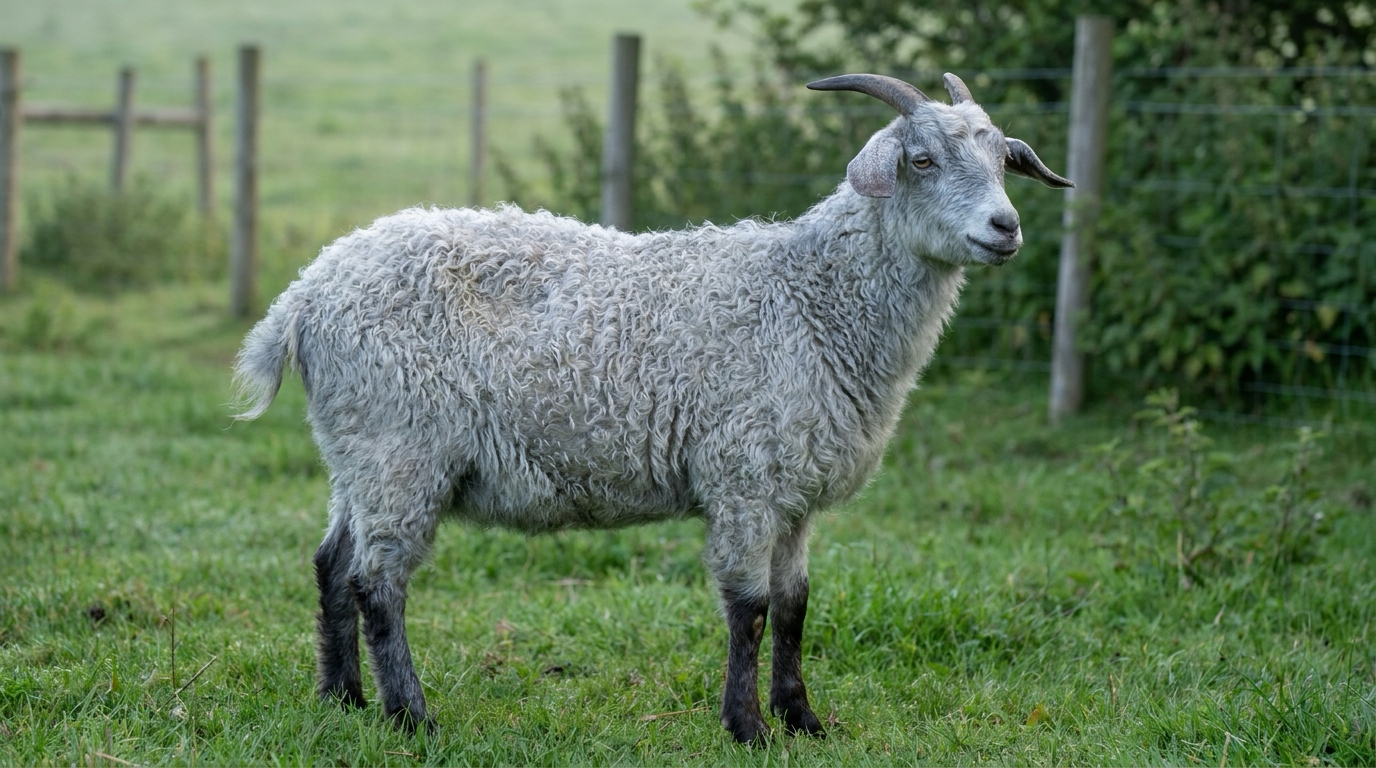
- Head and ears. A medium head with a dished profile preferred, a wide flat nose, and medium-long ears that either droop slightly or stand erect, like a Pygmy or an Angora.
- Horns. Pygoras are genetically horned. The standard and the FAQ both say disbudding is acceptable, and the PBA allows goats to be shown with or without horns. If you plan to disbud, read the goat disbudding guide and talk to your veterinarian about timing and pain control.
- Fleece coverage. In fleece, the goat is covered except for the legs from the knee down. There may be fleece on the face, but the eye area should be clear.
- Temperament. The standard asks for goats that are alert, curious, friendly, cooperative and easy to handle.
Two coats, two colors
Pygoras carry two recorded colors: an out-of-fleece color and an in-fleece color. The PBA’s color chart page says goats are out of fleece until about 3 weeks old, or after shearing, which is when the pattern shows best. The standard groups the colors into four patterns:
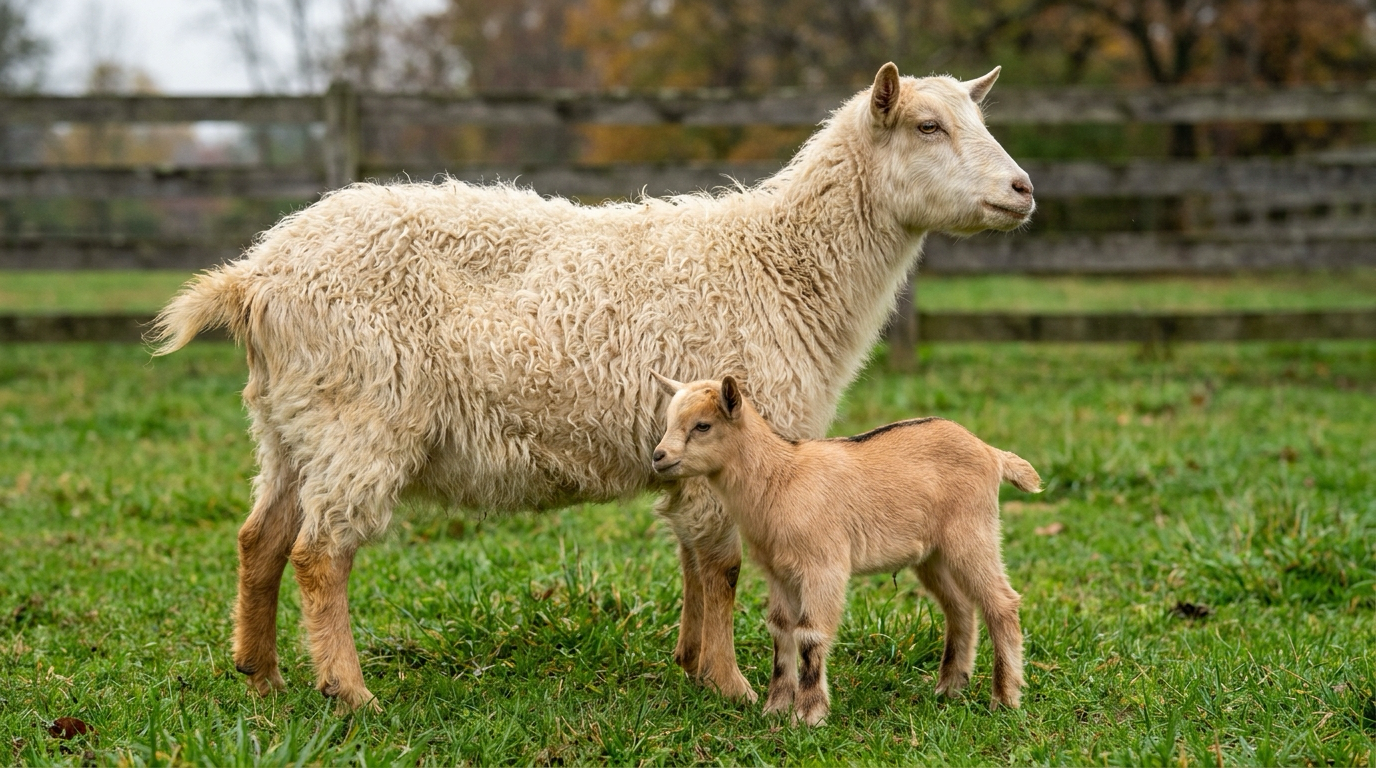
- Caramel: light vertical stripes on the front of darker stockings, with lighter accents on the muzzle, forehead, eyes and ears. Shades run from light caramel (white to cream) through medium (apricot to orange), dark and brown caramel.
- Agouti: solid stockings darker than the body, with intermingled black or brown and white hairs that give a salt-and-pepper look, from light grey agouti through black agouti and from light brown through brown agouti.
- Black: solid black stockings, either black with lighter facial accents or solid black with no white anywhere.
- White: no other color anywhere.
Breed markings include a contrasting dorsal stripe, socks, a facial mask and, on dark goats, often a white crown. The FAQ notes the PBA accepts all Pygmy colors and their dilutions plus white, and that markings resembling other breeds are not acceptable. White socks running from the hoof past the knee count as a fault. Fleece is usually lighter than the guard hair, so a Pygora often looks paler in full fleece than it does freshly shorn.
The three fleece types: A, B and C
Fleece type is the first thing a spinner or breeder asks about. The PBA says no type is better than the others; they suit different yarns. Here is how the breed standard and the PBA’s fiber page describe them:
- Type A. Long fiber averaging 6 inches or more that drapes in lustrous ringlets. Very fine and mohair-like, usually under 28 microns, with a silky, smooth, cool handle. There may be a silky guard hair but few coarse ones. The PBA FAQ says a Type A goat can give up to about 3 pounds of raw fleece per shearing.
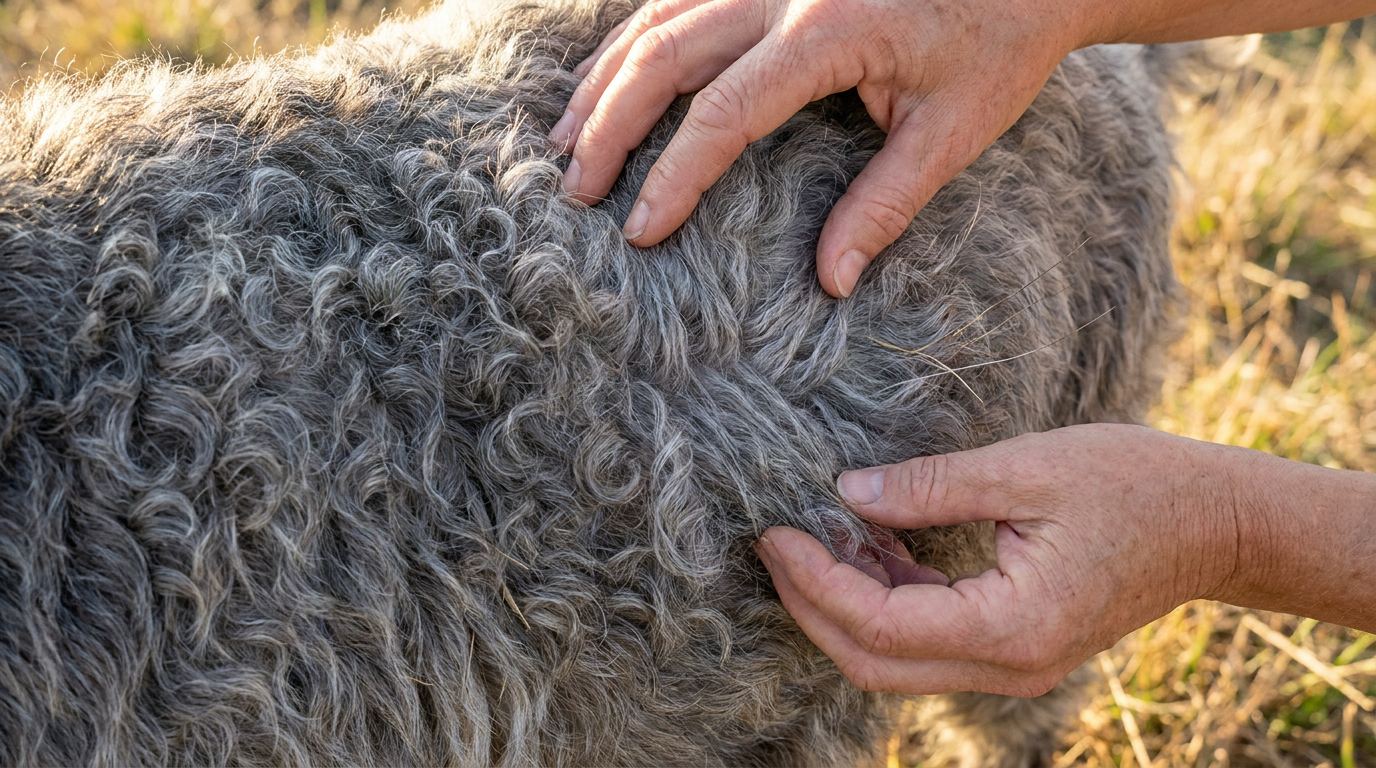
- Type B. A curly blend with traits of both mohair and cashmere, averaging 3 to 6 inches and testing under 24 microns on average, with luster and a soft, airy handle. It has an obvious guard hair plus a second, silkier one. The PBA calls it the uniquely Pygora fleece. Type B goats average about 1 pound of raw fleece per shearing.
- Type C. The finest type, usually under 18.5 microns, at least 1 inch long and usually 1 to 3 inches, with a matte finish, crimp and a warm, creamy handle. A single coarse guard hair is well separated from the down. Yield is the smallest, about 8 ounces of raw fiber per harvest.
A micron is a thousandth of a millimeter, so lower numbers mean finer fiber. For comparison, the federal labeling rule for textiles, 16 CFR 300.19, only allows the word “cashmere” for dehaired undercoat from cashmere goats that averages 19 microns or finer, with limits on coarse fibers. The PBA describes Type C as usually under 18.5 microns and says it “can be acceptable as commercial cashmere,” which is a statement about fineness. How a finished product may be labeled is a question for that rule, not for the goat’s registration papers.
Guard hair, dehairing and separation
Every Pygora fleece mixes the soft fiber you want with coarser guard hairs that should come out. The PBA FAQ says commercial dehairing can remove as much as 40% of a raw fleece’s weight, and that the cleaner the “separation” (the difference in fineness between down and guard hair), the easier the fleece is to dehair and the better the finished fiber. For that reason the PBA suggests that buyers of Type B and C goats choose animals with good separation based on a fiber test.
Pygora fleece has little or no lanolin, according to the fiber page, so it can be spun washed or unwashed. It felts if handled roughly in water, which matters if you wash it yourself: warm water, no agitation, no sudden temperature changes. The PBA recommends a mill experienced with Pygora fiber for dehairing, because overworking the fleece to pull every guard hair weakens it.
Harvesting the fleece
Fleece is not optional work. The PBA FAQ says an unharvested Pygora fleece will mat on the goat, Type B and C goats shed (“blow”) their fleece in spring if it is left on, and a partly shed fleece can leave the goat more open to external parasites. Once a fleece is blown, it is no longer usable.
What the PBA describes:
- Timing. Pygoras are usually shorn in fall and spring, depending on the fleece and the weather. Check often, especially the hind legs and thighs, for signs the fleece wants to mat; that is the time to shear if weather allows. Many breeders shear before does kid in late winter or early spring.
- Shearing. Brush or gently blow debris out of the fleece first. Spring-loaded scissors or electric clippers with a suitable comb both work. Avoid second cuts (short, uneven bits from going over the same spot twice), which spoil a fleece. A goat stand helps.
- Combing or plucking. Type B and C goats can be combed or gently plucked once they start to shed. They do not shed all at once, so the PBA suggests combing every few days. Type C is often harvested this way.
- After shearing. The PBA calls good bedding and shelter for freshly shorn goats critical. Its FAQ mentions coats for newly shorn goats, while its fiber page warns not to coat a Pygora once the fleece starts growing back, because the fleece mats under the coat. A dry, draft-free shelter is the safer default; the goat shelter guide explains how to keep it dry and ventilated at the same time.
Keep fleece records with the goat
Fleece weight, staple length and micron test results are what turn a “nice fleece” into evidence a buyer or judge can use. On Creatures, each goat’s profile can hold them as ordinary records. Use a Physical Measurement for fleece weight, staple length or average fiber diameter, with the unit and date, so the measurements chart on the goat’s Records tab shows how its fleece changes over the years. Store a lab fiber test as a Test Result and attach the report. Log each shearing as Routine Care (Grooming / Shearing / Clipping) and set a reminder for the next harvest, so the spring check on hind legs and thighs does not slip. The how-to is in adding a record, and reminders and upcoming care covers repeating reminders.
Everyday care
Outside of fleece work, a Pygora needs the same care as any goat. The PBA FAQ describes them as generally healthy goats when they get good-quality hay and/or pasture and browse, free-choice goat minerals and clean water, and it advises working with your veterinarian on a balanced ration for your area. It also lists regular hoof trims, vaccinations and deworming as needed, and recommends finding a goat veterinarian before you need one.
- Company. The PBA does not recommend keeping a single Pygora. Goats are herd animals, and a lone goat tends to be lonely and noisy. Plan on at least two.
- Feed and minerals. Hay, pasture and browse make up most of the diet. The loose minerals guide covers why regional copper and selenium needs differ.
- Parasites. Plan for internal and external parasites. The PBA warns that a partly shed fleece can leave a goat more open to external parasites, and a full coat makes it harder to see how a goat is carrying condition. The goat deworming guide explains fecal egg counts and targeted treatment, and the FAMACHA scoring guide covers the trained, card-based eyelid check that works for goats and sheep. Dosing decisions belong with your veterinarian.
- Feet and vaccinations. See the hoof trimming guide and the CD&T vaccination guide for the routine most goat keepers follow, and confirm the plan with your veterinarian.
- Weight checks. A full fleece hides body condition, so put your hands on the goat rather than trusting the outline. Between scale weighings, the goat weight calculator estimates weight from a tape measurement.
- Milk. Pygoras are fiber goats first, but the PBA FAQ says they give about 1 quart of milk a day.
- Bucks. All intact bucks smell, especially in breeding season. The PBA says a Pygora buck smells stronger than an Angora buck and less than a Pygmy buck, with little scent once the season is over. Wethers make easier pets.
Breeding, kidding and registration
The PBA FAQ says Pygora does come into season in spring and fall, with daylight length as the main trigger and a buck nearby helping, and an average heat cycle of 18 to 23 days. Does can carry one to four kids, with twins most common, and the PBA describes them as easy kidders and good mothers. It also cautions that three kiddings in two years is possible but hard on a doe and should not be done often.
Gestation is about five months. The two PBA pages differ slightly: the breed standard says 145 to 150 days, while the FAQ says 145 to 153. Plan for the wider window. The goat gestation calculator turns a breeding date into a kidding window, the goat gestation guide has a kidding date chart, and the signs of labor guide covers the kidding stages and when to call a veterinarian.
If you are breeding foundation crosses, the FAQ says either breed can be the dam, but a Pygmy doe’s size needs consideration for a trouble-free delivery. That is a conversation to have with your veterinarian before the breeding, not after.
Getting kids registered
The PBA’s registration page and rules set out the steps:
- Herd name and tattoo letters. Every breeder needs a herd name and tattoo letters registered with the PBA. The rules list a one-time $10 fee for the herd name. The kid takes the herd name of whoever owned the doe at conception.
- Identification. Goats are tattooed with herd letters plus a year letter and number (the PBA lists “V” as the 2026 year letter), and the PBA also accepts microchips, though a tattoo assignment is still required.
- Pre-registration. Most breeders pre-register kids before selling them, with a side-view color photo. The registration page says kids can be pre-registered up to one year old, while the FAQ says pre-registration is for goats under 8 months; check the current rule with the PBA registrar.
- Permanent registration. This needs a side-view photo of the goat in fleece and a 2-inch square of shorn fleece from the barrel, and the goat must be at least six months old. If the goat is not in fleece yet, you wait for the fleece, whatever its age.
- Paperwork for outside parents. Using a registered Pygmy or Angora means sending a copy of that parent’s certificate, front and back, and both parents need permanent papers first. If you used someone else’s buck, include a breeding memo.
Separately, federal scrapie rules (9 CFR 79.2) require official identification for many goats before they move interstate or change owners. Your state veterinarian’s office can tell you which device or method applies to your goats.
To keep the herdbook details straight at home, record each kid’s sire, dam and percentages on its profile; Creatures builds the family tree from those links, as described in pedigree, family and lineage. For reading papers in general, the goat pedigree guide walks through a registration certificate line by line.
Buying a Pygora
There is no reliable public price for Pygora goats, and we will not invent one. Price depends on registration status, fleece type and quality, sex, whether the goat is sold as breeding stock or as a fiber wether, and the seller’s records. For the wider budget, including feed, shelter, shearing and veterinary costs, see how much a goat costs. The free livestock value calculator gives a rough starting range for a specific goat; when it has fewer than 25 matching sales for a breed, it falls back to goat sales in general and says so, which is likely for a breed as uncommon as the Pygora.
What to check before you buy:
- Papers in hand. Ask for the original PBA pre-registration or registration certificate and a completed transfer of ownership. A goat sold as “Pygora” without PBA papers is, by the registry’s own definition, not one.
- F1, F2 or Pygora. Read the designation on the papers. An F1 or F2 can be a fine fiber animal, but it is not eligible for championships (F1) or PBA-sanctioned shows (F2).
- Expected fleece type. A young kid has not grown its fleece yet. Ask what fleece types the dam and sire carry, and for an adult, ask to see the goat in fleece or a fleece sample.
- Fiber test. For Type B and C goats, the PBA suggests choosing animals with good separation based on a fiber test. Ask for the micron report if one exists.
- A companion. Buy two, or make sure your Pygora will have goat company at home.
- Horns. Ask whether the goat is horned or disbudded, and think about your fencing; the PBA notes horned goats can get caught in field fence.
- Health and ID. Ask about the herd’s disease testing, vaccinations and parasite history, and check the official ID. The where to buy a goat guide lists the disease tests worth asking about.
Supply is thin. On October 17, 2026 the Creatures marketplace had no Pygora listings, while the Creatures breeder directory listed 21 entries for the breed. Directory listings are farms that work with the breed, not a guarantee of stock for sale, so contact them directly. The PBA also keeps its own breeders directory on its website.
Showing Pygoras
The PBA sanctions goat and fleece shows, often held at fiber festivals, with classes for does, bucks, wethers and fleeces. Its shows and events page lists upcoming dates. If you show, keep each placing on the goat’s profile, as explained in show results on your animal’s profile. For how goat shows run in general, see the goat shows guide.
Related breeds
The Pygora’s parent breeds have their own pages: the Angora goat, the source of mohair, and the Pygmy goat. For a dairy breed instead, the Nubian goat guide covers the popular long-eared milk goat.
Frequently asked questions
Is a Pygora the same as a Pygmy goat?
No. A Pygora is a separate breed with its own registry, developed from crosses of registered Pygmy and Angora goats. It grows fleece, is larger than a Pygmy, and has minimum heights with no maximum.
Is the Pygora a miniature goat?
No. The PBA standard calls it a medium-sized fleece goat. Does must be at least 18 inches at the withers at 2 years and bucks at least 23 inches at 2 and a half years, and the PBA FAQ puts adult weights at roughly 75 to 140 pounds.
What is the difference between Type A, B and C Pygora fleece?
Type A is long (6 inches or more), lustrous and mohair-like. Type B is a curly 3 to 6 inch blend of mohair and cashmere characteristics. Type C is short (usually 1 to 3 inches), matte, crimpy and the finest, usually under 18.5 microns.
How much fleece does a Pygora produce?
The PBA says Type A goats can give up to about 3 pounds of raw fleece per shearing, Type B about 1 pound on average and Type C about 8 ounces. Expect to lose a good share of that weight to dehairing.
How often are Pygoras sheared?
Usually twice a year, in fall and spring, depending on the fleece and the weather. Type B and C goats can also be combed or plucked when they start to shed.
Can I keep just one Pygora?
The PBA does not recommend it. Goats are herd animals, and a single goat tends to be lonely and noisy.
Do Pygoras have horns?
Yes, they are genetically horned. Disbudding is acceptable under the standard, and goats can be shown either way.
Do this next on Creatures
Whether you already keep Pygoras or are still looking for your first pair, these are the next steps on Creatures.
Add your goat. Create a free Pygora profile with its tattoo, papers, colors and parents. No account needed to start. The walkthrough is in adding an animal to Creatures.
Keep fleece and health records. Add a shearing, fleece weight or health record. The record sheet opens for any visitor, and a free account saves what you enter. See adding a record.
Get alerted. Set a free Pygora listing alert and we will email you when one is posted. No account needed to start. See saving searches and using your watchlist.
Browse listings. Check Pygora goats on the Creatures marketplace; when it is empty, the alert above is the better bet.
Find breeders. Search the Creatures breeder directory for trusted farms that work with fiber goats, then ask about papers and fleece type.
List your herd. Breed Pygoras? Create a free farm profile so buyers looking for registered fiber goats can find you. No account needed to start. Read getting listed in the breeder directory.