Goat Linear Appraisal: Read ADGA Scores and Keep the Full Record
Author: Elliott Garber, DVM · Published
ADGA linear appraisal describes a dairy goat’s type through linear traits, structural assessments and major scorecard categories with a final score. Read the full sheet, including its date and codes, before using the headline number in a breeding decision. The free goat pedigree chart maker helps you place that animal among its relatives while you keep the original appraisal record.
Rules checked November 11, 2026: ADGA’s current program page and its Standard Operating Procedures revised March 2026. The program page is already publishing tentative 2027 trip information; use the current application and rates for your season.
| Primary linear traits | 15 traits described across their biological ranges |
|---|---|
| Linear scale | 1 to 50 under the March 2026 SOP; higher is not automatically better |
| Structural assessment | Ratings and codes are distinct from primary trait numbers |
| Final score | Comes from the major scorecard categories |
| Prepare | Accurate identity, papers, safe footing and comfortable animals |
| Keep | The complete dated score sheet, not only a copied final number |
Read three parts of the result
ADGA’s program page describes appraisal as a standardized assessment of type traits related to structural and functional durability. Use it with what you know about the animal and herd. It is not a milk-production result or veterinary diagnosis.
The 2026 SOP separates primary linear traits, structural or functional characteristics, and major scorecard categories. Those numbers and ratings carry different meanings.
Linear numbers describe the trait
The current SOP uses 1 to 50 for 15 primary traits. More points, fewer points or the midpoint are not automatically ideal. Stature, rump width and teat placement describe different characteristics, rather than interchangeable votes for overall quality.
Use ADGA’s Linear Appraisal booklet for drawings of each trait’s range. It is dated 2014 and 2019 and still lists 13 primary traits and one secondary trait, so where it differs the March 2026 SOP controls. Read the trait name beside the value. A copied number without its heading loses information.
Structural ratings and codes need their labels
Letter ratings and miscellaneous codes differ from primary linear values. Rear udder side view has its own 0 to 4 scale under the current SOP; keep it separate from the primary scale.
If the report says NIC, ADGA’s appraisal FAQ defines that as Not in Condition: something prevented a fair evaluation. Preserve that designation rather than entering zero into an average.
The final score comes from scorecard categories
Does have General Appearance, Dairy Strength, Body Capacity and Mammary System categories; bucks have the applicable three. Final score follows the category calculation rather than averaging the primary linear numbers.
The SOP’s overall ranges are Poor below 60, Fair from 60 to 69, Acceptable from 70 to 79, Good Plus from 80 to 84, Very Good from 85 to 89, and Excellent from 90 upward. Age, lactation and other program rules can affect eligibility for a category or final score. Read the complete report rather than reconstructing a result from the range alone.
Prepare identity and animals
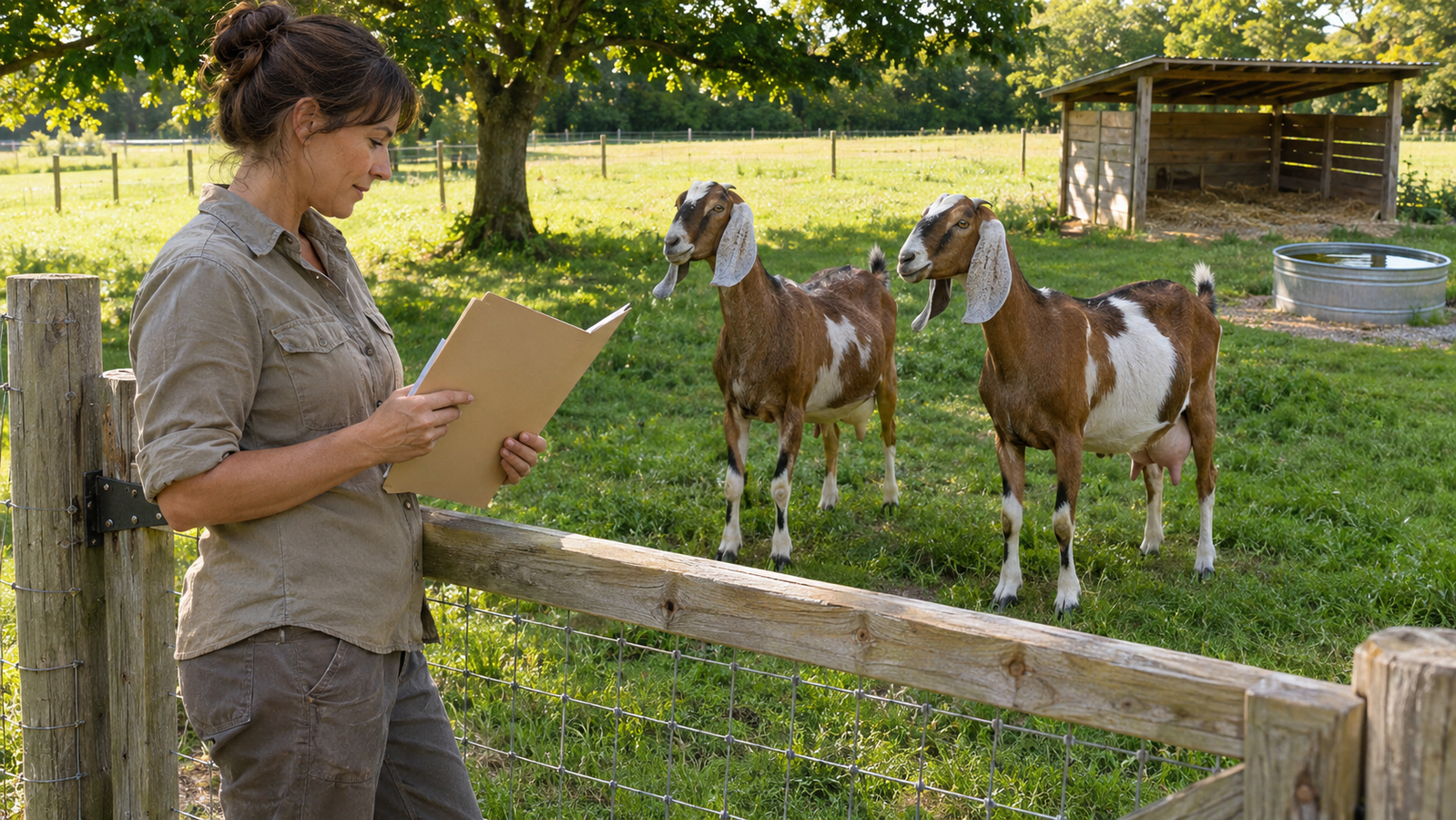
ADGA’s recommended checklist starts with identification and paperwork. Compare tattoos or approved EID with registration papers and resolve errors before the session. Our goat tattoo guide covers the identification record, while the goat pedigree guide explains the papers.
Plan a level area with comfortable footing and weather protection. Arrange handlers and a safe place for the next animal. Have registration papers and tattoo-reading supplies ready. Prepare ahead so the session is not the first time a goat has been handled calmly.
Follow ADGA’s advice to have a doe in milk comfortably full for function. Its checklist warns that excessive fullness can interfere with normal movement and evaluation. Do not use one universal number of hours to withhold milking.
Communicate biosecurity concerns and follow session instructions. An animal with illness, injury or handling difficulties may need a different decision from a herdmate. The current procedure and appraiser determine how that animal is recorded.
Check the season you are applying for
As checked on November 11, ADGA’s page shows tentative 2027 trips and a January 31 application deadline. Scheduling depends on applications, stop locations and appraiser availability. Applying does not guarantee a trip will reach the herd.
Use the current application and rate schedule for your season. Confirm whether you are a host, transport herd or special-session participant and which charges apply. Do not carry a previous year’s fee or arrangement into the next season without checking.
Keep the original score sheet on the animal

When the report arrives, check identity and appraisal date. Retain the complete sheet, trait labels, category results and codes. If something seems wrong, use ADGA’s correction process rather than changing an official-looking result in your copy.
On Creatures, open the animal and add an Other record for the appraisal date. Use a clear title such as “ADGA linear appraisal score sheet” and attach or retain the original report with it. Copy scores into the Description field only with labels and year. Check the sharing setting before sending the record to someone else.
This is an ordinary record home for the document. It does not submit an appraisal to ADGA, calculate an official score or promise a special analysis screen. Adding a record explains the workflow; a free account saves it.
Use the result beside the pedigree, milk-test records and your observations. The goat linebreeding guide covers the separate question of relatedness.
Use the report beyond a sale listing
Choose the traits you want to understand, then compare complete records from relevant relatives. Keep the appraisal year visible so a younger animal’s result and a mature relative’s result do not become an undated comparison. Preserve earlier reports when a new one arrives.
A show placing is a separate record. Our goat show guide covers that setting; do not rewrite a placing as an appraisal result or a score as a title. The goat species page links the wider herd guides.
Do this next on Creatures
Keep appraisal reports and their dates with the goat they belong to.
- Add your goat’s profile with its existing identifiers. Guest signup can start in this flow. How to add an animal shows the fields.
- Add the dated record. This opens for visitors; a free account is needed to save it. How to add a record explains the next step.
- Create your farm’s profile when several people or animals belong to the same program. Getting listed in the breeder directory explains the public profile.
- Save a goat listing search if you are planning future breeding stock, with email alerts for matching listings.
- Browse goat listings when you are ready to compare animals. Availability changes; there is no promise of a particular breed or listing.
- Browse the breeder directory to find a program rather than a particular animal.