






SFP Alice
No Buyer Fees
Cattle
$9,000

Choose two goats. See the colors, markings and health notes their kids could have.
Updated · How it works and sources
Map ready: 4 colors
Exact chance per kid, assuming this line's chocolate is dominant · change
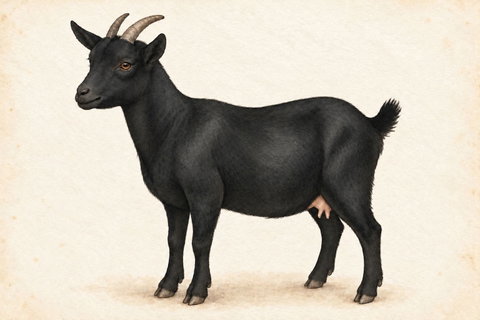
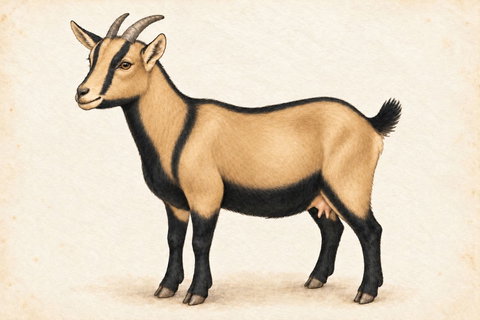
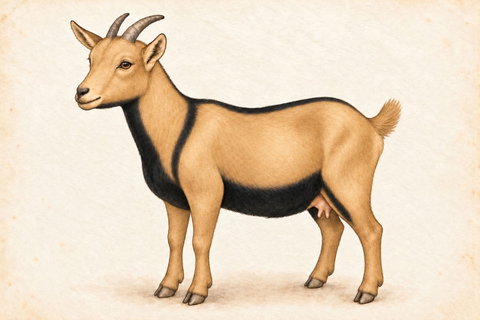
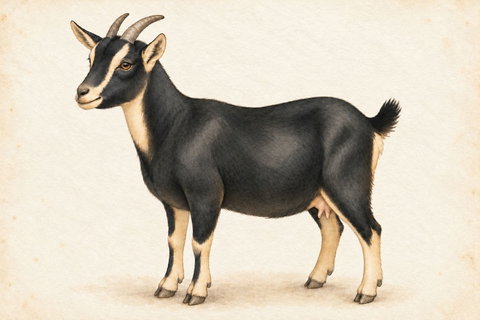
Color illustration shown with natural horns. Horn status is entered separately.
Scrapie susceptibility: one or both parents not tested; offspring odds are not calculated.
Alpha-S1 casein: one or both parents not tested; offspring odds are not calculated.
Congenital myotonia: one or both parents not tested; offspring odds are not calculated.
The chance applies under the entered family answers and assumptions. Open the methods and sources to see how the color names are mapped.
The chance applies under the entered family answers and assumptions. Open the methods and sources to see how the color names are mapped.
The chance applies under the entered family answers and assumptions. Open the methods and sources to see how the color names are mapped.
The chance applies under the entered family answers and assumptions. Open the methods and sources to see how the color names are mapped.
Under the stated dominant-chocolate assumption, each of four colors has a 25% chance: chamoisee, Swiss, chamoisee Swiss and black.
No. Gold can hide chocolate. A recessive chocolate line can also hide chocolate in black goats.
No. Horn removal does not change the inherited polled status.
Each parent can hide another copy. The calculator crosses every genotype that fits your choices and shows the lowest and highest chance for each color. It does not guess which hidden genotype is more common.
Choose a breed and the closest look for each parent, or use your recorded goats. See which kid colors are possible, what each parent may hide, and the questions that could narrow the answer. Chances are per kid under the assumptions shown, not a promised litter.
A coat name is a starting point, not a DNA result.
The map keeps its assumptions beside the numbers.
The Nigerian Dwarf example is a chamoisee buck and a Swiss doe, each with a black parent. Under the stated dominant-chocolate assumption, chamoisee, Swiss, chamoisee Swiss and black each have a 25% chance per kid. The black-parent facts are labeled examples and clear when you choose real goats.
Yes. Gold can cover another Agouti pattern or black, so a gold coat does not tell you the hidden copy. Enter both gold parents and answer the family questions if you know the supporting facts. Unknown copies stay unknown rather than being filled in as black.
More than one copy pair can fit the same look. The calculator works out each compatible pairing and shows the smallest and largest chance for each kid color. It does not average those possibilities or use breed frequencies to guess the missing copies. Separate upper limits need not add to 100%.
Both readings have been reported in goats. The starting assumption is that this line's chocolate is dominant; the switch shows the recessive reading. A gold can carry chocolate without showing it, and where a line's chocolate is recessive it can hide in black goats. A look alone does not establish which Brown allele a goat has.
Some Nigerian Dwarf breeders call a silvery-gray coat "silver". We haven't found a study showing what causes it, and the word may cover more than one thing. Heavy roan and the gray Agouti pattern are two known causes of gray coats in goats, and some breeders think silver is a gene of its own. These would give different kids. If silver works like roan or a separate gene, the pattern odds shown still apply. If it is the gray Agouti pattern, a silver parent passes on either silver or its other pattern, not both, and a gold goat could hide it. Until a study or clear breeding records tell these apart, we don't calculate silver, and a result with a silver parent isn't marked exact.
Yes. A known cross uses the supported pools of both parents. Other breed or cross gives a partial answer in species words, with its limits shown. Dominant black, Angora-type or breed-specific white, white body and other unmodeled patterns are not calculated for unknown ancestry; kids can show colors not listed.
If the buck has one copy of polled, about 1 in 8 kids is expected to be an intersex goat: genetically female and infertile, and it can look like a doeling, a buckling or something in between. If he has two copies, about 1 in 4. If you don't know which he has, plan for 1 in 4. This assumes the polled doe is fertile (she has kidded, or a test shows one copy). Breeders usually pair a polled goat with a horned one: half the kids are polled (all of them if the polled buck has two copies), and none have polled intersex syndrome. A polled DNA test is offered in Europe (Giessen, Bern).
No. The calculator keeps the recorded words beside its reading and labels supporting facts. A vague color phrase does not establish copies, and missing family information never means No. DNA results and informative records can narrow an answer within their scope. You can correct a proposed color through the normal profile edit page and choose whether to save it.
Save keeps the pairing in your private calculation history; it does not write predicted genetics to a goat. A shared link carries the entered looks, answers and deidentified modeled constraints needed to reopen the result, without animal names, identifiers or private family explanations. A result remains conditional on the assumptions shown.




