
Nachi
Author: Elliott Garber, DVM · Published
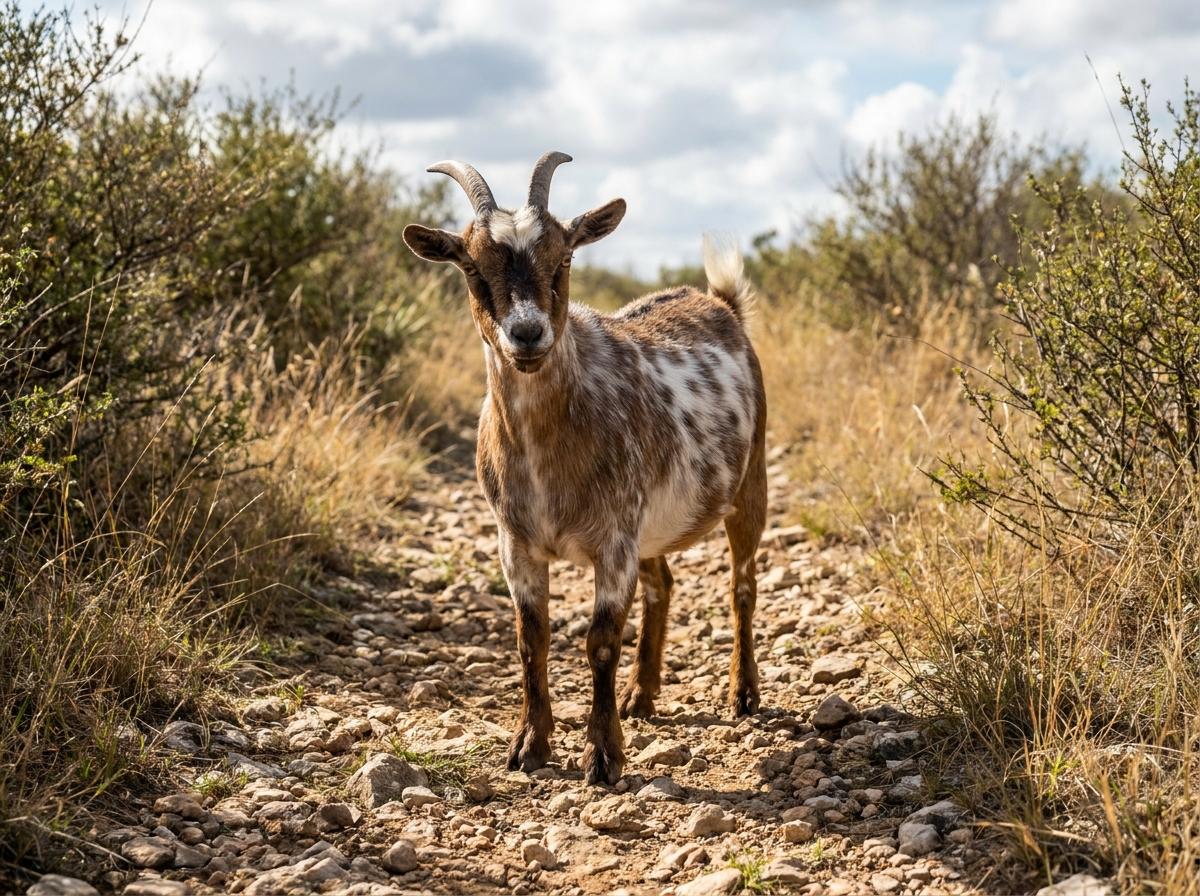
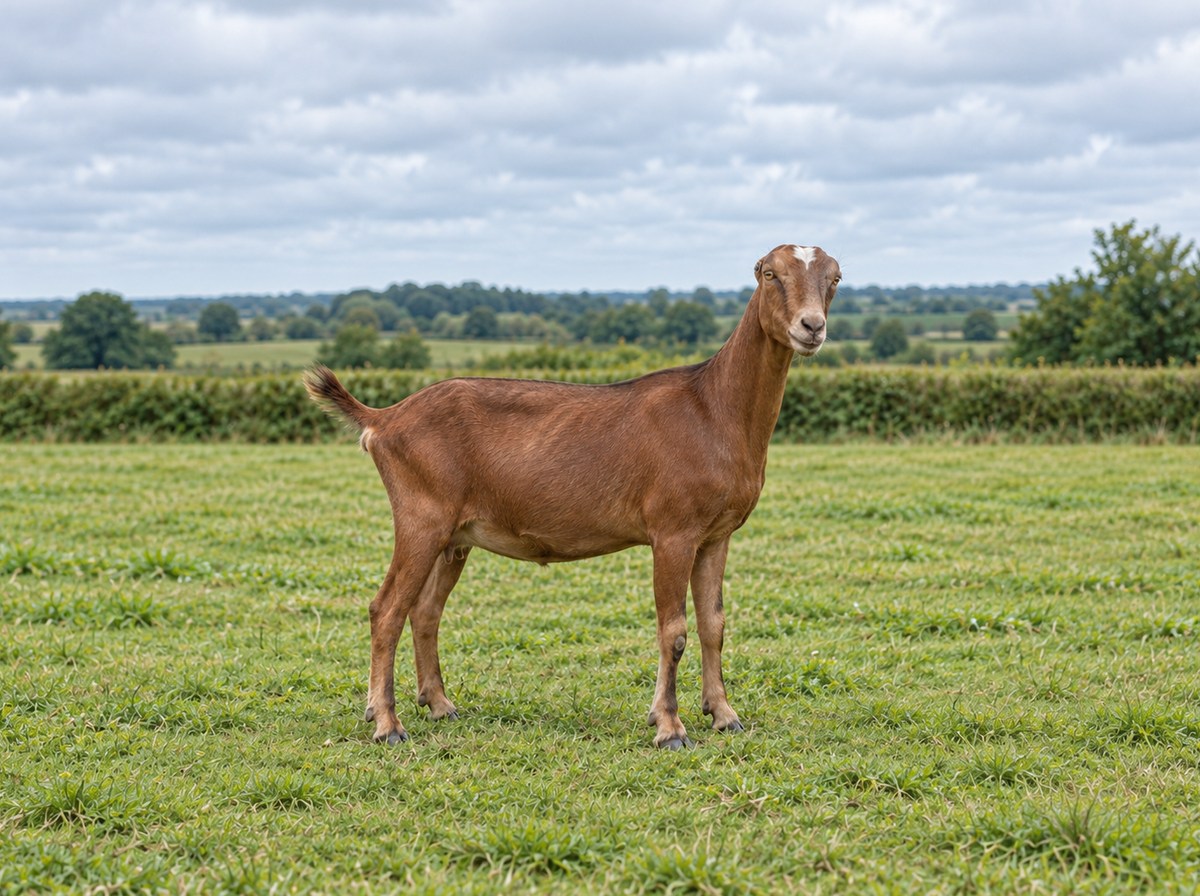
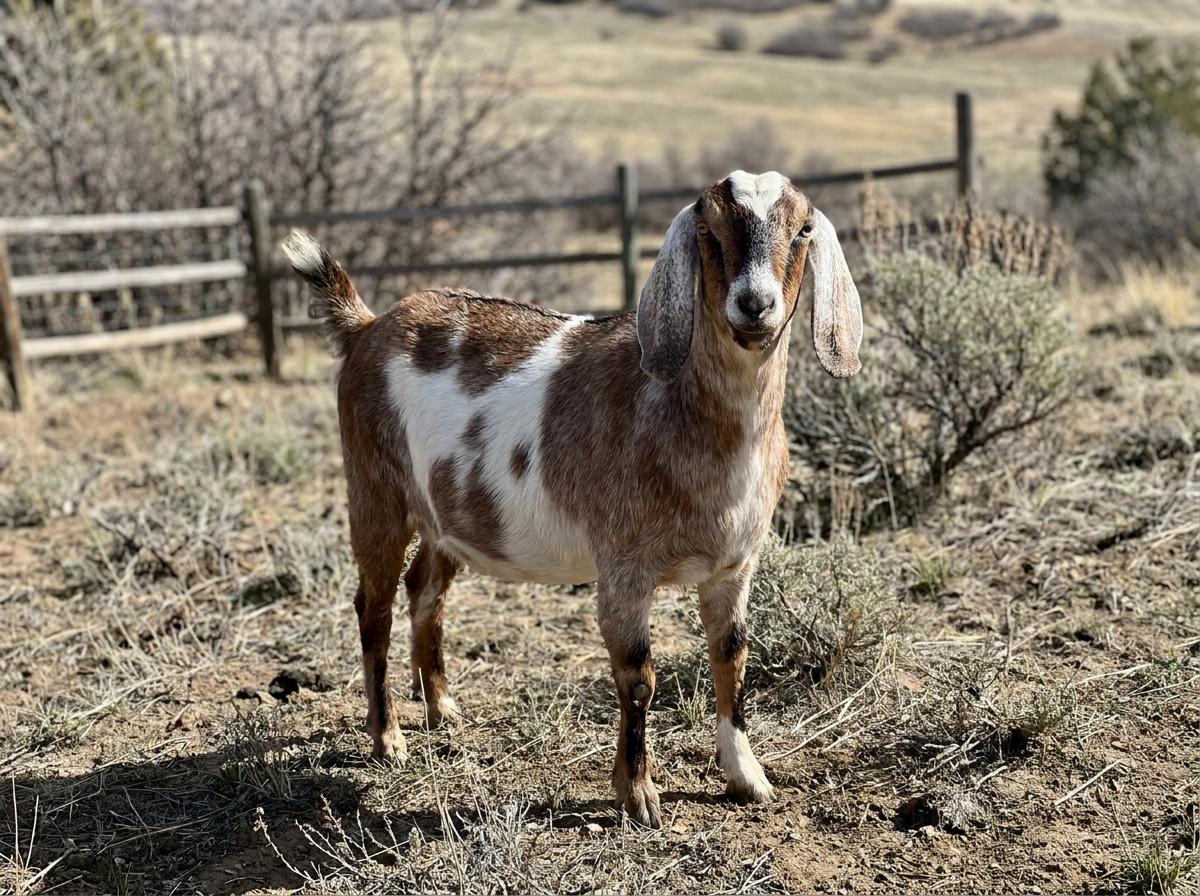
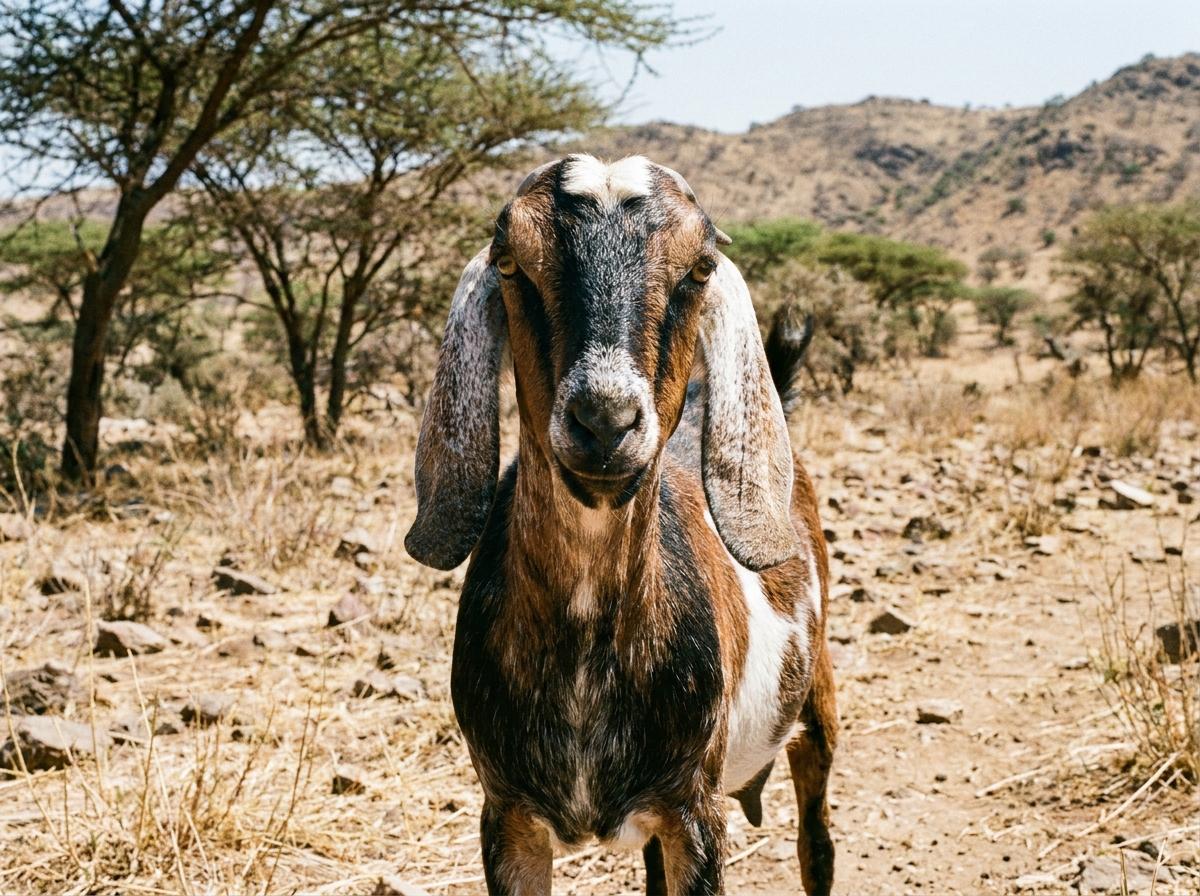
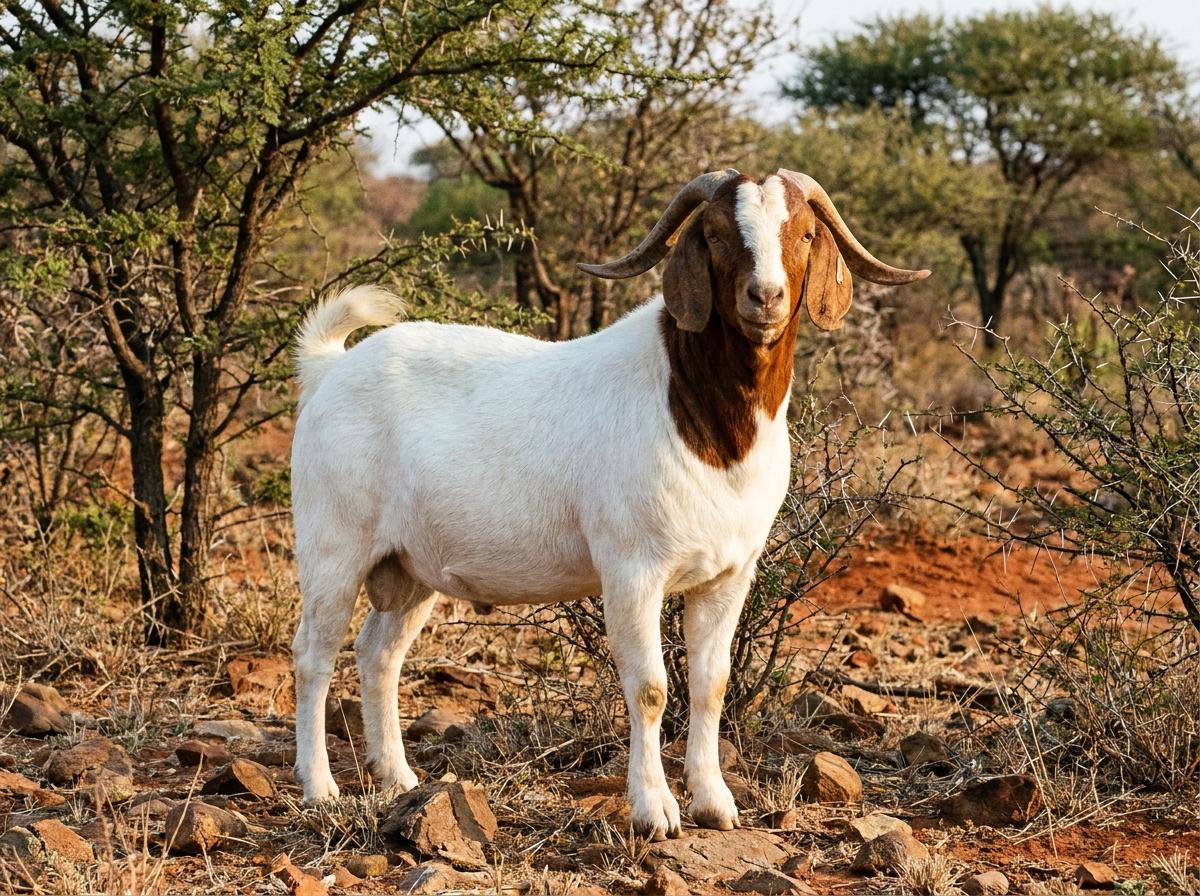
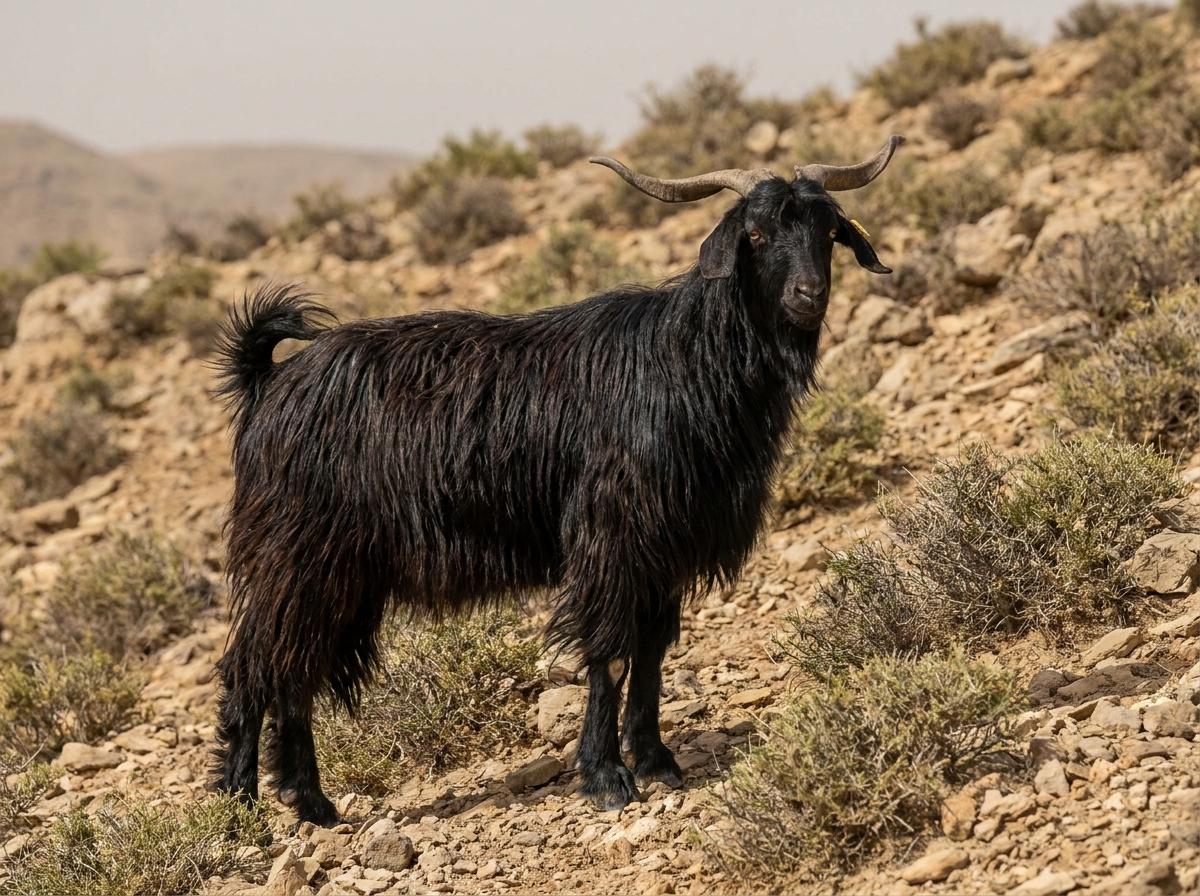
The Nachi is a goat breed from south Punjab, Pakistan, and it is known for one thing above all else: the way it walks. “Nach” means dance, and a Nachi is a goat “having dancing quality.” Purebred Nachis move in short, prancing steps with the front feet swinging in a partly circular arc and the head carried high on a long, upright neck. Breeders there keep the goats mainly for that walk, which is judged in dedicated walk competitions at village shows, with milk as a secondary purpose. The breed is black more often than any other colour, has a short coat, drooping speckled ears and small twisted horns, and is almost never seen outside Pakistan.
If you searched for Nachi goats because you saw a video of one, you probably have two questions: is that walk natural, and does it hurt? This guide answers both from the sources that actually exist, explains what the breed looks like and produces, and is honest about buying one (outside Pakistan, you realistically cannot right now). If you want to know the moment one does appear, the Nachi goat marketplace page and a free listing alert, both covered at the end, are the practical tools.

| Origin | South Punjab, Pakistan (Jhang, Multan, Muzaffargarh, Layyah, Bahawalpur, Bahawalnagar) |
|---|---|
| Name | From “nach,” dance; also said “Naouchi” locally |
| Known for | An inherited high-stepping “dancing” walk, judged in walk competitions |
| Main use | Kept first for the gait, second for milk; meat and hair are by-products |
| Colour | Mainly black; grey, spotted and other colours also occur |
| Size | Published figures vary widely; show does average about 60 kg and 88 cm at the withers |
| Coat and head | Short coat, drooping ears around 30 cm, small twisted horns, no beard, no wattles |
| Availability | Essentially none outside Pakistan; live import to the US is not permitted |
Browse listings, public profiles, breeders, or add your animal.
What is a Nachi goat?
The Nachi is one of Pakistan’s indigenous goat breeds. A 2024 review of the country’s goat sector counts 36 indigenous breeds among roughly 80 million goats, and names the Nachi alongside the Beetal, Kamori and Sindh Desi as one of the most prominent. Most Pakistani goats are raised for meat, but the Nachi is grouped with the breeds noted for milk.
What makes it unusual is the reason people keep it. The most detailed source on the breed is Nachi Goats: Judging and Selection Guide by M. Sajjad Khan of the University of Agriculture, Faisalabad, published in 2016 through the Agricultural Innovation Program for Pakistan with the International Livestock Research Institute. It states plainly that the primary objective of raising Nachis is the dancing gait, and that milk is secondary. The meat is eaten, the shorn hair is used for rugs, and some animals are sacrificed, but to a limited extent. Khan’s guide pulls together seven years of experience judging goat shows, and much of this page leans on it because very little else about the Nachi has been written down.
That also means a few caveats run through everything below. Most published descriptions of the breed are old, short, and in places contradictory, and Khan’s guide explicitly corrects several of them. Where sources disagree, we say so rather than picking the most impressive number.
If you are comparing breeds, the Creatures goat species page lists every goat breed with its own page, including the Nachi’s Punjab neighbours the Beetal and the Kamori.
Where the Nachi comes from
Khan’s guide gives the breed’s home tract as the Jhang, Multan, Muzaffargarh, Layyah, Bahawalpur and Bahawalnagar districts of Punjab province, in the south of the province. Oklahoma State University’s breeds of livestock entry for the Nachi, credited to a University of Agriculture, Faisalabad breeding and genetics professor, names the same core districts (Jhang, Multan and Muzaffargarh). Animals have since been taken to other districts and provinces, and Khan notes some have gone to other countries, but the breed remains a south Punjab animal.
About the name “Bikaneri.” Some breed lists record the Nachi under the alternative name Bikaneri, after the city of Bikaner in Rajasthan, India. Khan’s guide calls that name erroneous, because Nachis are not found in Bikaner. If you see “Bikaneri” in an older database, it refers to this breed, but it is not a name the breed’s own judges use.
Numbers are falling. Khan reports that Nachis have declined over the years, mainly because village life has changed: free grazing land has been squeezed and there are fewer herders. We could not find a current, verifiable population census for the breed, so we will not quote one.
The dancing gait, and what it actually is
This is the part everyone wants to understand, so it is worth being precise.
It is inherited, not trained. Khan’s guide describes the gait as “natural (genetically controlled).” The strongest evidence it gives is from crossbreeding: when Nachis are crossed with other breeds such as the Beetal, the offspring walk with a gait somewhere between dancing and normal, and even animals that are three quarters Nachi can be picked out from purebreds by the way they move. Kids are not taught to do it, and it is not a trick.
What the movement looks like. According to the guide, as the goat walks, the feet and pasterns move in a partially revolving motion, with the head held high. Judges look for two things above all: small steps and a semicircular movement of the front toes. The neck stays upright, there is some hopping in the stride, and Khan compares the carriage of the upright neck to a camelid. A Nachi that walks like an ordinary goat is disqualified in the show ring.
It is a flock behaviour as much as an individual one. Nachis stay close together and follow their herder more readily than other breeds do. In the traditional walk competitions, a group that follows the herder and moves with the herder’s moves scores better than one that does not, and winning does are decorated with turbans. Those contests have little in common with an American ring; our goat shows guide covers how dairy and market goats are judged there. Males in particular can be reluctant to walk away from the herd on their own, which is why Khan tells judges to let animals walk with their herdmates.
The anatomy behind it. The guide gives a structural explanation that is also the honest starting point for the welfare question below: in Nachis, the shoulder joints are “not attached securely,” nor is the upper joint of the forearm, so the animals cannot jump as freely as other goats. The shoulder blades sit visibly proud of the withers, especially just after shearing, and there is a characteristic dip in the back behind the withers. The hind legs are described as weak, and most Nachis stand sickle-hocked (too much angle at the hock when seen from the side, with the hind feet set forward under the body).
What the science has not done yet. We found no peer-reviewed study that identifies the gene or genes behind the gait, and none that measures the gait with modern tools such as the pressure-sensing walkways researchers have used to describe normal gait in other goats. The Nachi has been included in genome studies of Pakistani goats, but for other traits: a 2020 study in Genes found that Nachis share a selection signature at the LCORL locus, a region linked to body size in many mammals. So “genetically controlled” is supported by breeding observation, not yet by a mapped gene.

Are Nachi goats in pain?
This is a fair question and it deserves a straight answer: no study we could find has assessed pain or welfare in Nachi goats, in either direction. Nobody has published evidence that the gait hurts them, and nobody has published evidence that it does not. Anyone who tells you confidently either way is going beyond the evidence.
What the sources do record is a set of structural features that a veterinarian or welfare scientist would want looked at properly. All of these come from Khan’s judging guide, which is written by and for people who value the breed:
- Loosely attached shoulder and upper foreleg joints, so the goats cannot jump as freely as other breeds.
- Newborn kids that struggle. Kids “have difficulty in getting up for first few days” and may need help to suckle.
- Weak hind legs. Most animals are sickle-hocked, and bucks do not rear up to clash heads the way other goats do; they strike sideways instead.
- Difficulty with mating. Bucks may fall when they land after mounting.
- Limited endurance. Nachis “cannot travel long distances,” and the guide says strong, springy pasterns matter in this breed because of that inherited difficulty.
None of these statements says the animals are in pain, and the guide does not describe lameness as normal. It treats overgrown hooves, weak pasterns, bowed legs and extreme sickle hocks as faults, recommends trimmed hooves because they are “more comfortable for the animal,” warns that overgrown hooves risk lameness and joint problems, and notes that making animals stand for a long time at shows puts stress on them. In other words, the breed’s own judges already separate a sound dancing walk from an unsound one.
The honest framing, then, is that the Nachi’s walk is a selected trait built on an unusual skeletal set-up, and that its welfare cost, if any, has not been studied. That is a genuine research gap, and it is also a reason for any breeder to select for soundness alongside the gait rather than for exaggeration.
What an owner or vet would actually look for
Because the Nachi’s normal walk is itself abnormal by the standards of other goats, you cannot judge a Nachi’s comfort by comparing it to a Boer or a Nubian. The useful comparison is the animal against its own normal and against its herdmates. The Merck Veterinary Manual’s overview of lameness in goats calls abnormal gait “a nonspecific sign common to many diseases,” and the same principles apply here. Signs worth a veterinarian’s attention in any goat, Nachi included:
- A change from the animal’s usual movement, especially if it becomes uneven from one side to the other. A healthy Nachi’s dance is rhythmic and symmetrical.
- Reluctance to move or to keep up with the flock, in a breed whose whole instinct is to stay with the group.
- Lying down more than usual, getting up slowly, or kneeling to graze.
- Hot, swollen or painful joints, or visible heat and swelling in the feet.
- Overgrown, cracked or smelly hooves. Khan’s guide notes that trimming is not generally practised in the home tract, so check the feet of any newly bought animal.
- Weight loss, a dull coat or reduced appetite, which often travel with chronic pain.
- A newborn that cannot stand or nurse effectively within its first few hours. Khan’s guide describes Nachi kids needing help to get up in their first days, but that does not extend the colostrum window. The Merck Veterinary Manual says kids should nurse as soon as possible or be bottle or tube fed colostrum within the first couple of hours after birth, and antibody absorption falls sharply after about 18 to 24 hours. If a kid has not nursed well within a couple of hours, call a veterinarian or an experienced goat keeper promptly so it gets colostrum in time; tube feeding should only be done by someone trained to do it.
Any concern about a specific animal is a veterinary question. A vet who can watch the goat walk, handle its joints and examine its feet is the only person who can tell you whether that particular Nachi is comfortable.
What a Nachi goat looks like
The easiest way to recognise a Nachi is to watch it walk. Standing still, it is a tall, lean, long-necked goat. Here is what the judging guide describes, including where it corrects older textbooks:
- Colour. Black is the main colour, and the “bookish” standard is solid black with white ears speckled with black. Khan says that ideal is far from reality and that insisting on it has narrowed the breed’s genetic base. In practice Nachis come in almost every goat colour: sawi (grey), white, spotted and multicoloured animals exist, as do solid colours with a paler underline. Oklahoma State’s entry records black or brown.
- Coat. Short and slightly rough. It is not as short as a Teddy’s or Beetal’s, and nowhere near as long as the hairy Jattal or Kaghani. Most Nachis are shorn once a year before summer.
- Ears. Medium length, soft and drooping, averaging about 30 cm, and they stay down even when the goat is alert. Erect ears are a fault.
- Horns. Small to medium and slightly to moderately spiralled, usually pointing backward (sometimes backward and upward). Polled (naturally hornless) Nachis are rare.
- Head. A slightly to moderately Roman nose, a wide muzzle, prominent alert eyes, and no beard: a beard is listed as a fault.
- Neck. Long, lean and carried almost erect, with no wattles. This is one of the breed’s defining features.
- Tail. Bent upward, ideally into a semicircular loop. A hanging tail is a fault.
- Body. Tall, nearly as tall as a Beetal, with prominent wedge-shaped withers and a visible dip behind them.

Size: why published numbers disagree
Size is where the sources split the most, and it is worth explaining rather than choosing one.
- Older textbooks put adult Nachis at around 20 to 25 kg, and a 2024 review table lists 27 to 34 kg.
- A 2020 genetics study classed the Nachi as a medium-sized breed, listing breed averages of about 71 cm at the withers and 35 kg rather than its own measurements.
- Khan’s 2016 judging guide says the average Nachi weighs more than double the old 20 to 25 kg figure. Show does average about 60 kg, breeding bucks weigh more than 80 kg, and height at the withers averages 88 cm in does and 98 cm in bucks.
The likeliest explanation is that the figures describe different animals: village-average goats measured years ago versus well-kept show stock measured recently. Treat the smaller numbers as a typical smallholder animal and Khan’s as well-grown show stock.
Milk, meat and other uses
Milk is the Nachi’s second job, and the figures are thin.
- A 2024 review reproduces an older textbook figure of about 214 litres over a 107-day lactation (Abdullah et al., 2024). The same table gives a daily figure of 1.3 litres, which does not match that total (214 litres over 107 days would be about 2 litres a day), so at least one of the numbers is wrong, another sign of how thin the data are. That places the Nachi below the Beetal (272 litres in the same table) but in the same range as other Pakistani dairy-leaning breeds.
- Khan’s guide says 100 percent of Nachis are hand-milked. Does generally have good fore-udders but narrower, lower rear udders, and their teats tend to be long and bottle-shaped, which judges are trying to improve toward shorter, cylindrical teats.
Treat the lactation figure as indicative, not a guarantee. It comes from a source dating to the 1990s, and no recent, large milk-recording study for the breed turned up in our research.
Meat is eaten and the shorn hair is used to make rugs, but Khan is clear that neither is why people keep Nachis. Oklahoma State’s short entry calls the breed a meat type with medium meat conformation, which reflects older classifications rather than how breeders in the home tract describe it.
Temperament and handling
Nachis are strongly flock-oriented. They stay together, follow their herder closely, and do not like being separated, which affects everything from grazing to showing.
Bucks deserve respect. Khan notes that males should show vigour and some aggression, and that they “can be furious and dangerous” if a handler is not alert, especially in the breeding season. That is true of intact bucks of most breeds, but it is worth hearing from someone who has handled many Nachis. The guide advises holding a buck at the base of the ear rather than by the ear itself.
Care and management
Nachis in Pakistan are mostly kept by smallholders on free grazing and browse, and shorn before summer. The breed’s anatomy adds a few specific points to ordinary good goat husbandry:
- Keep journeys short. A breed that cannot travel long distances should not be walked long distances to grazing or to market. Short moves, rest and shade matter more than for most goats.
- Watch kids closely from the moment they are born. Plan to help newborns stand and nurse, confirm every kid has nursed well within the first couple of hours, and have colostrum and veterinary help lined up before kidding in case one cannot; the goat gestation guide helps you work out when kidding is due. Helping a Nachi kid get up over its first few days is normal for the breed; a kid that has not fed within hours is an emergency.
- Keep feet trimmed. Khan’s guide notes that trimming is rarely practised in the home tract but that trimmed hooves are more comfortable and reduce the risk of lameness and joint problems. For a breed with an unusual gait, this is the easiest welfare gain available.
- Give heat protection. South Punjab summers are hot, and Khan notes most Nachis are shorn before summer. Shade, clean water and good airflow matter.
- Browse over bare grazing. Goats are natural browsers, and Khan says this is even more true of Nachis, so leafy branches and fodder racks suit them well.
- Keep good records. Kidding ease, kid survival, foot trimming dates, lameness episodes and any veterinary treatment are exactly the evidence a breeder needs to select for sound animals rather than for the gait alone.
Routine goat health care, including parasite control and vaccination suited to your area, should be planned with a local veterinarian.

Nachi goats for sale: the honest picture
People search for “Nachi goats for sale” every month, so here is the straight answer.
Inside Pakistan, Nachis are bought and sold locally, mostly among smallholders and show breeders in south Punjab. We could not find a reliable, published price for the breed, and prices for a proven show doe and an ordinary village goat will not be the same, so we will not invent a number.
In the United States, live import from Pakistan is effectively closed. Federal rules at 9 CFR 94.1 prohibit importing any ruminant that originates in a region where foot-and-mouth disease exists, and USDA APHIS treats the disease as present everywhere except regions it has declared free. Pakistan is not on APHIS’s list of foot-and-mouth-free regions. Imports of semen and embryos follow separate rules that we have not verified for this breed, so check directly with APHIS before assuming any route is open.
Elsewhere, we found no breed society, herdbook or recognised population of Nachis outside Pakistan, though other countries have their own import rules and we have not checked each one.
What this means in practice:
- Be sceptical of any “Nachi” offered outside Pakistan. Ask where the animal came from, how it entered the country, and what paperwork proves it. Khan’s guide notes that even three-quarter-bred animals walk differently from purebreds, so a goat with a slightly odd gait is not proof of Nachi breeding.
- Watch it walk before anything else. In a genuine Nachi the dance should be obvious, rhythmic and even. An uneven, reluctant or painful-looking walk is a reason to walk away, whatever the breed.
- Check feet, legs and kidding history. Strong pasterns, trimmed hooves, and a record of kids that stood and nursed are what a sound breeding animal looks like.
For most readers outside Pakistan, the realistic choice is a related, available breed. The Damascus and the Jamnapari both have long drooping ears and a Roman nose and are covered in their own guides, though neither dances. If you keep other livestock breeds with strong show traditions, our guide to the Hampshire pig covers a very different breed shaped by the show ring and the farm.
Frequently asked questions
Why do Nachi goats dance?
Because the walk is inherited. Breeders in south Punjab have selected for it for generations, and the breed’s judging guide describes it as natural and genetically controlled. Crossbreds walk with an in-between gait, which is strong evidence the trait is bred, not taught.
Are Nachi goats in pain when they walk?
No published study has measured it either way. The breed’s judging guide records loosely attached shoulder joints, weak hind legs and kids that struggle to stand at first, but it does not say the animals are in pain, and it treats lameness-causing faults such as overgrown hooves as things to avoid. A goat whose walk becomes uneven, slow or reluctant should be seen by a vet.
What does “Nachi” mean?
“Nach” means dance, so a Nachi is a goat with a dancing quality. It is also pronounced “Naouchi” in local dialects.
What colour are Nachi goats?
Mainly black, often with white-speckled ears, but the breed occurs in almost every goat colour, including grey, white and spotted.
Do Nachi goats give milk?
Yes, and it is their second purpose after the gait. An older figure reproduced in a 2024 review puts lactation at about 214 litres over 107 days. All Nachis in the home tract are hand-milked.
Can I buy a Nachi goat in the US?
Realistically, no. US rules prohibit importing ruminants from regions where foot-and-mouth disease exists, and Pakistan is not on the USDA list of free regions. Treat any US “Nachi” with caution and ask for proof of origin.
Do this next on Creatures
Whether you are following the breed from afar, keeping Nachis in Pakistan, or running a farm with other Pakistani breeds, Creatures is the records, marketplace and directory layer to keep it all in one place.
Get alerted. Nachi listings are close to non-existent, so the useful tool is an alert: set a free Nachi goat listing alert and we will email you if one is ever posted. No account needed to start. See saving searches and using your watchlist for how alerts work.
Check the market. Look at Nachi goats on the Creatures marketplace, and search goat breeders and farms in the Creatures breeder directory.
Add your goat. Keeping Nachis? Create a free Nachi goat profile in a few minutes, no account needed to start. The walkthrough is in adding an animal to Creatures.
Record soundness, kidding and milk. Add a kidding, hoof-trim or health record. The record sheet opens for any visitor to look around, and a free account saves what you enter. See adding a record and health and medical records.
List your farm. Breed Nachis or other Pakistani goats? Create a free farm or breeder profile so buyers searching for rare breeds can find you, no account needed to start. Read getting listed in the breeder directory and creating an organization and adding your team.
Name your goat. Try the goat name generator for your next kid.