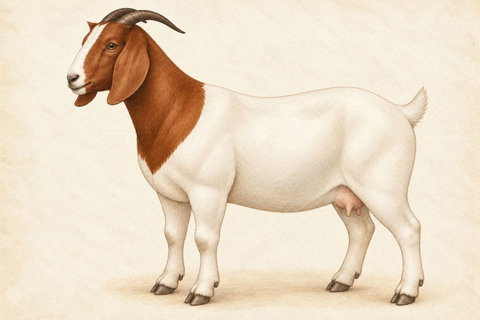
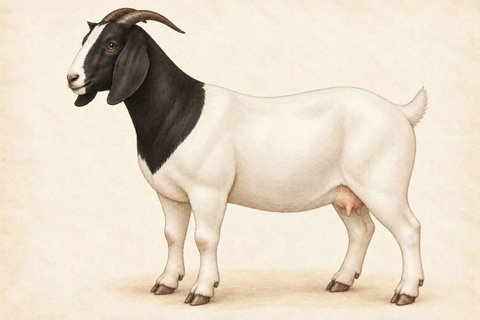
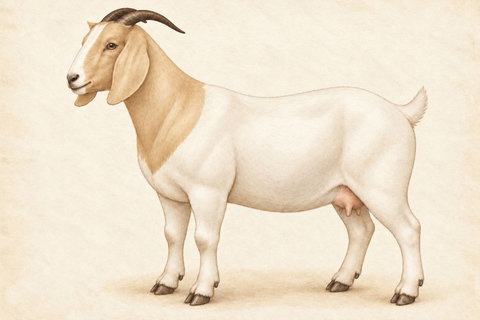
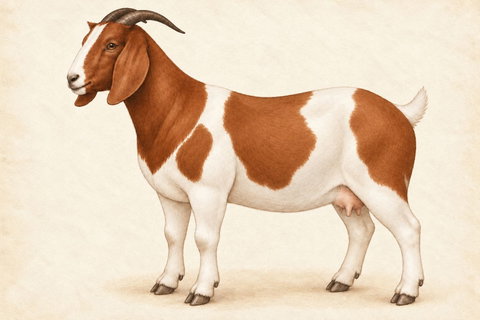
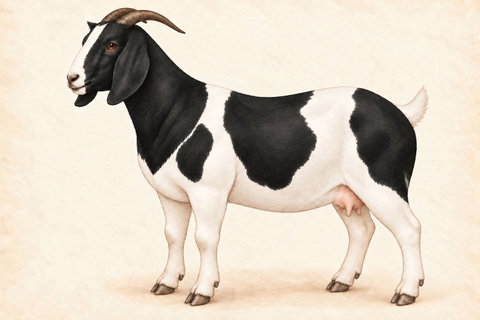
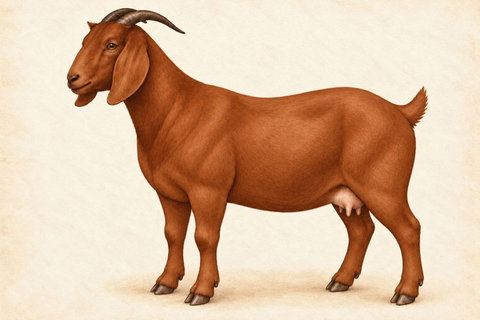
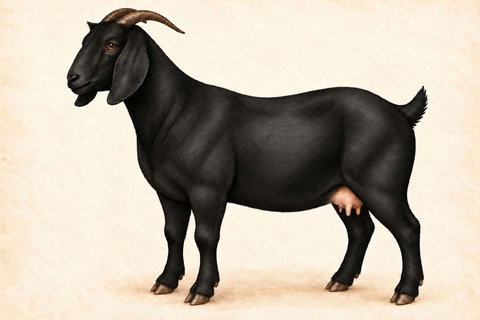
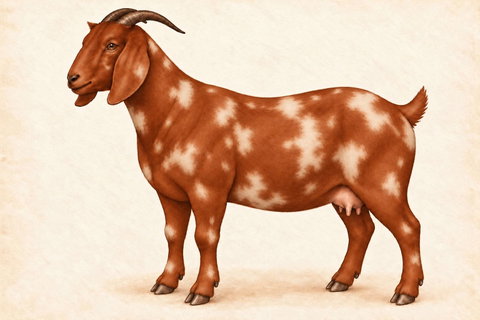
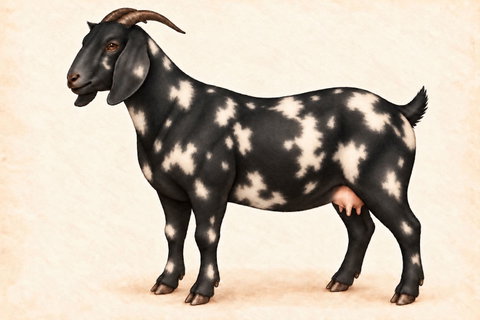
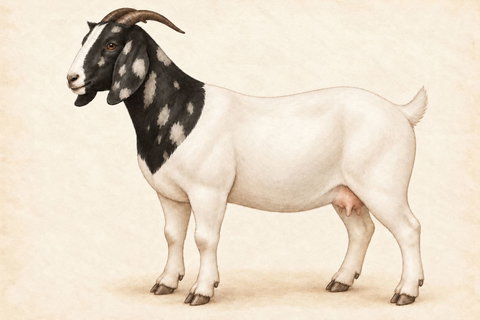
Illustrations of a typical Boer with each color, not photos of DNA-tested goats; the closest picture is not proof of a goat's color.
Color illustration shown with natural horns. Horn status is entered separately.
What to check
Traditional, solid or paint?
Traditional describes a white body and colored head. Solid means color across the whole body; paint describes large colored patches over white. These names do not tell you the number of white-body copies a goat has.
Dapple and head shade
Dapple describes pale patches on a colored base, and how dapple is inherited isn't worked out yet. Head color has competing published explanations. Do not use the amount of paint or dapple, or a particular red shade, to infer copy number.
Boer color breeding chart
Body pattern only: solid versus white-bodied. Traditional and paint coats both count as white-bodied. Head color is described in words; white amount and dapple are not calculated.
Buck rows by doe columns. Each pairing opens in the full calculator.
The white body has DNA evidence from Swiss and German Boers. Coat names do not settle whether a white-bodied goat carries the solid form, and the amount of paint is not predicted.
Dapple
Not worked out yet: how dapple is inherited isn't worked out yet. Red and black dapples are shown as appearances, without inheritance odds.
The ABGA standard states that no preference is given to any hair color. Blue eyes disqualify in all classes. Naturally polled fullblood does and bucks are disqualified; percentage goats may be polled. Standard revised July 22, 2025.
Health notes
Polled buck × polled doe. If the buck has one copy of polled, about 1 in 8 kids is expected to be an intersex goat: genetically female and infertile, and it can look like a doeling, a buckling or something in between. If he has two copies, about 1 in 4. If you don't know which he has, plan for 1 in 4. This assumes the polled doe is fertile (she has kidded, or a test shows one copy). Breeders usually pair a polled goat with a horned one: half the kids are polled (all of them if the polled buck has two copies), and none have polled intersex syndrome. A polled DNA test is offered in Europe (Giessen, Bern).
A traditional Boer has a white body and a red head. Black-headed, cream-headed, solid, paint and dapple coats are also described. The ABGA standard says no preference is given to any hair color.
How are dapple Boer goat colors inherited?
How dapple is inherited isn't worked out yet. This guide shows dapple as a recorded appearance and gives no odds for its amount or placement. A dapple coat alone is not proof of a genotype.
What is the difference between paint and dapple?
Paint describes large colored areas over white, while dapple describes pale patches on a colored base. The words describe what you can see; they do not establish the number of gene copies a goat has.
What this tool covers
Named colors and markings, with the registry words and the features to check.
Limits
Illustrations show typical appearances, not proof of a genotype. White markings, age and lighting can hide a pattern.
Printed from https://creatures.com/species/goat/boer/colors on October 26, 2026. Method and references: https://creatures.com/species/goat/boer/colors#sources







 Torah
 Lehr1 Crimson Queen





