Piedmontese
Author: Elliott Garber, DVM · Published
Piedmontese cattle are a beef breed from Piedmont in northwestern Italy, known for pale adult coats and muscling associated with a myostatin gene variant. The genetics are real, but a muscular appearance cannot prove an animal’s genotype, pedigree or suitability for a particular mating.
When a seller supplies documented ancestry, use the free cattle pedigree chart maker to organize it. The chart reflects your entries; it is not a registry certificate, a parentage test or an assessment of calving risk.
| Origin | Piedmont, northwestern Italy |
|---|---|
| Modern role | Beef production and crossbreeding |
| Appearance | Pale adult coats with dark pigmentation |
| Defining genetics | MSTN C313Y variant associated with increased muscle |
| Buyer evidence | Registry category, individual DNA and calving history |
| Care priority | Functional soundness, nutrition and safe calving planning |
Browse listings, public profiles, breeders, or add your animal.
Breed identity and appearance
Italy’s breed association, ANABORAPI, describes the Piemontese as a local Piedmont breed formerly kept for several purposes and now selected mainly for beef. Piedmontese is the English name commonly used in North America. It is not a general label for every pale, heavily muscled animal.
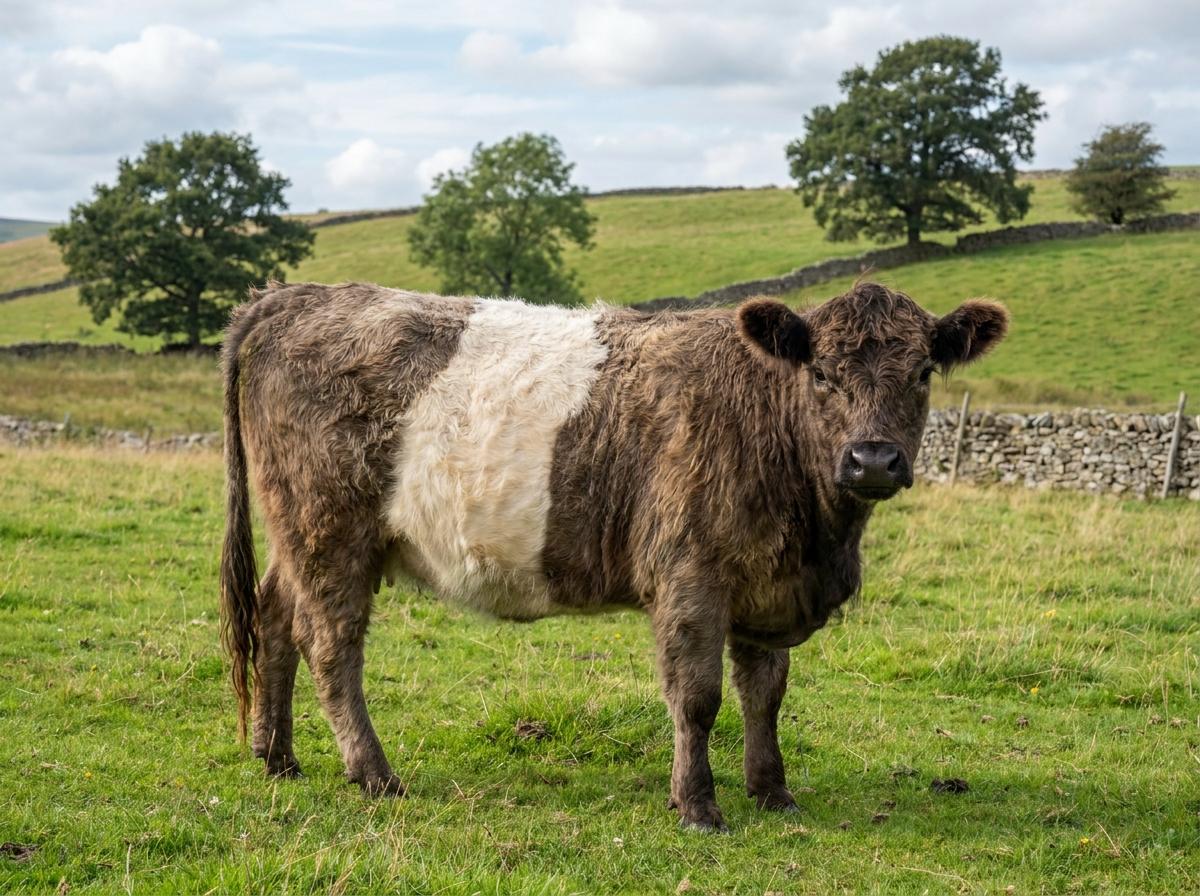
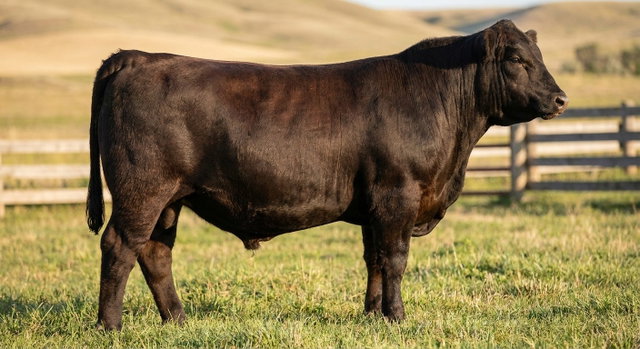
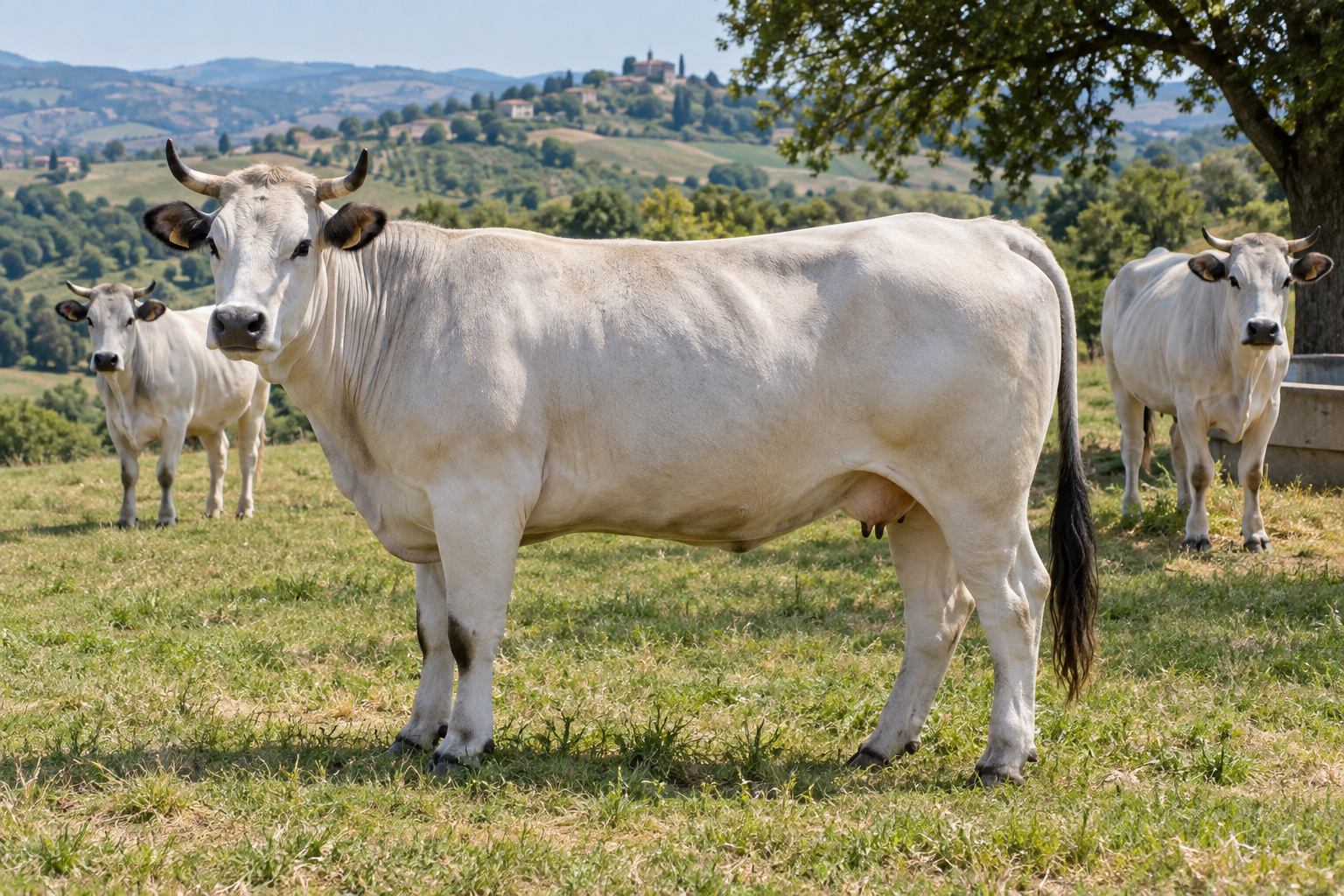
The Italian breed description allows pale shades in adult cows, with bulls often showing darker shading on the head, neck, shoulders and legs. Newborn calves are wheaten or fawn. Dark pigmentation on the muzzle, eyelid margins, hooves and tail switch is characteristic. The Italian standard describes horned cattle: horns are black when young and develop lighter shafts with black tips in adults. A photographed smooth head does not prove a naturally polled genotype.
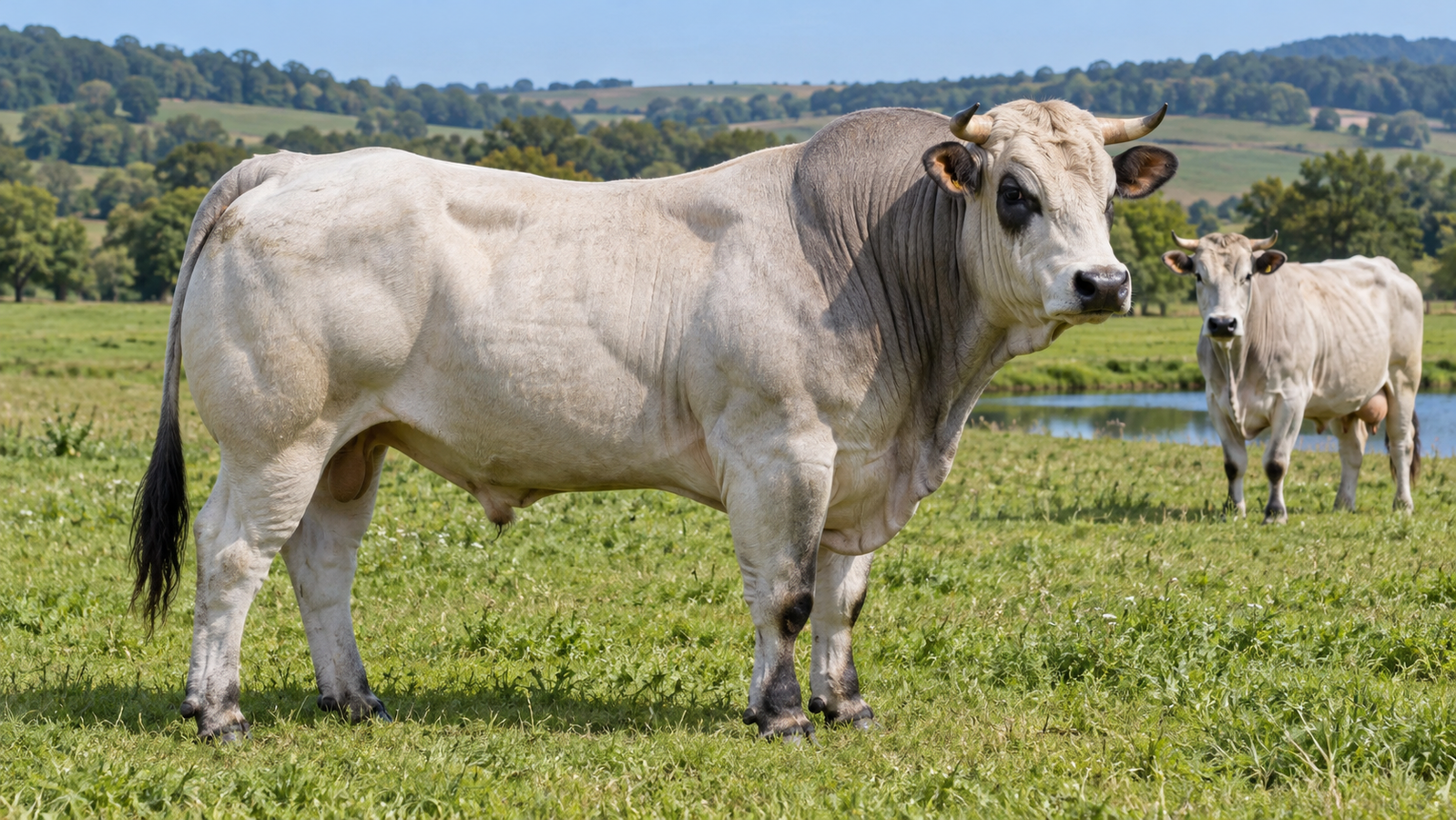
Look beyond color to a functional body: sound limbs and feet, good movement, appropriate body condition, a correct mouth and a functional udder or breeding anatomy. ANABORAPI’s description includes these traits alongside muscling. Neither extreme muscle nor a particularly white coat should excuse poor locomotion.
For comparisons, Charolais is another pale beef breed with a different breeding history, while Chianina is a separate Italian breed. Our cattle hub helps keep those identities distinct. A sale description needs the animal’s own documentation rather than a resemblance to any one of them.
What myostatin and double muscling mean
Myostatin helps regulate muscle growth. Primary genetic research identified a change in Piedmontese MSTN commonly called C313Y. Functional research on Piedmontese myostatin found that the changed protein lost its normal growth-inhibiting activity in the tested assay. This helps explain the breed’s increased muscling. “Double muscling” does not mean that the animal has a second set of muscles.
A DNA result belongs to an identified animal and a named variant. Ask which laboratory tested the sample, whether its ID matches the certificate, and whether the report indicates one or two copies. Do not infer copy number from the width of the hindquarters or assume that all MSTN variants in different breeds are equivalent.
A percentage of breed ancestry and a myostatin genotype describe different things. A crossbred can inherit a relevant variant, while a coat color or breed percentage alone cannot establish that result. If a seller uses fullblood, purebred, percentage or another category, ask for the issuing registry’s definition and the actual certificate rather than translating the word into an assumed genotype.
Calving: neither a blanket promise nor a blanket prediction
A USDA research study of Piedmontese crosses compared calves with different numbers of C313Y copies. In that population, calves with two copies had more assisted calvings than calves with one copy. The authors also concluded that producing one-copy calves could be economically worthwhile when the value of extra retail-product yield exceeds the added costs associated with calving difficulty. That is a conditional conclusion from this study, not a promised return. The result is a reason to examine mating choices and records. It is not an individual probability for your cow, nor proof that every Piedmontese birth requires assistance.
The study involved particular crossbred populations and management. Do not treat an advertised low birth weight, a general breed claim or a single successful birth as a complete risk assessment. Ask for sire-specific information, the dam’s previous calvings, her age and condition, and the calves’ actual assistance records. Have your veterinarian or experienced breeding adviser evaluate the proposed mating, especially for heifers.
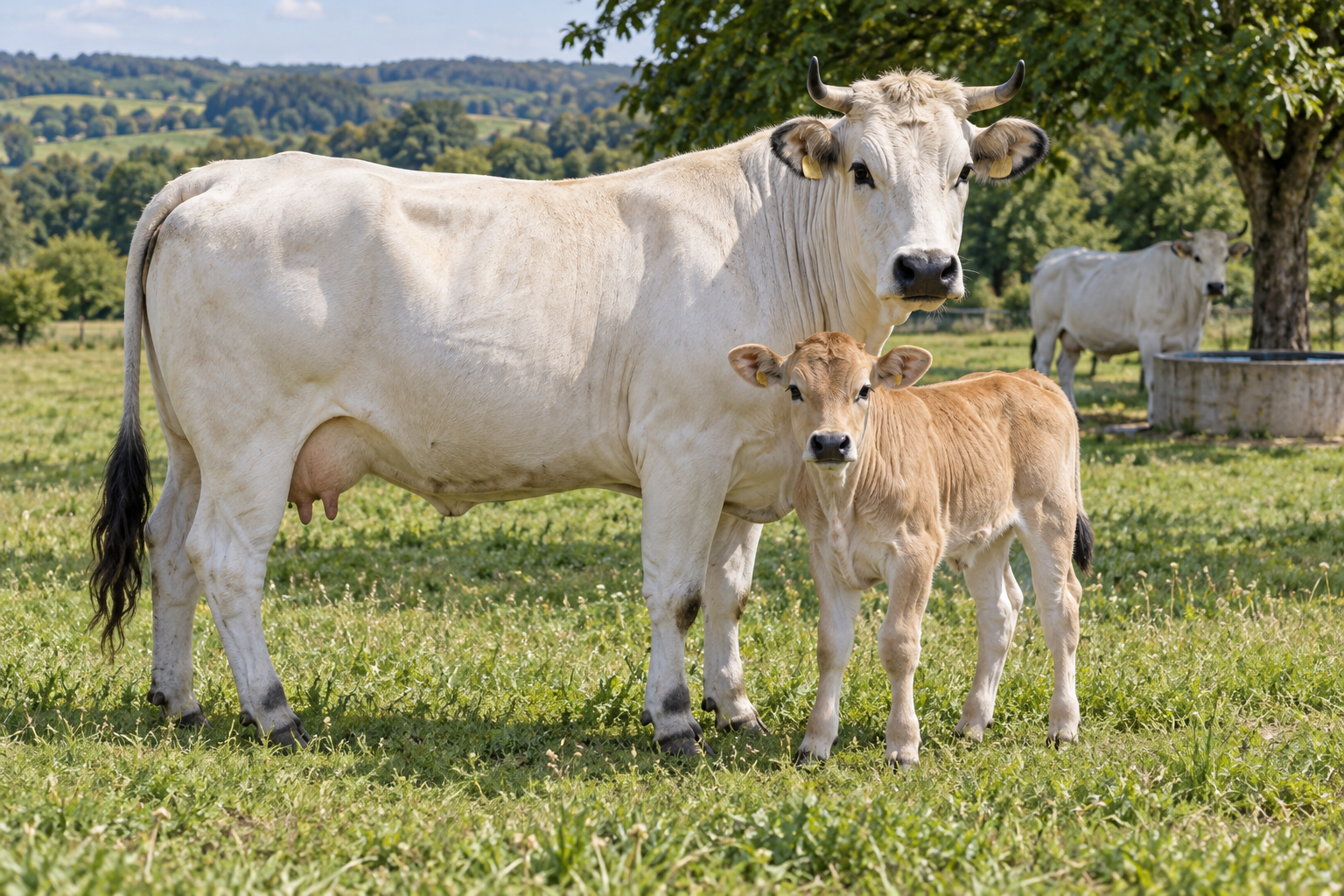
Before breeding, make sure someone can monitor calving, safely restrain the cow if necessary and obtain timely veterinary help. The calving guide helps organize observation and escalation; it does not replace training in obstetrics. Avoid a breeding plan that depends on you learning difficult birth assistance during an emergency.
Use the cattle gestation calculator after recording exposure or insemination dates. Its output is an estimated window, not a pregnancy diagnosis or a guarantee that the calf will arrive on that day. Record pregnancy findings and the actual birth separately.
Feeding and housing a functional beef animal
Muscling does not remove the need for a balanced ration. Base the plan on forage quality, animal size, condition and production stage. The USDA-hosted beef-cow feeding guidance explains why forage can fill a cow without meeting her nutrient needs. Review the cattle feeding guide with your veterinarian or nutrition adviser when planning growth, pregnancy or lactation diets.
Choose supplements for the actual feed supply. University of Nebraska guidance recommends considering forage tests and mineral interactions; more supplement is not automatically better. No special muscle-building ration should take priority over normal health and condition.
Provide clean water, cattle companions, secure fencing, dry resting space and protection from extreme weather. Plan safe handling and vehicle access before arrivals. The NFACC beef-cattle code provides a detailed care framework, including quiet handling and veterinary attention for sick or injured cattle. It is Canadian husbandry guidance, not a statement of the law on your US property.
Keep people out of unsafe positions around bulls and protective mothers. A breed’s reputation for calm behavior does not make an individual safe to handle without facilities. If a cow cannot walk comfortably, stops eating or is in calving difficulty, obtain veterinary help rather than explaining the problem away as normal muscling.
Registration, health and a useful record set
The North American Piedmontese Association offers registry services and states that DNA and myostatin testing are mandatory before registration. Confirm which association and category are on the seller’s documents; this is not a claim that every animal advertised as Piedmontese has met NAPA’s rules.
Match the animal’s permanent ID to its certificate, parentage report, MSTN report and sale agreement. Ask what transfers and who submits it. The cattle pedigree papers guide explains how to compare those documents. Keep unknown ancestors or disputed results identified as gaps rather than filling them from a seller’s photograph.
Build a veterinary plan for arrivals, locally appropriate testing, vaccination, parasites and reproductive examinations. Breed papers do not establish freedom from infectious disease. The cattle record keeping guide connects those health events with breeding, calving and sale history.
For growth records, distinguish a scale weight from an estimate. The cattle weight calculator uses body measurements and cannot be assumed to have breed-specific accuracy in heavily muscled animals. Measure only with appropriate safe handling, use a scale when accuracy matters, and never treat the result as a dosing tool. A cattle name suggestion can be convenient, but it should remain linked to the permanent ID.
Buying Piedmontese and budgeting for them
There is no useful single national price for fullblood breeding stock, registered percentage cattle, commercial crosses, semen and embryos. Request dated quotes for like-for-like categories. Ask what registration, tests, transport and reproductive services are included, rather than assuming a high price buys all of them.
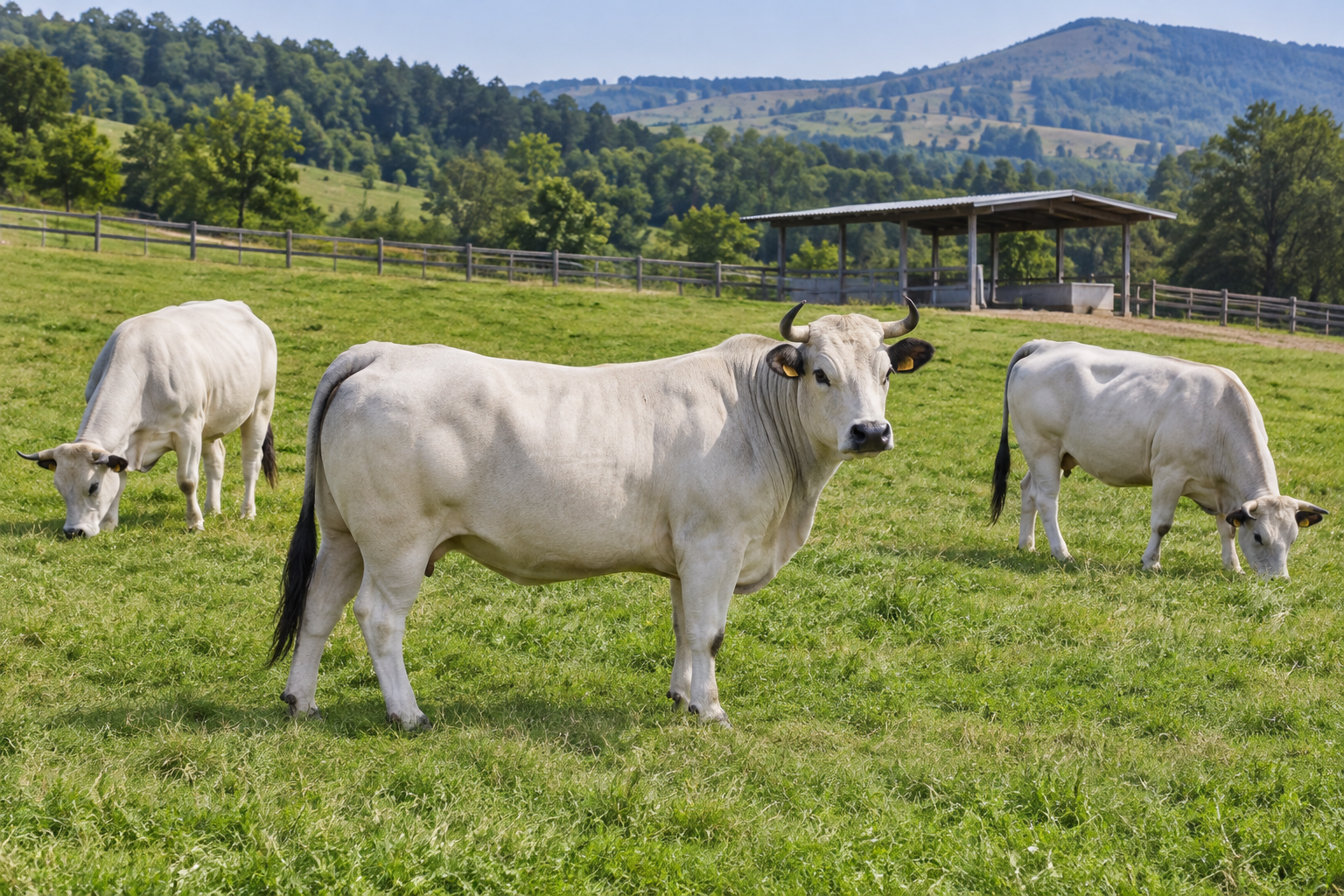
Your ownership budget also needs forage, water, fencing, handling, veterinary care and calving support. If you want a specialty beef market, identify the buyer and its actual specifications before assuming the breed label earns a premium. Neither a registry certificate nor a genotype report guarantees a sale price.
Questions worth asking before a deposit:
- Which association and registration category identify this animal, and how will the papers transfer?
- Do the permanent ID, parentage and C313Y test reports all match?
- Which matings and calving outcomes can be documented for the sire, dam and individual cow?
- What does the breeding adviser recommend for my heifers or cows, and what evidence supports that choice?
- Can I see the animal walk and inspect its feet, condition and relevant breeding soundness?
- Which health records and current diet will accompany the move?
- Can my facilities and veterinary arrangements support the proposed breeding program?
Compare Speckle Park for a different beef-breed selection emphasis, with color, pedigree and performance also kept separate. Salers and Senepol are further comparisons when maternal records or environmental adaptation guide your search. Do not assume any of those names settles the best mating for your herd.
Frequently asked questions
Why are Piedmontese cattle heavily muscled?
The breed is associated with the MSTN C313Y variant, which affects normal regulation of muscle growth. An individual DNA report is needed to establish its tested genotype.
Are Piedmontese calves born white?
The Italian description says newborn calves are wheaten or fawn. Adult coloration becomes paler, and bulls may show darker shading. Color is not a DNA test.
Do all Piedmontese cows have difficult births?
No universal claim is justified. Research in particular crosses found higher assistance with two C313Y copies than one. Use the actual mating, calving records and professional assessment rather than promising easy calving or predicting a difficult birth from the breed name alone.
Is a Piedmontese cross the same as fullblood stock?
No. Ancestry category and tested genotype are different records. Ask the named registry what the certificate means and match the reports to the animal.
Are Piedmontese naturally polled?
The Italian standard describes horned cattle, with black horns in young animals and black-tipped horns with lighter shafts in adults. A smooth head may reflect horn management or breeding choices; ask for the relevant DNA result if a polled genotype matters to your plan.
Do this next on Creatures
Choose the step that fits your plans for Piedmontese cattle. A breed page or directory entry does not establish current stock, health status or registry eligibility.
Watch for stock. Set a Piedmontese cattle listing alert for future matching listings. It does not mean an animal is available now. Read saving searches and using your watchlist.
Browse what is listed. Check the filtered marketplace, then ask the seller for the evidence described above.
Start an animal profile. Add your animal. No account is needed to start; a free account keeps your records. See adding an animal to Creatures.
Keep useful observations. Add a record for weights, health observations and calving outcomes. The sheet opens for visitors; a free account saves it. The record walkthrough explains the steps. A saved record does not verify a diagnosis, breed or pedigree.
Look for farms. Browse the breeder directory as a starting point for inquiries. Entries are not guarantees of active sellers, endorsement or available stock.
Represent your operation. Start an organization profile for your farm. Read creating an organization and adding your team and the separate directory listing guidance. Creating a profile does not itself verify breeder status or guarantee admission to the directory.