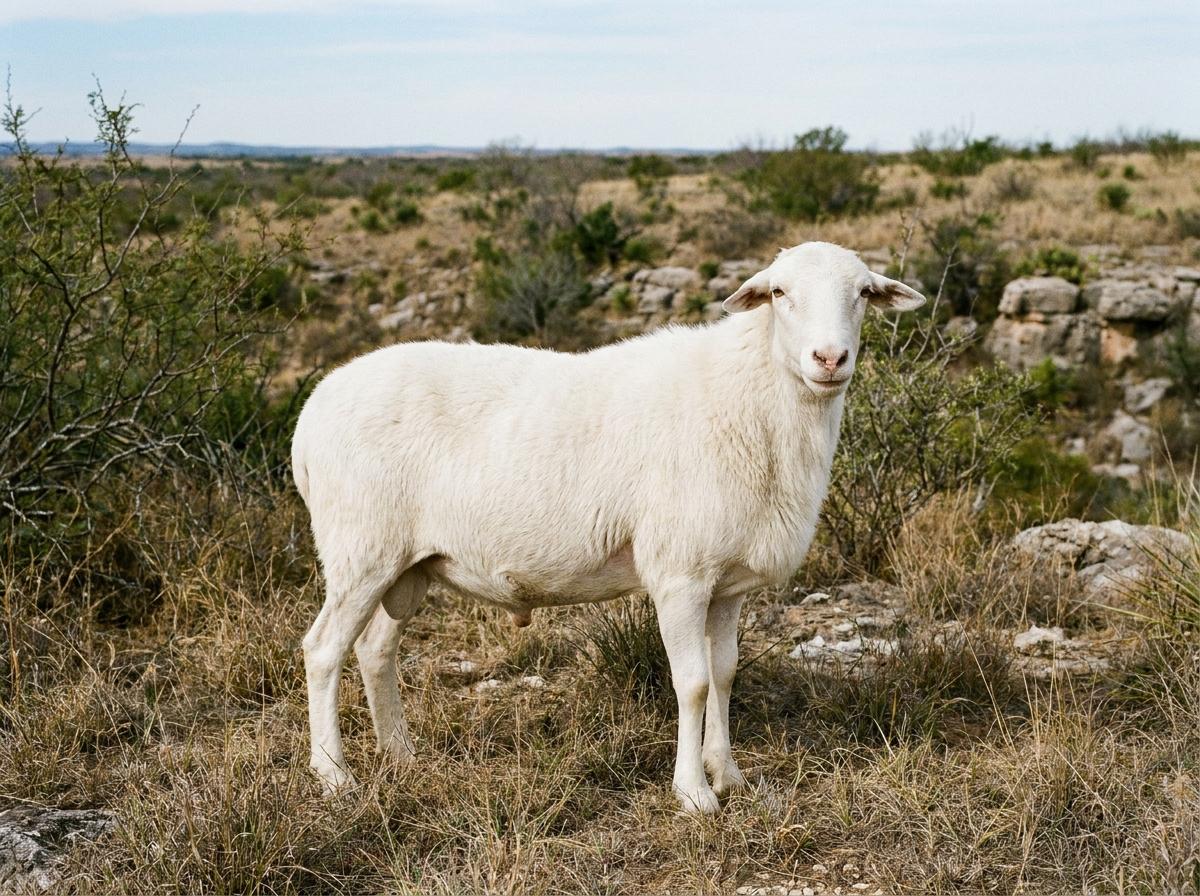
Royal White
Author: Elliott Garber, DVM · Published
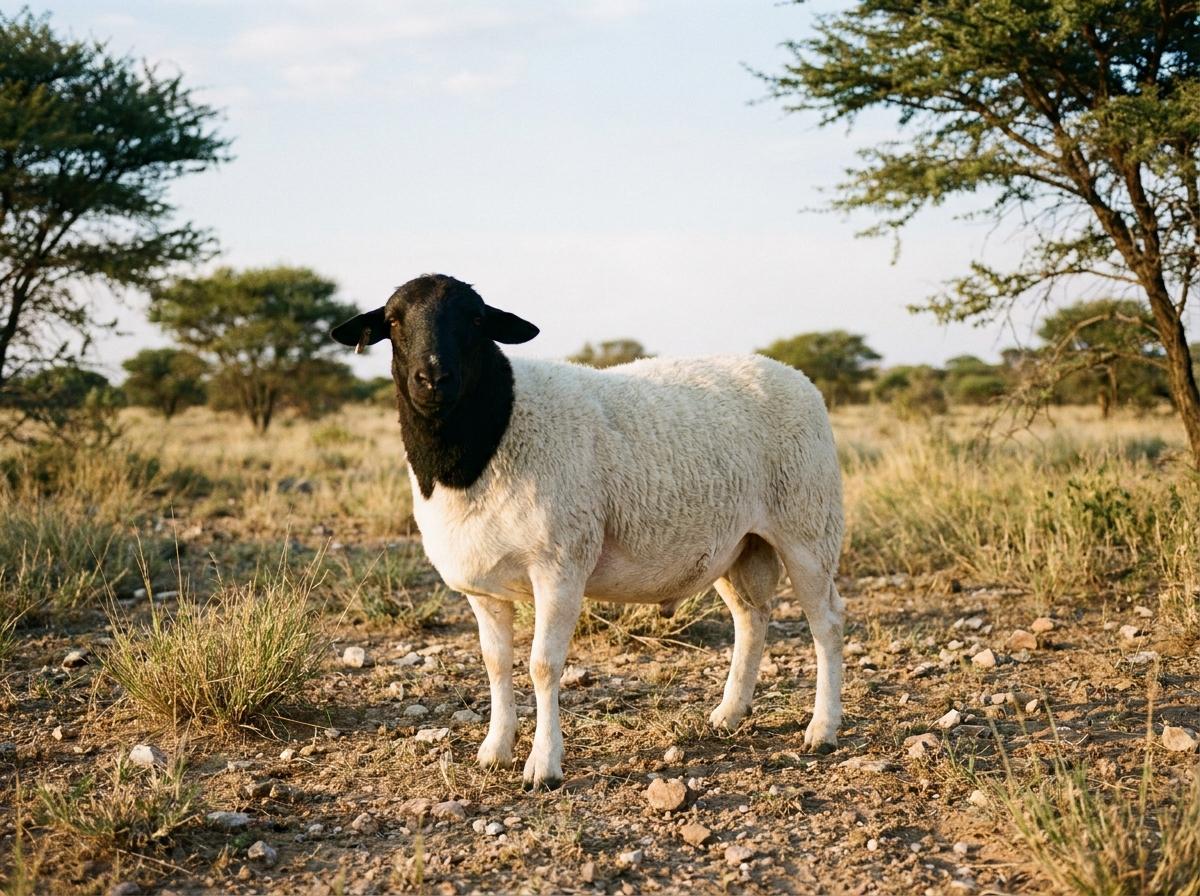
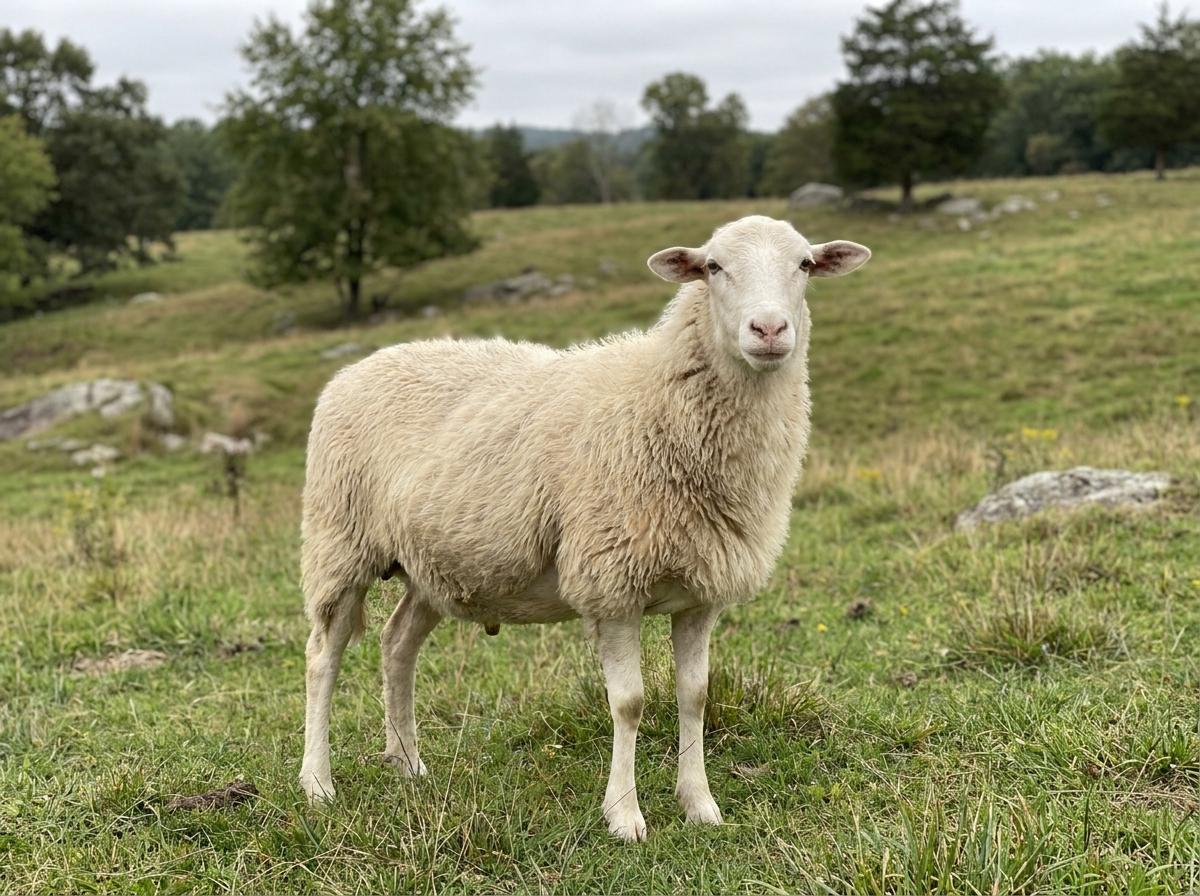
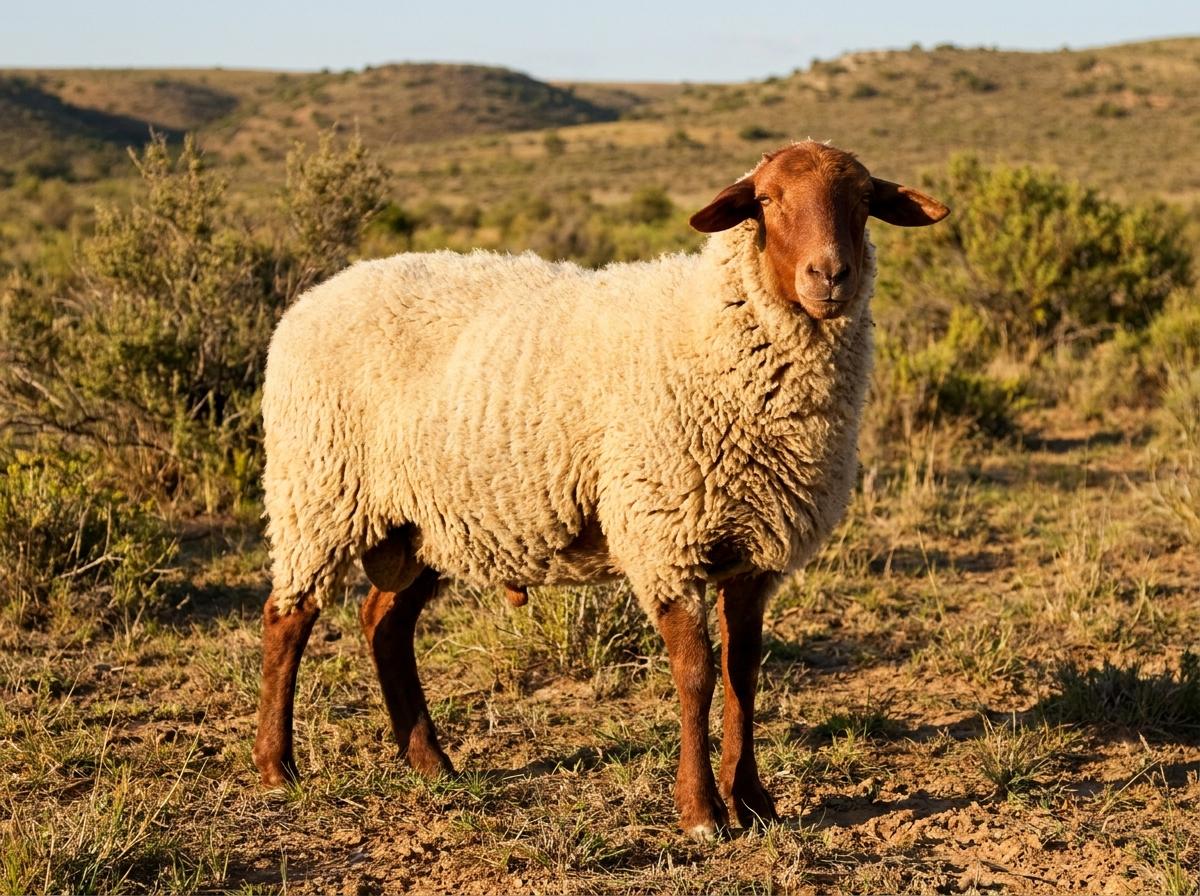
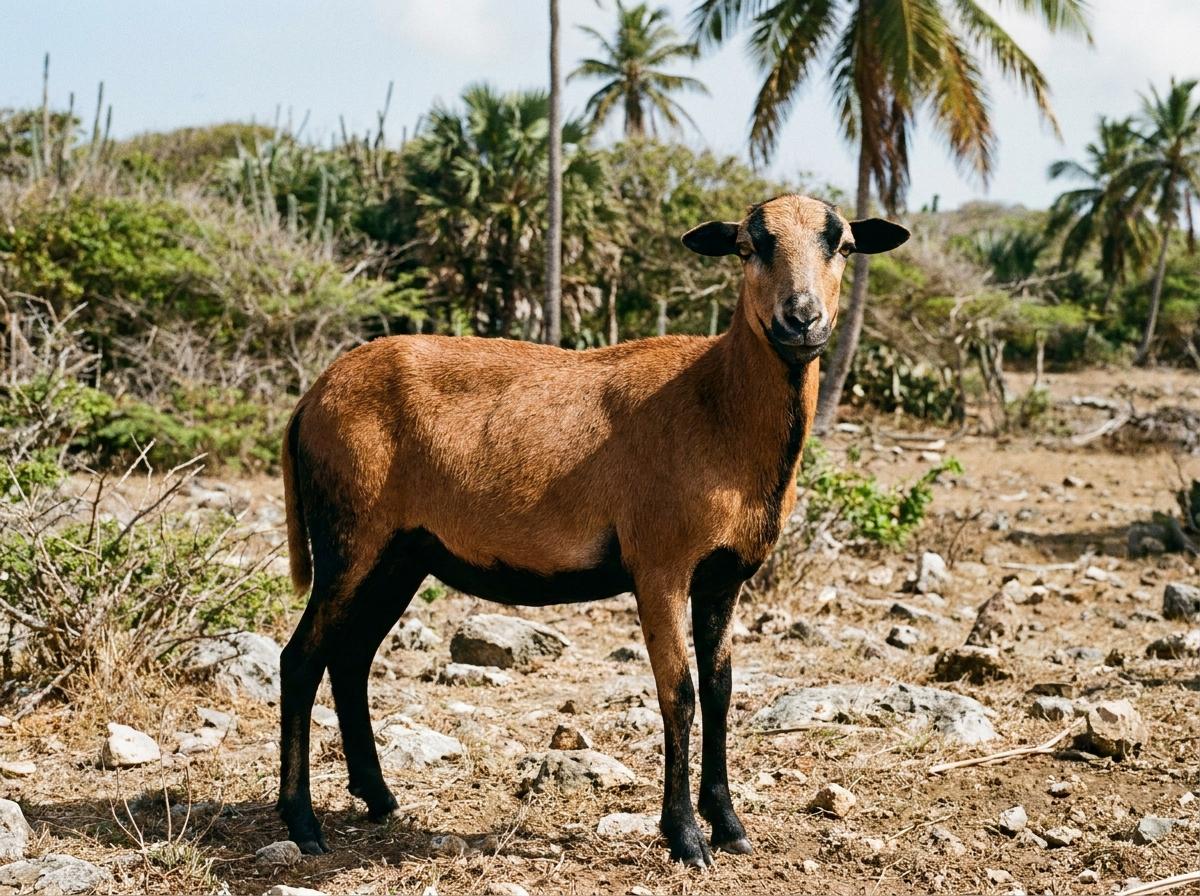
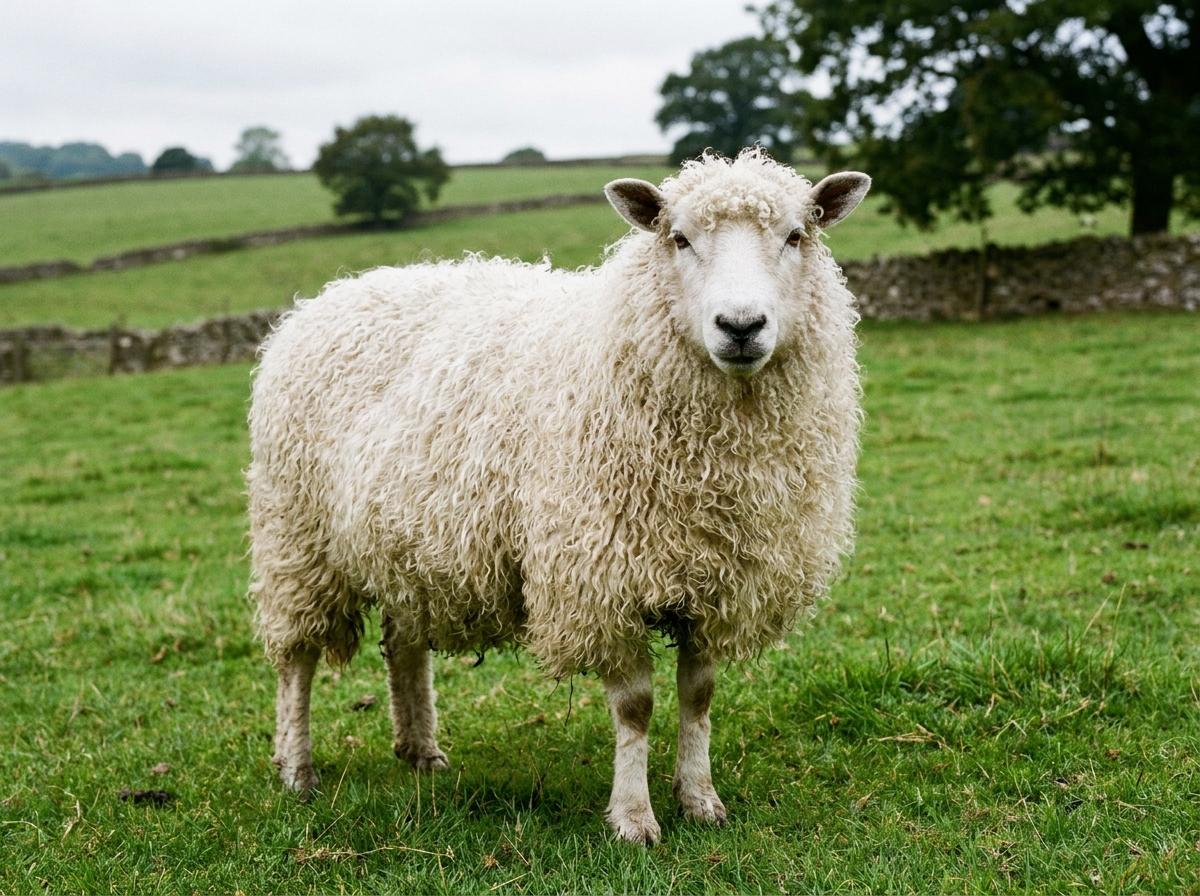
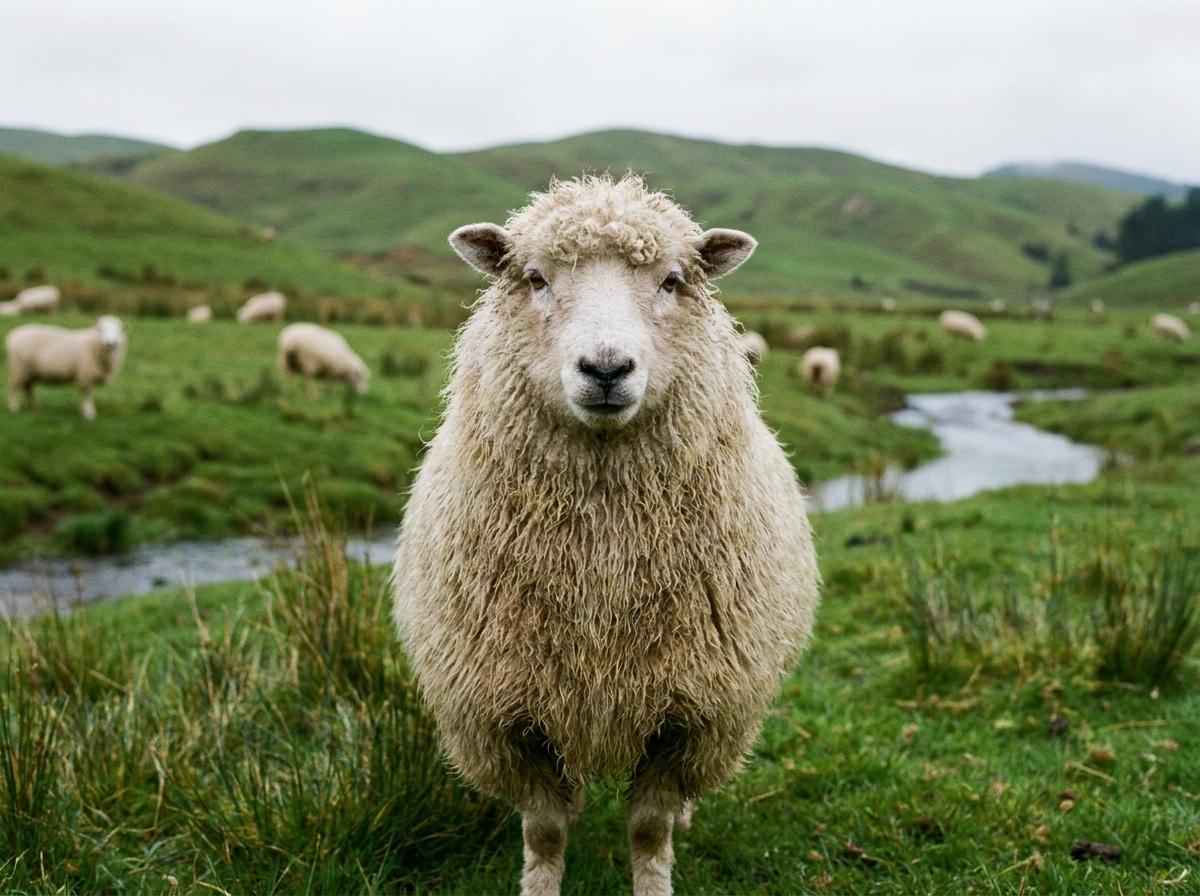
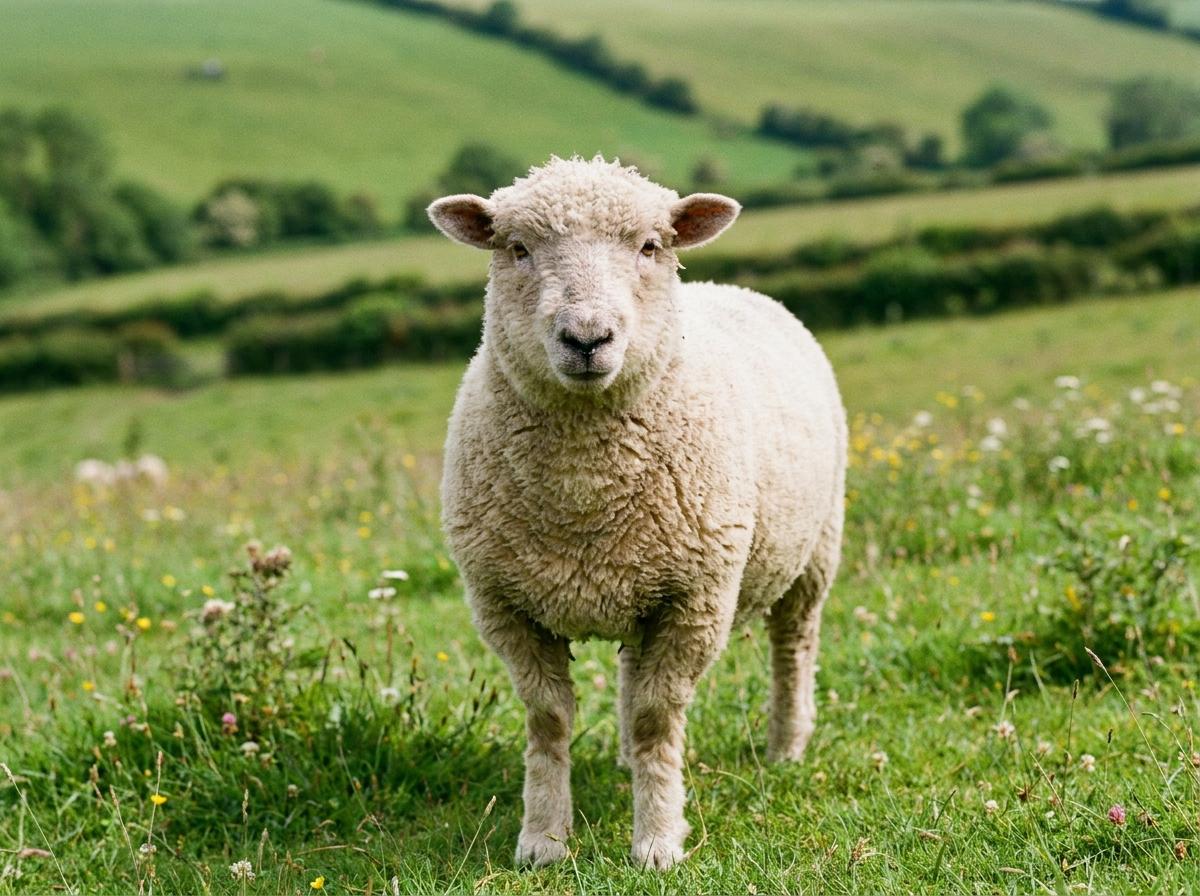
The Royal White is an all-white, polled hair sheep developed in the United States for meat. Bill Hoag started the breed in the mid-1990s by crossing registered St. Croix ewes with Dorper and then White Dorper rams, first in Utah and later on his ranch in West Texas. He sold the early crosses as “Dorpcroix,” renamed them Royal White in 2003 and trademarked the name. A Royal White grows hair, not wool: the coat thickens with a soft undercoat in winter and sheds out in spring, so the sheep never needs shearing, and its naturally short tail needs no docking. It is a big sheep for a hair breed, with commonly cited weights of about 185 to 235 pounds for rams and 175 to 210 pounds for ewes.
It is also a scarce one. Registration runs through the Registry Royal White Sheep Association, which does not accept upgraded or percentage animals, so registration papers are the only real proof that a white hair sheep is a Royal White and not a cross. If you want to buy, set a free Royal White listing alert (no account needed to start) and read the buying checklist further down before you pay for anything.

| Origin | United States: begun in Utah in the mid-1990s, developed in West Texas by Bill Hoag |
|---|---|
| Parent breeds | Registered St. Croix ewes crossed with Dorper and White Dorper rams |
| Registry | Registry Royal White Sheep Association; no upgrading from other breeds |
| Coat | All hair, chalk white; the winter undercoat sheds out in spring, no shearing |
| Horns | Polled (naturally hornless) in both sexes |
| Adult weight | Rams about 185 to 235 lb, ewes about 175 to 210 lb (breed figures) |
| Use | Meat lambs; short natural tail that never needs docking |
| Availability | Scarce; even a university research flock struggled to buy purebred rams |
Browse listings, public profiles, breeders, or add your animal.
What is a Royal White sheep?
Royal Whites belong to the hair sheep class: sheep whose coats are mostly hair rather than wool and which shed each year instead of being shorn. The University of Arkansas extension guide to using hair sheep describes the breed as a Texas cross of St. Croix and Dorper sheep, made to get a pure hair sheep with more muscle than other hair breeds.
The two parent breeds pull in different directions, which is why Hoag combined them.
- St. Croix is a Caribbean hair sheep. According to the Livestock Conservancy, the US breed traces to 22 ewes and three rams that Dr. Warren Foote of Utah State University imported from the Virgin Islands in 1975. St. Croix sheep are small (ewes average about 120 pounds and rams about 165), prolific, true hair sheep with well-documented parasite resistance, and the Conservancy lists the breed on its Watch category. Creatures has a St. Croix breed page too.
- Dorper and White Dorper come from South Africa and were built for dry country and meat. The Arkansas guide notes that the Dorper is more heavily muscled than meat-type wool breeds, but its coat carries more woolly fibers than a true hair sheep. Our Dorper sheep guide covers the breed, and the all-white variety has its own White Dorper page.
Hoag’s stated aim, in the association’s breed booklet, was to get more meat from his St. Croix ewes while keeping their pure hair coat and their consistency. NDSU researchers call the result an established composite hair breed: a breed built from two others and now bred within itself. For the other sheep breeds with their own pages, start from the sheep species guide.
Where the breed came from
The breed’s own history, set out in the association’s 2018 booklet, starts in 1995 with a small flock of registered St. Croix sheep in Utah: about 25 ewes and one registered ram. Oklahoma State University’s Breeds of Livestock entry, which credits Hoag as its source, dates the start to 1994 to 1995. Hoag wanted more meat from those ewes without losing their pure hair coat, so he bred them to a full-blood Dorper ram and liked the lambs.
He then moved the flock to West Texas, to Hermleigh, and began using several White Dorper rams from different bloodlines. To widen the St. Croix side, he bought small flocks of registered St. Croix ewes, mostly from the western United States, and kept the larger-framed ones; the booklet says he eventually ran more than 300 registered St. Croix ewes. Buyers began asking for his best offspring, which he sold off the ranch as Dorpcroix sheep, keeping the best all-hair lambs for himself. The booklet says no breeds other than St. Croix, Dorper and White Dorper were used.
The name changed from Dorpcroix to Royal White in January 2003, and a 2023 North Dakota State University research report says the name was trademarked in 2004. Over the same years, according to OSU, Texas Tech University tested the sheep for feed efficiency and meat starting in 1998, and Texas A&M University’s DNA Core Facility studied their scrapie genetics from 2002.
The independent record is thin. The NDSU report found only a handful of published studies on the breed and noted that most descriptions of the Royal White rest on Hoag’s own observations and records. Its own contribution came from a flock of 60 purebred Royal White ewes that NDSU’s Dickinson Research Extension Center bought in 2015 to see how the breed performed in North Dakota’s cold winters, a very different climate from West Texas.
The association’s website notes that Hoag has since passed away, and the Registry Royal White Sheep Association carries on the herd book. Its contact details have changed over the years (OSU’s entry lists a Pennsylvania address, while the association’s own site now lists Missouri), so use the association’s current Info and Links page for registration forms and fees.
How to recognize a Royal White
The association’s 2018 booklet sets out a written breed standard. These are the points that matter most when you are standing in front of a sheep.
- Head. Both sexes naturally polled, with no scurs (small loose horn growths). A slight Roman nose and a fairly narrow, triangular head. Medium to large ears covered in hair.
- Eyes. Brown, never blue. Dark skin around the eyes is preferred but not required.
- Color. Pure chalk white, not off-white. The standard allows one colored spot up to 2 inches across anywhere on the body and color on up to a quarter of an ear. The tongue must be pink, never black, and hooves can be any color except solid black.
- Frame. Height in proportion to weight: legs neither short and stocky nor long and fragile, with the hind legs a little heavier than the front. A long, deep, wide body, a long straight back and a neck of medium to medium-long length.
- Chest. V-shaped rather than blocky, which the standard links to easier lambing.
- Coat. All hair in summer, with no wool. A longer, coarser patch of hair on the upper hind legs is tolerated for now but is meant to be bred out.
- Rams. A small mane is allowed but not preferred.

The tail. The booklet asks for a naturally short tail, about seven inches long, with a little fat in it for energy in cold weather and during lactation, and says docking is never necessary. It also describes “bobtail” Royal Whites born with no tail, and certified, sequentially numbered tags for each kind: orange for Type A (short tail) and blue for Type B (no tail), with no other difference between them. The association’s current website mentions whip tails as well, so if tail type matters for registration, ask the registry what it accepts today.
Royal White, St. Croix, Dorper or Katahdin?
A white, polled hair sheep could be several breeds, or a cross of them. Here is how the Royal White compares with the breeds it is most often confused with.
- St. Croix. Smaller: Livestock Conservancy averages are about 120 pounds for ewes and 165 for rams, well below the Royal White’s breed figures. Mature St. Croix rams can grow a lion-like mane that reaches the knees, while the Royal White standard only tolerates a small one.
- White Dorper. All white like a Royal White, and one of its parents, but it is the white variety of the Dorper breed, which keeps its own registry. Dorper coats carry more woolly fibers, while the Royal White standard allows no wool in the summer coat.
- Katahdin. The other well-known American hair breed, developed in Maine from Caribbean hair sheep and British breeds. Katahdin Hair Sheep International’s history page explains that its registry lets breeders build a purebred flock by upgrading and recording each cross. The Royal White association does the opposite and allows no upgrading for registration. The Katahdin standard on the same page accepts any color or pattern and records horned and scurred animals, so a polled white Katahdin is entirely possible.
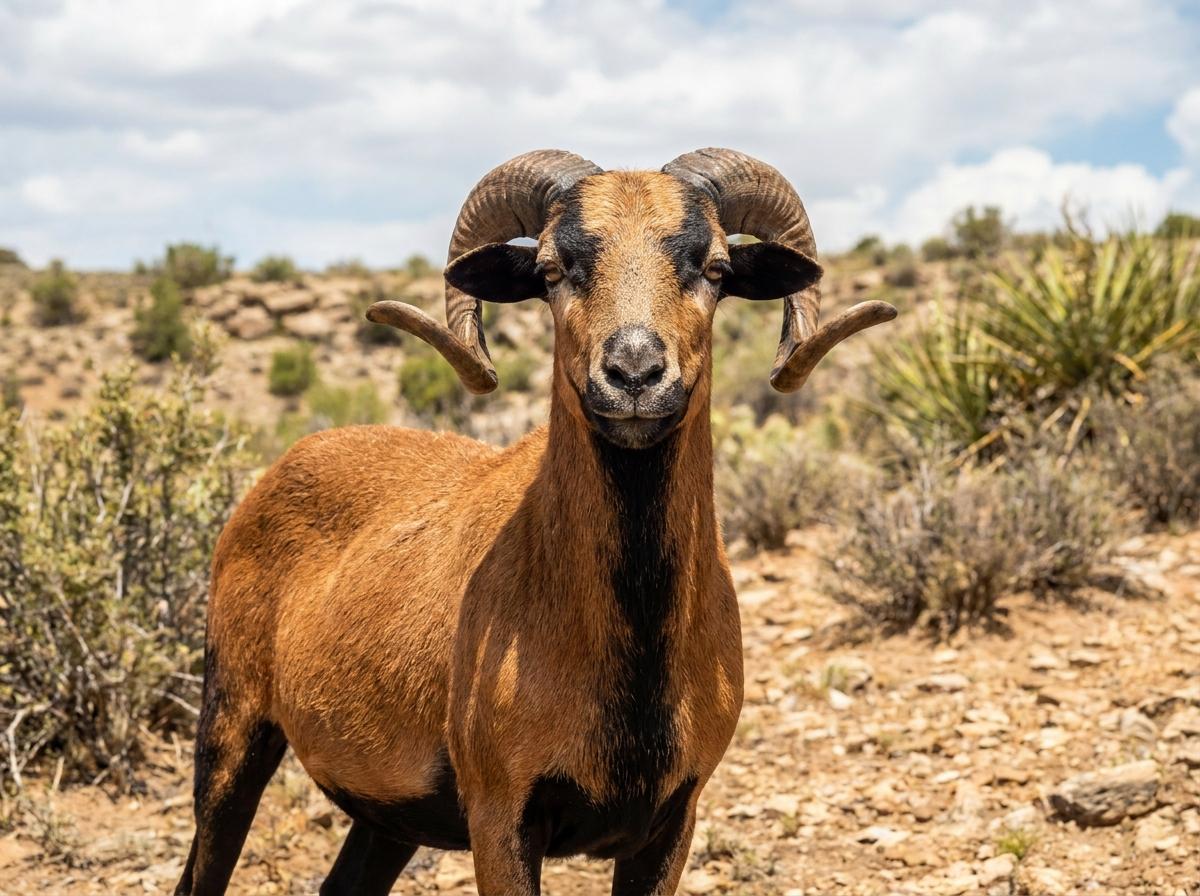
- American Blackbelly. At the other end of the hair-sheep range: the Arkansas guide describes it as a Barbados Blackbelly crossed with Rambouillet and mouflon to give Texas game ranches a sheep with trophy horns. Our in-depth American Blackbelly guide explains that breed, which looks nothing like a Royal White.
Papers are the real test. Looks narrow it down, but only a registration certificate from the Royal White association proves breed. A polled white ewe from a mixed flock of White Dorpers, Katahdins and St. Croix could look very much like a Royal White.
The coat: shedding instead of shearing
Not having to shear is the main draw of hair sheep for many new producers, the Arkansas guide notes, and the Royal White standard is strict about the coat. In summer the coat should be 100 percent hair. In winter the sheep grows a thicker coat that includes a soft down undercoat, and the standard expects all of that to shed out completely in summer, leaving smooth, white, lie-down hair. OSU’s breed entry and the Arkansas guide both describe the same thing: a longer coat in fall, shed naturally in spring.

Shedding is a trait that varies, though, even within hair breeds. The Arkansas guide points out that individual hair sheep differ in how well they shed, that some look shaggy because not all of the coat comes away, and that hair sheep tend to grow more woolly fiber in cold climates. A Royal White kept in the northern states may carry a heavier winter coat than one in Texas, and it should still shed clean by summer if it is true to type.
Why this matters when you buy. The association’s booklet warns buyers against shorn show and sale sheep. A hair sheep that has been clipped for a sale looks sleek, but it can hide a coat that turns out to be part wool, and some buyers have ended up having to shear “hair sheep” they bought that way. So:
- Look at sheep in summer, after they have shed, or ask for summer photos of the animal and its dam.
- Ask directly whether the animal has ever been shorn or clipped, and why.
- Treat wool on the back or sides of an adult in summer as a reason to walk away if breed matters to you.
With an all-hair coat there is no shearing bill and no crutching, and because the tail is naturally short there is no docking either. The Arkansas guide notes that hair sheep in general do not need their tails docked. If you also keep wool sheep, our sheep shearing guide covers the wool side of the flock, and the tail docking guide explains why wool lambs are docked.
Size, growth and meat
The weights most often quoted are OSU’s: 185 to 235 pounds for rams and 175 to 210 pounds for ewes, repeated in the Arkansas extension guide. The association’s own booklet gives a wider spread, from 185 to 400 pounds for rams (with 200 to 250 preferred) and 165 to 225 pounds or more for ewes. All of these figures come from the breed’s founder and association rather than from a weighed survey of many flocks, so treat them as a guide. Even so, a Royal White ewe is clearly a bigger animal than a St. Croix ewe.
If you want a working weight for your own sheep, a weigh tape and the free sheep weight calculator will get you close, and our sheep weight guide explains how to read the result.
What the NDSU data show. The North Dakota study is the best independent look at Royal White lambs, but it is small and descriptive:
- Purebred Royal White lambs averaged 7.62 pounds at birth across three lamb crops (34 lambs). Purebreds were only produced in three years because the station had trouble buying purebred rams.
- Crossbred lambs with Royal White ancestry, sired by White Dorper or Romanov rams, averaged 8.13 pounds at birth.
- Crossbred lambs gained about 0.62 to 0.68 pounds a day from birth to roughly 60 to 90 days old, reaching about 54 to 67 pounds, and purebred lambs gained at similar rates in the two years they were weighed. The authors called these weights comparable to medium-framed wool sheep.
- The authors concluded those lambs could be marketed after a short growing period for the lightweight lamb market, and said more research on growth after weaning is needed.
The study reports averages without formal statistical comparisons, so it describes what happened in one research flock rather than proving how the breed ranks.
Meat and hides. Most performance claims beyond that come from the association. Its booklet reports a 54 percent dressing yield from 100 pasture-raised ram lambs averaging 109 pounds, inspected at a commercial packer, and suggests marketing lambs before about 135 to 145 pounds to avoid excess fat. It also reproduces a 2003 Texas Tech Leather Research Institute inspection that rated Royal White hides as garment-quality leather. These are breeder-supplied figures, not peer-reviewed results.
Breeding and lambing
Hair sheep are generally less seasonal than wool breeds, and the association says Royal Whites breed year round. The Merck Veterinary Manual is more cautious about sheep as a whole: they are seasonal short-day breeders, with real differences between breeds and longer seasons closer to the equator. The Arkansas guide says hair sheep breed almost throughout the year. In practice, ask a seller for the actual lambing dates in their flock rather than assuming year-round lambing will happen on your farm.

Litter size. The booklet says ewes usually have singles or twins at their first lambing and that triplets are not uncommon afterward. The Arkansas guide puts hair sheep in general at a 150 to 200 percent lambing rate (one and a half to two lambs per ewe). The association also advises against pushing ewes to three lamb crops in 18 months, because of wear on the udder and a shorter working life.
Ram lambs mature early. St. Croix ram lambs can breed at about 90 days old, and the association recommends taking Royal White ram lambs away from the ewes no later than 90 days after birth. Plan your weaning pens before the first lambs arrive.
Ewe lambs need size first. Merck notes that ewes reach puberty at 6 to 9 months but should weigh 60 to 65 percent of their mature weight before they are bred. For a ewe that matures in the breed’s reported range, that works out to roughly 105 to 135 pounds.
Due dates. Gestation in sheep averages 147 days, according to Merck. The free sheep gestation calculator turns a breeding date into a lambing date, the sheep gestation guide explains the timeline, and our lambing guide covers the signs of labor and what to have in your lambing kit. For ram management and flushing, see the sheep breeding guide.
Health: parasites, scrapie genetics and copper
Parasite resistance: promising, not proven. Parasite resistance is one of the breed’s main selling points, so it is worth looking at what the evidence supports. The St. Croix side is strong: the Livestock Conservancy calls the breed’s parasite resistance well documented. The Dorper side is weaker. Susan Schoenian’s Sheep 201 guide to US sheep breeds notes that Dorpers, which come from a different part of Africa, lack the parasite resistance of the other US hair breeds, and a Virginia Tech trial (Vanimisetti and colleagues, 2004) found Dorper-sired lambs showed little resistance to barber pole worm (Haemonchus contortus) compared with Katahdin and Caribbean hair sheep crosses, though they coped with infection better than wool-sheep crosses. One USDA study in Arkansas (Burke and Miller, 2002) did find mature Dorper-cross ewes about as worm-resistant as Katahdin and St. Croix ewes. We found no published trial measuring parasite resistance in Royal Whites themselves, and the association’s own booklet says it cannot say how much of the St. Croix’s resistance carried over.
So treat a Royal White like any sheep in worm country. Monitor rather than deworm on a calendar: the American Consortium for Small Ruminant Parasite Control explains how FAMACHA scoring uses the color of the lower eyelid to spot the anemia caused by barber pole worm, and producers need training to use the card. Pair it with fecal egg counts, and work out a treatment plan with your veterinarian. Our sheep deworming guide covers FAMACHA, fecal egg counts and keeping some worms untreated so dewormers keep working.
Scrapie genetics. Scrapie is a fatal, degenerative disease of the central nervous system in sheep and goats, and a sheep’s susceptibility is controlled mainly by its genes. A 2003 Texas A&M study (Seabury and Derr) looked at St. Croix White sheep and a related composite meat breed, which the association identifies as the Dorpcroix, and found that about two thirds of each group sampled (66.7 percent of the St. Croix White and 65.4 percent of the composite) carried genotypes considered resistant or nearly resistant to scrapie. Those were founding-era animals, and genotypes vary from sheep to sheep. The USDA’s scrapie program page explains that codon 171 is the main genetic factor in classical scrapie in the United States: R is linked with resistance, Q with susceptibility, and more than 99 percent of genotyped classical cases were QQ. When you buy a ram, ask for his codon 171 genotype (RR or QR) rather than relying on breed reputation.
Official ID when sheep move. Federal scrapie rules require official identification on most breeding sheep that leave their farm. USDA’s own rule of thumb is that a sheep leaving your farm gets an official ear tag, and a certificate of veterinary inspection is generally needed to move sheep across a state line. Ask the seller to tag animals before they load and check your state’s rules.
Copper. The Merck Veterinary Manual names sheep as the species most susceptible to copper toxicosis, and the association’s booklet carries the same warning. Feed a mineral made for sheep, never one made for goats or cattle, and read the label on every feed. Our sheep minerals guide and sheep feeding guide explain why.
Everything else is ordinary good shepherding. Royal Whites still need clostridial vaccination (see the CD&T vaccine guide), regular foot checks (hoof trimming and foot rot) and fencing that keeps predators out as well as sheep in. The association describes them as non-jumpers that stay together while grazing, which helps; our sheep fencing guide compares electric netting and woven wire. Plan vaccinations and treatments with a veterinarian who knows sheep.
Buying a registered Royal White
Registration first. If breed matters to you, buy sheep registered with the Registry Royal White Sheep Association and have the registration transferred into your name. Because the association allows no upgrading, in practice both parents of a registered lamb need to be registered Royal Whites; confirm the details with the registry. A “75 percent Royal White” or “Royal White cross” may be a perfectly useful sheep, but it is not a Royal White and cannot become one on paper. The association’s registration forms and fee schedule are on its website.
Check the name and the tag. Royal White is a registered trademark, and the association’s booklet sets rules for how registered breeders may advertise their sheep. An ad for “Royal White type” or “white Royal-style hair sheep” is a signal to ask questions. If the seller says the sheep carries the association’s certified tag (orange or blue, as described above), check that the number matches the paperwork.
Judge the coat in summer. See the sheep after it has shed, and be wary of animals that have been shorn or clipped for a sale.
Ask for health records. Ask for scrapie flock ID tags, a codon 171 genotype on any ram, the flock’s deworming approach and recent fecal egg counts or FAMACHA scores, and any disease testing the flock has done. Our guide to where to buy sheep lists the disease tests worth asking about and how to judge a seller. Have your own veterinarian look over the results.
Expect to wait. Supply is genuinely thin. When this guide was written in October 2026, the Creatures directory listed one Royal White breeder (in Oklahoma) and there were no live Royal White listings. Even the NDSU research flock had trouble buying purebred rams, and it later produced purebred lambs by artificial insemination with semen from registered rams. Ask the association for its list of registered breeders, start looking well before you need sheep, and keep a listing alert running.
Price. We could not find a reliable published price range for Royal White sheep, and Creatures’ sheep auction price guide listed no Royal White sales in its current data release (sales through August 2026). For context, our guide to how much a sheep costs puts registered breeding stock of most breeds at several hundred dollars to the low thousands, and the auction guides for Katahdin, Dorper and White Dorper show what related hair breeds have brought at public sales. Registration, the parents’ records and the quality of the coat will matter more to a Royal White’s price than its weight.
Once you own registered stock, a three-generation chart from the free pedigree chart maker is a quick way to keep each sheep’s sire and dam on hand when you plan matings or sell lambs.
Who the Royal White suits
The breed makes most sense for someone raising meat lambs who wants to stop shearing, especially in hot or humid country where a wool fleece is a burden. The association pitches it to cattle and goat producers looking to diversify, and describes it as calm, non-flighty and easy to manage as a flock, noting that many of its buyers are new to sheep.
It is a weaker fit in a few situations. The Arkansas guide notes that hair sheep in general handle cold less well than wool sheep, although the NDSU flock was raised through North Dakota winters, so plan for shelter if your winters are hard (our sheep shelter guide covers what a flock needs). If you want to sell wool or compete in club lamb shows, a wool breed will serve you better. And if you need a large number of registered sheep quickly, the small supply may push you toward a more widely kept hair breed such as the Katahdin, with a Royal White ram added later.
Frequently asked questions
What is a Royal White sheep?
A polled, all-white hair sheep developed in the United States by Bill Hoag, who crossed registered St. Croix ewes with Dorper and White Dorper rams from the mid-1990s. The early crosses were sold as Dorpcroix, and the breed was renamed Royal White in 2003.
Do Royal White sheep need shearing?
No. The coat is hair with a winter undercoat that sheds out naturally in spring. Shedding varies between individuals, so check a sheep’s coat in summer before you buy.
Do Royal Whites have horns?
No. Both rams and ewes are naturally polled, and the breed standard does not allow scurs.
How big do Royal White sheep get?
Commonly cited weights are about 185 to 235 pounds for rams and 175 to 210 pounds for ewes. The association’s booklet gives a wider range, and all of these are breed-reported rather than surveyed figures.
Who registers Royal White sheep?
The Registry Royal White Sheep Association. It does not allow upgrading from other breeds, so in practice both parents of a registered Royal White need to be registered too.
Are Royal Whites parasite resistant?
Their St. Croix ancestry is known for parasite resistance, but no published trial has measured it in Royal Whites, and Dorpers generally have less of it (one USDA study of mature Dorper-cross ewes is the exception). Monitor with FAMACHA scoring and fecal egg counts like any sheep.
How much does a Royal White cost?
There is no reliable published price. Registered breeding stock of most sheep breeds sells for several hundred dollars to the low thousands, and a scarce, registered Royal White is likely to be priced by its papers and records.
Do this next on Creatures
Whether you are hunting for your first Royal Whites or already lambing them, Creatures is the records, marketplace and directory layer that keeps the flock’s paperwork in one place.
Get alerted. Royal White listings are scarce, so set a free Royal White listing alert and we will email you when one is posted. No account needed to start. See saving searches and using your watchlist for how alerts work.
Check the market. Browse Royal White sheep on the Creatures marketplace (none were listed when this guide was written), and contact the Royal White breeder listed in the Creatures directory of trusted breeders.
Add your sheep. Keeping Royal Whites? Create a free Royal White profile with registration number, sire, dam and photos, no account needed to start. The walkthrough is in adding an animal to Creatures.
Record breedings, lambings and health. Add a breeding, lambing, FAMACHA, deworming or genotype test record. The record sheet opens for any visitor to look around, and a free account saves what you enter. See adding a record and health and medical records.
List your flock. Breed registered Royal Whites? Create a free farm or breeder profile so buyers looking for registered, tested stock can find you, no account needed to start. Read getting listed in the breeder directory and creating an organization and adding your team.
Plan and name. Work out lambing dates with the sheep gestation calculator, and find names for this year’s lambs with the sheep name generator.