Tunis
Author: Elliott Garber, DVM · Published
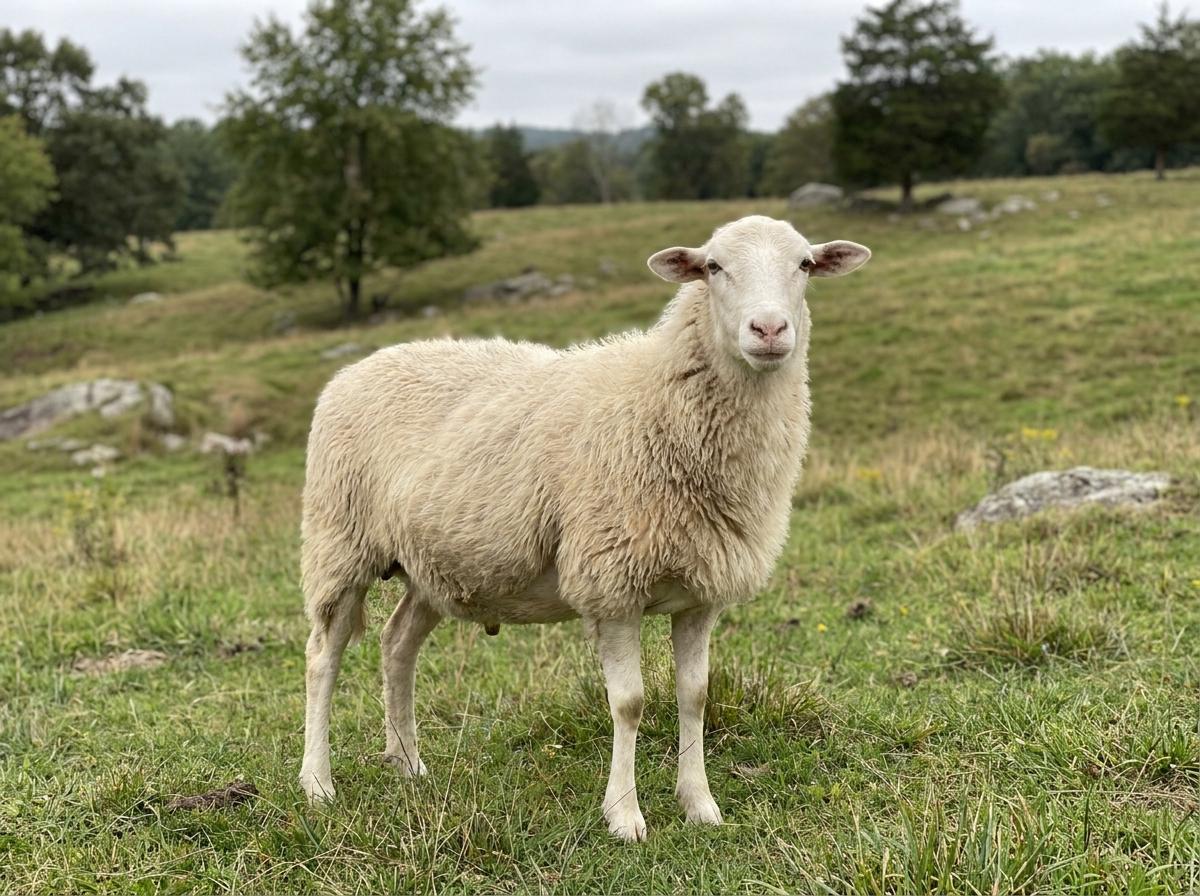
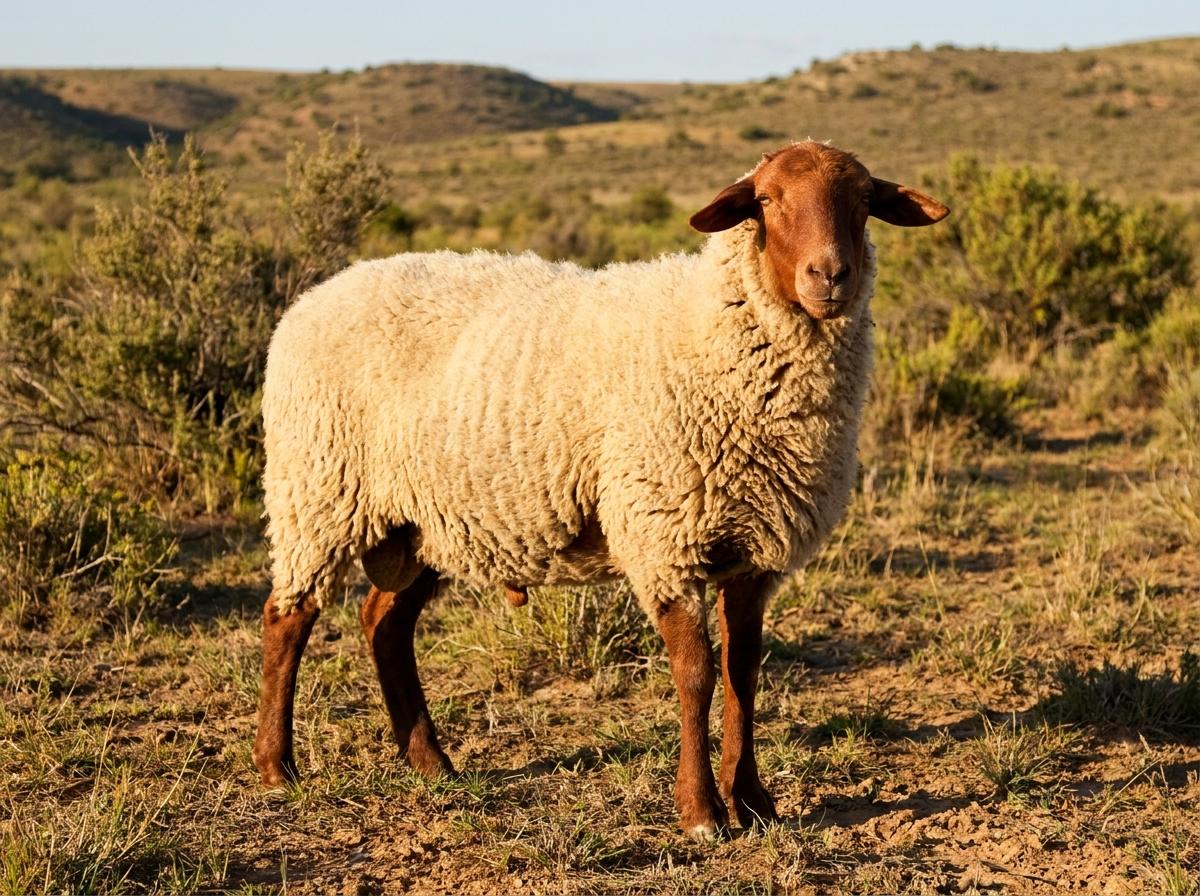
The Tunis is an American heritage sheep with a creamy wool fleece, a cinnamon-red head and legs, and long ears that hang down at rest. It is a medium-sized, polled (hornless) breed descended from fat-tailed North African sheep that reached Pennsylvania around 1799, which makes it one of the oldest livestock breeds developed in the United States. Today it is registered by the National Tunis Sheep Registry, Inc. (NTSR) and kept mainly for lamb, with a useful medium wool on the side.
If you are weighing it against other breeds, start on the Creatures sheep guide to compare meat, wool and hair sheep, then come back here for the Tunis specifics: the breed standard, where the old Washington story stands, what ewes and lambs are like, what registered stock sold for at a recent national sale, and the questions to ask before you buy. If you already know you want one, the Tunis marketplace page shows what is posted today.

| Also called | American Tunis |
|---|---|
| Origin | United States, from fat-tailed sheep shipped from Tunis in 1799 and crossed on local flocks |
| Registry | National Tunis Sheep Registry, Inc. (standard dates its guidelines to 1929) |
| Look | Creamy wool, tan to cinnamon-red head and legs, long pendulous ears, polled |
| Mature weight | Rams 175 to 225 lb, ewes 125 to 175 lb in breeding condition (registry standard) |
| Fleece | Light ivory to cream, 54s to 58s spinning count; ewes about 8 to 10 lb (registry standard) |
| Main use | Lamb and mutton, with medium wool; ewes noted for twins and milk |
| Conservation status | Watch, on The Livestock Conservancy’s priority list |
Browse listings, public profiles, breeders, or add your animal.
What is a Tunis sheep?
The Tunis is a medium-sized, meat-type wool sheep that was shaped in the eastern United States from imported North African stock. The National Tunis Sheep Registry breed standard describes it as a calm, medium-sized sheep with creamy wool set off by a solid tan to cinnamon-red head and legs, a slender head, expressive eyes and long pendulous ears. The same standard calls the Tunis “the first red-faced American sheep breed” and says it should not look like any other breed.
You will see the breed called the American Tunis as well, to separate it from the fat-tailed sheep still kept in Tunisia today. On Creatures the breed hub is the Tunis sheep page, which collects listings, public animal profiles and breeders in one place.
Three things make a Tunis easy to pick out in a field:
- Color pattern. A wool-free head and lower legs covered in fine, lustrous tan to cinnamon-red hair, with the body in light ivory to cream wool.
- Ears. Long, broad and pendulous, drooping forward at rest and pointing forward (not up) when the sheep is alert.
- No horns. Both sexes are polled. Rams may carry small scurs, which the standard faults; any horn on a ewe disqualifies her from registration.
A white spot on the crown of the head and on the tip of the tail is listed by the registry as an ideal characteristic, not a fault, so do not mark down an otherwise correct animal for it.
Where the breed came from
The Tunis story starts with a shipment of broad-tailed sheep from Tunis, in North Africa, in 1799. The registry’s breed history page quotes a 1927 University of Kentucky textbook saying ten head were shipped that year and only two survived the voyage, and that the rams were then widely used on native ewes.
The man who spread them was Judge Richard Peters of Belmont, near Philadelphia. Period letters make his role clear. In an 1809 letter to Thomas Jefferson, William Thornton copied out Peters’s own published note describing “a valuable imported Ram of the Broad-taild Breed of Sheep obtained off the mountains of Tunis, by the present General Eaton when Consul in that regency” (Founders Online, National Archives). In 1810 Peters mailed John Jay his pamphlet “Communications on the Tunis Sheep,” and Jay wrote back asking whether the “quiet” Tunisians would stay inside stone walls (Jay to Peters, 21 November 1810). Peters answered that he never knew “so quiet & stationary a Sheep” and that demand in Carolina was as strong as demand for Merinos in Pennsylvania (Peters to Jay, 25 November 1810).
Was the Tunis a gift to George Washington?
You will often read that the Bey of Tunis sent the founding sheep to George Washington. The Livestock Conservancy’s Tunis page tells it that way. The registry’s own history says only that the first pair was “a gift from the Bey of Tunis” placed with Judge Peters, and the letters above credit William Eaton, the American consul at Tunis, with obtaining the sheep. We did not find the Washington version in the period correspondence we checked, so treat it as breed tradition rather than settled history. The registry does list George Washington Custis among the early figures associated with the breed.
Near loss and recovery
The breed spread through the mid-Atlantic and the South, where its tolerance of heat was valued. The Livestock Conservancy says the Civil War destroyed nearly all Southern stock, and that one South Carolina flock, kept near Columbia, carried the breed through. Sources spell that breeder’s name several ways (Spigener, Spigner and Spigler all appear), which is common in 19th-century livestock records.
After the war the breed’s center moved north and west. The 1927 text quoted by the registry says Tunis sheep from that South Carolina line were taken to Indiana in 1894, and that an American Tunis Sheep Breeder’s Association was organized in Indiana in 1896. The current registry’s standard refers to “the inception of the National Tunis Sheep Registry, Inc. in 1929.” Registrations, transfers and memberships are now handled for the registry by Associated Registry, according to the NTSR registrations page.
The breed is still uncommon. The Livestock Conservancy’s Conservation Priority List places the Tunis in its Watch category, which it defines as breeds with fewer than 2,500 annual US registrations and an estimated global population under 10,000, or with other genetic, numerical or geographic concerns.
The breed standard in practice
The registry’s standard is unusually specific, and it is the best checklist you have when you look at a Tunis for sale. Its scorecard gives 20 points each to general conformation, body, and head and neck, 15 to feet and legs, 10 each to wool and size, and 5 to general appearance.
What the standard wants to see:
- A deep, only moderately wide chest. The registry explains that an excessively wide chest interferes with lambing ease.
- A wide back of medium length, with the pins level with or slightly lower than the withers, and a hind saddle longer than half the back.
- Hindquarters wider than the forequarters, straight but resilient pasterns, and dark brown or brown and beige striped hooves.
- A slender face that widens at the muzzle (the standard compares the front view to an hourglass).
- Pink skin, a large, well-attached udder on ewes, and good-sized, symmetrical testicles on rams.
- A slight fat tail. For breeding stock the standard asks that the tail be left no shorter than one inch.
Faults include white or black hooves, cow hocks, a wedge-shaped head, wool on the face or ears, red fiber in the adult fleece, black or brown spots, and a brown or grey-brown face that lacks a red hue.
Disqualifications from registration include an undershot or overshot jaw, rams with scurs over three-quarters of an inch, ewes with any horn, a white blaze below the eye ridges, a white or black face or leg, white socks or mottling on a leg, spinal deformities, a single testicle or split scrotum, and an all-black fleece.
The standard also says breeding sheep should be shown in working condition, at a body condition score of 2.5 to 3.0, not underfed or too fat. That is a useful signal of what the breed community values: a functional ewe that lambs easily and keeps herself on pasture.
Size, fleece and where the numbers disagree
Published Tunis figures vary by source, so it helps to know which number comes from where.
- Ram weight. NTSR standard: 175 to 225 lb in breeding condition. The Livestock Conservancy: 150 to 275 lb for rams and ewes together. Oklahoma State University: 175 to 225 lb.
- Ewe weight. NTSR standard: 125 to 175 lb. Oklahoma State University: 25 to 50 lb lighter than rams.
- Fleece weight. NTSR standard: 8 to 10 lb for a ewe, 10 to 15 lb for a ram (unskirted). The Livestock Conservancy: 7 to 12 lb. Oklahoma State University: 6 to 9 lb for ewes.
- Staple length or growth. NTSR standard: more than 3.5 inches of growth a year. The Livestock Conservancy: 3 to 5 inches. Oklahoma State University: 4 to 6 inches.
- Wool grade. NTSR standard: 54s to 58s spinning count. The Livestock Conservancy: medium grade. Oklahoma State University: 24 to 30 microns, 56s to 58s.
For a buyer, the registry’s numbers are the ones that matter, because they describe what judges and registrars look for. The registry standard also gives heights at the withers: 28 to 30 inches for mature rams and 24 to 28 inches for mature ewes, with a service life of 8 to 10 years for rams and ewes productive to 8 to 10 years of age. The Oklahoma State University breed page adds that lambs weigh 7 to 12 pounds at birth. Show animals in full bloom will often weigh more than any of these ranges.
If you do not have a livestock scale, the free sheep weight calculator estimates live weight from tape measurements, and the guide to measuring a sheep for weight explains how fleece length throws the tape off. On a wool breed like the Tunis, that correction matters.
The fleece itself is a soft medium wool. The registry describes it as light ivory to cream; The Livestock Conservancy notes that it washes out white in processing, and the OSU page says it has found favor with fiber and textile enterprises. Red fiber should be confined to young lambs: the standard faults red fiber in the wool of mature animals.
Ewes, lambs and breeding
Tunis ewes are the reason many flocks keep the breed. The registry describes them as excellent mothers with a high rate of twinning, heavy milkers, and productive for much of their long lives. The Livestock Conservancy says the ewes “consistently produce twins.” Treat those as breed-community descriptions: we did not find a recent published flock study comparing Tunis litter size with other breeds.
The lambs are distinctive. They are born red or tan, often with a double coat of red fiber, and they whiten as the wool grows in, while the head, ears and legs keep their red. If you have only seen Tunis lambs in photos, a pen of red lambs beside cream-colored mothers can look like a mixed flock. It is not.

Breeding season. The registry lists out-of-season lambing as an ideal breed characteristic and says some Tunis will breed out of season and produce fall lambs, and the OSU page notes the same report. In practice, plan on a normal fall breeding season and treat any out-of-season lambs as a bonus that depends on the individual ewe and your latitude. Our sheep breeding guide covers heat cycles, flushing and ram management for any breed.
Due dates. The free sheep gestation calculator uses a 147-day average with a 144 to 152 day lambing window, and it accepts either an exact breeding date or the dates the ram was in with the ewes. For a deeper look at timing, see how long sheep are pregnant, and for the birth itself, the lambing guide walks through the stages and a lambing kit.
Tails. Because the breed has a slight fat tail and the registry asks that breeding stock keep at least one inch of tail, check your own plan against the standard before you band lambs. Our tail docking guide explains the welfare trade-offs, and your veterinarian can advise on method and timing.
The recording a breeding help article shows both options: an exact date for a hand mating, or an exposure window when the ram runs with the flock.
Pasture, heat and everyday care
The Tunis has a reputation as an easy keeper on grass. The registry says the breed “excels on pasture,” is very heat tolerant thanks to its desert ancestry, and is feed efficient, needing less feed than larger breeds to finish lambs at the same weight. The Livestock Conservancy describes Tunis as good grazers that thrive in forage-based systems, and notes the breed is “southern adapted.” Those are breed-association and conservation descriptions rather than controlled trials, but they match the breed’s history in the Carolinas and its Watch-list notes.

Heat tolerance is not heat immunity. A wool sheep in full fleece still needs shade, clean water at all times and shearing before summer. The rest of a Tunis care plan looks like any other wool flock’s:
- Shearing. Plan on shearing at least once a year. The sheep shearing guide covers timing, crutching before lambing and what to do with the fleece.
- Parasites. Barber pole worm is the main grazing threat in warm, humid regions, which is exactly where the Tunis is often kept. FAMACHA is a card-based eyelid-color check for anemia; the American Consortium for Small Ruminant Parasite Control explains that producers must be trained before they receive a card. Our FAMACHA scoring guide explains the five scores, and the sheep deworming guide covers fecal egg counts and refugia. We did not find published trial data showing Tunis are more parasite resistant than other breeds, so score and test them like any flock.
- Copper. The Merck Veterinary Manual lists sheep as the most susceptible species to copper toxicosis. Feed minerals and rations formulated for sheep, never goat or cattle minerals; see why copper is the mineral that can kill sheep.
- Feet. The standard puts weight on sound, resilient pasterns and correct hoof color. Check feet regularly; the hoof trimming guide covers trimming and foot rot.
- Vaccines and vet care. Ask your veterinarian which vaccines suit your area. Any medical decision about an individual sheep belongs with a veterinarian who can examine it.
If you score a flock regularly, Creatures has a free eye-score round for signed-in users: you walk the flock with your own FAMACHA card, record each score, and flag animals to separate. It does not replace the training; it keeps the scores with each sheep’s records.
Tunis compared with Katahdin and Hampshire
Many buyers looking at Tunis are also looking at two other American flock favorites, and both have their own new guides on Creatures.
- Tunis vs Katahdin. The Katahdin is a hair sheep that sheds its coat, so it needs no shearing. The Tunis is a wool breed. If you want a fleece to sell or spin, the Tunis gives you one; if you never want to book a shearer, a hair breed is simpler.
- Tunis vs Hampshire. The Hampshire is a larger, dark-faced Down breed best known for market lambs and the show ring. The Tunis is a moderate-framed breed selected for mothering, lambing ease and grazing, and the registry promotes Tunis crosses (for example Tunis-Dorset) for feed-efficient market lambs.
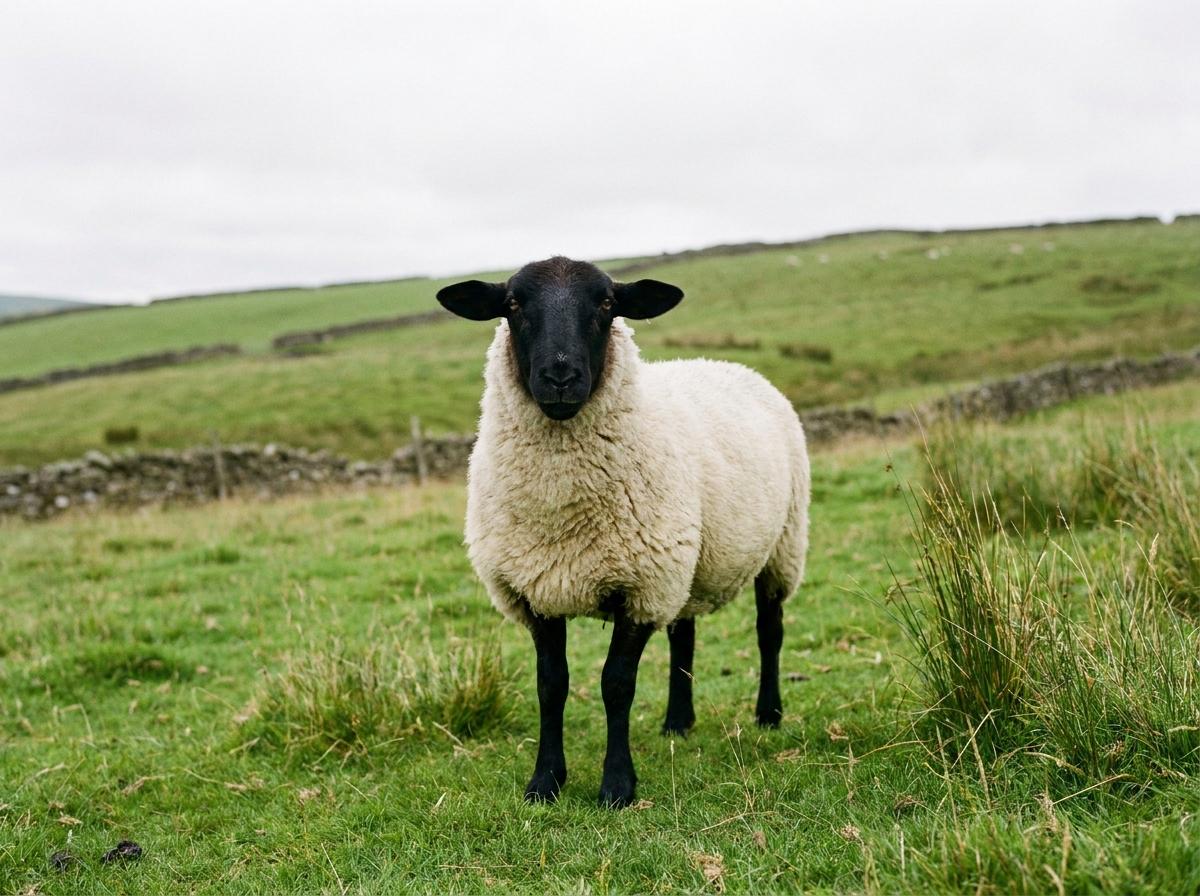
Other breed guides worth a look if you are still choosing: the Dorper for a meaty hair breed, and the Suffolk for a classic black-faced meat sire.
What Tunis sheep cost
There is no single price for a Tunis, and we will not invent one. Prices depend on registration, age, sex, show record and bloodline, and private-treaty farm prices are not published anywhere central. The clearest public evidence is the registry’s own sale reports.
2023 National Tunis Sale. The registry’s posted 2023 National Sale results list 67 Tunis sold for $55,100, an average of about $822 a head. Individual lots ranged from $300 for a slick-shorn ram lamb to $5,000 for an early yearling ewe, and half of the lots sold for $600 or less. These are registered, fitted show-and-sale animals, so expect ordinary commercial or unregistered Tunis to sell for less, and proven show winners for more. The registry’s show and sale results page lists later show results; it did not post a later national sale price report when we checked on October 17, 2026.
Creatures market data. The sheep auction price guide on Creatures lists only 12 qualifying Tunis records in its October 2026 release, computed October 19 and checked October 29, too few to publish a Tunis median. Across all sheep breeds the same release covers sales through October 7, 2026 and shows a median of $900 per head from 4,373 records. Use that as general context, not as a Tunis quote.
For a fuller picture of purchase price plus the yearly cost of feed, shearing, fencing and vet care, see how much a sheep costs. To see what comparable animals sold for, the free livestock value calculator gives an auction-backed range by species, breed, sex and age. It needs at least 25 matching sales, so for a breed as thin as the Tunis it will usually fall back to all sheep; read the result as context, not as an appraisal.
Buying a registered Tunis
A Tunis that looks right is not automatically a registered Tunis, and the two matter differently depending on your plans. If you want to breed and sell registered stock, or show in breed classes, buy registered animals and confirm the transfer.

Questions to work through with any seller:
- Papers and transfer. Ask for the registration certificate and who pays for the transfer. NTSR registrations and transfers go through Associated Registry, per the registry’s registrations page. Registered names are optional: the registry charges $25 to christen an animal, and the sheep name generator is a quick way to brainstorm one.
- The disqualifications. Check the jaw, look for horn or scurs, and look at the face and legs for white blazes, white socks or mottling. Any of these can keep an animal out of the registry.
- Structure. Watch the sheep walk. Look for straight, resilient pasterns, a level back, and on ewes a well-attached udder with two functional teats.
- Records. Ask for lambing dates, twin rates, deworming and FAMACHA history, and weights. A flock that keeps records can answer quickly.
- Health and identification. Scrapie is a fatal brain disease of sheep and goats that, according to USDA APHIS, can take two to five years to show signs. Ask how the flock identifies animals under the National Scrapie Eradication Program, and check with your state veterinarian’s office what identification and paperwork your state requires before you move sheep. The where to buy sheep guide lists the disease tests worth asking about.
Once your sheep are home, a pedigree is easier to keep current than to rebuild later. The free pedigree chart maker works for any species, and the sheep flock record book guide shows how to organize IDs, lambing and health in one place.
Showing Tunis sheep
The breed has an active show community. The registry publishes national show and junior show results, including its 2024 National Show at the Maryland State Fair and Tunis classes at the North American International Livestock Exposition. The standard allows yearlings and mature animals to be shown slick shorn or with no more than one inch of unblocked wool, and lambs in full fleece.
If you are new to the ring, our guide to showing sheep covers picking, feeding, fitting and showing. After the show you can add a Show result to the sheep’s Records tab, and the show results help article explains how placings appear on its public profile.
Frequently asked questions
Are Tunis sheep good for beginners?
The Livestock Conservancy rates them suitable for novice to intermediate keepers and describes them as docile. They are calm and moderate in size, which helps, but they are a wool breed, so a beginner also takes on annual shearing and the parasite management any grazing flock needs.
What are the disadvantages of Tunis sheep?
They need shearing, unlike hair breeds such as the Katahdin. Registered stock is less common than mainstream breeds, so you may wait or travel to find it. The breed standard is strict about color and structure, so a sheep with a white blaze, white socks or scurs over three-quarters of an inch cannot be registered. And their reputation for hardiness does not remove the need for FAMACHA checks, fecal egg counts and a sheep-safe mineral.
Do Tunis sheep have horns?
No. Both rams and ewes are polled. Rams may have small scurs, which the registry faults, and scurs over three-quarters of an inch disqualify a ram from registration. A ewe with any horn is disqualified.
Why are Tunis lambs red?
They are born with a red or tan coat. The body fleece lightens to cream as the wool grows, while the head, ears and legs stay red. Red fiber in a mature sheep’s fleece is a fault under the standard.
How big do Tunis sheep get?
The registry standard gives 175 to 225 pounds for rams and 125 to 175 pounds for ewes in breeding condition. Show animals often weigh more.
Is the Tunis a fat-tailed sheep?
It descends from fat-tailed North African sheep, but the modern American Tunis has only a slight fat tail. The standard asks breeders to leave at least one inch of tail on breeding stock.
Do this next on Creatures
Pick the step that matches where you are.
- Looking to buy? Tunis supply is thin, so the alert comes first. Save a Tunis listing alert and Creatures emails you when one is posted; no account needed to start. The saving searches help article explains alerts and your watchlist. Then check what is posted today on the Tunis marketplace page, or look for flocks in the breeder directory.
- Already have Tunis? Add your Tunis sheep to start a free profile with its photos, papers and pedigree; no account needed to start. Then add a record for a breeding, weight, FAMACHA score or treatment. The record form opens for visitors, and a free account saves it. See adding an animal and adding a record.
- Raising Tunis to sell? Create your farm or breeder profile so buyers searching for Tunis can find your flock; no account needed to start. The getting listed in the breeder directory article covers how listings appear.
Breed and registry-sale sources checked October 17, 2026. Breed-standard figures are from the National Tunis Sheep Registry; registry-sale figures are from its posted 2023 National Sale report. Creatures October market release checked October 29, 2026.