


Breed Club Member Directories: Roster Accuracy, Claims, and Public Listings
Author: Elliott Garber, DVM · Published
A breed club’s member directory is useful only when it reflects the roster the club actually manages. An imported row, a claimed account, a current membership, and a public directory entry are different states. The Creatures Association Hub guide explains where approved associations and registries manage those connections. Associations not yet set up can start with Creatures for breed associations.
AI-generated illustration.
| Authority | Correct approved association or registry |
|---|---|
| Roster | Use the current template and accurate email |
| Import | Resolve all validation errors |
| Claim | Link the member's own identity |
| Standing | Check status and relevant dates |
| Audience | Public or members-only |
| Embed | Update the website after token rotation |
Confirm who the directory represents
Decide whether the page introduces current members, helps visitors find breeders, or serves members privately. State that purpose in the directory introduction. A membership listing should not imply an inspection, health guarantee, or independent endorsement of every animal a member owns.
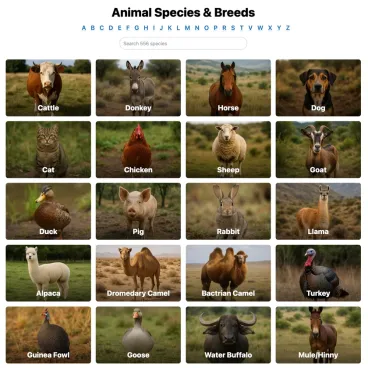
For a sheep association, a member may keep registered breeding stock, commercial animals, fiber animals, or no animals currently available for sale. Membership is not the same as inventory. The sheep species page and breed guides such as Border Leicester can explain the animals without making claims about a particular member’s availability.
The Association Hub is for approved registry or association relationships, managed by authorized people. Creating an ordinary farm organization does not by itself grant association authority. Check that you are in the correct Hub and acting for the right organization before importing or publishing anything.
For a sheep association, the sheep buying guide can help define useful information for visitors. A directory should support those questions without implying that membership replaces individual seller checks.
Prepare the roster from the current template
Download the current roster template from the Hub and map your source data to its columns. The membership roster guide describes supported fields, including member name, email, membership number, type, status, and relevant dates.
Email matters because it is used to match the member. Review misspellings and obsolete addresses before importing. Do not substitute a shared club mailbox for every person simply to make the sheet complete; that destroys the distinction the matching process needs.
Keep membership numbers as identifiers, not as arithmetic. Check leading zeros and formatting when moving between spreadsheet software and CSV. Use the date format the current template expects, and distinguish a membership’s effective or expiry dates from a note about when you last spoke to the person.
Make corrections in the source roster so the next import does not reintroduce them. A clean upload is easier to maintain when the club knows which file is its working record and who owns it.
Resolve validation before expecting changes

AI-generated illustration.
If any row fails validation, nothing is imported. The message names the first problem row, so fix it and re-upload the whole file; you may need more than one pass.
Reimporting updates matching roster records by email rather than creating a fresh member for every row. That makes accurate matching valuable, but it also means a changed email deserves care. Check the existing membership and claim state before deciding that a second row is the answer.
The imported roster is not permission to create personal accounts for people or to invent their public profile information. It records the association’s membership information and supports the member’s claim process.
Keep claim status and membership standing separate
A roster row can exist before the member has claimed it. Claiming links the membership to the person’s Creatures identity. Once linked, public identity information comes from the member’s profile or the farm organization the member links rather than an arbitrary display name in a later spreadsheet upload.
Membership standing is another check. An expired or otherwise non-current membership should not be described as current just because the account is claimed. Review the recorded status and dates through the membership workflow.
When someone reports that their listing is missing, inspect these pieces in order: correct roster row, a verified account email matching the roster email, linked identity, membership standing, the verified-member badge setting and any badge revocation, then directory visibility. This is more effective than repeatedly importing the same file without understanding which state is incomplete.
Choose public or members-only visibility deliberately
In the Hub’s Directory settings, review whether the directory is enabled and whether its audience is public or members-only. Preview the result for the intended audience before announcing it.
A public directory shows eligible claimed members in good standing. It is not a public dump of the source CSV. Still, members should understand which profile information visitors will see and have a clear route to correct it.
A members-only directory is a different publication choice. Its embed is disabled for public use. Do not promise a private member list while distributing an unrestricted copy elsewhere; review every place you publish membership information, including exported files and manually maintained website pages.
Treat the embed as part of the public page
If you use the directory embed on the association’s website, review the actual embedded page after setup. Check its title, introductory text, member cards, and the links visitors can follow. A correct Hub preview does not prove an old embed elsewhere has been updated.
Rotating an embed token requires updating the website’s embed code. Coordinate that as a small website change, and verify the destination afterwards. Do not rotate a working token casually and leave the public page broken.
The farm website privacy checklist offers a similar visitor-view review for farm sites. Association administrators should apply the same habit: inspect what a signed-out person sees, not only the controls available to an administrator.
Explain badges without overclaiming

AI-generated illustration.
A membership badge communicates the relationship it represents. It is not a substitute for checking an individual animal’s registration, health records, or sale terms. Keep the directory introduction and member-facing guidance precise about that distinction.
If a member also wants a breeder listing, the breeder directory profile checklist covers that separate organization profile. The organization and team guide explains shared profile management. A club membership and a farm’s public introduction can support each other without being interchangeable.
A breed page such as the Dorper guide supplies breed and registration context. Keep that animal-level evidence separate from a badge showing club membership.
Give corrections an owner and a repeatable route
Tell members how to report a wrong email, missing claim, renewal issue, or public profile detail. These requests may need different fixes. A member can update their profile identity, while the association remains responsible for its roster and standing decisions.
After a roster update, spot-check new members, a renewed membership, and any corrected row that prompted the work. After a visibility change, test the directory as the intended audience. Keep the check focused on the change rather than assuming that a successful import means every public surface is correct.
Common questions
Does importing a member make them publicly listed immediately?
No. Claim state, membership standing, the enabled verified-member badge and directory settings also matter. Review those states before promising a public listing.
Can a members-only directory be embedded publicly?
The public embed is disabled for members-only visibility. Choose the audience first, then use the publishing options that match it.
Does a membership badge endorse an animal for sale?
It identifies the membership relationship. Buyers still need to evaluate the animal, records, seller, and sale terms themselves.
Do this next on Creatures
Choose the next step that fits your animal or program:
- Start an organization profile for your farm or breeding program.
- Explore the breeder directory to review profiles and contact breeders with specific questions.
- Add an animal profile to organize its identity and history.
- Add a record for a document, observation, or completed event.
- Save a search alert for listings matching your needs.
- Browse sheep on the marketplace and read each listing’s current terms.
For help getting started, read how to add an animal, save a record, and manage saved searches. You can begin the profile and record flows before signing in; saving your work requires an account.