Giant Angora
Author: Elliott Garber, DVM · Published
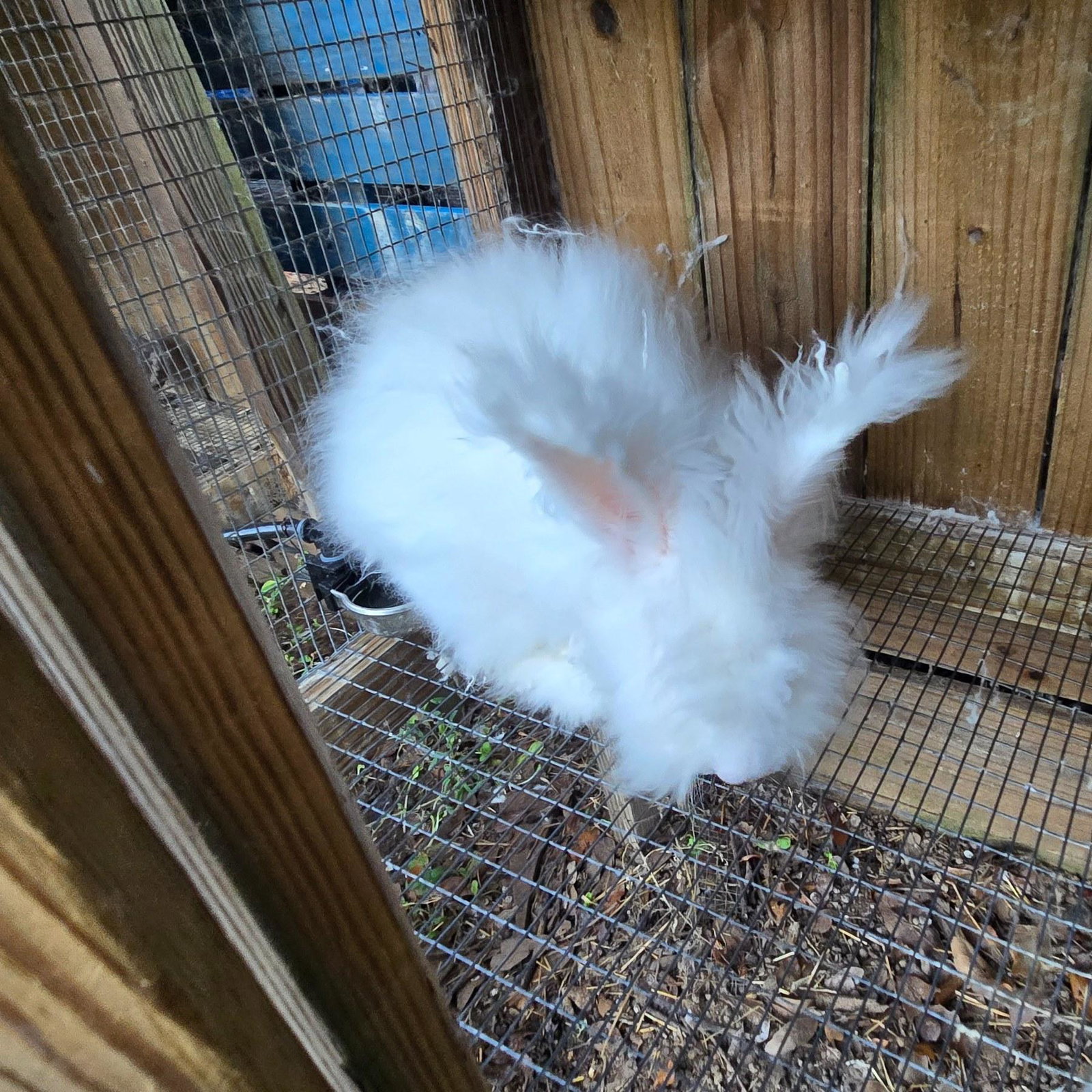
The Giant Angora is the largest of the four Angora breeds recognized by the American Rabbit Breeders Association (ARBA), and it was built for one job: growing a heavy crop of wool on a big, commercial-type body. A senior doe must weigh at least 10 pounds to meet the show standard, there is no maximum weight, and the coat does not molt, so it has to be sheared or clipped by a person. That last fact shapes everything else about owning one.
If you are still deciding, read this guide alongside the Creatures rabbit hub, which collects every rabbit breed and care guide in one place. Giant Angoras are scarce: the Creatures breeder directory lists only a handful of Giant Angora breeders today, so the most practical first step is to save a Giant Angora listing alert and get an email when one is listed. No account is needed to start.

| Registry | ARBA, one of its four Angora breeds; national club is the NARBC |
|---|---|
| Senior minimum weight | Bucks 9.5 lb, does 10 lb; no maximum |
| Show classes | Six-class breed: junior, intermediate and senior bucks and does |
| Show colors | Ruby-eyed white and chestnut, per the national club |
| Coat | Underwool, awn fluff and awn hair; does not molt |
| Wool harvest | Sheared or clipped, not plucked |
| Yearly wool | Up to 28 to 40 oz, per the national club’s beginner guide |
| Biggest demands | Weekly grooming, scheduled shearing, cool housing |
Browse listings, public profiles, breeders, or add your animal.
What the breed standard asks for
ARBA’s Giant Angora breed page sums the breed up in three facts: it is the largest of ARBA’s four Angora breeds, it was developed specifically as a wool producer, and it must be shorn because it does not molt. The other three ARBA Angoras are the English Angora, the French Angora and the Satin Angora. You will also see the German Angora offered; it is a separate wool rabbit with its own following, and it is not one of ARBA’s four.
The National Angora Rabbit Breeders Club (NARBC) describes the Giant as the only six-class animal among the Angoras. That means juniors, intermediates and seniors of each sex are judged as separate classes:
- Juniors are under 6 months and must weigh at least 4 3/4 pounds.
- Intermediates are 6 to 8 months old.
- Seniors are 8 months or older. A senior buck must weigh at least 9 1/2 pounds and a senior doe at least 10 pounds.
ARBA lists no maximum weight. These are show minimums, not feeding targets. A pet that falls short of them is not unhealthy for that reason, and a rabbit pushed to a heavier number with extra food is not a better Giant. Ask your veterinarian to judge body condition by hand, under the wool, where your eyes cannot.
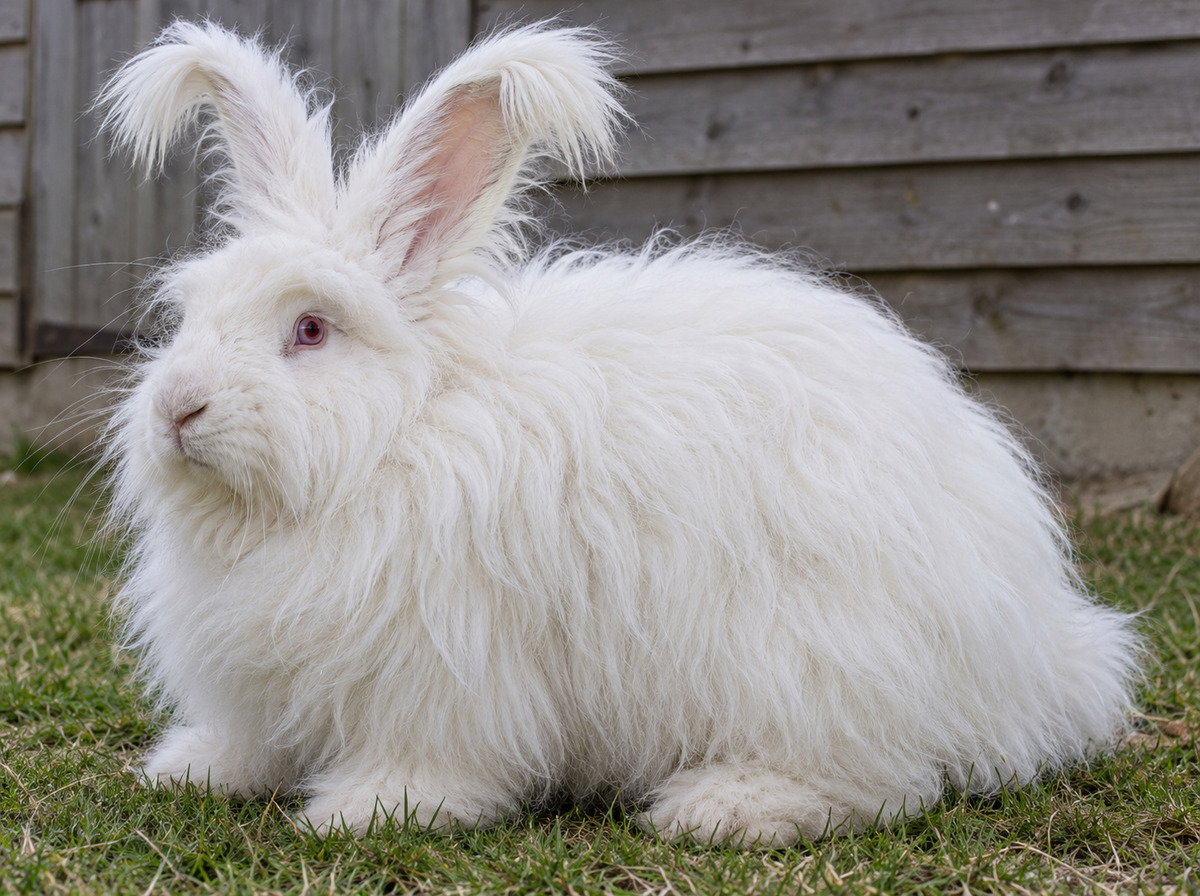
The body is described as commercial type, with an oval head that is broad across the forehead and slightly narrower at the muzzle. The national club calls for forehead tufts and cheek furnishings, with lightly fringed, well-tasseled ears. Bucks usually carry heavier head trimmings than does. In judging, most of the points go to the wool (density, texture and length), with the rest for general type.

Colors: narrower than buyers expect
According to the national club, a Giant Angora can be shown in only two colors: ruby-eyed white and chestnut. Large wool rabbits are sometimes sold in other colors, and some may be excellent fiber animals, but a seller should not describe them as show-eligible Giant Angoras. If you hope to exhibit, ask for the color in writing and confirm it against the current ARBA Standard of Perfection before you pay.
Where the breed came from
Neither ARBA’s breed page nor the national club’s page gives a founding history, and popular online accounts of who developed the breed and when vary in their details. What the primary sources do support is the breed’s purpose: a large rabbit selected for wool yield. Treat any precise origin story in a sales listing as tradition unless the seller can point to a registry or club source.
The wool: three fibers and no molt
The coat is the reason this breed exists, and it is different from the coat of most rabbits. ARBA and the national club both describe three fiber types:
- Underwool, which should dominate. The club calls for it to be medium fine, soft, delicately waved and gently lustrous.
- Awn fluff, a stronger, wavy wool with a guard-hair tip that sits between the other two.
- Awn hair, the straight, strong guard hair that must be present and visible above the wool.
Most rabbits shed their coat in a molt, and Angoras of some breeds release wool that a keeper can gently pluck when it is ready. The Giant does not. ARBA’s page states plainly that the breed “must be shorn.” A harvesting article published by the national club agrees that Giants do better sheared or clipped than plucked. If a seller talks about plucking a Giant Angora, that is a reason to ask more questions.
Yield is the breed’s selling point. The NARBC’s beginner’s guide to Angora care says English, French and Satin Angoras can yield 10 to 16 ounces of wool a year, while Giants can produce up to 28 to 40 ounces. That is a club figure for well-kept rabbits from selected lines, not a promise for any individual. If wool yield matters to you, ask the breeder for the parents’ actual clip weights.
Grooming and shearing on a schedule
A Giant Angora is a commitment of hours every month, every month of the year. The care routine has two parts: regular grooming to keep the coat open and free of mats, and a harvest that removes the coat before it becomes a problem.

Regular grooming. The national club’s beginner guide suggests grooming about once a week, with more frequent handling to help you and the rabbit get used to each other. Comb or brush through the whole coat, paying close attention to places that rub together, such as the base of the tail and behind the ears, plus the legs and belly. Many Angora keepers use a pet blower to part the wool and see down to the skin. The Merck Veterinary Manual lists daily combing to remove loose hair among the ways to help prevent digestive slowdown in rabbits, so a short daily check suits this breed well.
Mats. A mat that you can separate with your fingers can be combed out gently. A solid mat close to the skin needs a careful cut, and rabbit skin is thin and easy to nick. If you are not confident, have the breeder or your veterinarian show you before you try it. Never pull a tight mat away from the skin.
The harvest. The club’s harvesting article puts the first harvest at about 5 to 8 months for Angoras in general, older in Giants, and then roughly every four months, varying with genetics, weather, breeding and showing. Shearing is a skill: work in thin rows, keep the blade flat to the body, and stop if the rabbit is distressed. Ask your breeder to demonstrate a full shearing before you take a rabbit home, and book a second session if you need it.
Handling. Work with the rabbit on a stable, nonslip surface at a comfortable height. The RSPCA’s rabbit handling advice is to support the body and hindquarters properly, never pick a rabbit up by the ears or scruff, and never hold a rabbit on its back. Some older Angora grooming instructions describe turning the rabbit over; ask your veterinarian for a gentler way to reach the belly instead. Our rabbit handling and bonding guide covers floor-level trust building, and the nail and dental care guide covers the rest of the grooming kit.
Heat, housing and floors
A full wool coat is excellent insulation, which is welcome in winter and dangerous in summer. The Merck Veterinary Manual says rabbits are sensitive to heat, and that hot, humid weather and poorly ventilated hutches can kill them. Where conditions can be controlled, Merck gives 50 to 70 F with 40 to 60 percent relative humidity as optimal, and offers a rule of thumb: the temperature in Fahrenheit plus the relative humidity in percent should not go over 150. The RSPCA’s health guidance gives a similar recommended range of 10 to 20 C.

For a Giant Angora, that makes the shearing calendar part of heat planning. A rabbit in full coat at the start of a hot spell is at greater risk than one recently clipped. Shade, airflow and a cool, well-ventilated building matter more than any single cooling trick. Learn the warning signs in our guide to keeping rabbits cool and preventing heat stroke, and treat a rabbit that is stretched out and breathing rapidly in the heat as an emergency for your veterinarian.
Floors deserve the same attention. Merck notes that heavy breeds such as the Flemish Giant are susceptible to sore hocks, which can result from bearing body weight on wire floors, and advises a solid resting floor, such as a board or mat, for rabbits that have them. The RSPCA’s housing guidance goes further for every rabbit: floors should be solid and non-slip, not wired or barred, and the space should let a rabbit lie fully stretched out. The national club’s beginner guide still recommends all-wire cages to keep the wool off soiled bedding, so the sources do not agree. Follow the welfare sources: give solid, non-slip flooring, and keep the wool clean by changing bedding often rather than by putting the rabbit on wire. Compare layouts in the rabbit housing guide and size them for a 10-pound rabbit that needs room to stretch out and hop.
Cleanliness is also about flystrike. The RSPCA says long-haired rabbits are at greater risk, and advises checking the fur and skin around the rear end and tail twice a day in warm weather. A soiled rear on a wool rabbit is a reason to look for the cause with your veterinarian, not just to trim the wool.
Health: wool, digestion and when to call the vet
Angora keepers talk a lot about “wool block,” the idea that swallowed wool jams the gut. The national club’s beginner guide treats it as a serious, potentially fatal risk. Veterinary sources frame it a little differently. Merck’s owner guide to digestive disorders in rabbits says true hairballs that block the digestive tract are uncommon but serious, and that rabbits more often stop eating because of too little dietary fiber or another problem such as dental disease, then develop gastrointestinal stasis.
Both views lead to the same daily habits: plenty of hay, a coat kept free of loose and overgrown wool, and attention to appetite and droppings. They also lead to the same rule: if your Giant Angora stops eating, or its droppings get smaller or stop, contact your veterinarian promptly. Do not rely on home remedies from forums or older handouts. Our GI stasis guide explains what to watch for while you make that call, and the rabbit diet guide covers the hay-first diet that supports a working gut.
Ask your veterinarian which vaccines your rabbit needs where you live. In the US, rabbit hemorrhagic disease virus type 2 (RHDV2) is the main question; our rabbit vaccination guide explains the disease, the vaccine and how to keep the dates straight. The common rabbit illnesses guide covers the rest, and the rabbit health record template shows what to write down and when.
Breeding Giant Angoras
Breeders select for wool density, texture and length on a large frame, while keeping does that can raise litters under a heavy coat. Rabbit gestation is short, so plan the doe’s coat care around the expected kindling date. The free rabbit gestation calculator gives you a due date from the breeding date, and the rabbit pregnancy guide explains the timeline. Ask an experienced Giant Angora breeder how they manage a doe’s wool before and after she kindles, because the right timing depends on the individual rabbit and the season.
Our rabbit breeding guide covers breeding age, pairing, nest boxes and kindling. For show stock, keep the six-class weights in mind: a junior that is under the 4 3/4 pound minimum cannot be shown in that class, so weigh and record growth on a schedule. Build each litter’s lineage with the free rabbit pedigree chart maker, which keeps ear numbers and weights with each ancestor.
Buying a Giant Angora
Because supply is thin, you may wait for the right rabbit, and that is fine. Use the wait to find a breeder who will teach you the coat. Our guide to where to buy a rabbit explains how to judge a breeder or rescue. For a Giant Angora, also ask:
- What color is it, and is it show-eligible? Ruby-eyed white and chestnut are the club’s showable colors.
- When was it last sheared, and how? You want a clear answer and a recent date, not “it sheds on its own.”
- Can I watch a grooming session and a shearing? A breeder who wants the rabbit to thrive will usually say yes.
- What do the parents weigh, and what do they clip? Senior minimums are 9 1/2 pounds for bucks and 10 for does.
- What paperwork comes with it? Ask for the pedigree, date of birth, sex and any veterinary history in writing.
There is no dated, public price data for Giant Angoras that we can cite, and asking prices vary with color, show quality, lines and region. Get a written quote that covers the rabbit, any deposit and transport, then use the rabbit cost guide to budget for the larger housing, grooming equipment and veterinary care a 10-pound wool rabbit needs.
If you plan to exhibit, read our guide to how ARBA rabbit shows work and keep each result with its paperwork, as described in the show results records guide.
Is a Giant Angora the right rabbit for you?
A Giant Angora suits someone who wants the wool, or at least enjoys the routine that produces it. Someone who loves the look but not the work may be happier with a smaller wool breed such as the Jersey Wooly or the American Fuzzy Lop, which still need grooming but carry far less coat. Someone who mainly wants a very large rabbit should compare the short-coated Flemish Giant and Continental Giant. Picking a name for your new rabbit? Try the free rabbit name generator.
Giant Angora questions
Do Giant Angoras shed?
Not in the usual way. ARBA states that the breed does not molt and must be shorn, so the coat keeps growing until you harvest it.
How big do Giant Angoras get?
The show standard sets minimums, not a maximum: senior bucks at least 9 1/2 pounds and senior does at least 10 pounds. Individual rabbits vary.
Can you pluck a Giant Angora?
Plucking is the wrong tool for this breed. Because Giants do not release their wool in a molt, they are sheared or clipped instead.
What colors do Giant Angoras come in?
The national club lists two show colors: ruby-eyed white and chestnut. Rabbits sold in other colors may be good wool animals, but they are not show-eligible Giants.
How much wool does a Giant Angora produce?
The national club’s beginner guide says up to 28 to 40 ounces a year, compared with 10 to 16 ounces for the other three Angora breeds. Individual yield depends on lines and care.
Are Giant Angoras good pets?
They can be, for a household ready to groom weekly, shear on a schedule and keep the rabbit cool. The coat is the deciding factor, not the temperament label.
Do this next on Creatures
Waiting for the right rabbit? Get an email alert when a Giant Angora is listed. With so few Giant Angoras for sale at any time, the alert is the most reliable way to hear about one, and no account is needed to set it up. The Help Center explains saved searches and alerts.
Contact breeders directly. Browse the Creatures breeder directory, filter to rabbits, and ask breeders about their Giant Angora lines, colors and shearing routine.
Check current listings. See Giant Angoras for sale on the Creatures marketplace. If nothing is listed today, the alert above will tell you when that changes.
Log the next shearing or vet visit. Add a record for a grooming session, a weight or a vaccination, and set a reminder for the next one. The form opens for visitors; a free account is needed to save it. The Help Center covers adding an animal, adding a record and reminders and upcoming care.
Breed Giant Angoras? Create a free rabbitry profile so buyers searching for this rare breed can find you, then see how to get listed in the breeder directory.