How to Tell If a Rabbit Is Pregnant: Palpation, Signs and False Pregnancy
Author: Elliott Garber, DVM · Published
The most reliable way to tell if a rabbit is pregnant is an abdominal check about 10 to 14 days after mating by an experienced breeder or a rabbit-savvy veterinarian, who can feel the small, firm embryos along her belly, or a veterinary examination with ultrasound. Behavior is a poor test: nesting and fur pulling usually start only a day or two before kindling, and a doe in a false pregnancy does both without carrying a single kit. Write the mating date down first, then put it in the free rabbit gestation calculator so you know which day to check and when to expect kits.
The Merck Veterinary Manual’s rabbit management chapter names day 12 after breeding as the best time to palpate and calls palpation “a much better technique” than test mating. If you have never palpated a doe, have an experienced breeder or a rabbit-savvy veterinarian do the check. Pressing too hard can hurt the doe and the litter she may be carrying, which is why it is a skill learned in person, not from a page.
Sources checked November 14, 2026. This guide covers how pregnancy is confirmed, what the signs do and do not mean, and how to keep the result with the doe’s breeding record. Diagnosis of a sick doe and any treatment belong with your veterinarian. The Creatures rabbit page collects the breed guides and tools in one place.
| Best early check | Abdominal palpation by an experienced breeder or a rabbit-savvy vet |
|---|---|
| When to check | Day 12 after mating per Merck; most checks fall between days 10 and 14 |
| What you feel | Small, firm, round embryos, described as grape sized by Merck |
| Veterinary option | Examination and ultrasound; studies detect embryos from about days 8 to 13 |
| Unreliable signs | Test mating, appetite, mood and an early nest |
| False pregnancy | Common in rabbits; nesting around days 16 to 18 with no kits |
| Expected kindling | About 31 to 33 days after mating |
| Call a vet now | No kits by day 32, or a heavily pregnant doe who stops eating |
Why the mating date comes first
Rabbits are induced ovulators: Merck explains that the doe releases eggs in response to mating rather than on a fixed cycle. That makes the mating date the start of the clock for every check in this guide. Without it, “day 12” means nothing, and an uncertain doe drifts toward day 30 with nobody sure whether to expect kits.
Write down the date, the buck and whether you saw a completed mating. Oregon State University Extension’s guide to raising rabbits describes the signs that mating has occurred, including the buck falling to the side or backwards off the doe. If the doe and buck shared a pen for several days, keep the first and last possible dates instead of picking one.
From that date the rest follows. Gestation runs about 31 to 33 days in Merck’s figures, with small litters (usually four or fewer) tending toward the longer end. Our guide to how long rabbits are pregnant walks through a worked calendar, and the calculator’s Exposure Window option handles a pairing that lasted several days.
| Day 0 | Mating; record the date, buck and whether you saw it |
|---|---|
| Days 8 to 13 | Ultrasound can show embryonic vesicles in research settings |
| Days 10 to 14 | Palpation window; Merck names day 12 as best |
| Days 16 to 18 | A nest built now, with no embryos felt earlier, points to false pregnancy |
| Days 28 to 29 | Nest box goes in, per Merck |
| 1 to 2 days before kindling | Doe pulls fur and builds her nest |
| Day 31 | Usual planning date for kindling |
| Day 32 with no kits | Call a rabbit veterinarian that day |
Palpation: the check breeders rely on
Palpation means feeling the doe’s abdomen for the developing embryos. It costs nothing, takes a few minutes and, done at the right time by someone who knows the feel, gives an answer weeks before the belly changes. It is also the check most likely to be done badly, so have an experienced breeder or a rabbit-savvy veterinarian do it, and learn it from them in person before you rely on your own result.

When to have her checked
Merck says the best time to palpate is 12 days after breeding. Oregon State Extension adds that a litter is difficult to feel in the first 10 days, when the developing kits are about the size of a blueberry. A small Turkish study of 25 New Zealand White does (Akar and Canooğlu, 2009) found that palpation first detected pregnancy at an average of about day 12, with a range of days 10 to 14. That is the window the Creatures breeding reminder uses too.
A check on day 8 that finds nothing proves nothing. If a day 10 check is unsure, have her checked once more nearer day 12 to 14 rather than handled every day. Past about day 14 the usual window has closed. If you missed it, a veterinary examination is a better next step than repeated handling of a doe who may be well into her pregnancy.
Who should do the check
An experienced breeder or rabbit-savvy veterinarian can feel for developing embryos during an abdominal exam, and that is as far as this guide goes. The abdomen also holds the gut and its contents, and telling those apart from embryos is exactly what an experienced breeder or vet brings to the check. Hard pressure can injure the doe or the pregnancy. Until you have learned in person from someone practiced and felt confirmed pregnancies several times, treat your own result as “not sure” and have it confirmed. For everyday lifting and holding, our rabbit handling guide covers safe handling.
Reading the result
When an experienced examiner feels a clear row of embryos at day 12, that is a positive result. Write it down with the date, who checked her and, if they could count them, the rough number, knowing a count by feel is an estimate. A negative result at day 12 to 14 needs more care: palpation can miss an early pregnancy, so confirm a negative with your veterinarian, for example by ultrasound, before you act on it with a breeding decision such as pairing her again. If matings keep not taking, ask a vet why.
An uncertain result stays uncertain. Record it as such, have it confirmed before any breeding decision, and keep the nest box date on the calendar anyway, because a pregnant doe still needs a box by day 28 whether or not anyone felt the embryos.
Veterinary confirmation: examination and ultrasound
A rabbit-savvy veterinarian can examine the doe and, where it helps, confirm pregnancy with ultrasound. This is the sensible first step for a pet doe with an unknown history, for a doe when no experienced breeder can check her, and for any doe who is also off her food or otherwise unwell, since the vet can assess her health at the same visit. Our guide to finding a rabbit-savvy vet is worth reading before you need one.
The research on timing is small but consistent. In a World Rabbit Science study by Ypsilantis and Saratsis, ultrasound showed countable embryonic vesicles about 8 mm across on day 8 after artificial insemination, growing to about 17 mm by day 10. In the Akar and Canooğlu study, ultrasound first confirmed pregnancy at an average of about day 11 (range 9 to 13), fetal heartbeats were first seen on day 16 and bone formation on day 19. The same authors reported that droppings and gut gas made early scans harder, and that a definite diagnosis could be made from day 13.
Those were controlled studies with specialist equipment, so do not treat any single day as a promise. Ask your vet which check and timing they recommend for your doe, and keep their finding, with its date, alongside your own.
Signs you can see, and why they mislead
Every keeper wants a visible sign, and the honest answer is that rabbits give few useful ones before the last days of pregnancy.
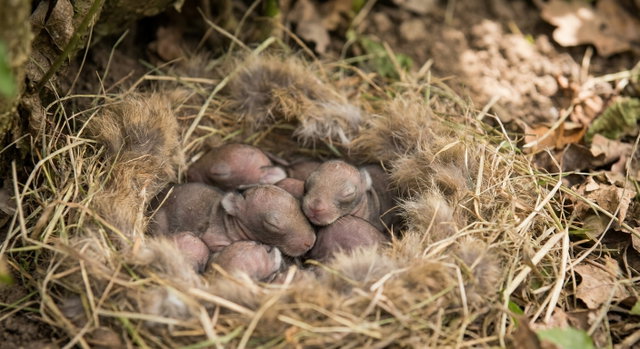
Nesting and fur pulling. According to Merck, the doe pulls fur from her body and builds a nest in the box a day or two before kindling. That is a sign kindling is close, not a pregnancy test, and a pseudopregnant doe does the same thing about two weeks earlier.
Weight and belly shape. A pregnant doe gains weight, but gradually and mostly late. On a well-furred or well-conditioned rabbit it is easy to miss and easy to imagine. Weighing her on the same scale at the same time each week adds some evidence; it does not replace a check. The rabbit weights guide explains body condition.
Refusing the buck (test mating). Some breeders return the doe to the buck and read a refusal as pregnancy. The Alabama 4-H rabbit production manual describes doing this 18 to 20 days after mating. The Merck manual, describing test mating 10 to 16 days after breeding, says plainly that it is unreliable. A doe’s response tells you how she felt about that buck that day; it does not tell you what is in her uterus. Palpation answers the question earlier without another pairing.
Mood and appetite. Behavior changes vary from doe to doe, and many pregnant does show nothing at all. A change in mood is not a test. A drop in appetite in late pregnancy is not a sign to wait on; it is a reason to call a vet, covered below.
False pregnancy: nesting without kits
Pseudopregnancy is common in rabbits. Merck says it can follow any induced ovulation, the introduction of a male rabbit into the environment, or other stimuli. Utah State University Extension’s rabbit breeding guide names sterile mating and physical stimulation from other rabbits as common causes and says false pregnancies last around 17 days and are generally harmless.
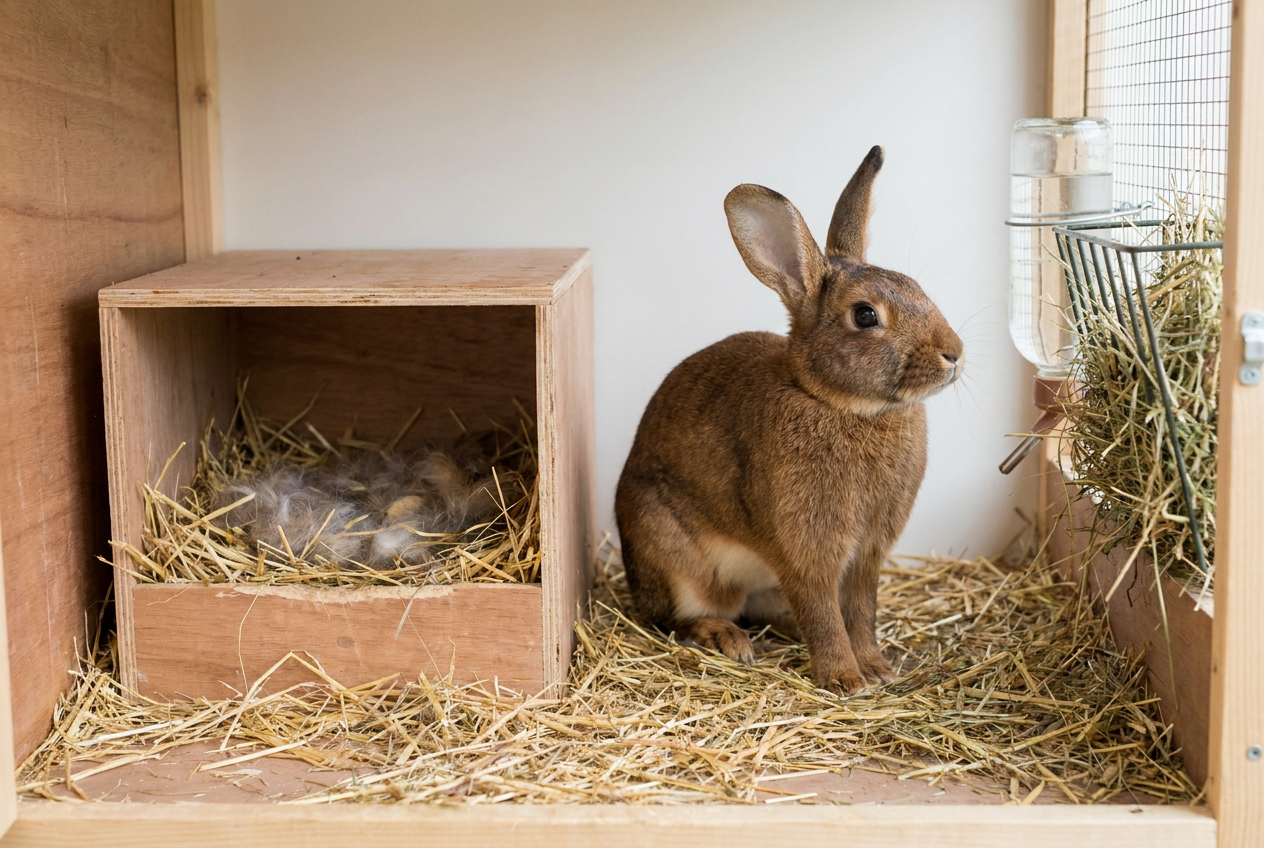
That timing is your best clue. A doe who pulls fur and builds a nest around day 16 to 18 after her last contact with a buck, and in whom nobody felt embryos at day 12, is very likely pseudopregnant. A real nest is usually built in the last day or two before kindling, around day 29 to 31. If she was checked at day 12 and you recorded the result, you already have most of your answer.
A single false pregnancy is not an emergency. If it keeps happening in an unspayed pet doe, or she becomes aggressive or stops eating, talk to your vet. Spaying ends the cycle, and our guide to spaying and neutering rabbits covers why it is often recommended for pet does.
If your pet rabbit might be pregnant by accident
Accidental litters usually begin with two “females” that were not, or a young buck left with his sisters too long. If that has happened:
- Separate the buck now. Merck notes that a doe can conceive again 24 hours after kindling, so leaving him in risks a second litter straight after the first. Our rabbit sexing guide helps if you are not sure who is who.
- Work out the window. Note the first and last days they could have mated and enter both in the rabbit gestation calculator using its Exposure Window option.
- Book a vet check rather than trying to palpate yourself. Without a known mating date you cannot aim for day 12, and a vet can also check that she is healthy enough to carry a litter.
- Have a nest box ready. Our nest box and kindling guide explains the box, bedding and first litter checks.
When to call a veterinarian now
A rabbit pregnancy is short, and the problems at its end move quickly. Call a rabbit-savvy veterinarian the same day if any of these happen.
- No kits by day 32. Merck says that if a doe has not kindled by day 32, a dead litter is almost always delivered sometime after day 34 unless a veterinarian intervenes. There is nothing safe to give her yourself.
- She stops eating, or turns dull and sluggish, in late pregnancy. Merck’s chapter on noninfectious rabbit diseases describes pregnancy toxemia as rare but able to kill a doe at, or one to two days before, kindling. It is more common in first-litter does, and obesity and lack of exercise predispose to it. Dull eyes, sluggishness and breathing difficulty are among the signs. Any rabbit that stops eating needs prompt help, as our GI stasis guide explains.
- She strains or is clearly distressed without producing kits, or kindling starts and then stops with her still uncomfortable.
- She is panting, limp or unresponsive in hot weather. Late-pregnant does are especially vulnerable; see keeping rabbits cool.
Pregnant does also occasionally abort or resorb a litter because of nutritional deficiencies or disease, Merck notes. A pregnancy that seems to vanish deserves a vet check rather than a guess.
Recording the pregnancy check on Creatures
A rabbit pregnancy fits a month, and the dates that matter (mating, day 12 check, nest box, kindling, the day-32 call) crowd together. A card on the hutch works for one doe. With two does due in the same week, the record needs to live with each animal.
Start with the free calculator. The rabbit gestation calculator works without an account. Enter an exact breeding date or an exposure window and it returns the expected kindling date (mating plus 31 days) and a 28 to 33 day preparation window. The gestation calculator help article explains both modes.
Record the breeding on the doe. Add a Breeding & Reproduction record, pick the buck from your animals or type his name if he lives elsewhere, and turn on due-date tracking. Creatures projects the due date and window and lays out projected reminders for the species. For rabbits these include a palpation pregnancy check from day 10 to 14 and adding the nest box at day 28. Recording a breeding walks through the fields.
Save the check as its own record. A Pregnancy Check record holds the exam date, the result (Pregnant, Not pregnant or Not sure) and an optional count of kits. Use Not sure honestly; it keeps an uncertain day 10 check from looking like a confirmed pregnancy later. A veterinarian’s finding can go in the same record type, or as a Test Result with the ultrasound subtype and the report date. If a check gives you better dates than the calculator, tracking pregnancy and progress shows how to adjust the projection rather than starting a second record.
Watch every doe from one screen. The breeding dashboard lists tracked pregnancies with what is due soon or overdue, along with the projected reminders. Overdue means the window has passed with no birth recorded; do not wait for that label to call the vet. A single known mating keeps the rabbit window open to day 33, so the day-32 call comes first.
Use a Care routine if you breed regularly. The curated Rabbit kindling chain protocol sets reminders from the mating date for a day 12 palpation check, the nest box at day 28, expected kindling at day 31 and the weaning window. Breeding and reproductive care protocols explains how to apply one, and reminders and upcoming care covers one-off reminders such as a day 32 check.
Record the kindling. When the kits arrive, record the birth with kits born alive and any stillborn. Creatures closes the pregnancy and creates a private litter group, and you can add individual kit profiles when you are ready to identify them. See recording births and creating a litter. Over several litters, the records answer questions memory cannot: which does run long with small litters, which buck’s matings take, and how often a doe has had a false pregnancy. When the kits go to new homes, the free rabbit pedigree chart maker lays out their ancestry without an account.
Creatures keeps the dates and results you enter. It does not palpate, diagnose a pregnancy or decide when a doe needs a vet.
After a positive check: the next jobs
Once embryos are confirmed, the work shifts to preparation. Keep her lean and active rather than fattening her up, since Merck ties obesity and inactivity to pregnancy toxemia, and let your vet guide any diet change. Our rabbit diet guide covers the everyday ration.
Have the nest box clean and ready to go in on day 28 to 29. Boxes added too soon get fouled with urine and droppings, Merck warns. Keep the buck away from her before and after kindling. The wider plan, from breeding age to the first weeks with a litter, is in the rabbit breeding guide and the baby rabbit care guide.
If you also keep goats, the logic carries over with different numbers: our goat pregnancy test guide compares ultrasound, blood tests and the signs that mislead in does.
Frequently asked questions
How soon can you tell if a rabbit is pregnant?
By palpation, from about day 10 to 14 after mating, with day 12 the best single day according to Merck. In research settings, ultrasound has shown embryonic vesicles as early as day 8. Visible signs usually appear only in the last days before kindling.
Can you tell if a rabbit is pregnant by looking at her?
Rarely, and not early. Weight gain is gradual and easy to misjudge, and nesting appears a day or two before kindling or during a false pregnancy. Palpation or a veterinary examination is the reliable route.
Does a pregnant rabbit refuse the buck?
Some do, but Merck calls test mating unreliable, so a refusal is not a result. Palpation at day 12 gives a better answer without another pairing.
What does a pregnant rabbit’s belly feel like at day 12?
An experienced hand feels a row of small, firm, round embryos along each side of the lower abdomen, described as grape sized by Merck. Learning to tell them from the rest of the abdomen takes practice, which is why a first attempt should be guided.
How long does a false pregnancy last in a rabbit?
Utah State Extension puts it at around 17 days. A doe who nests around day 16 to 18 after contact with a buck, with no embryos felt at day 12, is probably pseudopregnant.
Is palpation safe for the doe?
In experienced hands and in the right window, it is a routine check for breeders. Hard pressure can injure the doe or the pregnancy, so if you have never done it, have an experienced breeder or a rabbit-savvy vet do it.
My doe was palpated pregnant but has not kindled by day 32. What now?
Call a rabbit veterinarian that day. Merck says a doe who has not kindled by day 32 almost always delivers a dead litter after day 34 without veterinary intervention.
Do this next on Creatures
You have a mating date and a doe to check. These are the next useful steps, in the order most breeders need them.
- Record the breeding or pregnancy check on your doe with the date, buck and result. This opens for visitors; a free account is needed to save it. How to add a record explains the fields.
- Add your doe’s profile so her matings, checks and litters stay together. Guest signup can start in this flow. How to add an animal shows the fields.
- Create your rabbitry’s profile when several does, people or litters belong to the same program. Getting listed in the breeder directory explains the public profile.
- Save a rabbit listing search if you are looking for a new buck or doe, and get an email when matching listings appear. Saved searches and your watchlist explains the alert.
- Browse rabbit listings to compare animals that are for sale now. What is listed changes from week to week.
- Browse the breeder directory to find rabbitries and other programs to contact directly.