Gypsy Vanner
Author: Elliott Garber, DVM · Published
The Gypsy Vanner is a compact, heavily feathered horse with a small-draft build and a history of wagon work. Today buyers consider these horses for riding, driving and showing. The mane, tail and patterned coat may catch your eye, but registry identity, sound legs, suitable training and daily management deserve the buying decision.
If coat color is part of your breeding research, the free horse coat color calculator can explore possible outcomes from the parent information you enter. It cannot identify a horse’s genotype from its photograph or establish breed eligibility.

| Build | Compact, muscular, small draft horse impression |
|---|---|
| Distinctive hair | Full mane and tail, abundant lower-leg feather |
| Color | Many colors and patterns, not only black and white |
| GVHS target height | 13.2 to 15.2 hands, with eligible variation outside it |
| Registry question | Which society and which certificate does this horse have? |
| Care priority | Inspect skin beneath feather and maintain sound feet |
Browse listings, public profiles, breeders, or add your animal.
Gypsy Vanner, Gypsy Cob and the registry name
These names overlap in ordinary conversation, but the paperwork comes from particular organizations. In the United States, the Gypsy Vanner Horse Society registers horses under its own breed definition and eligibility rules. Its current FAQs explain the Vanner name, the wagon-pulling background and the society’s approach to registration. US buyers may also encounter the Gypsy Horse Association (GHA) and the Gypsy Horse Registry of America (GHRA), each with its own registry.
In Great Britain, the Traditional Gypsy Cob Association is a separate body. The UK government’s studbook-issuing organization list names its breed as Traditional Gypsy Cob. A TGCA document and a GVHS certificate are not interchangeable merely because the horses look similar.
Ask a seller to name the issuing society in full, show the original document and explain any proposed transfer or additional registration. If you want to compete or breed within a society, ask that society about the exact horse. Do not accept an advertisement’s claim that one organization is the only authority for every cob or Vanner worldwide.
Appearance and size without a color shortcut
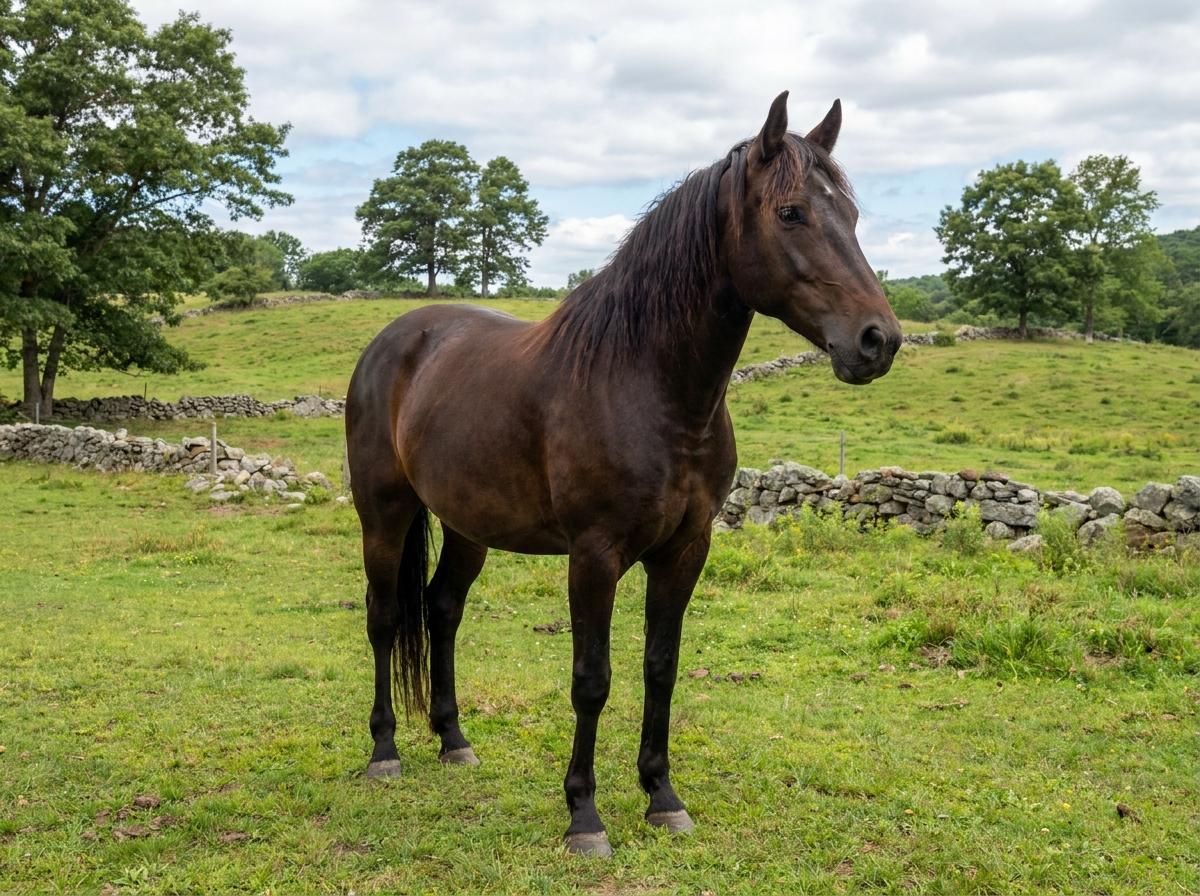
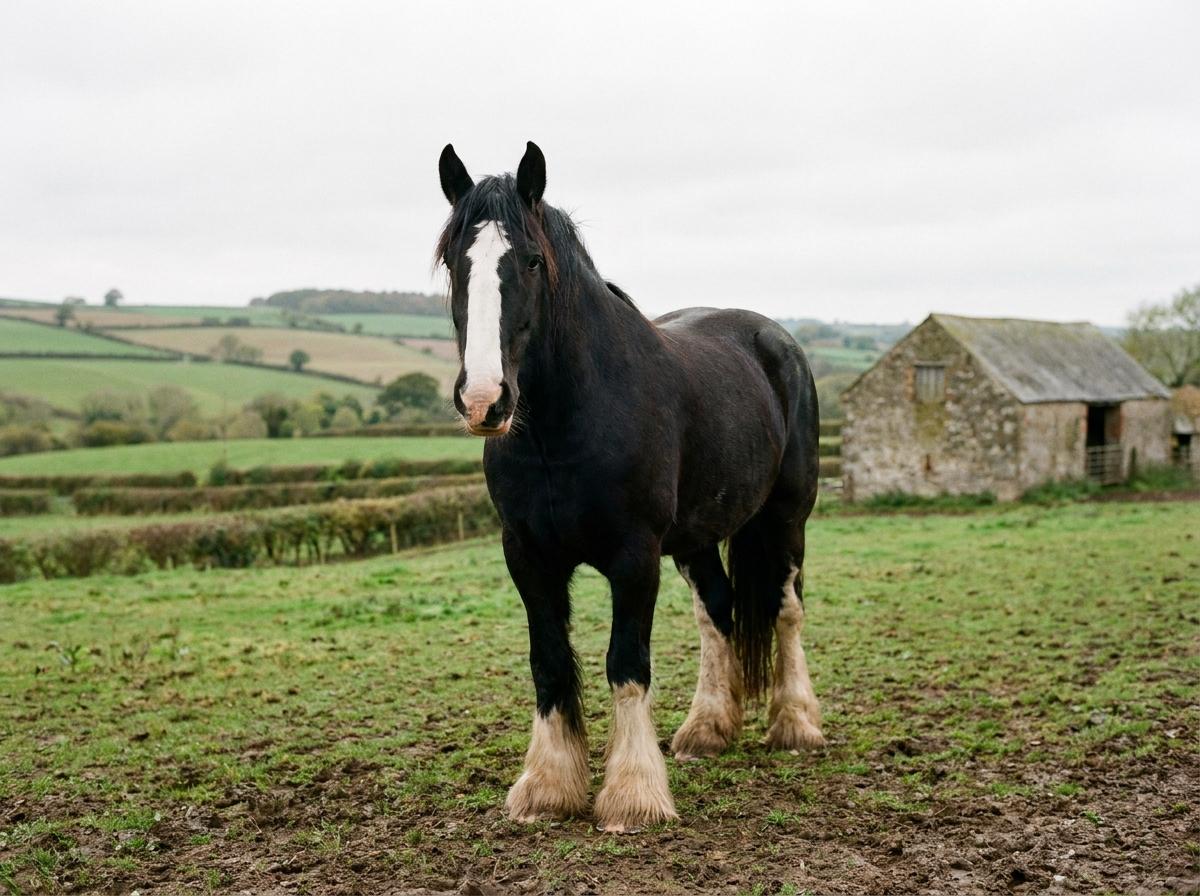
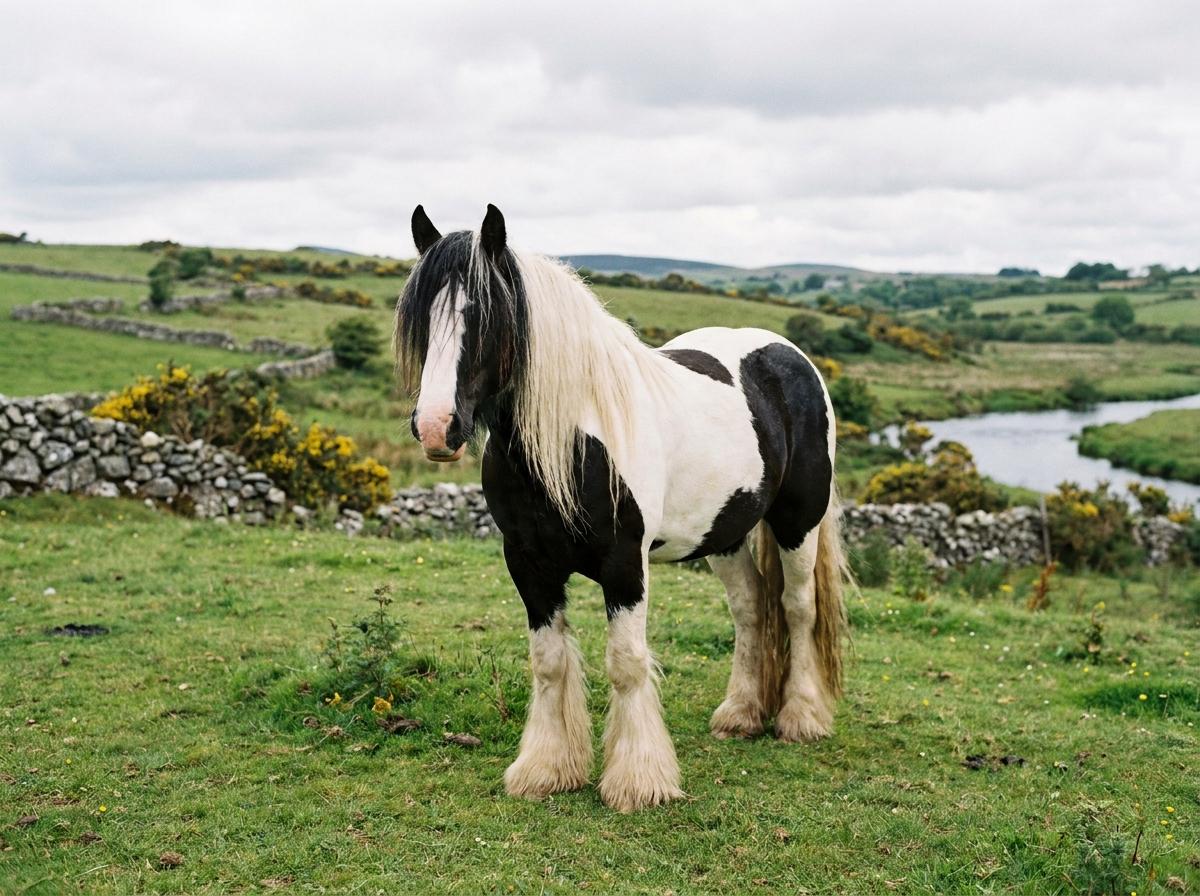
The GVHS breed standard calls for a balanced, muscular horse with the impression of a small draft, a substantial body and correct limbs. Abundant feather covers the lower legs, with a full mane and tail. Conformation and useful movement matter alongside the hair.
The standard describes a normal height of 13.2 to 15.2 hands. The society’s current FAQ calls this a target and says horses outside it may be registered if they meet the registration requirements. Hands use four inches per hand: 13.2 means 13 hands and two inches, not a decimal number of hands. Marketing size labels should not be mistaken for separate GVHS registration divisions.
Black-and-white tobiano is familiar, but the breed is not defined by that pattern. GVHS accepts other colors and patterns. A solid-colored horse can be eligible, and a strikingly marked horse can lack the ancestry or documentation required by a registry. Keep a color description separate from a laboratory result and from the breed entry. The horse color DNA records guide shows how to preserve the report behind a prediction.

A good riding or driving horse is an individual
The standard values a cooperative, mannerly horse. That is a breeding objective, not a guarantee that every young horse is ready for a beginner. Ask what the horse can do now, with whom, in which setting and with what equipment.
For a riding purchase, have the seller demonstrate catching, leading, standing for mounting and work appropriate to the horse’s training. Bring an instructor who understands your experience and intended use. For driving, involve a qualified driving trainer and evaluate the actual training and harness arrangement. A broad, attractive horse is not automatically trained to pull a vehicle safely.
Size does not establish a universal rider-weight allowance or pulling capacity. Have suitable professionals assess the individual, its soundness, fitness and equipment. Do not extrapolate a workload from a breed photograph or a seller’s claim that the horse is strong.
Compare the Racking Horse guide if your main goal is gaited riding, or the Ardennais guide if you are researching a heavier draft type. Those are different horse choices with different records to inspect. The horse hub keeps the wider comparison together.
Daily care, feeding and facilities
Plan turnout with compatible equine company, secure visible fencing, clean water and shelter. Keep gateways and feeding areas drained. University of Minnesota Extension’s dry-lot guidance explains how a grass-free turnout area can preserve movement while pasture access is controlled; it still needs forage, water and shelter.
Feed for the horse’s condition and work, not for the volume of its mane. Forage is the foundation, with supplements selected to fill actual needs. Rutgers’ equine nutrition guidance explains why excess energy and abrupt feed changes can cause problems. A broad body and thick hair can make casual visual assessment misleading, so learn to assess the body beneath the coat with your veterinarian or nutrition adviser.
Use the horse weight calculator as an estimate from measurements, and label the result that way. A scale is preferable when precise weight matters. The horse weight measurement guide helps you repeat measurements consistently; it does not turn a tape result into a dosing instruction.
Feather care and health checks
Separate the hair and examine the skin and shape of the lower legs. Do not let a beautiful feathered outline substitute for checking what is underneath. Ask about itching, repeated crusting, swelling, skin folds and any treatments or veterinary diagnoses.

UC Davis’ chronic progressive lymphedema guidance includes Gypsy Vanners among affected breeds. CPL can involve progressive lower-leg swelling and skin changes that may be obscured by heavy feather. UC Davis explains that reduced lymph flow and heavy feather favor bacterial and chorioptic mange (feather mite) infections, whose inflammation can worsen CPL. Treating those infections does not resolve the underlying lymphedema. It is not simply another name for every case of scratches or mites, and a photograph cannot diagnose it. Have a veterinarian diagnose itching, crusting or persistent swelling rather than choosing treatment from appearance alone. The source describes management rather than a permanent cure.
Arrange regular hoof care, dental care, vaccination and parasite management with the relevant professionals. Minnesota Extension’s hoof guidance emphasizes balance and a working relationship with the farrier and veterinarian. Feather should not prevent inspection of the foot or hide a missed appointment. Keep dated farrier records, including observations and follow-up advice.
For any purchase or breeding plan, discuss which health tests are appropriate for the animal and its ancestry. A color test is not a health panel. A negative result for one tested variant is not a guarantee against every cause of muscle, skin or metabolic disease.
Research Mammoth donkey care separately before choosing a large donkey as a horse companion. Compare the proposed social group and feeding arrangements with professional help.
Responsible breeding and show records
Before breeding, confirm the mare and stallion’s identity, registry eligibility, reproductive suitability and relevant health evidence. Use the horse pedigree chart maker to organize entered ancestry while retaining the original documents. Use the horse gestation calculator for a planning estimate from a known breeding date, alongside veterinary pregnancy checks and a foaling plan.
If showing matters, read the society’s current show rulebook for the intended event and class. Registration, class eligibility and a show award are separate claims. Save the result exactly as issued rather than converting a placement into a title the horse has not earned.
Cost, availability and questions before buying
This guide does not invent a breed-wide price or lifespan. Seek dated quotes for comparable horses and budget for board or land, forage, farrier work, veterinary care, equipment, training, transport and grooming time. A foal, an unstarted adult and a proven riding or driving horse represent different commitments.

Ask:
- Which society registered the horse, and can its ID and ownership be checked?
- What training can the seller demonstrate today without changing the normal routine?
- Can my veterinarian inspect beneath the feather and perform a pre-purchase examination for my intended use?
- What is the history of leg swelling, itching, lameness and metabolic problems?
- Which advertised genetic claims have an original laboratory report tied to this horse?
- What does the horse currently eat, and how is its pasture managed?
- What equipment fits it, what accompanies the sale and what further training is needed?
Our horse buying guide covers arranging the examination and making a purchase decision from evidence. A registry certificate is valuable documentation, but it is not a soundness certificate or a promise of beginner suitability.
Frequently asked questions
Is every Gypsy Vanner black and white?
No. GVHS is explicit that the breed is not based on color. Black-and-white tobiano is one familiar pattern among many accepted colors and patterns.
Is there a strict GVHS height limit?
Its standard and FAQ describe a target of 13.2 to 15.2 hands, with variation outside that range. Eligibility depends on the society’s registration rules, not height alone.
Are Gypsy Vanners and Gypsy Cobs the same registry?
No. Similar names and horse types do not make organizations identical. Ask whether the documents are GVHS, GHA, GHRA, TGCA or another specifically named body’s documents, then check its requirements.
Are they good family horses?
Some individuals suit family use with appropriate training and supervision. Choose on demonstrated manners, soundness and the household’s experience, not on a breed reputation or a child’s ability to stand beside one in a photograph.
Is all leg swelling under feather CPL?
No. Several conditions can affect the lower legs. A veterinarian needs to examine persistent swelling, lesions or discomfort and decide what investigation and treatment are appropriate.
Do this next on Creatures
Choose the next action that fits your stage. Keep purchase claims and your own observations tied to the right animal.
- Watch for a suitable listing. Save a Gypsy Vanner horse listing alert for future matching listings. No account is needed to start. See saving searches and using your watchlist.
- Check current listings. Browse Gypsy Vanner horse listings. Availability changes; inspect the actual listing and contact the seller about its documents and terms.
- Research a breeder or farm. Browse the breeder directory. A directory entry does not guarantee available stock or establish the animal’s identity, soundness or suitability.
- Start an animal profile. Add your Gypsy Vanner horse profile. No account is needed to start; a free account keeps the records. Follow adding an animal to Creatures.
- Keep the evidence. Add a health, weight, breeding or care record. The sheet opens for visitors; a free account saves it. See adding a record and health and medical records.
- Describe your operation. Start a breeder or farm profile. Starting a profile does not verify breeder status or guarantee directory admission. Read creating an organization and adding your team and getting listed in the breeder directory.