
Canadian Pacer
Author: Elliott Garber, DVM · Published
The Canadian Pacer was a pacing strain of the old French-Canadian horse, bred mainly by farm families in Quebec’s St. Lawrence Valley and best documented in the 1800s. It came from crossing French-Canadian horses with Narragansett Pacers brought up from Rhode Island, it was famous for racing on frozen rivers in winter, and pacing stallions exported from Canada helped found families of American harness racing and saddle horses. It was never a breed with a studbook, and no registry, breed standard or living population exists under the name today. You cannot buy a Canadian Pacer, but you can meet its closest living relative and several breeds that carry some of its blood.
If you are here because you own a pacing or gaited horse, or you are tracing an old pedigree, the living breeds that matter are the Canadian Horse, the Standardbred and the Tennessee Walking Horse. This page covers the historical strain first, then what its influence really amounts to and what that means for a horse you might own. For every breed at once, start from the horse species page. If you are working on a pedigree, the free horse pedigree chart maker lays out what you know in a printable chart.
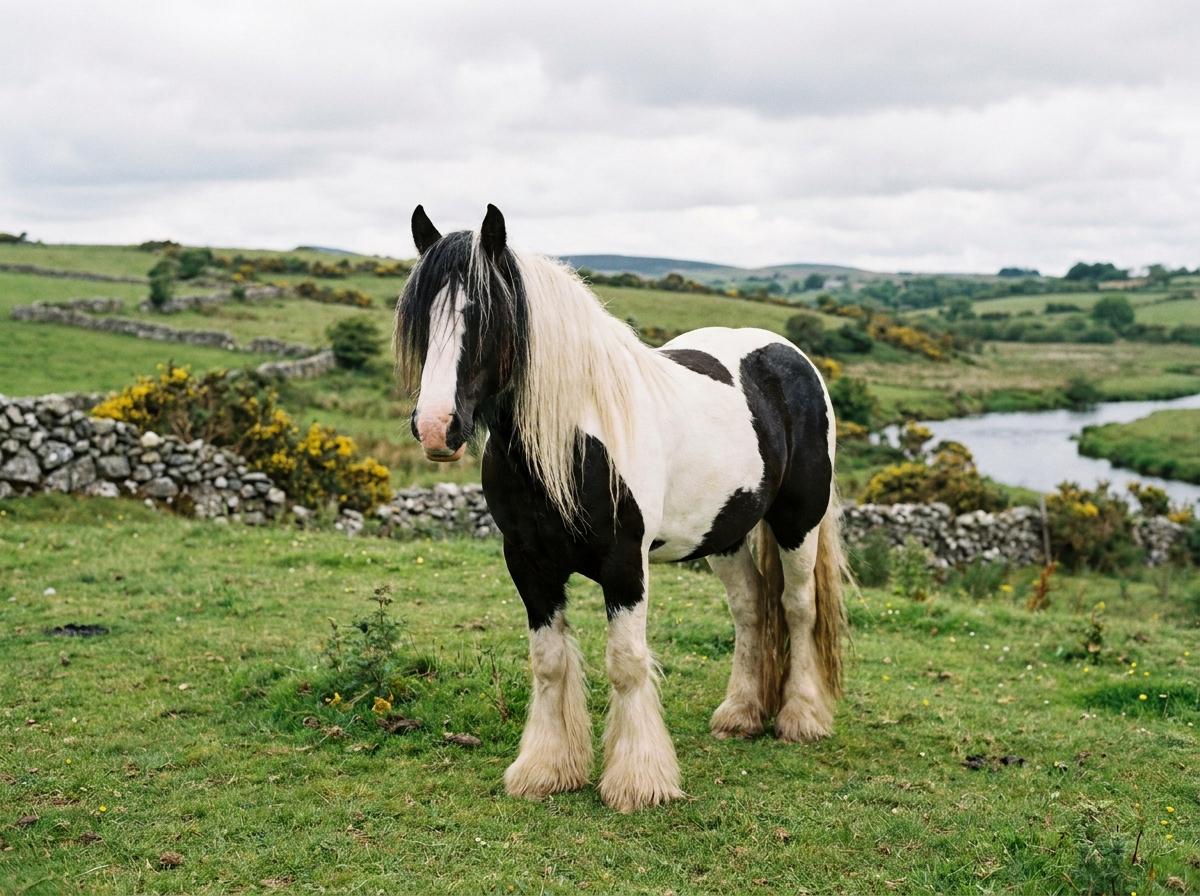
A note on the pictures: nobody photographed a Canadian Pacer racing on the ice, so the two historical scenes on this page are AI-generated reconstructions, and each is labeled that way. The two modern horses are also AI-generated and are captioned as the living breeds they show.

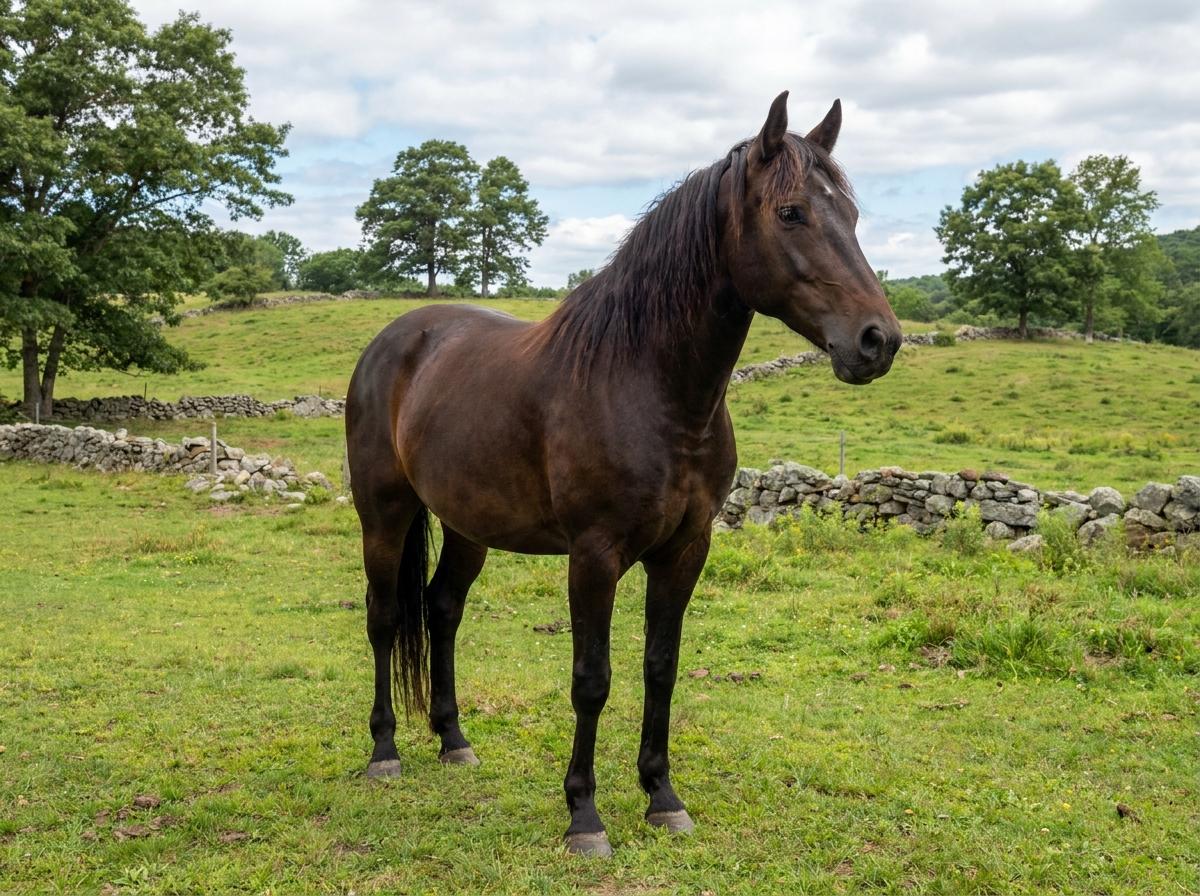
AI-generated reconstruction, not a photograph. A compact black horse of the old French-Canadian type in winter harness; the image does not reliably show a pacing footfall.
| What it was | A pacing strain of the old French-Canadian horse, bred in Quebec’s St. Lawrence Valley |
|---|---|
| Breed or type? | A historic type; there has never been a Canadian Pacer studbook, registry or breed standard |
| Ancestry | French-Canadian horses crossed with Narragansett Pacers from Rhode Island |
| Gait | The pace, a lateral gait; many were double-gaited and could trot as well |
| Known for | Winter racing on frozen rivers, and road and saddle work |
| Legacy | One of several foundation sources behind the Standardbred and Tennessee Walking Horse, and part of the wider French-Canadian influence on the Saddlebred |
| Status today | Not a living breed; the closest living relative is the Canadian Horse |
Browse listings, public profiles, breeders, or add your animal.
What was the Canadian Pacer?
The best scholarly account is still Robert Leslie Jones’s history of the French-Canadian horse, published in the Canadian Historical Review in 1947. Jones describes the Canadian Pacer as one of several new varieties that grew out of the old French-Canadian horse, and he defines it by its ancestry: a blend of Narragansett Pacer blood brought into the St. Lawrence Valley from Rhode Island with the pacing strains already present in the French-Canadian stock.
That definition matters, because it tells you what kind of thing the Canadian Pacer was. It was a population of horses selected for a gait, bred on farms by ordinary owners, and named for where it came from and how it moved. Nobody kept a herdbook for it. Nobody wrote a breed standard. A horse was a Canadian Pacer because it came out of Quebec and paced, much as a medieval destrier was a destrier because of its role rather than its papers.
Jones also makes a point that modern summaries often skip. These horses were usually “double-gaited,” meaning they could both trot and pace, and when Canadian Pacers were sold abroad they usually went to the same buyers as Quebec’s trotters. The line between a Canadian pacer and a Canadian trotter was often a matter of which gait a given horse was trained and raced in.
What “pacing” means
Most horses have three natural gaits: walk, trot and canter (with the gallop as a faster canter). In the trot, the legs move in diagonal pairs. In the pace, they move in lateral pairs. The Canadian Encyclopedia’s entry on the horse in Canada puts it plainly: the pace, which some horses perform naturally and others by training, is a lateral gait with both legs on the same side moving together.
For a traveller on a bad road, that mattered. A good pacer covers ground quickly with less of the up-and-down bounce of a trot, which made pacers valued road and saddle horses in the era before railways. For a racing driver on a smooth surface, the pace can be very fast, which is why it became one of the two gaits of harness racing.
Modern genetics has found part of the explanation. A 2012 study in Nature led by researchers at the Swedish University of Agricultural Sciences, Andersson and colleagues, showed that a single change in a gene called DMRT3 has a major effect on how horses move. The variant is “permissive” for alternate gaits such as the pace and the smooth four-beat ambling gaits, and it also improves harness racing performance. A follow-up survey of 141 breeds by Promerová and colleagues found the variant in 68 of them, and the breeds where it is common are either gaited breeds or harness racing breeds. That is the gene pool the Canadian Pacer belonged to, though no study we found has genotyped a horse identified as a Canadian Pacer, so any statement about its exact genetics is inference.
Where it came from: French-Canadian horses and Narragansett Pacers
The Canadian Pacer had two parents, and both have their own history.
The French-Canadian horse. Between 1665 and 1670, King Louis XIV sent horses from France to Quebec, according to The Livestock Conservancy. The Canadian Horse Breeders Association, the breed’s registry, counts 82 horses arriving in New France between 1665 and 1671, mainly from Brittany and Normandy stock. Over the following century, a hardy, compact horse developed in the colony: The Livestock Conservancy describes today’s descendants as strong, 14 to 16 hands, and primarily black or bay.
The Narragansett Pacer. The other parent was a New England saddle horse named for Rhode Island’s Narragansett Bay. The general reference on the Narragansett Pacer describes it as a fast ambling and pacing horse that was sold in large numbers to the West Indies and was extinct by the late 19th century. It notes that the breed was also combined with French pacers to create the Canadian Pacer. You can read more on our Narragansett Pacer page.
Exactly when Narragansett blood reached Quebec is not well pinned down. Secondary summaries place it in the late 1700s and early 1800s; Jones gives no single date. What the sources agree on is the direction of travel: pacing horses from Rhode Island went north into the St. Lawrence Valley, mixed with French-Canadian stock, and pacing horses from Quebec later went south into the United States.
Racing on the ice
Jones calls Canadian Pacers “almost a monopoly of the habitants,” the French-Canadian farm families, who valued them especially for racing on the ice. In a long Quebec winter, a frozen river was the smoothest, flattest racecourse available, and a fast pacer in front of a light sleigh was both transport and sport.
The same horses had a working life too. Jones reports that Canadian Pacers were still in demand during the 1870s as saddle horses in the rougher parts of Ontario, Kentucky and Tennessee, and that they continued to be bred in Quebec, both for the owners’ own pleasure and for export, well into the period he was writing about. That last point is worth noticing. The pacer did not vanish in a single moment; it faded as roads, railways and then cars removed the reasons to keep it, and as its blood was absorbed into other horses.
The pacing sires that went south
The Canadian Pacer’s lasting influence came through a handful of stallions exported to the United States in the early 1800s, especially to Kentucky. The best-supported account comes from the breed registry that inherited them. Standardbred Canada’s history of the breed says Canadian influence was strong in the new Standardbred, naming the sires Pilot and Pilot Jr. and the early pacers brought out of Canada, such as Copperbottom.

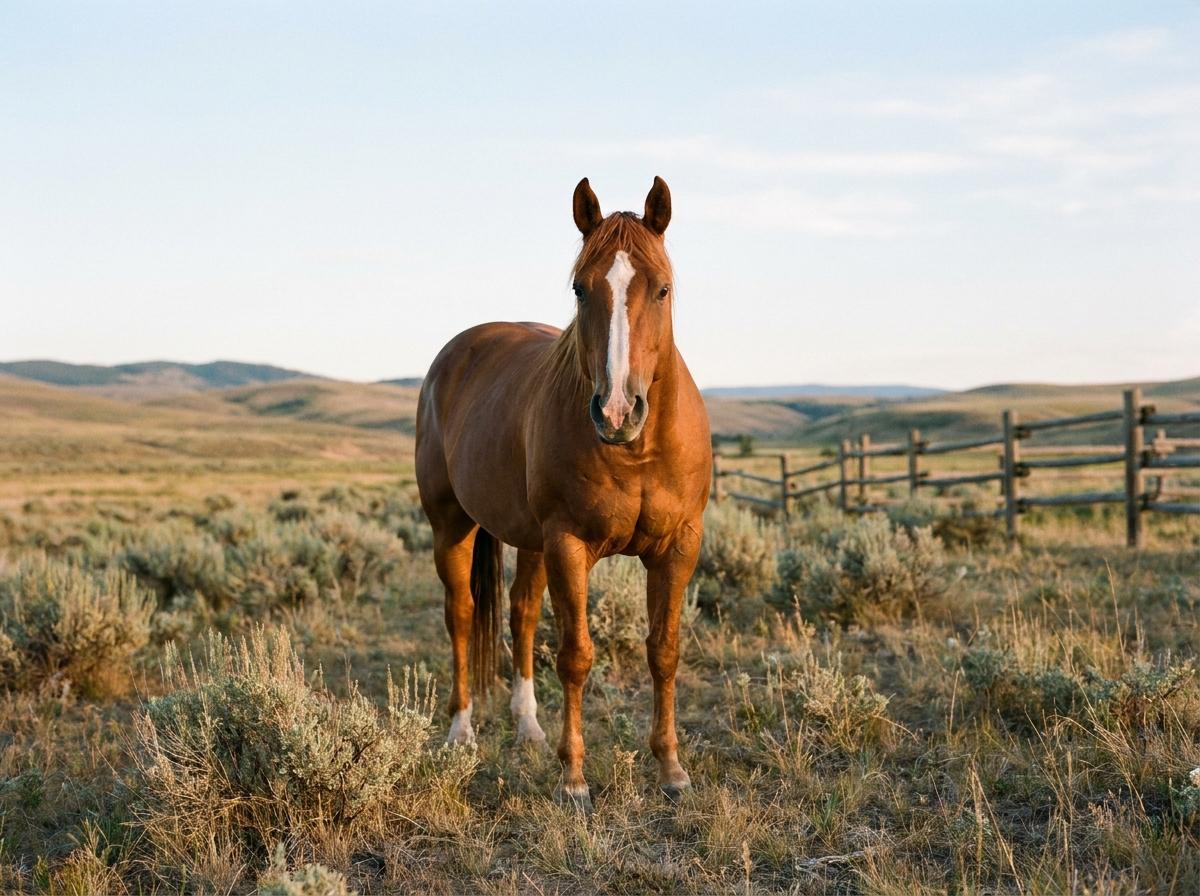
AI-generated reconstruction, not a photograph. A compact saddle horse of the kind Kentucky and Tennessee buyers sought from Canada; the gait shown is not a reliable depiction of a pace.
- Copperbottom. A pacing stallion brought out of Canada, whom Standardbred Canada credits as founder of the Hal family of pacers. Later pedigree histories place him in Kentucky from around 1816.
- Tom Hal. A pacer that other histories, rather than the registry, name as the Hal family’s founder. They give different foaling years in the early 1800s, so treat his dates as tradition.
- Pilot and Pilot Jr. Named by Standardbred Canada among the Canadian sires that shaped the breed.
The disagreement over whether Copperbottom or Tom Hal founded the Hal family is a good reminder that these pedigrees were written down long after the fact. Read the names as the traditional account, and the dates as approximate.
Influence on the Standardbred
The Standardbred is the American harness racing breed, and it races at both the trot and the pace. Its stud book grew out of the Trotting Register that John H. Wallace started in 1867; in 1879, the National Association of Trotting Horse Breeders agreed on the standards that defined which horses were eligible, which is where the name Standardbred comes from. Standardbred Canada tells that story, and says the modern breed owes its existence to Hambletonian, a descendant of the imported stallion Messenger, not to a Canadian horse.

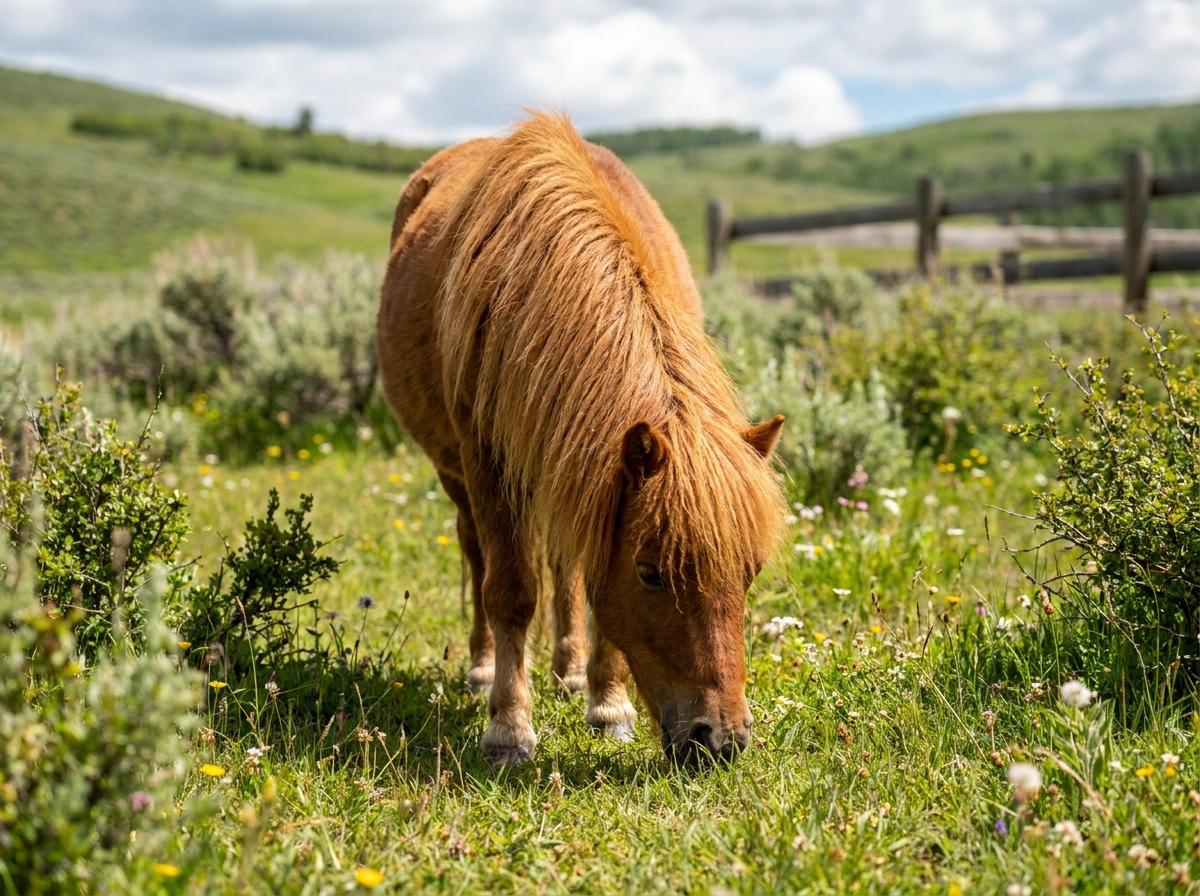
AI-generated image of a modern Standardbred, shown for illustration. Not a Canadian Pacer.
Where the Canadian Pacer shows up is in the pacing side of the breed and in early trotting pedigrees generally. Standardbred Canada notes that in 1881 the first world champion was a pacer of the Hal family, and that the most prestigious American pacing race, the Little Brown Jug, bears his name.
Jones quotes an 1881 article from the National Live Stock Journal making the broader claim that French-Canadian blood ran through American trotting pedigrees everywhere, from Kentucky to New England. That was a contemporary opinion rather than a measured result, and it is about French-Canadian horses generally, not pacers alone, but it shows how the influence was seen at the time.
The honest summary: the Canadian Pacer was one of several ingredients in the Standardbred, and a documented one in the Hal line of pacers. It was not the Standardbred’s founder, and no modern Standardbred is a Canadian Pacer.
Tennessee Walking Horse and American Saddlebred
The Canadian Pacer is also named among the ancestors of the two great American gaited show breeds, although here the evidence is thinner and the claims are broader.
Tennessee Walking Horse. The breed’s registry, the Tennessee Walking Horse Breeders’ and Exhibitors’ Association, describes the breed as a composition of Narragansett and Canadian Pacer, Standardbred, Thoroughbred, Morgan and American Saddlebred stock, founded in Middle Tennessee. The general reference on the Tennessee Walking Horse adds that early pacing horses in the region were known as Tennessee Pacers, that the breed’s foundation sire, Black Allan, was foaled in 1886, and that the breeders’ association formed in 1935. So the Canadian Pacer is part of the Walking Horse’s background, but several steps removed from the breed as it was eventually registered. Our Tennessee Walking Horse page covers the living breed.
American Saddlebred. The Livestock Conservancy says the Canadian horse played a pivotal role in forming the Morgan, American Saddlebred and Standardbred, and the pacing strain was one part of that wider French-Canadian influence. The Saddlebred’s association was founded in 1891 as the National Saddle Horse Breeders Association. See the American Saddlebred page and the Morgan page for the living breeds.
What you should not take from this is that a particular Walking Horse or Saddlebred today is “part Canadian Pacer” in any measurable sense. The influence is real at the level of foundation stock, more than 150 years back, and it is shared with several other breeds.
Is the Canadian Pacer extinct?
As a distinct, identifiable strain, yes, in practice. There is no registry, no studbook and no living population recorded under the name, and we found no breed society that registers horses as Canadian Pacers today.
The more exact answer is that it was absorbed rather than wiped out. Its parent population, the old French-Canadian horse, was nearly lost in the late 1800s. The Livestock Conservancy says so many horses were exported or lost that by 1880 the breed was nearly extinct in Canada, and Jones considered the old French-Canadian horse to have disappeared as a distinct race toward the end of the 19th century. Its pacing blood survives in two places: in the American breeds its exported stallions helped found, and in the modern Canadian Horse, rebuilt from surviving French-Canadian stock.
Canadian Pacer vs Canadian Horse
They are related but not the same. The Canadian Horse is a living breed with a registry and a studbook; the Canadian Pacer was a historical pacing strain within the older French-Canadian population.

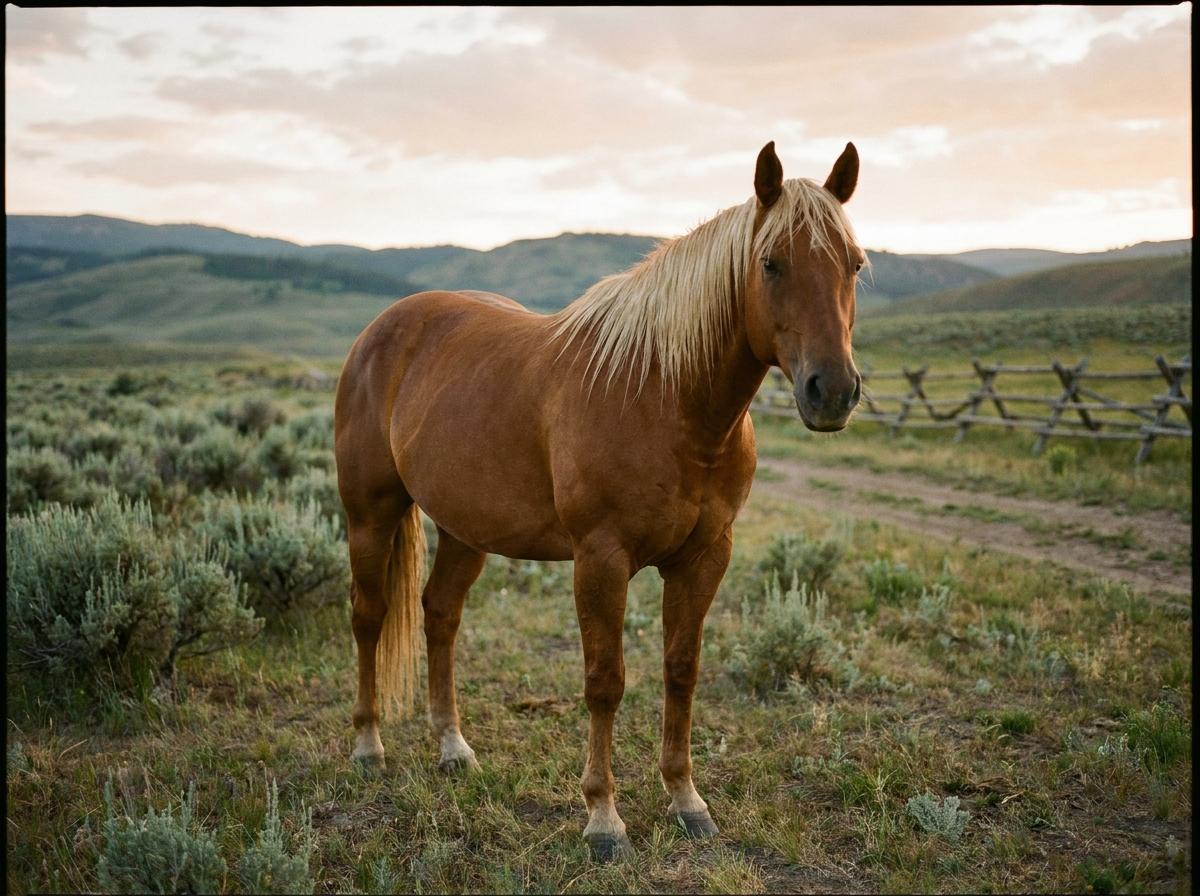
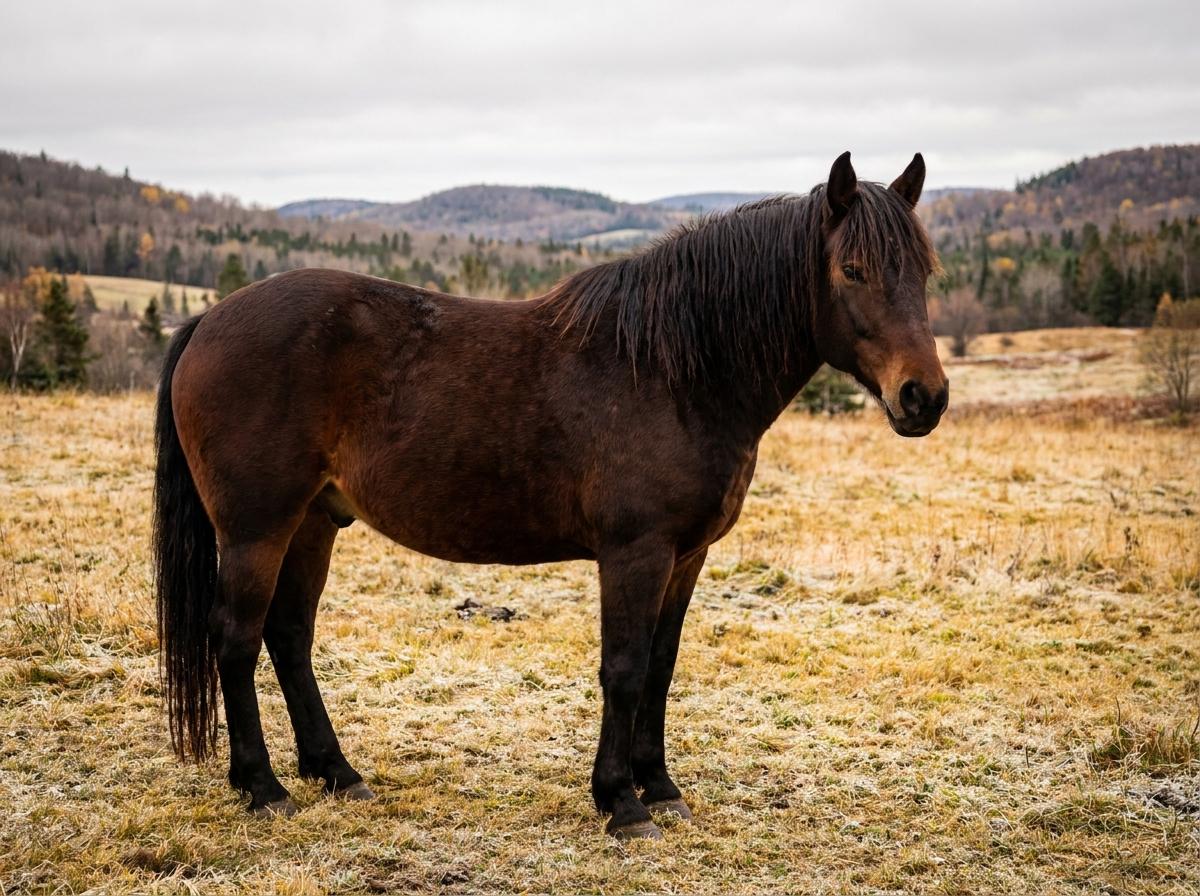
AI-generated image of a modern Canadian Horse, the living breed descended from the old French-Canadian stock. Not a Canadian Pacer.
The Canadian Horse Breeders Association was created on September 17, 1895, to keep a stud book for the breed, and Jones describes the government breeding program that followed, started at Cap Rouge in 1913 and later continued at other Quebec stations, as effectively creating the present Canadian Horse from the surviving stock. In 2002, federal Bill S-22 recognized the Canadian Horse as the national horse of Canada, according to the association.
The breed is still rare. The Livestock Conservancy lists it at Critical on its conservation priority list, and the association says there are fewer than 7,000 registered horses. If you want a living horse with the same roots as the Canadian Pacer, this is it, and a registered Canadian Horse has papers you can verify. Just do not expect a Canadian Horse to pace because its distant relatives did; gait varies by individual and by training, so judge the horse in front of you.
If you want a pacing or gaited horse today
Nobody can sell you a Canadian Pacer, but plenty of living horses do the jobs it did.
- For harness racing or a pacer to drive: the Standardbred is the modern pacing breed. Retired racehorses often move on to driving and riding homes, and a raced horse’s public race record makes part of its history easier to check than most.
- For a smooth, ground-covering ride: the gaited breeds, including the Tennessee Walking Horse, American Saddlebred, Missouri Fox Trotter, Paso Fino and Icelandic Horse, are bred mainly for smooth riding gaits rather than for harness racing.
- For the same roots: the Canadian Horse, compact, hardy and still rare.
- For a heavy horse with its own French ancestry: Jones notes that some horses exported from Quebec to Maine’s lumber country were a heavy-draft variety. If that is the job you have in mind, today’s draft breeds such as the Percheron are the practical choice.
Whatever you buy, the same rules apply as for any horse. Ask for registration papers and check them with the registry, get an independent pre-purchase veterinary examination, and treat any claim of “Canadian Pacer blood” as a story about distant ancestry rather than a reason to pay more. Our guides to where to buy a horse and how much a horse costs cover the practical side.
Frequently asked questions
Is the Canadian Pacer a horse breed?
Not in the modern sense. It was a historic pacing strain of the old French-Canadian horse, bred without a studbook, registry or breed standard. It is best described as a type defined by its origin and its gait.
Is the Canadian Pacer extinct?
As a distinct strain, effectively yes. No population, registry or breed society exists under the name today. Its bloodlines were absorbed into other breeds, and its parent population survives as the modern Canadian Horse.
Where did the Canadian Pacer come from?
From Quebec’s St. Lawrence Valley, where French-Canadian horses, descended from horses sent by Louis XIV from 1665, were crossed with Narragansett Pacers brought north from Rhode Island.
What is the difference between a Canadian Pacer and a Canadian Horse?
The Canadian Horse is a living registered breed, the national horse of Canada. The Canadian Pacer was a historical pacing strain within the older French-Canadian horse population from which the modern breed was rebuilt.
Did the Canadian Pacer influence the Standardbred?
Yes, as one of several foundation sources. Standardbred Canada names Canadian pacing sires such as Copperbottom and the trotting sires Pilot and Pilot Jr., and the Hal family of pacers traces to Canadian imports. The breed’s foundation sire, Hambletonian, was not Canadian.
Is the Tennessee Walking Horse descended from the Canadian Pacer?
Partly and distantly. The breed’s registry lists Canadian Pacer stock among its foundation ingredients, along with Narragansett Pacer, Standardbred, Thoroughbred, Morgan and Saddlebred blood.
Can I buy a Canadian Pacer?
No. A horse advertised with “Canadian Pacer” in its description is a modern horse of another breed or a cross. Judge it on its real breed, papers, soundness, gait and training.
Do this next on Creatures
You cannot buy or register a Canadian Pacer, so nothing below pretends to. Every link here is for living horses: the Standardbreds, Canadian Horses, gaited breeds and crosses people ride and drive today, and the records that keep a horse’s pedigree and history provable.
Give your horse a profile. Own a pacer, a gaited horse, a Canadian Horse or any horse at all? Create a free profile for your horse, no account needed to start. The walkthrough is in adding an animal to Creatures.
Keep its pedigree and history. Registration details, vet checks, farrier visits and training or racing milestones: start a record for your horse. The record sheet opens for any visitor to explore, and a free account saves what you enter. See adding a record and health and medical records.
Get told when horses are listed. There will never be a genuine Canadian Pacer listing, so this alert covers horses of every breed: set up a free horse listing alert, no account needed to start. Here is how saved searches work.
Browse horses for sale. Look through current horses on the Creatures marketplace, or narrow it to Standardbreds or Canadian Horses, and judge each one on its papers, soundness and gait.
Breed or train horses? Farms, training stables and breed clubs can create a free organization profile, no account needed to start. See how directory listing works and how to add your team.
Find trusted breeders. Search the Creatures breeder directory for horse breeders near you.
Keep exploring. Start from the horse species page, or compare the Canadian Horse, Standardbred, Narragansett Pacer and Percheron.