Horse Lease Agreement: Full and Half Leases, Care and Records
Author: Elliott Garber, DVM · Published
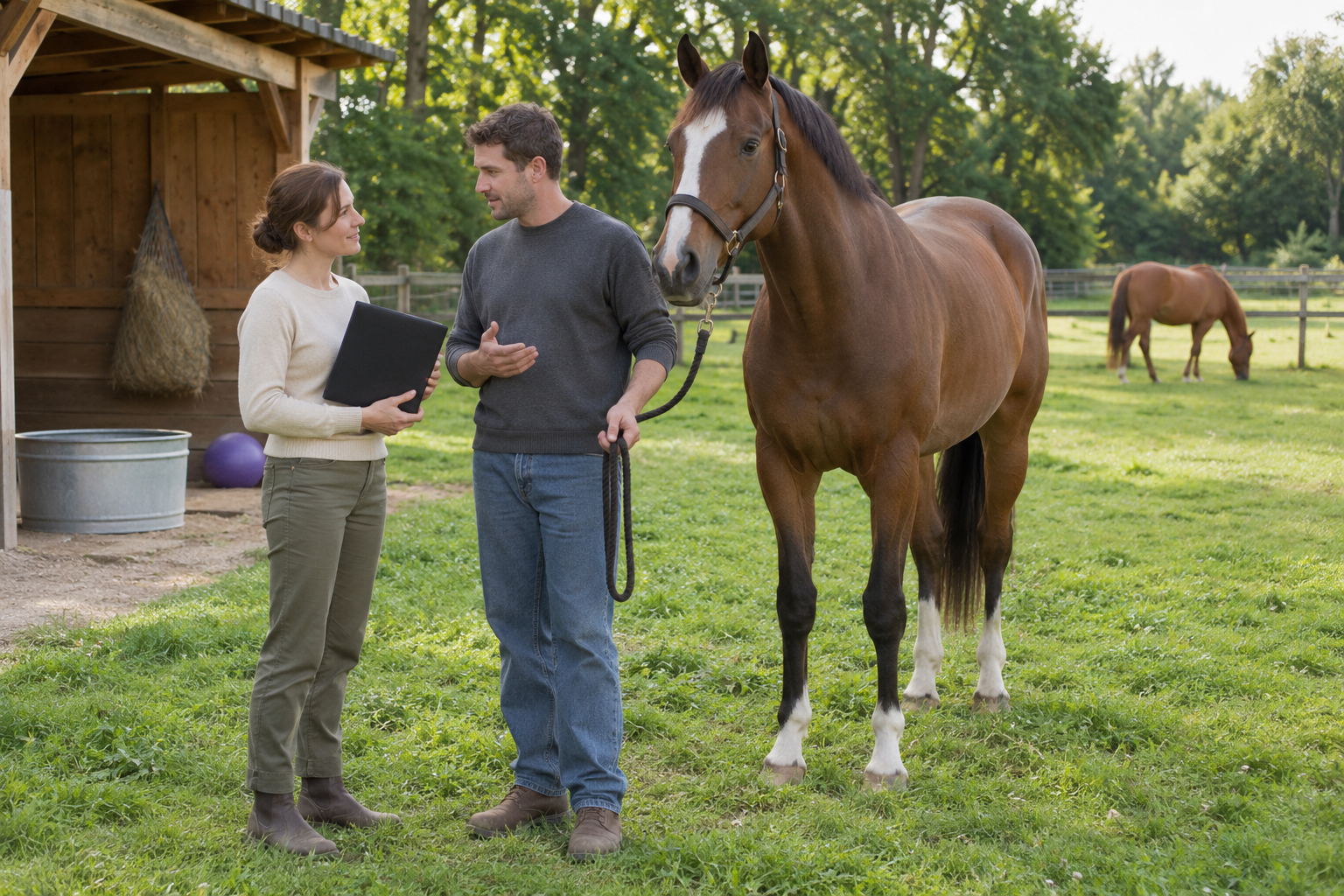
A horse lease agreement should spell out who may use the horse, who makes care decisions, who pays each cost and how the horse returns when the arrangement ends. Whether you call it a full lease or a half lease, write down the actual access and responsibilities instead of relying on the label.
Keep the agreed document beside the horse’s care history. On Creatures the owner can add the lessee to that horse’s Team so both people read the same records. Creatures for breeders shows the wider record tools.
| Identify | The horse, owner, lessee and authorized contacts |
|---|---|
| Access | Riding days, permitted use, location and other riders |
| Care | Who provides care, approves changes and authorizes urgent decisions |
| Money | Lease fee and the allocation of routine and unexpected costs |
| Ending | Term, notice, return arrangements and outstanding records |
| Before signing | Have an attorney who knows equine agreements review the terms |
Full lease and half lease need written details
In a full lease, the lessee commonly has the agreed use of the horse for the term, with expenses allocated in the contract. A half lease shares access and costs with another rider or the owner. “Half” does not tell anyone which days they ride, whether lessons count against those days, or how an unexpected bill is split.
The USHJA’s owning or leasing guidance describes leasing and shared half-lease arrangements, while emphasizing that agreements vary. For a horse already in a working program, turn that variation into specific decisions: which rider has which days, whether the owner retains access, and who can change the schedule.
Leasing also does not automatically make a sale. If a later purchase is being discussed, treat the purchase terms and any ownership change as a separate decision. The horse bill of sale guide covers the record packet for that transaction.
Have an attorney familiar with equine agreements and the applicable local law review the proposed terms before signing. This checklist helps prepare that discussion; it is not a ready-to-sign agreement or a guarantee of enforceability.
Identify the horse and everyone with authority
Start the discussion with the horse’s recorded name, barn name, description and identifiers. Match them to the papers and to the actual animal. Add the owner and lessee’s contact details, the barn where the horse will live and the people each party may contact about care.
If the person negotiating is an agent, trainer or co-owner, establish who may make the agreement and sign for the owner. A familiar person at the barn is not automatically authorized to commit everyone with an interest in the horse.
Keep the latest agreed version easy to identify. A draft with handwritten changes and an older signed copy should not both be labeled “current.” Record the effective date and retain superseded copies with a clear note explaining what replaced them.
Decide permitted use and daily care
Work through a normal week before discussing unusual cases. Cover riding days, lesson arrangements, competition plans, travel and whether anyone else may ride. Agree where the horse will be kept and who approves a move or change of trainer.
University of Minnesota Extension’s equine-law guidance specifically identifies lease days, housing, the owner’s continuing access, authority over care, health-care responsibility and veterinary costs as matters to address. Use those questions to make the actual division of work clear.
For example, “lessee pays routine care” still leaves questions. Who books the farrier? Who tells the owner what happened at the visit? Who can approve a change in feed, workload or medication? Put the agreed answers with the relevant contact information and existing veterinary instructions, without inventing a treatment plan in the lease notes.
If the horse is boarded, compare the lease with the barn’s boarding agreement. The person paying board, the person authorizing care and the person entitled to receive notices may be different. Horse boarding contracts covers the barn relationship.
Allocate costs before an invoice arrives
Make a practical cost list for this particular horse and barn. For each item, record who arranges it, who pays, whether approval is needed first and where the receipt goes. Discuss the lease fee, board, routine veterinary care, farrier, insurance, transport, training, competition costs and any equipment supplied with the horse.
Then discuss the difficult cases: urgent veterinary attention when the owner cannot be reached, an unexpected expense outside the routine plan, a period when the horse cannot perform its intended work, or a change in either person’s circumstances. Agree how to contact each other and what decision-making authority applies; the record should not imply that a payment limit prevents appropriate urgent care.
Ask the insurer which activities, people and locations the actual policy covers and which notifications it requires. Keep the answer and policy details with the lease packet. A statement in a lease is not a substitute for checking the insurer’s terms.
Agree the end conditions and the handback
Record the start and end dates and the process for renewal or early termination. Discuss notice, missed payments, unsuitable use, a move to another barn and what happens if the horse becomes unable to do the intended job. Avoid leaving either party to infer that one event automatically ends every responsibility.
Plan the return as carefully as the start: where the horse goes, who arranges transport, which equipment returns and when outstanding costs are settled. Keep a dated condition and equipment record at the start and handback, with photographs where useful. Agree who receives the continuing veterinary and farrier history so the horse’s care does not lose context.
A short change log is useful during a longer arrangement. Record who agreed a change, when it took effect and which document supports it. A text conversation can be kept as context, but do not silently replace the signed terms in your working summary.
Keep the lease and care history on Creatures
Add the horse’s profile and verify its identifiers. Keep the signed agreement, approved amendments, handover notes and relevant care records together. Use adding an animal for the profile and adding a record for the dated supporting history. Saving needs a free account.
Two Creatures features fit a lease. From the horse’s Team panel, the owner can choose the pencil, Add member and the Team role, then invite the lessee. Access starts when the invitation is accepted. A Team member sees private records, adds photos and records and checks off care, but cannot edit the main profile or manage people. Leave the owner as owner. Avoid granting a lessee Co-owner access just to share care records: a co-owner can transfer the animal.
Once your attorney has reviewed the wording, you can send your own agreement for electronic signature and link it to the horse so the signed copy appears in its History tab. How agreements work explains the requirements: you write and own the text, Creatures does not draft or review it, and creating or sending one needs a verified identity and phone number. The agreed lease determines the parties’ responsibilities; adding someone to a team or storing an agreement does not itself grant legal authority to treat, sell or transfer ownership of the horse.
A reminder can help you review the term or arrange a planned check-in. Reminders and upcoming care explains that feature; confirm the actual notice method in the agreement rather than treating an app reminder as notice to the other party.
The public horse pedigree chart maker can help inspect known ancestry without an account. If your existing history is on paper or a spreadsheet, sign in and import it for review; importing your animals shows the steps. Review proposed matches before saving and keep the original papers or export. Neither task changes legal ownership.

Questions about horse leases
Does a half lease always mean half of every expense?
The label does not allocate an invoice. Write down the agreed costs, riding access and approval process for this arrangement.
Should the owner retain the care records?
Keep an agreed sharing process so the responsible people can find current instructions and the horse’s history. The horse record packet guide helps organize those documents for the start and end of the term.
Can the lease be handled as an ownership transfer on Creatures?
No. A lease is not an ownership transfer. Leave the owner as owner and add the lessee to the horse’s Team.
Return to the horse hub for the wider record guides. Breeding programs can also use the horse management software comparison to plan how their existing records fit together.
Do this next on Creatures
Start with the animals already in your care. The record form opens for visitors; a free account is needed to save. Public pedigree tools can be tried without an account.
- Add your horse and match its identifiers to your existing papers.
- Add a lease, care or handover record with the date and supporting document.
- Add your barn or breeding program profile when you want a public contact page.
- Save a horse search alert if you are planning a future addition.
- Browse current horse listings when you are ready to compare available animals.
- Browse the breeder directory for listed contacts. Inventory and directory coverage vary; confirm the animal’s records and the terms directly with its owner.