Himalayan
Author: Elliott Garber, DVM · Published
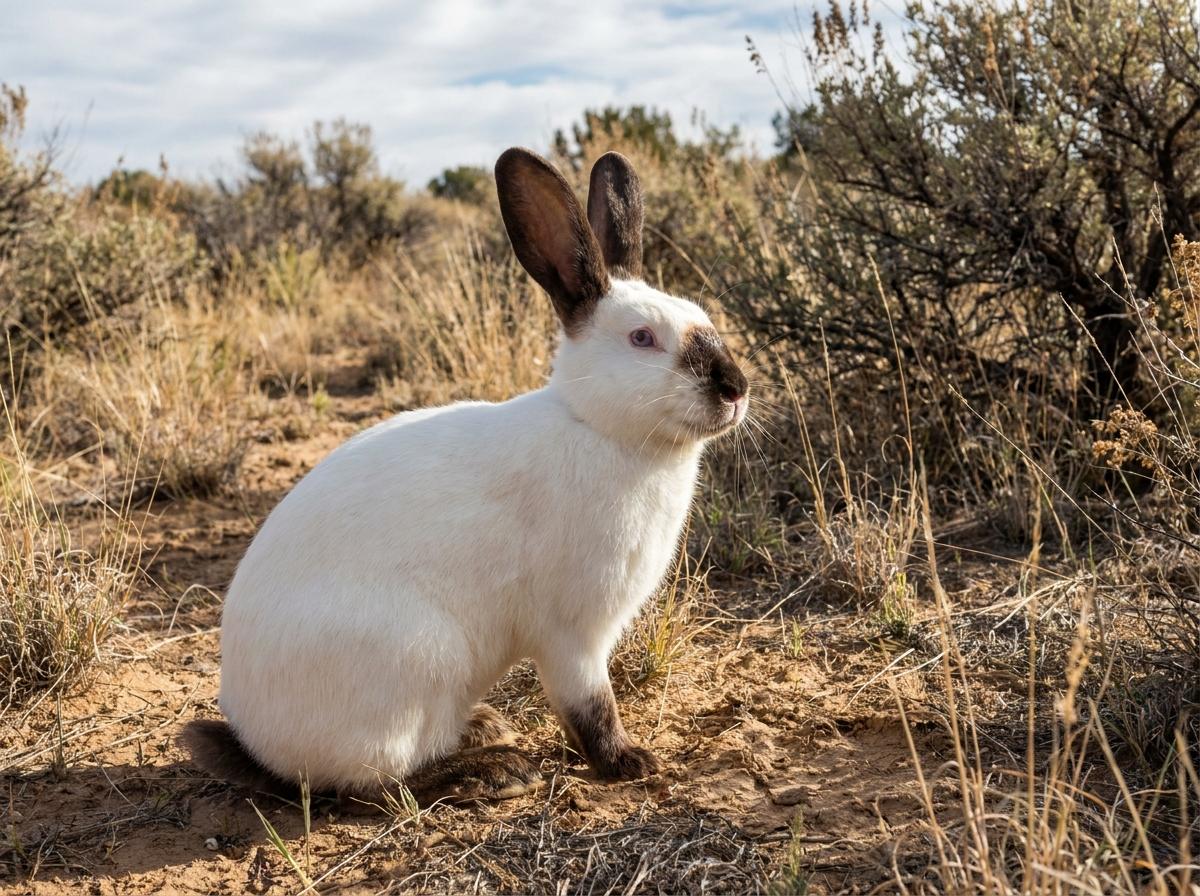
The Himalayan is a small, elegant white rabbit with dark colored points on its nose, ears, feet, and tail, arranged much like a Siamese cat, and it stands out from every other rabbit breed in two ways. It is the only breed the American Rabbit Breeders Association (ARBA) judges in a long, posed, stretched-out cylindrical shape, and its markings are switched on by temperature: the cool tips of the body grow dark fur while the warm core stays white. It is also one of the oldest and most widely kept domestic rabbit breeds in the world. This page covers what the breed is, where it came from, how those famous points actually work, what it looks like at a glance, how it behaves as a pet, and what to check before you bring one home.

| Also called | Russian, Chinese, Egyptian Smut, Black Nose (older regional names) |
|---|---|
| Origin | Uncertain and ancient; not from the Himalayas, despite the name |
| Body type | Cylindrical, the only ARBA breed judged posed and stretched out |
| Weight | Small, roughly 2.5 to 4.5 lb (about 1.1 to 2 kg), 4.5 lb maximum under the ARBA standard |
| Body color | White body with colored points on nose, ears, feet, and tail |
| Point colors | Black, blue, chocolate, and lilac (black is the original) |
| Eyes | Red (pink), from the albino base of the coat pattern |
| Ears | Erect, carried upright |
| Coat | Short, flyback fur, low grooming needs |
| Temperament | Widely described as calm, gentle, and easy to handle |
| Typical lifespan | Often cited around 5 to 8 years with good care, sometimes longer |
Browse listings, public profiles, breeders, or add your animal.
What is a Himalayan rabbit?
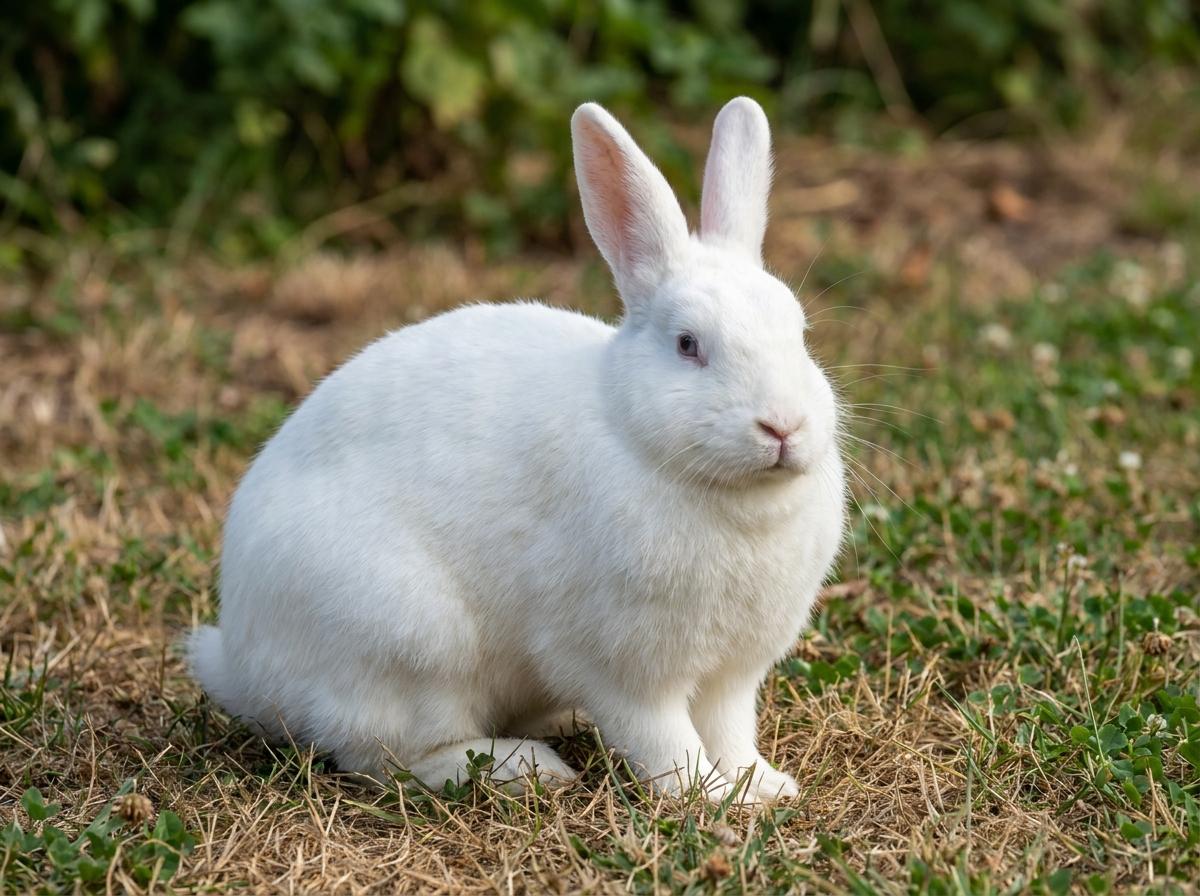
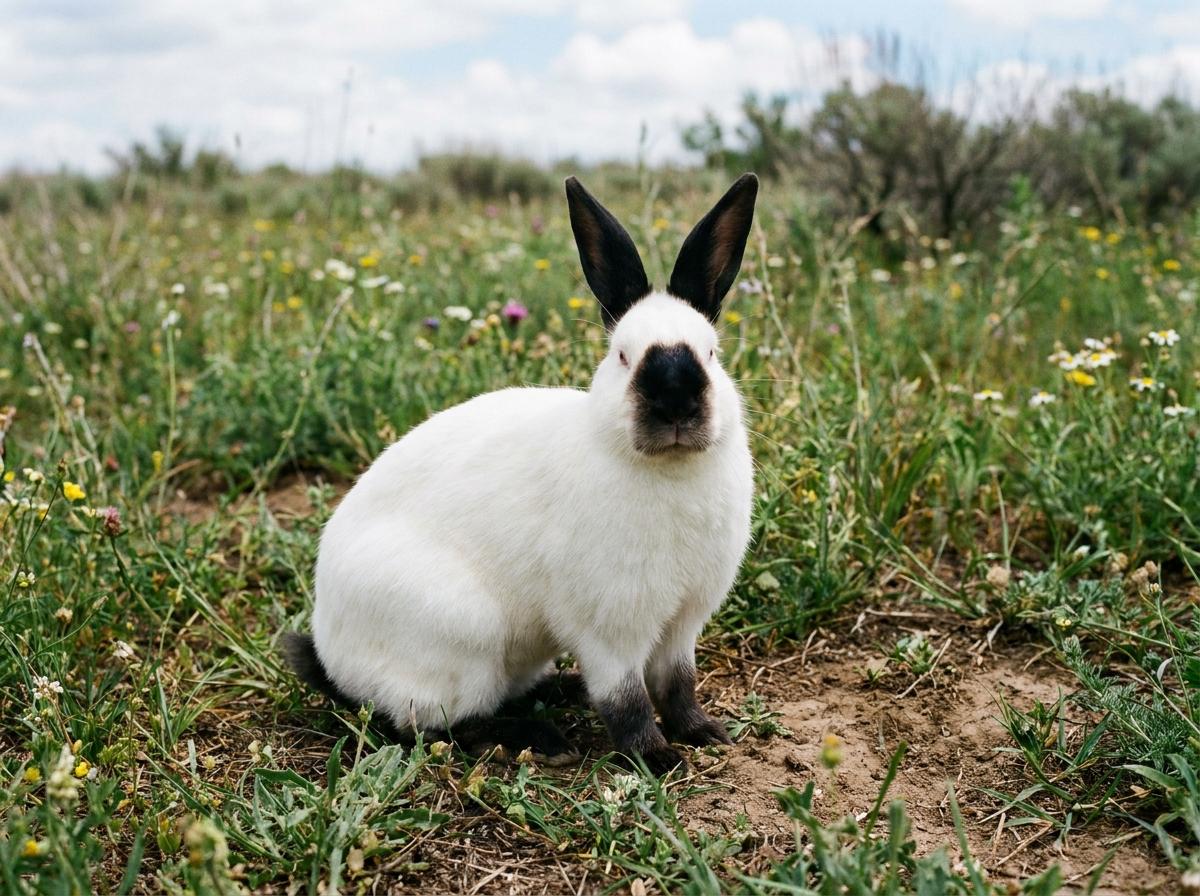
The Himalayan is a small, slender, white-bodied rabbit marked with darker fur on its extremities: the nose, the ears, the four feet, and the tail. The look is the same pattern you see on a Siamese or Himalayan cat, and it comes from the same kind of temperature-sensitive gene. The white body plus dark points, combined with erect ears and a small frame, makes the breed easy to recognize once you know what to look for.
Two things set it apart from the rest of the rabbit world. First, it is the only breed that ARBA judges as a cylindrical breed, meaning the rabbit is posed stretched out long and low rather than sitting up in a compact ball, and the ideal body is long and tubular. Second, its markings are not fixed at birth. They develop as the young rabbit grows, and their darkness responds to temperature for the rest of the animal’s life. Both points are covered in detail below.
It is also one of the oldest and most geographically widespread domestic breeds. If you are comparing it against other rabbits, the broader Creatures rabbit species page is a good place to line it up against breeds of different sizes and coat types.
Origin and history
Despite the name, the Himalayan almost certainly did not come from the Himalayan mountains. The breed’s true origin is genuinely uncertain, and there are no clear early records that pin it to one place. What is well documented is that the same pointed rabbit has been kept across a wide stretch of Asia for a very long time and has picked up many regional names along the way, including the Russian, the Chinese, the Black Nose rabbit, and the Egyptian Smut. That long list of names for essentially the same animal is itself a sign of how old and widespread the breed is.
A written description of the Himalayan appeared in a European publication in 1857, and by the end of the 19th century the breed was being shown in Great Britain. It reached the United States around the turn of the 20th century, in the same era as the Belgian hare craze that made pet and show rabbits briefly very popular in America. (If you want to see that other historic import, the Belgian Hare page covers it.) The Himalayan was recognized early by American rabbit breeders and went on to serve as foundation stock in developing other pointed white breeds, most notably the meat-focused Californian.
Because it is old, small, gentle, and inexpensive to keep, the Himalayan spread as both a show rabbit and a practical backyard rabbit, which is a large part of why it remains one of the most common breeds worldwide today.

How the points work: temperature-controlled color
This is the most genuinely interesting thing about the breed, and it is well understood by science, so it is worth getting right.
The Himalayan pattern comes from a specific version of the gene that controls coat color, historically written as the ch allele at the C (color) locus. That gene codes for tyrosinase, the enzyme that lets the body build dark melanin pigment. In the Himalayan, the enzyme is temperature sensitive: it works at cooler temperatures and shuts down when it gets warm. Researchers generally put the switchover in the low-to-mid twenties Celsius (in the neighborhood of 25 degrees C, roughly 77 degrees F), above which pigment production largely stops.
The result is a body map of temperature. The warm core of the rabbit stays white because the enzyme is inactive there, while the cooler extremities, the nose, ears, feet, and tail, run cold enough for the enzyme to work and grow dark fur. This kind of pattern has a name, acromelanism, and it is the same mechanism behind the points on Siamese cats. It is also why the breed sometimes goes by “smut,” an old word for the dark nose marking.
Two consequences follow from this that owners actually notice:
- Kits are born pale. Newborn Himalayan kits are white or very light, because the warm nest keeps the whole body above the pigment threshold. The dark points fill in over the following weeks as the young rabbit spends time in cooler air.
- Color drifts with the seasons and with health. Points tend to darken in cold weather and lighten in summer heat. A patch of fur that regrows over a cold spot, such as after an injury or where the rabbit lies against a cold surface, can come back darker than the surrounding coat. None of this is a defect; it is the gene doing exactly what it does.
For breeders and show exhibitors, this temperature link is practical knowledge, not trivia. Housing that is too warm can wash out the points, and localized cold can create stray dark spots that count against an animal in the show ring.
What a Himalayan rabbit looks like
Set the color aside for a moment and the Himalayan is defined by a distinctive body and small size.
- Cylindrical body. The breed is long, low, and slender, and ARBA is judged in a stretched-out pose rather than sitting up. It is the only ARBA breed shown this way. Show standards describe the ideal length in proportion to the head, so exhibitors literally pose the rabbit long on the table.
- Small frame. This is a light rabbit, generally in the range of 2.5 to 4.5 lb, with the ARBA standard setting a maximum of 4.5 lb. That small size is one reason it has stayed popular as a pet and 4-H project rabbit: it needs less space and less feed than a large breed.
- Erect ears. The ears stand upright rather than lopping, and in a well-marked animal they are fully colored.
- White body with four points. The body is white, and the color appears only on the nose (the “smut”), the ears, the four feet, and the tail. Clean, well-defined, symmetrical markings are prized in show animals.
- Red eyes. The eyes are red or pink. The Himalayan sits on an albino base coat, which is why the eyes lack dark pigment even though the points are dark. This is normal for the breed and not a sign of illness.
- Short, low-maintenance coat. The fur is short and flyback, meaning it returns to place when stroked backward, so grooming needs are modest compared with wool or long-haired breeds.

Point colors
The body is always white; it is the points that vary. ARBA recognizes four point colors:
- Black, the original and, according to the American Himalayan Rabbit Association, the only naturally occurring variety.
- Blue, a dilute gray-blue.
- Chocolate, a warm dark brown.
- Lilac, a dilute of chocolate, a soft dove-gray-brown.
The blue, chocolate, and lilac varieties were developed later through breeding rather than appearing on their own, which is why the black Himalayan is often called the “true” or “pure” form. Whatever the point color, the pattern and the temperature mechanism are the same.
Temperament and as a pet
The Himalayan has a strong reputation as one of the calmer, more handleable rabbit breeds. Breed sources and the American Himalayan Rabbit Association describe it as gentle, docile, and unusually easy to handle, which is a large part of why it is a common choice for children’s projects and first-time keepers. We flag this as the consistent view of keepers and breed associations rather than a formally measured trait, and, as with any rabbit, individual personality varies with handling, socialization, and how much calm daily interaction the animal gets.
A few realistic expectations for anyone considering one as a pet:
- Rabbits are prey animals. Even a docile breed prefers being approached calmly and does not usually enjoy being picked up and carried; supporting the body well and letting the rabbit come to you goes a long way.
- They need space and time out of the cage. A small breed still needs room to move, daily exercise, and enrichment. A cramped hutch is the wrong setup for any rabbit.
- They can live several years. Pet-care sources commonly cite roughly 5 to 8 years, sometimes longer with good care. There is no single authoritative breed-specific lifespan figure, so treat that as a general expectation rather than a guarantee. Spaying or neutering and good husbandry meaningfully affect how long any pet rabbit lives, so discuss it with a rabbit-savvy veterinarian.
Care basics
The Himalayan needs the same core care as any pet rabbit, with a couple of breed-specific notes. This page keeps care at the overview level; defer any medical decision to a veterinarian who can examine the animal.
Diet
The foundation of a healthy rabbit diet is grass hay, and the House Rabbit Society recommends unlimited fresh hay (timothy, orchard, or other grass hay for adults) as the bulk of what a rabbit eats, supported by a daily portion of leafy greens and a measured, limited amount of pellets. Constant access to clean water is essential. Hay is not optional filler; it keeps the digestive system moving and helps wear down teeth that grow continuously. Sudden diet changes and too many sugary treats are a common cause of digestive trouble in rabbits.
Housing and temperature
Give the rabbit a clean, dry, spacious enclosure with room to stretch and hop, safe flooring, and daily time outside the cage to exercise. Rabbits handle cool conditions better than heat, and they are vulnerable to heat stress; shade, ventilation, and protection from high temperatures matter, especially in summer. There is a charming quirk here: because the coat color tracks temperature, a very warm environment can lighten a Himalayan’s points and a cold surface can darken a patch of fur, so for show animals in particular, steady, moderate housing keeps the markings even.
Health and grooming
Routine rabbit health care applies: watch appetite and droppings daily (a rabbit that stops eating is an emergency), keep the environment clean, monitor the continuously growing teeth, and keep nails trimmed. The short flyback coat needs only occasional brushing, more during a molt. Find a veterinarian who treats rabbits before you need one, since not every clinic does, and keep clear records of weights, treatments, and any health events so you can spot changes early. For pet owners who track this at home, Creatures makes it easy to keep health and medical records and care reminders in one place.

Is the Himalayan a good breed for you?
For a lot of households, yes. The combination of small size, low grooming, an even temper, and a low feed bill makes it one of the more manageable rabbits, and its long history as a 4-H and beginner rabbit reflects that. It is a strong candidate if you want a calm, handleable pet or a first show rabbit.
A few things to weigh honestly before you commit:
- It is still a rabbit, not a low-effort pet. Daily feeding, fresh hay, cage cleaning, exercise time, and a rabbit-savvy vet are all part of the deal, and rabbits routinely live for years.
- Show and pet goals point at different animals. If you want a competitive show Himalayan, the cylindrical type and clean, symmetrical points matter a great deal, and you should buy from someone who breeds to the ARBA standard. If you just want a friendly pet, markings that would cost points in the ring make no difference to a wonderful companion.
- Confirm the red eyes are normal, not a health issue. New owners sometimes worry about the red eyes; they are simply part of the breed’s albino-based coat, not a sign of illness. Any actual eye redness, discharge, or squinting is a separate matter for a vet.
If you are shopping, you can browse current Himalayan rabbits on the Creatures marketplace and look for breeders in the Creatures directory. Prefer another compact companion breed? The Blanc de Hotot and Champagne d’Argent pages cover two more established rabbits worth comparing, and the American Fuzzy Lop is a good contrast if you like the idea of lop ears and a wool coat instead.
Frequently asked questions
Why is it called a Himalayan rabbit if it is not from the Himalayas?
The name is misleading. The breed’s true origin is uncertain and it has been kept across a wide part of Asia under many names, but there is no good evidence it originated in the Himalayan mountains. The pointed white color pattern, not the geography, is what the name really refers to.
Why do Himalayan rabbits have red eyes?
The Himalayan sits on an albino base coat, so the eyes lack dark pigment and appear red or pink. It is entirely normal for the breed and not a sign of illness. Genuine eye redness, discharge, or swelling is a different, veterinary matter.
Why are the nose, ears, feet, and tail dark but the body white?
The color gene in Himalayans makes pigment only at cooler temperatures. The warm core of the body stays white, while the cooler extremities grow dark fur. It is the same temperature-controlled pattern, called acromelanism, that gives Siamese cats their points.
Are Himalayan rabbits born with their markings?
No. Kits are born pale because the warm nest keeps the whole body above the pigment threshold. The points develop over the following weeks as the young rabbit spends time in cooler air, and they continue to lighten and darken with the seasons throughout life.
How big do Himalayan rabbits get?
They are a small breed, generally about 2.5 to 4.5 lb, with the ARBA standard capping them at 4.5 lb.
Are Himalayan rabbits good pets for beginners?
They have a strong reputation as gentle, easy-to-handle rabbits and are a common 4-H and first-rabbit choice, but every rabbit still needs unlimited hay, space, daily exercise, cleaning, and access to a rabbit-savvy vet. Go in prepared for a multi-year commitment.
Do this next on Creatures
Whether you are researching the breed, looking for a rabbit to bring home, or already keeping a Himalayan, Creatures is the records, marketplace, and directory layer that keeps it all in one place.
Add your rabbit. Already have a Himalayan? Create a free animal profile in a few minutes, no account needed to start. The walkthrough is in adding an animal to Creatures.
Track health and care. Start a health or care record for weights, vet visits, and molts. The record sheet opens for any visitor to look around, and a free account saves what you enter. See adding a record and health and medical records for the full how-to.
Find a rabbit. Browse Himalayan rabbits on the marketplace and search trusted breeders in the Creatures directory.
Get alerted. Not seeing the color or line you want yet? Set a free Himalayan rabbit listing alert and we will tell you when one is posted. No account needed to start, and you can learn more in saving searches and using your watchlist.
List your rabbitry. Breed Himalayans? Set up a breeder profile so buyers searching for the breed can find you.