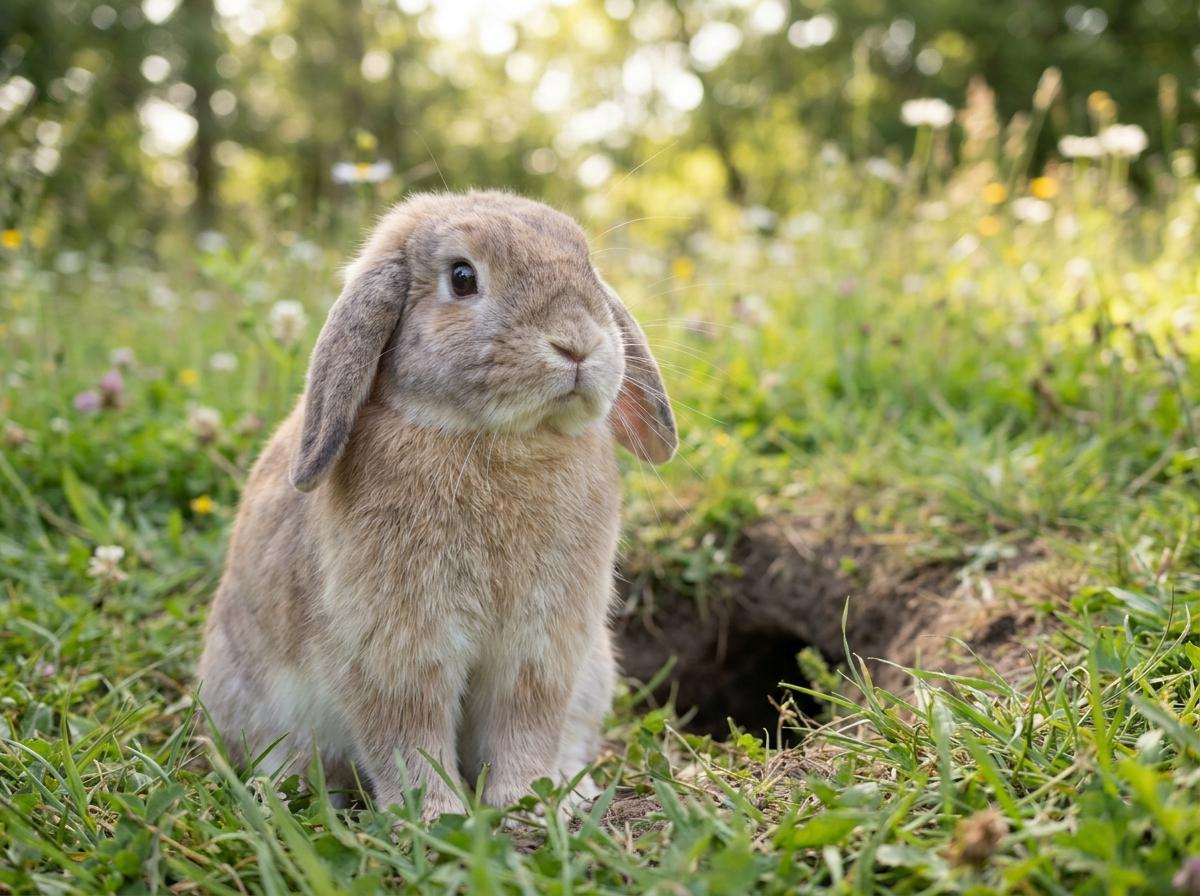
Mini Lop
A Mini Lop, in American usage, is the compact, thick-set lop-eared rabbit recognized by the American Rabbit Breeders Association (ARBA) since 1980, with a senior weight capped at 6.5 pounds. That makes it noticeably bigger than the Holland Lop, which tops out at 4 pounds, and that is where most of the confusion starts. In the United Kingdom the words “Mini Lop” usually mean a different, much smaller breed, and the rabbit Americans call a Mini Lop lines up more closely with what the British Rabbit Council calls the Dwarf Lop. If you are reading a care sheet, a pedigree, or a listing from another country, check which Mini Lop it means before you trust any size figure.
This guide covers the American Mini Lop in depth: how to tell it apart from its look-alikes, what the standard asks for, the colors people search for, and what a Mini Lop actually needs as a pet, from housing and a hay-first diet to ear and tooth checks. If you are still comparing breeds, the Creatures rabbit species page lays out the options side by side, and if you already know this is your breed, you can browse Mini Lop listings on Creatures while you read.

| Registry (US) | ARBA recognized breed since 1980; the national specialty club is the American Mini Lop Rabbit Club |
|---|---|
| UK naming | Closest UK counterpart is the BRC Dwarf Lop; the BRC Miniature Lop, often called Mini Lop in Britain, is a much smaller breed |
| Weight | ARBA senior maximum 6.5 lb, with an ideal widely given as 5.5 lb |
| Body | Short, thick-set, and heavily muscled, with a bold head, a raised crown, and broad lop ears |
| Coat | Dense, glossy rollback fur of medium length |
| Colors | Shown in solid and broken groups; agouti, black, blue, orange, and many other colors |
| Lifespan | Pet rabbits typically live about 8 to 12 years; no breed-specific figure is published |
| Care needs | A neutered rabbit companion, a large pen, unlimited hay, and regular ear, teeth, and weight checks |
Browse listings, public profiles, breeders, or add your animal.
What is a Mini Lop? The naming problem first
Three rabbits get called “mini lop” in everyday conversation, and they are not the same animal.
- The ARBA Mini Lop (United States). The subject of this guide. ARBA’s breed page describes it as stocky and compact, recognized in 1980, with a maximum weight of 6.5 pounds. This is the largest of the three.
- The BRC Dwarf Lop (United Kingdom). The British Rabbit Council’s 2021-2025 breed standards book (the latest edition we could check) describes the Dwarf Lop as a short, cobby, well-muscled rabbit with a prominent crown and broad horseshoe-carried ears, and sets its adult weight between 4 lb 4 oz and 5 lb 4 oz (1.93 to 2.381 kg). The two breeds share a similar outline and fill a similar size niche, which is why the Dwarf Lop is the usual British answer to “what is an American Mini Lop?” They are still separate breeds under separate councils, and the BRC Dwarf Lop runs lighter than the ARBA maximum.
- The BRC Miniature Lop (United Kingdom). In Britain this is the rabbit people mean when they say “Mini Lop”; the British Rabbit Council’s own breed overview calls it “the petite Mini Lop.” The same 2021-2025 BRC standard set an ideal adult weight of 1.5 kg and a maximum of 1.6 kg (about 3 lb 8 oz), which puts it in the size class of the American Holland Lop, not the American Mini Lop.
So a British “mini lop” is roughly a Holland Lop, and an American Mini Lop is roughly a British Dwarf Lop. Nearly every contradictory weight you will find online, from “under 4 pounds” to “about 6 pounds,” comes from someone mixing these up. The BRC revises its standards every five years, so if you are showing or buying in Britain, check the weights in the current BRC standard.
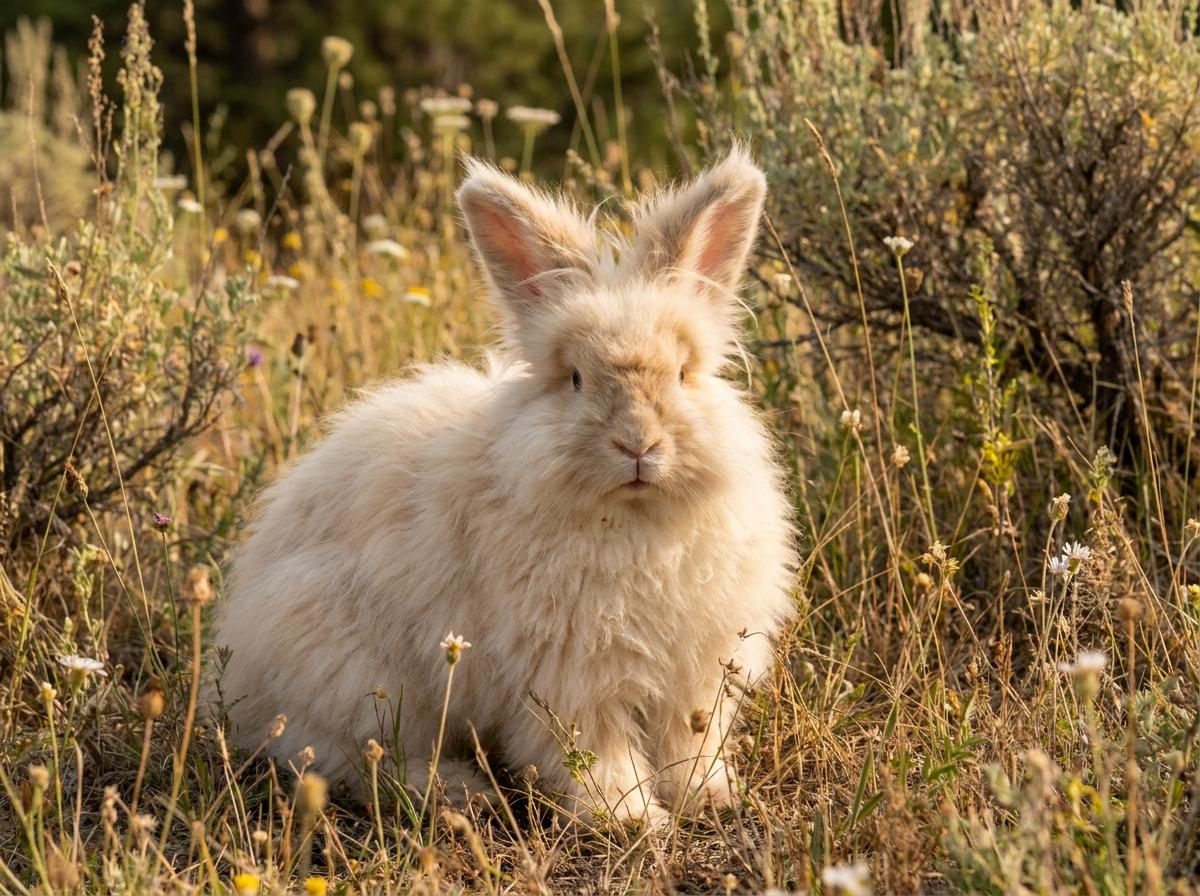
Two more names add to the pile. The Miniature Cashmere Lop is a separate long-coated British breed, and the American Fuzzy Lop is the ARBA’s wool-coated small lop. Neither is a Mini Lop with a different coat, and a listing that calls a rabbit an “angora mini lop” is describing a look, not an ARBA breed.
Origin and history
The Mini Lop has German roots. ARBA’s history says the breed was brought to the United States in the 1970s under the German name Klein Widder (literally “small lop”), and that after a slow start and a name change it became an official ARBA breed in 1980, presented by Herb Dyck.
The fuller story, as repeated in breed histories (Wikipedia’s Mini Lop article summarizes it), credits Bob Herschbach with finding the Klein Widder at a German national show in 1972. The rabbits he saw were larger than today’s Mini Lop, and they descended from crosses of big German lops with small chinchilla-type rabbits, originally in agouti and white. Herschbach bred them in the United States, and when he brought them before an ARBA convention in 1974 the verdict was that they needed to be smaller and renamed before they could be recognized. Several more years of selection for a smaller, rounder rabbit, a correspondence club that drew hundreds of supporters, and Dyck’s sponsorship carried the breed to acceptance at the 1980 ARBA convention. Treat the exact dates in that account as breed-history tradition; the 1980 recognition and the Klein Widder name are the parts ARBA itself states.
ARBA’s English Lop page says the English Lop was used to develop other lop breeds, naming the Mini Lop among them, which makes the Mini Lop a distant, compact descendant of the original long-eared lop. If the lop family interests you, the English Lop guide shows where the line started and how far ear length was pushed in the other direction.
The breed’s national specialty club today is the American Mini Lop Rabbit Club, chartered by ARBA in 2011, which runs a spring national Mini Lop show and publishes a guidebook for members.
What a Mini Lop looks like

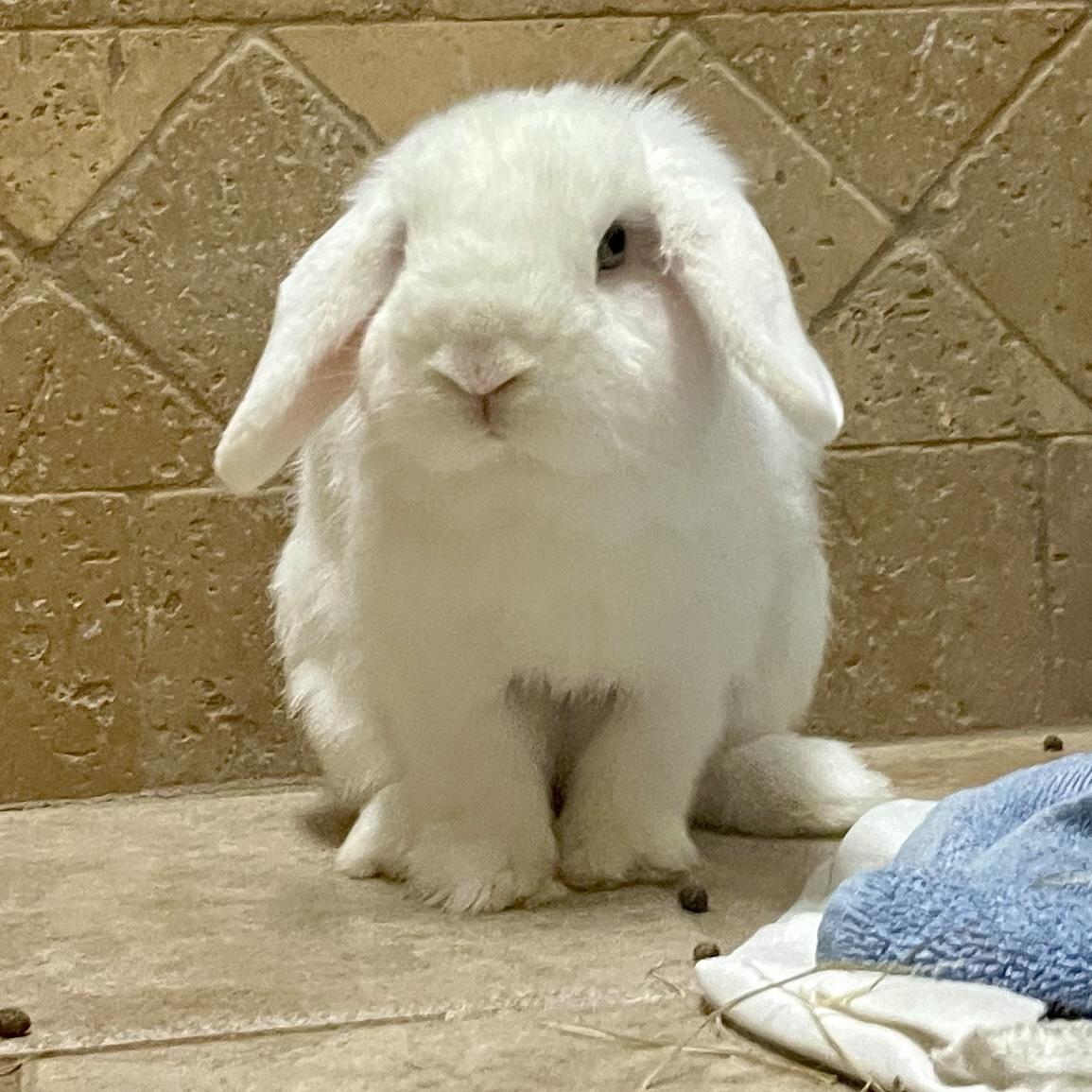
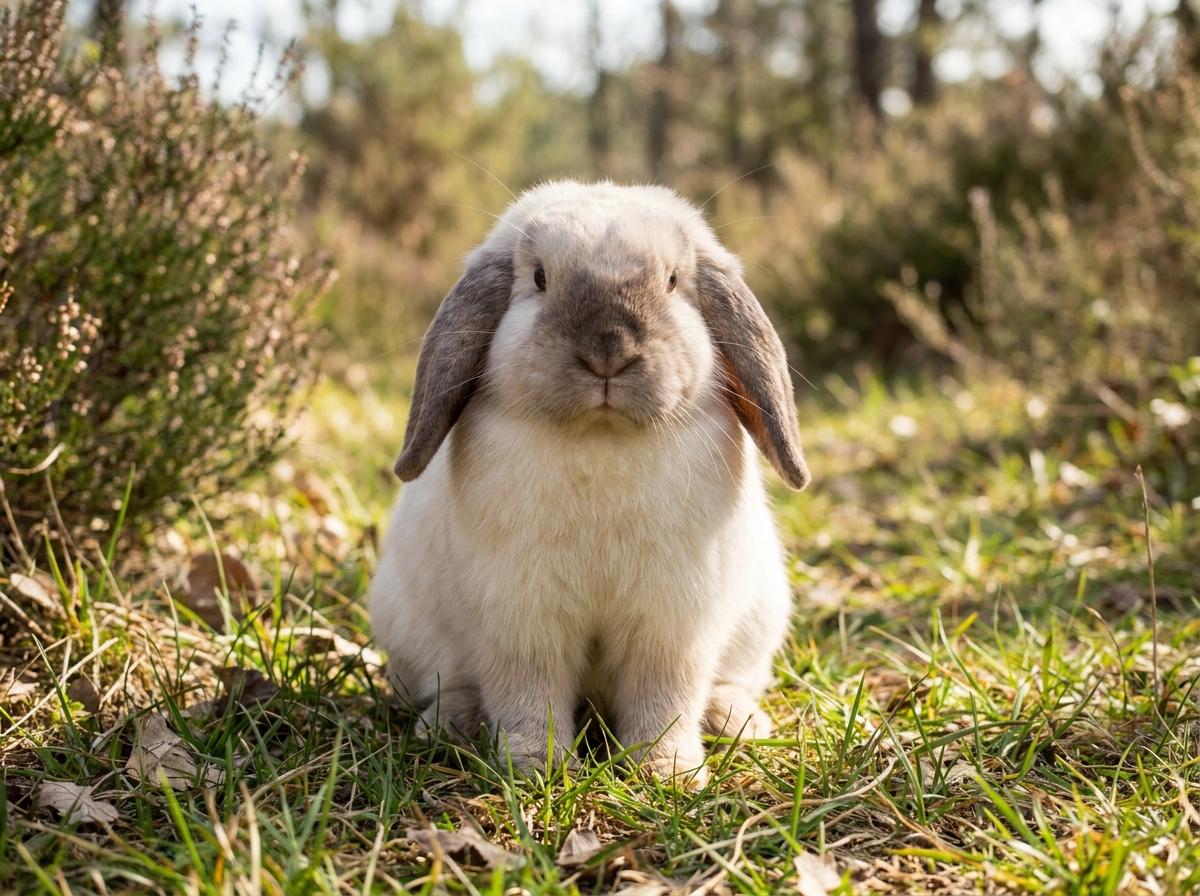
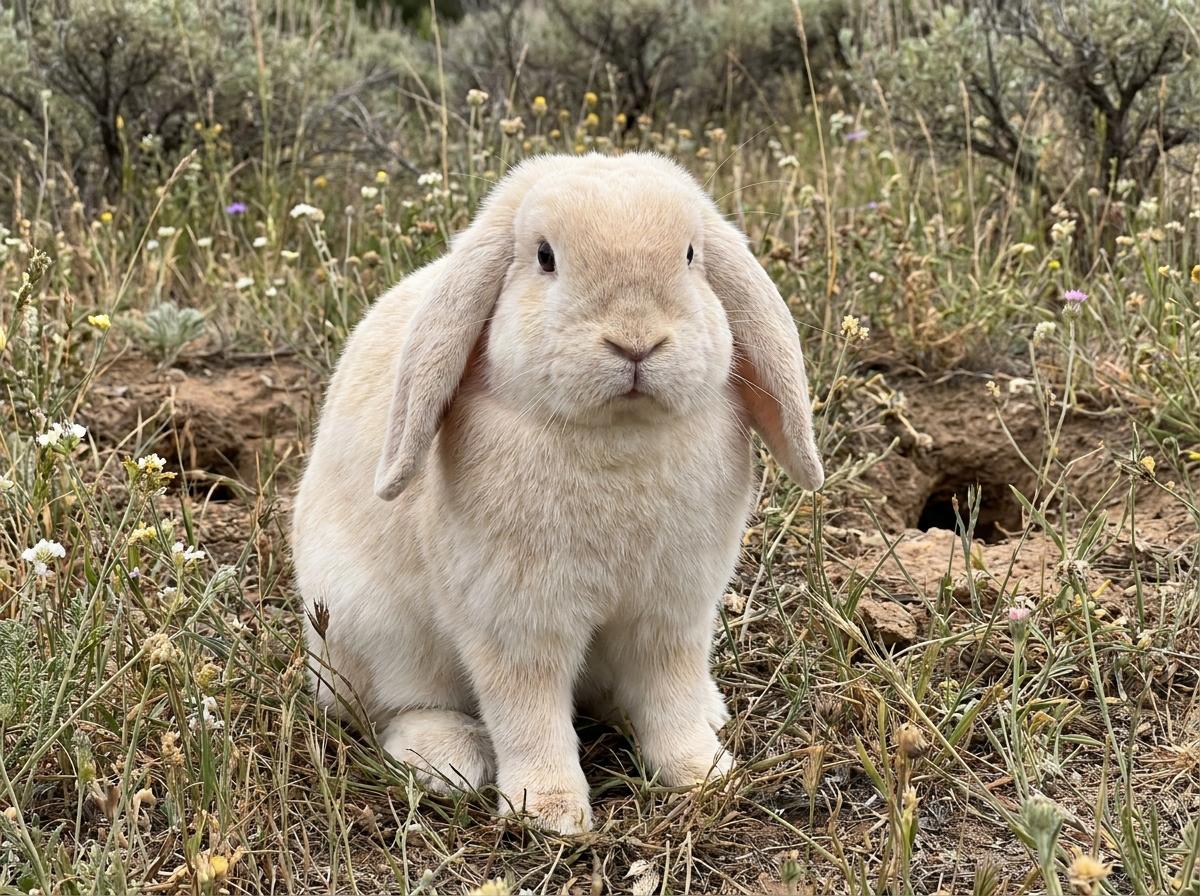
The shorthand fanciers use for the ideal Mini Lop is “a basketball with a head,” and it is a good one. The ARBA breed description (as reproduced in the Ohio 4-H rabbit handbook) calls for a compact body that is thick-set, massive, heavily muscled, and balanced, on straight, short, thick legs. The head is sturdy and strong, set close to the shoulders, and ARBA’s own page singles out the “softball-sized head” as the feature that makes the breed easy to recognize.
The ears sit on top of the head, rising from a strong ridge at the base (the crown), and hang vertically with the openings turned toward the head. They are rounded and well furred. Compared with a Holland Lop, the adult Mini Lop is simply more rabbit: heavier, longer through the body, and deeper, which is the quickest way to tell adults apart. Young rabbits are harder, because a junior Mini Lop can weigh about what an adult Holland Lop does.
The coat is rollback fur of medium length, very thick and dense, with a glossy finish. Run your hand from tail to head and it should return slowly to place.
Weight and classes
ARBA’s current breed page states one number: a maximum weight of 6.5 pounds. The Standard of Perfection’s ideal senior weight is widely reported as 5.5 pounds, and rabbits are shown as juniors and seniors, with senior status from six months of age. Pet Mini Lops that are not bred to the standard can land above or below that range, so treat 6.5 pounds as the show ceiling, not a guarantee for any individual.
Colors
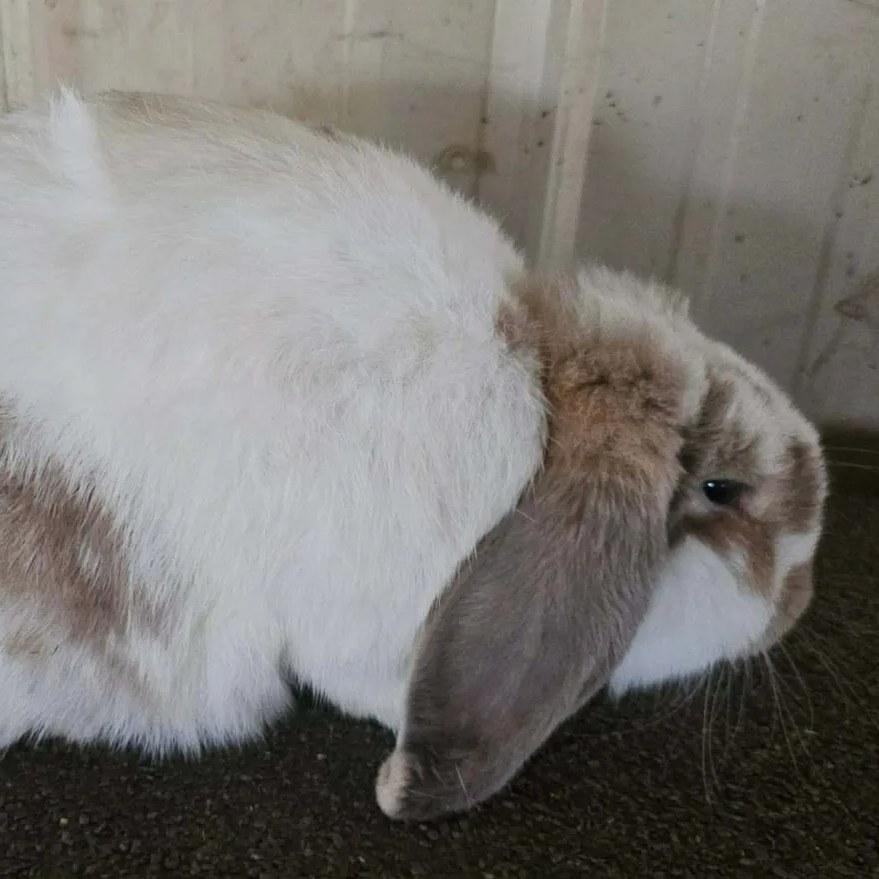
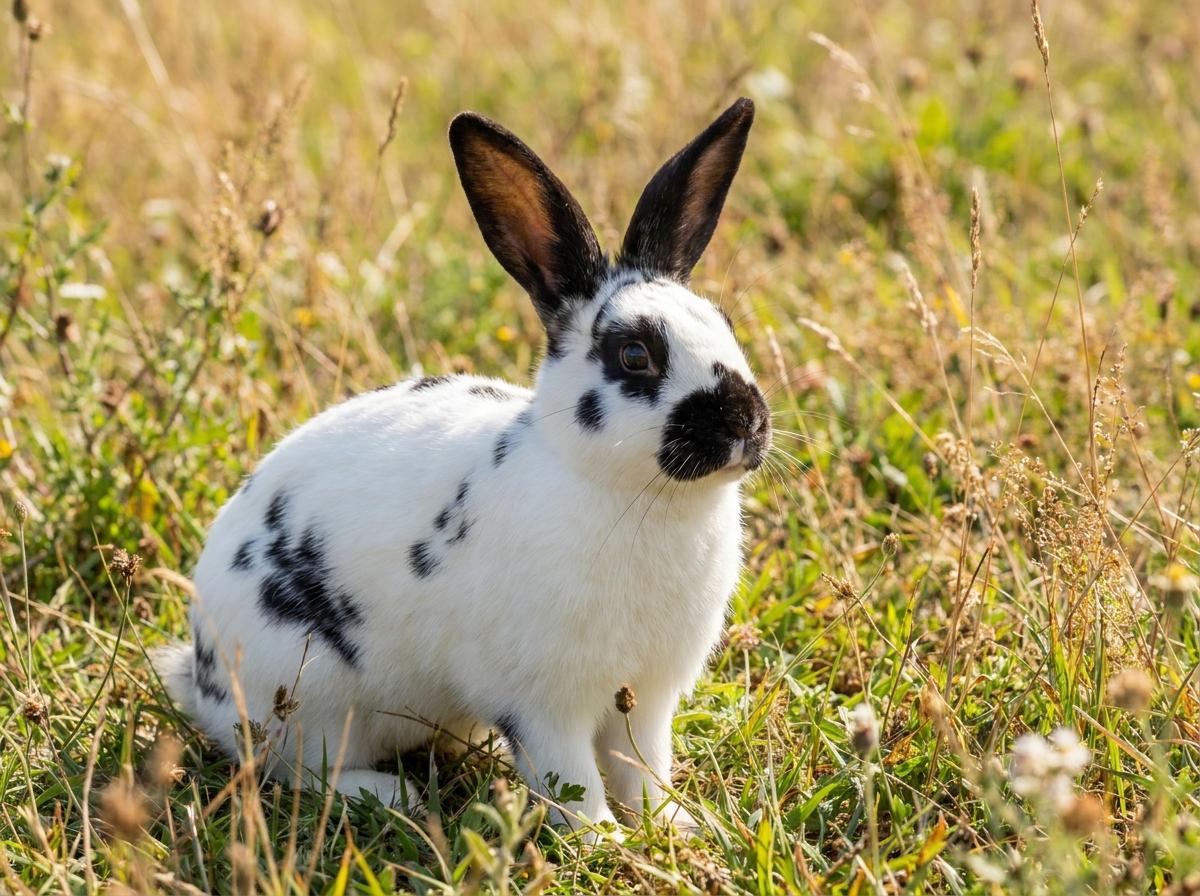
Mini Lops are shown in two groups, solid and broken. A broken rabbit is white with patches of a recognized color, like the broken orange above; a solid has color over the whole body. Within those groups the breed comes in a long list of colors across the agouti, self, shaded, tan-pattern, and wide-band families. The ones people search for most:
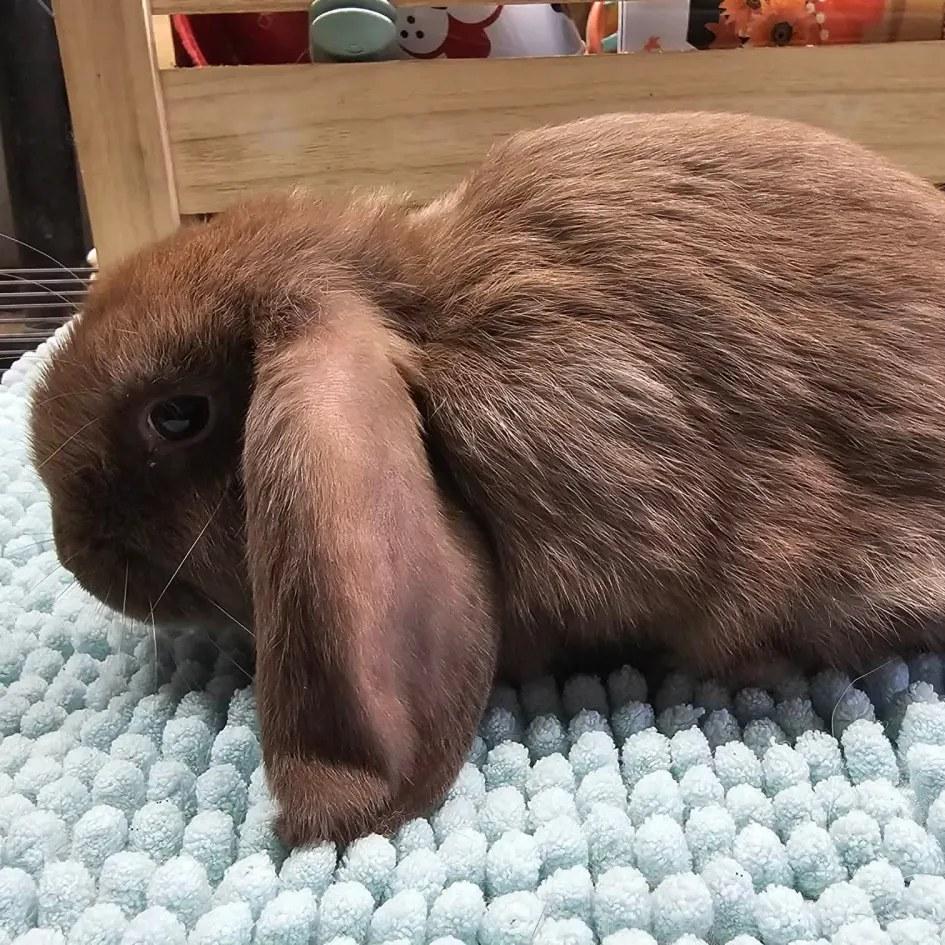
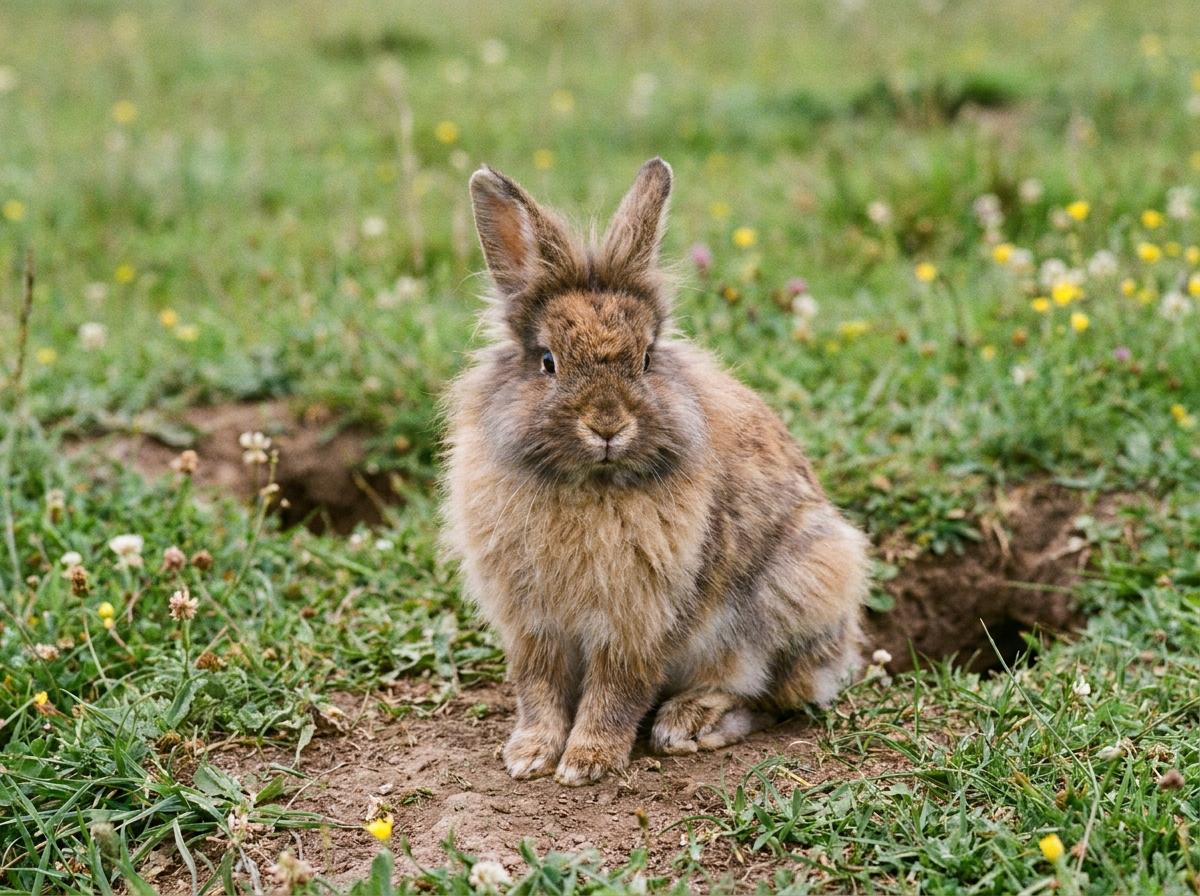
- Chestnut agouti. The wild-rabbit look: a brown coat ticked with black, with slate undercolor and light eye circles. Most “brown mini lop” searches are about this color.
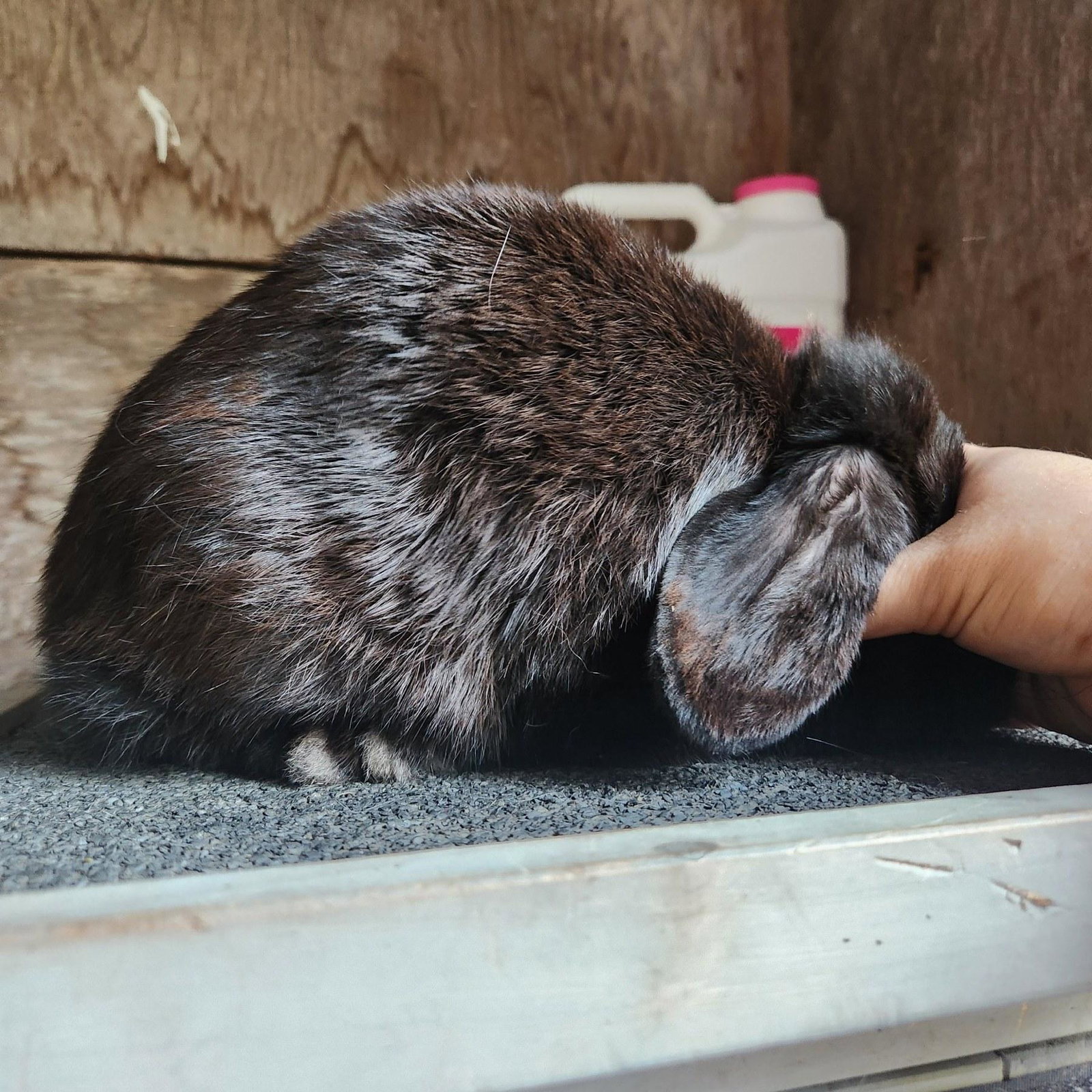
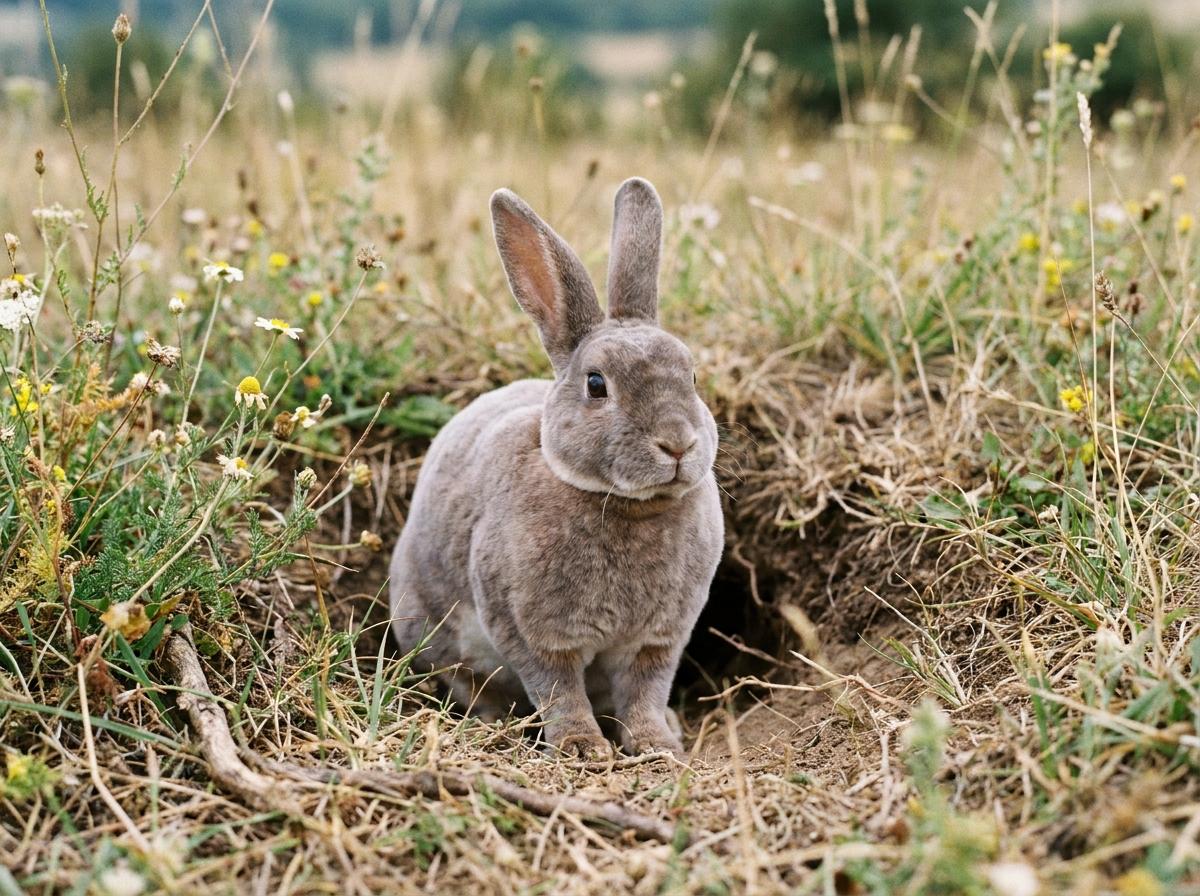
- Black and blue. Solid selfs, dense and even. A “blue” Mini Lop is a soft slate gray, not a true blue.
- Orange, fawn, and red. The warm wide-band colors, very common in brokens.
- Chinchilla, lynx, opal, and squirrel. Other agouti-pattern colors with banded hair.
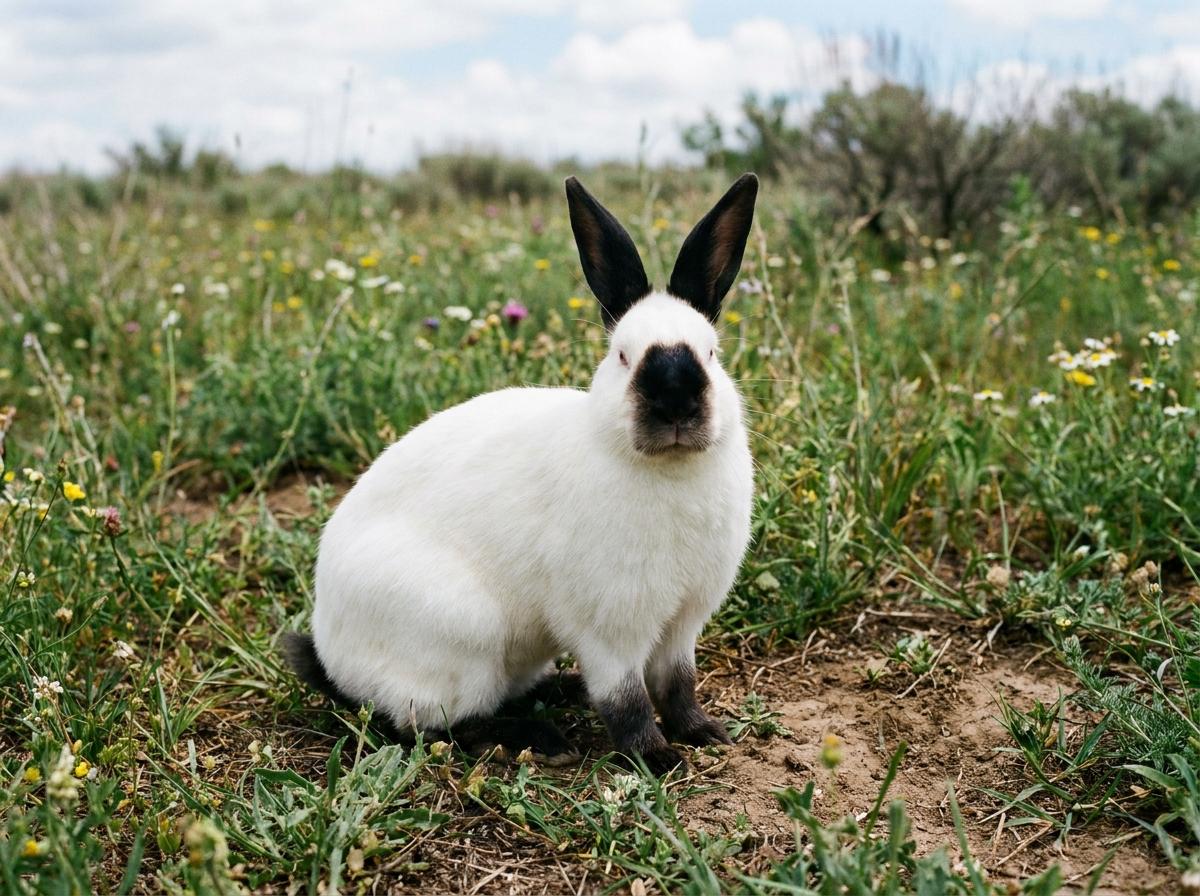
- Sable, seal, tortoise, and pointed white. Shaded and pointed colors.
The exact list of showable colors lives in the current ARBA Standard of Perfection, so a breeder showing rabbits will check the book, not a website. For a pet, color is the least important choice you make: temperament, health, and the parents’ condition matter far more.
Temperament
Mini Lops have a reputation as steady, sociable rabbits, and it is easy to see why they have become such common pets. That reputation describes the breed on average, not any given rabbit. Individual temperament depends heavily on handling in the first weeks, on whether the rabbit is neutered, and on whether it has a rabbit companion.
What catches new owners off guard is that the Mini Lop is still a prey animal. Most rabbits dislike being picked up and carried, and a solid six-pound rabbit that kicks out when lifted can hurt itself or a child. Mini Lops do best with people who spend time at floor level, let the rabbit approach, and support the whole body on the rare occasions it has to be lifted. Our guide to handling and bonding with your rabbit walks through that in detail.
It is also a very different commitment from a dog, even a large one like the Bully Kutta: a rabbit hides pain well, which shapes much of the care advice below. Other small pets bring their own demands: a hairless rat, for example, needs extra warmth and skin care because it has no coat.
Housing: more space than “mini” suggests

The word “mini” tempts people into small cages. A Mini Lop is a stocky, active rabbit that needs room to run, hop, stretch out, and stand on its hind legs, and the welfare guidance is clear that a hutch or cage on its own does not cut it.
- Floor space. The Rabbit Welfare Association and Fund recommends a single enclosed area of at least 3 m by 2 m and 1 m high for two rabbits, available at all times rather than for limited periods, and says a hutch should never be the sole or main accommodation. The RSPCA’s rabbit housing guidance gives the same 3 m by 2 m by 1 m minimum for two medium-sized rabbits, and adds that rabbits must be able to stand up without their ears touching the roof, lie fully stretched out, and turn around freely. In practice that means a large pen, a rabbit-proofed room, or a secure free-roam setup indoors.
- Company. Both organizations say rabbits need the company of another rabbit. Plan for a neutered pair from the start, and size the space for two. Two rabbits that did not grow up together need a slow, careful introduction on neutral ground; our guide to bonding rabbits explains how.
- Solid floors. The Merck Veterinary Manual’s section on noninfectious diseases of rabbits names pressure from wire-floored cages as a cause of sore hocks (pododermatitis) and says an affected rabbit needs a solid floor to rest on. Use solid flooring with washable rugs, mats, or deep clean bedding, never bare wire.
- The basics inside. A hide or two, a large litter tray with hay, a hay rack, a heavy water bowl or bottle, and things to chew and explore. Keep cables, toxic plants, and anything chewable out of reach in free-roam areas.
- Temperature. Rabbits overheat easily. Keep the space out of direct sun and away from radiators, and read our guide to keeping rabbits cool before your first summer.
The broader setup options, indoor and outdoor, are covered in our rabbit housing guide.
Diet: hay first, always

A Mini Lop’s diet should be built around grass hay, offered without limit. Rabbits’ teeth grow throughout life, and chewing fibrous hay is what wears them down; fiber also keeps the gut moving. Merck’s owner guide to digestive disorders of rabbits ties low dietary fiber directly to gastrointestinal stasis and recommends unlimited hay as part of prevention.
On top of the hay, a sensible daily plan looks like this:
- Fresh leafy greens in modest daily portions, introduced gradually.
- A small measured portion of plain pellets, not a muesli-style mix the rabbit can pick through.
- Clean water, always available.
- Treats such as fruit only occasionally and in tiny amounts.
A compact, heavy-bodied breed puts on weight easily, and extra weight makes grooming, hock problems, and cleaning its own rear harder. Our guide to what to feed a rabbit goes through safe greens and portion sizes. If you want to track weight month to month, logging it on your rabbit’s profile shows the trend long before you would notice it by eye.
Health: ears, teeth, and the gut
Mini Lops share the health risks of all pet rabbits, and a few of those risks are higher in lop-eared breeds. None of what follows replaces a vet: find a rabbit-experienced veterinarian before you need one, and let them make every medical call for your rabbit.
Ears
A lop ear folds over where it leaves the head, and that fold narrows the ear canal. A small 2019 Royal Veterinary College study of 30 rescue rabbits (15 lop-eared, 15 erect-eared) found that the lops had more ear canal narrowing, more wax buildup, and more signs of pain when their ears were examined. Middle and inner ear infections can also cause a head tilt, which Merck describes under bacterial diseases of rabbits and which needs veterinary treatment.
What you can do at home is look. Check both ears weekly for wax, redness, crusting, scratches, or smell, and watch for head shaking, ear scratching, pain when the base of the ear is touched, or a tilted head. Any of those is a reason for a vet visit, not for home cleaning deep in the canal.
Teeth
Merck calls malocclusion probably the most common inherited disease in rabbits. Whether lop ears themselves raise the risk is less settled than it once looked. The small 2019 RVC study found more dental problems in its 15 lop-eared rabbits, including overgrown molars and sharp spurs, but two larger, newer studies did not find the same link. A 2024 study that drew on the veterinary records of nearly 162,000 UK pet rabbits (Jackson and colleagues, Veterinary Record) found no significantly higher odds of dental disease in lop-eared or short-faced rabbits, and a 2025 study that examined 435 pedigree rabbits directly (Jackson and colleagues, Animals) also found no significant lop-ear association with dental abnormalities. Both point to husbandry, above all diet, as the bigger factor, though neither proves that lops carry no dental risk, and a group of British Rabbit Council pedigree rabbits may not represent pet rabbits generally. Warning signs include drooling, a wet chin, weepy eyes, dropping food, picking at food but not eating, and weight loss. Plenty of hay is the best prevention, and a rabbit-savvy vet should check the cheek teeth at routine visits. Our guide to rabbit nail and dental care covers what owners can check themselves.
GI stasis
A rabbit that stops eating, or produces fewer or smaller droppings, needs a vet the same day. Merck’s owner guide says to seek veterinary care promptly when a rabbit stops eating or shows digestive upset, and GI stasis can follow from dental pain, stress, or low fiber. Learn the signs before you need them in our guide to GI stasis in rabbits.
Spay and neuter
Merck notes that uterine adenocarcinoma can affect as many as 60% of intact does over three years old, and that this is the main reason to spay does that will not be bred, at about 4 to 6 months of age. Neutering bucks and does also makes bonding and litter training far easier. Ask your vet about timing and anesthetic risk for your rabbit, and see our guide to spaying and neutering rabbits for the practical side.
Everyday checks and lifespan
Keep nails trimmed, check the hocks for bare or red patches, and look under the tail for soiling, especially in warm weather when flies are about. Brush more often during molts, because rabbits groom themselves and swallow loose fur.
There is no published breed-specific lifespan for the Mini Lop. The RSPCA says rabbits typically live around 8 to 12 years, sometimes longer, and that smaller rabbits tend to live longer than larger ones. Budget your time and money for a decade, not a couple of years. Our overview of common rabbit illnesses and warning signs is worth reading early.
Cost and where to find a Mini Lop
There is no reliable national price list for Mini Lops, and prices vary with region, pedigree, show quality, and color. Pet-quality rabbits from a breeder usually cost less than the pen, hay, and first vet visit you will set up around them, while show-quality stock from established lines costs more. The purchase price is the small line in the budget; the running costs of hay, bedding, neutering, and vet care are the big ones. Our guide to what pet rabbits cost breaks those down.
The Mini Lop is widely kept, so finding one is usually easier than finding a rarer lop. Good places to start:
- Breeders who show. The American Mini Lop Rabbit Club suggests finding ARBA-sanctioned shows near you and talking to exhibitors with Mini Lops, which is sound advice: you see the adults and the breeder’s standards in person.
- The Creatures marketplace and directory. Mini Lop listings on Creatures and the breeder directory let you see what is available near you and which rabbitries keep the breed.
- Rescues. Lop-eared rabbits, often Mini Lop crosses, turn up in rescues regularly, frequently already neutered.
Before you commit, read our advice on where to buy a rabbit. When you meet a breeder, ask to see the parents, ask how the rabbits are housed and floored, ask what the kits are eating, and look at ears, teeth, eyes, and the rear end of the rabbit you are considering. A rabbit going home should be fully weaned; ask the breeder the age, and ask what records come with it.
Showing and breeding
The Mini Lop has an active show following in the United States, with the American Mini Lop Rabbit Club tracking sweepstakes points at sanctioned shows and running its own national show each spring. Judging rewards the compact, deep, heavily muscled body, the bold head and crown, correct ear carriage, and a dense coat, within the weight limit. Our guide to rabbit shows explains how ARBA-sanctioned shows and legs work, and the guide to rabbit pedigrees covers the papers breeders keep for registration.
Breeding is ordinary rabbit breeding at a small-to-medium scale: pregnancy lasts about a month, does need a quiet nest area, and kits need careful handling and good records. Two points deserve emphasis. Dental malocclusion is commonly inherited, so a rabbit with bad teeth should not be bred, whatever the evidence on ear type. And the ear findings in lop breeds are a reason to track health across generations, not just show results. The authors of the small 2019 RVC study went further and said their ear and dental findings question the ethics of breeding and buying lop-eared rabbits at all; the later, larger dental studies did not confirm the dental half of that finding, but the ear concern stands, which is a strong reason to breed only from sound, well-recorded stock. Our guide to breeding rabbits covers the husbandry, and the records hub at the end of this page shows how breeders keep lines organized on Creatures.
Is a Mini Lop right for you?
A quick honest check:
- You have room for a pen that is really a room. Not a cage with an hour out, but space the rabbits can use all day.
- You are planning for two. A neutered companion rabbit is part of the deal, not an extra.
- You will spend time on the floor. Mini Lops tend to be sociable, but on their terms, and most do not enjoy being carried.
- You will keep up the checks. Weekly ears, teeth signs, nails, weight, and a same-day vet trip if eating stops.
- You have a rabbit-savvy vet, and money set aside for neutering and the occasional emergency.
If most of that fits, a Mini Lop is a sturdy, engaging companion that suits indoor family life well. If you want something smaller, the Holland Lop is the next place to look, keeping in mind that its small size does not shrink the space or companionship it needs.
Frequently asked questions
How big does a Mini Lop get?
Under the ARBA standard, a senior Mini Lop may weigh no more than 6.5 pounds, and the ideal is widely given as about 5.5 pounds. In the UK, the rabbit sold as a “Mini Lop” is usually the much smaller BRC Miniature Lop, with a maximum of 1.6 kg under recent editions of the BRC standard (about 3.5 pounds).
What is the difference between a Mini Lop and a Holland Lop?
In the United States, size and build. The Holland Lop’s maximum is 4 pounds and the Mini Lop’s is 6.5, and the Mini Lop is a larger, deeper, heavier-bodied rabbit. In Britain the comparison flips, because the British “Mini Lop” is close in size to the American Holland Lop.
Is a Mini Lop the same as a Dwarf Lop?
Not officially: they are separate breeds standardized by different registries. The American Mini Lop and the British Dwarf Lop look alike and fill a similar size niche, so the Dwarf Lop is the closest British equivalent. The BRC Dwarf Lop runs a little lighter, 4 lb 4 oz to 5 lb 4 oz in the 2021-2025 standard.
What colors do Mini Lops come in?
They are shown as solids and brokens in many colors, including chestnut agouti (the brown, wild-type color), black, blue, orange, fawn, chinchilla, lynx, opal, sable, and tortoise. A broken rabbit is white with patches of one of those colors.
Is there an angora Mini Lop?
Not as an ARBA breed. The ARBA’s wool-coated small lop is the American Fuzzy Lop, and Britain has the long-coated Miniature Cashmere Lop. A rabbit sold as an “angora mini lop” is usually a cross or a fuzzy-coated lop, and it will need regular grooming to keep the coat from matting.
Can a Mini Lop live alone?
Welfare organizations advise against it. The RWAF and RSPCA both say rabbits need the company of another rabbit, and people are not a substitute. A neutered, bonded pair is the standard recommendation.
Do Mini Lops get ear infections?
Lop-eared rabbits have narrower ear canals and more ear problems on average than erect-eared rabbits, according to Royal Veterinary College research. Check the ears weekly and see a vet for head shaking, scratching, smell, pain, or a head tilt.
Do this next on Creatures
Whether you are still choosing, waiting for the right rabbit, or already sharing your floor with a pair of Mini Lops, Creatures keeps the listings, breeders, and records in one place.
Compare the lops. Read the Holland Lop page for the smaller American lop and the English Lop guide for the breed where the lop family began.
Find a Mini Lop. Browse Mini Lop listings on the marketplace and look up trusted rabbitries in the Creatures breeder directory.
Get alerted. Set a free Mini Lop listing alert and we will email you when a new one is posted. No account needed to start. See saving searches and using your watchlist.
Add your rabbit. Already have one? Create a free profile for your Mini Lop in a few minutes, no account needed to start. The walkthrough is in adding an animal to Creatures.
Keep the records. Add weight, ear-check, dental, and vet records so changes show up as a trend. The record sheet opens for any visitor, and a free account saves what you enter. See adding a record and health and medical records, and set the weekly ear check as a repeating reminder with reminders and upcoming care.
Breed Mini Lops? Create your rabbitry’s profile, no account needed to start, then get listed in the breeder directory so buyers searching for Mini Lops can find you.