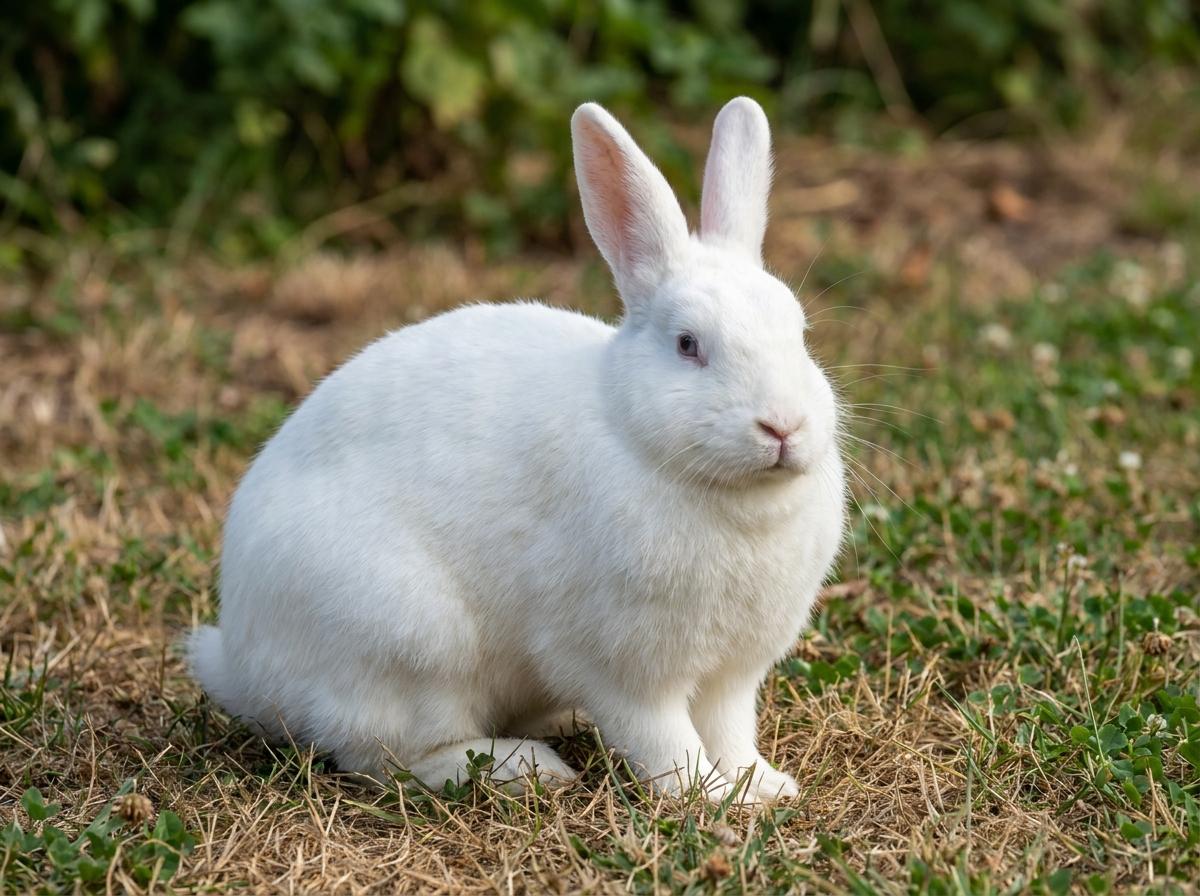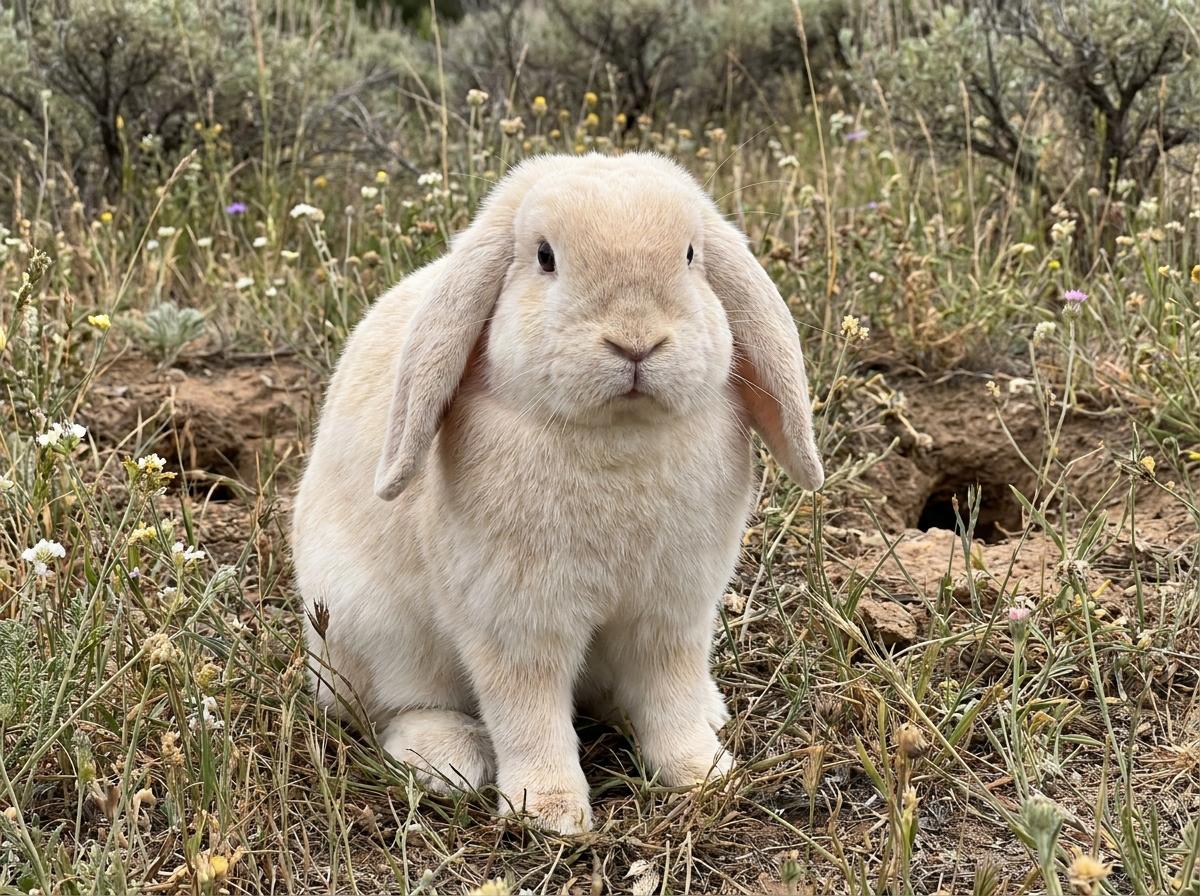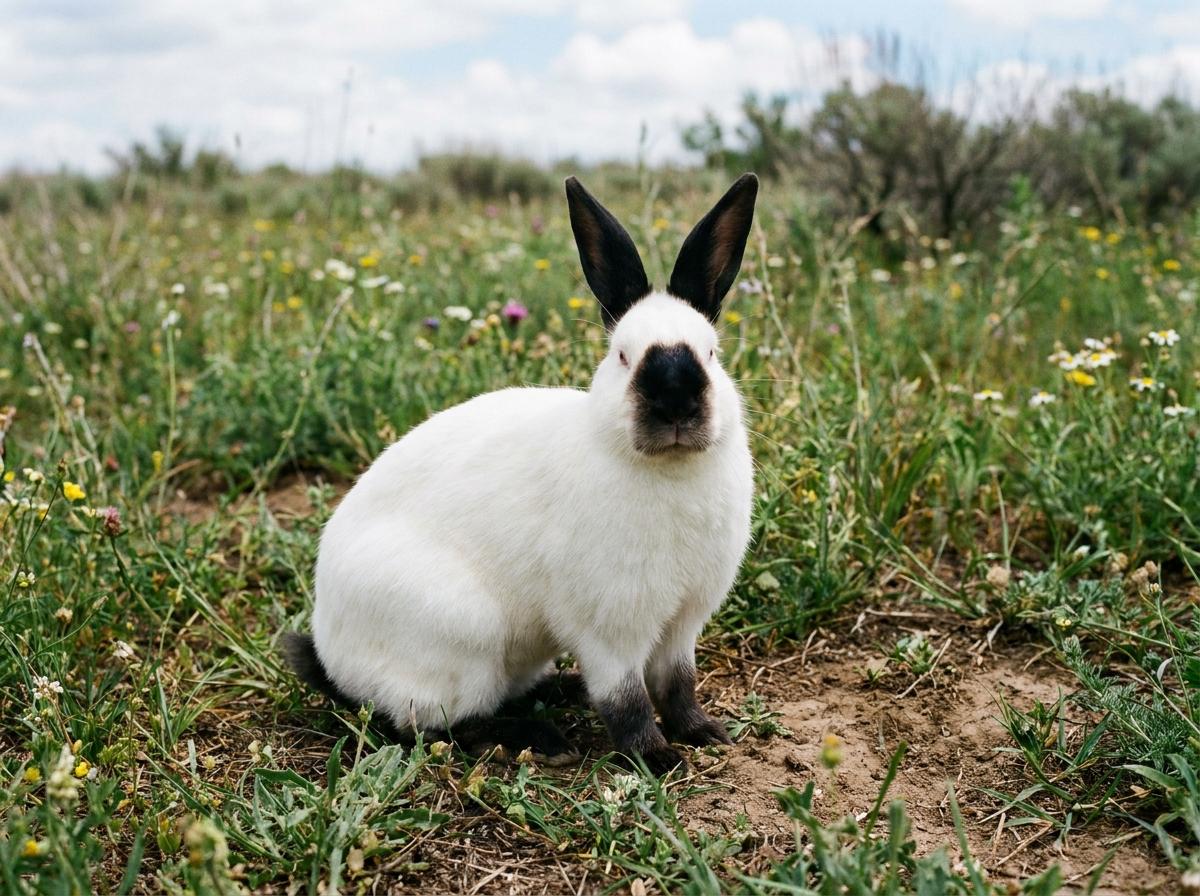





Champagne d'Argent
A Champagne d’Argent is a large French rabbit that is born solid black and turns silver as it grows. That is not a figure of speech. A nest box of Champagne kits looks like a nest box of black rabbits, and the silver arrives later, hair by hair, across the animal’s first months of life. Almost every question people ask about this breed traces back to that one fact.
The second thing people get stuck on is the spelling, and the search data says so plainly. This page gets found by readers typing champagne d’argent, champagne d argent, champagne de argent, champagne dargent, argenté de champagne, and simply champagne animal. All of those are the same rabbit. If you are shopping rather than reading, you can see what is listed for the breed right now, then come back for the coat section, because the coat is where buyers get caught out.

| Also written | Champagne d’Argent (ARBA), Argenté de Champagne, often shortened to Champagne |
|---|---|
| Origin | Champagne region of France. ARBA says the breed may have been present in France by the mid 1600s |
| Size | Large. ARBA gives a maximum weight of 12 lb (about 5.4 kg) |
| Coat at birth | Solid black, with no silver at all |
| Adult coat | Silvered: white and black tipped hairs mixed evenly over a dark slate blue undercolor |
| Registry | Recognized by the American Rabbit Breeders Association. ARBA’s breed page lists no color varieties for it |
| Conservation status | Not on the Livestock Conservancy 2026 Conservation Priority List. Its cousins the Crème d’Argent and Argente Brun both are, at Watch |
| Lifespan | No breed specific figure exists. Of 6,349 English pet rabbits under veterinary care, the 370 that died had a median age at death of 4.3 years |
Browse listings, public profiles, breeders, or add your animal.
The name, and why nobody can spell it
Two naming conventions are in circulation, which is the root of the problem.
The American Rabbit Breeders Association registers the breed as the Champagne d’Argent and translates it as “Silver [rabbit] of Champagne”. In French the older form runs the other way round, Argenté de Champagne, meaning the silvered one from Champagne. Both are correct, and you see both because the French name was inverted rather than translated on its way into the English speaking fancy.
For anyone writing it down: d’Argent is two words joined by an apostrophe, not Dargent and not De Argent. The accent on Argenté disappears in most English use. Champagne here is a place, not a drink. Breeders will often just write Champagne, which inside rabbit circles is unambiguous. Search for it however you like, but put Champagne d’Argent on the pedigree, because that is what a registrar expects. Our guide to reading a rabbit pedigree shows what else a registrar checks.
Born black: how the silvering actually works
Silvering is not a color the rabbit is given. It is a color the rabbit loses, slowly, in a pattern.
A Champagne kit is born a solid glossy black with no silver anywhere on it. As it grows, individual hairs come in white or white banded instead of black, scattered through the coat rather than clustered in patches. The adult effect is three layers stacked: a dark slate blue undercolor down at the skin, a mass of silvery white hairs through the body of the coat, and darker black tipped guard hairs standing above the surface. Together they read as frosted silver with fine dark ticking, which older writing calls old silver.
That is why a correct Champagne is neither a white rabbit nor a plain gray one. Set a good one beside a solid blue rabbit and the difference is obvious. The Champagne sparkles, because you are looking at thousands of individual light and dark hairs rather than one flat tone.
What to expect at eight weeks, and at six months
This is the part worth reading before you send anyone money.
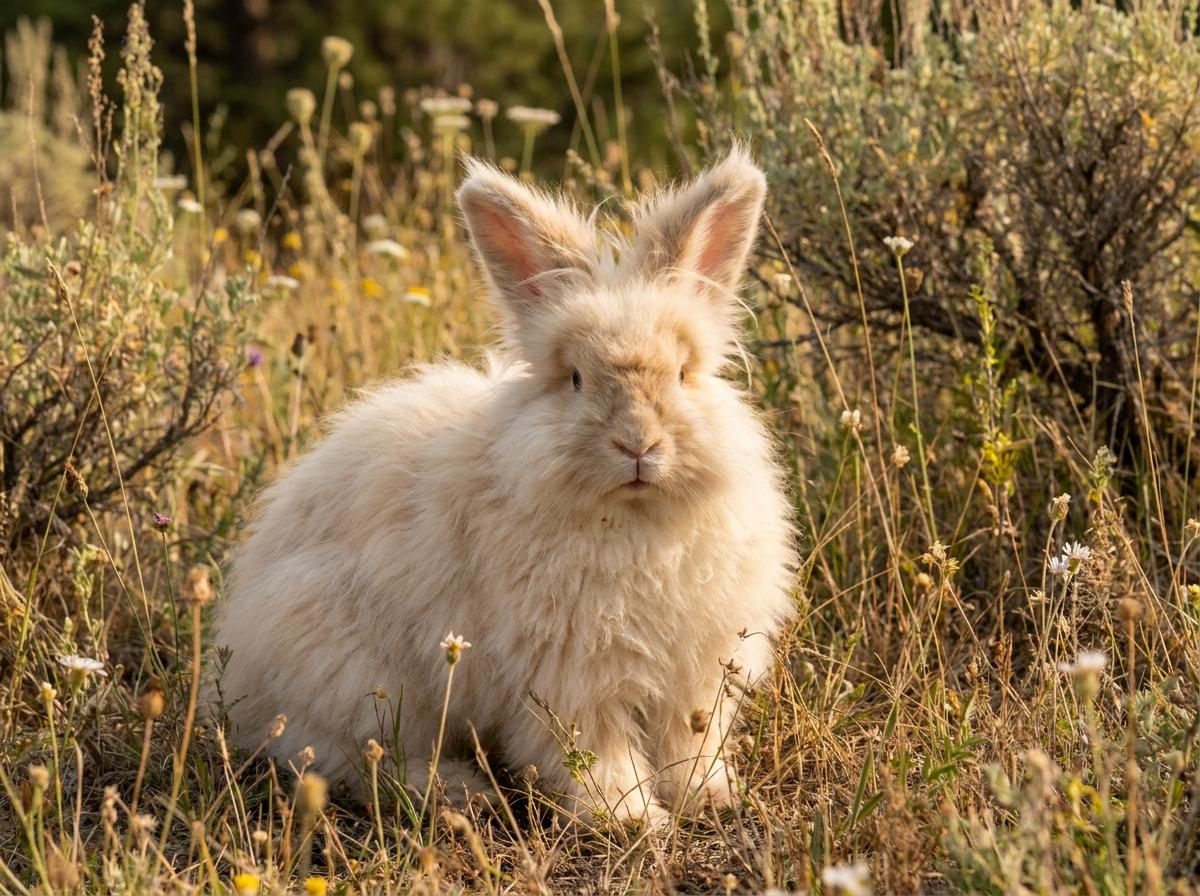
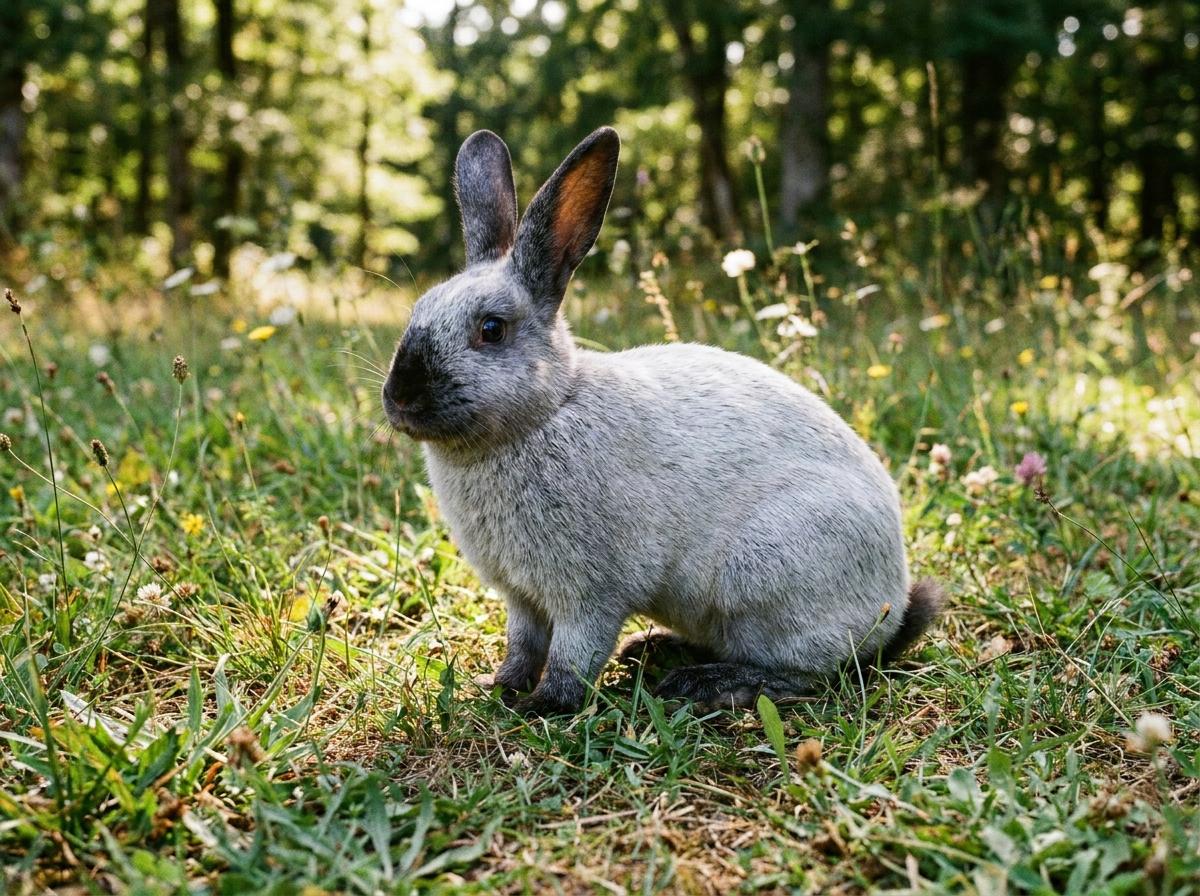
At around eight weeks a Champagne is still mostly dark. Breeders describe the first silver hairs as usually visible by then if you look closely, particularly over the flanks and shoulders, and a scatter of white shows up clearly against black fur. Take that as practitioner observation rather than a published figure, for the reason two paragraphs down. But the animal reads as a dark rabbit with a frosting, not as a silver one. The image below shows that coat stage on an older animal, since the point of it is the scatter of silver over a dark ground rather than the build of an eight week old kit.

Over the following months the silvering spreads and thickens. Breeders also report that the head, especially between and behind the ears, is commonly among the last areas to come through, so a part silvered youngster wearing a darker cap is normal rather than a fault; that too is practitioner observation. By the time the adult coat is in, silvering should be even from nose to tail and across the belly, and that adult coat is what a judge actually assesses.
Two caveats matter, and most breed pages skip both.
First, no registry or breed club publishes a week by week silvering timetable. Neither ARBA nor the national breed club offers one, and ARBA’s own standard text for the family sets young kit color aside entirely, saying color is not to be considered under three months of age. So any precise schedule you read, including confident claims that silvering starts at exactly three weeks or finishes at exactly six months, is somebody’s rabbitry experience rather than a published standard.
There is one institutional figure, and it is coarse rather than weekly. Texas A&M AgriLife Extension’s Rabbit Project Reference Manual says of this breed: “This rabbit is born black. At about 3 to 4 months, it takes on the adult color, a silver or skimmed-milk color with a dark slate blue undercoat.” Three to four months for adult color is the honest resolution the evidence supports. The direction of travel is reliable, the month scale is documented, and the week counts are not.
Second, individuals and lines vary. Some silver early and evenly, some come through slowly and patchily, and the coat keeps shifting with each moult afterwards. That variation is exactly what breeders select against, which is why one who keeps written notes on how each animal silvered out is worth more to you than one who does not. If you buy a young rabbit, start a record and photograph the coat monthly. You will end up with the thing that is genuinely scarce in this breed: your own data on how your line silvers.
What is actually known about the silvering gene
Less than the internet suggests, and being straight about that is more useful than hand waving.
The breeding behavior is solid. Silvering is inherited, it breeds true within the breed, and two Champagnes reliably produce silvering offspring. The classical rabbit genetics literature treats silvering as its own recessive locus, conventionally written si, sitting on top of whatever base color the animal carries, with further modifier genes controlling how heavily and evenly a rabbit silvers. That last part is why evenness is a selection trait rather than something you get for free.
The molecular story is not solid. Rabbit coat color is a well worked field and several classic loci have been pinned to real genes in the peer reviewed literature: MC1R for extension, ASIP for agouti, TYRP1 for brown, melanophilin for dilution, KIT for English spotting. Searching PubMed and PubMed Central for silvering turns up nothing equivalent. No published study has identified the causal gene or mutation behind the silvered coat in rabbits.
So the honest line for a buyer is that the trait is predictable at the level of a mating and unmapped at the level of DNA. No panel will tell you how well a kit will silver out. The evidence is the pedigree, the parents’ coats and the breeder’s notes.

Parting the coat over the shoulder, as above, is the fastest field check there is. On a correct Champagne the hair is darkest at the base and the silver sits along and above the shaft. A rabbit that is pale all the way down is showing you something else.
Size, type, and what the breed was built to do
ARBA gives a maximum weight of 12 pounds, roughly 5.4 kilograms, and mature animals sit at the upper end of that. Full ranges by sex and class live in ARBA’s Standard of Perfection, which the association sells as a book rather than publishing online, so treat any free web page quoting exact senior buck and doe brackets as second hand.
The build follows the job: deep and full through the body, broad and well muscled over the loin and hindquarters, rounded rump, medium length ears carried erect. This is not a compact fancy rabbit and it is not a dwarf. Hutch size, feed bill and how comfortably you can lift it one handed all scale with that.
Both purposes that shaped the breed were commercial: ARBA describes it as prized for its silvery pelt and its meat producing qualities, and as a frequent winner on the show table. Today most Champagnes in North America are bred for show or for meat on smallholdings, with a growing minority kept as pets, which the breed handles well when the space and feed budget match the animal. To line it up against other rabbits, the Creatures rabbit species page is the place to compare.
Telling the Argents apart, and the two Silvers that are not Argents
Five breeds get confused with each other here, and the search data shows readers landing on this page while hunting for at least three of them.
The Argents are the French silvered breeds, sharing the silvering trait and differing in the base color under it. The Livestock Conservancy calls the Champagne d’Argent the oldest of them and suggests it probably had a hand in creating the others. ARBA recognizes three: the Champagne d’Argent, the Crème d’Argent and the Argente Brun. Others, including the Argente Bleu, are recognized by European registries but not in the United States. Even the size of the family is contested, and the counts you will see quoted, six Argente types in one place and seven in another, are repeated secondhand rather than published as a list by either body. Treat any tidy number with suspicion, including those two.
- Crème d’Argent. A cream rabbit with a bright orange undercolor that carries down to the skin, developed in France in the mid to late 1800s. Slightly smaller, with bucks at 8 to 10.5 pounds and does at 8.5 to 11.
- Argente Brun. Silvering over a deep chocolate brown undercolor. It appeared in France in the late 1800s, died out, and was recreated in Britain by H.D.H. Dowle between 1939 and 1941. The American club formed in 2015 and ARBA accepted the breed into its Standard of Perfection in 2016, making it the newest Argent in the American book.
The two Silvers are separate breeds, not Argents. The Silver is an old English breed rather than a French one, and it is small: ARBA caps it at 7 pounds. The Silver Fox is American, developed by Walter B. Garland and renamed from the American Heavyweight Silver in 1929; it also tops out at 12 pounds, but its signature is a standing coat that holds position when stroked backwards instead of falling flat. Neither will produce a Champagne.
One line to remember: silvered is a look that several unrelated breeds share, and Champagne d’Argent is a specific breed with a specific undercolor. Check the pedigree, not the photograph.
Is it rare?
Not in the way its relatives are, and the internet blurs this constantly. Checked against the Livestock Conservancy’s 2026 Conservation Priority List, the Champagne d’Argent is not on it. Several cousins are: the Crème d’Argent and the Argente Brun sit at Watch, as do the Silver and the Blanc de Hotot, while the Belgian Hare has climbed to Recovering.
So a listing marketing a Champagne d’Argent as an endangered heritage rabbit is confusing it with a cousin. Old and well documented is a different claim from rare. If conservation is your reason for picking a breed, the Crème d’Argent is the Argent that actually needs breeders.
What one costs
There is no published price index for this breed, and any page handing you a confident dollar bracket is quoting itself. What can be said honestly is what moves the price.
- Age relative to the coat. This one is specific to the breed. A young animal is a bet on how it will silver out; an adult in full coat is a known quantity and priced like one.
- Pedigree, line and proven status. A weanling from a rabbitry that shows and wins costs a multiple of a pet quality weanling, and a doe with good litters behind her is usually the most expensive animal in the barn.
- Distance. Rabbits do not ship casually, so transport is a real cost and often exceeds the price of a pet quality animal.
Look at what sellers are actually asking rather than at a number in an article. Browse Champagne d’Argent listings, and if nothing is up, set an alert. A dozen or so breeders currently keep a Creatures profile for the breed, a small enough pool that supply is lumpy.
Care for a large silvered rabbit
Core rabbit care applies, scaled up. None of this replaces a veterinarian, and rabbits are a species where finding a genuinely rabbit experienced vet before you need one pays off.
Housing
Give a big rabbit room to sit fully upright with its ears clear, lie stretched out, and take several hops in a line. Floors should be solid rather than bare wire, and generously bedded: a heavy rabbit puts real load on its hocks. Add a hide box, a full hay pile, a heavy bowl that cannot be tipped, and something safe to chew. Mesh for ventilation belongs on the sides, not underfoot.
Company belongs in the housing plan too. Rabbits are social, so a neutered, compatible pair is the better default for a pet Champagne, which is what the pen below holds. Pair them slowly on neutral ground, watch the first weeks closely, and be ready to separate and start again if an introduction turns into real fighting. Two rabbits mean scaling the pen up rather than sharing the same space out, plus a second hide so neither animal can be cornered in the only one. Breeding animals are the deliberate exception and are housed individually.

Heat is the bigger threat, not cold. A dense bodied rabbit in a dense coat sheds heat poorly, so shade, moving air and cool water matter far more in July than insulation does in January.
Feeding and grooming
Feed as you would any rabbit, scaled up: unlimited grass hay as the foundation, a measured ration of a good pellet, appropriate greens and clean water always available. A large, growing or lactating rabbit needs more than a small pet rabbit does, but the failure mode in pet homes is nearly always too many pellets and not enough hay, which produces obesity and dental disease together.
The short dense coat needs very little most of the year. Through a moult, brush it out so the rabbit swallows less loose hair, and check nails regularly, for the reason in the next section.
Health, and how long they actually live
Here is where this page departs from most of what is written about the breed.
There is no breed specific longevity figure for the Champagne d’Argent, and the “seven to nine years” repeated across the web is not sourced to anything. The best population level evidence available comes from O’Neill and colleagues in the Veterinary Record in 2020, who examined the clinical records of 6,349 rabbits attending 107 primary care veterinary clinics in England. Among those that died during the study, median age at death was 4.3 years, with an interquartile range of 2.1 to 7.0 years.
Read that carefully rather than gloomily. It is a median, so half of those rabbits lived longer and the upper quartile reached seven years and beyond, and it describes pet rabbits at a median adult bodyweight of 2.1 kilograms, a much smaller animal than a Champagne. It is not a ceiling and it is not a breed figure. What it does say is that the commonly quoted numbers are optimistic against real data, and that much of the gap is preventable.
The same study makes the preventable part concrete. The most commonly recorded cause of death was myiasis, or flystrike, at 10.9 per cent, followed by anorexia and collapse at 4.9 per cent each and ileus at 4.3 per cent. The most prevalent disorders recorded were overgrown claws at 16.0 per cent, overgrown molars at 7.6 per cent, perineal soiling at 4.5 per cent and overgrown incisors at 4.3 per cent.
That list is a care checklist in disguise:
- Check the rear end, twice a day in warm weather. Flystrike starts with a soiled or damp back end and can kill within a day or two, and any rabbit that cannot groom itself properly is at much higher risk.
- A rabbit that stops eating or passing droppings is an emergency. Gut stasis is a same day veterinary problem, not a wait and see one.
- Teeth and nails are the routine work. Between them they account for most recorded disorders, and both are catchable at a monthly check.
- Ask your vet about rabbit hemorrhagic disease and whether vaccination is appropriate where you live.
Weigh the animal monthly and write it down. A trend in weight is the earliest warning most rabbit problems give you, and it is invisible unless you record it.
Breeding and litters
According to the Merck Veterinary Manual, rabbit pregnancy lasts about 31 to 33 days, kits are weaned at around four to five weeks, and medium to large breeds reach sexual maturity at four to four and a half months. Litter sizes vary widely, and within this family the Livestock Conservancy puts the Crème d’Argent at five to eight kits and the Argente Brun at around eight.
The interesting part comes after the birth. Every kit arrives black, so the nest box tells you nothing about color, and over the following weeks a box of identical black babies becomes a group of unevenly silvering youngsters. If you are breeding for show, evenness of silvering is one of the traits you are selecting for, and you cannot judge it at weaning.
Does can conceive again almost immediately after kindling, so plan matings deliberately and give them real recovery time between litters. And keep the records: kindling dates, litter sizes, weaning weights, and how each kit silvered out. That last column is what turns a rabbitry into a line.
What to check before you buy
- Judge the coat against the animal’s age. A dark eight week old is normal. A pale, washed out adult with no dark ticking is not.
- Part the coat. You want a dark slate blue base with the silver above it.
- Confirm which Argent it is. Champagne, Crème and Brun have different undercolors. Read the pedigree rather than trusting the listing title.
- Feel the body. This is a meat type rabbit, so you want firm muscling over the loin and rump, neither fat nor thin.
- Ask how their line silvers, and for records and current photographs in natural light rather than under a flash, which flattens silvering badly. A serious breeder can describe it and usually has photographs of earlier litters at several ages. A vague answer is the answer.
Look for keepers in the Creatures breeder directory. If you like coat traits that are not what they appear to be at eight weeks, the long-haired Syrian hamster is the other animal on Creatures that changes after you take it home.
Frequently asked questions
Why are Champagne d’Argent rabbits born black?
Because silvering is a progressive change rather than a birth color. The kit is born a solid black rabbit, and white and white banded hairs come in gradually through the coat as it grows, mixed with the black tipped guard hairs that give the adult its ticked, frosted look.
When does the silver appear, exactly?
No registry or breed club publishes a week by week timetable. The one institutional figure available is coarse: Texas A&M AgriLife Extension says the rabbit is born black and takes on the adult color at about three to four months. In practice the first silver hairs are usually visible within the first couple of months and the head is often last, but any exact week count you read is one rabbitry’s experience, not a standard.
How big does a Champagne d’Argent get?
Large. ARBA gives a maximum weight of 12 pounds, about 5.4 kilograms, and detailed ranges by sex and class are in its Standard of Perfection.
Is the Champagne d’Argent rare?
No. It is not on the Livestock Conservancy’s 2026 list, though its Crème d’Argent and Argente Brun relatives are, which is where most “rare Argent” claims come from.
What is the difference between a Champagne d’Argent and a Crème d’Argent?
The base color under the silvering. The Champagne has a dark slate blue undercolor and reads as silver and gray. The Crème has a bright orange undercolor and reads as creamy silver. Separate breeds, both recognized by ARBA.
Do they make good pets?
They can, and they have a good reputation for being calm and manageable. Temperament varies by individual and by how much gentle handling an animal had when young, so meet the rabbit. The real constraint is size: a 10 pound rabbit needs more space, more hay and a bigger litter tray than a dwarf.
Do this next on Creatures
This is where the coat notes stop living in your head.
- Add your rabbit. Create a free animal profile for a Champagne d’Argent in a few minutes, no account needed to start. The walkthrough is in adding an animal to Creatures.
- Track how it silvers out. Add a record for a monthly weight, a coat photo, a moult or a vet visit. The record sheet opens for any visitor to look around, and a free account is what saves what you enter. See adding a record and health and medical records.
- Get told when one is listed. Set a free listing alert and Creatures will tell you when a Champagne d’Argent is posted. No account needed to start, and it is the right move for a breed with lumpy supply. See saving searches and using your watchlist.
- Browse what is up now. Champagne d’Argent listings on the marketplace, and trusted keepers in the Creatures breeder directory.
- List your rabbitry. Breeding Champagnes? Create a breeder profile so buyers looking for this breed can find you, and read getting listed in the breeder directory.