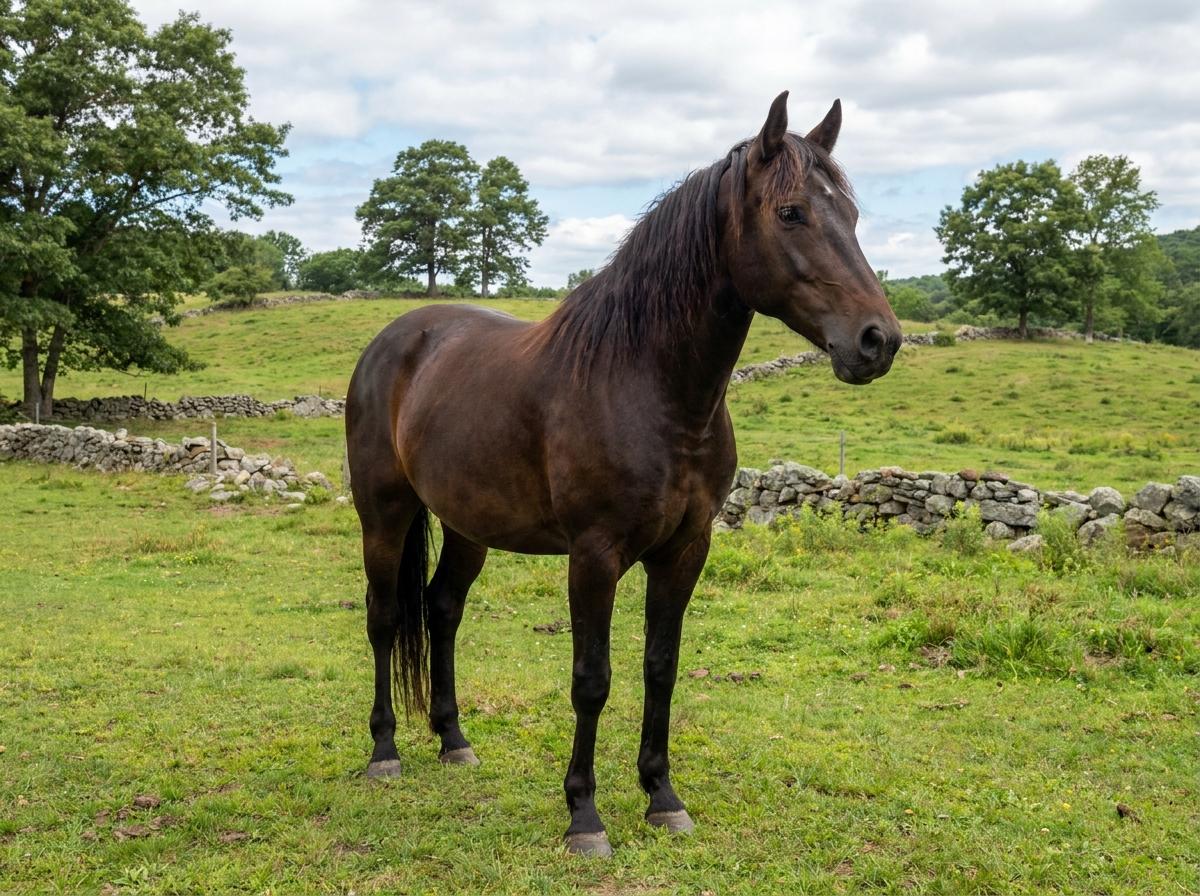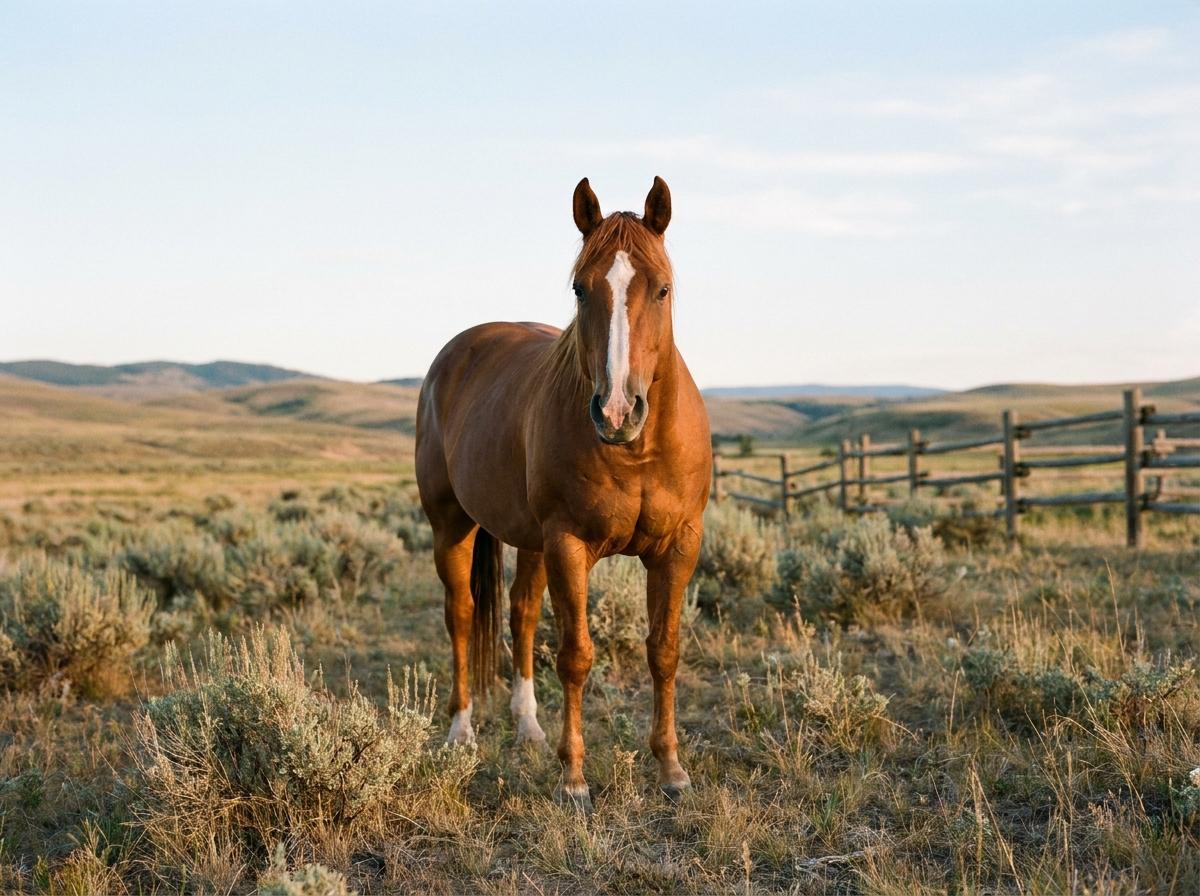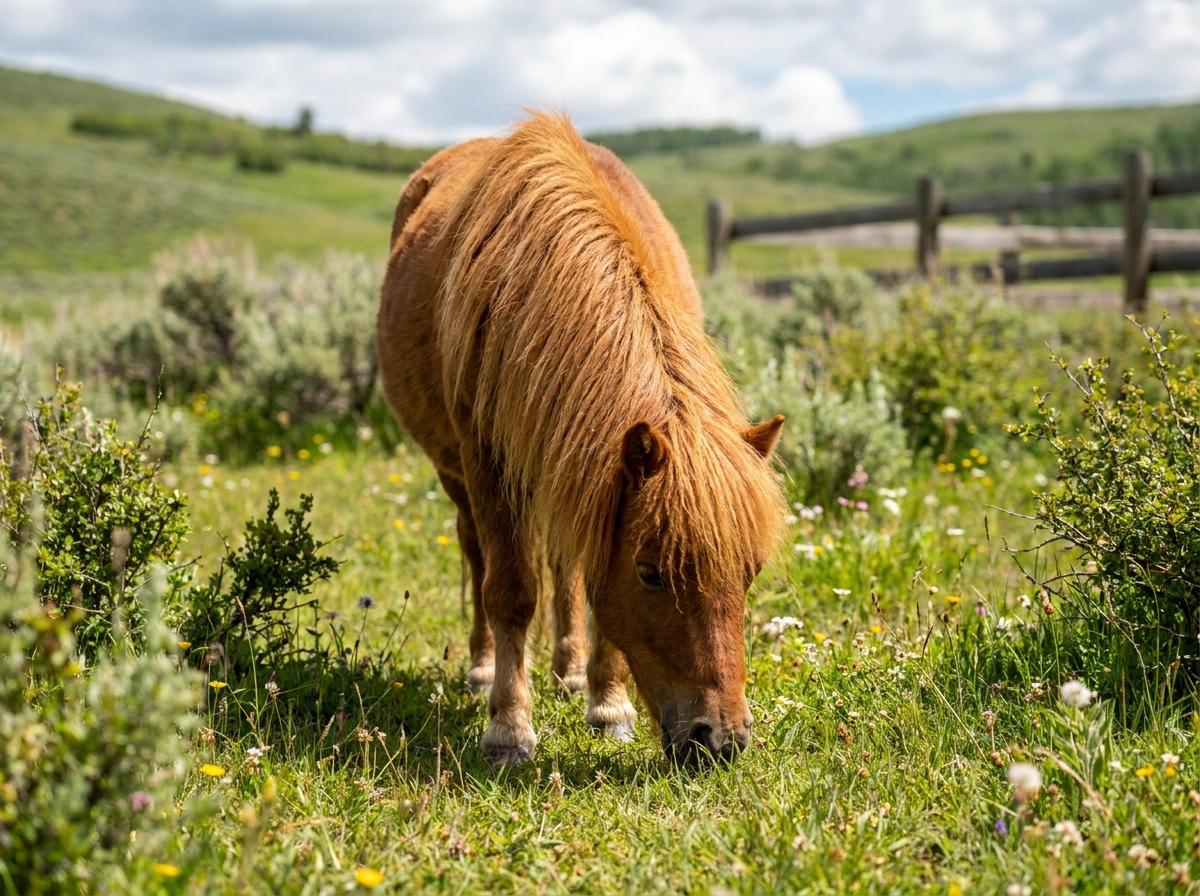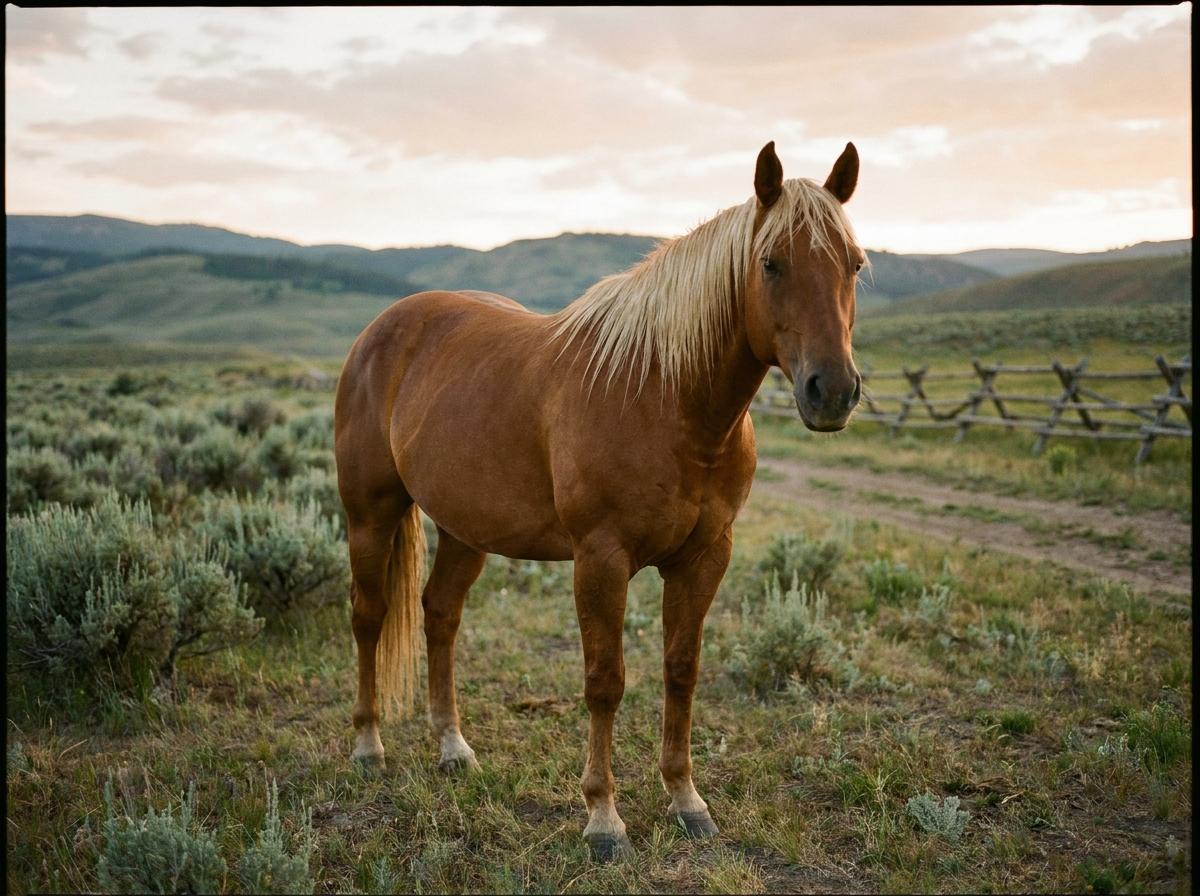
Garron
Author: Elliott Garber, DVM · Updated
A garron is not a breed. It is a Scots and Gaelic word for a small, sturdy working horse, and in Scotland it points at a real and living animal: the Highland pony, usually the larger, heavier mainland sort that crofters ploughed with and that stalkers still lead onto the hill. There is no garron studbook, no garron breed standard, and no garron registration papers, because the animal people mean when they say garron is registered as a Highland pony with the Highland Pony Society. That distinction is the whole point of this page. Below you will find where the word comes from, which animals it has been applied to, what the breed standard behind it actually says, what these ponies were built to do, what they cost and how scarce they are, and the specific things worth checking before you buy one. If you already keep one, you can start its free records on the Creatures horse pages in a couple of minutes.

| What it is | A word, not a breed. Scots and Gaelic for a sturdy small working horse |
|---|---|
| Also spelled | Garran; from Gaelic and Irish gearran, meaning gelding or hack |
| The animal usually meant | Highland pony, historically the larger mainland type |
| Governing body | Highland Pony Society (formed 1923), the studbook of origin |
| Height | Breed standard sets an upper limit only: not to exceed 14.2hh (148 cm) |
| Weight | Roughly 400 to 500 kg (about 880 to 1,100 lb) per RBST; other sources run heavier |
| Colours | Duns (mouse, yellow, grey, cream), plus grey, brown, black, bay, occasionally liver chestnut with silver mane and tail. Broken colours not allowed |
| Traditional jobs | Croft work, ploughing, peat and timber haulage, and carrying deer off the hill |
| Conservation status | At Risk on the RBST 2026-27 equine watchlist; Critical on The Livestock Conservancy’s US list |
| Availability in the US | Genuinely scarce, with only a few breeders |
Browse listings, public profiles, breeders, or add your animal.
What does garron mean?
Garron (also spelled garran) is a word borrowed into Scots and English from Gaelic. The Scottish National Dictionary, published by the Dictionaries of the Scots Language, defines it as “a small, sturdy type of horse, mostly used for rough hill work, a Highland pony,” traces it to Old Scots garrein from 1631, and links it to Gaelic and Irish gearran, meaning a gelding or a hack. The dictionary records the word in use across general Scots from 1730 into the twentieth century, with variant spellings and pronunciations recorded from Caithness and Orkney to the north-east and Ulster, and quotations from Argyll and Inverness.
Two things follow from that, and both matter if you are shopping.
First, garron has never been a breed name. It is an occupational and descriptive word, the way “cob,” “hack,” “hunter” and “cow pony” are descriptive words. Nobody issues garron papers.
Second, the word has not always been flattering. Alongside the working-pony sense, the dictionary also records garron used for an old or worn-out horse, and figuratively for a thickset man. A nineteenth-century Orkney source quoted in the same entry describes these animals as having thick necks and heads with short ears, and calls them very strong and hardy. When you meet the word in an old book or an estate record, read it as “the tough little horse that does the work,” not as a pedigree claim.
Garron, Highland pony, or Galloway? Sorting out the names
Three Scottish names get tangled together, and separating them is the fastest way to understand what a garron is.
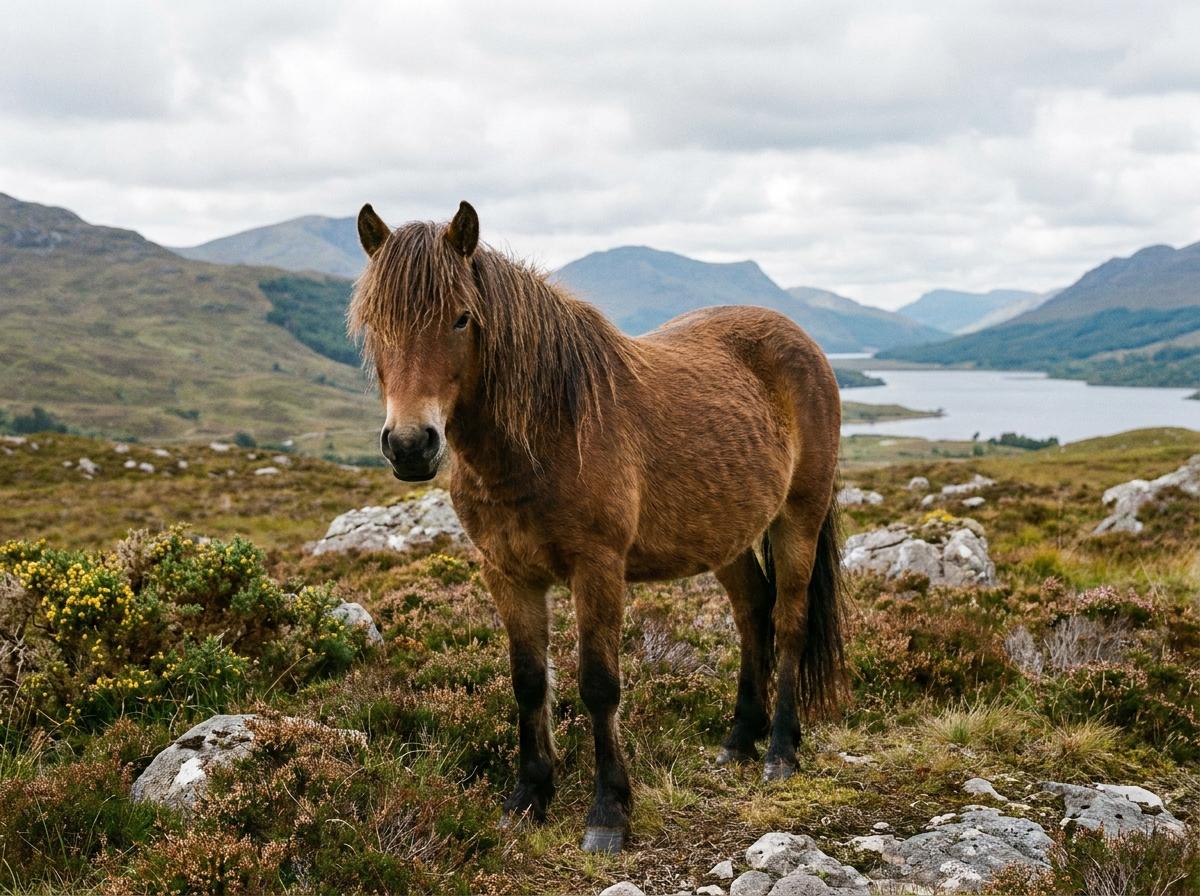
Highland pony. This is the actual breed. The Highland Pony Society calls it “one of the two native pony breeds of the Scottish Highlands and Islands” and holds the studbook. Historically the breed contained two recognisable sorts: a lighter, finer type from the Western Isles, and a larger, heavier type from the mainland. The mainland type is the one that has commonly been called a garron. The Society’s current standard no longer describes two types as separate classes, but it still nods to the older split in a technical detail, noting that “ponies of Western Isles type may have striped hoofs which grow out at maturity.” So the sorts were real, and the difference has largely blurred into a single breed with a range of substance within it. If the animal in front of you is a registered pony, its papers will say Highland pony, and you can compare it against our Highland pony page.
Galloway. A separate and now extinct Scottish type from the southwest, prized as a hardy riding and droving animal and remembered in Shakespeare’s phrase about Galloway nags. It is often described as an ancestor or relative of the Fell pony and the Highland, and it died out through crossbreeding rather than neglect, because its crossbred progeny were too useful to resist. The Galloway is a genuine part of Scottish horse history, but it is a different thread. Do not treat garron and Galloway as synonyms; the loose modern habit of using garron for any old Scottish pony type is where that confusion comes from.
Garron. The word. Applied most consistently to the bigger mainland Highland pony, and also, in some recorded usage, to Highland ponies crossed with Clydesdales to make a heavier working animal for hill farms where a full Clydesdale would have been uneconomic. That second usage is worth knowing about precisely because it is not a pedigree animal. A pony advertised as a garron may be a registered Highland, or it may be a part-bred or an unpapered working pony of the same general stamp. Both can be excellent; they are not the same purchase.

What a garron looks like
Because the animal behind the word is a Highland pony, the description that applies to it is the Highland Pony Society breed standard. The version below is quoted from the Society’s own breed description, which is the primary document, rather than from the summaries that circulate online.
Height. The standard gives an upper limit and no lower one: “not to exceed 14.2hh (148cms).” This is worth stating plainly, because a great many sources quote a range of “13hh to 14.2hh” as though it were the standard. It is not. The Society’s own commentary on the standard says that “few Highlands are under 13hh but some can be over 14.2hh,” and that overheight ponies “fall outwith the breed description,” which keeps them out of the show ring. The Rare Breeds Survival Trust gives a typical working range of 13 to 14.2 hands (132 to 147 cm) on its Highland pony page, which is a fair description of what you will meet, but it describes the population rather than the rule.
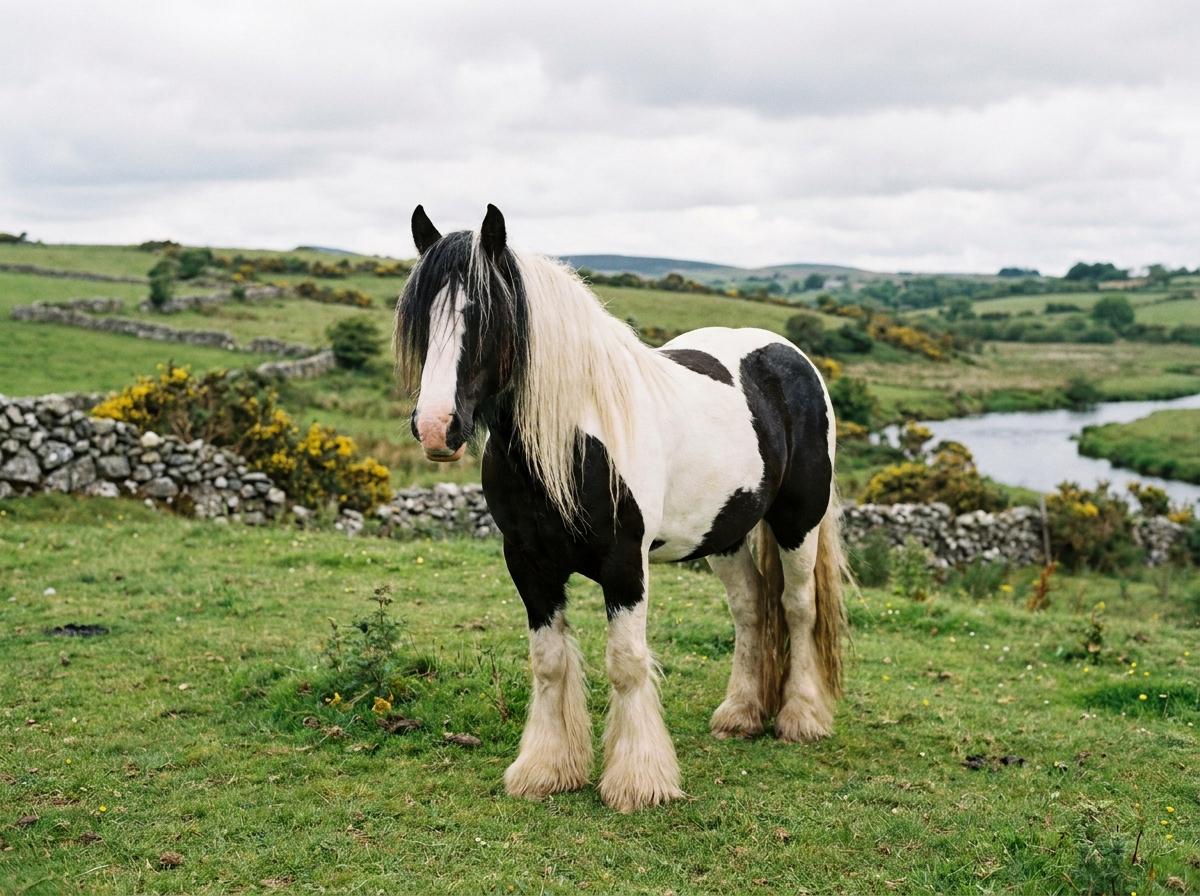
Build. The standard asks for “a strong, well balanced, compact pony with all its features being in proportion to its height,” and calls it “one of the largest of the British Native Breeds.” That is the garron impression in a sentence: substance without coarseness, and pony proportions at pony height rather than a scaled-down horse.
Head. “Well carried and alert with kindly eye. Broad muzzled with a deep jowl.” The Society’s commentary adds a useful measuring trick: the width across the forehead from eye to eye should be about the same as the depth of the jowl, and the nose should not be too long.
Legs and feet. “Flat hard bone, broad knees, short cannon bones, oblique pasterns and well shaped broad dark hoofs. Feather soft and silky.” The feather is light and silky rather than the heavy, coarse feather of a draft horse, which matters for daily care.
Mane and tail. “Hair should be natural, flowing and untrimmed with a full tail.” Pulling, plaiting or trimming a Highland’s mane is against the breed standard, and adding hairpieces is against showing rules. If you see a trimmed Highland in a sale photo, it tells you something about the seller.
Colour. A range of duns (mouse, yellow, grey and cream), plus grey, brown, black, bay, and occasionally liver chestnut with a silver mane and tail. “Many ponies have a dorsal stripe and some show zebra markings on legs and shoulder.” Two rules are hard: “broken colours are not allowed,” so no piebald or skewbald, and “a small star is acceptable but other white markings are discouraged.” Stallions with white markings beyond a small star are not eligible for licensing at all, which is a real commercial consideration if you are buying a colt to breed from. Foal colour is unreliable, and many ponies change colour gradually as they age, so do not buy on a foal photo’s colour alone.
Coat and hardiness. The Society describes a winter coat of “strong, badger like hair over a soft, dense undercoat which enables this breed of pony to live out in all weathers,” shed in spring to a smooth summer coat. This is the trait the whole garron reputation rests on.
What garrons were bred to do
The garron was a working animal before it was anything else, and the jobs shaped the shape.
On crofts and hill farms across the Highlands and Islands, the same pony ploughed, carried peat home in creels, dragged timber, went to market and carried the family. The Livestock Conservancy’s Highland pony entry describes exactly that mix of farm work, hauling timber and ploughing. A mid-twentieth-century source quoted in the Scottish National Dictionary lists the same round of jobs: drawing ploughs, carrying peat creels, and moving game across island fords.
The job the word garron is most associated with today is deer work. On Scottish sporting estates, a trained pony carries a shot stag off ground where no vehicle can go, using a purpose-made pack saddle, and estates still keep ponies for this because a pony picks its own line around bog and broken ground and does less damage to the hill than a machine. That is why the animal has to be sure-footed, calm about being loaded with an awkward weight, and content to stand still while it happens. A red deer stag from Scottish hill ground is a substantial load in its own right, which explains why the mainland type, the bigger of the two, is the one the estates wanted.
None of this is folklore that has quietly stopped. It is a working role that survives on a modest number of estates, alongside the breed’s much broader modern life as, in the Society’s own words, “a ride, drive and pack animal which can adapt to many equestrian disciplines”: trekking centres, riding club work, driving, hill trekking and forestry extraction.

Temperament and who a garron suits
The Highland Pony Society pairs the breed’s hardiness with “a kindly nature and an even temperament,” and that reputation is consistent across the working record: a pony that will stand while a deer is strapped to it, or plod home in the dark with a load of peat, is not a sharp ride. Treat that as a breed tendency rather than a guarantee about any individual animal. Temperament is shaped by handling, workload and how the pony has been kept, and the same steadiness that makes a garron safe on a hill track can read as stubbornness to a rider expecting a lighter, quicker response.
Who they suit: adults who want a genuinely weight-carrying native pony, families wanting a durable all-rounder, trekking and hill work, driving, and anyone whose ground is wet, rough and cold enough that a thin-skinned horse would be a nuisance.
Who they do not suit: anyone wanting a modern competition shape, anyone without the grazing management to keep a good doer at a sensible weight, and anyone who assumes a hardy pony is a low-input pony. The second of those causes far more problems than the first.
Keeping a garron: the care that actually matters
Highland ponies are famously self-sufficient, and that reputation is the single biggest cause of preventable trouble in modern homes. The full picture goes well beyond what fits here, so the breed-specific points are below and the general management detail lives in the Creatures horse feeding guide and horse hay guide. Defer every medical decision to a veterinarian who can see the animal.
Weight, laminitis and metabolic disease
This is the big one. Ponies are generally more insulin resistant than horses, and Royal Veterinary College laminitis research describes that difference as genetically mediated, likely an adaptation for surviving harsh environments that becomes a liability once the pony is on good grazing and doing little.
The numbers back it up. A cross-sectional study of UK native ponies and cobs by Carslake, Pinchbeck and McGowan, published in the Equine Veterinary Journal and available via PubMed Central, examined 354 animals aged 3 to 14 across 64 properties and found equine metabolic syndrome in 23.3 percent of them. Just under 10 percent had had at least one laminitis episode in the previous five years, and 76 percent of those animals were EMS positive. The risk factors the study retained were age, female sex, a sedentary main activity rather than being ridden or driven, obesity at a body condition score of 7 or more out of 9, and less time at summer pasture. Highland ponies were among the native breeds sampled, in a grouping with Fell, Shetland, Dales, Dartmoor, Exmoor and New Forest ponies, so read the finding as applying to hardy natives as a class rather than to Highlands specifically.
Practically: learn to condition score your pony rather than eyeball it, using the Henneke scale explained in the Creatures body condition scoring guide, restrict grazing rather than rugging a fat pony through winter to keep it comfortable, keep it in work, and know the early warning signs in the Creatures laminitis guide. A garron that came off a Scottish hill and went onto an improved lowland paddock has changed diet more dramatically than its owner usually realises.
Feather, mud and skin
Feather is part of the standard, and feather traps wet and dirt against the skin. The Merck Veterinary Manual’s entry on scratches, also called greasy heel, dew poisoning or pastern dermatitis, the condition British owners call mud fever, describes a long running inflammation in which the back of the pastern and fetlock swell and ooze, says it is often associated with poor stable hygiene, and notes that heavy horses are particularly susceptible and the hind limbs more commonly affected. The line that matters most for a feathered pony is the one about visibility: scratches may go unnoticed in horses with feathers, because the long, dense hair makes it difficult to see the lesions. The treatment Merck describes is unglamorous and mostly mechanical: remove the hair, wash and cleanse with warm water and soap until the discharge is gone, dry the skin, and apply an astringent dressing. Prevention runs along the same lines, which is what the old name dew poisoning is getting at: clean dry legs, clean dry bedding through wet weather, and the feather clipped back on any pony that keeps breaking out. Check under the feather with your fingers at least weekly through a wet winter. Scabs found early are a nuisance; scabs found late are a vet visit.
Feet, teeth and routine work
A garron’s feet are typically hard, broad and dark, and many live barefoot without difficulty, but hard feet still need a farrier on a regular cycle, particularly on soft ground where they do not wear. The Creatures hoof care guide covers the schedule and what thrush looks like. Dentals, worming based on faecal egg counts, and vaccination all follow ordinary equine practice for your region.
Shelter and living out
The winter coat is genuinely functional, and a healthy Highland in good condition can live out in weather that would need a rug on a thin-skinned horse. Living out is not the same as living unmanaged: they still need shelter from driving wind and rain, a dry standing area, and clean water that does not freeze. Rugging a native pony that does not need it flattens the coat’s insulation and hides the weight gain you needed to see. The Creatures shelter guide covers what a field shelter has to do.
How rare is a garron, and what does one cost?
The pony behind the name is a conservation-priority breed on both sides of the Atlantic, and the two organisations rate it differently because they are measuring different populations.
In Britain, the Rare Breeds Survival Trust places the Highland pony in the At Risk category on its 2026-27 equine watchlist, a tier below its highest-concern Priority group (which holds the Eriskay, Dales, Exmoor, Cleveland Bay, Hackney and Suffolk). So in its homeland the breed is monitored, not on the edge.
In the United States it is much thinner on the ground. The Livestock Conservancy lists the Highland pony as Critical on its Conservation Priority List and states plainly that there are only a few breeders in the US. Two North American organisations serve owners, the Highland Pony Enthusiasts Club of America and the Scottish Highland Pony Society of North America, and the Highland Pony Society in Scotland remains the studbook of origin for registration.
Price. There is no reliable published price for a garron, and any specific figure you see quoted for the type should be treated as one seller’s asking price rather than a market rate. Across the type, price tracks the same things it does in any pony purchase: age, training, soundness, registration status, temperament, and how much genuine hill or ridden work the animal has actually done. A registered Highland with a passport, a competition or trekking record and clean vetting sits at one end; an unpapered part-bred working pony sits at another. For the wider cost picture, including the annual cost that dwarfs the purchase price, see the Creatures guide to how much a horse costs.
Import reality. Buying from Scotland into the US is not a casual transaction. USDA APHIS requires an import permit and quarantine for live equines, with a quarantine period set by the animal health status of the countries the horse has lived in. Release from that quarantine depends on negative official tests for dourine, glanders, equine piroplasmosis and equine infectious anaemia, a requirement set out in the federal rule itself at 9 CFR 93.308. In Britain, every equine must have an equine passport and a microchip, and a buyer has 30 days to have the ownership details updated with the passport issuing organisation. Factor the paperwork and transport into any international purchase before you fall in love with a photograph.

Buying a garron: what to actually check
- Ask what “garron” means for this specific animal. Registered Highland pony, part-bred, or unpapered? Ask for the passport and the registration papers, and read the breeding recorded on them rather than the advert.
- Match the pony to the job, not to the word. If you want a weight-carrying hill pony, look at bone, foot and back, and ask what the pony has actually carried and where. A garron that has never left a flat paddock is a Highland pony with no hill experience, whatever the advert says.
- Condition score before you admire. Given the metabolic risk above, a fat pony being sold as “a good doer, lives on fresh air” is a warning, not a selling point. Score it, and ask directly about any laminitis history.
- Look under the feather. Check both hind and front pasterns for scabs, heat and soreness, and ask about the pony’s mud fever history over the last two winters.
- Check white markings if you plan to breed. Anything more than a small star affects registration and, for a colt, stallion licensing.
- Watch it move and watch it stand. The standard asks for straight, free movement without undue knee action. Then load it, tie it, and see whether it stays sensible about being handled, which is the trait the working role selects for.
- Vet it. A pre-purchase examination is worth its cost on any horse and especially on one you intend to work on rough ground. Ask your own vet, not the seller’s.
- Buy carefully at a distance. Rare breeds attract long-distance sales, which is where fraud lives. The Creatures guide to horse scams online covers the patterns worth recognising before money moves.
If your search also includes compact heritage riding horses, the Florida Cracker guide provides another set of identity, size and training questions.
When you are ready to shop, you can browse the horse listings filed under garron and the horse listings filed under Highland pony, find sellers in the Creatures directory, and if the pony you bring home still needs a name, the horse name generator has a Scottish streak in it.
Frequently asked questions
Is a garron a breed of horse?
No. Garron is a Scots and Gaelic word for a small, sturdy working horse. The animal usually meant by it in Scotland is a Highland pony, and Highland ponies are registered with the Highland Pony Society. There is no garron studbook or garron breed standard.
Is a garron the same as a Highland pony?
Close, but not identical. Garron has been used most consistently for the larger, heavier mainland type of Highland pony, as opposed to the lighter Western Isles type. It has also been recorded as a name for Highland ponies crossed with Clydesdales. So every garron in the Scottish sense is a Highland-type pony, but not every animal called a garron is a registered Highland.
How big is a garron?
The Highland Pony Society’s standard sets an upper limit only, “not to exceed 14.2hh (148cms),” with no lower limit written into it. In practice most are between about 13hh and 14.2hh, and the Rare Breeds Survival Trust gives a typical weight of 400 to 500 kg.
What is a garron used for?
Historically, everything a croft needed: ploughing, carrying peat and timber, going to market, and riding. Today they are ridden, driven and used for trekking, and a smaller number still work on Scottish estates carrying deer off the hill on a pack saddle.
Can a garron carry an adult?
Yes, that is one of the reasons the type exists. A Highland is one of the largest British native breeds and was bred to carry adults and loads over rough ground. Suitability still depends on the individual pony’s size, condition and fitness, so match the rider to the pony rather than assuming the breed covers it.
Are garrons good for beginners?
Their reputation for a kindly, even temperament is well earned, and many are excellent for confident novices. The catch is management rather than riding: they are efficient at holding weight, and a first-time owner who lets a native pony get fat on good grass takes on a real laminitis risk. Go in ready to restrict grazing and condition score.
Are Highland ponies rare?
They are a conservation-priority breed. The Rare Breeds Survival Trust lists them as At Risk in Britain, and The Livestock Conservancy lists them as Critical in the United States, where there are only a few breeders. Expect a small pool of sellers in North America and a wait for the right animal.
Do this next on Creatures
Whether you are trying to work out what a garron is, hunting for one, or already keeping a Highland on rough ground, Creatures is the records, marketplace and directory layer to do it in one place.
Compare the type. Read the Highland pony page for the registered breed behind the word, the extinct Galloway for the other Scottish type it gets confused with, and the Creatures horse pages to compare native ponies against everything else. If you are looking at the other end of the horse world, the Westphalian is the German sport horse counterpart, and if you want a hardy small equine for the same rough ground, so is the Miniature Mediterranean donkey.
Find one. The word and the breed are filed as two separate marketplace searches, so run both: horse listings filed under garron and horse listings filed under Highland pony, which is where a registered pony will be. Then search trusted breeders and farms in the Creatures directory. New to the marketplace? Start with saving searches and using your watchlist.
Get alerted. These ponies are scarce outside Scotland, so set a free alert on each search and we will tell you when a listing is posted: alert me about garron listings and alert me about Highland pony listings. No account needed to start.
Add your pony. Already keeping one? Create a free animal profile in a few minutes, no account needed to start. The walkthrough is in adding an animal to Creatures.
Track weight, feet and vet visits. Given the laminitis risk above, a condition-score log is the single most useful record a native pony can have. Add a record on Creatures. The record sheet opens for any visitor to look around, and a free account saves what you enter. See adding a record and health and medical records for the how-to, and set farrier and worming reminders with reminders and upcoming care.
List your stud or trekking centre. Breeding or working Highlands? Get listed in the breeder directory so buyers searching for a scarce native breed can reach you, and read creating an organization and adding your team if you run the yard with other people.
If you run a stud, a trekking centre or a working yard, you can also list your operation in the Creatures directory so buyers looking for a native working pony can find you.