


Hejazi
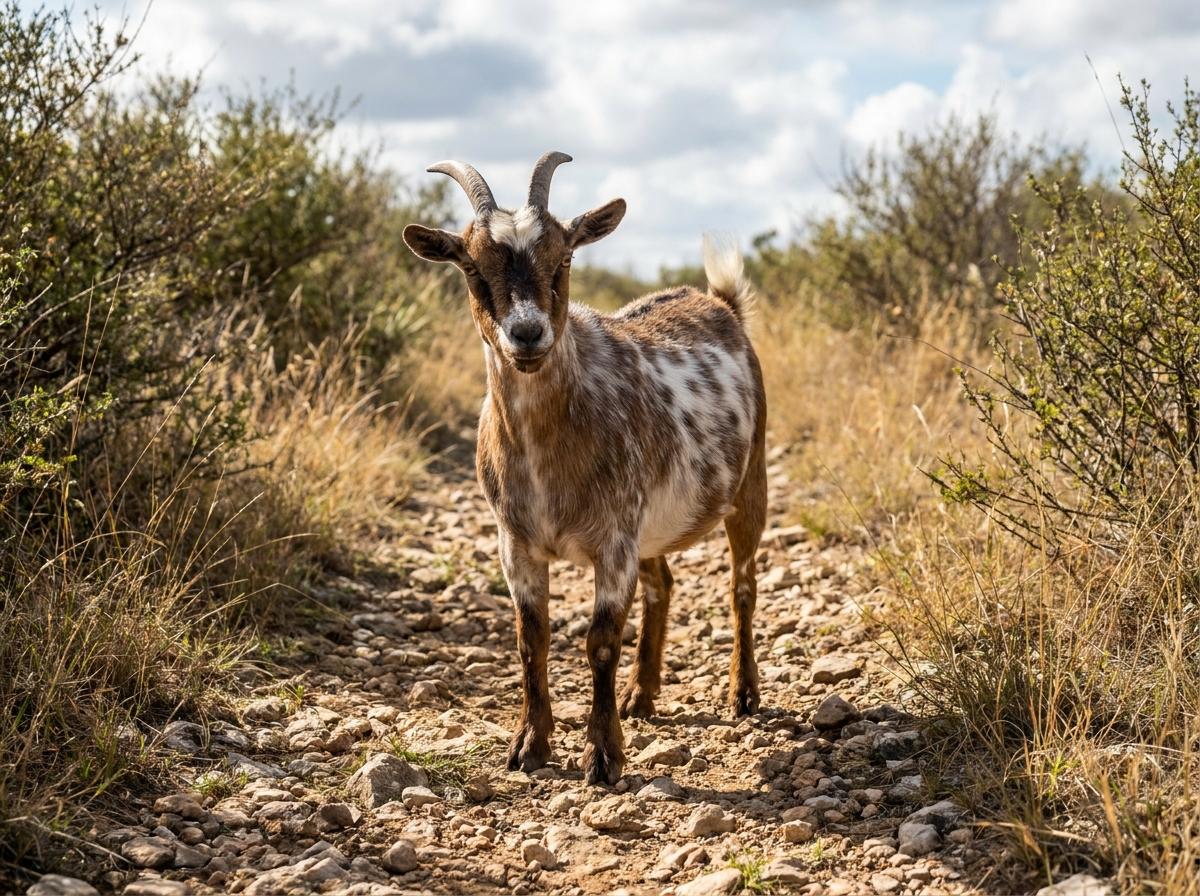
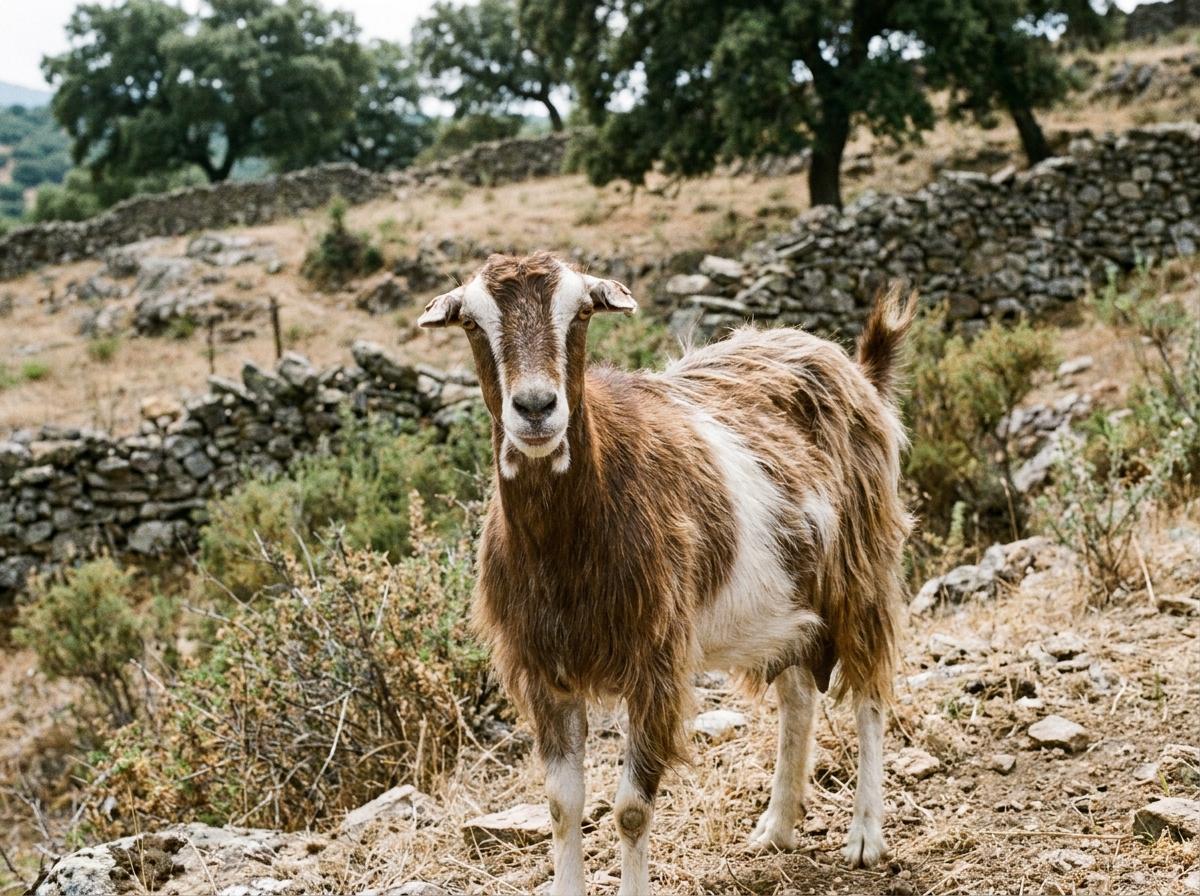
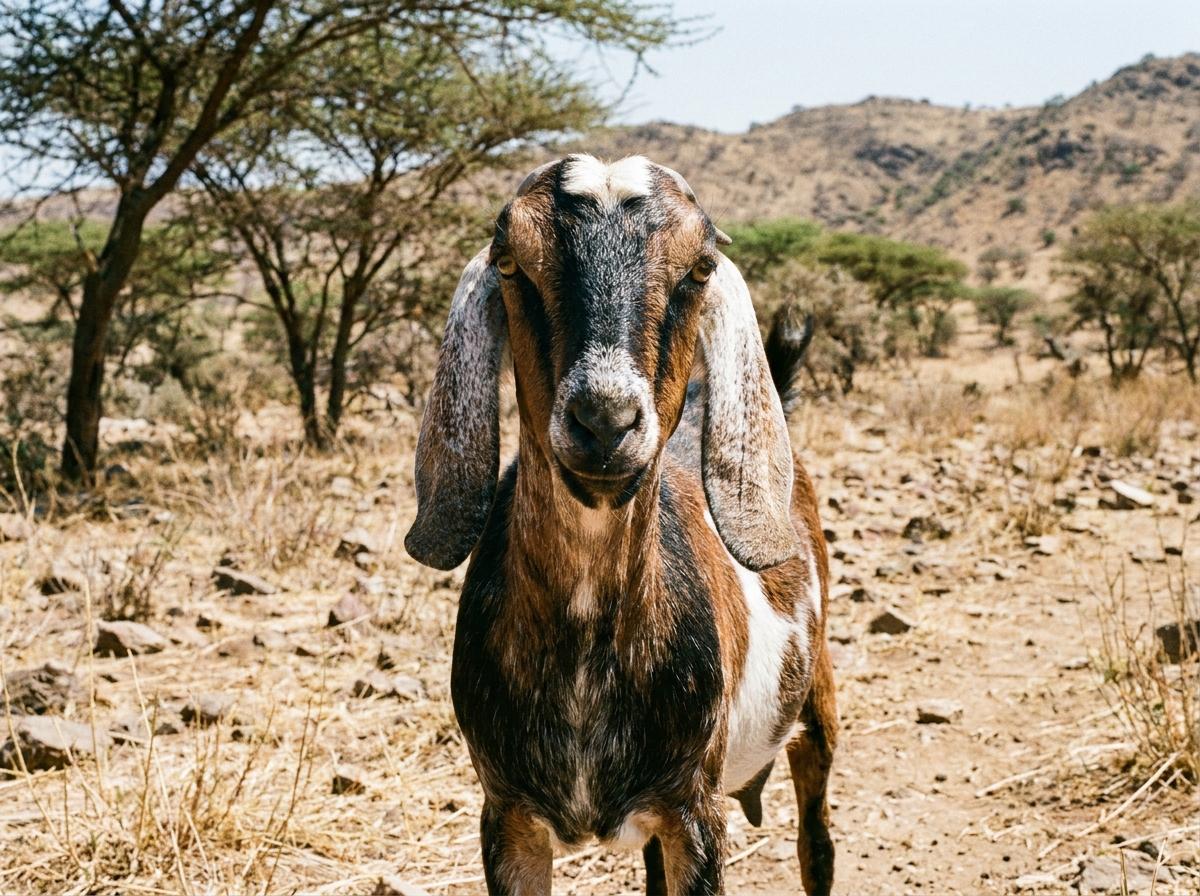
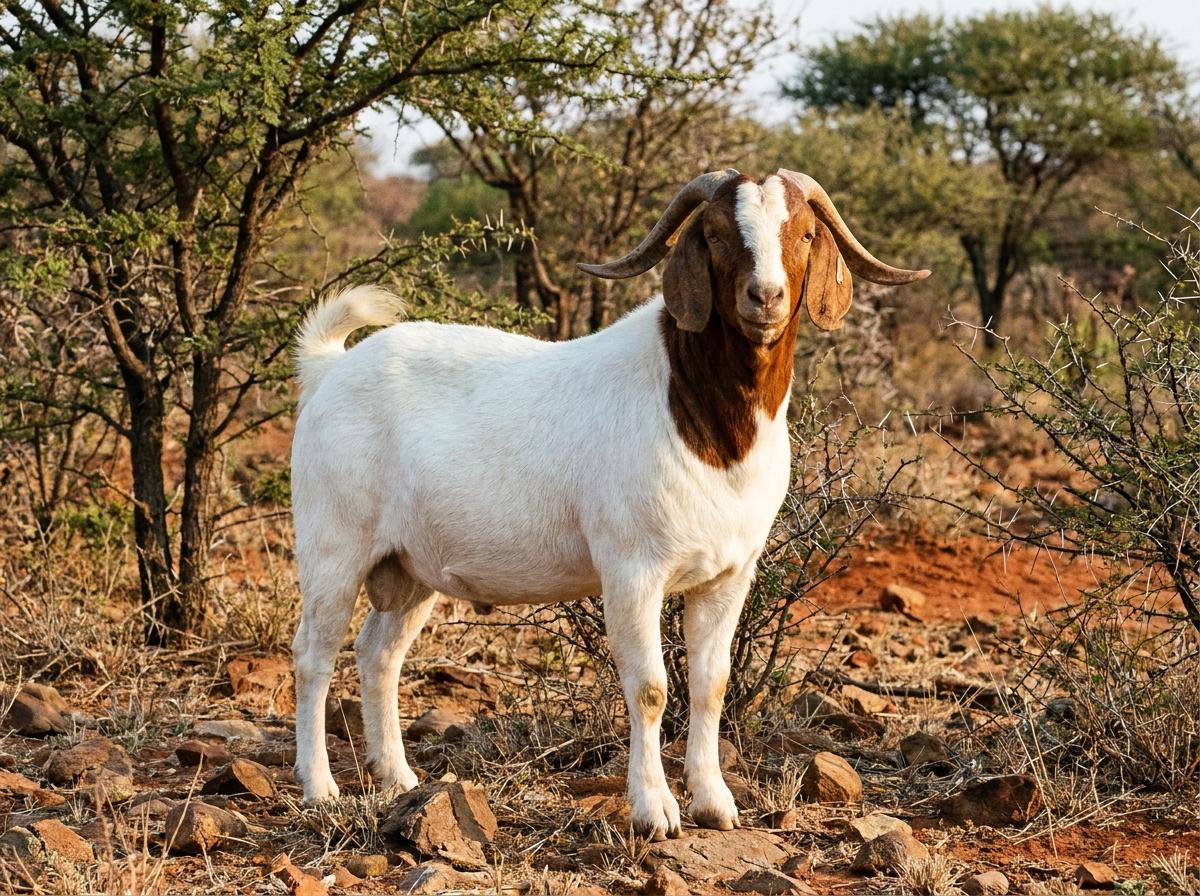
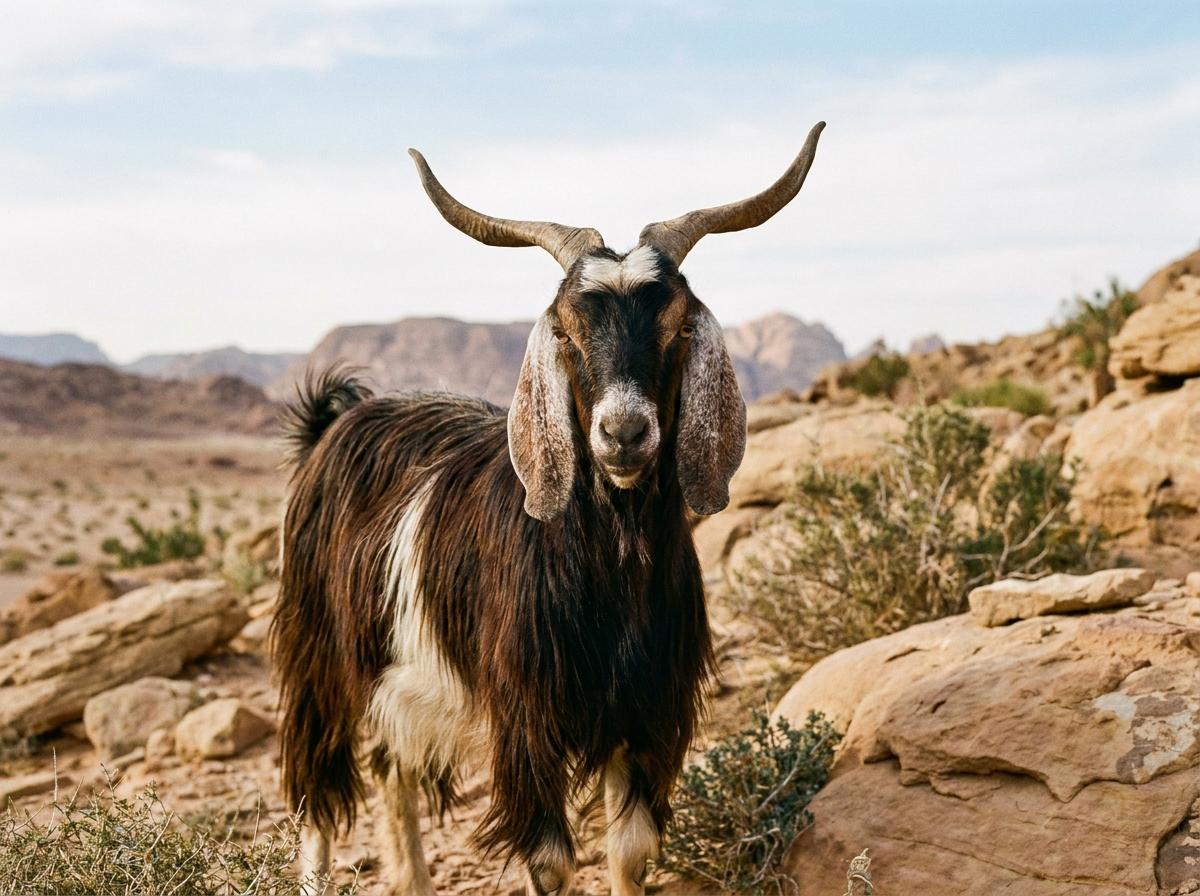
The Hejazi goat (also written Hijazi) is a traditional Arabian breed from the Hejaz region of western Saudi Arabia, kept mainly for meat and known above all for its long, low-hanging ears. It is a smaller, hardy desert goat, usually black and long-haired, and in its home country it has become a favorite of the Saudi goat shows, where breeders prize dramatic ears and a refined head. If you have landed here trying to sort the real farm animal from the pageant photographs, or to find out whether you can actually buy one outside Arabia, this page lays out what is genuinely known about the breed, what is repeated online without a solid source, and what to check before you take any claim about it at face value.
| Also called | Hijazi goat |
|---|---|
| Origin | Hejaz (Hijaz) region, western Saudi Arabia |
| Primary use | Meat, with some household milking |
| Coat | Usually black, long and silky hair |
| Signature trait | Long, low-hanging ears, actively selected for in Saudi goat shows |
| Size | Medium to small; reliable published measurements are scarce |
| Horns | Commonly horned, curving back; some animals are polled |
| Availability | Common in its home region, essentially absent from North American markets |
Browse listings, public profiles, breeders, or add your animal.
What is a Hejazi goat?
The Hejazi is one of the indigenous goats of the Arabian Peninsula, named for the Hejaz, the western region of Saudi Arabia. Oklahoma State University’s Breeds of Livestock reference, which draws on the standard livestock breed dictionaries, describes it briefly and plainly: a goat found in Arabia, usually black and long-haired, used primarily for meat, and similar to the Syrian Mountain goat but smaller. That short description is worth holding onto, because most of what circulates about the breed online is far more elaborate and far less sourced.
So the honest starting point is this. The Hejazi is a real, recognized regional breed with a long history in western Arabia, first and foremost a meat goat kept by herders and smallholders, and it happens to carry a distinctive set of ears that has since made it a star of Saudi Arabia’s goat beauty circuit. Past that core, most of the specific figures you will see quoted (exact ear lengths, precise milk yields, tidy weight bands) come from general-interest breed sites rather than a farm study or a registry standard, and this page treats them accordingly.
If you are comparing Arabian and Near Eastern goats generally, the broader Creatures goat species page is a good place to see this breed alongside others.
Origin and the Hejaz
The Hejaz (also spelled Hijaz) is the historical region running down the western side of the Arabian Peninsula along the Red Sea. According to Britannica, it takes in the cities of Mecca, Medina, Jeddah, Yanbu, and Taif, bounded by the Red Sea to the west and the highlands of the Najd to the east. It is a land of coastal plain, the Sarawat mountains, and dry interior, with cultivation concentrated in oases and around towns such as Taif and Medina. That mix of hot coast, rocky uplands, and sparse grazing is exactly the country this goat evolved to work.
Goats have been part of the pastoral economy of Arabia for thousands of years, and the Hejazi is one of several local types that developed in different corners of the peninsula, each shaped by its own terrain and by the preferences of the herders who kept it. The breed’s identity is regional and traditional rather than the product of a formal breeding society, and there is no widely recognized international herdbook for it in the way there is for the major European dairy breeds. What has kept the Hejazi distinct is generations of local selection, more recently sharpened by the show culture described below.
What a Hejazi goat looks like
The Hejazi is a lighter-framed, refined desert goat rather than a big commercial meat animal. A few features come up consistently across descriptions.
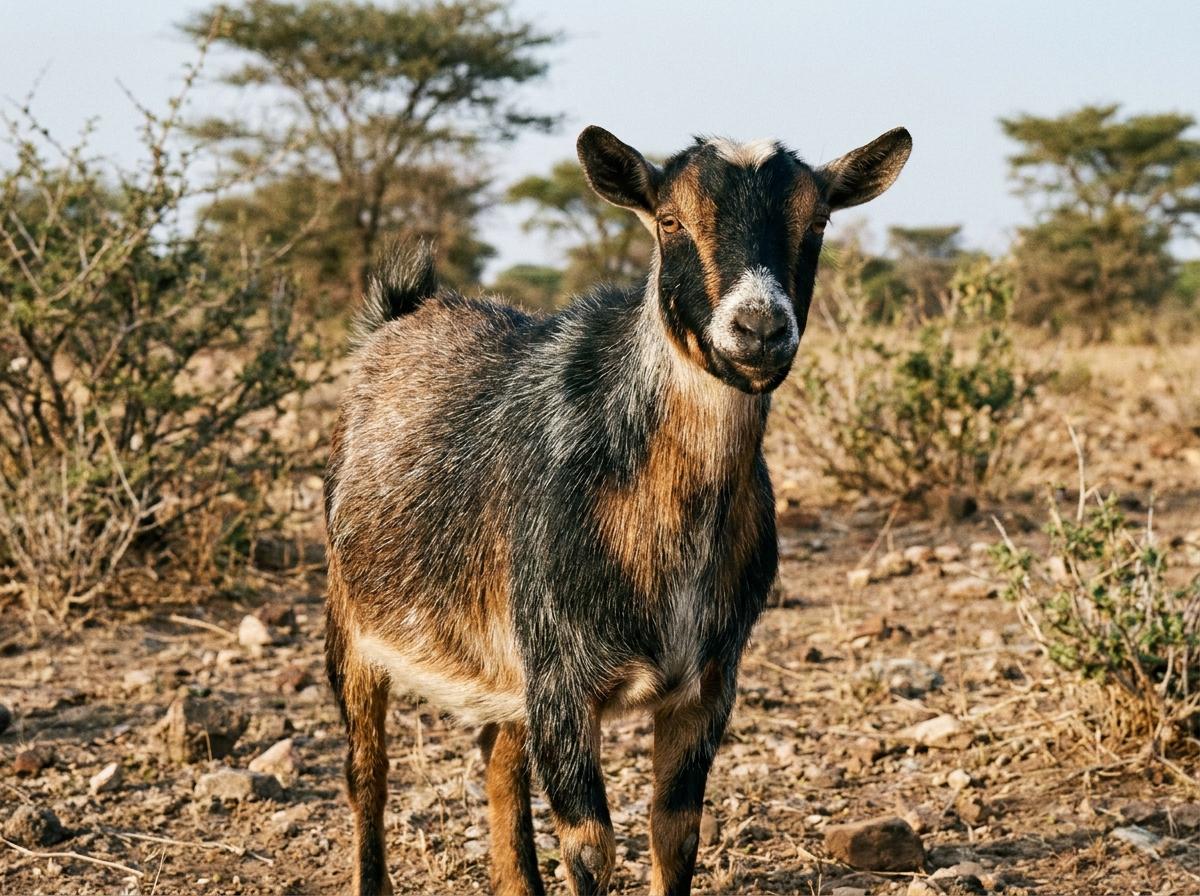
- Long, low-hanging ears. This is the trait everyone notices first. The ears are long and pendulous, dropping well down alongside the face, and they are the single feature Saudi breeders and show judges care about most. How long is a fair question, and the answer is less tidy than the internet suggests (see the next section).
- A small, fine head and slender neck. Compared with heavier meat breeds, the Hejazi head reads as small and neat, set on a long, slender neck. This delicacy of the head is part of what the show ring rewards.
- A predominantly black, long, silky coat. The classic Hejazi is black with long hair, though other colors turn up, partly because crossbreeding for looks has introduced variation. Oklahoma State University records the breed as usually black and long-haired.
- Commonly horned. Most Hejazi goats carry horns that sweep back from the head, though polled (naturally hornless) animals occur. This is the opposite pattern from breeds like the Damascus, where hornlessness is the norm.

Adults are usually described as medium to small. You will see specific weight figures quoted around 25 to 45 kg, and sometimes split by sex, but these come from breed-summary websites rather than from a published morphometric survey, and they do not fully agree with one another. The most accurate thing to say is that the Hejazi is a smaller-framed goat, distinctly lighter than the big Near Eastern dairy breeds, and that a peer-reviewed measurement of the breed’s size does not appear to be publicly available. If a seller gives you an exact weight, it is a description of that animal, not a documented breed standard.
The long-ear question, and the show culture
The ears deserve their own honest paragraph, because they are where breed lore and breed fact drift furthest apart. You will very often read that Hejazi ears reach up to 70 cm (about 28 inches) long. That number is repeated across general breed websites, but it does not trace back to any primary measurement, veterinary paper, or registry standard that we could find, and an ear approaching that length would hang close to the ground, which is not what the animals in reliable photographs look like. Treat the 70 cm figure as unverified folklore. What is well supported is simpler and still striking: the ears are genuinely long and pendulous, notably longer than an ordinary goat’s, and their length and carriage are actively bred for.
That selection pressure comes largely from the Gulf goat pageants, a real and popular part of livestock culture in Saudi Arabia. The best-known of these “most beautiful goat” contests, the Mazayen al-Maaz festival covered by outlets including Reuters and Arab News, is built around the Damascene (Shami) goat rather than the Hejazi, so it is not a Hejazi judging venue. What is specific to this breed is that Hijazi goats have their own contests on the same wider circuit, and reporting on those Hijazi shows describes scores of purebred animals assessed on the shape and color of the eyes, the head, and overall condition, with long ears and a fine face counting heavily. Because these shows reward appearance, breeders have crossed Hejazi goats with other long-eared and refined-headed breeds, including the Shami (Damascus) and imported Indian and Pakistani stock, to intensify the look. Pakistan has a different kind of goat show: the Nachi is judged on how it walks rather than how it looks. If you want to understand the closely related aesthetic breeding that produced the famous short-faced show goats, the Damascus goat breed page covers that story in detail.
The practical takeaway for a buyer is that “Hejazi” in the show world can mean an animal bred hard for looks and possibly carrying outside blood, while “Hejazi” to a village herder means a hardy black meat goat. Both are legitimate, but they are not the same animal, and it is worth knowing which one you are being offered.
What the breed is used for
For all the pageant fame, the Hejazi is worked mainly as a meat goat. That is how Oklahoma State University classifies it, and it fits the breed’s role in Arabian smallholdings: a hardy animal that converts sparse desert browse into meat for the household and the local market. Its smaller frame means it is not a heavy carcass breed on the scale of commercial meat goats, but it is efficient and well adapted to conditions where larger animals would struggle.
Milk is a secondary product. Households do milk Hejazi does for family use and for traditional dairy, and you will see daily yield figures quoted online (commonly one to two liters, sometimes more at peak). Those numbers should be read with caution, because they come from breed-summary sites rather than from a recorded milking trial, and the breed is not selected or managed as a specialist dairy animal. If milk is your priority, a purpose-bred dairy breed will out-produce a Hejazi comfortably. Think of it as a hardy dual-use goat that leans toward meat, with milk as a useful extra rather than its headline job.
Adaptation to heat and dry country
The Hejazi’s real merit, beyond its looks, is that it thrives where the going is hard. It developed in a hot, arid region of rocky uplands and thin grazing, and like other desert-adapted goats it is built to travel for forage and to cope with heat and limited water far better than temperate breeds. Long ears are often cited as a cooling adaptation, increasing the surface area available to shed heat, which is plausible for a desert animal even though the extreme ear lengths claimed for this breed are not documented.

None of that makes the breed indestructible. Heat tolerance in goats is relative, and even a desert breed needs shade, clean water, and shelter from the worst of the sun and from cold desert nights. What it does mean is that the Hejazi is a sensible choice for a hot, dry management system and a poor match for a wet, cold, muddy one, where its light frame and long coat offer no advantage and its feet and skin would be under constant challenge.
Temperament
Formal behavioral studies of the Hejazi are not something we could find, so temperament is best described from how the breed is kept rather than from research. As a traditionally herded and, in the show lines, closely handled animal, well-socialized Hejazi goats are generally described as manageable and people-oriented, especially where they are halter-trained and shown. As with any goat, individual temperament depends heavily on handling, housing, and how much time the animals spend with people, and intact bucks in the breeding season are a different proposition from does and wethers. Take any blanket claim that the breed is uniformly “friendly” or “calm” as a general tendency, not a guarantee.
Husbandry and care
A Hejazi is, at bottom, a goat, and the fundamentals of good goat husbandry apply. Its desert background shapes a few priorities.
Housing
The breed wants dry, well-ventilated shelter and sound, dry footing far more than it wants elaborate barns. In its native climate the enemy is heat and sun by day and cold by night, so shade and a windbreak matter. Outside that climate, the priority flips to keeping the animal dry, because a long-coated goat bred for arid country does not do well standing in wet, muddy conditions. The long ears are worth protecting from injury in cramped or rough housing.
Feeding
Hejazi goats are efficient foragers and evolved on sparse, fibrous browse, so on good pasture they need less concentrate than a high-output dairy breed. That efficiency cuts both ways: it is easy to let an idle, well-fed goat get over-conditioned. Provide adequate forage, clean water at all times, and appropriate goat minerals for your region, and step up nutrition for does in late pregnancy and lactation. Sudden diet changes and rich, unaccustomed feed are a common cause of digestive trouble in goats, so transitions should be gradual.
Breeding
Breeding seasonality in the Hejazi is not well documented. Goats from hot, dry country are sometimes described as seasonal breeders that cycle in the cooler months so kids arrive in spring, but many low-latitude desert breeds cycle year round, and there is no published Hejazi study to say which pattern this breed follows. Rather than assume a season, watch your own animals for signs of heat and confirm the local pattern with a breeder or veterinarian who knows the breed in your area, then plan matings and decide when young does first kid on what you actually observe. Where show or aesthetic breeding is the goal, be clear-eyed that selecting purely for ear length and head shape, and crossing in outside breeds to get them, is a cosmetic program, not a soundness or productivity one.
Health
Routine goat health care covers most of what a Hejazi needs: a parasite control plan suited to your climate and grazing, regular hoof trimming, clean kidding and, if you milk, clean milking hygiene, and the core vaccinations your veterinarian recommends for your area. Keep good records of kiddings, weights, treatments, and any health events so that breeding and culling decisions rest on evidence rather than memory. All medical decisions and any drug dosing should be made by a veterinarian who can examine the animal; nothing here is a substitute for that.
Size, lifespan, and what is not reliably known
It is worth being explicit about the limits of the record, because this breed attracts more confident numbers than it can support.
- Size. Medium to small, lighter than the major Near Eastern breeds. The commonly quoted 25 to 45 kg range comes from breed-summary sites, not a measured survey, so treat it as a rough impression rather than a standard.
- Ear length. Genuinely long and pendulous, and selected for, but the popular “up to 70 cm” figure is not backed by any primary measurement we could find.
- Milk yield. Real but modest and household-scale. The one to two liter figures online are unverified by any recorded trial.
- Lifespan. No breed-specific longevity data appears to exist. Domestic goats in general commonly live into their low teens with good care, and that is the reasonable expectation here, not a documented Hejazi figure.
- Genetics and conservation. Formal genetic characterization of the Hejazi specifically is limited. Saudi goat diversity studies published to date have concentrated on other local breeds, so heterozygosity and population statistics you may see attached to the Hejazi should be treated with caution unless the study actually sampled Hejazi animals. The breed appears secure in its home region as a traditional and show animal, but we have found no dated official inventory to put a population number on it, so we will not invent one.
Saying “this is not well documented” is not a cop out. For an animal wrapped in as much online embellishment as this one, knowing which claims rest on evidence is exactly what protects you as a buyer.
Availability and buying considerations
Inside Saudi Arabia and the wider Gulf, Hejazi goats are readily available, traded as ordinary meat stock at everyday prices and, at the top of the show market, as high-value animals whose price reflects ear length, head refinement, and pedigree rather than any production record. The eye-watering sums attached to Gulf show goats belong to that pageant world and are not a guide to what a working goat costs.
For buyers in North America or Europe, the practical reality is that genuine Hejazi goats are effectively unavailable. Live small-ruminant imports into countries such as the United States are tightly restricted on animal-health grounds by USDA-APHIS, because of concerns like foot-and-mouth disease, which makes bringing goats out of the region very difficult. If you see an animal marketed as a “Hejazi” in North America, be skeptical and specific: ask exactly what that means, whether it is an import, a descendant of one, or simply a long-eared goat given the name, and expect that documentation will be thin. In most cases the label is describing a look rather than a verifiable pedigree.
If you are drawn to the breed for its striking appearance, it is worth remembering that Creatures profiles plenty of other animals kept for their striking looks, from the Groninger Slenke pigeon, a fancy pigeon bred for form, to the Chimera axolotl, a rare split-colored variant prized by keepers. Appearance-led breeds reward the same careful buying: judge the individual animal in front of you, ask what its striking feature cost in soundness, and do not pay a premium on a name alone.
Frequently asked questions
Where does the Hejazi goat come from?
It is native to the Hejaz, the western region of Saudi Arabia along the Red Sea that includes Mecca, Medina, Jeddah, and Taif. It is one of several traditional goat types of the Arabian Peninsula.
Are Hejazi goat ears really up to 70 cm long?
The ears are genuinely long and pendulous and are actively bred for, but the specific “up to 70 cm” figure repeated online does not trace to any primary measurement or registry standard, so treat it as unverified. What is reliable is that the ears are notably long, not the exact number.
Is the Hejazi a meat or a dairy goat?
Primarily meat. Oklahoma State University classifies it as a meat breed, and that fits its role in Arabian smallholdings. Households do milk them, but it is not a specialist dairy breed and the milk-yield figures quoted online are not backed by recorded trials.
Why are Hejazi goats famous in Saudi Arabia?
Because of the Gulf goat beauty pageants. The most famous of them, the Mazayen al-Maaz, centers on the Damascene (Shami) goat rather than the Hejazi, but the same show culture runs its own Hijazi contests, where long-eared, fine-headed animals are prized. That culture has driven a lot of aesthetic breeding, including crossing with the Shami and imported breeds to exaggerate the ears.
Can I buy a Hejazi goat in the United States?
Realistically, no. Live goat imports from the region are tightly restricted by USDA-APHIS on animal-health grounds, so genuine Hejazi stock is essentially absent from North American markets. An animal sold under the name there is more likely describing a look than a verifiable imported pedigree.
Do Hejazi goats have horns?
Most carry backward-curving horns, though some animals are polled. That is different from breeds like the Damascus, where being naturally hornless is the norm.
Do this next on Creatures
Whether you are researching the breed, keeping goats of your own, or running a farm, Creatures is the records, marketplace, and directory layer to do it in one place.
Compare the breed. See the Hejazi alongside other goats on the Creatures goat species page, and read the closely related Damascus goat breed page for the wider story of aesthetic goat breeding in the Gulf.
Add your goat. Keep goats already? Create a free animal profile in a few minutes. The walkthrough is in adding an animal to Creatures.
Track weight, breeding, and health. Start a health and breeding record. The record sheet opens for any visitor to look around, and you will need a free account to save what you enter. See adding a record and health and medical records for the how-to.
Find stock. Browse goats on the marketplace and search trusted breeders and farms in the Creatures directory.
Get alerted. Genuine Hejazi stock is rare outside its home region, so set a free Hejazi goat listing alert and we will tell you when one is posted. No account needed to start.
List your farm. Run a herd or farm? Create a free organization profile and get listed in the breeder directory so buyers can reach you. If you manage the operation with others, see creating an organization and adding your team.
Genuine Hejazi goats are hard to find outside Arabia, so if you are set on the breed, a saved listing alert is the most practical way to catch one when it appears.