Akbash
Author: Elliott Garber, DVM · Published
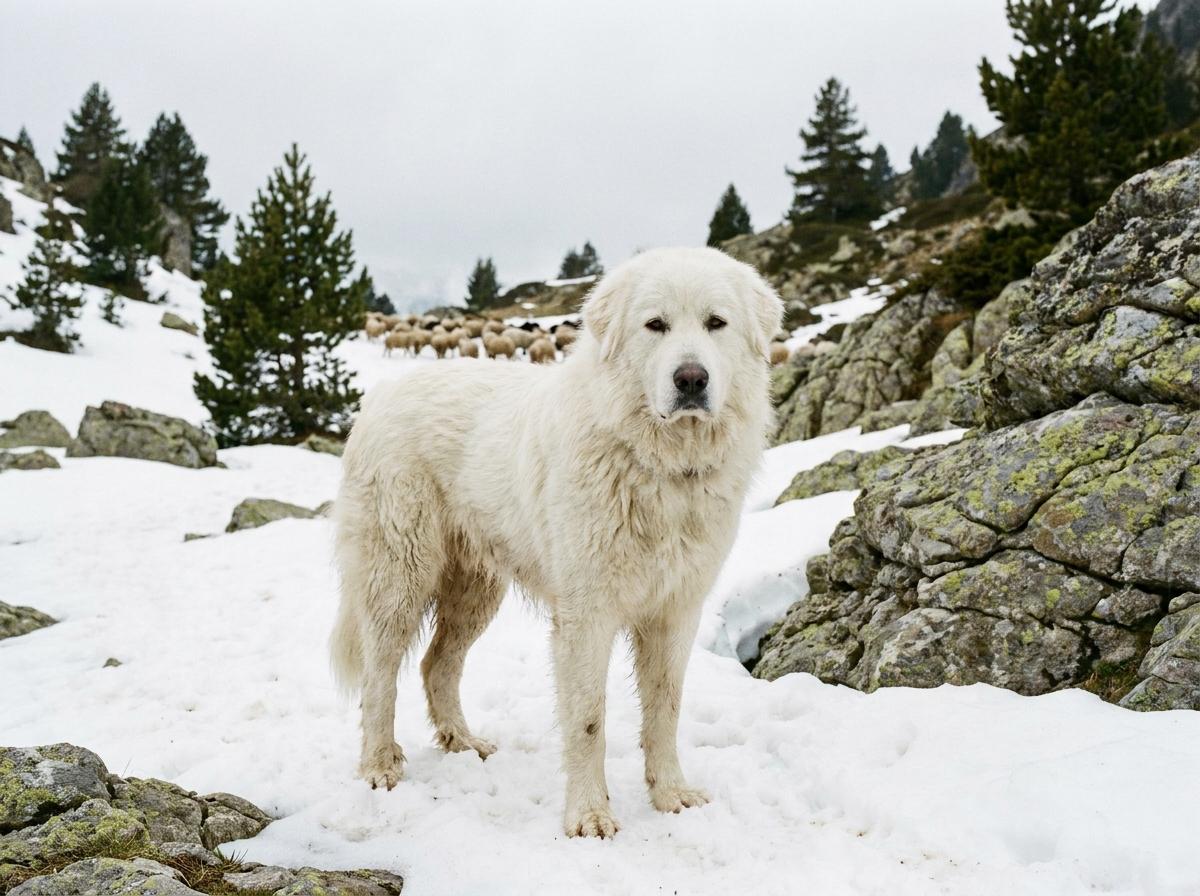
The Akbash is a white livestock guardian dog from western Turkey, bred to live with sheep and drive off predators rather than to herd or to take commands at a handler’s side. The United Kennel Club standard describes a long-legged, lean dog of imposing size that blends mastiff power with sighthound speed, and it asks for a temperament that is “calm, quiet, and steady.” If you are weighing one for a flock, a herd of goats or a rural property, start with the job and the fencing, then the dog. When a puppy comes with a pedigree, the free dog pedigree chart maker turns the breeder’s papers into a chart you can check before you commit.
This guide covers what the breed standard actually says, how the Akbash performed in USDA guardian dog research, how to raise a pup with stock, and what to ask before buying. For other dogs in the same family of flock guardians, the dog breed index lists them side by side.

| Origin | Plains and mountains of western Turkey (UKC standard) |
|---|---|
| Job | Livestock guardian that lives with the flock and works without direction |
| Recognition | UKC Guardian Dog Group since January 1, 1998; not on the AKC breed or Foundation Stock Service lists (checked October 2026) |
| Height | Males 30 to 34 inches, females 28 to 32 inches at the withers (UKC) |
| Weight | Average about 120 pounds for males and 90 pounds for females in good condition (UKC) |
| Coat and color | Always white; medium or long double coat, undercoat shed about once a year |
| Maturity | Two to three years to reach full prime, females faster (UKC); Oregon State’s extension guide says 18 months to two years for guardian dogs generally |
Browse listings, public profiles, breeders, or add your animal.
Where the Akbash comes from
The UKC standard places the breed’s home on the plains and in the mountains of western Turkey, where villagers and shepherds kept these white dogs to protect sheep from wolves and other predators. The name is usually translated from Turkish as “white head.” The standard treats the Akbash as the Turkish member of the white guardian breeds found around the northern Mediterranean, set apart by its mix of mastiff and sighthound traits.
Its recognition outside Turkey traces to fieldwork by David and Judy Nelson, Americans who began studying the dogs in Turkey in the 1970s and imported more than 40 of them to the United States, according to the same UKC history. Those imports became the foundation stock in the United States and Canada. The UKC also records that the U.S. Department of Agriculture brought Akbash dogs into its predator control work in 1980, and the breed shows up in the USDA’s own guardian dog bulletin: the cover of Livestock Guarding Dogs: Protecting Sheep from Predators (Agriculture Information Bulletin 588, revised 1999) is an Akbash watching sheep on Idaho rangeland.
Akbash, Anatolian Shepherd and Kangal
Buyers run into overlapping names here, and registries do not agree on how to divide Turkey’s guardian dogs. The UKC registers the Akbash as its own breed. The AKC does not list an Akbash at all, either as a recognized breed or in its Foundation Stock Service record-keeping program, though it does register the Anatolian Shepherd Dog. The FCI’s international list includes the Kangal Shepherd Dog with Turkey as its country of origin and has no Akbash entry.
In practice that means three things for a buyer. A seller’s breed name is not proof of anything until you see which registry issued the papers. Some working dogs sold as guardians are crosses, which can work well on a farm but should be described honestly. And the Akbash’s solid white coat is a firm part of its standard, while a fawn dog with a black mask is a different picture altogether. If you are comparing guardians more broadly, the Great Pyrenees, Maremma Sheepdog, Kuvasz and Komondor hubs cover other white or pale guardian breeds, and the Kars dog is another Turkish flock guardian.
What the breed standard asks for
The UKC describes a dog slightly longer than tall, with a wedge-shaped head, pendant ears and a long tail. Its sighthound side shows in the long legs, deep chest, arched loin, shallow lower jaw and tucked-up flank. The mastiff side shows in the height, weight, broader head and overall impression of power. Judges are told to prefer dogs that balance the two types rather than leaning hard toward either.
Points worth knowing before you look at a litter:
- Head and pigment. The head is a blunt wedge, free of wrinkles, with the muzzle about half the head’s length. The nose is solid black or solid dark brown, eye rims and lips are black or dark brown, and the eyes run from golden brown to dark brown. Blue eyes and a complete lack of pigment on the nose, eye rims or lips are disqualifications.
- Ears. V-shaped, pendant and set fairly high. Many dogs in Turkey have their ears cropped as puppies, and the UKC does not penalize cropped ears on a dog imported from Turkey, but cropped ears on a dog bred in the United States are a disqualification.
- Tail. Uncut and long, carried low at rest with the bottom third often forming a hook, and curled over the back when the dog is moving or excited. A docked tail is a fault.
- Coat. A double coat with coarse guard hairs over a dense, soft undercoat. Two coat lengths are equally acceptable: a medium coat that lies flat with a slight ruff, and a long coat that is often slightly wavy with a distinct ruff and heavy feathering.
- Color. The Akbash is always white. Light biscuit or gray shading around the ears or in the undercoat is fine as long as the dog looks white overall, and gray or silver-blue skin pigment is acceptable. Any overall color other than white, defined spots in the outer coat, black whiskers, black eyelashes and albinism are all disqualifications.
- Size. The desirable range is 30 to 34 inches at the withers for males and 28 to 32 inches for females, with weight in proportion. A dog more than an inch outside those ranges is a severe fault, and an obese, soft dog is a fault.
The standard also says the breed matures slowly, physically and in temperament, and that individuals need two to three years to reach their prime. That matters for anyone expecting an eight-month-old to guard a flock alone.
Temperament: a guardian first
The UKC sums up the working temperament as calm, quiet and steady, with dogs that are “independent and capable of correctly responding to changing circumstances without human direction.” It also notes that the Akbash is loyal and gentle with its own family but “aloof and suspicious toward strangers,” watchful of other dogs, and may react aggressively to dogs that intrude on its territory. Viciousness, marked shyness and cowardliness are disqualifications.
That independence is the reason the breed works, and the reason it can be hard to live with. The USDA bulletin explains that guarding breeds were selected to act on their own, which makes them “relatively hardheaded and unresponsive to verbal commands.” A herding dog moves sheep on a handler’s signal; a guardian stays with the stock, patrols, barks and confronts intruders largely on instinct. Do not buy an Akbash expecting a dog that comes off a fence line on the first call.
What the USDA research found
The most cited breed comparison is a survey of about 400 U.S. and Canadian producers reporting on 763 guardian dogs, summarized in the USDA bulletin and published by Green and Woodruff in the Journal of Range Management in 1988. Akbash dogs made up 8 percent of the dogs reported, behind Great Pyrenees and Komondors. The success rate did not differ among breeds, but behavior did. Six percent of the Akbash in the survey had bitten people, compared with 4 percent of Great Pyrenees, 9 percent of Anatolians and 17 percent of Komondors, and fewer Great Pyrenees injured livestock than Komondors, Akbash or Anatolians.
Read those figures as a description of how dogs in that survey behaved, not as a forecast for any one puppy. The bulletin itself warns that “guarding ability varies among dogs of a specific breed” and that no breed or bloodline guarantees success. The Ontario agriculture ministry’s guardian dog factsheet reaches the same conclusion and adds that buying from a reputable breeder matters more than the breed, sex or age of the dog.
Working with sheep and goats
An Akbash earns its keep where predators are a real cost: coyotes, loose dogs and, in some regions, larger predators. The USDA bulletin reports that 95 percent of the dogs in its survey were aggressive to predators, mainly coyotes, which usually avoid a direct confrontation with a dog several times their size. It is candid about limits too. Grizzly bears appear far less easily deterred than black bears, and a dog cannot stop every loss.

How many dogs you need depends on predator pressure, terrain and how your stock behaves. The USDA guidance is that one dog is often enough for a pasture operation with few predators, that range bands commonly use two, and that brush, timber and ravines call for more. Sheep that bunch up at night are easier to protect than stock bedded in scattered groups. For a first guardian, the bulletin recommends starting with a single pup and adding a second dog only after the first is well established, because a young dog learns its routine from an experienced one and bad habits such as roaming can spread between dogs.
Guardians and fences work as a pair. A tight perimeter keeps the dog home and slows predators down; the dog does the rest. If you are planning the fence first, the sheep fencing guide and the goat fencing guide compare electric netting, woven wire and high-tensile options. The flocks and herds that most often need a guardian are the grazing breeds kept on open pasture, such as the Katahdin hair sheep, the Tunis sheep and the Nubian goat.
Herding and guarding dogs can share a farm. The USDA bulletin says they generally work on the same operation, but they should know each other without being encouraged to play together, and a young guardian should not be allowed to copy the herding dog or interfere while sheep are moved. Restrain a juvenile guardian during gathering and loading if it gets in the way.
Raising an Akbash puppy with stock
The guardian behavior an adult shows comes from two things, says the USDA: heredity and the way the dog was raised, with the first few months mattering most. The goal is a dog that bonds to livestock, not to the porch.

The bulletin and the Ontario factsheet describe a similar approach:
- Bring the pup home young. The USDA puts the best age at 7 to 8 weeks. Ontario describes a critical period from about 8 to 16 weeks when social attachments form and the pup learns to pay attention to livestock.
- Use a small bonding pen. Both sources suggest about 150 square feet with three to six sheep, ideally lambs or calm young ewes that will not bully the pup. Give the pup a corner it can slip into to eat and rest away from the stock, and put the water where dog and sheep share it.
- Check often, handle lightly. Look in several times a day at first. The emphasis is on the pup and the sheep, so keep human fuss modest, but Ontario notes that many producers now find brief praise and petting helpful rather than harmful.
- Move up gradually. Around four to five months (Ontario) or after at least 16 weeks (USDA), the pup can go into a larger area with more stock, still supervised. Expect it to test fences and explore.
- Plan for adolescence. From about four months to over a year, young guardians often chase, play roughly or wander while they learn. Rough play that pulls wool or tears ears has to be interrupted at once.
On training, the Ontario factsheet is direct: dogs learn faster from reward than from punishment, prevention through supervision beats fixing a problem later, and unwanted behavior such as chasing stock or roaming must be interrupted immediately. Teach a reliable recall, walking on a leash, accepting handling by different people and riding in a vehicle. Those are the skills that make vaccinations, injury checks and moves between pastures possible with a 100-pound dog. Oregon State University’s extension guide, Raising and Training a Livestock-guarding Dog, notes that guardians take about a year and a half to two years to mature and that fatal accidents are most common between six months and two years.
The Akbash as a home and property guardian
The UKC standard says the Akbash is “highly suitable as a home companion or estate guardian” and, properly socialized and trained, can be an ideal family pet. The same paragraph says it stays aloof with strangers and may act aggressively toward intruding dogs. Both statements are true at once, and a household should plan for the second.
A guardian dog’s sense of territory does not stop at your property line unless you teach it to. The USDA bulletin calls roaming the most common problem with guardian dogs, notes that owners can be responsible for damage their dogs do, and recommends warning neighbors and guests. It also records a hard number about risk: during a five-year study at the U.S. Sheep Experiment Station, 32 percent of working guardian dogs died before reaching adulthood, with vehicles and malicious shooting each accounting for 23 percent of those deaths. Ontario’s factsheet adds that many accidental deaths among farm guardian dogs can be traced to roaming.
For a suburban or small-acreage home, that adds up to a short list of non-negotiables: secure fencing the dog cannot climb or dig under, gates that visitors cannot open by accident, a plan for where the dog goes during deliveries and gatherings, and tolerance for barking, which the USDA lists alongside patrolling and scent marking as part of how guardians work. Some local rules restrict large or barking dogs, so check with your county or city before you bring one home. An Akbash that has nothing to guard and no room to patrol is likely to find its own work, and that rarely ends well.
Health, care and records
Breed-specific health research on the Akbash is thin, and this guide does not quote a lifespan or a list of breed diseases because no primary source we could check supports one. What the sources do support is practical. The USDA bulletin says a guardian should be free of serious inherited defects such as hip dysplasia or a poor bite. Ontario suggests looking for breeding stock and puppies with routine veterinary care, and possibly hip and eye certification on the parents. Ask the breeder for the actual screening results on both parents rather than a verbal assurance, and talk through growth, joints and exercise for a large, slow-maturing dog with your veterinarian.

Day-to-day care for a working Akbash is mostly about access and observation. The dog needs fresh water, shade and a dry shelter in rain (the USDA notes that a dog with no shelter on range may leave the sheep to find one), daily food (the USDA recommends a self-feeder), and regular checks for injuries, overgrown nails and parasites. The UKC notes the breed sheds its undercoat about once a year, and a long-coated dog looks much sleeker in summer once it has blown that coat. Vaccinations, deworming, and spay or neuter timing are decisions for your veterinarian; Ontario recommends making the spay or neuter call with the flock or herd vet for dogs not intended for breeding.
Records are where a working dog is easiest to lose track of. A guardian that lives out with the flock may not see the house for days, so the vaccination date, the microchip number and the last weight should live somewhere every person who checks the stock can find them. On Creatures you can add your dog’s profile, log vaccinations and vet visits as health and medical records, and set reminders for upcoming care such as boosters and deworming. If a partner or farm hand checks the dogs, co-owner and team access lets them see and add to the same records. The dog vaccination record template and the dog microchip records guide cover what to keep, and the puppy vaccination schedule explains the core series for a new pup.
Finding and buying an Akbash
Akbash dogs are uncommon, and supply on Creatures is thin today. The University of California Cooperative Extension’s puppy selection factsheet lists the Akbash among the common guardian breeds in the U.S. and gives a clear first rule: buy a pup from working parents, and do not buy a cross with a non-guardian breed.
Questions worth asking any breeder:
- Do both parents work with livestock, and can you see them on the job or on video?
- Were the puppies whelped and raised where they could hear and smell stock, and with which species?
- Which registry issued the parents’ papers, and can you see the pedigree? A UKC registration and a loose “Turkish guardian” label are not the same thing. The guide to checking dog pedigree papers explains what to look for.
- What screening have the parents had, and can you see the certificates?
- What does the breeder’s guarantee or return policy cover if the dog does not work out?
Expect a good breeder to ask questions back about your predators, fencing and stock. The breeder buyer application guide shows the kind of questions careful breeders use. Ontario also points out that an older, already proven dog costs more than a puppy but carries less risk of an unsuitable match, and that a first-time owner may get faster protection from an adult.
What an Akbash costs
We could not find dated, public price evidence for Akbash puppies from a registry, extension service or public sale report, so this guide does not quote a typical price. Prices vary with the parents’ working record, registration, age and how much training the dog already has, and an adult proven with stock costs more than a young pup. The USDA bulletin’s view still holds: purchase price “is probably one of the least important factors” in the economics of a guardian dog, next to feed, veterinary care, fencing, and the losses a good dog prevents or a poor one causes.
If you breed Akbash dogs, the dog gestation calculator gives a due date from the breeding date, and the dog stud fees guide covers contracts and how stud service usually works. Other Creatures guardian breed guides worth reading next are the Caucasian Shepherd Dog and the Greek Shepherd.
Frequently asked questions
Is the Akbash the same as an Anatolian Shepherd or a Kangal?
Registries treat them differently. The UKC registers the Akbash as its own breed; the AKC registers the Anatolian Shepherd Dog and lists no Akbash; the FCI lists the Kangal Shepherd Dog for Turkey and no Akbash. All are Turkish flock guardians, but the Akbash standard requires a solid white dog, which sets it apart from the fawn, black-masked look common in the other two.
Can an Akbash be black or spotted?
Not under the UKC standard. The Akbash is always white. Light biscuit or gray shading around the ears or in the undercoat is allowed, and the skin may carry gray or silver-blue pigment, but any overall color other than white, defined spots in the outer coat, black whiskers and black eyelashes are disqualifications. A spotted dog sold as an Akbash is likely a cross.
How big does an Akbash get?
The UKC’s desirable height is 30 to 34 inches at the withers for males and 28 to 32 inches for females. Average weight in good condition is about 120 pounds for a male and 90 pounds for a female, and the dog should look lean and muscular rather than heavy.
Is an Akbash a good family dog?
It can be, with the right home. The UKC describes a dog that is gentle and quietly affectionate with its own family, including children and pets, but aloof with strangers and possibly aggressive toward intruding dogs. It needs secure fencing, early socialization, and owners who are comfortable with an independent, protective and sometimes noisy dog.
How is the Akbash different from a Great Pyrenees?
Both are white flock guardians. The Akbash standard asks for a lean, long-legged dog with visible sighthound traits such as a deep chest and tucked-up flank. In the 1986 producer survey (published 1988), fewer Great Pyrenees injured livestock than Akbash, and a smaller share had bitten people, though overall success rates did not differ by breed.
Is the Akbash recognized by the AKC?
No. As of October 2026 the AKC does not list the Akbash as a recognized breed or in its Foundation Stock Service. The United Kennel Club has recognized the breed in its Guardian Dog Group since January 1, 1998.
Do this next on Creatures
Pick the step that matches where you are: still searching, bringing a pup home, or running a breeding program.
Get told when one is listed. Akbash listings are rare, so set a free Akbash listing alert and we email you when one goes live. No account needed to start. See saved searches and the watchlist.
Find breeders. Search the breeder directory for guardian dog breeders, then check current Akbash listings on the marketplace.
Start your dog’s profile. Add your Akbash with its photo, registration and microchip number. No account needed to start; here is how adding an animal works.
Log its care. Add a record for a vaccination, vet visit, weight or deworming. The form opens for visitors, and a free account saves it. See adding a record.
List your kennel or farm. Create a breeder or farm profile so buyers can find your working dogs. No account needed to start. Read getting listed in the breeder directory and creating an organization and adding your team.