

Greek Shepherd
Author: Elliott Garber, DVM · Published
The Greek Shepherd, or Hellenikos Pimenikos, is a large Greek livestock guardian developed to live with flocks and protect them, not a close-control herding dog. The Kennel Club of Greece publishes its national standard, while the breed does not have its own entry in the FCI’s definitive or provisional lists. It is also not the FCI-recognized Greek Harehound. Start with the Creatures breeder directory, then verify each dog through its issuing records and working background.

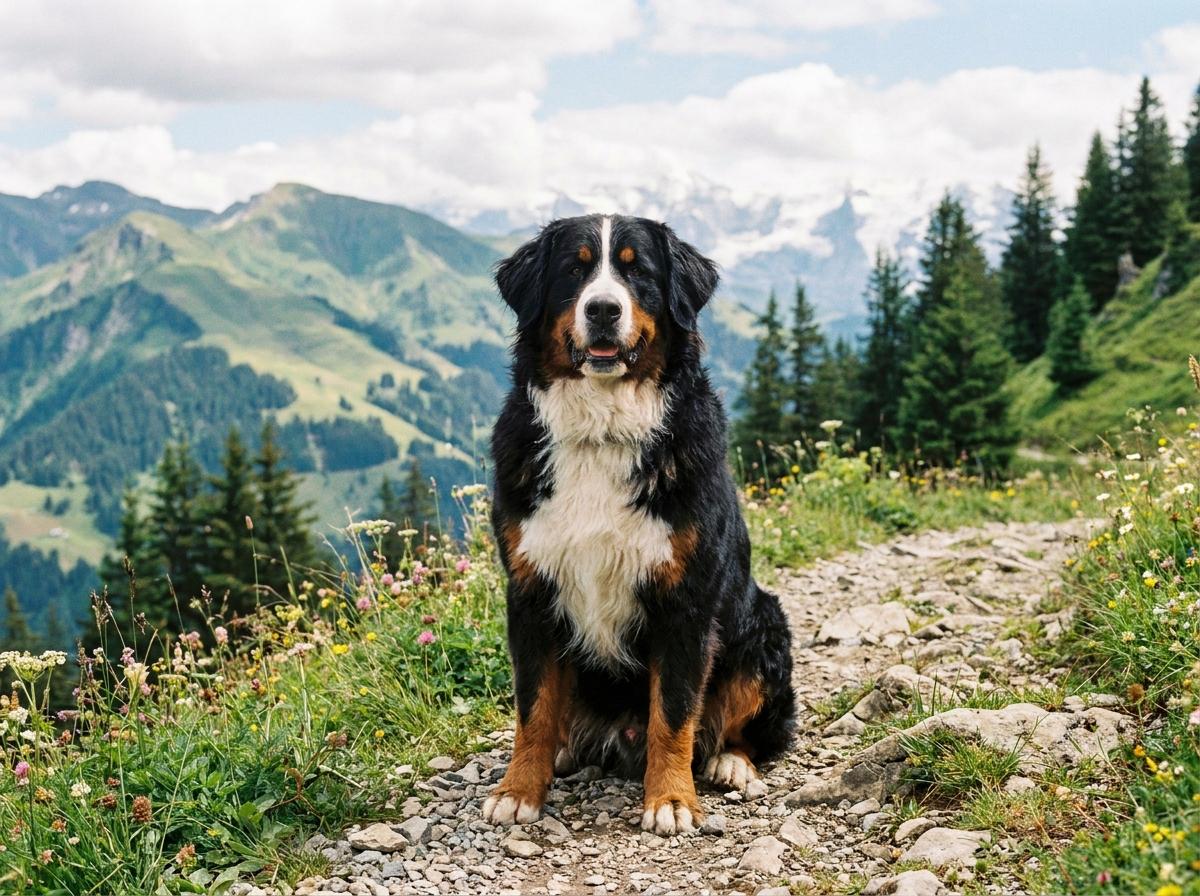
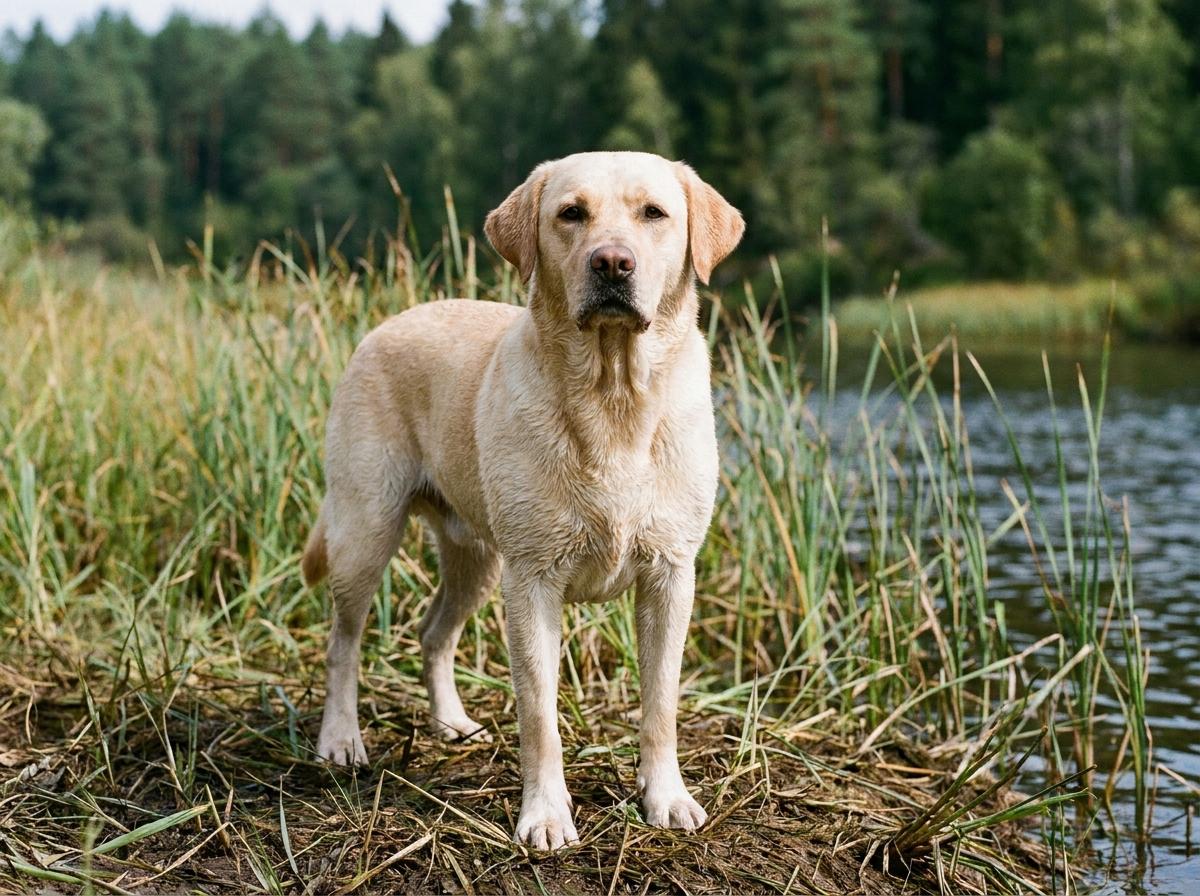
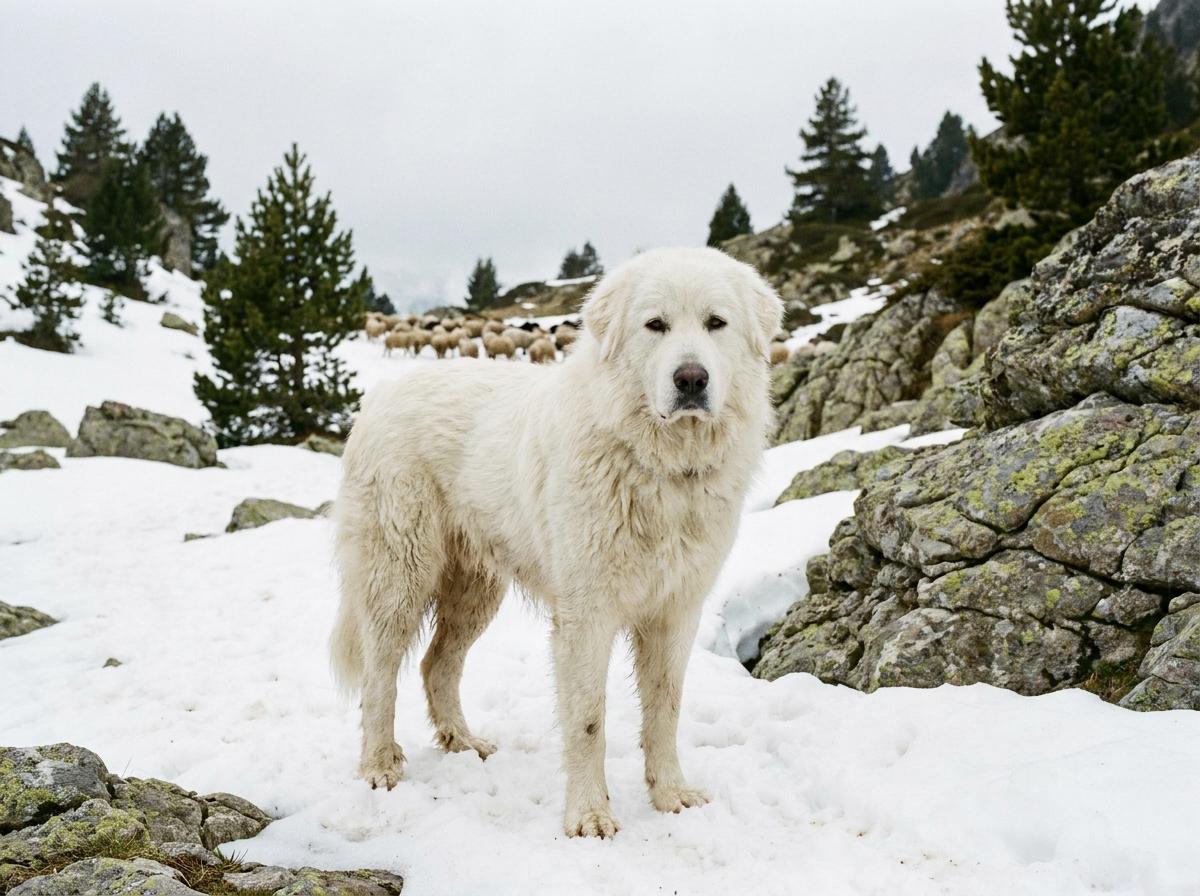
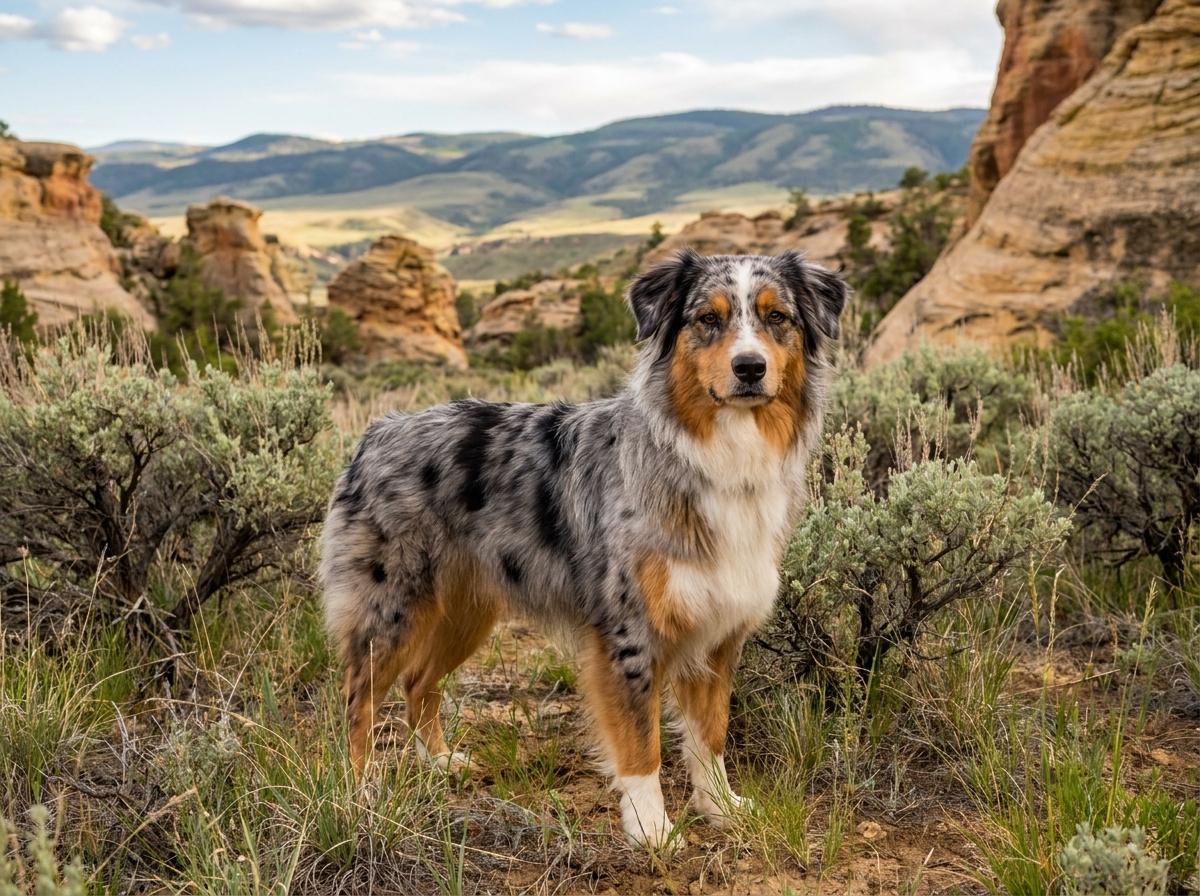
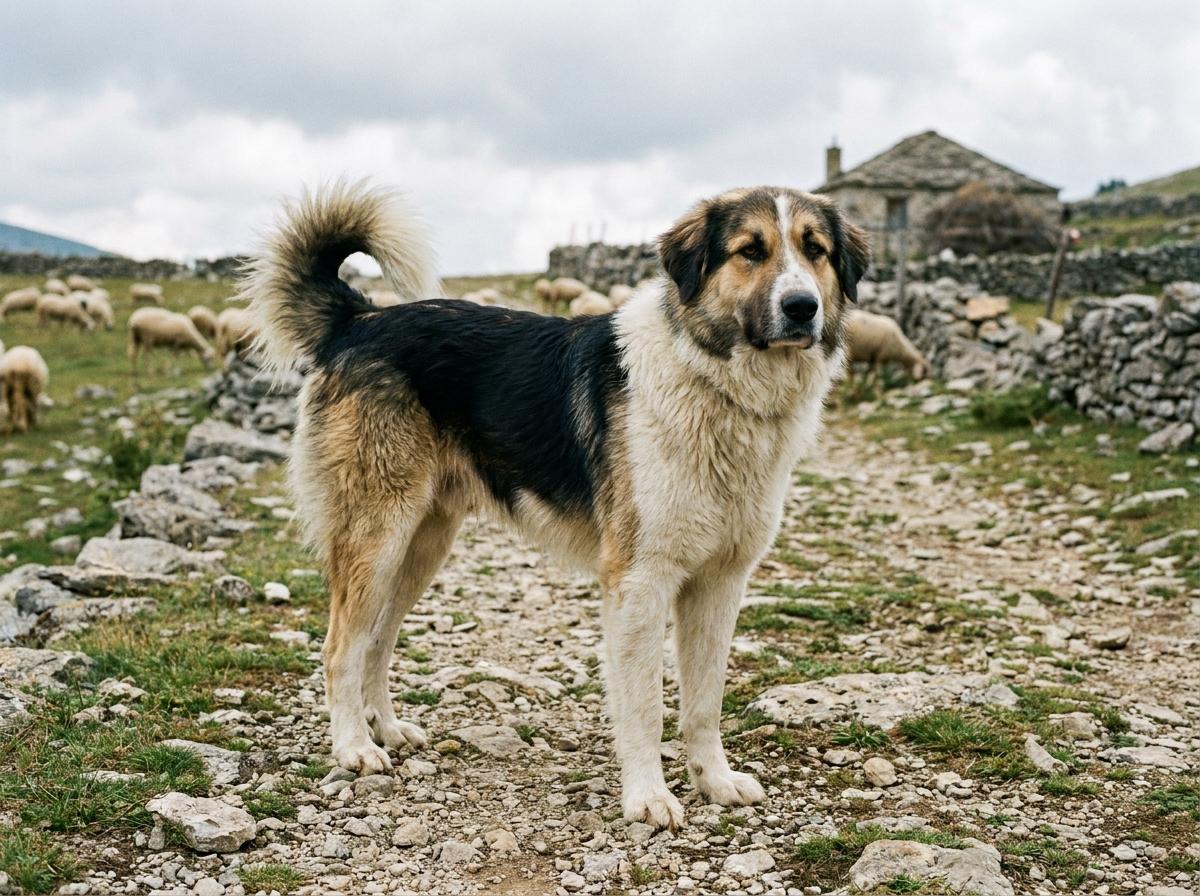
AI-generated breed representation, not a photograph of a registered dog. The broad head, drop ears, strong frame, black-and-white double coat, and long tail illustrate one accepted expression, not a single universal landrace look.
| Greek name | Hellenikos Pimenikos |
|---|---|
| Country | Greece |
| Primary work | Protection of flocks, herds, and property |
| Recognition | National Kennel Club of Greece standard; no separate FCI breed entry |
| Standard size | Males 66-75 cm and 40-55 kg; females 60-68 cm and 32-40 kg |
| Coat | Dense double coat; short and long variations, straight to slightly wavy |
| Temperament goal | Independent, brave, loyal, protective, stranger-reserved, and sensitive to harsh handling |
Browse listings, public profiles, breeders, or add your animal.
Livestock guardian, not sheep herder
The word “shepherd” can suggest a dog that gathers and moves sheep on a handler’s cues. The Greek Shepherd’s standard describes another job: guarding herds and property. A livestock guardian bonds with stock, watches its surroundings, patrols, and deters threats. It should not stalk or tightly circle sheep as a Border Collie would.
The current Kennel Club of Greece standard page calls for a sturdy, strongly muscled dog able to work over rough terrain in varied weather. It emphasizes harmonious life with the herd and forceful protection when threatened. That describes a demanding working role, not permission to stage dog-predator fights or keep an animal without food, shelter, veterinary care, and rest.
A WWF Greece field report found livestock-guardian use widespread in its Tzoumerka farm sample. It identified the Greek Sheepdog, White Greek Sheepdog, and Molossos of Epirus as indigenous guardian breeds, while its field images also documented local mixed and crossbred dogs. That is a useful reminder: working Greek guardian populations are not authenticated by size, coat, or village location alone.

AI-generated working representation. The dogs patrol outside a relaxed flock within a secure pasture; no predator encounter, chase, bite, or performance claim is shown.
National standard and FCI boundary
The KOE page assigns the Greek Shepherd to the mastiff-type guardian section of FCI Group 2. That placement organizes the national standard; it does not create an FCI breed number. The Greek Shepherd does not appear in the current FCI definitive or provisional nomenclature.
The Hellenic Hound, also called the Greek Harehound or Hellenikos Ichnilatis, does have definitive FCI recognition as breed 214. It is a medium Group 6 scent hound, conventionally short-coated and black-and-tan. It is not a variety, synonym, or lighter version of the large double-coated Greek livestock guardian.
Ask a breeder or registry which exact standard and studbook a document represents. “FCI Group 2” on a national description should not be rewritten as “FCI-recognized Greek Shepherd.” Likewise, a pet passport saying only “Greek shepherd mix” is not proof of KOE pedigree.
Is the Greek Shepherd an ancient landrace?
The KOE standard traces the population to ancient Greek Molosser-type shepherds that developed over centuries with other mountain shepherd dogs on Greek territory. That is the national standard’s historical account. It is not, by itself, a genomic demonstration that today’s registered dogs are unchanged direct descendants of a specific ancient image or named population.
“Landrace” can be useful when it means a regionally developed working population shaped by place, livestock, predators, shepherd selection, and exchange among local dogs. It becomes misleading when it implies one frozen appearance, perfect purity, or a closed pedigree extending into antiquity. The broad colors, two coat lengths, natural tail variation, and ongoing distinction between standardized and mixed working dogs all call for precise language.
Size, head, coat, and tail
The national standard lists males at 66-75 cm and 40-55 kg. Females are 60-68 cm and 32-40 kg. It describes clear sexual dimorphism, meaning mature males may carry visibly more substance. Keep every dog at a veterinarian-guided healthy body condition rather than pushing it toward the top of a range.
The head is voluminous and slightly domed, with a wide, deep muzzle that tapers but should never become pointed. Medium triangular or heart-shaped ears lie against the cheeks or slightly out from them. Cropping is not allowed under the standard. Eyes are chestnut, with darker shades preferred, and the expression should be serious and calm.
The body is broad, deep, strongly boned, and muscular. A long tail is thick at the base, feathered, and reaches the hock, though natural short or stumpy tails also appear in the standard. Never assume that any short tail is congenital; verify birth records and physical condition.
Both short and long double coats are accepted. The undercoat is soft and dense, while the outer coat is straight or slightly wavy rather than curly. Colors include black, fawn, white, brindle, multicolor, and blue in the national text. No color proves identity, and the Greek Shepherd should not be reduced to a generic all-white flock guardian.
Temperament and household fit
KOE describes the desired dog as independent, brave, decisive, loyal, highly protective, capable of acting alone, reserved with strangers, and active at night. It also calls the breed sensitive and unsuited to violent handling. Those are selection goals and working tendencies, not guarantees about an individual puppy, rescue, or cross.
Independence can conflict with expectations of immediate obedience. Stranger reserve and territorial behavior require secure barriers and carefully managed visitors. Night vigilance can mean barking when a dog detects movement or sound. A large guardian without a flock still needs suitable physical space, purposeful activity, companionship, sleep, and structured training; a backyard alone does not meet those needs.
Use reward-based teaching for recall, lead walking, stationing behind a gate, releasing objects, settling, and cooperative veterinary handling. Socialization should build calm neutrality without forcing strangers to touch the dog. Consult a qualified trainer or veterinary behavior professional about escalating guarding, roaming, fear, aggression, or livestock chasing.
Working management and care
Government livestock-guardian selection and training guidance emphasizes that effectiveness depends on genetics and rearing. Dogs need appropriate bonding with the livestock they will guard, supervision while young, reinforcement of desired behavior, and immediate management of chasing or roaming. Physical boundaries, including closed gates and well-maintained fencing, are the foundation of boundary training.
The same guidance recommends teaching basic cues and preparing dogs for handling, leads, and vehicle travel to reduce stress during care. Working guardians remain animals with their own needs, not disposable predator-control equipment. They require food, clean water, shelter, rest, social contact, preventive medicine, injury checks, and prompt treatment.

AI-generated cooperative-care scene. The dog stands loosely on a nonslip mat while one ear is checked gently; the sheep remain separated behind a gate.
No robust breed-wide disease prevalence or lifespan estimate was established by the sources used here. Ask for the actual parents’ hip, elbow, eye, cardiac, and other testing recommended by the relevant veterinarian or breeding program. Monitor weight, gait, skin, ears, eyes, teeth, and coat. A sudden behavior change may signal pain or illness.
Buying, adopting, or importing
Before reserving a Greek Shepherd, ask for:
- The registered names, numbers, microchips, and issuing organization of both parents.
- A pedigree that the issuer can verify independently.
- Parent-specific health reports with identifiers and dates.
- Evidence of stable behavior around people, dogs, and the intended livestock or home setting.
- The breeder’s plan for early livestock bonding or household socialization.
- A contract, return plan, transport documents, and written local or import requirements.
A working farm cross may be a valuable guardian without being a KOE-registered Greek Shepherd. A Greek rescue can be a wonderful dog without a defensible breed assignment. Describe known origin and observed behavior separately from pedigree. Do not sell resemblance as certainty.
Frequently asked questions
Is the Greek Shepherd recognized by the FCI?
The Kennel Club of Greece has a national Greek Shepherd standard and places it in an FCI-style group and section. The breed does not have its own entry in the FCI’s current definitive or provisional nomenclature.
Is the Greek Shepherd the same as the Greek Harehound?
No. The Greek Harehound or Hellenic Hound is FCI breed 214, a medium scent hound. The Greek Shepherd is a much larger livestock guardian with a dense double coat and different work.
Does a Greek Shepherd herd sheep?
Its primary role is guarding livestock, not gathering and moving a flock through close-control herding patterns. It bonds with animals, patrols, watches, and deters threats.
How large is a Greek Shepherd?
The KOE standard lists males at 66-75 cm and 40-55 kg, and females at 60-68 cm and 32-40 kg. Healthy condition matters more than reaching a maximum.
Are all Greek Shepherds white?
No. The national standard accepts black, fawn, white, brindle, multicolor, and blue, with short and long coat variations.
Is it an ancient breed?
The KOE standard gives an ancient Molosser-type origin narrative and describes centuries of development with Greek mountain shepherd dogs. That should not be overstated as genomic proof of an unchanged modern pedigree extending to antiquity.
Can a Greek Shepherd live as a pet?
Some individuals can live successfully in suitable homes, but size, independence, stranger reserve, protective behavior, fencing, training, exercise, and night activity require an experienced, realistic plan.
Do this next on Creatures
Use Creatures to connect a living dog to verifiable records and working context, without turning a regional resemblance into a pedigree claim.
Find possible sources. Search the Creatures breeder directory, then verify every KOE, pedigree, and working claim with the named issuer.
Watch new listings. Save a Greek Shepherd search, no account needed to begin. An alert does not prove identity or guarantee availability. Read saving searches and using your watchlist.
Browse cautiously. Open the Greek Shepherd marketplace filter and ask for issuer-verifiable documents before paying.
Profile a verified dog. Start a Greek Shepherd profile, no account needed to begin. Follow adding an animal to Creatures.
Preserve health and working records. Open the record sheet as a visitor; a free account is required to save. See adding a record and health and medical records.
Represent a club or working program. Start a dog organization profile, no account needed to begin. Read creating an organization and adding your team.