OFA Certification and Dog Health Testing: Hips, Elbows, Eyes, Heart and CHIC
Author: Elliott Garber, DVM · Published
OFA certification means a dog’s screening result has been submitted to the Orthopedic Foundation for Animals and judged normal for that database, at an age old enough to count: 24 months for hips and elbows, 12 months for heart, patellas and thyroid, and any age for eyes, which must be renewed every year. Dog health testing for breeding is the set of those screenings your breed’s parent club recommends, and a CHIC number shows the set was completed and published, not that every result was normal.
This guide walks through each OFA database, what the grades mean, what a submission costs and how to read a stud owner’s or breeder’s results before you plan a litter. You can line the results up against the family tree with the free dog pedigree chart maker, so it is obvious which ancestors were screened and which were not.
OFA rules and fees checked November 14, 2026 on the Orthopedic Foundation for Animals’ own pages, linked in each section below. Your veterinarian, and for some exams a board-certified specialist, decides how each test is done.
| Hips and elbows | Radiographs; certification at 24 months or older, preliminary reads from 4 months |
|---|---|
| Normal hip grades | Excellent, Good and Fair |
| Eyes (CAER) | Exam by a board-certified veterinary ophthalmologist, valid 12 months |
| Heart, patellas, thyroid | Certification from 12 months of age |
| CHIC number | Breed’s recommended tests done and results public; not a promise they were normal |
| Abnormal results | Published only if the owner consents on the application |
| Look up a dog | OFA’s public database search |
What OFA certification actually covers
The OFA runs separate databases, one per condition. A dog does not get “OFA certified” as a whole; it gets a number in each database where it was screened and found normal. A breeder who says a dog is “OFA’d” might mean hips only, or a full breed panel. Ask which databases, and look them up.
The databases most breeders meet first:
- Hips. A veterinarian takes the hip radiograph, usually with the dog sedated so it can be positioned well, and OFA radiologists grade it.
- Elbows. Radiographs again, read for the changes that make up elbow dysplasia.
- Eyes. The Companion Animal Eye Registry, or CAER, exam is done by a board-certified veterinary ophthalmologist.
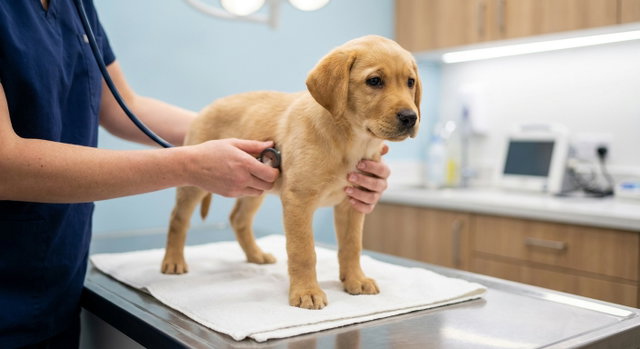
- Heart. A basic exam by stethoscope, or an advanced exam by a veterinary cardiologist.
- Patellas. The attending veterinarian checks the kneecaps by hand with the dog awake.
- Thyroid. A blood sample run on the OFA thyroid panel, looking for autoimmune thyroiditis.
- DNA tests. Results for specific inherited diseases, which some breeds’ panels require.
Which of these your breed needs is not set by OFA. Each breed’s parent club chooses its own list, as described next.
Hips: the seven grades and what they mean
OFA’s hip dysplasia page sorts hips into seven categories: Excellent, Good, Fair, Borderline, Mild, Moderate and Severe. The first three are within normal limits and earn an OFA number. Mild, Moderate and Severe are dysplastic. Borderline sits between the two: OFA describes it as not clear, with more incongruity than a Fair hip but no arthritic changes that definitively diagnose dysplasia. It does not earn a number, so ask your veterinarian whether and when to radiograph again. Films that look dysplastic are reviewed by a team of OFA’s consultant radiologists rather than one reader.
Certification needs the dog to be at least 24 months old on the date of the radiograph, per the OFA FAQ. A preliminary evaluation is available from 4 months to under 24 months. A good preliminary read helps you decide whether a young dog is worth keeping in a breeding plan, but it is not the certification, and the final film can still differ.
The OFA view is not the only method. The Merck Veterinary Manual describes the standard extended-hip radiograph graded by OFA and a stress radiograph method, PennHIP, that measures joint laxity. It also notes that reviews of screening programs have not found a single gold standard, and that growth rate, exercise and nutrition affect hip dysplasia as well as heredity. Some breeders and clubs use both; ask your veterinarian which suits your dog.
Does screening work? A 2020 study of six UK pedigree breeds in Frontiers in Veterinary Science found hip scores improving over time, with a genetic trend it attributed partly to breeders selecting on screening results. That is a trend across whole breeds over years, which is why one normal parent is a starting point, not a guarantee for a litter.
Elbows, eyes, heart, patellas and thyroid
Elbows. OFA’s elbow dysplasia page has no grade for a normal elbow: it is simply normal. Abnormal elbows are graded I to III by the amount of bone change, from minimal change to well developed degenerative joint disease. Like hips, a normal elbow is not certified until the dog is 2 years old.
Eyes. The CAER eye exam is performed by a board-certified (ACVO) veterinary ophthalmologist, either at a clinic or at an eye clinic held alongside a show. Certification is valid for 12 months from the exam date, and OFA advises yearly re-examination. An eye clearance from three years ago tells you little about the dog today.
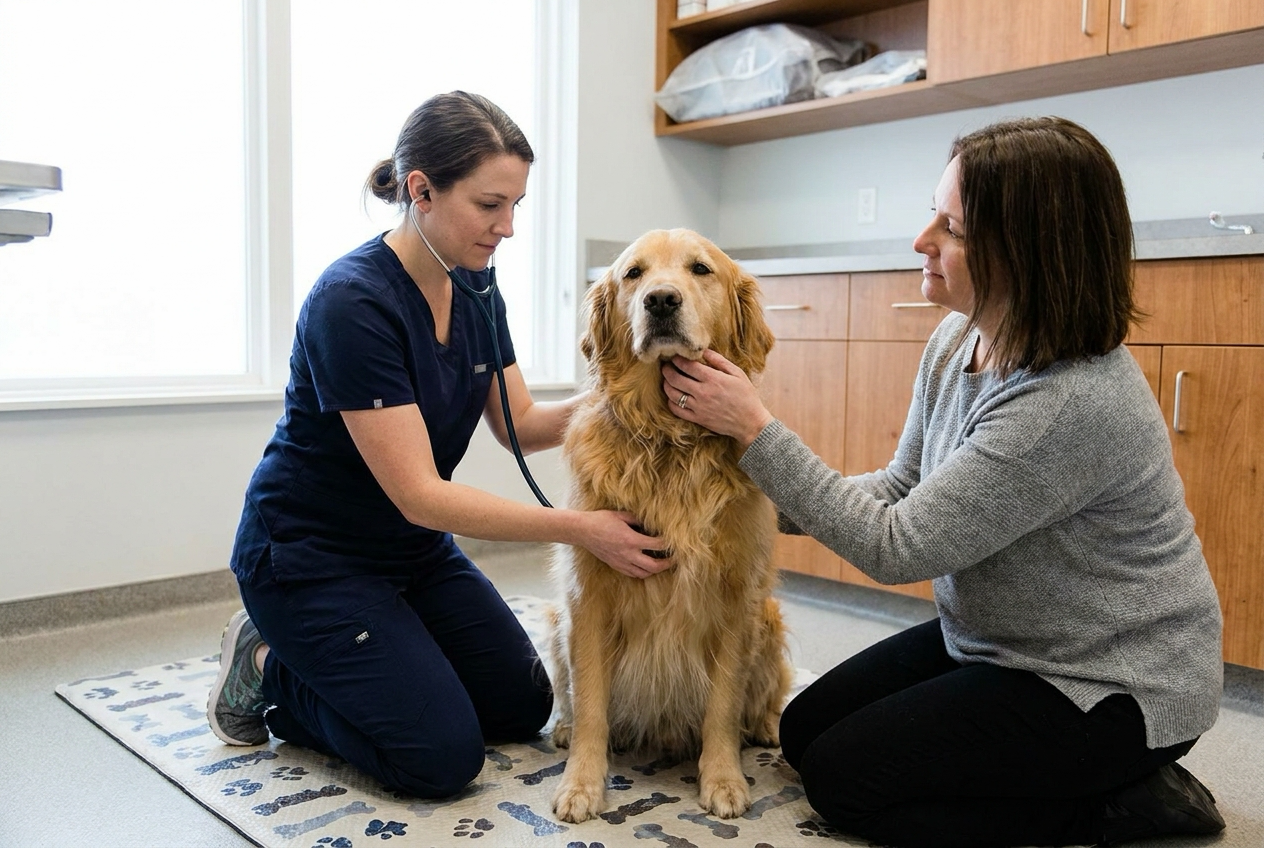
Heart. The OFA cardiac database issues a number for a dog found normal at 12 months or older. A basic exam can be done by any licensed veterinarian and is valid for one year from the exam. The advanced database needs a veterinary cardiologist and, since October 1, 2020, an echocardiogram, and it gives two clearances: congenital disease, which is permanent, and adult-onset disease, which is valid for one year. The registry number shows whether a cardiologist, specialist or practitioner did the exam, so read it before you assume an advanced clearance.
Patellas. The patellar luxation database is for dogs 12 months and over. Luxation is graded 1 to 4 by how readily the kneecap slips and how far the limb has deviated. Exams on younger dogs are treated as consultations without an OFA number.
Thyroid. The thyroid database collects results for autoimmune thyroiditis, which OFA describes as heritable. Certification starts at 12 months. Because a negative result at one age does not rule out the condition later, OFA recommends retesting at intervals through the dog’s life. OFA also asks that a dog not be on thyroid supplementation for a set period before testing, so tell your veterinarian about any thyroid medicine your dog takes before you book.
CHIC numbers and your breed’s required tests
The Canine Health Information Center, run by OFA with participating parent clubs, sets a test list for each breed. A dog earns a CHIC number when it has been screened for every test on its parent club’s list, the results are released publicly and it has permanent identification (a microchip or tattoo).
The part buyers often misread: OFA states that a CHIC number does not imply normal test results. It means the dog’s owner did the work and published it. You still open the CHIC report and read each result. The lists also change over time, so check the current requirements for your breed rather than relying on what was required when the parents were tested.
Identification matters in a second way. OFA itself does not require permanent identification for most databases, but the OFA FAQ notes that the AKC requires a tattoo or microchip before it will carry OFA results. If you intend results to follow the dog into registry records, chip it first and record the number; our dog microchip records guide covers keeping that number with the animal.
How to read another breeder’s results before a breeding
Before a stud contract or a puppy deposit, look the dogs up yourself in OFA’s public database search by registered name or registration number. A screenshot or a typed list is a claim; the OFA record is the evidence.
Check these points for each parent:
- Which databases. Compare what is listed against the breed’s CHIC list. A missing test is not a failed one, but it is information you do not have.
- Age at test. Hip and elbow certification needs 24 months. A preliminary read on a 12 month old is useful and different.
- Date. Eye exams, basic cardiac and advanced adult-onset cardiac clearances all last one year, so an old date is a lapsed clearance.
- Who examined. For heart results, the registry number tells you cardiologist, specialist or practitioner.
- What is not shown. Abnormal results appear only if the owner initialed the abnormal release on the application, per the OFA FAQ. Silence on a database can mean “never tested” or “tested and not released”. Ask.
- The wider family. Results in siblings, parents and grandparents tell you more than one dog’s results alone.
Results load to the OFA website about a week after the evaluation is complete, and hip and elbow evaluations take roughly two to three weeks from when OFA receives the application and radiographs. If a breeder says results are “pending”, that timeline is the honest range.
For the stud side of the conversation, the dog stud fees guide covers what usually goes into a stud agreement, and checking dog pedigree papers covers matching the dog in front of you to its registration and parentage records. Where coat genetics carry a health risk, as in merle to merle pairings, the merle and double merle guide explains which DNA results to ask for.
OFA fees checked in November 2026
The OFA fee schedule on November 14, 2026 lists these single-dog fees in US dollars. The page header reads “Price Increases Effective Jan 1, 2022”, so confirm the current amount when you submit. Your veterinarian’s or specialist’s own charges for the radiographs, sedation, exam or blood draw are separate and usually the larger part of the cost.
| Hips or elbows (24 months and over) | $45 each |
|---|---|
| Hips and elbows together | $50 |
| Hip or elbow preliminary | $35 each, $40 together |
| Eyes (CAER) | $15 |
| Basic or advanced cardiac | $15 |
| Patellas | $15 |
| Thyroid | $15 |
The same page lists a litter rate when three or more littermates are submitted together, a kennel rate for five or more dogs of the same application type with a common owner, and a multi-registry discount when three or more soft-tissue applications go in together for one dog. Each discount needs the applications submitted as one group with one payment.
Keep OFA results with the dog on Creatures
Creatures is where the results live alongside the rest of the dog’s history: its pedigree, litters, vaccinations and sale paperwork. It does not submit anything to OFA and does not verify results. Recording an OFA number on a profile never certifies the dog; the OFA database stays the source a buyer should check.
What to enter:
- A Test Result record for each screening. Choose the category (for example Imaging, then Radiographs, for hips and elbows; Genetic, then Genetic Disorder, for a DNA test), the date of sampling, the date of report and the result as OFA worded it, such as “Good” or “Normal”. The form has no link field, so paste the dog’s OFA page address into Notes. Add an expiration date where a clearance lapses, like an eye exam, and Creatures adds a renewal reminder ahead of it. The health and medical records guide walks through the form.
- A Certification record if you prefer to log the OFA or CHIC number itself, with the certificate number, who issued it, the dates and the dog’s OFA page in its URL field, so anyone you share it with can check it.
- The report itself. Under “Photos, files & sharing” on the record, attach the PDF or a photo of the OFA report.
Test Result records start private. To share one, tick the sharing box on the record, and the result appears on the dog’s Records tab for anyone viewing a public profile, which is where puppy buyers and stud owners look. Sharing the result does not share the attached report: the PDF stays private unless an owner also turns on Show files publicly, which appears while the sharing box is ticked. Turn that on only if you want the report itself on view. Keep a result private while you wait for a retest if you like; the choice is yours per record. When someone asks for everything at once, the profile can produce a record packet PDF to hand to a vet, registry, buyer or insurer, and you choose which sections and whether private records go in.
The add-record form opens for visitors; a free account saves it. Records are free and unlimited. For the dates that come round again (eye exams, basic cardiac, thyroid retests), the reminders and upcoming care guide explains where they show up.

Health results sit best next to the family. The profile pedigree shows the dog’s recorded ancestors, and the pedigree, family and lineage guide shows how parents and offspring connect, so a buyer can move from a puppy to its sire’s records. If you are weighing a pairing, the coefficient of inbreeding guide covers the other half of the decision, and once a litter is planned the dog gestation calculator projects the due date from the breeding date.
Registration is a separate job from health testing. If your dogs are UKC registered, our UKC registration guide covers the registry paperwork, and the AKC litter registration guide covers AKC litters. Breeders of other species keep the same split: the TICA cat registration guide and the ABGA Boer goat registration guide treat registry papers as their own records, apart from health results.
Show buyers the results
Many puppy buyers ask about health testing before they put down a deposit. Make it easy: list each parent’s OFA results by database with the dates, link each one to its OFA record and say plainly which tests were not done. The dog breeder website guide covers what else buyers look for, and the puppy sales contract guide covers how health guarantees are usually written. Put the same results in front of applicants with the breeder buyer application guide. More dog guides are on the dog species page.
Common questions
Is OFA certification required to breed a dog?
OFA itself does not require anything of breeders; it is a database you choose to submit to. Some parent clubs and breeder codes of ethics expect specific tests, and the CHIC list for your breed is the clearest summary of what your breed’s club recommends. The AKC, for example, carries OFA results in its own records for dogs with a tattoo or microchip.
How old does a dog have to be for OFA hips?
At least 24 months for certification. From 4 months to under 24 months you can submit a preliminary evaluation, which is not a certification.
Does a CHIC number mean the dog passed?
No. OFA says the CHIC number itself does not imply normal results. It means the breed’s recommended tests were completed and the results are public. Read each result in the CHIC report.
Do OFA eye clearances expire?
Yes. CAER certification is valid for 12 months from the exam date, and OFA advises yearly exams. Record the expiration date so the renewal reminder comes round in time.
What if my dog’s result is abnormal?
Talk to your veterinarian, and to a specialist where one is involved, about what it means for the dog’s health first and for breeding second. Abnormal results are published only if you initial the release on the application; many breeders release them anyway, because an open database is how a breed improves.
Do this next on Creatures
You have results coming back, or a breeding to plan around them. Start with the record, then make it easy for buyers and stud owners to find.
- Record an OFA result with the grade, report date and attached report. The form opens for visitors; a free account saves it. The adding a record guide shows each step.
- Add your dog’s profile with its registered name and microchip number so results attach to the right dog. See adding an animal.
- Create your kennel profile so your dogs, litters and results sit under one name. It starts with a guest signup; the breeder directory guide explains how listing works.
- Browse the breeder directory to find kennels in your breed and ask for their parents’ OFA records.
- Save a dog listing alert to hear about new litters and adults, then check each one’s results in the OFA database.
- Browse current dog listings and ask each seller which databases the parents are in.