Hampshire
Author: Elliott Garber, DVM · Updated
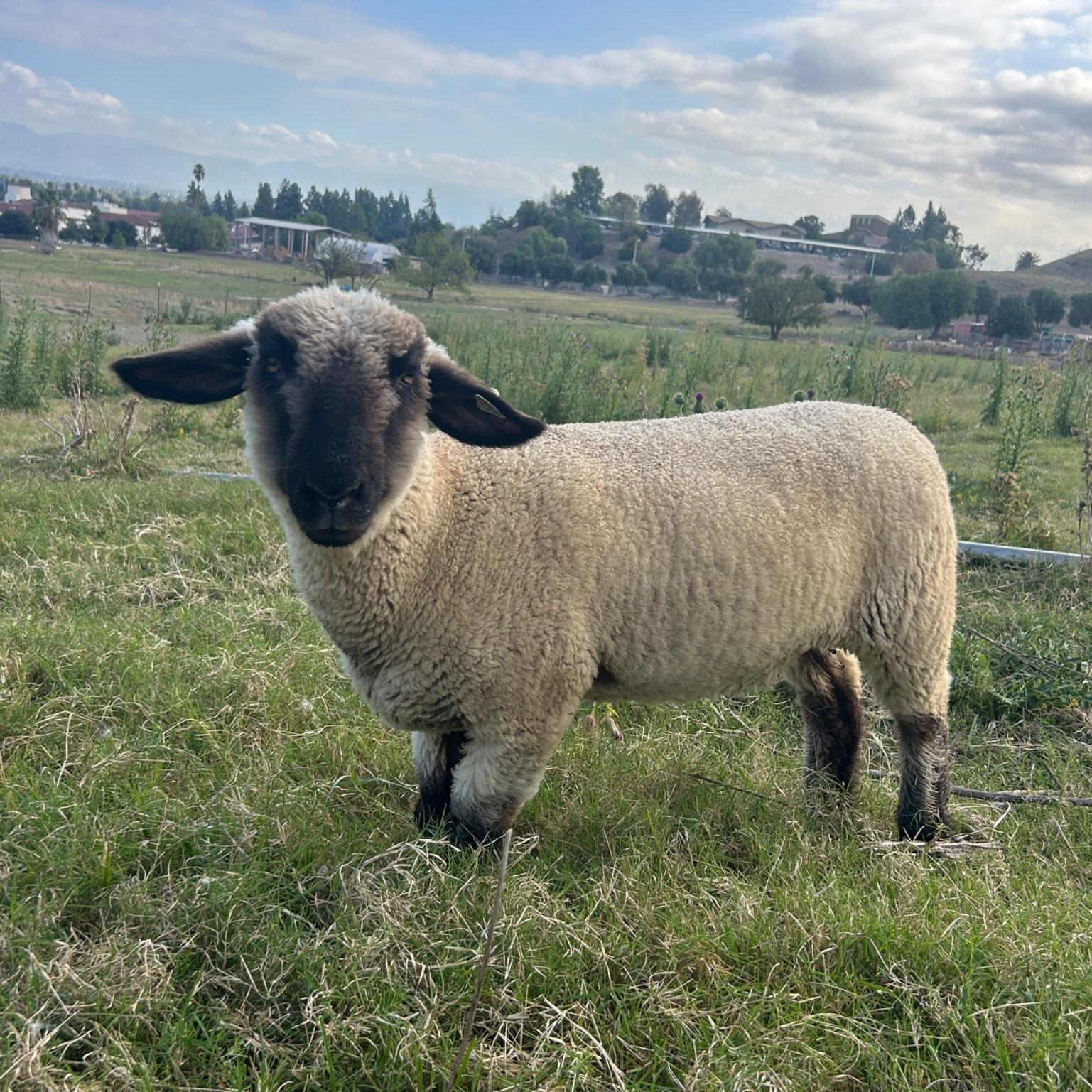
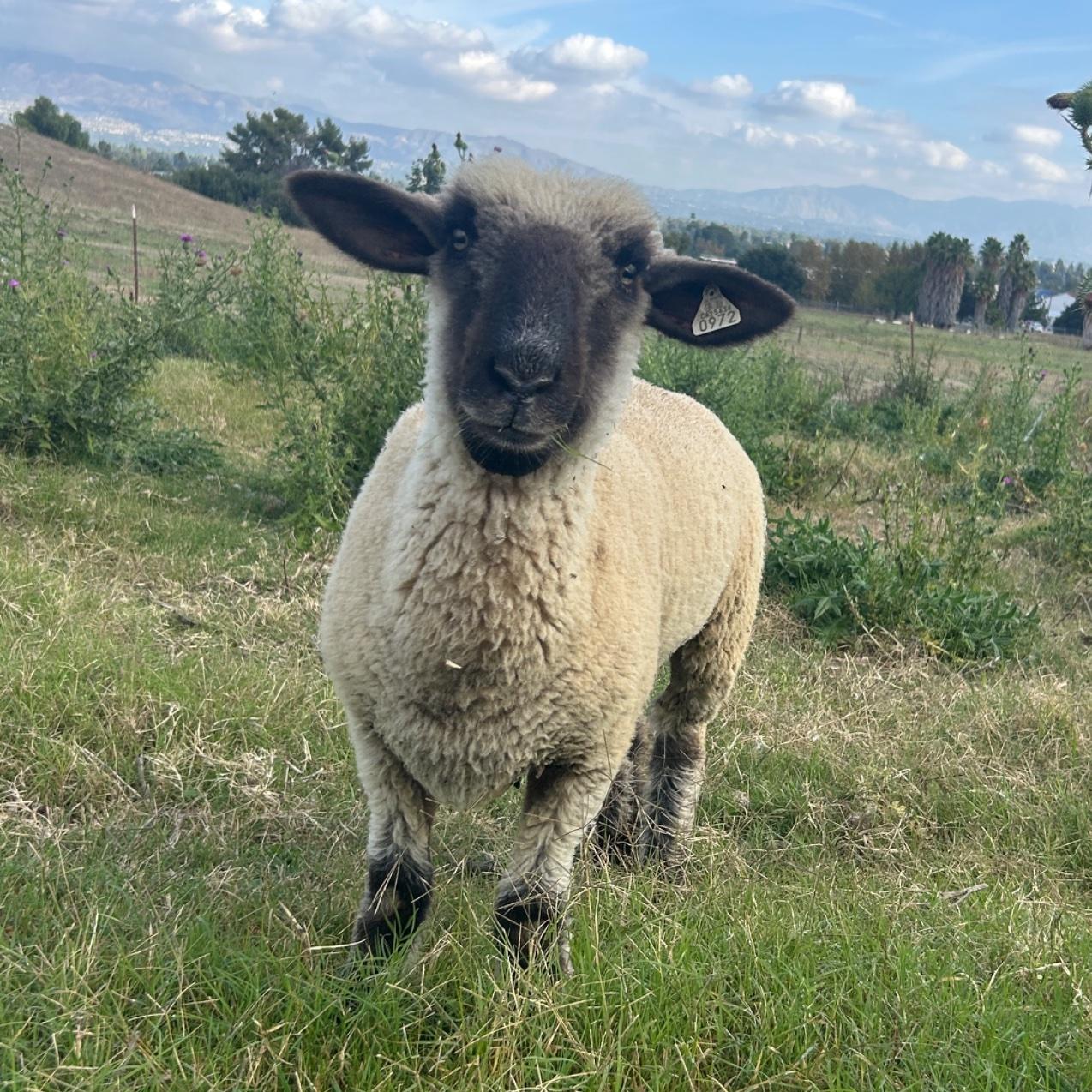
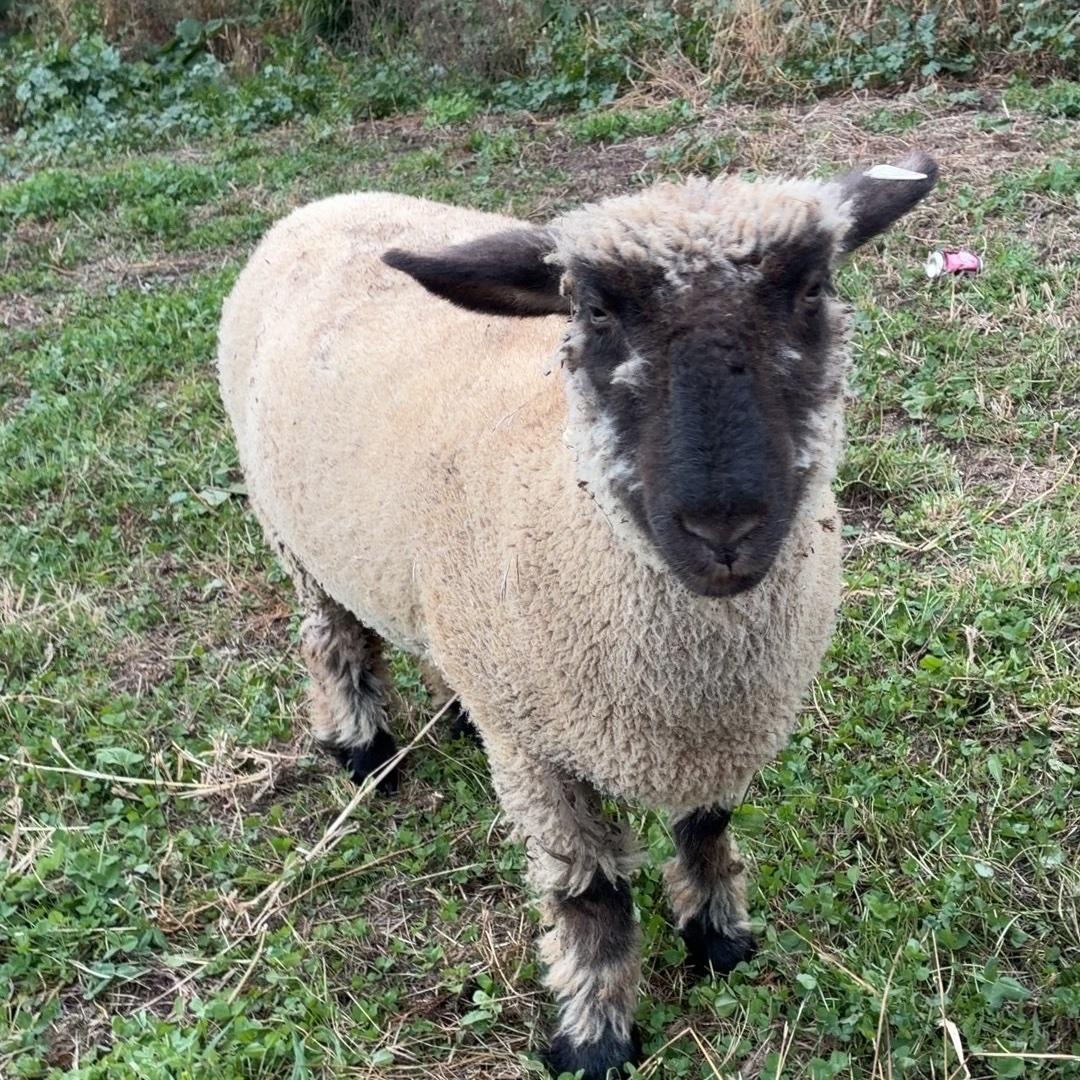
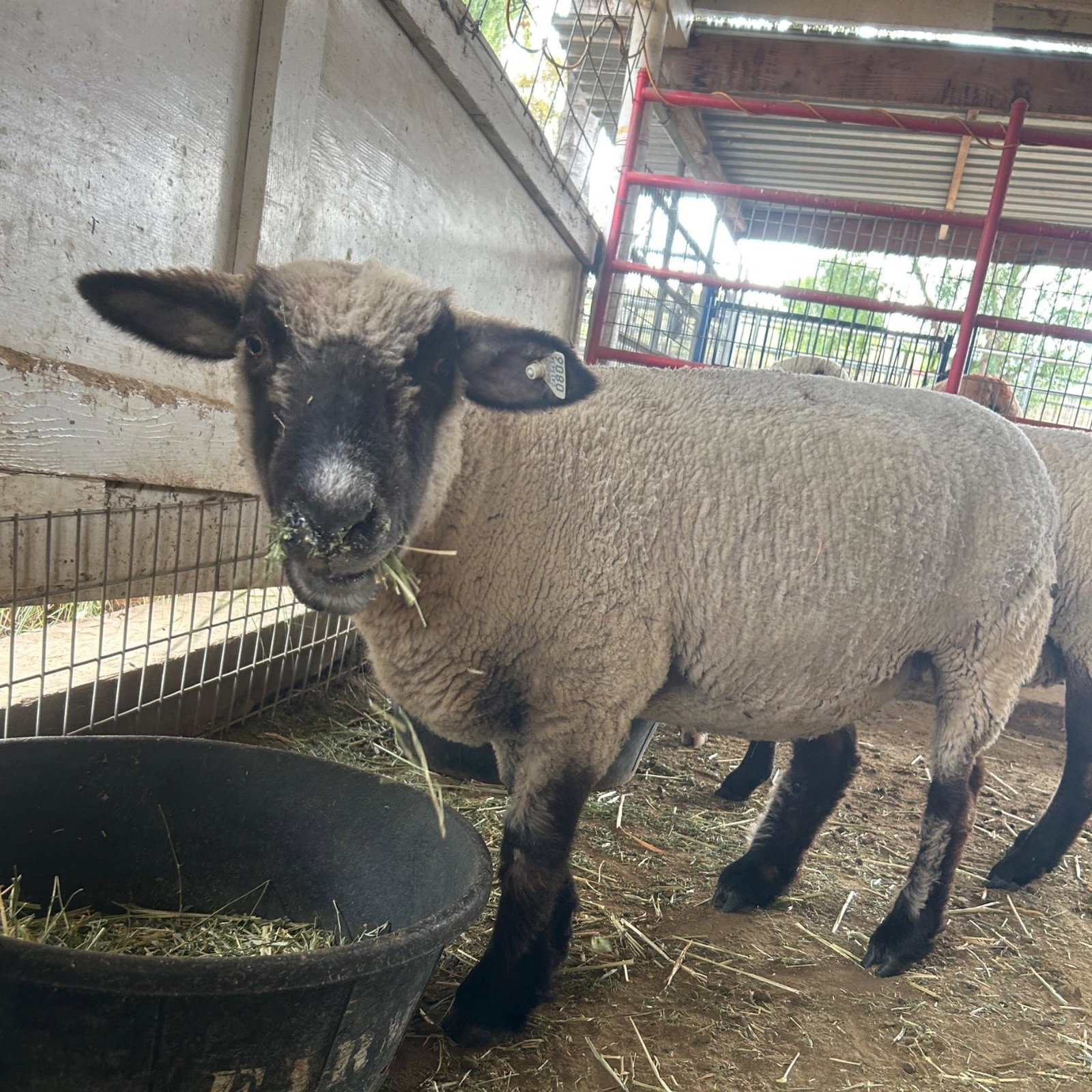
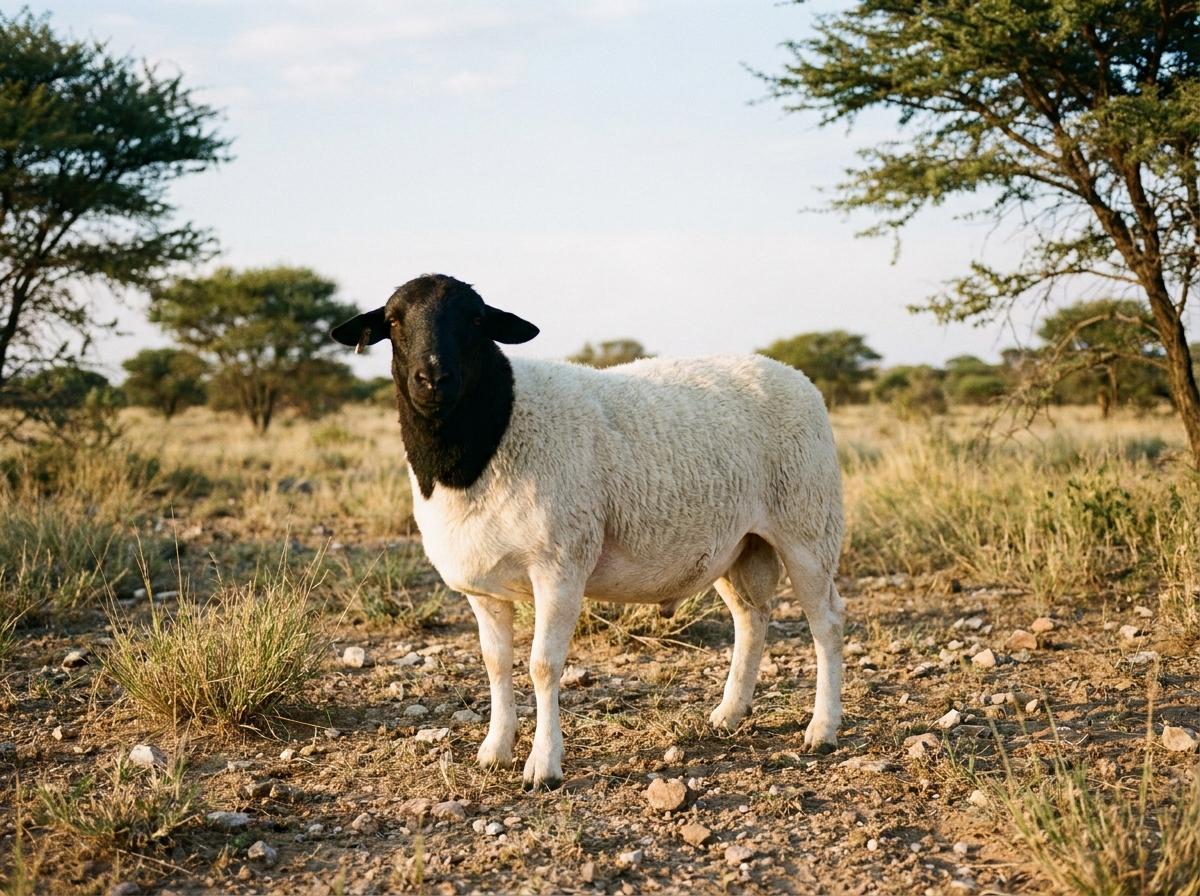
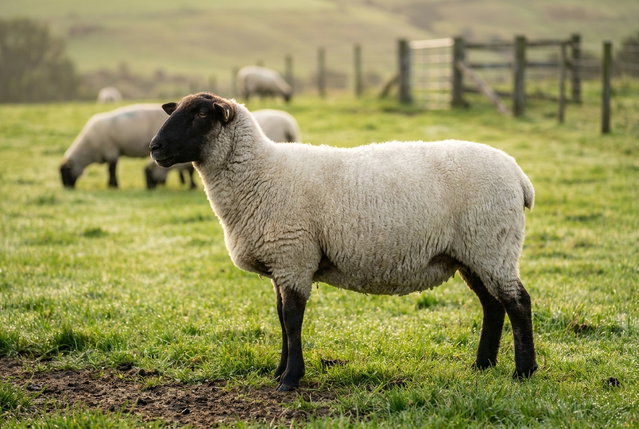
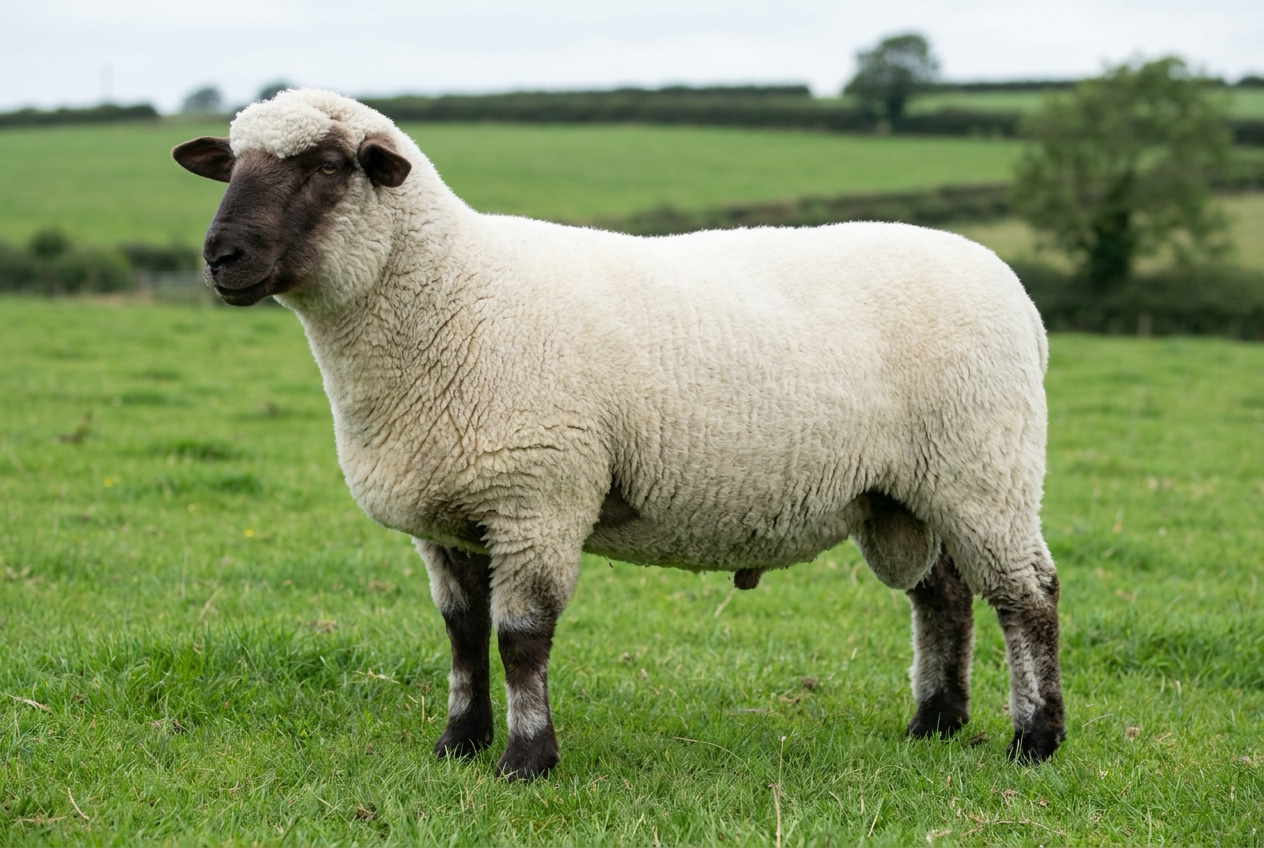
Hampshire sheep are large, fast-growing meat sheep from the downland of southern England, recognized by a dark brown to black face and ears under a white wool cap, a hornless head and a white fleece over a deep, muscular body. In the United States the breed is registered by the American Hampshire Sheep Association, and in Britain, where it is called the Hampshire Down, by the Hampshire Down Sheep Breeders’ Association. Most Hampshires earn their keep in one of three jobs: as terminal sires on commercial ewes, as purebred seedstock, or in the show ring as market and breeding lambs.
This guide covers where the breed came from, how to tell a Hampshire from a Suffolk, what the two breed standards ask for, the two genetic tests worth asking about, prices from published sale results, and how to keep breeding, test and registration records in one place. Hampshire listings are scarce on the Creatures marketplace right now, so if you are shopping, set a free Hampshire listing alert to hear about the next one; no account is needed to start. To compare Hampshires with other meat, wool and hair breeds first, start on the Creatures sheep breeds page.
| Also called | Hampshire Down; “Hamps” in the show barn |
|---|---|
| Origin | Hampshire and neighboring downland counties, southern England |
| Main use | Meat: terminal sire, purebred seedstock, show and market lambs |
| Look | Dark brown to black face and ears, white wool cap, polled, white fleece |
| Mature size (AHSA standard) | Rams 300 lb or more, ewes 200 lb or more in breeding condition |
| Fleece (AHSA standard) | About 8 lb a year, grade 1/4 to 3/8 blood (54s to 60s) |
| Registries | American Hampshire Sheep Association (US); Hampshire Down Sheep Breeders’ Association (UK) |
| Tests to ask about | Spider lamb syndrome status and scrapie genotype (codons 171 and 136) |
Browse listings, public profiles, breeders, or add your animal.
What is a Hampshire sheep?
A Hampshire is a Down breed: one of the short-wooled, dark-faced meat sheep developed on the downland of southern England. The American Hampshire Sheep Association (AHSA) describes the breed in its Hampshire breed standard as “a large, open faced and active sheep with a mild disposition”, and puts the major emphasis on weight for age, muscling, soundness, breed type and multiple births. In other words, the Hampshire was selected to put a heavy, well-muscled lamb on the ground quickly, and its wool is a secondary product.
That is the reason most commercial sheep producers know the breed as a ram rather than a flock. The UK breed society describes the modern Hampshire Down as a terminal sire: a ram used on ewes of another breed so that every lamb goes to market, chosen for growth, muscle and carcass rather than for breeding replacements. Purebred breeders keep the registered flocks that supply those rams, and in the US much of the AHSA’s published activity centers on shows, sales and its junior program.
If you are weighing Hampshires against other terminal breeds, the Suffolk and Texel guides cover the two breeds buyers most often compare them with.
Where Hampshire sheep came from
The breed takes its name from the county of Hampshire. According to the Hampshire Down Sheep Breeders’ Association, the breed came from a three-way cross of Wiltshire Horn, Berkshire Knot and Southdown sheep, kept on the thin downland soils of Wiltshire, Hampshire and Berkshire, where flocks were valued for maintaining the fertility of the arable land. The association says Hampshire Down flocks were established more than 150 years ago and that fairs such as Wilton, Overton and Weyhill handled up to 20,000 head each.
Oklahoma State University’s breeds of livestock entry for the Hampshire adds two names to that story: John Twynam, who used an improved Cotswold ram, and William Humphrey, who brought in two large Southdown rams. The same source dates both breed societies to 1889, when the Hampshire Down Sheep Breeders’ Association was set up in Salisbury and the American Hampshire Down Sheep Association, now the AHSA, was organized in the United States.
The American side of the history has a gap in it, and OSU says so plainly. Hampshires were reported in the US around 1840, but there is no record that any of those sheep survived the Civil War. More were imported between about 1865 and 1870, and the first authentic record of an importation dates from 1879. OSU adds that for over a century US breeders have selected Hampshires to fill specific sheep industry needs, which is one reason the two national standards differ in their details.
How to recognize a Hampshire (and tell it from a Suffolk)
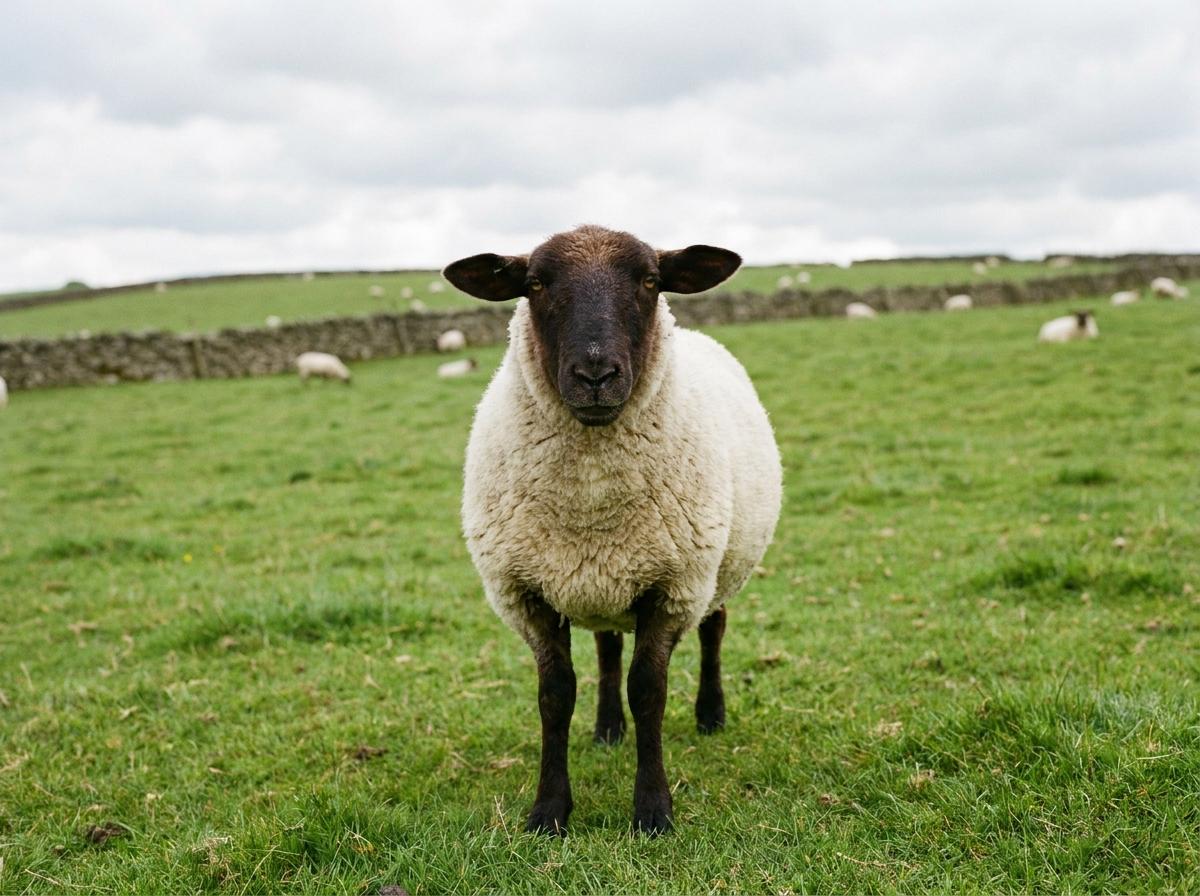
Breed type sits in the head. The AHSA standard asks for a face “of good length, dark in color, and practically free of wool from the eyes down”, with an unbroken wool cap running from the neck over the forehead. The ears are moderate in length, thick and covered in coarse dark brown or black hair, free of wool. The muzzle is broad, and a small amount of “frostiness” on the nose is acceptable. The UK standard asks for “face and ears of a rich dark brown or black” with wool over the top of the head and around the eyes.
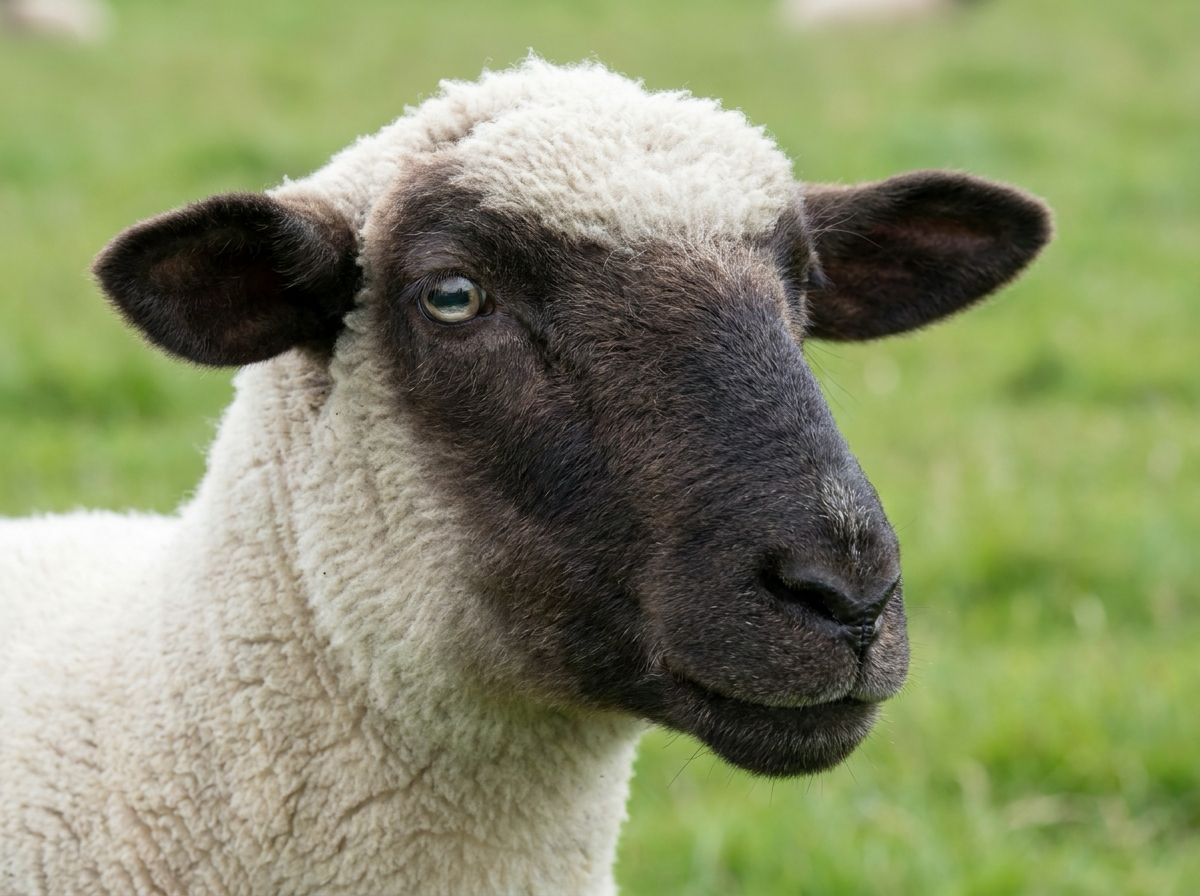
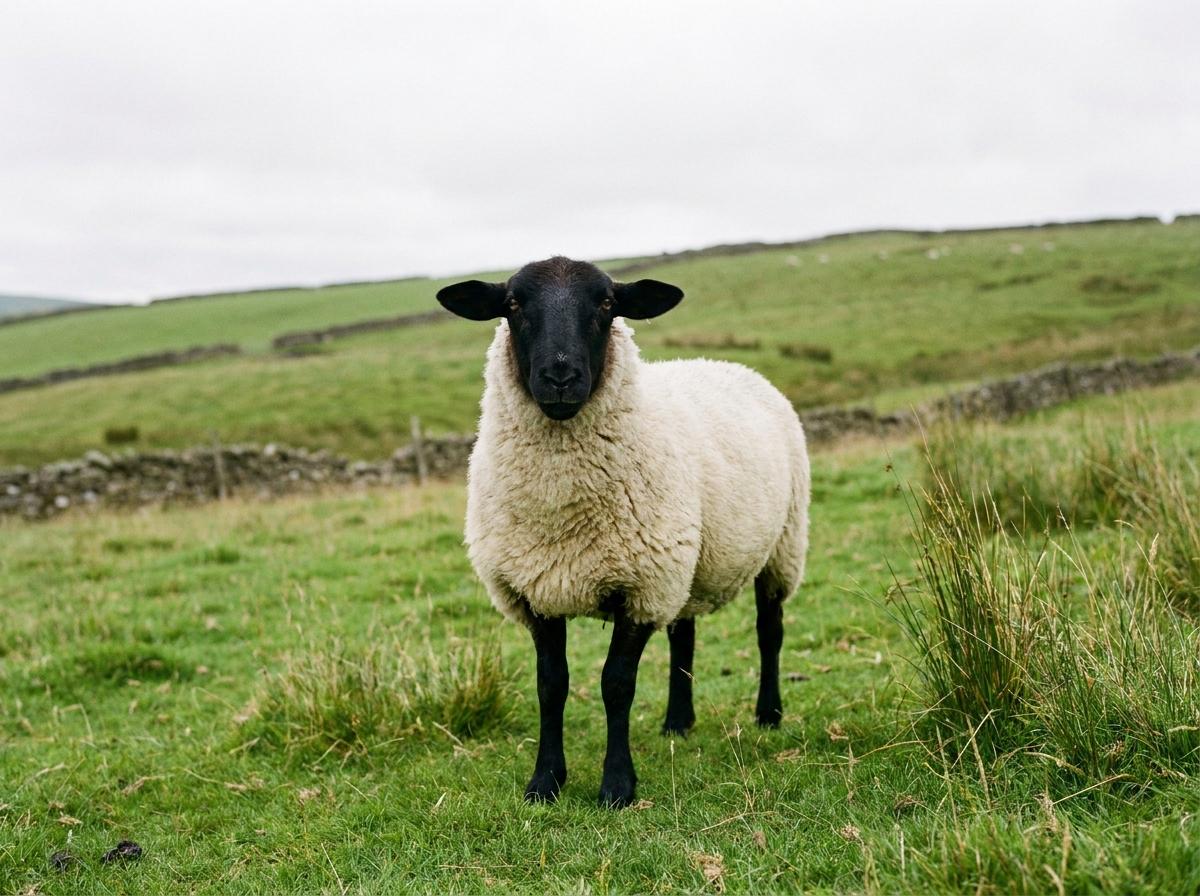
That wool cap is the quickest way to separate a Hampshire from a Suffolk. The United Suffolk Sheep Association describes the Suffolk head as free of wool at both the poll and cheeks, with jet black, wool-free heads and legs. A Hampshire carries wool over the poll and forehead, and the AHSA standard says “some wool is desirable below the knee”. The AHSA lists the absence of a wool cap or leg wool as a disqualifying absence of breed type.
A few other points from the two standards are worth knowing before you look at sheep:
- Hornless. Hampshires are a polled breed. The AHSA lists scurs (loose horn growths) as highly objectionable, and the UK standard objects to “snigs”, its term for horn buds.
- Color faults. The AHSA wants Hampshires free of white spots on the jaws, legs and ears, lists excessive white spots as disqualifying, and treats black fiber in the fleece as highly objectionable. The UK standard lists black wool and white hair patches on the nose of younger animals as undesirable.
- Soundness. Both standards spend more words on legs, feet, pasterns and hocks than on looks. The AHSA flags post-legged and sickle-hocked sheep as unsound, and the UK standard adds bites that do not meet the dental pad.
- Reproductive soundness. The AHSA disqualifies rams with fewer than two testicles and ewes with fewer than two teats, and lists a split scrotum as highly objectionable.
A dark face on its own does not prove a sheep is a Hampshire, because many crossbred lambs out of Hampshire or Suffolk rams have one. Registration papers and parentage are what make a purebred claim.
Size, growth and fleece
The current AHSA breed standard (revised November 2007) says mature rams should weigh 300 pounds or more and mature ewes 200 pounds or more in breeding condition. Older references give a lower ram figure: the Oklahoma State University breed page says 275 pounds or more for rams, with the same 200 pounds for ewes. Treat these as targets in the standard, not averages you will see on every farm. Feed, age and the flock’s breeding goals change mature size a great deal.
Weight for age matters more than a single number. The AHSA standard names weight per age among its major traits, describes Hampshires as noted for “rapid growth and efficient feed conversion”, and lists insufficient weight for age as highly objectionable. If you weigh lambs at birth, weaning and later, you can see that growth instead of guessing it. Without a scale, the sheep weight calculator estimates live weight from tape measurements, and the guide to measuring a sheep for weight explains how fleece length affects the estimate.
The fleece is medium wool. The AHSA standard calls for a fleece of good length and uniformity, graded 1/4 to 3/8 blood (54s to 60s spinning count), weighing about 8 pounds a year, with a pink skin preferred. OSU’s figures run a little coarser and wider: mature ewes averaging 6 to 10 pounds of fleece at 25.0 to 33.0 microns, a spinning count of 46 to 58, and a staple of 2 to 3.5 inches. Either way, Hampshire wool is a by-product of a meat sheep, and the flock still needs shearing at least once a year. The sheep shearing guide covers timing and crutching.
For rams, the AHSA standard asks for a scrotal circumference of 33 cm at 12 months and notes that larger testicles are linked to longer fertility and earlier puberty in daughters. The UK standard asks for over 30 cm in ram lambs and 35 cm in older rams at the start of the breeding season.
What Hampshires are used for
Terminal sires. In commercial flocks, a Hampshire ram goes on ewes of another breed and all the lambs are sold for meat. The UK association says Hampshire Down sired lambs mature early, can reach finishing weight off forage, and are born with a good coat of wool and quick to start suckling. Those are the association’s claims about its own breed, so ask the seller of any ram for the growth records behind them.
Purebred seedstock. Registered flocks supply rams to commercial producers and breeding stock to other breeders. In the UK, the breed society points ram buyers to Estimated Breeding Values from performance recording, says EBVs can be compared between flocks but not between breeds, and estimates that the difference between an average ram and one with high EBVs “could be worth more than £500 during its lifetime”.
Show and market lambs. In the US, Hampshires are a fixture of junior livestock shows. The AHSA’s results page lists National Hampshire shows at the North American International Livestock Exposition (NAILE) and the All-American Junior Show, with separate champions for fitted and slick-shorn sheep. The association also runs a junior ewe lamb and yearling ewe futurity. If a child in your family wants a lamb project, the showing sheep guide walks through picking, feeding, fitting and showing a lamb.
Breeding and lambing
Hampshire ewes are expected to work hard. The AHSA standard says ewes should conceive on first service regardless of season, and that replacements and prospective sires should come from ewes that settle within 42 days of the ram going in. It asks for ewes that need minimal help at lambing, raise at least two strong lambs, and milk well enough to wean lamb weight equal to 100 percent or more of their own body weight within 120 days. Those are breeding goals in a standard, not a promise about any one ewe, but they show what a good Hampshire ewe is meant to do.
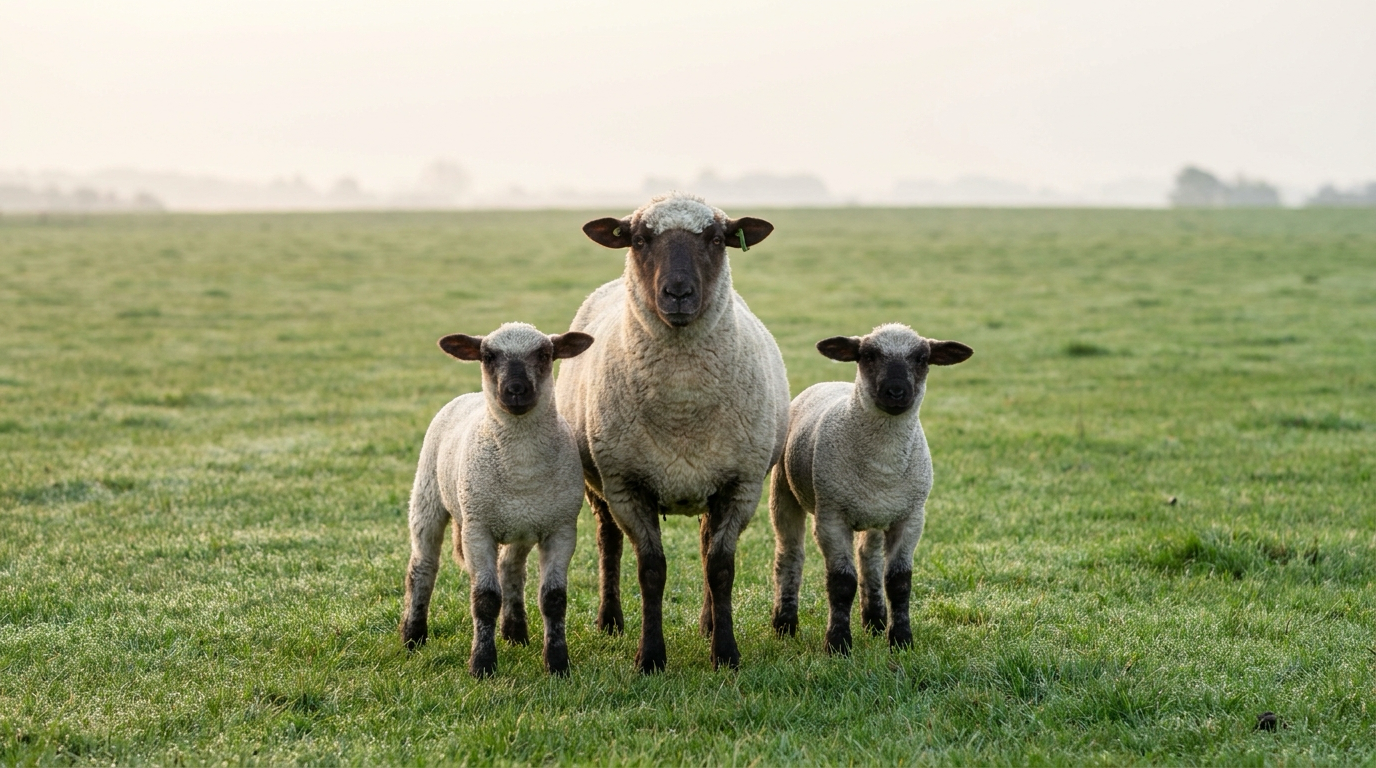
Gestation in sheep averages 147 days, according to the Merck Veterinary Manual, and the estrous cycle averages 17 days. To work out when lambs are due from the date the ram went in, use the free sheep gestation calculator. For heat cycles, flushing and ram management, see the sheep breeding guide, and for the run-up to lambing day, the lambing preparation timeline.
Breeding records are also what the registry asks for. The AHSA’s work order includes a breeding certificate with the ram’s registration number, the ewes exposed and the dates of exposure, and separate certificates for artificial insemination and embryo transfer. On Creatures you can record a breeding with an exact date or an exposure window, see the projected due date, and later record the births and create a litter so each lamb gets its own profile with its parents linked.
Two genetic tests to ask about
Spider lamb syndrome. The Merck Veterinary Manual describes spider lamb syndrome (hereditary chondrodysplasia) as an inherited, semilethal skeletal disease affecting lambs primarily of Suffolk or Hampshire breeds. It is recessive and caused by a mutation in the FGFR3 gene: a lamb is affected only when both parents pass the mutation on, and carriers look completely normal. That is why a DNA test, not a look at the sheep, is the only way to know. The AHSA standard explains the result codes: NN means the animal is not a carrier, and NS means it carries one copy. Two carriers mated together can produce affected lambs, so ask for the spider status of any ram you buy and of the ewes he will cover.
Scrapie genotype. Scrapie is a fatal disease of the central nervous system in sheep and goats. The USDA APHIS scrapie page says it can take 2 to 5 years for signs to appear, that current diagnostic tests need brain or lymphoid tissue, and that apparently healthy infected animals can spread it. Genetics changes susceptibility to classical scrapie, but the codons must be interpreted together. APHIS’s Scrapie Program Standards, May 2016, Table 7 (checked October 29, 2026), classifies AA at codon 136 with QQ at 171 as highly susceptible, AA with QR as rarely susceptible, and AV with QR as susceptible to some strains. Even AA with RR is not an absolute guarantee of resistance. An RR ram passes an R to every lamb he sires. Ask for the full lab report and have your veterinarian or APHIS interpret the combined result; a genotype test concerns susceptibility, not whether the sheep is infected. Ask whether the flock takes part in the APHIS Scrapie Free Flock Certification Program. Any sheep showing incoordination, intense rubbing or weight loss with a normal appetite needs your veterinarian.
On Creatures, keep each result as a Test Result record on the animal, with the lab report attached, so it stays with the sheep if it is sold. Our health and medical records guide shows how records and attachments work.
Care: what Hampshires need
Hampshires are kept like other large meat sheep, and the general sheep guides apply. A few points deserve extra weight because of the breed’s size and growth.
- Feed for the frame. A ewe meant to wean her own weight in lambs needs good forage and extra energy in late pregnancy and lactation. Watch copper, because sheep are easily poisoned by levels other livestock tolerate. The sheep feeding guide and sheep minerals guide explain why.
- Parasites. Internal parasites are a common grazing health problem, and the AHSA standard encourages breeders to select for resistance to disease of hoof and body. Use fecal egg counts and eyelid scoring to treat only the sheep that need it. The FAMACHA scoring guide explains how the method works and why training comes first, and the sheep deworming guide covers refugia and resistance. Dosing decisions belong with your veterinarian.
- Feet. A 300 pound ram puts a lot of weight on four feet, and both breed standards stress sound pasterns and feet. The hoof trimming and foot rot guide covers routine care.
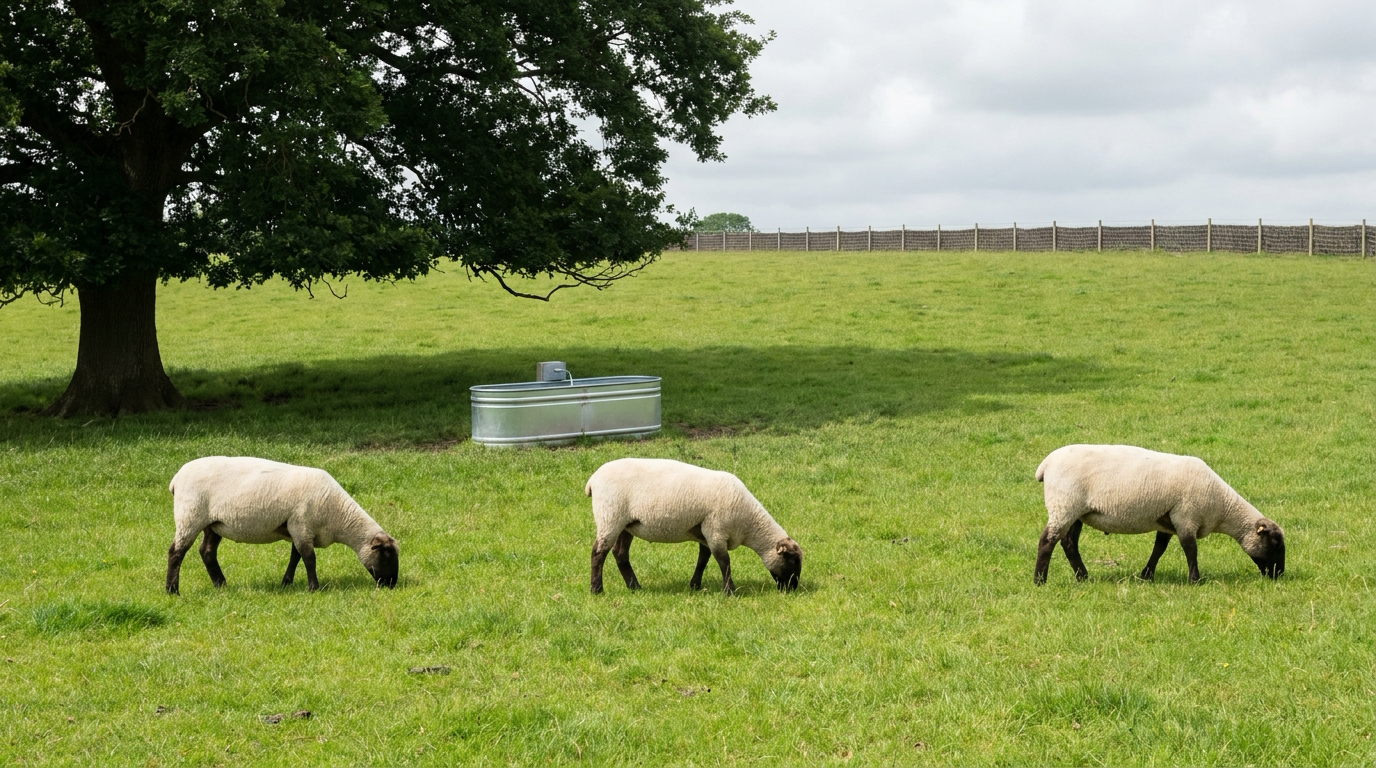
- Shelter and fencing. Hampshires do not need special housing, but they do need shade, clean water, dry footing and sound fences. See the sheep shelter guide and sheep fencing guide.
- Vaccination. Talk to your veterinarian about a clostridial program such as CD&T; the CD&T guide explains what it covers.
Lifespan in sheep depends more on teeth, feet, management and the culling decisions of the flock than on breed; the sheep lifespan guide explains what limits it.
Registration and papers
In the US, only AHSA members can register Hampshires. The association’s work order and fee schedule, updated April 30, 2026, lists new senior membership and annual senior dues at $35, junior membership at $15, registration at $9 for an animal under 12 months and $15 over 12 months, and transfers at $10 within 90 days of sale or $20 after that. Registrations and transfers can be done through the association’s online registry. Check the current form before you send anything, since fees change.
In the UK, the breed society now requires DNA for rams: from July 1, 2023, rams need a DNA result under the HDSBA scheme before they can be registered as stock rams, and rams born after 2023 must be sire verified. No lambs can be registered without the sire’s DNA profile on file.
Whichever registry you use, keep the registration number, the pedigree and the test results together. On Creatures, a Registration record holds the registry name and number, and the animal’s pedigree tab links sire and dam so lambs inherit their family tree automatically. See pedigree, family and lineage for how parents are linked, and the sheep flock record book guide for a practical record routine.
What Hampshire sheep cost
There is no single price for a Hampshire. Registered breeding stock, commercial rams, club lambs and cull ewes sell in different markets, and price follows pedigree, show record, test results and age. The most useful numbers are dated, public sale results. Two examples from the AHSA results page and its posted sale reports:
- At the AHSA’s futurity-nominated online sale (results posted April 28, 2023), 16 lots sold for between $500 and $2,000 each.
- At the AHSA online sale on May 30, 2024, 7 lots sold for between $400 and $1,100, for a sale gross of $5,551.
Those are small association sales of registered stock, so read them as a snapshot, not a market average. Individual animals sell well outside these ranges in both directions, depending on pedigree, show record and the market they sell into. To sanity-check an asking price, the free livestock value calculator gives a sales-based estimate for sheep by breed, sex and age, and falls back to broader sheep data when a breed has too few recorded sales. The sheep cost guide covers commercial, registered and ongoing costs, and the where to buy sheep guide lists the disease questions to ask any seller.
Buying checklist
- Decide the job first. A terminal sire for a commercial flock, a purebred ewe for registered lambs and a show lamb for a child are three different purchases.
- Ask for papers. Confirm the AHSA (or HDSBA) registration and that the transfer will be completed.
- Ask for test results. Spider status (NN preferred for any breeding animal) and scrapie genotype at codons 171 and 136.
- Ask for records. Birth type, birth and weaning weights, and lambing history for ewes; growth and EBVs where the flock records them.
- Check soundness in person. Feet, pasterns, hocks, bite, two testicles of even size or two functional teats, and an udder with no lumps.
- Check breed type. Dark face and ears, an unbroken wool cap, some leg wool, no scurs, no white spots and no black fiber.
- Quarantine. The UK association advises at least four weeks of quarantine before bought-in rams mix with the flock; ask your veterinarian what your farm needs.
Frequently asked questions
Are there black Hampshire sheep?
The expected Hampshire fleece is white, while the face, ears and legs are dark brown to black. The AHSA treats black fiber in the fleece as highly objectionable, and the UK standard lists black wool as undesirable. A black fleece does not match that expected breed standard, but coat color cannot establish ancestry. Check registry papers and parentage for a sheep with a Hampshire-type head.
What is the difference between a Hampshire and a Suffolk?
Both are large, dark-faced meat sheep descended in part from the Southdown. The quickest field difference is wool on the head and legs: a Hampshire has a white wool cap over the forehead and some wool below the knee, while a Suffolk’s head and legs are jet black and free of wool. The Suffolk standard also asks for long, bell-shaped ears that “hang below perpendicular”; the Hampshire standard asks for ears of moderate length.
Do Hampshire sheep have horns?
No. They are a polled breed. Scurs and horn buds are faults in both the US and UK standards.
How big do Hampshire sheep get?
The AHSA standard asks for mature rams of 300 pounds or more and ewes of 200 pounds or more in breeding condition. Older references give 275 pounds for rams. Actual weight depends on feeding, age and bloodline.
Are Hampshire sheep good for beginners?
They are calm, and the AHSA standard calls them “quiet and not easily excited”, but they are big, fast-growing sheep with real feed needs. A beginner can raise them well with good fences, a feeding plan, a parasite plan and a veterinarian, and many first-time shepherds start with a Hampshire lamb project. A large mature ram needs respectful handling, as with any breed.
What is a Hampshire lamb used for?
Most Hampshire and Hampshire-cross lambs are raised for meat. Registered lambs may be kept as breeding stock, and many are shown at junior and open shows as breeding or market lambs.
Do this next on Creatures
Hampshire listings are thin, so the alert comes first. Then record what you already have.
Get alerted. Set a free Hampshire sheep listing alert and Creatures emails you when a Hampshire is listed. No account needed to start; see saving searches and using your watchlist.
Browse and find breeders. Check Hampshire sheep on the marketplace, and search trusted farms in the Creatures breeder directory, where Hampshire breeders are listed on the breed page.
Add your sheep. Create a free Hampshire profile for a ram, ewe or show lamb, with photos, registration number and parents. No account needed to start; the steps are in adding an animal to Creatures.
Record breedings, tests and weights. Add a record for a breeding, a spider or scrapie test result, or a weaning weight. The record sheet opens for visitors to look around, and a free account saves what you enter. See adding a record.
List your flock. Breed Hampshires? Create your farm profile so buyers looking for rams and show lambs can find you. Read getting listed in the breeder directory and, if others help run the flock, creating an organization and adding your team.
Compare breeds. Hampshires share pasture with plenty of other breeds. Read the Katahdin sheep guide for a shedding hair breed, the Tunis sheep guide for a heritage meat breed, and pick a name with the sheep name generator.