American Blackbelly
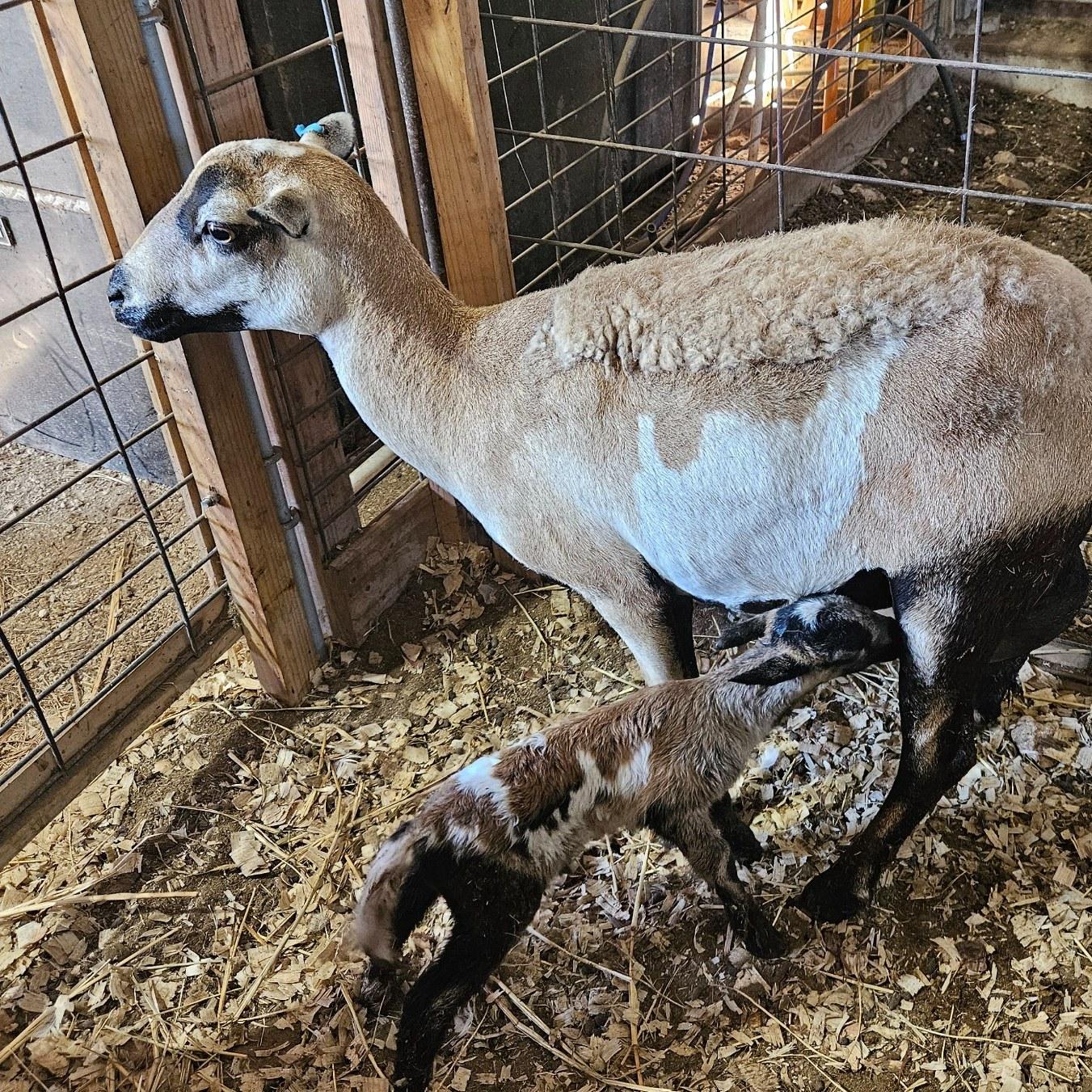
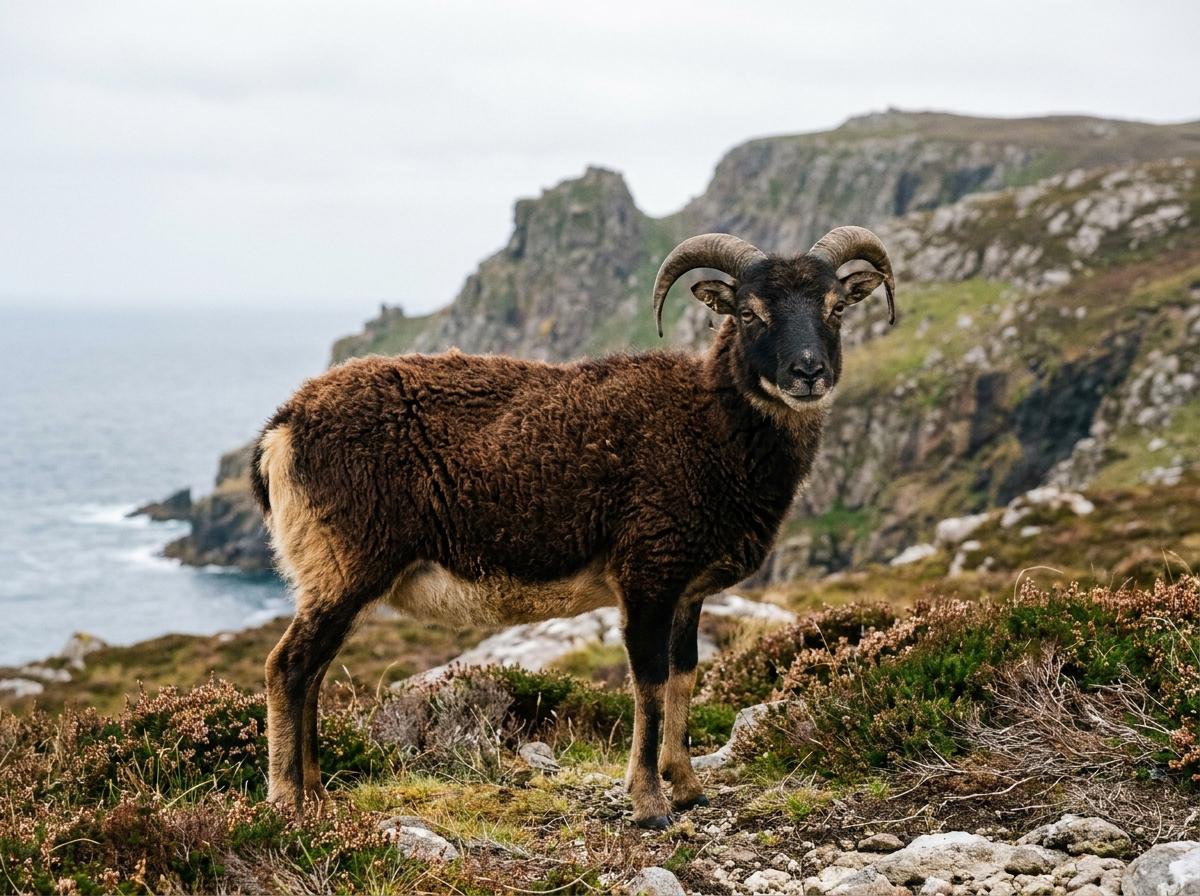
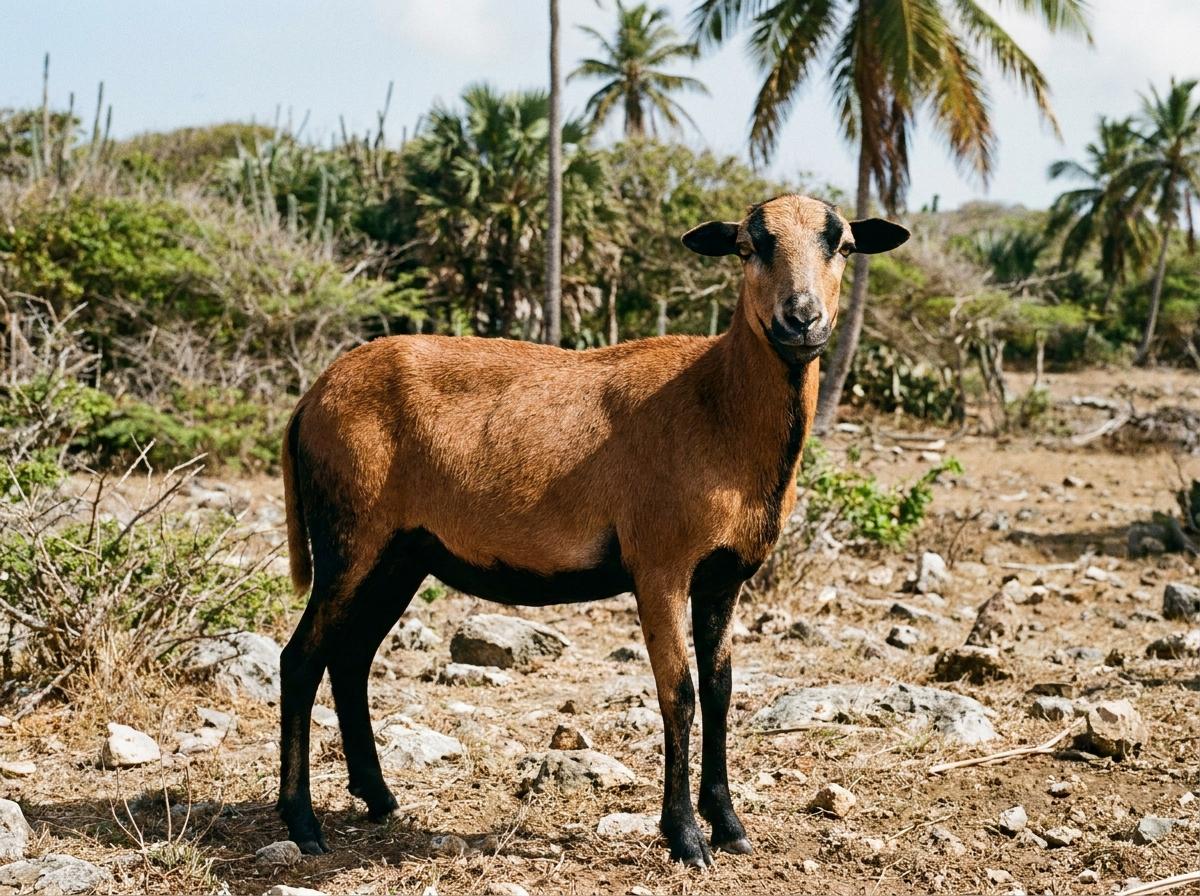
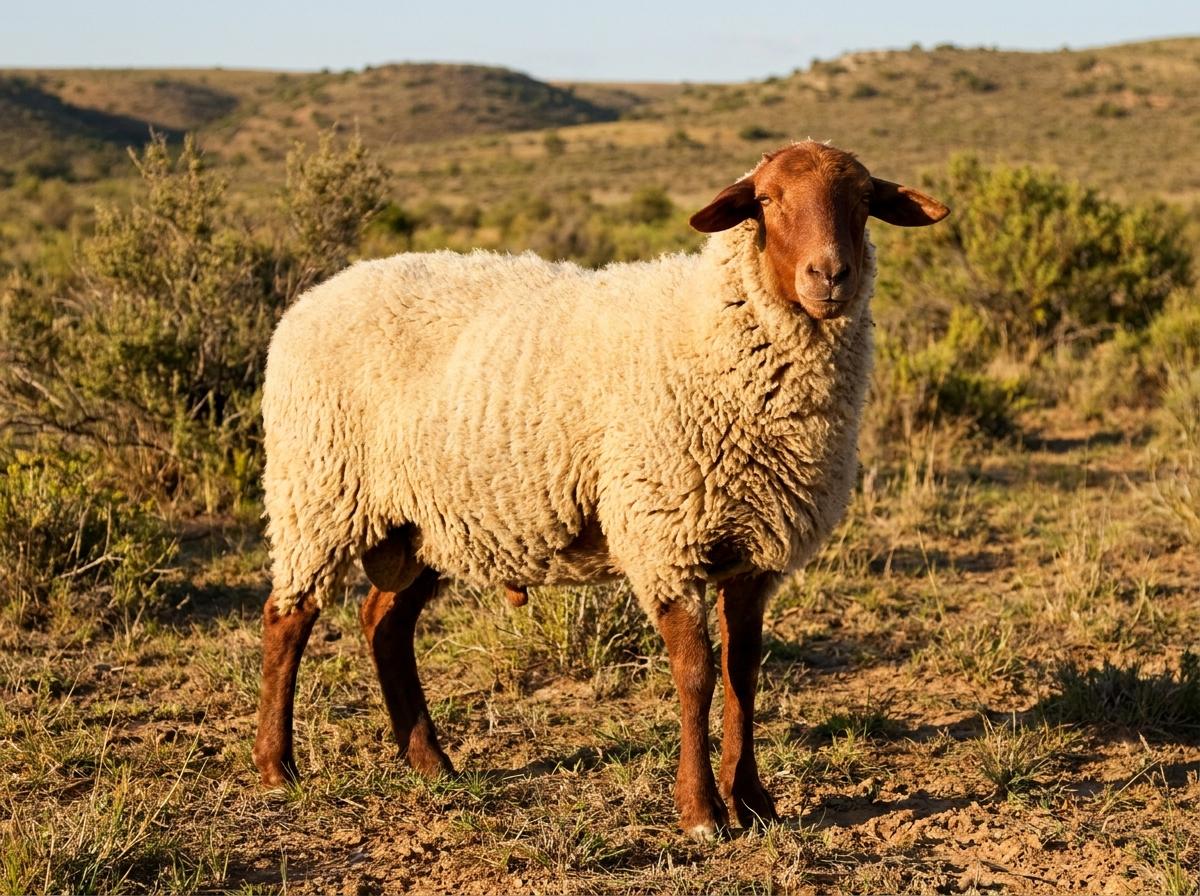
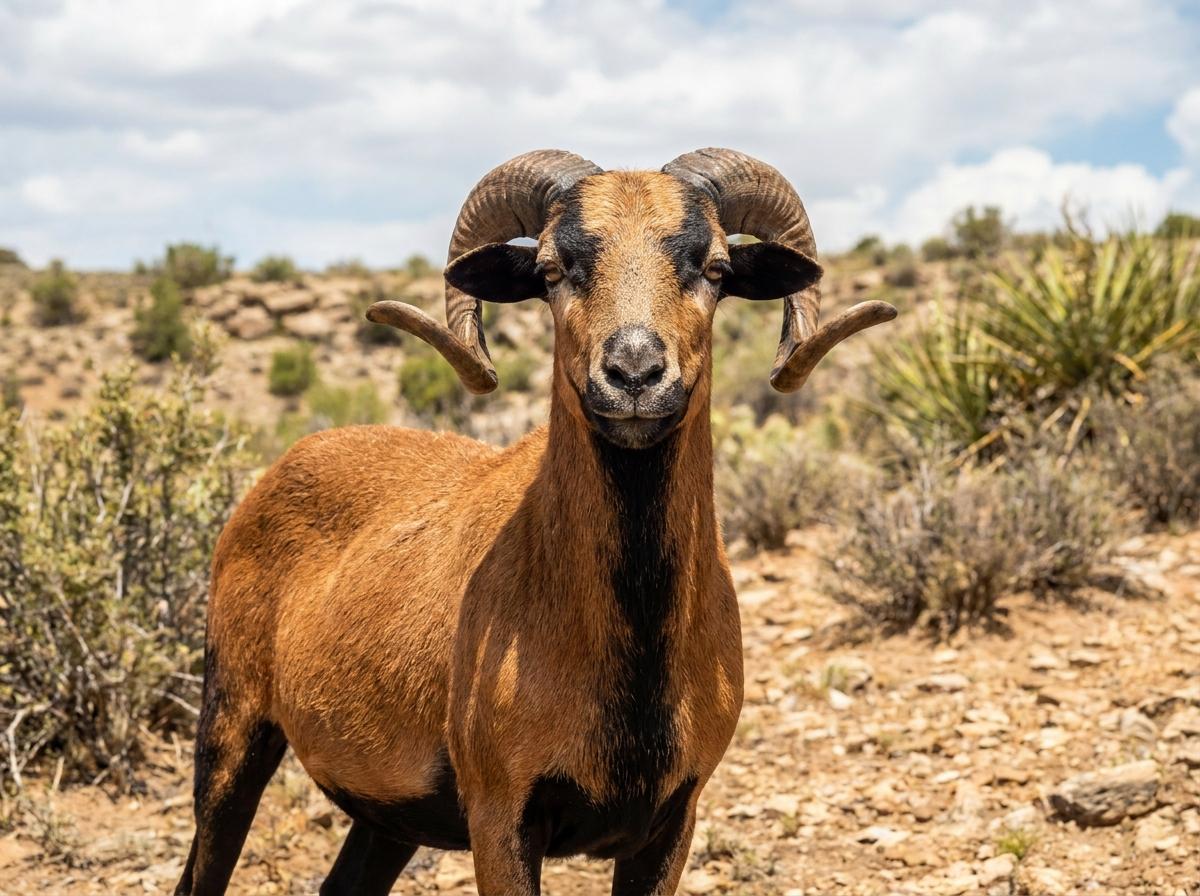
The American Blackbelly is a horned hair sheep developed in the United States, mainly in Texas, by crossing Barbados Blackbelly sheep with European mouflon and, in some flocks, Rambouillet. It keeps the Barbados look: a coat from light fawn to dark mahogany, a black belly, black inner legs and a “badger face” of black bars running from the crown down past the inner corner of each eye. What sets it apart is the horns. Mature rams carry a heavy, curling set, while ewes are ideally polled. The coat is hair, not wool, so the sheep sheds each spring and is never shorn, and the long tail is never docked. At about two years old, rams weigh roughly 100 to 160 pounds and ewes 70 to 120 pounds, according to the breed standard.
The breed is registered by the Barbados Blackbelly Sheep Association International (BBSAI), which also keeps the herd book for the polled Barbados Blackbelly, so the two names are easy to mix up and a buyer needs to know which one they are looking at. When this guide was written, the Creatures directory listed 33 American Blackbelly breeders and farms but there were no live listings, so the quickest route to a sheep is to set a free American Blackbelly listing alert (no account needed to start) while you contact American Blackbelly breeders in the directory.

| Origin | United States (mainly Texas): Barbados Blackbelly crossed with European mouflon, plus some Rambouillet |
|---|---|
| Registry | Barbados Blackbelly Sheep Association International (BBSAI); registered rams carry an AB suffix |
| Color | Light fawn to dark mahogany with a black belly, black inner legs and a black-barred badger face |
| Horns | Rams: large, symmetrical curled horns. Ewes: ideally polled; short horns or loose scurs tolerated |
| Coat | Hair that lies flat; any winter wool undercoat sheds out completely, so no shearing |
| Size at about 2 years | Rams 100 to 160 lb, 30 to 32 in at the withers; ewes 70 to 120 lb, 24 to 28 in |
| Tail | Long (from halfway to the hock down to the hock, never past it) and never docked |
| Uses | Lean lamb, low-input small flocks, weed grazing, trophy rams on game ranches |
Browse listings, public profiles, breeders, or add your animal.
What is an American Blackbelly?
The American Blackbelly belongs to the hair sheep class: sheep whose coats are mostly hair rather than wool and which shed each year instead of being shorn. The registry’s own American Blackbelly breed standard describes it as a hair sheep whose look and traits stay consistent with its main ancestor, the Barbados Blackbelly, but which was developed through a variety of crosses over many years. That history explains both its looks and the variation you will see from flock to flock.
The breed it is most often confused with is its own parent. The Barbados Blackbelly is a Caribbean hair sheep in which rams and ewes are both polled (naturally hornless). The Livestock Conservancy credits the Barbados with creating the American Blackbelly, which it calls a distinct modern breed prized for its horns and larger size. The Conservancy lists the Barbados as Threatened on its Conservation Priority List; the American Blackbelly is not on the list. Both breeds are registered by the BBSAI, which describes its mission as preserving and registering American Blackbelly (horned) and Barbados Blackbelly (polled) sheep.
For sheep in general, from breeds and flock care to records, start with the sheep species guide. This page stays with the American Blackbelly.
Where the breed came from
The story starts with a small import. A 1980 FAO review, Prolific Tropical Sheep, records that the US Department of Agriculture brought four yearling Barbados Blackbelly ewes and one ram into the country in 1904 and kept them at Bethesda, Maryland. One of those sheep grew a considerable amount of wool on its shoulders, apparently in response to the cooler Maryland climate, an early sign of how hair sheep respond to cold.
The breed’s real home became central Texas. The same FAO review describes a large population of hair sheep on the Edwards Plateau descended from those early Blackbellies. In about the 1950s, ranchers crossed them with European mouflon, a wild sheep, to put horns on the rams, and some flocks were also crossed with Rambouillet. By the late 1970s they were bred mainly as game animals, and the semi-feral rams were hunted on Texas game ranches and shipped to other states for the same purpose. FAO noted that Texas once held more than a quarter of a million of these sheep. They went by a string of names, most commonly “Barbado”.
The University of Arkansas extension guide to using hair sheep gives the same short version: the American Blackbelly, also called Barbado or Corsican, came from crossing the Barbados Blackbelly with Rambouillet and mouflon to make a sheep with trophy horns for Texas game ranches. Oklahoma State University’s Breeds of Livestock entry adds the detail breeders care about. The first mouflon crosses often grew horns that interfered with the animals’ faces, and repeated backcrossing to mouflon improved horn growth until the sheep caught the eye of trophy hunters. Those animals came to be called “Corsican”, after the mouflon of Corsica, and OSU says the original cross was later developed into several distinct breeds of hair sheep, of which the American Blackbelly is the one defined by the blackbelly coat pattern.
The paperwork came later:
- 1996: Charles Beam and Rudy Crawford, both of Oklahoma, founded the association that became the BBSAI. According to the association’s history page, its herd book began in April 1997.
- 2004: OSU’s entry says the name “American Blackbelly” was adopted that year to end the confusion between the polled Barbados Blackbelly and the horned hybrid that resembles it.
- 2013: The BBSAI closed the American Blackbelly registry, saying the breed had enough genetic diversity to stay viable. From then on a sheep could be registered only if its parents were.
- 2022: The association adopted an American Blackbelly open registration process for sheep with one registered parent, with progeny testing (covered in the buying section below).
How to recognize an American Blackbelly
The BBSAI’s standard grades each trait as Ideal, Acceptable, Discouraged or Not to Standard, and a sheep with a Not to Standard trait cannot be registered. These are the points that matter most when you are looking at a sheep.
- The blackbelly pattern. Black runs from the lower jaw down the neck, covers the belly and the insides of the legs, and continues along the underside of the tail. The ideal is a clean, sharp line between the black and the body color.
- The badger face. A black crown, and black bars (“barbs”) that run from the crown (the horn base on rams) down the face above each eye to just below the inner corner. The insides of the ears are black. A continuous black stripe down the neck should join the black jaw to the black belly.
- Body color. Light fawn through brown to dark mahogany. Darker hip patches and darker or lighter saddle patches are acceptable. Pure white anywhere on the body except the tip of the tail disqualifies the sheep, and so does a sheep with no blackbelly pattern at all.
- Horns. Rams should grow horns at about an inch a month for their first two years, either a “tight curl” that stays close to the face or a “wide curl” that spirals out. Both horns should match in length and spread. Ewes are ideally polled.
- Ears and eyes. Pointed ears, roughly 3 to 5 inches long, held out level from the side of the head. Brown or golden brown eyes.
- Neck and mane. A strong, muscular neck with no loose folds or wattles. Rams should carry a prominent mane of coarse black hair from the neck down to the chest.
- Tail and feet. An undocked tail reaching from halfway to the hock down to the hock (a tail past the hock disqualifies). Hooves black; white hooves disqualify.

Horn faults to look for. A ram with scurs (loose horny growths not attached to the skull) or stunted horns cannot be registered, and neither can a ram whose horns are badly lopsided or touch or rub his head, neck or face. The BBSAI’s frequently asked questions add that an adult ram with horns only about 2 inches long (horn buds) cannot be registered as either breed. On ewes, loose scurs or short horns are acceptable at maturity, but horns over 3 inches are discouraged.
Allow for variation. The standard itself says the crosses that built the breed left both genetic diversity and variation in appearance. Two registered American Blackbellies from different flocks can differ noticeably in size, shade and horn shape and still both meet the standard.
American Blackbelly, Barbados Blackbelly or “Barbado”?
Here is how the three names line up, according to the BBSAI.
- Barbados Blackbelly: rams and ewes are both polled. The Barbados Blackbelly standard allows small scurs on rams but lists horns on either sex as Not to Standard.
- American Blackbelly: rams are horned, and ewes may or may not have horns (polled is the ideal).
- “Barbado”: not a breed at all, in the BBSAI’s view, but a loose name for crossbred sheep with some Blackbelly traits (black bellies, black leg markings, facial bars). These crosses can be horned or polled and may carry white or cream patches, which both breed standards count against.
The confusion is understandable, because older references use “Barbado” for the Texas sheep that became the American Blackbelly; both the FAO review and the Arkansas guide do. If a seller says “Barbado”, ask whether the sheep is registered, and with which registry.
Registration numbers settle it. The BBSAI ends each registered ram’s number with “AB” for American Blackbelly (horned stock) or “BB” for Barbados Blackbelly (polled stock), so a ram’s certificate tells you which breed you are buying; for a ewe, ask the seller or the BBSAI registrar which breed she is registered as.
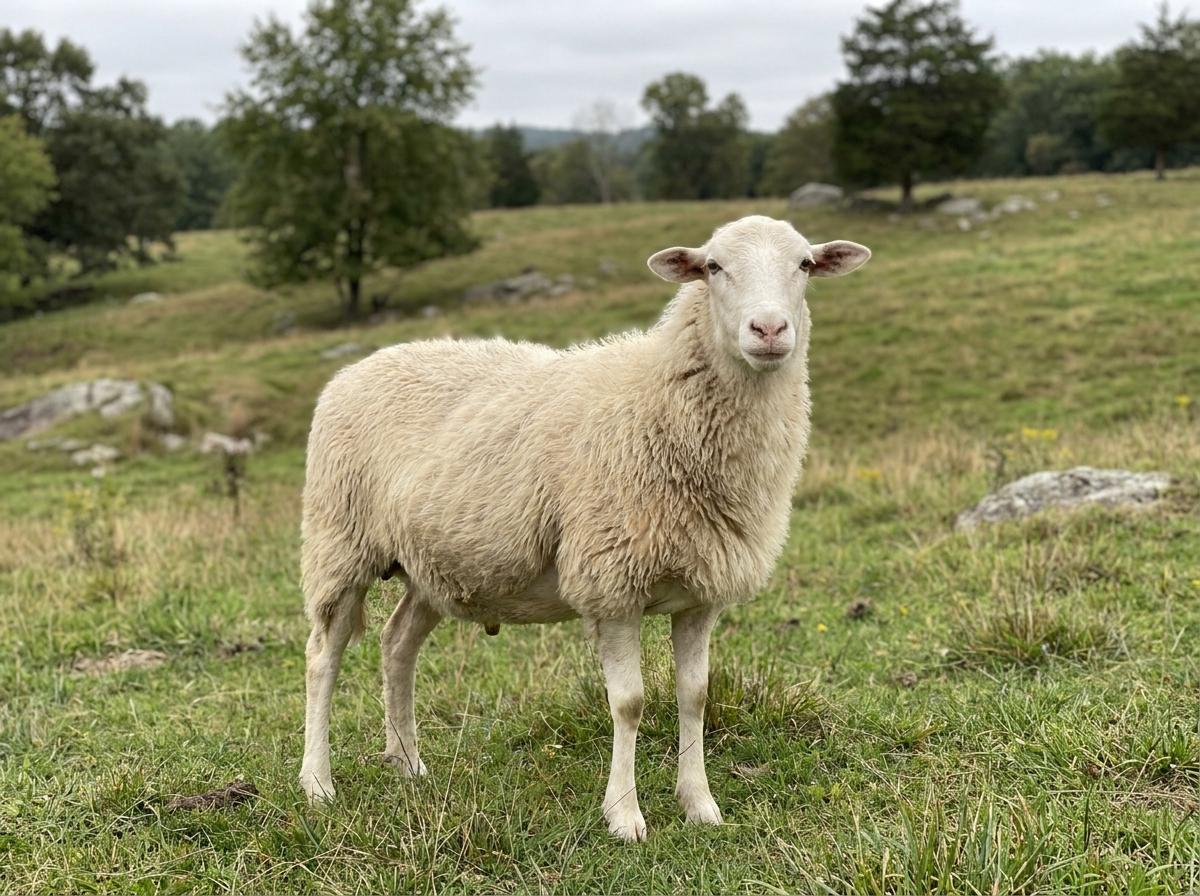
Two other hair breeds come up in the same searches. The Royal White, another American hair breed, is the opposite of an American Blackbelly in almost every visible way: all white, polled in both sexes and much heavier. The Katahdin, developed in Maine, can be any color or pattern and polled animals are preferred, but its registry records horned and scurred animals, so a horned, brown Katahdin cross can look a little like a Blackbelly. Neither has the full blackbelly pattern and badger face.
The coat: hair, shedding and cold winters
The standard calls for medium to thick, coarse hair that lies flat against the skin, with enough lanolin in it to help shed water and repel ticks and other external parasites. In warm climates there should be no wool at all. In cold climates, a winter wool undercoat is acceptable, and even ideal, as long as it sheds out completely every year. The BBSAI notes that the undercoat comes off each spring in clumps or long strands, a bit like dreadlocks.

Lambs can grow a woolly “baby coat” that hangs on through their first summer, which the standard accepts as long as it sheds after that. Small patches of wool along the back and rear legs that never shed are discouraged, and a woolly coat that needs shearing disqualifies the sheep.
What it means in practice. No shearing, no crutching and no shearer to book; if you also keep wool sheep, our sheep shearing guide covers the other half of the flock. Shedding still varies, though. The Arkansas guide points out that individual hair sheep differ in how well they shed, some look shaggy because not all the coat comes away, and hair sheep tend to grow more woolly fiber in cold climates. Judge a sheep’s coat in summer, after it has shed, and ask to see the parents in summer too.
Cold country. The same guide notes that hair sheep in general do not do as well in cold weather as wool sheep, although they can be kept in colder climates. The breed standard itself says larger sheep are generally preferable where winters are cold. Several of the American Blackbelly farms in the Creatures directory are in places with hard winters, including Alberta, Saskatchewan, Minnesota and Wisconsin, so the breed clearly can be kept there; plan for a dry, draft-free shelter and good winter feed. Our sheep shelter guide covers what a flock needs.
Size, growth and meat
The BBSAI calls the American Blackbelly a slow-growing breed that may not reach its ideal weight until about two years old. At that age the standard expects rams to weigh 100 to 160 pounds and ewes 70 to 120 pounds, with rams standing 30 to 32 inches at the withers and ewes 24 to 28 inches. The body should be longer than it is tall, deep and wide. Sheep that weigh more than the ideal are acceptable if they are in proportion and not fat, but a sheep over two years old that weighs less than the minimum is discouraged.
The standard is frank that size varies. The breed was historically small and deer-like, like its tropical ancestor, but as it spread north and buyers wanted bigger carcasses, body size grew more variable: larger sheep suit colder climates and meat markets, smaller ones warmer climates. For comparison, the Livestock Conservancy gives Barbados Blackbelly rams as 100 to 130 pounds and ewes as 85 to 100.
If you need a working weight for dosing or feed planning, a weigh tape and the free sheep weight calculator will get you close, and the sheep weight guide explains how to read the result.
Growth is the trade-off. Research on Caribbean hair sheep in the US backs up the “slow-growing” label. A 1997 review from Virginia State University (Wildeus, 1997) found that hair sheep gain weight more slowly and convert high-energy feed less efficiently than wool breeds, and that St. Croix lambs tended to grow faster than Barbados Blackbelly lambs. That review covers the Barbados rather than the American Blackbelly, but it explains why the breed is rarely chosen for fast commercial lamb production.
Meat. The BBSAI says Blackbelly lamb is very mild, lean and tender, and that even intact rams butchered at two years old keep a mild flavor. OSU’s entry describes the meat as lean, fine-grained and mild, suited to gourmet lamb and to the small-lamb market around religious holidays. These are breed-association and breed-reference descriptions rather than taste-panel results.
Horns, handling and fencing
A full-grown American Blackbelly ram is an impressive animal, and the horns bring practical jobs with them.
Watch the horns as they grow. The standard disqualifies horns that touch or rub the head, neck or face, and OSU’s history notes that early crosses often had exactly that problem. Check young rams regularly as the horns curl. If a horn starts to press on the face or neck, have a veterinarian look at it rather than trying to fix it yourself.
Fences. Horned sheep can push their heads through wide-mesh fence and then cannot pull the horns back out, and they can tangle in electric netting. Our sheep fencing guide recommends woven wire with openings of about 4 by 4 inches (or graduated mesh with the smallest gaps low down) and an offset electric wire to keep sheep off the fence, and it explains why netting needs frequent checks when horned sheep are on it. OSU’s entry, quoting an earlier version of the breed standard, also notes that these sheep are known for their ability to jump, so build perimeters with that in mind.
Temperament. OSU describes the breed as thrifty, energetic, small to medium sized and strongly flocking. The FAO review collected mixed reports on the Texas “Barbado” sheep of the 1970s: some observers called them wild, while a California researcher found that sheep raised from feral stock became very gentle with regular, close handling, though they stayed quick to react to strangers and new places. He also saw protective ewes with young lambs and some rams that charged dogs repeatedly. Expect alert sheep that settle with routine, and keep them with other sheep: a flocking breed should never be kept alone.
The trophy market. OSU notes that in some parts of the country many breeders focus on trophy-class rams for game ranches, and that the breed has a growing following on small farms, for grazing weeds and for training herding dogs. Ask a seller which market their flock is bred for, because a line selected mainly for horn size may not be the one you want for lambs.
Breeding and lambing
The BBSAI lists prolificacy, non-seasonal breeding and mothering ability among the traits it values most in the breed, even though they are not part of the written standard. OSU’s entry, which draws on the association, says mature ewes generally have twins to triplets or more and, depending on management, can lamb three times in about 18 months.

What the measurements show. There are no published lambing records for registered American Blackbellies, but older US research flocks of Blackbelly-type sheep give a realistic picture. In the FAO review’s figures from the 1970s, a California flock averaged 1.68 lambs per lambing and a North Carolina State University flock 1.56. In the North Carolina trial, Barbado ewes bred to Suffolk rams in summer and early fall lambed at 94 percent, against 63 percent for Dorset ewes in the same trial. The California flock lambed in every month of the year, most often in January and February, and its ewe lambs could first be bred at 5 to 8 months old.
Year-round, with limits. Wildeus’s review is more cautious: hair sheep are still seasonal breeders under US day lengths, but they tend to do better than wool breeds in accelerated lambing systems. The Merck Veterinary Manual describes sheep as short-day breeders with real differences between breeds. The FAO review also warns that very frequent lambing cannot be kept up indefinitely without hurting litter size, lamb survival and the ewe’s condition. Ask a seller for the actual lambing dates in their flock.
Breeding young ewes. Merck says ewes reach puberty at 6 to 9 months but should weigh 60 to 65 percent of their mature weight before they are bred. For a ewe that matures within the standard’s 70 to 120 pound range, that works out to roughly 42 to 78 pounds. Because ewe lambs can be fertile young, separate ram lambs from the ewe flock early, and ask your veterinarian or extension office for the right age in your system.
Due dates. Merck gives the average sheep gestation as 147 days, and the FAO review recorded about 150 days in a Barbado flock. The free sheep gestation calculator turns a breeding date into a lambing date, and the sheep gestation guide, lambing guide and sheep breeding guide cover the timeline, the signs of labor and ram management.
Never dock. The BBSAI says Blackbelly tails do not collect manure the way wool breeds’ tails do, so they do not need docking, and it will not register a sheep with a docked tail. If you are used to wool lambs, our tail docking guide explains why those breeds are docked.
Health: parasites, copper and scrapie ID
Parasite tolerance: promising in the Barbados, unmeasured in the American Blackbelly. The BBSAI values parasite tolerance and disease resistance, and the Livestock Conservancy says Barbados Blackbellies can tolerate a higher worm load without needing chemical dewormers. The research is narrower than that. A North Carolina State University study (Yazwinski and colleagues, 1980) infected lambs with barber pole worm (Haemonchus contortus) and found that lambs with Barbados Blackbelly breeding kept higher hemoglobin than non-Blackbelly lambs, and that the worms developed more slowly in Dorset x Blackbelly crosses. The FAO review cites another 1970s study that found no difference in resistance between lambs sired by Barbado and by Targhee rams. We found no published trial measuring parasite resistance in American Blackbelly sheep themselves.
So manage worms the way you would in any sheep. Monitor rather than deworm on a calendar: the American Consortium for Small Ruminant Parasite Control explains how FAMACHA scoring uses the color of the lower eyelid to spot the anemia caused by barber pole worm, and producers need training to use the card. Pair it with fecal egg counts and make a treatment plan with your veterinarian. Our sheep deworming guide covers FAMACHA, fecal egg counts and keeping dewormers working.
Copper. The Merck Veterinary Manual names sheep as the species most susceptible to copper toxicosis. Feed a mineral made for sheep, never one made for goats or cattle. The sheep minerals guide and sheep feeding guide explain why.
Scrapie and official ID. Scrapie is a fatal, degenerative disease of the central nervous system in sheep and goats. The USDA’s scrapie program page explains that a gene at codon 171 is the main factor in classical scrapie susceptibility in the US: the R form is linked with resistance and the Q form with susceptibility, and more than 99 percent of genotyped classical cases were QQ. The BBSAI reminds members that nearly all sheep that are sold or moved to another state need official scrapie identification, most often an ear tag (some registry tattoos qualify, and a few young or slaughter-bound animals are exempt), and that producers must keep records on sheep they buy and sell for five years after an animal dies or leaves the farm. Check the destination state’s rules too, because some are stricter. Ask the seller to tag animals before they load, and check your state’s rules.
Routine care. American Blackbellies still need clostridial vaccination (see the CD&T vaccine guide) and regular foot checks (hoof trimming and foot rot). Plan vaccinations and treatments with a veterinarian who knows sheep.
Buying a registered American Blackbelly
Decide whether papers matter. If you only want a few shedding sheep to graze, a well-grown crossbred may serve you fine. If you plan to sell breeding stock or want sheep that breed true, buy registered American Blackbellies and have the registration transferred into your name.
How registration works. Under the BBSAI’s registration rules, a sheep can normally be registered only if both its sire and dam are registered American Blackbellies (or both Barbados Blackbellies), and only by a BBSAI member. The breeder judges the sheep against the standard first, then sends an application with a clear photo, which the association can reject if the photo shows the sheep does not conform. The BBSAI is plain that registration tracks pedigrees and does not guarantee a sheep’s quality, so look at the animal as well as the paper.
The open registration route. Since 2022, a sheep with one registered American Blackbelly parent and one unknown or unregistered parent can be put forward through the open registration process. The candidate must be at least 7 months old and show only Ideal or Acceptable traits. It must then be bred to an unrelated registered American Blackbelly (unrelated meaning a coefficient of inbreeding of no more than 12.5 percent), the mating must produce at least one ram lamb, and every lamb is judged against the standard at 3 months or older. If any lamb fails, the candidate is refused. A “Blackbelly cross” or “Barbado” with no registered parent at all has no ordinary route to registration; the BBSAI’s standing rules allow only narrow exceptions for sheep that would add valuable genetics.
Check the sheep against the standard. Look for:
- symmetrical horns that clear the face on a ram, and polled or short-horned ewes;
- a complete blackbelly pattern and badger face with no white on the body (a white tail tip up to about 1.5 inches is acceptable);
- black hooves, ears held out level, and an undocked tail reaching from halfway to the hock down to the hock (a tail past the hock disqualifies);
- a coat that has shed clean by summer;
- a sound bite, straight legs and, in rams, two well-developed testicles.
Ask for records. Ask for the registration certificate and transfer form, the sheep’s official scrapie identification, the flock’s deworming approach with recent FAMACHA scores or fecal egg counts, lambing records for the dam, and any disease testing the flock has done. Our guide to where to buy sheep lists the disease tests worth asking about and how to judge a seller. Have your own veterinarian look over the results.
Where to look. When this guide was written in October 2026, the Creatures directory listed 33 American Blackbelly breeders and farms, spread from Alabama and Texas to Alberta and Ontario, and there were no live American Blackbelly listings. Directory listings are compiled from public sources and most are not yet claimed, so confirm registration directly with the breeder and the BBSAI. The association also keeps its own breeder list. The BBSAI describes its registry as covering sheep in the United States, so if you are buying in Canada, ask which registry a sheep’s papers come from. A separate registry, the North American Barbados Blackbelly Sheep Registry, keeps a herdbook for Blackbelly sheep in the US and Canada that it says is permanently open to any sheep that passes inspection and has shown it breeds true, and its standard accepts horned or polled rams under the Barbados Blackbelly name. So check which registry issued any papers, and which breed name they carry.
Price. We could not find a reliable published price range for American Blackbelly sheep, and Creatures’ sheep auction price guide listed no American Blackbelly sales in its current data release (sales through August 2026). For context, our guide to how much a sheep costs puts registered breeding stock of most breeds at several hundred dollars to the low thousands. Registration, the parents’ records, and for rams the horns, will matter more to an American Blackbelly’s price than its weight.
Keep the pedigree. Because the registry tracks relationships and the open registration process caps inbreeding, sire and dam records are worth keeping from the start. A three-generation chart from the free pedigree chart maker is a quick way to keep each sheep’s ancestry on hand when you plan matings or sell lambs, and our sheep flock record book guide covers the rest of the paperwork.
Who the American Blackbelly suits
The breed makes most sense for a small farm that wants a hardy, shedding, prolific sheep and does not need fast-growing market lambs: someone who wants to stop shearing, raise lean lamb for the freezer, graze weeds, or keep a striking flock that draws attention. It also has a following among herding dog trainers, and in parts of Texas a long-standing market in trophy rams.
It is a weaker fit in a few situations:
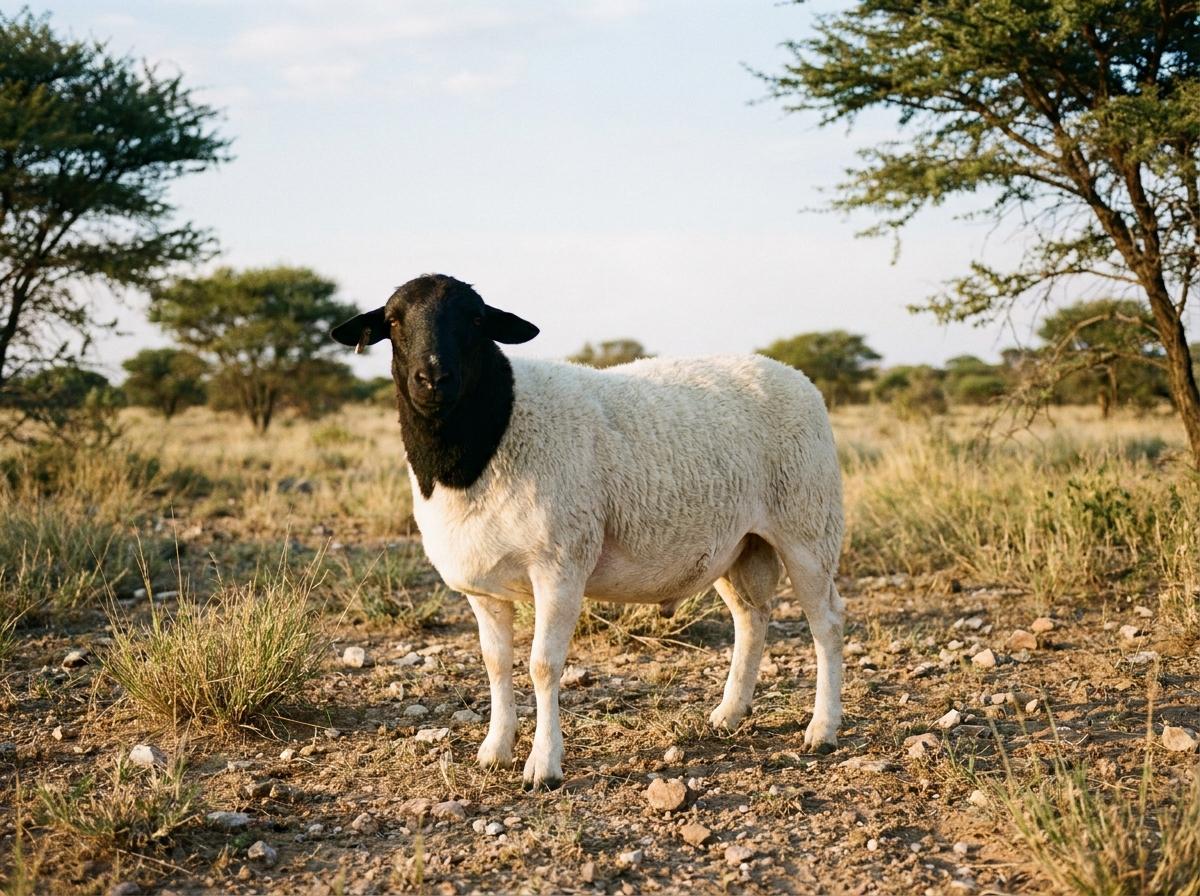
- Commercial lamb growth. Slow growth and a modest carcass make it a poor choice for high-volume market lambs. A meat hair breed such as the Dorper, which the Arkansas guide describes as more heavily muscled than meat-type wool breeds, may suit that goal better.
- Weak fences. Athletic, horned sheep need good perimeters and fence types that do not trap horns.
- Hard winters without shelter. It can be kept in cold country, but plan for shelter and winter feed.
- Anyone who wants a polled sheep. The ewes are usually polled, but the rams are not. If you want no horns at all, a BBSAI-registered Barbados Blackbelly has the same coloring with no horns.
Frequently asked questions
What is an American Blackbelly sheep?
A horned hair sheep developed in the United States, mainly in Texas, from Barbados Blackbelly sheep crossed with European mouflon and, in some flocks, Rambouillet. It has a tan to mahogany coat with a black belly and badger face, sheds instead of being shorn, and is registered by the Barbados Blackbelly Sheep Association International.
What is the difference between an American Blackbelly and a Barbados Blackbelly?
Horns. Under the BBSAI standards, Barbados Blackbelly rams and ewes are both polled, while American Blackbelly rams carry large horns and the ewes may or may not have short ones. Both breeds share the blackbelly coloring and are both registered by the BBSAI, which marks ram registration numbers AB or BB.
Do American Blackbelly ewes have horns?
The ideal ewe is polled, but the breed standard accepts loose scurs or short horns on mature ewes and only discourages horns over 3 inches.
How big do American Blackbelly sheep get?
At about two years old, the breed standard calls for rams of 100 to 160 pounds and 30 to 32 inches at the withers, and ewes of 70 to 120 pounds and 24 to 28 inches. Size varies between flocks, and the standard favors larger sheep in colder climates and for meat.
Do American Blackbelly sheep need shearing or tail docking?
No. The coat is hair, and any winter wool undercoat sheds out in spring. The tail does not need docking, and the BBSAI will not register a sheep with a docked tail.
Is a “Barbado” the same as an American Blackbelly?
Older references use “Barbado” for the Texas sheep that became the American Blackbelly, but the BBSAI uses it only for crossbred sheep with some Blackbelly traits. A registered American Blackbelly has a BBSAI certificate with an AB suffix on a ram’s number.
How much does an American Blackbelly cost?
There is no reliable published price. Registered breeding stock of most sheep breeds sells for several hundred dollars to the low thousands, and an American Blackbelly is likely to be priced on its papers, its parents’ records and, for a ram, its horns.
Do this next on Creatures
From finding your first American Blackbellies to registering the lambs, Creatures keeps the flock’s records, listings and breeder contacts in one place.
Get alerted. No American Blackbellies are listed right now, so set a free American Blackbelly listing alert and we will email you when one is posted. No account needed to start. See saving searches and using your watchlist for how alerts work.
Contact breeders. Contact the 33 American Blackbelly breeders and farms listed in the Creatures directory of trusted breeders, and check American Blackbelly sheep on the Creatures marketplace for new listings.
Add your sheep. Keeping American Blackbellies? Create a free American Blackbelly profile with the registration number, sire, dam and photos, no account needed to start. The walkthrough is in adding an animal to Creatures.
Record breedings, lambings and health. Add a breeding, lambing, FAMACHA or deworming record. The record sheet opens for any visitor to look around, and a free account saves what you enter. See adding a record, health and medical records and reminders and upcoming care for vaccination and lambing reminders.
List your flock. Breed registered American Blackbellies? Create a free farm or breeder profile so buyers looking for registered stock can find you, no account needed to start. Read getting listed in the breeder directory and creating an organization and adding your team.
Plan and name. Work out lambing dates with the sheep gestation calculator, and find names for this year’s lambs with the sheep name generator.