Buckskin
Author: Elliott Garber, DVM · Updated
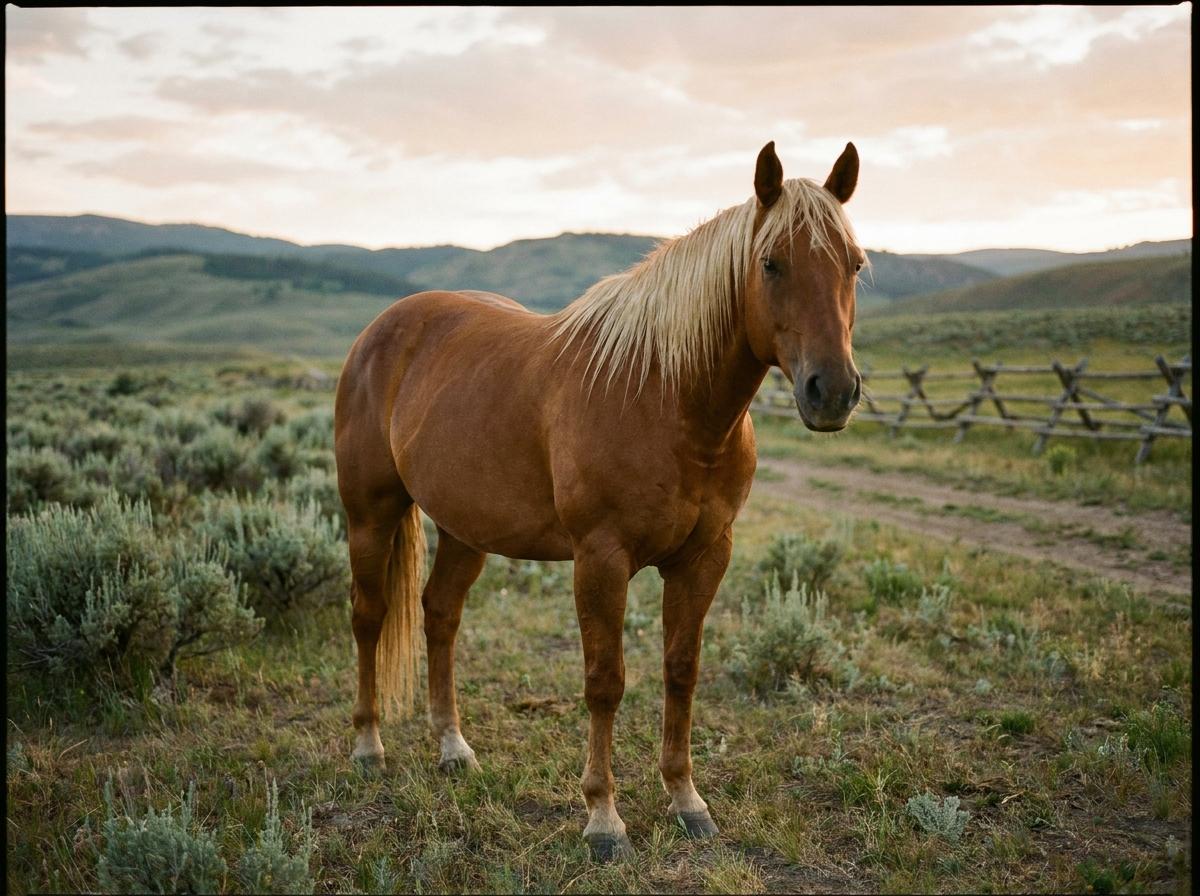
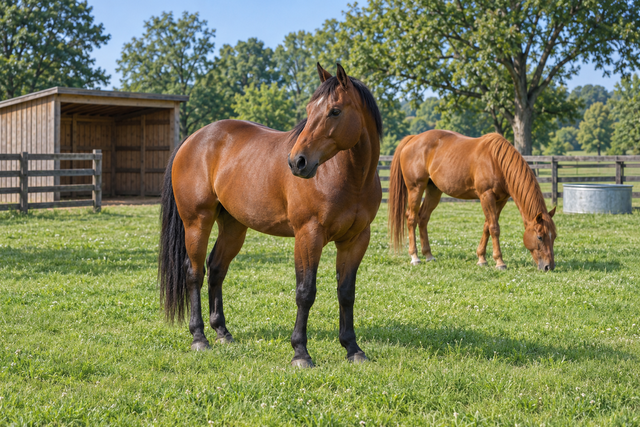
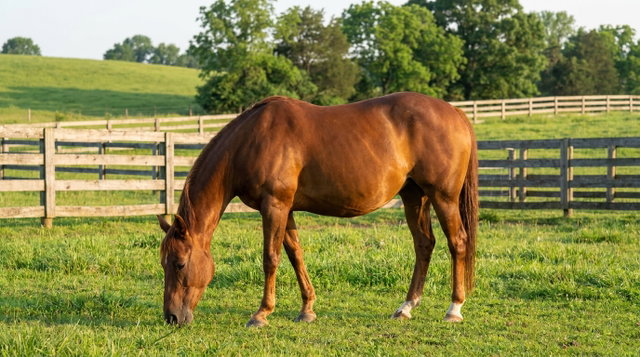
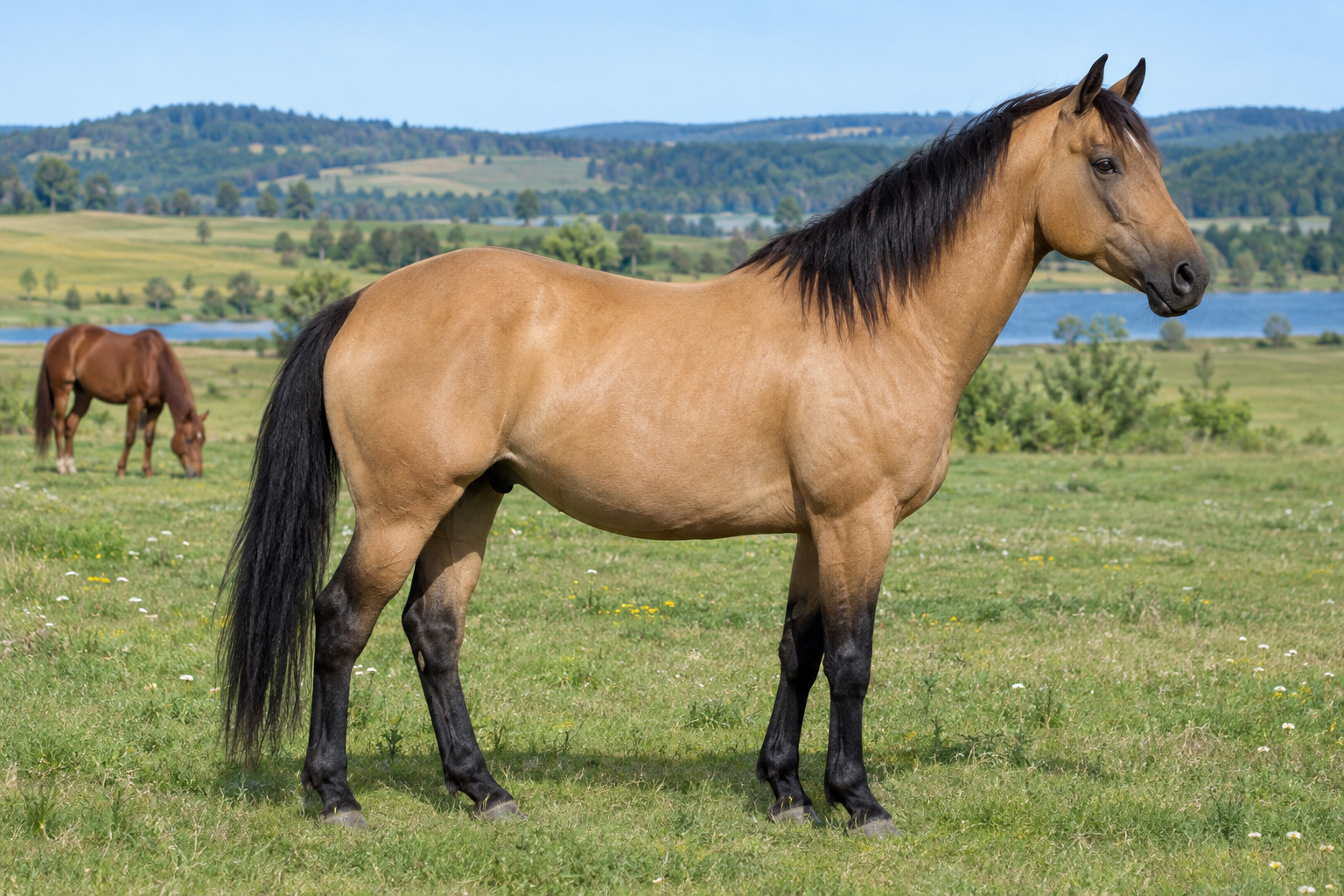
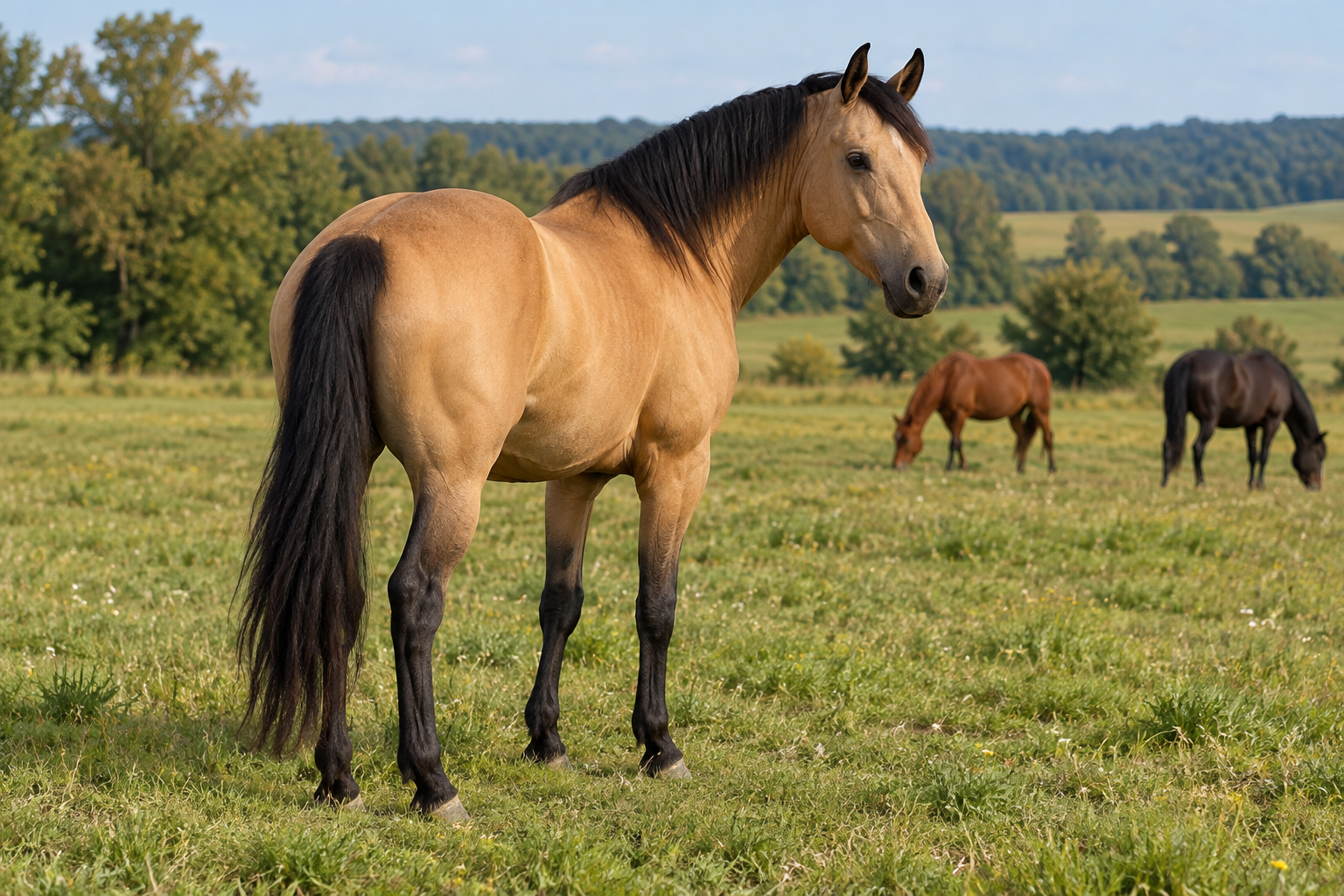
A buckskin horse has a tan to golden body with dark mane, tail and lower legs. The classic genetic cause is one Cream copy on a bay base. Buckskin and dun can look similar, but they are different dilutions; use the horse coat color calculator with documented inputs when the question is what a horse may pass to a foal.
| Identity | A coat color, not one ancestry breed |
|---|---|
| Classic cause | Bay base plus one Cream copy |
| Visible points | Dark mane, tail and lower legs |
| Main lookalike | Bay dun, which involves Dun rather than Cream |
| Confirmation | Base-color, Cream and Dun testing as relevant |
| Registry examples | ABRA and IBHA use their own color eligibility rules |
Browse listings, public profiles, breeders, or add your animal.
Buckskin versus dun
The most useful distinction is the mechanism, not whether the body looks yellow in a photograph. Cream on bay produces buckskin. Dun lightens the body while leaving darker points and typically produces primitive markings, including a dorsal stripe. A horse may have both dilutions, so these are not mutually exclusive labels.
A stripe alone is not proof of Dun. UC Davis’s Dun test explanation distinguishes D, non-dun1 and non-dun2; a non-dun1 horse can show primitive markings without Dun dilution. The dun horse guide explains the identification problem, and grullo or grulla describes Dun on a black base.
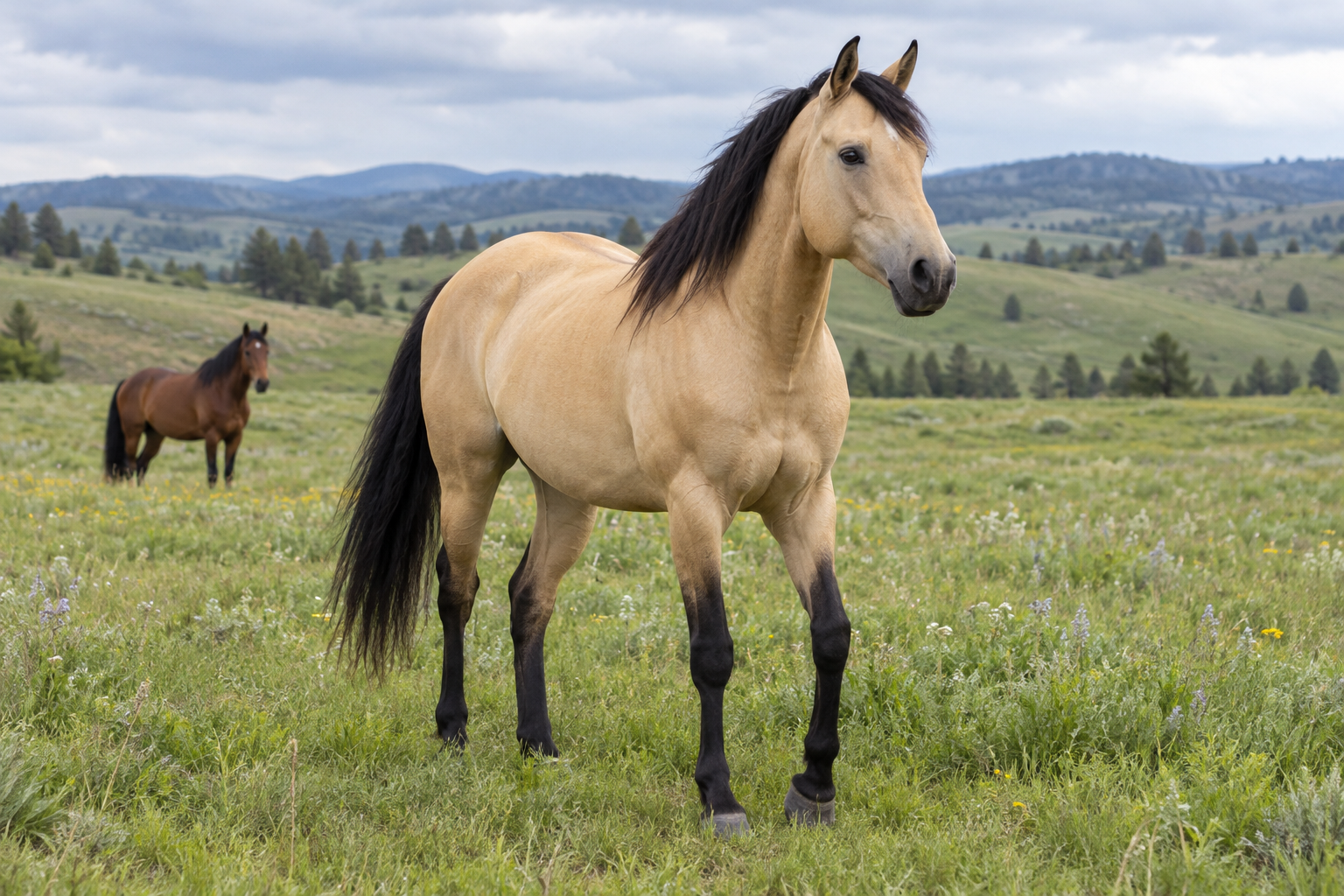
- Main dilution in the classic model: Buckskin: Cream; Bay dun: Dun.
- Base coat: Buckskin: Bay; Bay dun: Bay.
- Body impression: Buckskin: Cream to bronze or gold; Bay dun: Diluted tan or earth tone.
- Evidence to request: Buckskin: Cream and base-color reports; Bay dun: Dun and base-color reports.
- Is a dark stripe enough to identify it?: Buckskin: No; Bay dun: No.
Use the comparison to decide what evidence to request, not to diagnose a horse from a single side photograph. Show the whole body, mane, tail and legs; include a safe view of the topline if a stripe is relevant. Keep the original photos so a change in lighting does not become a change in the horse’s recorded genotype.
What the genetics report tells you
The Cream test reports N/N, N/Cr or Cr/Cr for the tested variant. In the classic bay-base model these correspond to no Cream, buckskin and perlino. Confirm the base separately. The same Cream result on chestnut gives palomino, and on black it gives smoky black, which may look only subtly different from black.
A test answers the question it was designed to answer. It does not establish training, soundness, every shade modifier or show eligibility. Use the horse colors overview for a map of bases, dilutions and white patterns. The cremello and perlino article covers double Cream in more detail.
A color registry is not a single bloodline
The American Buckskin Registry Association (ABRA) and International Buckskin Horse Association (IBHA) are separate organizations. Their names do not mean every horse they register is genetically buckskin.
ABRA’s registration page lists buckskin, dun, red dun, grulla and other eligible color categories and includes several equine types. Its regular-registry page excludes horses exhibiting gray or roan characteristics. IBHA’s eligibility page also describes buckskin, dun, red dun and grulla, plus exclusions for regular registration. Both have other programs, so check the current rulebook and the exact registration class instead of assuming that a photograph settles eligibility.
For a buyer, ask two separate questions: what is the horse’s underlying ancestry, and which color-registry certificate does it actually hold? Obtain the papers and transfer requirements. The horse pedigree papers guide helps you keep those checks distinct. Neither a color label nor a chart drawn from entered ancestry is a DNA parentage certificate.
What color foal can a buckskin have?
A buckskin can conceal information needed for the answer. For example, E/E and E/e horses can both be bay-based; A/A and A/a can both restrict black pigment to the points. The UC Davis base-color guide explains Extension and Agouti. Cream adds another inheritance question.
The buckskin with chestnut example uses a buckskin E/e, A/A, N/Cr parent and a chestnut e/e, A/A, N/N parent. With its stated negative calls for other modifiers, bay, buckskin, chestnut and palomino each have a 25% chance per conception. Change the inputs and the result can change. Do not apply that number to every buckskin and chestnut pair.
On Creatures, start with appearances if that is all you have. Read any ranges as uncertainty across compatible genotypes, not as averaged probabilities for hidden alleles. Replace the relevant unknowns with the original laboratory calls when available. The methods page states what the tool models and where its limits are.
Buying and care decisions
Write down your intended work before narrowing a search by color. What does the horse do now? Can you see it handled and ridden appropriately? What does the seller disclose about management and veterinary history? Ask an experienced person to help assess the match. University of Missouri Extension’s buying guide emphasizes planning the purchase and ongoing ownership costs.
Arrange a purchase examination with an equine veterinarian matched to your intended use. A color panel is not a health assessment. Ask your veterinarian which further questions the individual horse’s history raises.
There is no buckskin-wide feeding schedule or useful universal purchase price. Plan for the actual horse, its work and local costs. The where-to-buy guide covers search routes and purchase checks. Keep professional care recommendations in the horse’s records instead of substituting a coat label for a management plan.
Keep the evidence usable
Create a horse profile, attach the original DNA report and record the horse’s identifiers exactly. Keep dated appearance photos and registration papers as separate items. The horse color DNA records guide shows how to record a result without making an observation look tested.
The one-horse color visualizer helps explore the effect of supported variants; it is not a laboratory test. For ancestry, the horse pedigree chart maker organizes what you enter, without verifying it.
Buckskin questions
Can a buckskin also be roan?
Yes, color traits can combine. Keep the base, dilution and white-hair pattern separate in your description, and consult the roan identification guide for the lookalikes. Registry acceptance is a separate question.
Does buttermilk buckskin mean a different gene?
It is a shade description. Do not turn that label into an additional DNA call without an actual test supporting one.
Where should I start if the seller calls the horse both buckskin and dun?
Ask for the Cream and Dun reports, plus the underlying base-color results. If no testing exists, keep both the description and the uncertainty in your notes. More ownership resources are on the horse hub.
Do this next on Creatures
Keep the observation, the laboratory report and the registry certificate together, with each clearly identified.
- Add your horse. No account is needed to start. The animal profile guide explains the steps.
- Add a color observation or laboratory report. The form opens for visitors; a free account saves it. Follow the record guide. Saving a document does not verify its contents.
- Create a horse listing alert. Choose the search that fits your needs; an alert does not promise current stock. See saved searches and watchlists.
- Browse horse listings. Ask the seller for the evidence behind a color or registration claim.
- Browse the breeder directory to find programs to contact about their horses and records.
- Start a breeder or organization profile. The flow supports guest signup; the organization guide explains the setup.