

Brabant
Author: Elliott Garber, DVM · Updated
The Brabant is the thick-set, heavily feathered European draft horse from the Brabant region of Belgium, the stock that founded the modern Belgian and shaped most of western Europe’s heavy horses. France’s Percheron is the other great European draft breed, usually clean legged and gray or black. If you have looked at a tall, clean-legged American Belgian and a low, wide, feather-legged Brabant side by side and wondered whether they are really the same breed, the short answer is that they share a root and then split. The Livestock Conservancy calls the Brabant the heaviest of all draft breeds, and it means the compact European type: a horse that is often no taller than 16 or 17 hands but carries far more muscle and bone per inch than almost anything else on four legs. This page covers what the breed is, where it came from, how to tell it apart, what owning one actually involves, the health issue every prospective buyer needs to understand up front, and how to find genuine stock.
| Also called | Belgian Heavy Draft, Belgisch Trekpaard, Cheval de trait belge, Brabancon; the European Belgian type |
|---|---|
| Origin | Brabant region of Belgium, in the Low Countries |
| Primary use | Heavy draft: farm work, logging, hauling, driving, and now heritage and therapy work |
| Height | Stallions and geldings about 16 to 17 hands; mares about 14 to 15 hands |
| Weight | Stallions about 2,000 to 3,000 lb; mares about 1,500 to 2,000 lb (Livestock Conservancy) |
| Build | Short-coupled, deep, thick-boned, heavily muscled, with a kind eye |
| Coat | Bay, chestnut, and several roans (blue, red, strawberry, bay), plus gray; feathered lower legs |
| Temperament | Calm, patient, willing; commonly described as suitable for novice handlers |
| Health flag | High breed risk of chronic progressive lymphedema in the feathered legs |
| Availability | Uncommon; Livestock Conservancy lists the Brabant under Study status |
Browse listings, public profiles, breeders, or add your animal.
What is a Brabant horse?
The Brabant is a heavy draft breed from the Brabant region of Belgium, the historic heartland of Belgian draft horse breeding. In its home country it is known as the Belgisch Trekpaard in the Flemish-speaking north and the Cheval de trait belge or Brabancon in the French-speaking south, and English speakers often just call it the Belgian Heavy Draft. The Livestock Conservancy describes the Brabant as one of the founding influences of the modern Belgian horse and a breed that contributed to many other western European heavy draft breeds. In other words, this is not a spin-off of the Belgian you see at American county fairs. It is closer to the original.
That distinction is the single most useful thing to understand about the breed. When American writers say “Belgian,” they usually mean the tall, refined, chestnut-and-flaxen draft horse that American breeders developed over the last century. When they say “Brabant,” they mean the older, lower, wider, feather-legged European type that stayed behind. Both trace to the same Belgian roots and diverged only after the Second World War, and the history section below explains exactly how.
If you are weighing the Brabant against other heavy horses, the broader Creatures horse species page is a good place to compare draft breeds side by side.
Origin and history
The Belgian draft descends from the heavy farm horses of the Low Countries, the region that is now central Belgium. Breed histories trace it to several old regional strains, including the Colosse de la Mehaigne from the valley of the Mehaigne near Namur, the Gris de Nivelles et du Hainaut from what is now Walloon Brabant and Hainaut, and the Gros de la Dendre from the Dender river country of East Flanders. These were the working horses of medieval and early modern Flanders and Brabant, bred for centuries to pull heavy loads on heavy clay soils. By around 1870, breeders had consolidated the type into three influential stallion lines, headed by Orange I (the Gros de la Dendre line), Bayard (the Gris du Hainaut line), and Jean I (the Colosse de la Mehaigne line), and the stallion Albion d’Or later became so dominant that a large share of Belgian draft breeding traced back to him.
The breed became formally organized in the late nineteenth century. A national studbook, the Societe Nationale du Cheval de trait Belge, was founded in 1886, uniting earlier regional studbooks such as the 1884 East Flanders effort. That organization eventually earned the right to call itself Royal, and it is the institutional root of the Belgian draft horse as a recognized breed.
Belgian drafts reached the United States in the 1800s. The American association for importers and breeders of Belgian draft horses was established in Wabash, Indiana in 1887 and was later renamed the Belgian Draft Horse Corporation of America, according to the Livestock Conservancy. For decades, American and European Belgians were essentially the same horse.
The split came after the Second World War. As farms mechanized, demand for working horses collapsed, and the two populations were selected in opposite directions. American breeders favored a taller, lighter, cleaner-legged animal that suited the show ring and hitch classes. European breeders kept the stockier, heavier-boned, feather-legged draft horse that had always done the work. By the second half of the twentieth century, the two had drifted far enough apart to look like different breeds.
The revival of the old type in North America is recent and traceable. The Livestock Conservancy records that in the 1960s a breeder named Albert Stankiewicz imported pre-war European Belgians and crossed them onto existing mares, and that Anne Harper later joined the effort. Their horses became known as American Brabants to distinguish them from the modern American Belgian. The American Brabant Association was formed in 1999, and it defines an American Brabant as a horse carrying between 25 and 99 percent European Belgian blood, according to the association’s own history. A separate and stricter registry, the European Brabant Registry of America, reserves its purebred European Brabant Studbook designation for approved horses that are at least 93.75 percent (15 of 16) European Brabant, which the registry rounds to a 94 percent minimum, subject to registry evaluation; it keeps a Stock Studbook for horses of at least 47 percent European Brabant heritage, and runs a graded breed-up program for the rest.
So shopping for a “Brabant” in North America means shopping across a spectrum: from part-bred American Brabants at the 25 percent end to imported or near-purebred European Brabants at the top. That matters for price and for paperwork, and the buying section returns to it.
What a Brabant looks like
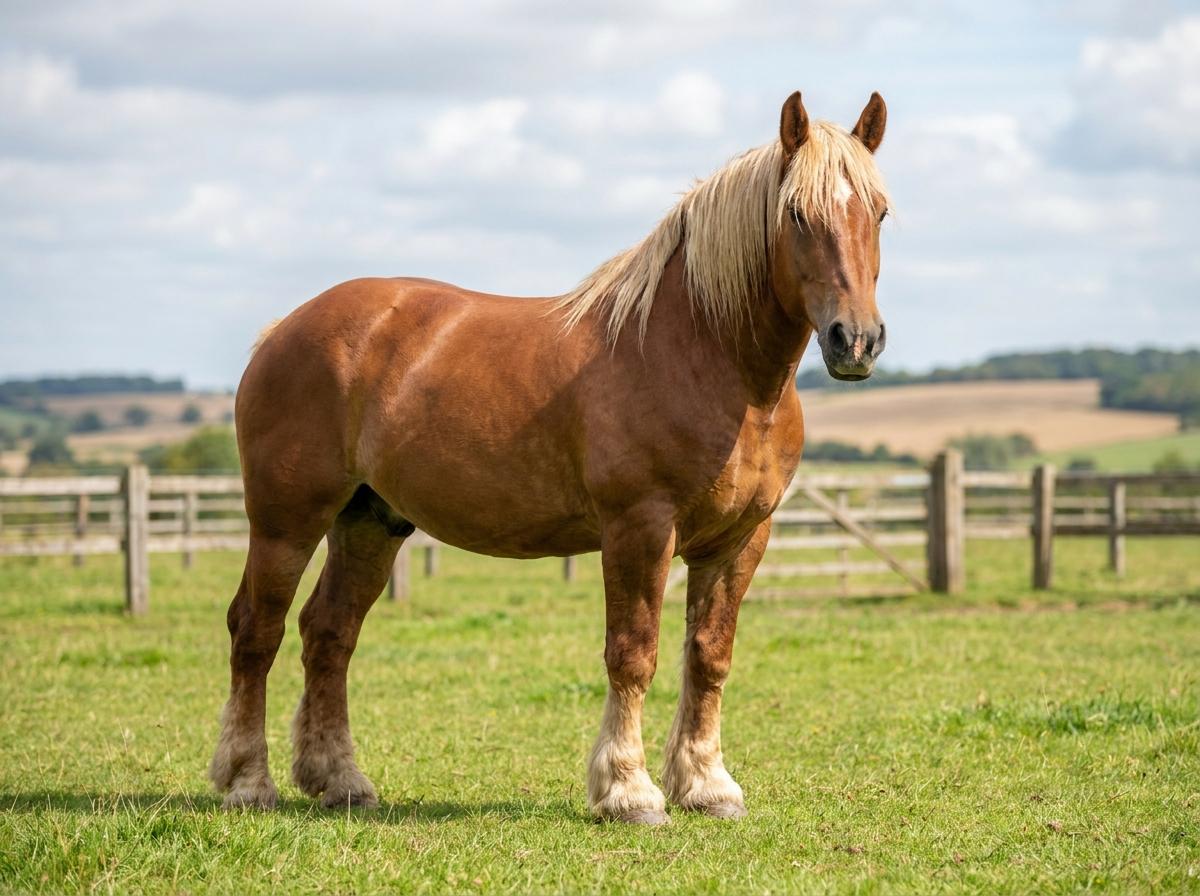
The Brabant is built to be the heaviest draft breed, and it does that not by being tall but by being dense. The diagnostic picture is a horse that is short for its mass, deep through the body, and enormously muscled, finished with feather on the legs.
- Extreme muscular density on a compact frame. Stallions and geldings generally stand about 16 to 17 hands and mares about 14 to 15 hands, according to the Livestock Conservancy, which is not especially tall for a draft. Weight is where the breed separates itself: the Livestock Conservancy puts stallions at roughly 2,000 to 3,000 lb and mares at about 1,500 to 2,000 lb. The impression is width and depth rather than height.
- Deep barrel and a double-muscled hindquarter. The chest is broad, the barrel deep and round, and the hindquarters and croup are heavily, almost doubly muscled, which is the engine of the breed’s pulling power. The back is short and strong, the classic short-coupled draft outline.
- Short, thick, powerful neck set on sloping shoulders. The neck is noticeably short and crested rather than long and elegant, matching the low, forward-driving build of a pulling horse.
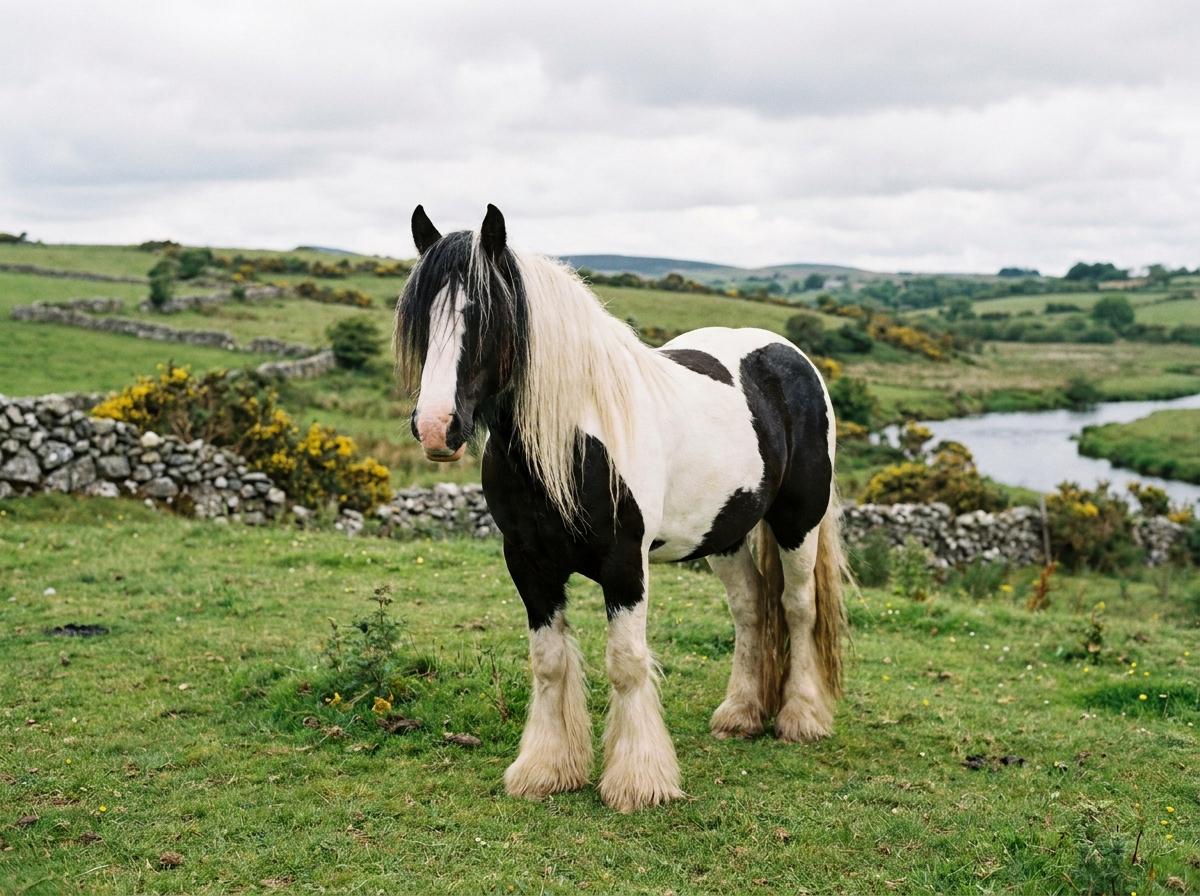
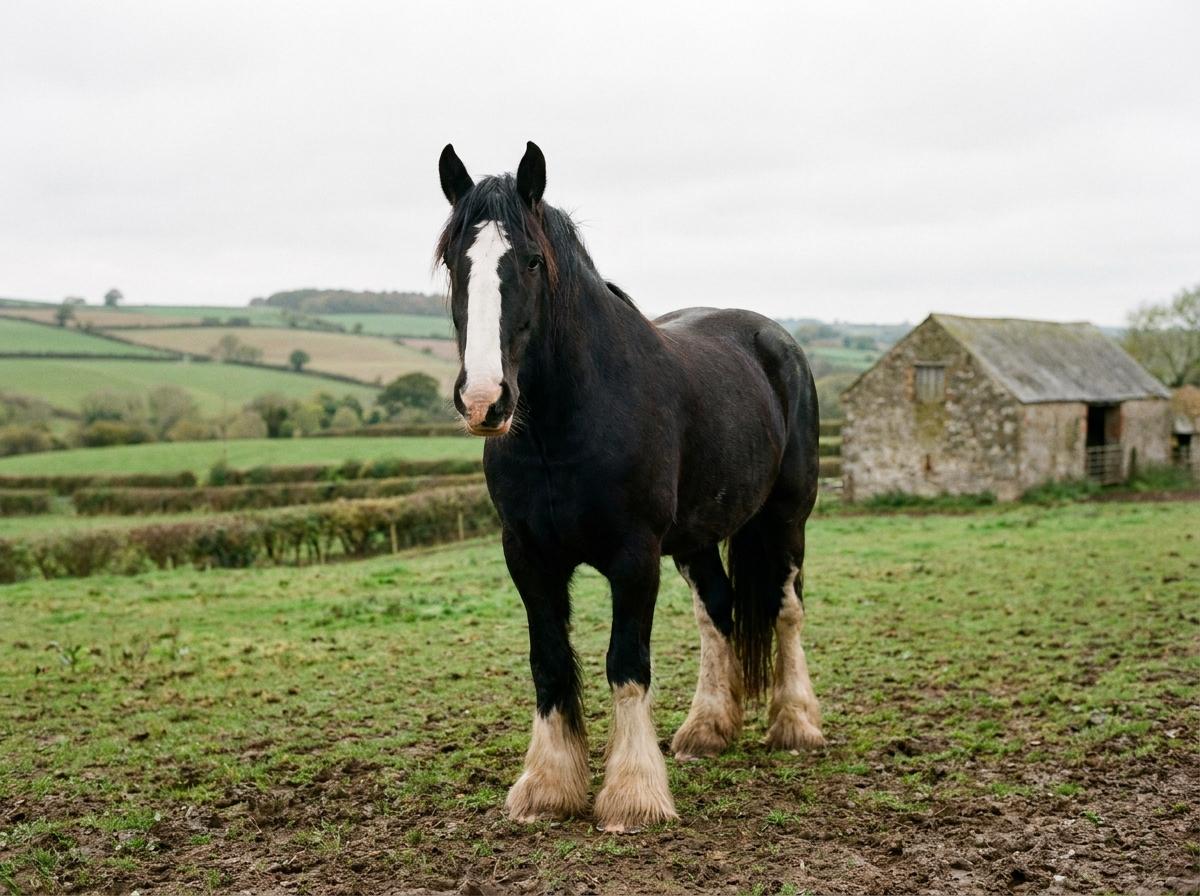
- Feathered lower legs. Like the old European type it descends from, the Brabant carries feather, the long hair over the fetlock and pastern. Feather is part of the breed’s look and also, as the health section explains, part of its main health risk.
- A kind eye. Breed sources consistently note the calm, honest expression, and in a working draft that gentle eye is treated as a temperament signal as much as a cosmetic point.
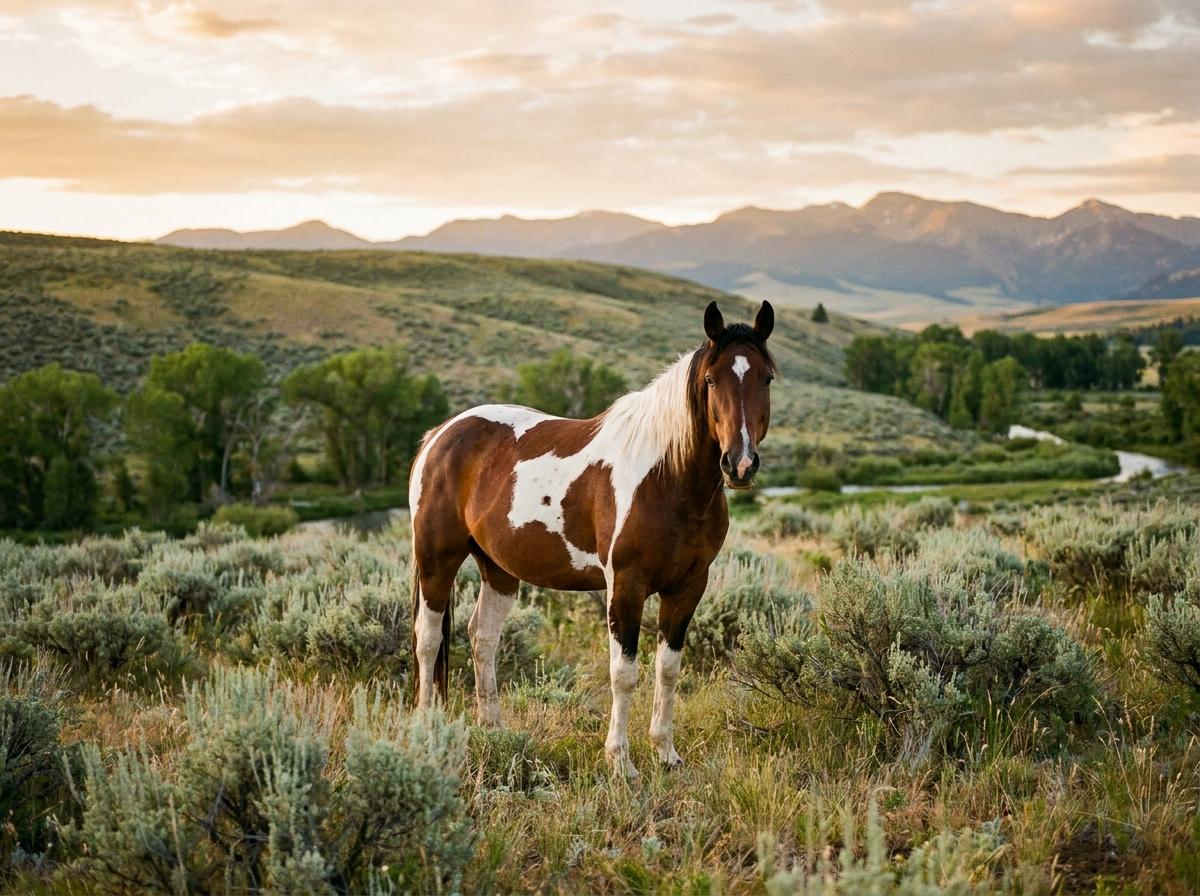
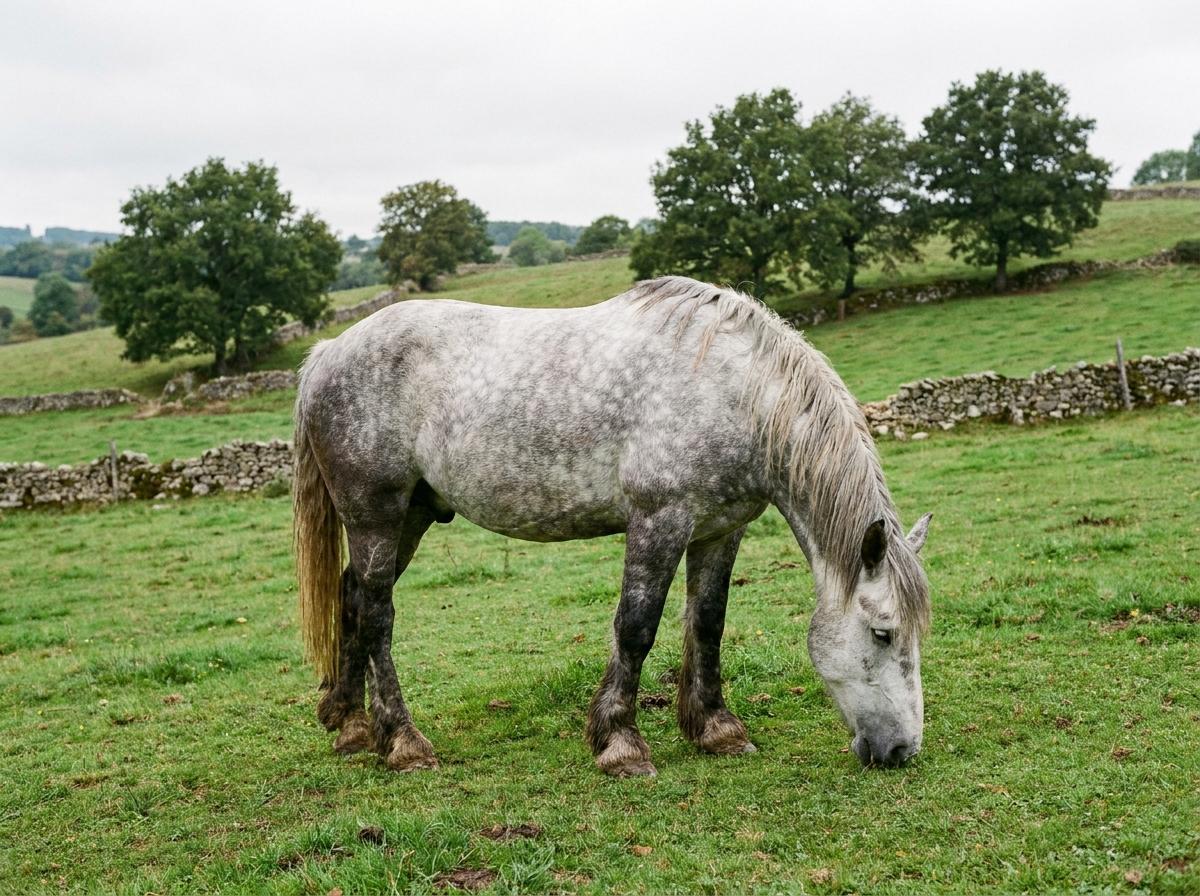
On color, the Brabant is more varied than the flaxen-maned American Belgian. Registries accept bay, chestnut, and several roan patterns (blue, red, strawberry, and bay roan), along with gray, with white face and leg markings permitted. The European Brabant Registry of America notes that its premier studbook permits only two color pattern genes, roan and gray, and excludes dilution and other pattern genes. Gray is now genuinely rare: the Livestock Conservancy notes that only a few true gray Brabants remain, and that color variety is close to disappearing.

Brabant, American Belgian, and Shire: telling them apart
People new to draft horses mix these up constantly, so here is the quick field guide.
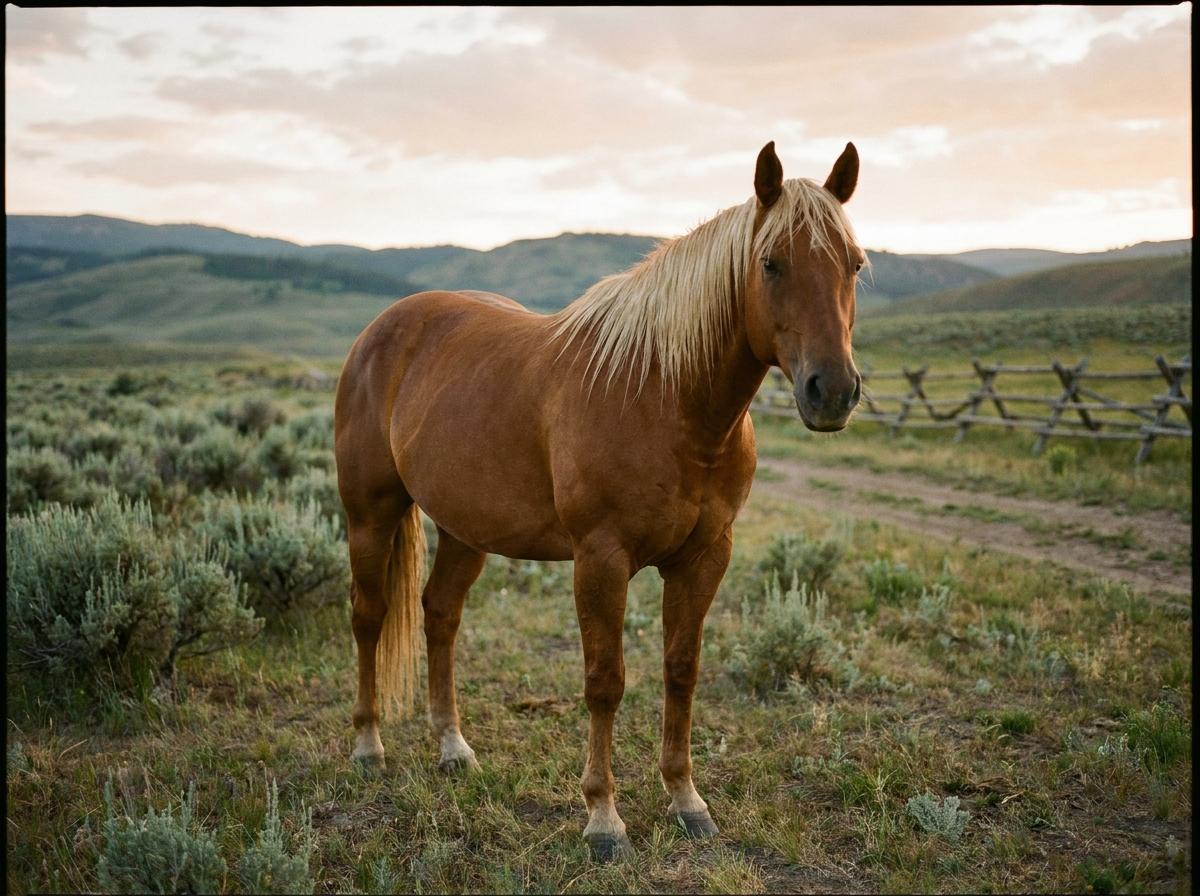
A modern American Belgian is typically taller, lighter in bone, mostly clean-legged or lightly feathered, and overwhelmingly chestnut with a flaxen mane and tail. It was bred toward that look over the last century.
A Brabant is shorter, wider, much heavier in bone, feather-legged, and comes in bays, roans, chestnuts, and (rarely) gray. It is the older European type. Weight for weight and inch for inch, it carries more substance.
A Shire is the tall, heavily feathered British draft, usually black, bay, or gray, and generally taller and leggier than a Brabant. If a feather-legged horse is very tall and dark, think Shire before Brabant.
For the Shire side of that comparison, read the Shire breed and ownership guide before choosing by feather or size alone.
Temperament
The Brabant’s reputation is one of its strongest selling points. Breed sources describe it consistently as calm, patient, willing, and gentle, with the kind of even temperament that tolerates pressure and new situations without spooking. The Livestock Conservancy goes as far as calling it suitable for novice handlers, which is a meaningful claim for an animal that can weigh well over a ton.
Two honest caveats belong here. First, temperament descriptions for any breed reflect the typical animal and good handling, not a guarantee; individual horses vary, and an intact stallion is a different proposition from a gelding or mare regardless of breed reputation. Second, size changes the stakes. A calm draft horse is still a draft horse. A half-ton of relaxed animal leaning on you, stepping on a foot, or swinging its head does real damage without any bad intent. The gentleness is real and it is one of the best things about the breed, but it is not a substitute for handling skill, good ground manners, and safe facilities.
Care and management
A Brabant is not a scaled-up riding horse. Its size drives almost every practical decision, and a few of its needs run opposite to what light-horse owners expect.
Feeding
The counterintuitive part first: many drafts, Brabants included, are described as easy keepers with slow metabolisms that gain weight readily, and Mad Barn’s breed profile flags obesity, insulin resistance, and equine metabolic syndrome as concerns for the breed. That means a working Brabant in heavy draft needs real calories, but an idle pasture Brabant can get fat and metabolically unhealthy on forage that would keep a Thoroughbred lean. Feed to the individual animal’s workload and body condition, provide constant clean water and appropriate minerals, and build the ration with your veterinarian or an equine nutritionist rather than by eye. Do not assume a big horse always needs big grain meals; often it needs controlled forage and a balanced vitamin and mineral supply instead.
Housing and handling space
Everything has to be sized up. Stalls, gates, doorways, alleys, trailers, and hardware all need to suit a horse that may be 17 hands and a ton or more. Sound, dry footing matters for a heavy animal’s feet and legs, and cramped or cluttered space is more dangerous with an animal this large. Plan turnout and shelter for the real dimensions of the horse, not for a light-horse barn.
Feather and leg care
The feather on a Brabant’s legs is not just decorative. It traps moisture, mud, and debris against the skin, which sets up the conditions for skin disease and, as the health section explains, is entangled with the breed’s most serious problem. Routine, careful leg and feather hygiene (keeping legs clean and dry, checking the skin under the feather regularly) is a core part of Brabant care, not an optional grooming nicety.
Hoof and farrier care
Draft hooves are large and the horse is heavy, so competent, regular farrier work from someone comfortable with drafts is essential. Poor hoof growth and thrush are common complications once leg disease sets in, which makes proactive foot care part of preventing bigger problems.
Heat
Because they are so heavily built, drafts can struggle in heat and humidity. The Livestock Conservancy notes the Brabant’s susceptibility to dehydration and heatstroke in hot weather. In summer, shade, ventilation, ample water, and sensible scheduling of any work matter more for a Brabant than for a lighter horse.
Keep clear records of body condition, farrier visits, leg checks, and any veterinary events. With a breed whose main problem is slow and progressive, a written history of what a horse’s legs looked like six months ago is genuinely useful clinical information. You can keep those health and care records on Creatures alongside the horse’s profile.
The health issue every buyer should understand: chronic progressive lymphedema
If you take one thing from this page before buying a Brabant, take this. Feather-legged draft breeds, including the Belgian and Brabant, carry a high risk of chronic progressive lymphedema (CPL), a chronic swelling disorder of the lower legs. It is common, it is serious, and it is incurable.
The numbers are stark. A 2023 veterinary review published in the journal Veterinary Sciences and available through the National Library of Medicine reports that CPL has a particularly high prevalence in the Belgian draft breed, with up to 85.86 percent of horses older than three years showing signs. The age matters: the same source found mild signs in only about 14 percent of yearlings, so this is a condition that builds with age rather than one that afflicts most of the breed from birth. CPL involves progressive thickening and fibrosis of the skin on the lower legs, with the development of skin folds, nodules, hyperkeratosis, and ulceration, most easily missed early because the feather hides the skin. Early signs are subtle swelling and soft pitting fluid around the pasterns and fetlocks. As it advances, the review describes thickened folded skin, nodules, discharge, poor hoof growth, thrush, and painful lesions, frequently complicated by secondary bacterial, fungal, or mite infections. The chorioptic mange mite is a well-documented aggravator.
Two hard truths follow. First, there is no cure; the same review notes that treatment is symptomatic only, aimed at managing lesions and keeping the horse comfortable, and that affected horses are sometimes euthanized prematurely because of it. Second, that is exactly why leg and feather management is not cosmetic for this breed. Regular clipping or careful cleaning to actually see and treat the skin, prompt control of mites, and early veterinary involvement can slow progression and prevent secondary infection even though they cannot cure the underlying condition.
For a prospective buyer, CPL should shape how you shop. Examine the lower legs carefully under the feather, ask directly about any history of leg swelling or skin disease, and consider a veterinary pre-purchase exam that specifically evaluates the legs. This is not a reason to avoid the breed, but it is a reason to go in informed. All medical decisions, from diagnosis to any treatment or management plan, belong with a veterinarian who can examine the individual horse.
CPL aside, breed profiles also note the metabolic tendencies covered under feeding (obesity, insulin resistance, and equine metabolic syndrome) and occasional neuromuscular conditions such as shivers and stringhalt. As with any large, heavy animal, joint and hoof stress accumulate over a working life. On lifespan, published figures for drafts vary and Mad Barn cites a broad range; treat any single number cautiously, since heavy horses are often shorter-lived than light breeds and an individual horse’s longevity depends heavily on weight management, leg health, and care.

What Brabants are used for
The Brabant was bred to work, and much of what it does now is a continuation of that. Historically it was an agricultural and hauling horse, pulling plows and heavy loads on demanding ground. That role still exists in logging, farm work, and draft hitching, and the breed’s combination of raw pulling power and calm cooperation is exactly what those jobs reward.
Its modern life is broader. Brabants and their part-bred relatives show up in carriage and wagon driving, parades and heritage demonstrations, weddings, pleasure and trail riding, and equine-assisted therapy programs, where the steady temperament is an asset. The breed will not out-jump a warmblood or out-run a stock horse, but for steady, honest work and a gentle presence, it is hard to match.
Availability, cost, and buying considerations
Genuine Brabants are uncommon in North America. The Livestock Conservancy lists the breed under Study status, its category for breeds of genuine genetic interest that lack the definition or documentation needed to place them elsewhere on its Conservation Priority List, and it specifically flags the gray color as nearly lost. The contrast with its lighter cousin is telling: the American Belgian graduated off the Conservancy’s priority list in 2026 with more than 25,000 horses, while the heavier old-type Brabant, rebuilt from a much smaller base of imported genetics, remains under study. So “Belgian draft” as a whole is not rare, but the Brabant specifically is. That scarcity, plus the wide range of European Belgian blood a “Brabant” can carry here, shapes both price and due diligence.
There is no single reliable published market price for the breed, and it would be misleading to invent one. Price varies with bloodline percentage (a 25 percent American Brabant is a different animal, and a different price, from a near-purebred imported European Brabant), age, training, conformation, color, and whether the horse is registered. Import stock and top studbook animals command a premium. Rather than anchor on a number, anchor on evidence.
A few things to check before you buy:
- Know what percentage you are buying. Ask whether the horse is registered, with which registry (American Brabant Association or European Brabant Registry of America), and what its documented European Belgian percentage is. “Brabant” alone does not tell you.
- Examine the legs seriously. Given the breed’s CPL risk, part the feather and look at and feel the skin on all four lower legs, and ask about any history of swelling, scabbing, or mite treatment. A veterinary pre-purchase exam that includes the distal limbs is money well spent.
- Assess body condition and metabolic health. An overweight draft is not “just a big horse”; obesity and insulin problems are breed concerns. Look for a horse in sensible working condition.
- Confirm temperament with handling, not just reputation. The breed is known for a calm mind, but see the individual horse handled, led, and (if relevant) worked before you commit.
- Verify paperwork and provenance, especially for any horse presented as imported or purebred.
You can browse Brabant and other draft horses on the Creatures marketplace and look for breeders and farms in the Creatures directory. Because genuine stock is uncommon, a saved listing alert (below) is often the most practical way to catch one when it comes up.
Frequently asked questions
Is a Brabant the same as a Belgian?
They share a root and then split. The Brabant is the older, stockier, feather-legged European type. The modern American Belgian is the taller, lighter, mostly clean-legged, flaxen-maned horse that American breeders developed over the last century. Both descend from the Belgian draft horses of the Brabant region.
How big does a Brabant get?
Stallions and geldings generally stand about 16 to 17 hands and mares about 14 to 15 hands, per the Livestock Conservancy, which puts stallions at roughly 2,000 to 3,000 lb and mares at about 1,500 to 2,000 lb. It is heavy rather than tall; the Livestock Conservancy calls it the heaviest of all draft breeds.
Are Brabants good for beginners?
Their temperament is a strong point, and the Livestock Conservancy describes the breed as suitable for novice handlers. That said, any horse this large demands solid ground-handling skills and safe, appropriately sized facilities. Gentle does not mean small.
What is chronic progressive lymphedema and does it affect Brabants?
CPL is a chronic, progressive, incurable swelling and skin disease of the lower legs seen at very high rates in feather-legged drafts, including the Belgian and Brabant. A 2023 veterinary review reports up to 85.86 percent of Belgian draft horses older than three years showing signs, against only about 14 percent of yearlings, so prevalence climbs steeply with age. It is manageable but not curable, which is why careful leg and feather care and a pre-purchase leg exam matter so much for this breed.
What colors do Brabants come in?
Bay, chestnut, several roan patterns (blue, red, strawberry, and bay roan), and gray, with white markings permitted. Gray is now rare. Unlike the flaxen chestnut American Belgian, the Brabant is more varied in color.
Are Brabants rare?
In North America, yes. The Livestock Conservancy lists the breed under Study status and notes the gray variety is close to extinction. Expect a limited pool of sellers and to verify carefully what you are buying.
Do this next on Creatures
Whether you are researching the breed, hunting for genuine stock, or already keeping a Brabant, Creatures is the records, marketplace, and directory layer to do it in one place.
Compare the breed. See how the Brabant stacks up against other heavy horses on the Creatures horse species page, and if you keep other rare stock, our wave also covers the Bergamasco Sheepdog and the Pietrain pig.
Find stock. Browse Brabants and other drafts on the marketplace and search trusted breeders and farms in the Creatures directory. New to searching listings? See saving searches and using your watchlist.
Get alerted. Genuine Brabants are uncommon, so set a free Brabant listing alert and we will tell you when one is posted. No account needed to start.
Add your horse. Already own a Brabant? Create a free animal profile in a few minutes. The walkthrough is in adding an animal to Creatures.
Track legs and health. Given the breed’s leg risks, a running record is genuinely useful. Track health, farrier, and leg-check records on Creatures. The record sheet opens for any visitor to look around, and you will need a free account to save what you enter. See adding a record for the full how-to.
Run a farm or breeding program? List your operation and get listed in the breeder directory so buyers hunting this hard-to-find breed can reach you. If you manage the operation with others, read creating an organization and adding your team.