


Author: Elliott Garber, DVM
A buyer is due at the farm in an hour. They want vaccine history before they hand over a deposit. Or your new veterinarian asks for the full record before a procedure, and all you can find is a crumpled feed-store receipt, a text message with a date, and one tag number written on the back of a mineral invoice.
That’s usually when people realize a vaccination record isn’t just admin. It’s part health document, part proof of care, and part transaction file. If you breed, sell, board, show, or move animals between properties, your system has to work when somebody else needs the record quickly and has no patience for missing details.
A solid vaccination record template gives you one repeatable way to document doses for a single pet, an entire litter, a string of sale horses, or a herd group. The format matters less than the discipline behind it. What counts is that every entry can answer the questions a veterinarian, buyer, transporter, registry, or inspector is likely to ask.
Table of Contents
- Why a Simple Piece of Paper Is Never Enough
- The Essential Fields for Any Animal Vaccination Record
- Start with identity and ownership
- Document the product and the dose
- Record how the vaccine was given
- Customizing Records for Different Species and Uses
- Companion animals and litters
- Livestock and herd management
- Equine and performance records
- Digital Platforms Versus Paper Systems
- Where paper still works
- Where digital systems earn their keep
- Sharing Archiving and Legal Best Practices
- What each recipient actually needs
- How to archive records so they hold up later
- Your Foundation for Responsible Animal Stewardship
Why a Simple Piece of Paper Is Never Enough
A handwritten card can be useful. It’s not enough on its own.
When someone asks for vaccine proof, they usually aren’t asking for a rough memory of what was given. They need a record that ties a specific animal to a specific product, on a specific date, by a specific person. That’s what makes the document usable in care decisions and credible in a sale.
The reason structured records matter is straightforward. Official immunization tracking depends on written documentation of each dose, including the vaccine name, date administered, dose, lot number, and administrator, and model forms also include identifiers such as patient name and birthdate, along with notes for doses recorded from elsewhere as “transcribed” or “elsewhere,” as shown on the California State Board of Pharmacy immunization record form. The same source material also reflects a larger reality from the CDC: records should be signed and dated, and there isn’t a national U.S. organization that maintains a complete vaccination history.
That human-health framework translates well to animal work because the record problems are the same. Animals change hands. Farms change veterinarians. Paper gets wet in the truck. Staff rotate. If a vaccine lot is questioned, if a buyer challenges what was disclosed, or if an animal arrives at a clinic with an incomplete history, a loose note won’t carry the same weight as a structured, signed record.
Practical rule: If an outside person can’t understand the record without calling you for clarification, the record isn’t finished.
A proper vaccination record template also protects trust. Sellers use it to show diligence. Buyers use it to verify what they’re taking home. Veterinarians use it to avoid guessing. In breeding programs, that trust compounds over time because clean records tend to travel with the animal longer than verbal assurances ever do.
The Essential Fields for Any Animal Vaccination Record
The best template is boring in the right way. It captures the same core data every time, regardless of whether you’re recording a puppy’s first series or a booster for a mature cow.

Start with identity and ownership
The first block should identify the animal so clearly that there’s no mix-up later.
Include:
- Animal name and barn name: Use both when they differ. Registered names often don’t match daily use names.
- Species and breed: This prevents confusion in mixed operations.
- Sex and reproductive status: Helpful for long-term care records and sale packets.
- Date of birth or estimated age: Especially important in young stock and rescue situations.
- Permanent ID: Microchip, ear tag, tattoo, leg band, registration number, or herd ID.
- Owner or farm details: Full legal name, phone, email, and property name if relevant.
For litters, I prefer one litter sheet plus one individual sheet per animal. The litter sheet catches shared events done on the same day. The individual sheet follows the puppy, kitten, kid, or lamb after placement. That split avoids duplicate work without losing traceability.
Document the product and the dose
Weak records usually fail here. “Got shots” doesn’t help anybody.
A high-utility vaccination record template should capture the vaccine’s trade or standard name, dose, funding source, route, anatomical site, VIS publication date, and the date the VIS was given. Immunize.org also recommends a separate reference list of vaccinators by initials and title, and for combination vaccines it recommends a separate row for each antigen to avoid later ambiguity in the record, as outlined in its administered vaccines documentation guide.
For animal records, that same logic is worth adopting even when you aren’t using a human-style VIS workflow. The practical fields are:
| Field | Why it matters in practice |
|---|---|
| Vaccine trade name | Helps distinguish similar products from different manufacturers |
| Standard vaccine name | Makes the record readable to the next veterinarian |
| Manufacturer | Useful when a clinic or buyer wants exact product history |
| Lot or serial number | Critical if a product issue or recall comes up |
| Expiration date | Shows the product was in date when used |
| Dose given | Confirms whether the full intended amount was administered |
For a puppy series, that means you don’t just write “5-way.” You record the actual product name, lot, date, and dose. For cattle, you don’t just write “respiratory vaccine.” You identify the exact product because that history can affect future vaccine planning and sale disclosures.
Record how the vaccine was given
The method matters almost as much as the product.
Standardized documentation workflows reduce omission risk because they force a consistent order of completion. The CDC’s administration guidance emphasizes recording vaccinations and locating prior records when available, and it notes coding conventions such as IM, Subcut, and NAS, along with anatomical-site abbreviations like RA, LA, RT, and LT, which support cleaner registry interoperability and fewer transcription errors in major systems, as described in the CDC vaccine administration documentation guidance.
Even if your farm never submits data to a formal registry, those conventions are useful because they create consistency across staff and years.
Record these items every time:
- Date administered: Use one date format across the whole operation.
- Route: IM, SubQ, intranasal, oral, or other applicable method.
- Anatomical site: Neck, left shoulder, right hip, or your operation’s approved site language.
- Administrator name and credentials: Veterinarian, technician, owner, herd manager.
- Clinic or farm location: Especially helpful for multisite operations.
- Signature or initials: A completed record should show who stands behind the entry.
- Next due date: Not legally magical, but operationally valuable.
- Notes or reaction field: Record swelling, fever, stress, or any immediate adverse event.
A template only works if it makes the next step obvious. Date first, product second, administration details third, sign-off last.
Customizing Records for Different Species and Uses
A useful vaccination record template for a house dog won’t fully serve a seedstock cattle program. The base structure stays the same, but the working fields and handoff style should change with the animal’s purpose.

Companion animals and litters
For dogs and cats, the handoff to a new owner matters almost as much as the clinic record. Breeders often lose credibility by sending home a vague sheet with check marks and no product details.
For companion animals, I’d build the file around the individual animal first, then connect it to the litter record if applicable. Include microchip number, color or markings, sire and dam if relevant, deworming entries on a separate health line, and a clean vaccine history page that a family can bring to its veterinarian without explanation.
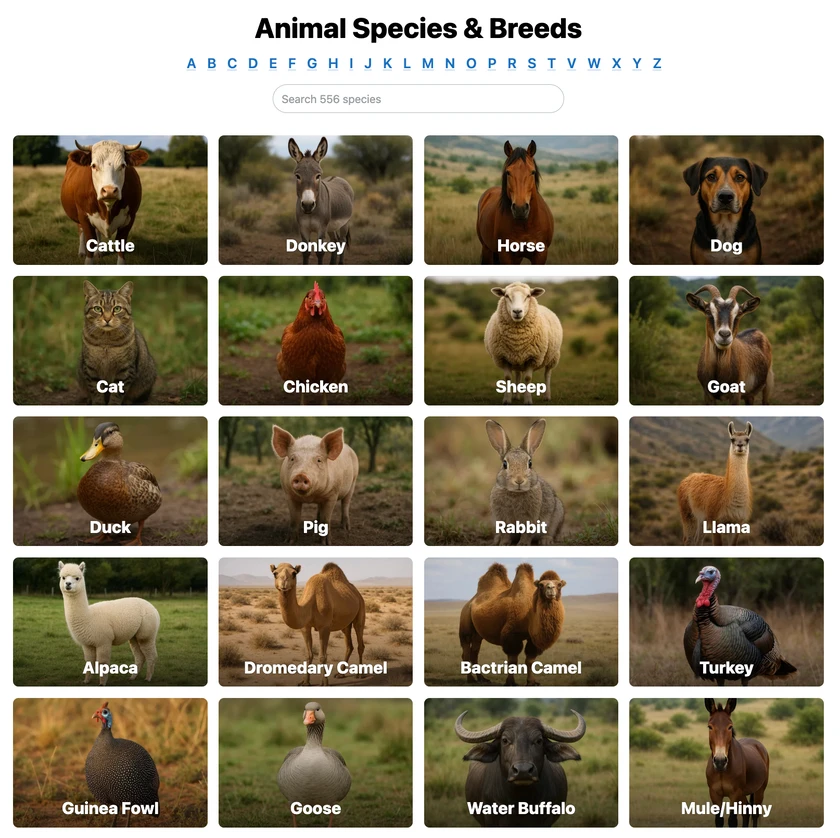
If you manage puppy placements, a species-specific profile helps keep records and sale information together. A structured directory like the dog pages on Creatures shows the kind of categorization that makes later sharing easier, especially when buyers are comparing records across multiple breeders.
Livestock and herd management
Livestock records need two views at once. One is herd-level. The other is animal-level.
At herd level, you want batch efficiency. If a pen of calves receives the same product on the same processing day, a group sheet saves time. At animal level, you still need a way to track exceptions, booster timing, sale candidates, and anything that deviates from the group.
These fields become more important in food-animal settings:
- Group or lot identifier: Pen, pasture, or management batch.
- Individual ID cross-reference: Ear tag, tattoo, electronic ID.
- Withdrawal notes: Keep these with treatment and vaccine records whenever product labeling or protocol requires review.
- Stage of production: Weaned calf, replacement heifer, lactating doe, breeding ram.
- Reason for administration: Routine protocol, pre-sale prep, outbreak response, arrival processing.
A paper chute-side sheet still works well in muddy weather. The mistake is leaving the data there. Enter it into the permanent record before the day ends while memories are fresh and product boxes are still available for lot verification.
Equine and performance records
Horse records often travel farther and get scrutinized more closely. A pleasure horse file can be simple, but sale horses, breeding stock, and competition horses need cleaner presentation and stronger archival habits.
For equine work, I like a packet with a summary page on top and the full vaccine log behind it. The summary page lists identity, registration number, owner, veterinarian, and current status. The detailed pages hold each administration event with the product specifics and signature trail. If you buy or sell through specialized channels, keeping the horse’s broader profile organized alongside the vaccine log helps avoid scattered paperwork, and the horse category on Creatures reflects that kind of species-specific organization.
When animals move often, the record has to move well too. A dense clinic printout may be complete, but a clear transfer copy is what people actually use.
Digital Platforms Versus Paper Systems
The paper versus digital question isn’t philosophical. It’s operational.

Where paper still works
Paper is fast in the moment. It doesn’t need signal, battery life, or staff training. In a working set of pens, during haul-in, or in a foaling barn at odd hours, a clipboard is often the most reliable first capture tool.
Paper also has one underrated advantage. People write on it under pressure. A system that gets used imperfectly is better than a polished system nobody opens until the week before a sale.
But paper breaks down quickly after the event. Sheets get split from the file. Ink fades. One employee abbreviates differently from the next. Copies for buyers or veterinarians turn into phone photos, and that’s when missing details start to matter.
The broader record-keeping problem is familiar in human immunization too. The CDC notes there is no national organization that maintains vaccination records, and records can become fragmented across multiple providers and institutions, making recovery after loss difficult and time-consuming, as described in the CDC’s guidance on keeping vaccine records up to date. Animal operations face the same fragmentation, except the records may also be split across owners, trainers, clinics, sale barns, and breed paperwork.
Where digital systems earn their keep
Digital storage becomes valuable the moment you need to search, share, archive, or prove continuity. A spreadsheet can handle the basics. A fillable PDF can look clean. A practice management system or animal-profile platform usually handles long-term traceability better because it links the vaccine event to the animal’s broader history.
For cattle operations, that matters when you’re sorting sale groups, checking prior protocol history, or answering buyer questions on short notice. A category view like the cattle section on Creatures shows why digital organization by species and animal profile can be more practical than keeping disconnected files in separate folders.
A balanced system often looks like this:
- Field capture on paper: Use it where speed and durability matter.
- Same-day digital entry: Transfer before labels, boxes, and memory disappear.
- Cloud backup: Keep a copy outside the office computer.
- Shareable export: Provide buyers and veterinarians with a readable version, not just an internal staff note.
- Audit trail: Preserve edits rather than overwriting the past.
This walkthrough is worth watching if you’re deciding how polished your record-sharing process needs to be in an online marketplace or breeder workflow.
One practical note on tools. Use only one permanent system of record. You can have paper intake sheets, but the final record should live in one place. If you split “official” data between notebooks, texts, and two apps, you’re building a dispute for later.
Sharing Archiving and Legal Best Practices
A vaccination record has the most value when someone else can trust it. That trust comes from clarity, completeness, and the way you share it.

What each recipient actually needs
Buyers want reassurance. Veterinarians want continuity of care. Registries and event organizers want documentation that matches the animal’s identity exactly.
That means you shouldn’t send everybody the same messy file dump. Prepare records for the recipient.
- For buyers: Give a clean copy with animal identification, each vaccine event, administrator details, and the next due date if your veterinarian has specified one.
- For veterinarians: Include the detailed version, especially product name, lot, route, site, and any reactions or schedule irregularities.
- For registries or competition offices: Match the animal’s registered identity and attached paperwork precisely. Small naming mismatches create avoidable delays.
- For transport or boarding situations: Provide a concise current-status summary plus the full log on request.
The legal value of the record also depends on authenticity. Documentation problems aren’t new. The History of Vaccines account of fake vaccine cards and exemptions traces fake vaccination records back nearly two centuries, which is one reason modern documentation emphasizes portability, redundancy, and proof of care instead of casual note-taking.
A record meant for sharing should look deliberate. If the file appears improvised, people will treat the care behind it as improvised too.
How to archive records so they hold up later
Archiving is where many good records die. People document carefully, then store the file in one laptop folder with a vague name and no backup.
Use a retention habit that answers three questions fast: Which animal is this, which version is current, and where is the backup? File names should include the animal ID and date. Scans should be legible. Signed paper originals should be protected from barn moisture and office clutter. If you update a record after receiving outside documentation, mark that entry as transcribed rather than blending it into the original administration log.
Privacy matters too, especially if your records include owner contact details, payment history, contracts, or veterinary attachments. If you’re building or choosing a digital workflow that stores sensitive health and identity information, think carefully through access control, audit trails, and secure handling, even if your animal operation isn’t subject to a formal compliance framework.
A dependable archive usually includes:
- Primary record file: The current official version.
- Source documents: Clinic invoices, signed certificates, label photos, and transfer paperwork.
- Off-site backup: Cloud or external backup not stored in the same office.
- Share log: A note of who received what and when.
- Transfer packet: A buyer-ready export that doesn’t require editing at the last minute.
Clean records don’t just support compliance. They reduce friction in sales, protect reputation, and make follow-up care easier for the next person responsible for the animal.
Your Foundation for Responsible Animal Stewardship
A good vaccination record template does more than track shots. It preserves the care history of a living animal in a form other people can use.
That matters in every setting. Breeders need it to support honest sales. Farms need it for herd decisions and biosecurity. New owners need it when they switch veterinarians. Trainers, boarders, and transporters need it when proof has to travel with the animal rather than stay in a desk drawer.
The strongest systems all share the same habits. They capture the right fields the first time. They adapt the template to the species and the job. They move field notes into a permanent record quickly. They archive records so they can be found years later. And they share them in a format that builds confidence instead of raising new questions.
That same mindset helps with paperwork beyond vaccines. If you also hand animals off to sitters, transporters, or temporary caregivers, defining responsibilities clearly before care changes hands is just as valuable.
Scattered notes feel manageable until the moment they don’t. A structured record system is quieter than most farm tools, but it supports welfare, traceability, and professional credibility every day you use it.
If you want one place to keep vaccination histories alongside pedigrees, photos, breeding records, and shareable animal profiles, Creatures gives breeders and owners a practical way to manage that record lifecycle online.