
Author: Elliott Garber, DVM · Updated
Find your bird’s veterinarian this week, while the bird is well. The work takes an afternoon: search the Association of Avian Veterinarians directory for practices you could actually drive to, call two or three with a written list of questions, book a wellness exam with whoever answers best, and settle in that same call what happens at eleven on a Sunday night. Doing the search instead with a fluffed-up cockatiel on the bottom of its cage is a much worse afternoon.
Birds make that planning matter more than dogs and cats do. The Merck Veterinary Manual’s professional chapter on the management of pet birds opens by saying that because birds mask clinical signs of illness until late in the disease process, they are often not presented until much sicker than owners realize, which also makes them riskier patients to evaluate. The Association of Avian Veterinarians puts it in owner language: a bird that appears to die suddenly has often been sick for a while. So you want a vet who sees birds often enough to read small signals, and a written history to hand over, which is what a health and medical record is for.
| Start here | The AAV Find-a-Vet search, by ZIP or city, state, specialty degree, or name. It searches AAV’s member database, and listing is a member’s choice |
|---|---|
| Highest credential | Diplomate of the American Board of Veterinary Practitioners in Avian Practice, written DABVP (Avian). Rare enough that you check for one rather than count on one |
| Practical bar | A named veterinarian who sees birds every week, weighs in grams at every visit, and can sedate rather than fight a frightened patient |
| Exam schedule | AAV recommends a minimum of once a year, plus a prompt exam for any newly acquired bird |
| The after-hours gap | AAV says most local emergency clinics do not treat birds, or do so very infrequently. Ask before you need to know |
| Same-day signs | Fluffed and sitting on the cage floor, tail bobbing or open-mouth breathing, any bleeding, a sudden fall in droppings, an egg-bound hen |
| Home monitoring | A gram scale, weekly. AAV says a change of about 10 percent either way warrants a visit |
| Bring with you | Weight history in grams, diet, band or microchip number, droppings pattern, cage photos, prior results. Keep them in one place |
Why birds need a vet who sees birds
This has nothing to do with mystique. Bird medicine is a normal veterinary discipline and plenty of general practitioners handle birds well. What separates an avian caseload from a mixed one is volume, equipment, and the specific way birds fail.
A bird hides illness until it cannot. Merck’s management chapter says feathers can effectively mask even severe emaciation, and that blood work matters more in birds precisely because the physical examination reveals less than in other animals. A vet who sees birds weekly notices the one that is quieter than it should be; a vet who sees three birds a year is working without that reference.
Handling a sick bird is itself a risk. The same chapter notes that birds have a much higher metabolism than mammals and that oxygen deprivation can occur during restraint, treatment, or diagnostic sampling. That is why an avian practice works in a set order: observe from a non-threatening distance, watch respiratory effort and posture, then restrain briefly with everything already laid out. Merck’s instruction for restraining a parrot is to immobilize the head with a thumb on one side of the mandible and a finger on the other, leaving the thorax and abdomen free to expand, and to return the bird to its cage if breathing becomes labored. A closed fist around a bird’s chest is the opposite of that.
Anesthesia rewards a healthy patient and punishes a sick one. There is no bird equivalent of the large multi-practice anesthetic studies done in dogs and cats, so the honest evidence is narrower. A five-year review of 206 anaesthetic events in 135 birds at one UK zoological collection, published in Veterinary Anaesthesia and Analgesia in 2021, found anaesthesia-related mortality of 3.88 percent, with birds in abnormal health at a 15.53-fold higher risk of death than healthy ones. The authors’ conclusion is the useful part: keep anaesthesia short, diagnose existing disease beforehand where you can, and anaesthetizing healthy birds carried a low risk. That is an argument for the wellness exam you book today, not against surgery.
The hazards are avian ones. Merck’s chapter on toxicoses of pet birds records that polytetrafluoroethylene gas poisoning happens commonly in birds housed in or near kitchens, released by certain nonstick cookware when pans are overheated, and that often the only clinical sign is acute death. It lists the household sources of lead poisoning too: blinds, costume jewelry, mirror backings, bird toys, hardware cloth, curtain weights. A practice that sees birds asks about the kitchen and the curtain weights.

The directories that actually exist
There is no national register of bird vets. There are three public routes worth knowing and two offline ones that often beat all three.
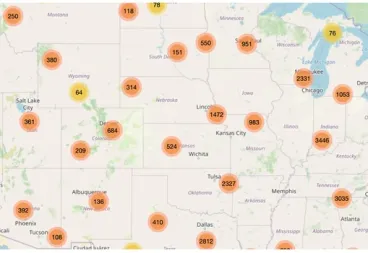
AAV Find-a-Vet. The Association of Avian Veterinarians is the professional association for avian medicine, running since 1980 and publishing the peer-reviewed Journal of Avian Medicine and Surgery. Its Find-a-Vet tool is where to start. You pick United States or international, then search by ZIP code or city, by state, by specialty degree, or by name. The radius search runs from 5 up to 500 miles and wants either a ZIP or a city and state together. Results are individual veterinarians rather than clinics, each profile carrying the practice name, address, phone, a map link and degrees. A 50-mile search around central Atlanta returned nine records on the day this was written.
Read a hit correctly. AAV says the tool searches its member database, and its membership page invites members to choose to be listed in the public directory, so a listing means a member who opted in, not a credential and not an endorsement. There is also no species filter anywhere in the search, so nothing tells you whether a listed veterinarian sees macaws, finches or chickens. That is a phone call, not a filter.
ABVP Find a Diplomate. The American Board of Veterinary Practitioners is the AVMA-recognized specialty organization that certifies veterinarians in 12 practice categories, and Avian Practice is one of them, second-largest of the twelve. Someone who passes is a Diplomate, written DABVP. The route is at least four years of full-time, high-quality bird practice, or an approved residency of at least two years entered after an internship or a year of practice, then a credentials review, a comprehensive examination, and recertification every ten years. ABVP is also explicit about the caseload behind it, which is the most useful sentence on the page for an owner: the typical caseload is 10 or more avian cases per week, and veterinarians who see fewer birds than that may not be successful in credentialing.
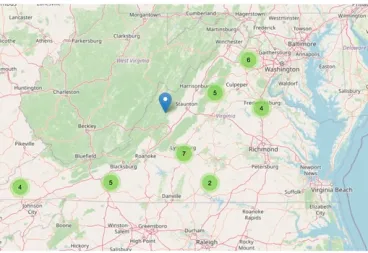
Use the ABVP specialist search as a ceiling to check rather than a filter to insist on. It searches by category, distance and location. Three searches at a 100-mile radius on the day this was written show why: New York returned eight avian diplomates, while Denver and Los Angeles each returned one. ABVP says diplomates across all its categories are in 49 of the 50 US states, but there may be no avian one within reach of you, and AAV says plainly that many well-trained veterinarians who regularly work with birds are not board-certified and provide excellent care. Outside the United States, AAV also names the European College of Zoological Medicine and the Australian Veterinary Boards Council as certifying bodies in avian medicine.
A university teaching hospital. Most veterinary colleges run an exotic or zoological medicine service, and birds are core to it. Cornell’s exotic pets service, one published example, describes primary and specialty care for birds with board-certified veterinarians, emergency and critical care, and 24-hour monitoring in a ward dedicated to exotic pets. Some services take direct appointments, some are referral-only, so ask your vet whether that route is open before you need it.
Two offline routes. AAV’s own advice is to check with local bird clubs, your closest veterinary school, or other local veterinarians. Take it. A bird club or parrot rescue can tell you which practice actually handled a crop burn or a chronic egg layer well, because they watched it happen. And a general-practice vet who does not take birds will usually name the person they send birds to, which is a recommendation from someone with nothing to sell you.
“We see birds” versus bird-savvy
Both practices will say yes when you ask whether they treat birds, and both are telling the truth. The difference shows up when the bird needs more than a nail trim.
A practice that sees birds will book the appointment, look the bird over, answer diet questions, and refer or improvise when something is genuinely wrong.
A bird-savvy practice runs birds as a normal part of its week. The first item on Merck’s list of what to have ready before restraining a bird is a gram scale, and a savvy practice weighs every bird at every visit and records it, because an accurate weight drives fluid therapy, nutrition plans and drug doses. It examines the whole bird from beak to vent, including the choana on the roof of the mouth and a keel score for body condition on the 1 to 5 scale where 3 suits most pet birds. Its team knows normal species-specific behavior, which Merck names as an expectation for veterinarians who see avian patients, because a Pionus parrot making rapid sniffing noises when stressed is not in respiratory distress. It sedates a bird too frightened to examine safely instead of wrestling with it. And it can hospitalize a bird somewhere warm, quiet, and out of sight and sound of dogs and cats, which is on AAV’s own list of questions to ask a facility, alongside whether all the veterinarians there treat birds, whether the technicians are trained in handling birds, and how emergencies are handled when the office is closed.
The screening call
Call, do not email, and ask for a technician or the practice manager. You are listening for fluency, and for whether your question sounds normal to them.
- How many birds does the practice see in a typical week, and which veterinarian sees them? A number and a name. Then ask what happens when that person is away.
- Do you see my species? A practice can be excellent with chickens and see very few parrots, or the reverse, and no directory encodes it.
- Is every bird weighed in grams at every visit, and recorded? The cheapest possible tell. A practice that weighs birds properly is a practice that tracks them.
- How do you restrain a bird, and will you sedate one that is too stressed? You want towel restraint, brief handling, and sedation as a normal option rather than a last resort.
- What does a full avian physical include here? A good answer travels the whole bird: eyes, nares, mouth and choana, crop, keel score, feathers and skin, feet, vent.
- Can you run blood work and take radiographs on a bird here? Ask which reference laboratory they use, and whether they sedate for imaging.
- Where do hospitalized birds stay? Away from dogs and cats, warm and quiet, ideally in a dedicated ward.
- If my bird is on the cage floor at 6pm on a Saturday, what happens? The answer you want names a place and a time. If it names an emergency hospital, get the name so you can call and check it yourself.
- What does a wellness exam cost, and what does a workup with blood work and radiographs run? Ask now, while nobody is upset.
If two practices answer well, take the closer one. Drive time is a clinical variable for a patient that hides illness until it is late, and owners regularly drive an hour for planned work while wanting something nearer for a crisis.
Book the wellness exam now
Being an established client is worth more at 8pm than any amount of research. Practices triage the patients they know, and a clinic that has met your bird already has a baseline weight and a file.
AAV recommends a bird be seen a minimum of once a year, and says annual visits are what let a veterinarian establish the normal values that become the baseline, and screen for problems that cannot be seen. Any newly acquired bird gets a prompt exam on top of that, and if you already keep birds, AAV advises holding a new one separately for at least six weeks, with no shared dishes or perches and ideally in a separate air space.
Expect the visit to be as much about the house as the bird. AAV says you will be asked where and when the bird was obtained, its age and sex if known, diet and supplements, caging and environment, previous health problems, and recent exposure to other birds, and it notes that photos of the setup help. Photograph the cage before you go, and bring the band or microchip number rather than trying to read a band off a moving bird.
The visit is also your chance to watch someone handle your bird. Calm and brief is what good looks like: observation first, a towel introduced slowly, the head controlled without the chest being squeezed, and the bird back in its carrier with respirations settling. A clinician who stops and puts the bird down when its breathing changes is showing you the judgment you came to buy.

Build the emergency plan before you need it
This is the part people skip, and for birds it matters more than for dogs and cats. AAV states it directly: unlike dogs and cats, which can be referred to a local 24-hour clinic after business hours, birds with an emergency late at night or on a weekend often have nowhere to go, because most local emergency clinics do not treat birds, or do so very infrequently. So build the plan in daylight.
- Ask your avian vet what they do after hours. Do they come in? Do they refer, and to whom?
- Call that emergency hospital yourself and ask whether they see birds, and whether someone comfortable with birds is on site overnight or only on certain shifts.
- Write it down where someone else in the house can find it: name, address, phone, hours, who to ask for.
- Drive the route once, before you have to do it upset and in the dark.
- Keep a carrier ready. Small, hard-sided, with a low perch or a folded towel on the floor and a cover so a stressed bird travels dark and quiet. Keep it accessible, not in the attic.
Signs that mean today, not tomorrow. AAV’s list of signs of serious illness includes blood loss or injury, discharge from the nares, eyes or mouth, labored breathing or abnormal respiratory sounds, loss of weight or body condition, vomiting or regurgitation, a significant fall in the quantity or frequency of droppings, fluffed posture and sleeping more than normal, seizures, and inability to perch. Merck’s chapter on reproductive diseases of pet birds adds the egg-binding picture, common in cockatiels, budgerigars and lovebirds: a bird on the bottom of the cage, depressed, eyes closed, tail bobbing and breathing hard, sometimes with a distended abdomen and often with no egg palpable. Merck says egg-bound birds often present as emergencies.
While you arrange care, AAV’s first-aid guidance is to keep the bird warm and quiet, at an ideal ambient temperature for most sick birds of 80 to 85 degrees Fahrenheit, with food and water within reach of where it is sitting. Its two blunt warnings are worth repeating: do not try to drop food or liquid into the mouth of a bird too weak to swallow, and do not wait to see how the bird is tomorrow.
If your bird is a chicken
A large share of people searching for a bird vet keep backyard poultry, and the answer for them is partly different.
Some avian veterinarians do see backyard poultry. If you keep ducks, the duck care guide lists the signs the Association of Avian Veterinarians says need a vet visit. AAV names backyard poultry among the fields its members work in, alongside companion bird medicine and surgery, conservation, wildlife and aviculture, and it publishes a public handout on zoonotic diseases in backyard poultry. But many companion-bird practices see parrots and passerines only, while plenty of mixed and food-animal practices see poultry without ever calling themselves avian. Ask the species question early.
Two things are specific to flocks.
A prescription now needs a veterinarian. The FDA’s guidance for industry #263 completed its transition in June 2023, and the agency’s own announcement states that once remaining over-the-counter labeled stock depletes, all medically important antimicrobials for animals require the authorization of a licensed veterinarian. FDA’s FAQ on the change names chickens and turkeys among the affected species and says access runs through a valid veterinarian-client-patient relationship, with specific requirements varying by state. The antibiotic that used to sit on the feed store shelf is now a call to a vet who knows your flock, so build that relationship before a sick hen forces it, and check your own state’s rules. Egg withdrawal after any treatment is part of the same conversation. If your birds share a place with livestock, our guide to finding a large animal vet covers the same prescription rule across cattle, goats, sheep and pigs, and what a farm-call practice needs from you to keep that relationship valid.
Flock problems are a different question from pet-bird problems. One hen with a broken toe is an individual patient. Six dead birds in a week is a diagnostic problem, and the route there is a poultry veterinarian, your state’s veterinary diagnostic laboratory, or your state extension poultry program. The American Association of Veterinary Laboratory Diagnosticians publishes a list of its accredited laboratories covering more than 30 states, each with an address, a director and a phone number. Many perform necropsies, and a necropsy on the bird you lost is often the fastest way to protect the ones you still have. Our guides to chicken diseases and symptoms and the poultry vaccination schedule cover routine flock health between visits.
The records that make the visit faster
An avian appointment is largely history-taking, and the history sets the ceiling on what the vet can do in the time you have. This part you control completely.
- Weight in grams, weekly. The single most valuable thing on the list. AAV recommends every bird owner keep an electronic gram scale and weigh weekly, and says a significant change of about 10 percent in either direction warrants a visit. Feathers hide the body underneath, so the scale sees what your eyes cannot.
- Diet as it actually is. Brand and form of pellet or seed, what fresh food is offered, and what the bird eats rather than what goes in the bowl.
- Droppings. What normal looks like for your bird, when it changed, and how. Photographs of the cage paper are genuinely useful.
- Identifiers. Band and microchip numbers. Merck notes the standard microchip site in parrots is the left pectoral muscle and that most captive-raised birds carry a closed leg band from chick age, so the numbers exist even if you have never written them down.
- Environment and prior results. Cage photos, what else is in the room, other birds and pets in the house, and the actual blood work and radiographs rather than a summary from memory. AAV advises bringing previous records, medications and radiographs to a first visit with a new veterinarian.
A free animal profile is a reasonable place to keep all of it: weights logged over time as physical measurements, exams and medications as records, reminders set for the annual visit. Medical records stay private by default, a free account lets you download the whole thing as a printable packet to take to the clinic, and afterwards you can import the clinic’s own PDF or lab report back into the bird’s history so the file stays whole.

What avian vet care costs
There is no honest national price for this, and any figure quoted as one is really a single clinic’s fee schedule. What is consistent is the shape of it. An avian exam usually costs more than a dog or cat exam at the same practice, because the appointment runs longer and far fewer clinicians offer it. The routine year is modest: one exam, sometimes blood work, sometimes a nail or beak trim. The expensive events are workups, where blood work, radiographs and sedation stack up in one visit, and after-hours care, which is the bill people are least prepared for.
So collect three numbers on your screening calls: the wellness exam fee, the usual cost of a workup with blood work and radiographs, and the after-hours exam fee at whichever hospital you would actually drive to. They are specific to where you live, which is what makes them worth more than any national average. Our guide to what pet birds cost sets veterinary care in the context of the rest of the budget.
Common questions
Can my dog and cat vet see my bird?
Sometimes, and many general practices handle routine bird care competently. The question is not whether they will book the appointment. It is what they do with a bird that is fluffed on the cage floor on a Saturday, and whether they can weigh, sedate and hospitalize a bird properly. Ask, and be willing to keep a routine vet nearby and a bird-savvy vet a little further away.
Is an exotic vet the same thing as an avian vet?
Overlapping, not identical. “Exotic” covers reptiles, small mammals, fish and birds, and someone excellent with ferrets may see few parrots. ABVP certifies Avian Practice and Exotic Companion Mammal Practice as separate categories, which tells you the profession treats them as separate skill sets. Ask about your kind of bird specifically. For a household with more than birds in it, our guides to finding an exotic vet and finding a reptile vet cover the directories and credentials on those sides.
My bird looks perfectly healthy. Does it still need a vet?
Yes, and that is the point of doing this now. AAV’s floor is a minimum of one visit a year, and its stated reason is that annual visits establish the normal values that become your bird’s baseline and screen for problems that cannot be seen. The visit also makes you an established client, which is what you are really buying.
What is the single most useful thing to have ready in an emergency?
The weight trend in grams, and the date the bird was last unambiguously normal. Those two facts shape the first decisions a vet makes, and almost nobody has them.
Do this next on Creatures
Creatures is the records, marketplace and directory layer for keeping all of this in one place. It is not a veterinary referral service, and nothing here replaces your vet. What it does is make sure that when you get to the clinic, the history is already written down.
Add each bird. Create a free profile for a pet bird or for a chicken in a few minutes. No account needed to start, and the walkthrough is in adding an animal to Creatures. The cockatiel, budgerigar, canary and chicken hubs carry the rest of the care library.
Build the history your vet will ask for. Log weights in grams, exams, medications and test results, and medical records stay private by default. The record sheet opens for any visitor to look around, and a free account is what saves it. See adding a record, health and medical records, and what each profile tab does.
Do not miss the annual visit. Yearly exams, rechecks, and worming or vaccination dates for a flock are exactly the things that slip. Set them as reminders and upcoming care and subscribe to them as a calendar feed.
Looking for a bird? Browse cockatiels, budgerigars and chickens on the marketplace, or search trusted breeders in the Creatures directory. Waiting for the right one? Set a free listing alert and new listings come to you. No account needed to start, and saving searches and using your watchlist explains how they work. Still choosing? Where to buy a parrot covers what a responsible source should hand over.
Breed birds or keep a flock? Add your aviary or farm so buyers can find you, then read getting listed in the breeder directory.