

Author: Elliott Garber, DVM · Updated
Find your reptile’s veterinarian this week, while nothing is wrong. It takes an evening: search the two directories that actually exist, call the practices they turn up, ask a short list of questions, and book a first exam with whoever answers best. The alternative is doing that research on a Sunday night with a bearded dragon that has not eaten in nine days in a carrier on the passenger seat, which is how most people end up doing it.
Reptiles are worth planning for, for a reason specific to them. In dog and cat medicine the patient is the patient. In reptile medicine the enclosure is half the patient, and a vet who sees reptiles routinely knows to start there. The University of Illinois zoological medicine service tells owners its consultations begin with a detailed overview of the animal’s environment and care, and asks them to bring the products they actually use, or photographs of the enclosure, its lighting and its temperatures. The Merck Veterinary Manual’s professional husbandry chapter says the same from the clinician’s side: a vet has to pull clinically relevant husbandry detail out of an owner quickly, and a history form helps. So write the husbandry down first. A free animal profile carrying weights, sheds, feedings and the date you last changed a bulb turns that first appointment from an interview into a consultation.
| When to start | Now, while the animal is healthy. Reptile signs are non specific and late, so the first visit is a baseline, not a rescue |
|---|---|
| Where to search | The ARAV find a vet member search, the ABVP find a diplomate search, your nearest university veterinary teaching hospital, and your own vet’s referral |
| Search trap to know | The ARAV radius box starts at 5 miles. Widen it to 100 or 250 before you conclude there is nobody near you |
| Highest credential | ABVP Diplomate in Reptile and Amphibian Practice. On 4 August 2026 the public ABVP directory listed 19 worldwide, 13 in the United States, so treat it as a ceiling to check rather than a filter |
| Practical bar | A named veterinarian who sees reptiles most weeks, takes a full husbandry history, and sedates reptiles routinely |
| Vaccines | None. Reptiles have no vaccination schedule, so the annual visit is an exam, a weight and a fecal check |
| Go now, not tomorrow | Burns, anything prolapsed from the vent, a bite from uneaten prey, obvious trauma, or open mouth breathing in a resting snake |
| Bring with you | Weight history in grams, shed dates, feeding log, and the temperatures, humidity and UVB dates from the enclosure. Keep them in one place |
Why reptile medicine is a different job
The honest version of this argument is not that your regular vet is incompetent. It is that reptile practice runs on repetition, equipment and husbandry knowledge a mostly dog and cat clinic has no reason to build. The American Board of Veterinary Practitioners is blunt about how much: a veterinarian working toward certification in Reptile and Amphibian Practice is expected to be carrying ten or more reptile cases a week, and says candidates seeing fewer may not succeed in credentialing.
The diagnosis often lives in the enclosure. Merck calls secondary nutritional hyperparathyroidism the most common bone disease in reptile practice and attributes it to poor diet (a low calcium to phosphorus ratio, vitamin D3 deficiency) or poor husbandry (no UVB, inadequate heat); its caption on the illustrating photograph calls it a disease of mismanagement. The pattern repeats: respiratory infections are common, with unfavourable temperature or humidity, poor ventilation, unsanitary conditions and malnutrition among the influences on how often they happen, and burns are generally associated with unscreened incandescent lights or other heat sources. None of it is arcane. It is knowledge you only reliably hold if you look at reptile enclosures every week.
The signs are non specific, so the history does the work. Anorexia and lethargy sit on the list for metabolic bone disease, renal disease, fungal skin infection and most of what else goes wrong. A reptile that has gone quiet and stopped eating has told you almost nothing by itself. Paired with a weight trend, a feeding log, a shed history and the date the UVB bulb was changed, it has told you a great deal.
Doses and anesthesia are unforgiving. Merck states that every reptile must be accurately weighed, because an accurate weight is what avoids deaths from drug overdoses, particularly anesthetics and aminoglycosides. Its owner guidance hands you a question to ask: your veterinarian should have knowledge of and experience with sedating a reptile, because several anesthetic techniques used routinely in cats and dogs are not appropriate for reptiles.
General practitioners know all this about themselves, which is why the most efficient question you will ask all week is asking yours who they send reptiles to.
The directories that actually exist
There is no national register of reptile vets. Two public searches are worth your time, and it helps to know what each is before you read a result.
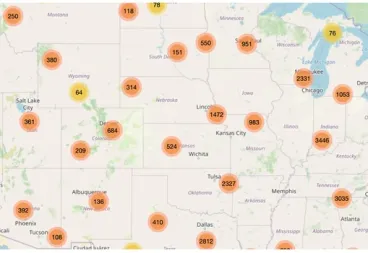
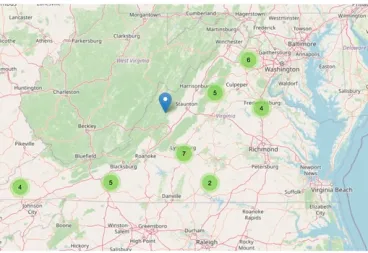
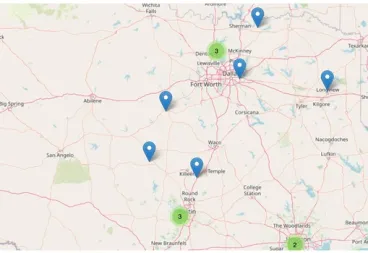
The ARAV find a vet search. The Association of Reptile and Amphibian Veterinarians runs the search most keepers are eventually pointed at. Three things to know first. It is a membership search, not an accreditation list, and the results page says so, telling you the hits match member types including Active Veterinarian, Committee Chair, Complimentary and New Grad. Results are individual people rather than practices, each profile self reported and dated, with a specialties field that is often empty. And the part that makes people give up too early, the radius box starts at 5 miles, though the menu runs up to 500. Run at the default it shows most people nothing; widened to 50 miles around a mid sized American city, a search this month returned seven members across five suburbs. City and state or a zip code are required, and outside the US you search by country.
The ABVP find a diplomate search. The American Board of Veterinary Practitioners is an AVMA recognized specialty organization, and Reptile and Amphibian Practice is one of its twelve certification categories. Passing makes someone a Diplomate, written DABVP, after at least four years of full time practice with reptiles and amphibians, a credentials review and a comprehensive exam, with recertification every ten years. The category covers snakes, lizards, crocodilians, chelonians, tuataras, anurans, caudates and caecilians, and excludes birds and mammals, so a reptile diplomate is a reptile person rather than a general exotics one.
It is also the rarest thing here. ABVP diplomates as a whole sit in 49 of the 50 US states and 16 foreign countries, but when we searched the board’s own public directory on 4 August 2026 it listed 785 in total, of whom 19 carried the Reptile and Amphibian category, 13 in the United States. Check it. Just do not organise your search around it, or read the absence of a diplomate near you as evidence that nobody near you is good.
University veterinary teaching hospitals. Most veterinary colleges run a zoological or exotic companion animal service, and reptiles are core business there. They are also not all referral only: the University of Illinois service states it can see your animal as a referral from your regular veterinarian or directly if no veterinarian is currently managing you, and its species list runs from bearded dragons and geckos through tortoises to boas, corn snakes and pythons. The clinicians are often boarded: the University of Tennessee zoological companion animal service says it includes veterinarians certified by the American College of Zoological Medicine.
Two offline routes beat all of it: your own vet’s referral, and local reptile rescues and herpetological societies, which spend their money on exactly these cases and remember who handled them well.

Bearded dragons: what a beardie vet is actually for
More people search for a bearded dragon vet than for a reptile vet, which tracks with Merck’s assessment that bearded dragons are probably the most popular pet reptile in the US. If that is the animal in your house, four things matter before you call anyone.
The classic beardie case is a husbandry case. Merck’s note on the species is worth memorising: bearded dragons need broad spectrum lighting, and their insect and plant based diet requires regular calcium supplementation to avoid secondary nutritional hyperparathyroidism. Its husbandry table puts them at a preferred temperature zone of 25 to 32 degrees Celsius (77 to 90 Fahrenheit) with basking about 5 degrees warmer, humidity around 20 to 30 percent, and UVB at 290 to 300 nanometres as essential rather than optional, and notes dragons do better in larger wooden or fiberglass vivaria than in glass aquaria. If your setup is off on any of that, a reptile vet will find it in the first ten minutes, and that is the appointment doing its job. Our bearded dragon care guide covers the enclosure, heat and UVB side in full.
Ask how they assess UVB, not whether they believe in it. Merck notes that almost every lamp sold for reptiles carries the words broad, full or natural on the box, which tells you nothing, and that a suitable lamp must be labelled as providing UVB, or better still measured. A practice that asks the bulb’s brand, age and distance from the basking spot is thinking correctly.
Know what the common presentations look like. Metabolic bone disease shows up as a dragon that will not walk normally, often with a swollen or distorted jaw, sometimes with fractures, and Merck lists muscle tremors and tetany at the severe end. Fungal skin disease is the other one that brings dragons in. In the University of Illinois’s case account of Nannizziopsis guarroi, the head of its zoological medicine service, Dr. Krista Keller, notes that although this is sometimes called yellow fungus disease, the crusty lesions are often dark rather than yellow, and gives the best short description of a healthy dragon in print: bright, interactive with its environment, and a voracious eater. Most Illinois cases involved recently acquired lizards that had contact with other reptiles at a shop or breeding facility, a good argument for the 3 to 6 month quarantine Merck recommends for any new reptile.
The autumn slowdown question deserves a vet, not a forum. A dragon that goes off food and spends October buried is the single most common thing beardie keepers write about, and seasonal behaviour and early illness look similar from outside. Merck’s husbandry table does not list a hibernation period among the species requirements for bearded dragons, where it does for corn snakes and Greek and box tortoises. Which is why this belongs to someone who sees the species: a weight trend and an exam separate a dragon that is slowing down from one that is sick. Guessing does not.
For other species the shape holds and the numbers change. Merck’s table puts ball pythons and corn snakes at 25 to 30 degrees Celsius (77 to 86 Fahrenheit) with humidity of 50 to 80 and 30 to 70 percent, and leopard geckos at the same temperatures but 20 to 30 percent, all rising during a shed. It has no crested gecko row, so get that species’ numbers from your vet, not from any page online, this one included. Our ball python care guide and leopard gecko care guide set those numbers inside a full husbandry routine.
“We see reptiles” versus reptile capable
Both practices say yes when you ask whether they see reptiles. Here is what separates them.
A practice that sees reptiles books the appointment, examines the animal, treats obvious things and refers when it gets complicated. That is honest work, and for a routine annual it may be all you need.
A reptile capable practice weighs in grams, takes a husbandry history as a matter of course, and has someone who can tell you whether your basking gradient is right. It handles correctly: Merck states flatly that a lizard should never be grasped by the tail, because many species will drop it, and that a snake is held behind the head with the body supported by another hand, or by more people as the animal gets bigger. It sedates routinely rather than as a last resort, and it has the radiography that diagnoses metabolic bone disease and retained eggs. And it can hospitalise a reptile at the right temperature: Merck notes a sick reptile should be kept near the upper end of its preferred range, because reptiles cannot mount a true fever and instead move somewhere warmer to create a behavioural one.
The screening call
Call two or three. You are listening for fluency, and for whether this sounds like a normal request.
- How many reptiles does the practice see in a typical week, and which veterinarian sees them? A number and a name. Then ask what happens when that person is not in.
- Do you take a full husbandry history at a reptile appointment? You want temperatures, humidity, UVB and diet, without prompting for any of it.
- What do you weigh reptiles on? Grams, on a scale suited to a 40 gram gecko as well as a 400 gram dragon.
- Do you sedate reptiles in house, and how do you approach anesthesia in one? Merck’s guidance is why this is a fair question rather than a rude one.
- Do you take radiographs here, and can you assess my UVB setup? Reptile medicine leans on imaging heavily. On UVB, a no is common and fine; a blank is not.
- If my snake stops eating for two months, do you want to see it, and when? This tests whether they triage on a reptile timeline or a dog one.
- Who covers nights and weekends, and will that hospital see a reptile? Get the hospital’s name, not a reassurance.
- What does a reptile exam cost, and what would radiographs and bloodwork add? Ask while nobody is upset.
Book the first exam now
Merck’s owner guidance sets the routine at a check-up and a fecal examination annually, and makes the case for going early better than we can: no vaccinations are required for reptiles, but the first veterinary visit establishes a record of the animal in healthy condition, and that information will be highly valuable should medical problems develop later. You are buying a baseline weight, a normal for this animal exam, and a file at a practice that triages its own clients first when you call in a panic in February. For what a first exam and a fecal test cost at three US clinics that publish their 2026 fees, see the crested gecko cost guide.
Bring the setup, or bring it on your phone. Illinois asks clients to gather the products actually in use, diet, supplements, treats and over the counter medications, to have the enclosure’s specifics, lighting and temperatures to hand, and to write concerns down beforehand. Photographs of the enclosure are explicitly welcome. Expect the visit to cover zoonosis too, and take that as a good sign rather than a lecture: Merck notes a reptile can pass organisms to people even when it is not sick, that children under 10, pregnant women, older people and immunocompromised people are more susceptible, and that hand washing is the control that matters.

The emergency plan, and honest triage
Reptile emergencies do not read like dog emergencies, and pretending otherwise makes people panic over the wrong things and shrug at the right ones.
Go tonight. Burns. Anything prolapsed from the vent, where Merck notes it matters which organ it is, since some can be amputated and others cannot. A bite from uneaten prey. Obvious trauma, including a cracked shell. Open mouth breathing or nasal discharge in a resting snake, which Merck lists among the frequent signs of respiratory infection.
Book this week, do not panic tonight. A dragon or gecko that stops eating with no other signs. Gradual weight loss. A shed that came off in pieces or left skin on the toes or tail tip, which Merck notes can cause ischemic necrosis. A snake still wearing its eyecaps after a shed.
The one that surprises people. Egg retention. Merck states that dystocia is generally not an acute presentation in reptiles as it is in mammals and birds, and that some reptiles retain eggs for weeks or even months past the normal timing, which makes telling normal gravidity from dystocia genuinely hard even in an animal that looks well. A female who has not laid is a call to your vet, not necessarily a midnight drive, and anyone answering confidently over the phone without imaging is guessing.
Then write these down where somebody else in the house can find them.
- The after hours hospital that will actually see a reptile. Call and ask out loud, because many emergency hospitals are dog and cat only and some have an exotics clinician on certain shifts only. Time the drive once, in daylight.
- The travel container, with heat. Reptiles run on ambient temperature, so a cold car is a clinical problem, not a comfort one. The nearest thing to official guidance is written for evacuations rather than vet trips, but the list is right: North Carolina’s state emergency guidance, credited to American Veterinary Medical Association material, tells keepers moving a reptile to pack a secure carrier plus a heating pad or battery operated heat lamp, spare batteries, a misting bottle and a soaking bowl.
The records that make the visit faster
Merck’s husbandry chapter tells owners to keep detailed records of changes in husbandry or nutrition, breeding activity, in contact animals, disease outbreaks, health issues, recent additions, and previous problems and treatments. That is longer than most keepers hold in their heads, and it is what an exotics vet otherwise rebuilds by interview.
Keep these:
- Weight in grams, on a schedule. Merck’s reason is dosing safety first, trend second: serial weights let a clinician appraise growth, captive management, response to treatment, and whether disease is progressing or resolving. Monthly suits a settled adult; weekly through a new arrival, a food change, or anything odd.
- Every shed, dated, with how it came off. Complete and in one piece, or patchy, or stuck on the toes. Merck notes snakes go off food and their eyecaps turn opaque beforehand, so the shed log is also what tells you whether an animal that stopped eating is about to shed or is unwell.
- The feeding log, and the environment with dates. What was offered, how big, when, and what was refused; basking and cool end temperatures, humidity, and the date you last changed the UVB bulb, since output falls long before the lamp stops lighting up.
- Test results, medications and procedures, with the clinic’s paperwork attached.
On Creatures that is a free animal profile and its records tab. Weights go in as physical measurements, vet visits as examination records holding the findings, the clinic and a follow up date, and sheds go in the routine care log, which carries a shedding assist entry for reptiles alongside tank and water checks and parasite or mite checks. Any health record with a follow up date creates a reminder automatically, and the schedule can be subscribed to from your own calendar app, which is how an annual exam gets booked a year later. Medical detail defaults to private, and the clinic’s PDF attaches to the record it belongs to.

What reptile vet care costs
There is no honest national number, and any figure quoted online is one clinic’s price list. The shape is consistent. An exotic exam usually costs more than a dog or cat exam at the same practice, because the appointment runs longer and far fewer clinicians offer it. The routine year is modest: an exam, a fecal check, maybe a weight recheck. The expensive events are workups, which for reptiles means radiographs, bloodwork and sedation, and surgery, which usually means retained eggs, an abscess or a mass.
Collect three numbers on the screening call and you can plan: the exam fee, what radiographs and bloodwork would add, and the after hours exam fee at whichever hospital you would drive to. Our guides to what a bearded dragon costs, what a corn snake costs and what a snake costs set veterinary care in the rest of the budget.
Common questions
Is an exotic vet the same as a reptile vet?
Overlapping, not identical. Exotic covers birds, small mammals, reptiles and fish, and someone excellent with parrots may see very few snakes. ABVP treats them as separate certification categories, and its reptile category excludes birds and mammals. Ask about reptiles specifically, and ideally about your species. Our guide to finding an exotic vet is the umbrella version, covering what the word means and what each credential is worth, and finding an avian vet covers the bird side for a household that keeps both.
My reptile has never seen a vet and seems fine. Does it need one?
Yes, and Merck’s guidance is the reason: the first visit establishes a record of the animal in healthy condition. It also gets you into a practice’s system before the night you need to be in it. Our guides to finding a rabbit vet and a ferret vet make the same argument for those species.
Do reptiles need vaccinations or boosters?
No, and that is exactly why the annual visit gets skipped. Merck still recommends an annual check-up and fecal examination, so the reminders worth setting are the exam, the fecal check, the weigh in and the UVB bulb change.
The nearest ARAV member is 90 miles away. Is that my only option?
Probably not. Run the search again at a wider radius, check the ABVP directory, look up the nearest veterinary college’s zoological medicine service, and ask your own vet who they refer to. For planned work an hour or two in the car is normal for reptile keepers; for emergencies the calculation flips, which is why you identify a nearer after hours option separately.
Do this next on Creatures
Creatures is the records, marketplace and directory layer for keeping all of this in one place. It is not a veterinary referral service, it does not list or recommend veterinarians, and nothing here replaces your vet. What it does is make sure the history is already written down when you get to the clinic.
Start the file. Create a free animal profile for each reptile, with its species, source and arrival date. No account needed to start. The walkthrough is in adding an animal to Creatures, and the profile tabs guide shows where each kind of information lives. Species hubs: bearded dragon, leopard gecko, ball python, corn snake, crested gecko.
Log what a reptile vet will ask for. Add records for weights, sheds, feedings, exams, medications and test results. The record sheet opens for any visitor to look around, and a free account is what saves it. See adding a record and health and medical records, which covers what stays private.
Stop relying on memory for the annual. The exam, the fecal check and the UVB bulb change all slip because nothing prompts you. Set them once as reminders and upcoming care and subscribe to the calendar feed.
Looking for a reptile? Browse bearded dragons on the marketplace or search trusted breeders in the Creatures directory, and read where to buy a bearded dragon first. Waiting for the right animal? Set a free listing alert and let new listings come to you. No account needed to start, and saving searches and using your watchlist explains how they work.
Breeding reptiles? Create a free organization or breeder profile so keepers in your area can find you, then read getting listed in the breeder directory. Buyers increasingly ask for a records history, and having one is the easy way to stand out.
Keep reading. The Creatures care library has the rest, including what a tortoise costs.