


Author: Elliott Garber, DVM
Almost everything that goes wrong with a pet bearded dragon goes wrong in the enclosure first. Washington State University’s veterinary teaching hospital opens its bearded dragon husbandry guidance with that point: the problems its clinicians see, including weak legs, soft jaws, yellow fungus disease and poor growth, are caused by incorrect diet, lighting, temperature or enclosure setup, and when a dragon is lethargic or off its food, husbandry should be evaluated first.
That is good news, because the hard part of this animal is a setup problem you solve once and then maintain. Get the floor space, the heat gradient, the UVB and the salad right and a bearded dragon is genuinely easy to live with. Get the UVB wrong and you can do everything else perfectly and still end up at a clinic with a dragon that cannot walk. This guide covers the setup with a named source behind every number, starting at the Creatures bearded dragon species page.
Dragons hide illness well, and what matters shows up as slow trends: a few grams lost each month, a shed that takes longer than the last, a basking spot that has quietly cooled. A free Creatures animal profile gives one dragon a single place for weights, feeding notes, shed dates and the date you last changed the UVB lamp.
The enclosure: floor space first
The modern welfare minimum for a single adult is the RSPCA’s: 120 cm long by 60 cm high by 60 cm wide, roughly 4 by 2 by 2 feet. An adult reaching around 45 cm including tail needs that length to hold a real gradient end to end. Washington State expresses it as a ratio, at least three times the total body length, and notes that a very large enclosure for a small lizard may need partitioning down temporarily to prevent stress.
The advice here has genuinely moved and you will still meet the old version. NC State’s care sheet recommends a 20 to 40 gallon glass terrarium with a screen top, at minimum four times the length and width of the lizard. A 40 gallon tank is substantially smaller than 120 by 60 by 60 cm. Build to the RSPCA figure. Merck’s veterinary manual, professional version, adds in its reptile management chapter that bearded dragons do better in larger wooden or fiberglass vivaria than in glass aquaria, which is about holding heat and controlling ventilation. The RSPCA wants good ventilation to reduce respiratory infection risk and a position away from radiators and bright windows that would fight your thermostat.
Furnish for behaviour: a hide at each end so the dragon feels secure at both temperatures, stones and branches to climb, and a digging box. One study cuts against assuming naturalistic is automatically better. Comparing captive bred Pogona vitticeps in naturalistic and standard enclosures, a study in PLOS ONE found that although naturalistic enclosures did offer better thermal heterogeneity, evidence that they better accommodated behaviour or improved welfare was equivocal, with animals spending most of the day inactive in one area regardless of style. The gradients are what the evidence supports, not the decor.
House one dragon per enclosure. The RSPCA is direct: they are territorial, wild males are solitary, and captive groups may fight, sometimes biting off toes and tails.
Heat: a gradient, measured at the surface
The basking figure gets missed in two ways. First, measuring the wrong thing: what matters is the basking surface, not the air above it. The JZAR UV-Tool, the peer reviewed husbandry dataset published by Baines and colleagues in the Journal of Zoo and Aquarium Research, lists Pogona vitticeps at a basking zone substrate surface temperature of 40 to 45 C (104 to 113 F), a summer daytime ambient of 25 to 30 C and a night ambient of 20 to 25 C.
Second, following an older and cooler figure. Sources genuinely disagree, so here is the spread. The RSPCA gives a hot end of 38 to 42 C and a cool end of 22 to 26 C. Washington State gives a basking area of 95 to 110 F and a cool zone of 75 to 80 F. Merck’s professional husbandry table puts the species in a preferred temperature zone of 25 to 32 C (77 to 90 F) with basking about 5 C warmer, so roughly 30 to 37 C, and NC State gives 88 to 100 F (31 to 38 C). Modern herpetological sources cluster around 38 to 45 C at the surface; older care sheet numbers sit nearer 31 to 38 C. Aim at the modern range, measure it on the stone with an infrared thermometer, and let the animal tell you: a dragon that never leaves the basking spot is probably too cool, one that will not use it is probably too hot.
Nights are allowed to drop. The RSPCA says not below 20 to 22 C and suggests a ceramic heater, which emits no light, if the room falls further; Merck’s footnote puts the night drop at about 5 C. NC State is explicit that white lights should not be used after dark, and that a ceramic emitter beats an under tank mat, which can cause thermal burns.
Every heat source goes on a thermostat, with a daily infrared check at both ends, because a thermostat controls the heater and only a measurement tells you what the animal experiences. Merck’s chapter on environmental diseases and traumatic injuries gives the reason for care: burns in reptiles are generally associated with unscreened incandescent lights or other heat sources. The RSPCA’s answer is a wire mesh guard on the bulb and a rule that the dragon’s back should never come closer than 25 to 30 cm to the lamp.
UVB: the part that decides whether everything else works
A dragon in a beautiful enclosure eating a perfect salad, with no usable UVB, will still get sick.
UVB drives vitamin D3 synthesis in the skin, D3 governs calcium absorption, calcium builds bone. Merck’s professional version states that UVB at 290 to 300 nm is especially important for most diurnal lizards and chelonians for vitamin D3 synthesis and calcium regulation, and flags broad spectrum lighting as essential rather than optional here. Without it you get secondary nutritional hyperparathyroidism, which Merck calls the most common bone disease in reptile practice, caused by poor diet (a low calcium to phosphorus ratio, vitamin D3 deficiency) or poor husbandry (lack of UVB, inadequate thermal provision). Merck’s caption on the illustrating photograph is the summary: this is a disease of mismanagement.
Owners notice it late. Merck lists anorexia, lethargy, an inability to walk normally, a swollen or distorted lower jaw, upper jaw or long bones, fractures of the limbs and spine, cloacal prolapse, muscle twitching and tetany; the RSPCA adds swollen legs, fragile bones and eventually permanent deformity of limbs, jaws, spine or tail. Merck also gives the reason to act early: correcting diet and husbandry are the mainstays of treatment, and the prognosis is favourable, particularly if the animal is still eating.
Use a linear tube, sized to the enclosure. The RSPCA’s prescription is specific: a high output 10 to 12 percent UVB fluorescent tube, running up to half the vivarium length, fixed into the roof as far into the hot end as possible, with a reflector of the correct length. You are lighting an area, not a point, and the UV-Tool describes tube mounting as producing irradiance over a relatively large area close to the tube with a gradient to zero further away.
Put the basking site under the tube. This is the most common physical mistake in a real setup. The RSPCA creates its photogradient by positioning the light close to the basking zone, so the warm end is also the bright end. If your basking stone sits past the end of the tube, the dragon is choosing between heat and UVB instead of getting both in one place.
Distance and obstructions. Washington State positions the lamp 30 to 45 cm above the basking area and says you must not place glass, plastic or fine mesh between bulb and lizard. The UV-Tool is stronger: ordinary glass or plastics must not be placed anywhere between lamp and animal, as these normally block transmission of all UVB. Mesh still absorbs a meaningful share, so a lamp inside the enclosure does more than the same lamp on a screen, and Washington State says directly that sunlight through a house window is not a substitute.
How much, in numbers. The UV-Tool assigns Pogona vitticeps to Ferguson zone 3 to 4, an open or partial sun basker through to a mid day sun basker. In its table, zone 3 is a mean UV index of 1.0 to 2.6 with maxima of 2.9 to 7.4, zone 4 a mean of 2.6 to 3.5 with maxima of 4.5 to 9.5, and it recommends treating 7.0 to 8.0 as the absolute maximum for safety. The RSPCA’s practical version is a meter reading running from 3.0 to 5.0 in the basking zone down to zero in shade, dropping to a maximum of 3.0 for an albino or similar low pigment morph. Both insist on that gradient: the UV-Tool notes even zone 4 reptiles must have UV falling to zero in shelters away from the light, which is another reason for the cool end hide.
Replace it on a schedule, not when it dies. Ultraviolet output decays steadily while the lamp goes on emitting perfectly normal visible light, so it looks fine long after it has stopped working. Replace them every 6 months even if the light is not burned out, says NC State; Washington State gives 6 to 8 months for juveniles and yearly for adults; the RSPCA says check output with a meter and replace when the manufacturer recommends. Those intervals differ, so follow your lamp’s stated life, and trust a UV index meter over the calendar if you own one. Do not wait for it to go dark.
Photoperiod is easy. NC State runs 12 to 14 hours of light in spring and summer and 8 in autumn and winter; the RSPCA suggests a timer at 12 on and 12 off. Turn everything visible off at night.

Diet: the ratio flips as they grow
Young dragons are largely insectivorous because they are growing fast; adults should eat mostly plants. Most owners never make the switch. A survey of feeding practices in pet inland bearded dragons across the United States and Canada, published by Barboza and colleagues in the Association of Reptile and Amphibian Veterinarians’ journal in 2022 and summarised by Tufts’ Cummings School of Veterinary Medicine, found around half of its 405 participants were feeding less than 50 percent plant material and more than 50 percent insects.
Target ratios differ; the direction is unanimous. Washington State gives adults 25 percent insects, 50 to 55 percent dark leafy greens, 20 percent chopped vegetables and under 5 percent fruit, with juveniles primarily on insects. NC State offers adults a salad of greens and vegetables at 70 percent with insects at 25 percent, and young lizards around 50 percent insects. The RSPCA is the most insect friendly, giving young dragons about 65 percent live food to 35 percent greens, and dragons over 30 cm about 40 percent live food to 60 percent greens. None of them looks like a bowl of crickets.
Feeding frequency follows age. NC State offers juveniles a meal once daily and adults daily or every other day; the RSPCA feeds babies twice daily and older dragons once, in the morning, so the animal has the day’s heat to digest. Fresh food goes in its own dish and comes out the same day, ideally within about four hours.
Insects. Feed them gut loaded. The RSPCA specifies a formulated gut loading diet 24 to 48 hours beforehand, with feeders kept fed and hydrated for their own welfare as well as your dragon’s. NC State warns that small prey must be fed to babies to avoid problems including impaction, starting with pinhead crickets and freshly moulted worms. Feed insects in a dish, which NC State recommends specifically to stop substrate being swallowed with the prey, and remove uneaten ones, because the RSPCA notes some insects will bite the dragon.
Greens. NC State’s recommended list includes collards, dandelion greens and flowers, mustard greens, turnip greens, endive, squash, sweet potato, bell peppers of any colour, carrots, green beans and peas. The RSPCA adds watercress, rocket, chicory, cress, grated butternut squash, clover and plantain.
The avoid list contains a real disagreement. All agree on spinach: NC State groups it with goitrogens that reduce thyroid function, the RSPCA says it prevents calcium absorption. Kale is where they part. Washington State lists kale among suitable dark leafy greens; NC State groups it with cabbage and chard as high in calcium oxalates and says avoid; the RSPCA sits between, saying too much cabbage or kale can affect hormone production. The safe reading is to build the salad on collards, mustard greens, turnip greens and dandelion, which nobody objects to, and treat kale as occasional rather than staple.
Supplements. Washington State dusts insects with calcium once or twice weekly for adults and four to five times weekly for juveniles, wants a calcium to phosphorus ratio of at least 2:1, and adds vitamin D3 once weekly, noting most feeder insects are low in calcium. The other two are more conservative on D3: the RSPCA notes that with sufficient UV light you will not need high dietary D3, and NC State says most dragons on a good diet with gut loaded, dusted insects need no additional supplementation. Vitamins can be over provided, so follow the product’s instructions rather than improvising upward. Good UVB means leaning less on dietary D3; poor UVB is not fixed by any amount of powder. One related trap: Merck notes beta carotene cannot be metabolised by many reptiles, so orange vegetables are not a reliable substitute for preformed vitamin A.
Adult obesity is the other end of the problem. Merck describes how restricted opportunities for exercise and reproduction, combined with excessive caloric intake, can quickly produce morbid obesity and hepatic lipidosis, treated with more exercise and a slow calorie reduction over many months. Barboza and colleagues analysed close to 600 postmortem cases at two North American institutions and reported in Veterinary Pathology in 2022 that adult female bearded dragons showed increased grade and severity of hepatic lipid change. An adult eating a juvenile’s insect load is the common route in.

Substrate, and the impaction argument in full
Two reputable sources give two answers here, and the confident version on either side is what gets dragons hurt.
NC State takes the conservative line: because bearded dragons will eat bedding made of small particles, do not use sand, including biodegradable calcium based sands, wood chips or gravel, and use newspaper, paper towels or reptile carpet instead.
The RSPCA disagrees in part, and its reasoning is the useful bit. With healthy adult dragons, it says, sand or a sand and soil mixture can be used, provided it is reptile safe sand such as clean children’s play sand rather than sharp edged builders’ sand. It singles out calcium sand as dangerous and gives the mechanism: in an incorrect environment, such as temperatures too low for good digestive function, it can clog the digestive tract and cause impaction. It rules out bark, wood chips, crushed walnut and corn cob as easily causing impaction if eaten. That mechanism explains why keepers argue past each other: the same sand behaves differently in a correctly heated enclosure than in a cold one.
Safe under either view: flat slate or rough stone tile as the main floor, insects fed in a dish, plus a digging box, which the RSPCA asks for anyway because non loose substrates prevent natural digging. Both want daily spot cleaning; Washington State’s phrasing is that a dragon should not be walking through soiled bedding.
Water, humidity and bathing
Humidity is where the sources spread most. Merck’s professional table gives 20 to 30 percent, NC State 20 to 40, and the RSPCA and Washington State 30 to 40, with the RSPCA specifying measurement at the cool end. Anywhere inside 20 to 40 percent is defensible; what matters is owning a hygrometer and knowing the number.
If humidity runs high, the fix is ventilation, not heat. Merck is pointed about the common shortcut, noting that decreasing ventilation to maintain temperature and humidity is ill advised and frequently causes skin and respiratory disease.
Provide standing water even though you will rarely see it used. The RSPCA asks for a large shallow dish of clean fresh water at all times at the cool end, replaced at least daily and immediately if soiled, noting dragons take most of their moisture from food. A weekly shallow soak in warm water, plus misting, comes from NC State.
Shedding, and the record most keepers do not keep
Bearded dragons shed in large pieces rather than in one piece like a snake, and the RSPCA notes there is no fixed schedule, though young dragons shed more often. A dragon about to shed often looks dull as the old skin dries.
Do not help by pulling. The RSPCA warns that pulling skin that seems stuck can tear the new skin underneath, and suggests bathing in shallow tepid water for about five minutes to soften what remains. Watch the feet: retained shed on toes can cut off the blood supply and lead to loss of toes, though the RSPCA notes this should not happen in a well hydrated animal, and that most shedding problems are corrected by adjusting hydration and humidity.
This is where a written record earns its keep, because “is this shed slower than the last one?” is unanswerable from memory. There is no dedicated shed record type on Creatures, and it is worth saying so rather than implying one exists. What you use instead is a routine care record, which carries a shedding assist care type for reptiles, with the date and how the shed came off in the notes. The record sheet opens for any visitor; saving what you enter needs a free account.
Brumation, or a dragon that needs a vet
In cooler months a dragon may slow down, sleep more and eat less. This is brumation, and the UV-Tool lists cooling or brumation as the winter treatment for the species, with ambient temperatures falling to 15 to 20 C by day and 10 to 15 C at night during it. A genuine divergence worth noting: Merck’s husbandry table marks hibernation as not applicable here, unlike the corn snake, which it marks Yes, so a keeper who never brumates a dragon is not doing anything Merck objects to.
The line between brumation and illness is what matters, and the RSPCA draws it clearly: a brumating dragon should not lose weight or stop eating entirely, so watch closely and contact your vet if it is losing weight. That is answerable only if you have been weighing the animal. Weigh in grams, monthly for a settled adult and weekly through any change, and a slow decline separates itself from a seasonal slowdown well before it becomes an emergency.
The problems that actually turn up
Metabolic bone disease is covered above and is the one to design the setup around.
Respiratory infection. Merck’s chapter on bacterial diseases of reptiles notes these are common and that incidence is influenced by parasitism, unfavourable temperature or humidity, insufficient ventilation, unsanitary conditions, concurrent disease and malnutrition, with open mouth breathing, nasal or glottal discharge and laboured breathing as frequent signs. Nearly every one of those is a husbandry setting.
Parasites. The RSPCA notes droppings should be long and quite firm, with a dark faecal portion and a white urate portion, and that abnormal droppings coupled with weight loss can indicate internal parasites, which a vet can test for on a fresh sample.
Reproductive problems in females. The RSPCA notes it is common for females to develop eggs without ever having been with a male, and that without a digging box in which to lay she may become egg bound, which is serious.
Burns, from unscreened heat sources, per Merck. Impaction, discussed under substrate.
Salmonella is a human health point. NC State’s guidance is that all lizards are potential carriers, that you wash hands before and after handling the animal or cleaning its habitat, and that infants, children under five, pregnant women, immunocompromised people and the elderly or infirm are at greater risk.
None of this is a reason to be anxious. It is a reason to identify a reptile vet before you need one rather than at 9pm on a Sunday.
Handling and temperament
Bearded dragons have a deserved reputation as one of the more handleable lizards. They are described at NC State as generally easy to handle or socialise and tolerant of handling, with 3 to 4 days to adjust to a new home before short sessions begin.
Support the whole animal. NC State says pick dragons up with all four feet supported, and the RSPCA says gently scoop with both hands so all four legs are supported, never surprising or grabbing. Never lift a dragon by the tail, which NC State warns could break off. If a dragon backs away or threatens to bite, leave it and try later.
Keep sessions short, for two reasons. The RSPCA notes a dragon out of its vivarium is cooling, and puts a safe period at around 10 to 15 minutes depending on room temperature. The second reason is behavioural: a study of gentle, unrestrained handling in this species, published in Animals, found that longer handling durations appeared to slightly increase stress related behaviour, and concluded that handling for longer periods, even gently, may be mildly stressful. The authors added that they do not know whether animals would grow accustomed to longer handling with more experience. Short and frequent beats long and occasional.

Lifespan, honestly
Published figures differ more than you might expect. Captive bearded dragons live 7 to 10 years and reach 15 to 20 inches per NC State, with sexual maturity around 10 to 18 months. The RSPCA says usually 10 to 15 years or more. The gap between them is roughly the gap between average outcomes and good husbandry, which is the thesis of this page.
The records that make this easier
Almost every judgment above is a comparison against last month: is this shed slower, is the weight drifting, when did the basking surface last actually read 42 C, how old is the lamp.
- Weigh in grams. Monthly for a settled adult, weekly during brumation, a food change or illness. This turns “contact your vet if they are losing weight” into something you can act on.
- Log sheds and feeding. The shed interval becomes visible rather than remembered, and the feeding log shows the insect to plant ratio you are actually achieving rather than the one you intend.
- Set the UVB replacement as a recurring reminder. Nothing in the enclosure will tell you the lamp has expired. Creatures reminders have a due date dashboard and a subscribable calendar feed.
- Keep the environment numbers with dates. Basking surface temperature, cool end temperature and humidity, recorded when you check them.
Medical record types, including test results, medication, examination and surgery, are private by default. You can download a printable packet of an animal’s records for an appointment, which needs a free account, and afterwards import the clinic’s PDF or lab report back into the animal’s history.
Bearded dragon care FAQ
How do I know my UVB lamp still works? Mostly you cannot by looking. Output falls while visible light continues. Follow the manufacturer’s replacement interval, set a reminder, and use a UV index meter if you want certainty rather than a schedule.
Can I keep two bearded dragons together? The RSPCA advises housing them separately. They are territorial, and groups may fight, sometimes biting off toes and tails.
Is sand safe? It depends who you ask, which is why the section above gives both positions. NC State says no loose particulate at all; the RSPCA permits reptile safe play sand for healthy adults but calls calcium sand dangerous. Flat tile plus a digging box satisfies both.
My dragon has stopped eating in winter. Is that normal? It can be brumation. The RSPCA’s threshold is that a brumating dragon should not lose weight or stop eating entirely, so weigh it and call your vet if the weight is falling.
Do this next on Creatures
Whether you are setting up a first vivarium or already keeping a dragon, Creatures is the records, marketplace and directory layer around the animal. It is not a veterinary referral service, and nothing here replaces your vet.
Start with the species page. The Creatures bearded dragon species page collects breeders, listings and profiles in one place. Keeping other reptiles too? There are hubs for the leopard gecko, the ball python and the corn snake.
Create the record. Create a free bearded dragon profile in a couple of minutes, no account needed to start. The walkthrough is in adding an animal to Creatures, and the profile tabs guide explains what each tab does.
Track weight, sheds and vet visits. Log weights in grams, shed dates and examinations so slow changes show up as trends. The record sheet opens for any visitor; saving needs a free account. See adding a record and health and medical records, and note that medical record types are private by default.
Never miss the UVB change. Set a recurring reminder for upcoming care for the lamp replacement, the annual health check and any recheck your vet asks for, and subscribe to the calendar feed so it appears alongside everything else you track.
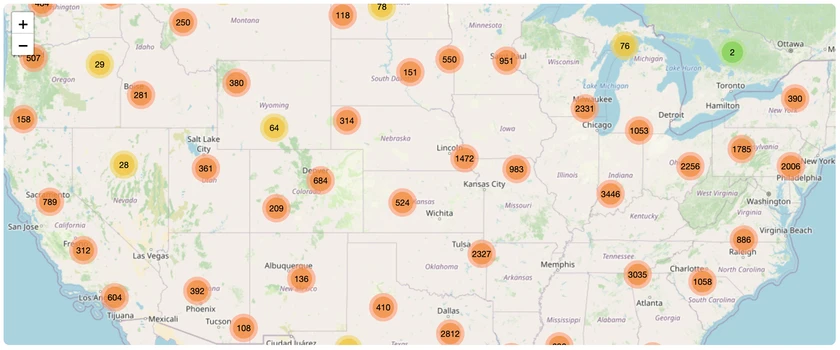
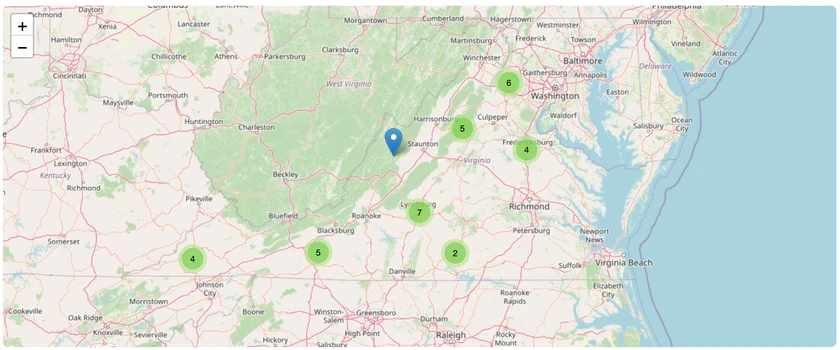
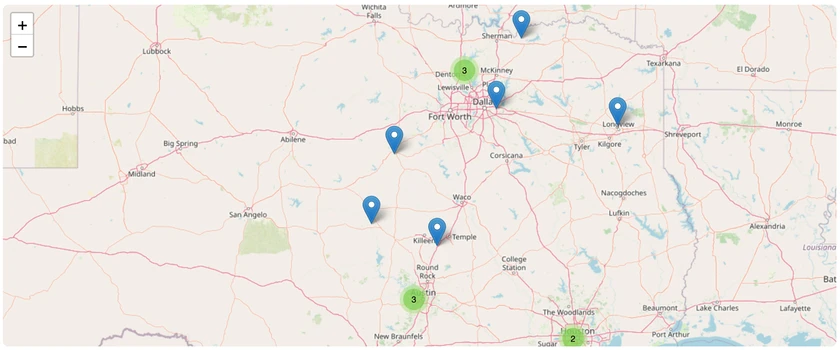
Find a dragon. Browse bearded dragon listings on the marketplace and search trusted breeders in the Creatures directory, which filters by species and US state.
Get told when one is listed. Good dragons from careful breeders go quickly, so set a free listing alert and we will tell you when one is posted. No account needed to start.
Breed bearded dragons? List your operation on Creatures so people searching near them can find you, and read getting listed in the breeder directory.