



Tan
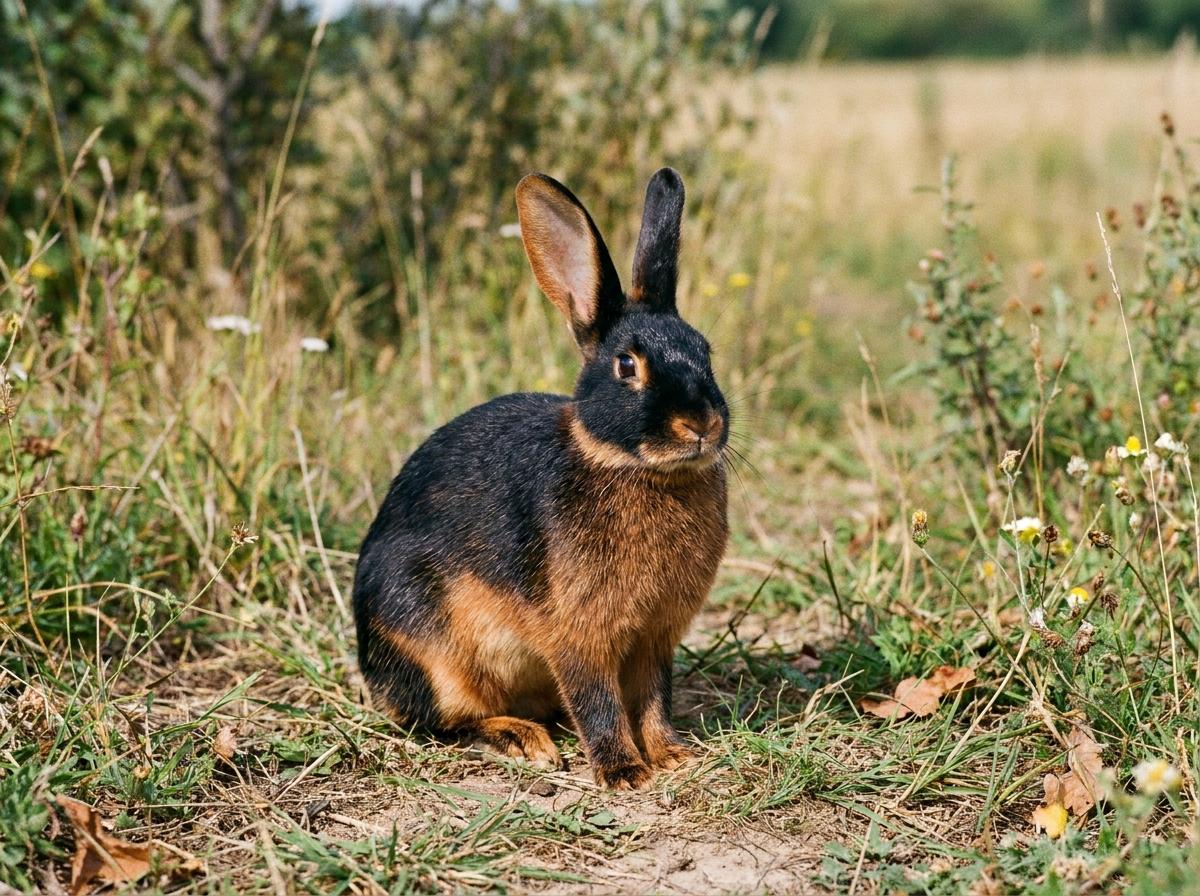
The Tan is a small, striking show rabbit built like a tiny athlete: a compact, fully arched body under about 5.5 pounds, big upright ears, and a two toned coat that looks like it was painted by the same hand that colors a Doberman or a black and tan hound. A dark, glossy top (black, blue, chocolate, or lilac) meets rich orange tan on the chin, chest, belly, the insides of the legs, and under the tail. It is one of the older established fancy breeds, one of the smaller ones you will meet on a show table, and one of the least cuddly. Tans are busy and athletic rather than sleepy lap rabbits, and the gap between how they look and how they act is the single most useful thing to understand before you get one. This page covers what the breed is, where it came from, how to tell a good one, how to keep it well, and what to know before you buy.
| Origin | Derbyshire, England, first recorded around 1887 |
|---|---|
| Recognized by | American Rabbit Breeders Association (ARBA) and the British Rabbit Council; national breed clubs in the US and UK |
| Body type | Full arch, judged as a “running” breed that moves on the show table |
| Weight | Maximum 5.5 lb (about 2.5 kg); ideal show weight roughly 4 to 5 lb |
| Color varieties | Black, blue, chocolate, and lilac, each with the same tan markings |
| Coat pattern | The tan pattern: a dark upper body meeting bright orange tan on the underside |
| Temperament | Very active, curious, and athletic; not a naturally cuddly lap rabbit |
| Lifespan | Commonly cited at about 8 to 10 years with good care |
Browse listings, public profiles, breeders, or add your animal.
What is a Tan rabbit?
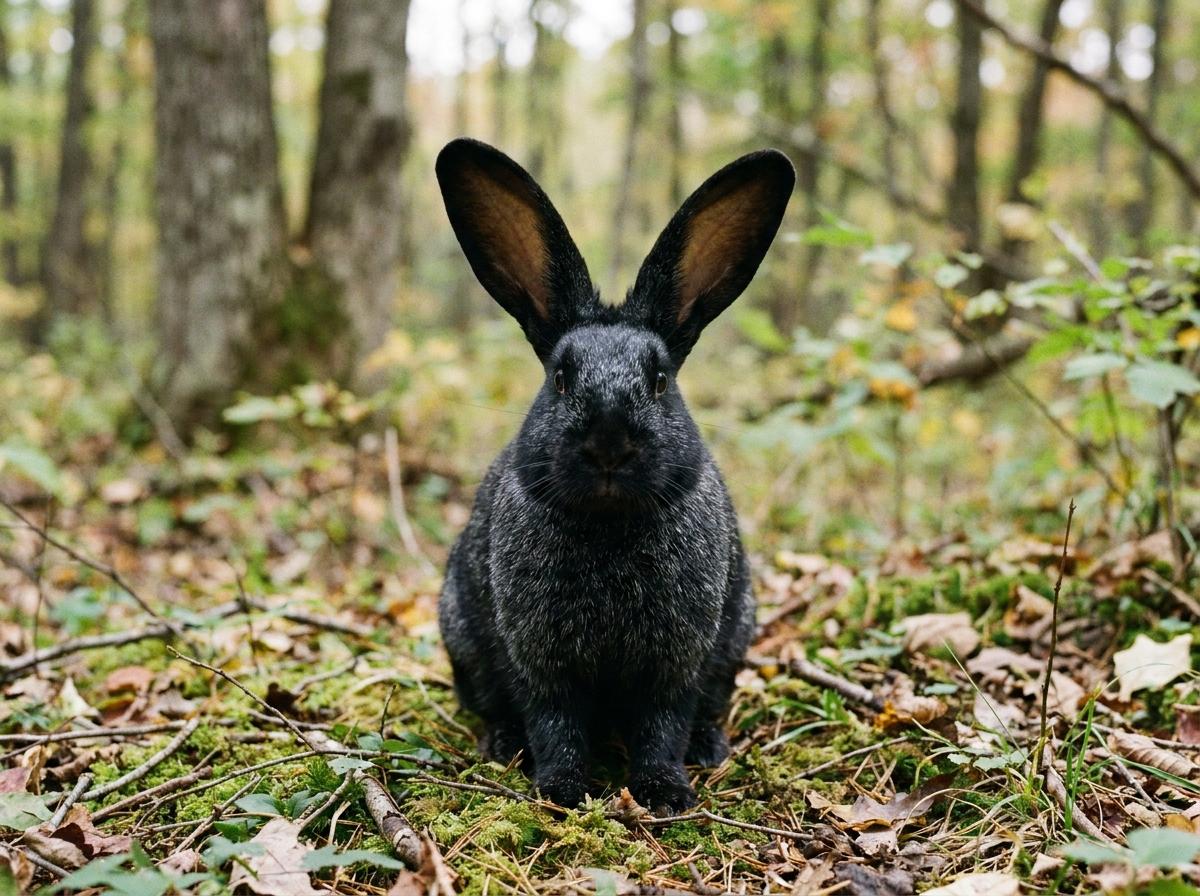
The Tan is a British fancy breed that takes its name from its coat, not from a single color. Every Tan shares the same layout of markings: a solid, glossy dark body over the back, sides, and head, and bright orange to red tan covering the chin, chest, belly, flanks, the inside of the ears, the underside of the tail, and a triangle at the nape of the neck. The contrast is what breeders chase. A good Tan reads at a glance like a small, sleek, black and tan dog rendered in rabbit form.
That marking layout is a genetic pattern, and the breed is the classic living example of it. In rabbit coat genetics the “tan pattern” sits at the agouti (A) locus, produced by the allele often written as a-t. It is intermediate between full agouti (the wild, banded, ticked coat) and self (a single solid color all over), which is why a Tan looks solid on top rather than ticked, but still carries the crisp pale underside that self rabbits lack. You do not need to follow the genetics to keep one, but it explains why the breed looks the way it does and why the markings, not the base color, are the heart of the standard.
Tans are also small. ARBA sets a maximum weight of 5.5 pounds, and most competitive animals sit closer to 4 to 5 pounds, which makes the Tan one of the more petite breeds you will see at a show. If you are weighing the Tan against other rabbits, the broader Creatures rabbit species page is a good place to compare it with the many other breeds kept as pets and show animals.
Where the Tan came from
The Tan is genuinely old, and its beginning was an accident rather than a plan. The breed traces to Derbyshire, England, in the late 1880s (breed clubs commonly cite 1887), where a colony of wild rabbits crossed with domestic stock, including Dutch rabbits that had been turned loose near the warren. Some of the resulting kits carried glossy black coats broken by unexpected tan markings. Fanciers noticed, liked what they saw, and set about fixing the look into a breed.
Black was the original and remained the foundation color. Blue followed not long after, reportedly from crossing a fawn doe onto a black Tan. Chocolate arrived later, around the 1920s, generally credited to introducing chocolate Havana blood, and lilac (a dilute of chocolate) came after that. The first Tan club in England formed in 1891, a lineage that continues today through the national breed club, and the breed crossed the Atlantic in the early 1900s, gaining a foothold with the organization that would become ARBA.
Two things about that origin still matter for anyone keeping the breed. First, the early infusion of wild and mixed blood gave the Tan real hardiness and a lively, driven temperament that has never fully mellowed. Second, the breed has changed shape over time. Early Tans were described as cobbier, closer to a Dutch in build, and the sleek, long limbed, fully arched animal prized today is largely a product of selective breeding from roughly the 1990s onward. When you read old breed descriptions, keep that shift in mind.
How to recognize a Tan
A few features, taken together, make the Tan hard to confuse with other small breeds.
- The tan pattern coat. A solid, deeply pigmented dark body meeting bright orange tan on the chin, chest, belly, leg insides, ear linings, tail underside, and nape triangle. Judges reward a coat where the two zones are rich, even, and cleanly divided, with the tan as intense and coppery as possible.
- A full arch, “running” body. The Tan is one of the fully arched show breeds. Stood correctly it is up on its toes with a continuous curve from the back of the ears over the shoulders and loin to the tail, and you can see daylight underneath. Because posture is central to the type, Tans are judged as a running breed, meaning the animal is watched moving on the table rather than only posed.
- Small, lithe, and lean. Under 5.5 pounds, with fine bone and a sleek, muscular frame. This is not a chunky, round breed.
- Large, erect ears. The ears stand upright and alert and are proportionate to the compact body, which gives the Tan its characteristic switched on expression. This is a clear separator from lop and semi lop breeds.
- Short, flyback fur. The coat is short and rolls back into place when stroked against the grain, glossy rather than woolly.

The four color varieties
ARBA recognizes four Tan varieties, and all of them carry the identical tan markings. Only the dark portion of the coat changes:
- Black is the original and still the most common, with a dense jet body against orange tan.
- Blue is a soft slate gray body, a dilute of black.
- Chocolate is a warm dark brown body.
- Lilac is a pale dove gray with a pink cast, the dilute of chocolate.
Across all four, the prize is contrast and the depth of the tan, so a well marked lilac and a well marked black are judged against the same ideal of clean, bright, evenly placed markings.
A lilac Tan is a color variety of the Tan breed; the Lilac rabbit guide covers the separate one-color Lilac breed.
Temperament: what the looks do not tell you
Here is where new owners are most often caught off guard. Tans are beautiful, and beautiful small pets tend to get bought on the assumption they will be gentle and huggable. The Tan is not that rabbit. Keepers and breed sources consistently describe Tans as intelligent, intensely curious, and high energy, closer to a busy terrier than a docile dwarf. They investigate everything, they move fast, and many of them simply do not enjoy being scooped up and held for long.
That does not make them bad pets. A Tan that is handled early, given room to move, and allowed to interact on its own terms can be a wonderfully engaging, interactive companion that follows you around and gets into everything. But it is a poor match for a young child hoping for a cuddly lap bunny, or for anyone who wants a rabbit that mostly sits still. Go in expecting an athletic, opinionated animal that wants a job, and the breed makes far more sense. Temperament still varies with the individual, with early socialization, and with how much daily interaction the animal gets, and an unneutered adult of either sex can be more territorial than a fixed one.
Daily care
Whatever else it is, a Tan is a rabbit, and the fundamentals of good rabbit care apply exactly as they do for any breed. The two areas where the Tan asks for more than average are space and enrichment, because a bored, under exercised Tan is a frustrated animal.
Housing and exercise
A cage alone is not a home for this breed. Plan for a secure base enclosure plus several hours a day of supervised, rabbit proofed running space, whether that is a large exercise pen, a bunny safe room, or a protected outdoor run. The rabbit needs enough room to run, take a couple of full hops in a line, stand fully upright on its hind legs, and stretch out flat, and a full arch breed like the Tan genuinely wants to move. Give it things to do: tunnels, cardboard to shred, boxes to climb into, and safe chew toys. Under stimulated rabbits often turn that energy into chewing baseboards and digging carpet, so meeting the need on purpose is easier than fighting the symptoms.
Rabbits are also more temperature sensitive to heat than to cold. They tolerate cool conditions far better than hot ones and can suffer heat stress well below temperatures that feel comfortable to us, so shade, ventilation, and never leaving a rabbit in direct summer sun matter more than most people expect.
Diet
Diet is where most preventable rabbit illness begins, so it is worth getting right. The foundation is unlimited grass hay, which should make up the large majority of what the rabbit eats. Veterinary and rabbit welfare sources put grass hay at roughly 80 percent or more of the diet, with timothy and other grass hays preferred for adults because they are lower in calcium and calories than alfalfa. Hay is not just food. The constant chewing wears down teeth that never stop growing, and the fiber keeps the gut moving.
Around that, offer a daily portion of fresh leafy greens and a small, measured amount of quality pellets rather than a full bowl, plus constant clean water. Sugary treats and starchy foods should be rare. This structure matters because two of the most common and serious rabbit problems, dental disease and gastrointestinal stasis, are strongly tied to low fiber diets. Your veterinarian can help you set portions for your specific rabbit.
Health and veterinary care
Rabbits have open rooted, continuously growing teeth, both the front incisors and the cheek teeth, and if they do not wear evenly the result is malocclusion and overgrowth that can cause drooling, weepy eyes, and an inability to eat. A hay heavy diet is the first line of defense, and rabbit teeth should be checked as part of routine veterinary exams.
Gastrointestinal stasis, where the gut slows or stops, is a genuine emergency in rabbits and can become fatal quickly. A rabbit that stops eating or stops passing droppings needs a veterinarian without delay, not a wait and see approach. Because so much of rabbit medicine is specialized, it is worth finding a vet experienced with rabbits before you have a crisis.
Two more items belong on any modern rabbit owner’s checklist. Spaying and neutering is strongly recommended by rabbit welfare organizations, and it is not only about behavior and unwanted litters: unspayed does have a high lifetime risk of uterine cancer as they age, and spaying removes that risk. And rabbit hemorrhagic disease virus type 2 (RHDV2), a highly contagious and often fatal virus, spread into wild rabbit populations across much of the western United States following a 2020 outbreak and is now considered established in wild lagomorphs in a number of states. A vaccine is available in the US, and whether your rabbit needs it is a conversation to have with your veterinarian based on where you live. Defer all medical decisions and any medication to a vet who can examine the animal.

Showing and breeding the Tan
The Tan is first and foremost a fancier’s breed, and its world revolves around the show table. On the table it is judged as a full arch running breed, which means the judge evaluates its type in motion as well as posed, looking for that continuous arch, the animal up on its toes, and correct proportion in a small, refined frame. After type, the markings carry enormous weight: the richness and evenness of the tan, the density and gloss of the dark color, and the clean division between the two.
If you want to breed or show, the practical path is to start from good stock and study the written standard rather than buying on looks alone. Connect with the national breed club and with established Tan breeders, learn what faults judges penalize, and be honest that a competitive Tan is a project that takes several generations to build. Keeping careful records of pedigrees, litters, weights, and show results is what separates a serious program from a hopeful one, and it is exactly the kind of thing worth tracking from the first animal.
Finding a Tan rabbit
Tans are an established breed with a dedicated following, but they are a specialty animal rather than a pet store staple, so you may not find one down the road. The best sources are breeders who show, because they select for correct type, markings, and temperament and can tell you honestly whether a Tan suits your household. Rescues occasionally have Tans or Tan crosses as well.
When you meet a rabbit, look past the striking coat and check the fundamentals: bright eyes, clean nose and ears, a correct bite with well aligned front teeth, good weight without being pudgy, and an alert, active manner. Ask about age, whether it has been handled, and whether it is spayed or neutered. A reputable breeder will talk you out of the breed if your situation calls for a calmer, more cuddle friendly rabbit, and that honesty is a good sign.
If you are still comparing animals more broadly, it is worth reading widely before you commit. Within the same set of breed profiles you will find everything from the Husumer or Danish Protest pig to the mosaic axolotl, which is a useful reminder that “small and good looking” means something very different from one species to the next. Among rabbits specifically, if the Tan sounds like more animal than you want, the calmer Lionhead or the popular, easygoing Holland Lop are gentler starting points. You can also browse current Tan rabbits on the Creatures marketplace and search for breeders in the Creatures directory.
Frequently asked questions
Are Tan rabbits good pets?
For the right owner, yes. They are smart, interactive, and full of character. But they are high energy and not naturally cuddly, so they suit active adults and older, gentle handlers far better than a small child who wants a lap bunny. If you want a rabbit that mostly wants to interact rather than be held, the Tan is a great fit.
Are Tan rabbits cuddly?
Generally no. Most Tans dislike being picked up and held for long and would rather explore on their own terms. With patient early handling they can become affectionate in their own way, but you should not expect a placid lap rabbit.
How big do Tan rabbits get?
Small. ARBA sets a maximum weight of 5.5 pounds, and most animals fall around 4 to 5 pounds, making the Tan one of the more petite breeds.
What colors do Tan rabbits come in?
Four recognized varieties: black, blue, chocolate, and lilac. All four share the same bright tan markings on the underside, chest, and face, so only the dark part of the coat differs.
How long do Tan rabbits live?
The commonly cited range is about 8 to 10 years with good care. As with any rabbit, diet, exercise, spaying or neutering, and prompt veterinary attention all influence how long an individual lives.
Why are they called Tan rabbits if they come in black, blue, chocolate, and lilac?
The name refers to the marking pattern, not the body color. Every variety carries the same rich tan on the underside and face, which is the defining feature of the breed and of the tan coat pattern in rabbit genetics.
Do Tan rabbits need a lot of exercise?
Yes. This is an athletic, fully arched breed that needs several hours of supervised, rabbit proofed running space each day plus enrichment. A Tan kept only in a cage will be frustrated and prone to problem behavior.
Do this next on Creatures
Whether you are researching the Tan, hunting for good stock, or already keeping one, Creatures is the records, marketplace, and directory layer to do it all in one place.
Add your rabbit. Already have a Tan? Create a free animal profile in a few minutes. The walkthrough is in adding an animal to Creatures.
Track behavior, diet, and health. A busy breed rewards good records, so log activity, feeding, and health records. The record sheet opens for any visitor to look around, and a free account saves what you enter. See adding a record and health and medical records for how it works.
Stay on top of care. Set feeding, exercise, and vet reminders so nothing slips. Here is reminders and upcoming care.
Find a Tan. Browse Tan rabbits on the marketplace and search trusted breeders in the Creatures directory. New to it? Read saving searches and using your watchlist.
Get alerted. Tans are a specialty breed and do not appear every day, so set a free Tan rabbit listing alert and we will tell you when one is posted. No account needed to start.
Breed or show Tans? List your rabbitry so buyers looking for this breed can reach you.