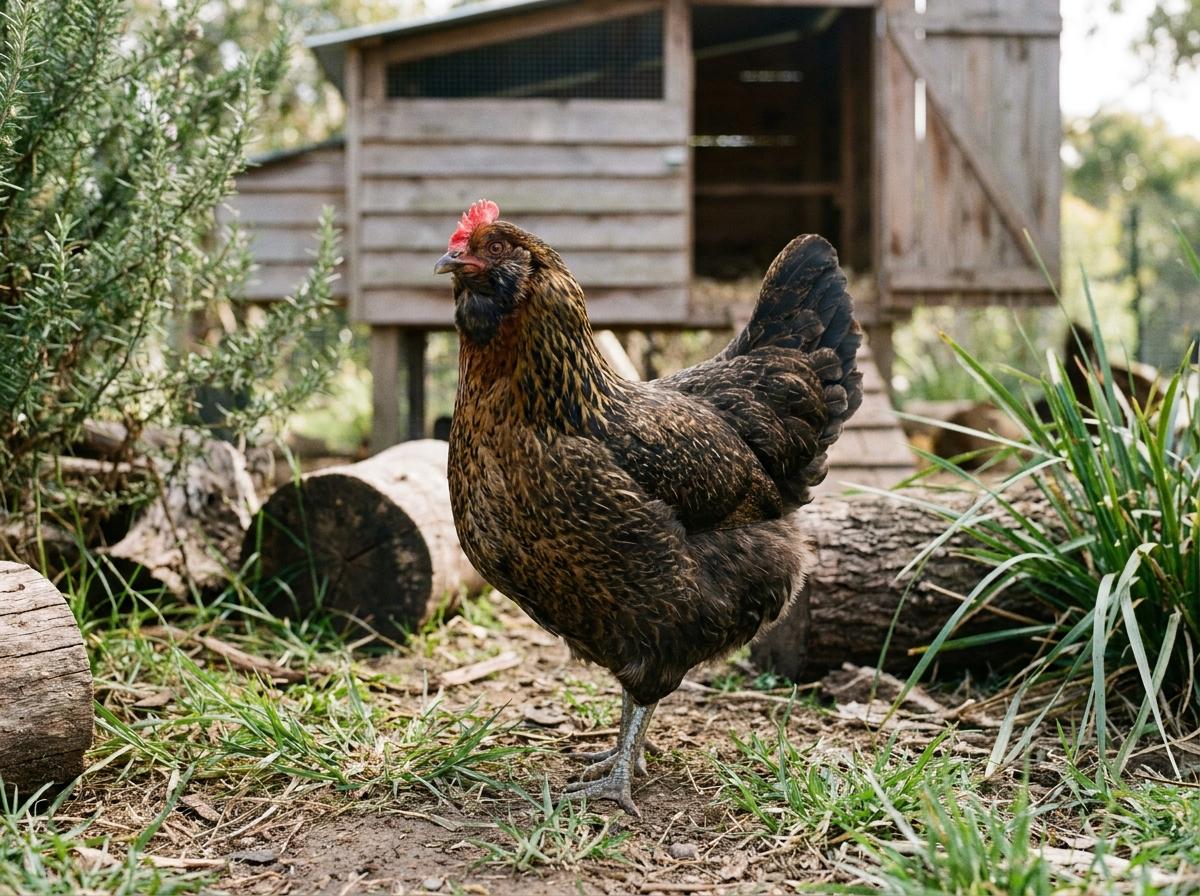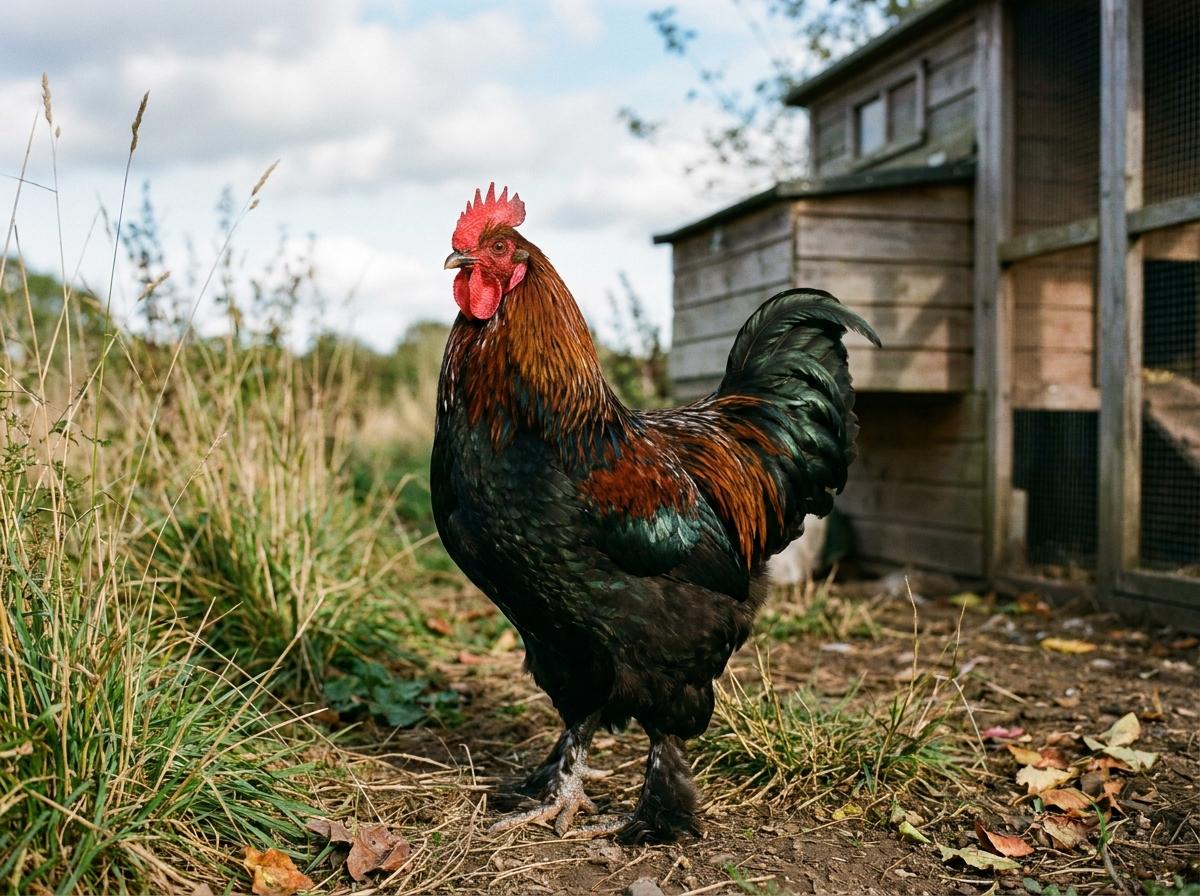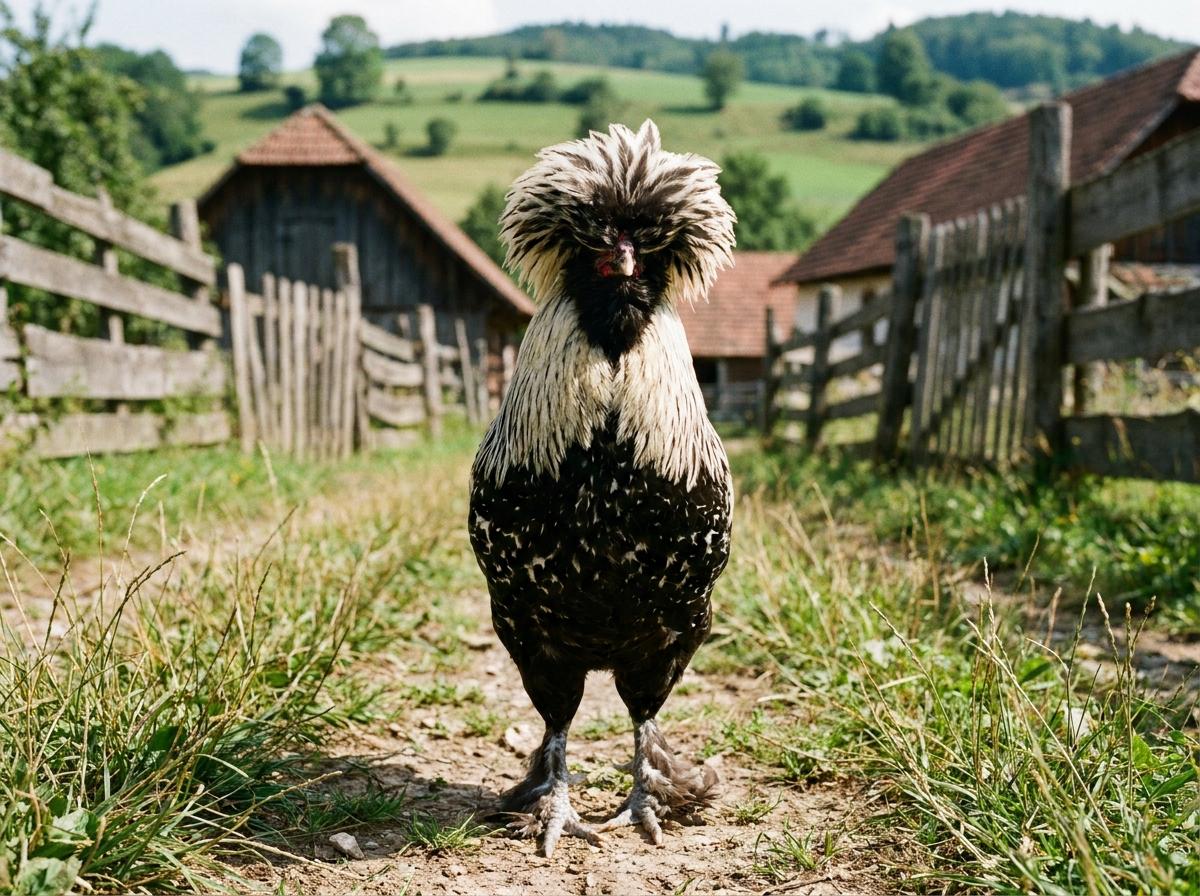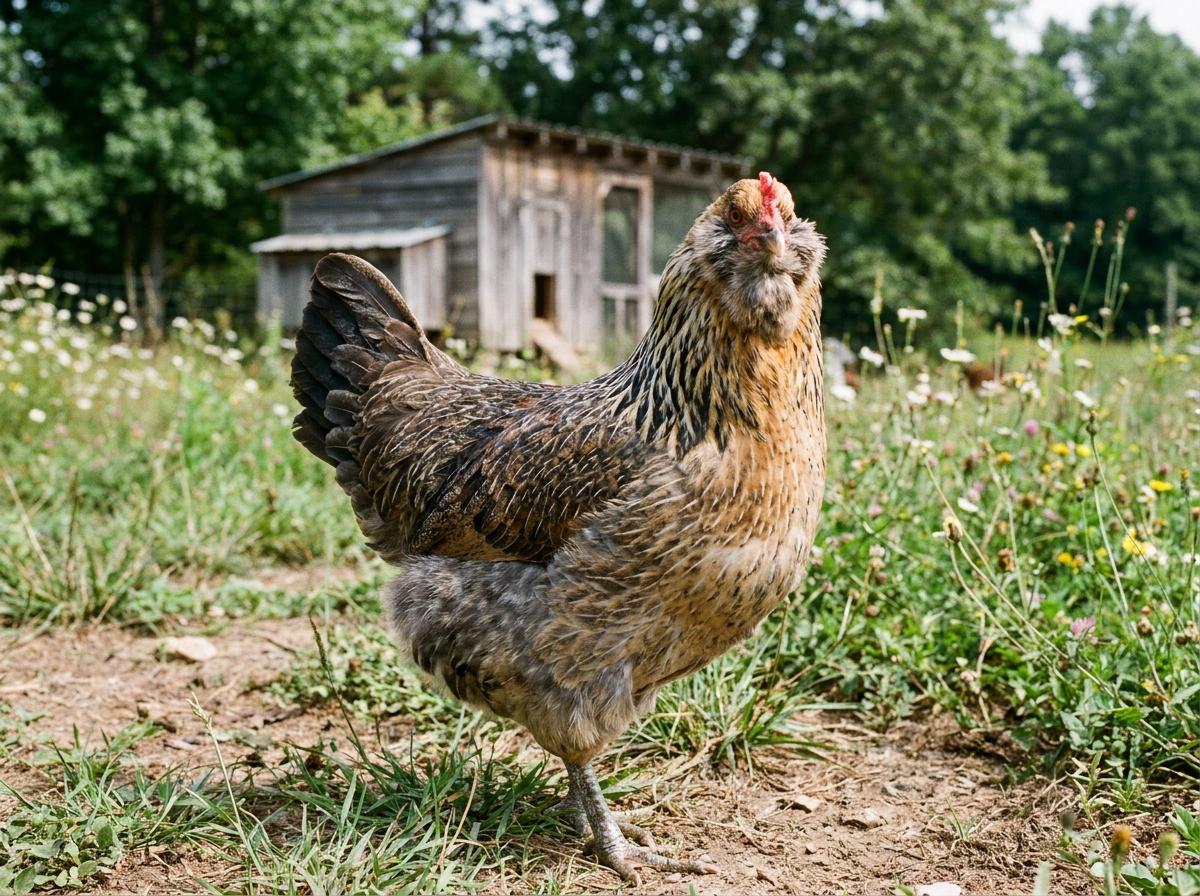


Silkie
Author: Elliott Garber, DVM · Published
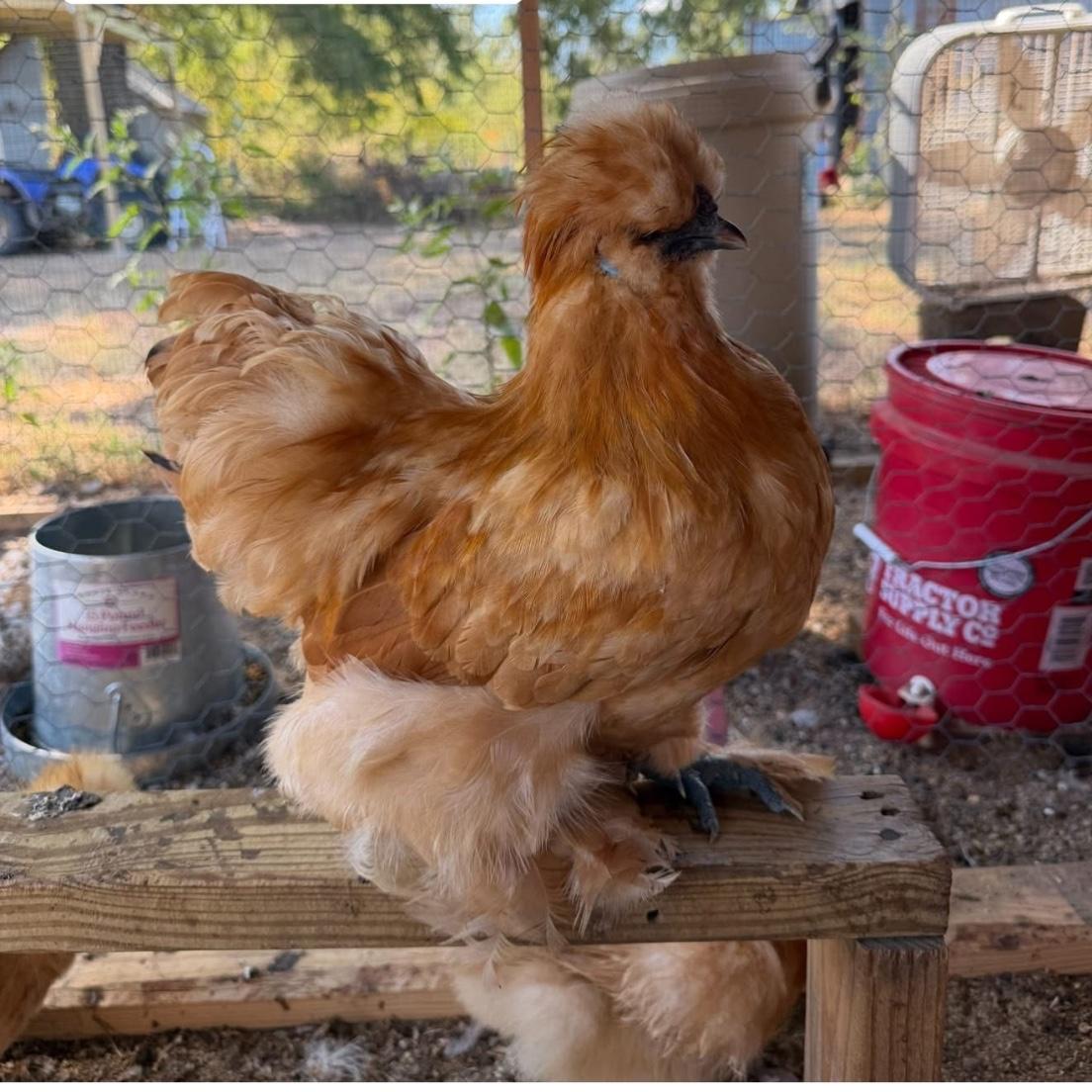
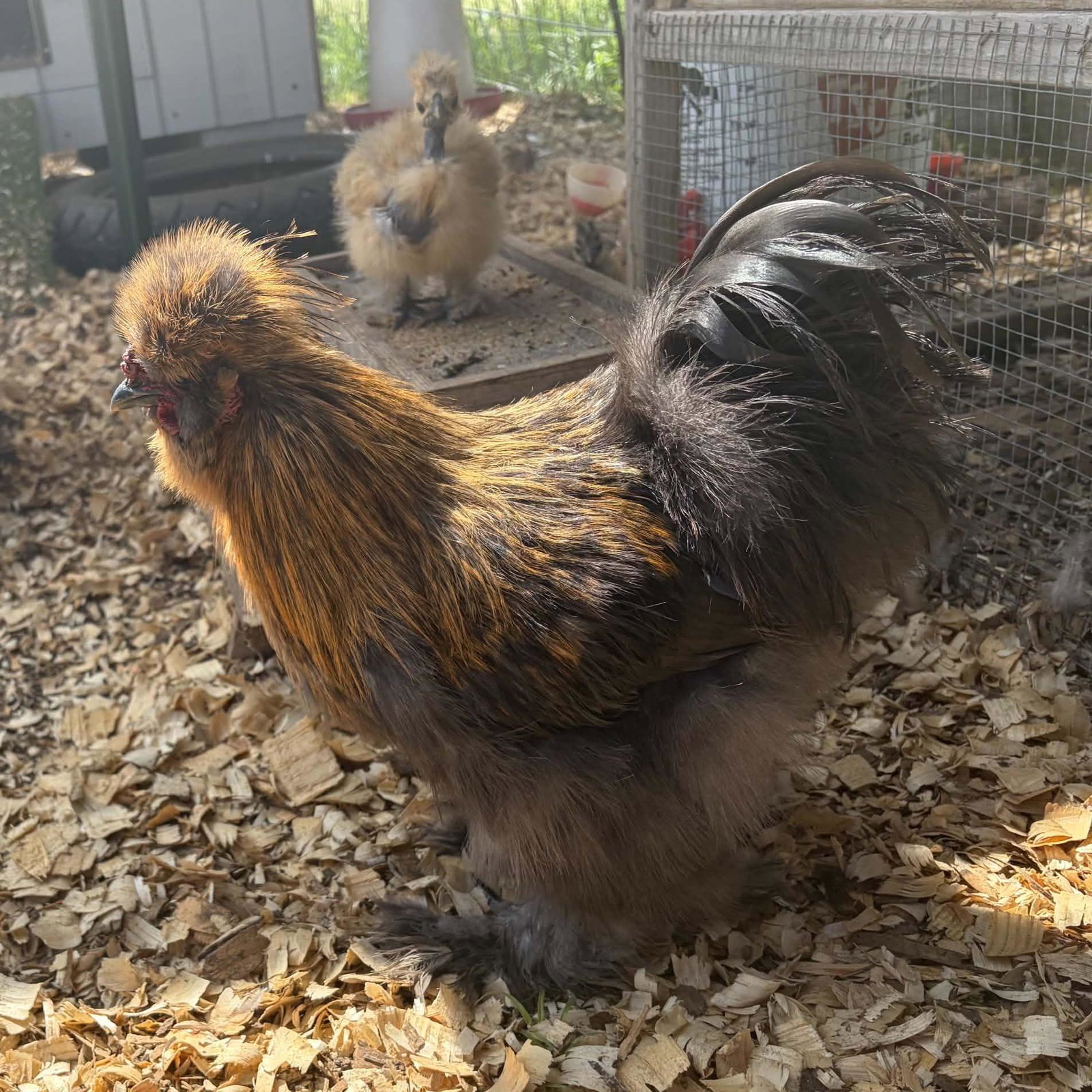
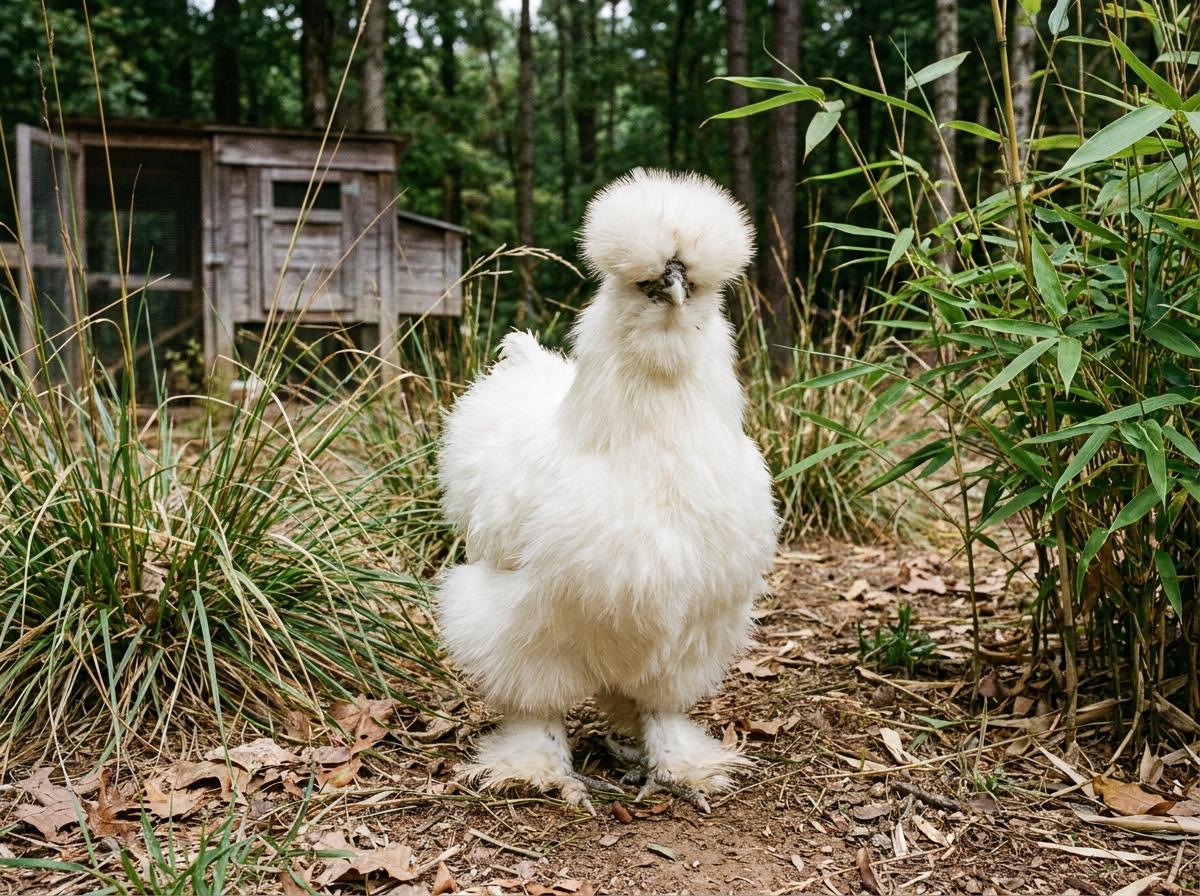
The Silkie is the chicken that does not look like a chicken. Its plumage has no working hooks to hold the feather web together, so it hangs in soft, fur-like strands instead of lying flat, and underneath that coat the bird has black skin, black meat, and black bones. Add a puffball crest, feathered legs, a dark mulberry comb, and five toes on each foot instead of the usual four, and you have the most recognizable bantam in the world.
Four quick answers, since they are what most people arrive for. Yes, they make unusually good pets: the American Silkie Bantam Club describes them as gentle and docile birds that adapt quickly to attention and handling. Yes, they lay eggs, but modestly and in stops and starts, because they go broody constantly. The black skin is a documented genetic trait called fibromelanosis, not a dye or a diet. And the care differences are real: a bird whose feathers cannot shed water and cannot carry it into the air needs dry ground, a covered run, and a low roost more than most chickens do.
Below: what the American and British registries actually recognize (they disagree, and it matters), what the peer-reviewed genetics say, and the husbandry that is genuinely breed-specific. If you already keep Silkies, create a free animal profile and start logging hatch dates, broody cycles, and treatments per bird while you read.

| Class in the US | Bantam only. The American Poultry Association’s accepted list carries the Silkie in the Feather Legged bantam class and nowhere in large fowl |
|---|---|
| Class in the UK | The Poultry Club of Great Britain lists it under Soft Feather Light and states it is regarded as a light breed |
| Accepted varieties | 14 on the APA’s accepted list, 18 on the American Bantam Association’s, counting bearded and non bearded forms separately |
| Plumage | Silky feathering from a recessive gene named hookless, so the feather web never zips together |
| Skin, meat, and bone | Black, from the dominant fibromelanosis allele, regardless of feather color |
| Toes | Five per foot rather than four, an autosomal dominant trait mapped in this breed to the ZRS limb enhancer |
| Eggs | Small, white to light brown, and modest in number; laying stops during every broody cycle |
| Signature use | Natural incubation. Silkie hens will sit on and raise other birds’ eggs, including game birds |
| Care flags | Cannot get away from rain, mud, or predators the way a flighted bird can; dense foot feathering hides mites |
Browse listings, public profiles, breeders, or add your animal.
The feathers, and why they change everything
Strip away the show ring and a Silkie is a small, round, heavily feathered ornamental chicken kept for company, for exhibition, and above all for sitting on eggs. Everything distinctive about keeping one starts with the plumage.
A normal feather has a central shaft with a vane on each side, and the vane is built from barbs whose small barbules carry hooked ends that catch the neighboring barb. The University of Kentucky’s Cooperative Extension poultry program states the function directly in its anatomy of a feather article: flight feathers must be tough to withstand the rigors of flight, and the barbs are connected to adjoining barbs in the same vane by the hooks on the barbules. Where those hooks are missing, as in an ornamental peacock eye feather, spacing opens between the barbs and the vane stops holding together.
That is the Silkie’s situation exactly. The American Silkie Bantam Club describes it on its About Silkies page: the strands of the web are normally held by small hooks, or barbicels, at their ends, and the Silkie does not have them, so the strands are fluffed out rather than held together. Researchers reporting in PLOS Genetics in 2014 mapped silky-feather to chromosome 3 and identified the cause as a single C to G change upstream of the PDSS2 gene that sharply reduces its expression during feather development. The trait is recessive, the gene’s own name is hookless, and every silky-feathered bird carries two copies.
Two consequences follow, and they drive most of what makes Silkie husbandry different: the plumage cannot form the firm, sealed surface powered flight requires, and it cannot shed water the way a normal chicken’s outer feathers do. Treat a Silkie as a ground bird that gets wet to the skin and stays wet.
Where the breed came from is less settled than most pages admit. The Poultry Club of Great Britain, the UK standards body, says on its own Silkie page: “Silkie fowls have been mentioned by authorities for several hundred years. Some think that they originated in India, whilst others favour China and Japan.” The American club records the frequently repeated Marco Polo reference to a fur-covered fowl with black skin in thirteenth-century China, while saying the exact origin is not known.
Five toes, feathered legs, and the rest of the diagnostic list

- Five toes. Chickens normally have four toes per foot. The Silkie is one of a small set of breeds with more, alongside the Beijing-You, Jiningbairi, Dorking, and Houdan, and the extra toe is not a recovered ancestral digit. A 2016 PLOS ONE study of polydactyly in Chinese and European chickens states that the additional toes do not represent restoration of a fifth digit lost from the typical five-digit vertebrate foot, but the development of new toes on the opposite side of the foot. The trait is autosomal dominant, and the causative mutation in the Silkie maps to the ZRS, the regulatory sequence controlling limb patterning.
- Feathered legs and feet. The breed club describes abundant feathers growing down the legs and the middle toe, which is why Silkies show in the Feather Legged bantam class rather than with the clean-legged bantams.
- A crest. A topknot of head feathers. Crest is an autosomal variant showing incomplete dominance, traced in 2021 to a 197 base pair duplication inside an intron of HOXC10.
- A dark comb and face. Not the bright red of a typical hen. The same extension program’s characteristics of healthy birds checklist makes the point for owners: a healthy bird has a bright red comb and wattles, except for breeds with blue combs, such as the Silkie. A dark comb on a Silkie is normal, which is worth knowing before your first health scare.
- Turquoise to blue earlobes, another expression of the same pigmented skin.
- Bearded or non bearded. The bearded form carries a muff of feathers under the beak. Both are recognized, and judged as separate varieties rather than as one breed with a cosmetic option.
A caution about numbers: the APA Standard of Perfection and the ABA Bantam Standard are printed books, and the American Silkie Bantam Club’s detailed standard page is behind member login, so this page quotes no weights or point scores and does not say which faults are scored as defects and which are disqualifications. Preparing a bird for a show means buying the current Standard rather than trusting any web page, this one included.
What the registries actually recognize
This is where careless sources go wrong, so here it is with the registry named against every number.
In the United States, the Silkie is a bantam. The American Poultry Association’s published accepted breeds and varieties table lists 14 Silkie entries, every one under Bantam and in the Feather Legged class. The same table carries breeds like the Cochin in both Large Fowl and Bantam, so the absence of a large fowl Silkie is a real absence, not a quirk of the page. The 14 are bearded and non bearded Black, Blue, Buff, Gray, Partridge, and White, plus Bearded Self Blue and Bearded Splash.
The American Bantam Association recognizes more. Its published Active Breed and Variety list carries 18 Silkie varieties, all Feather Legged, and states 18 as the breed total itself. The four it carries that the APA table does not are Bearded Paint, Non Bearded Self Blue, Non Bearded Splash, and Bearded White Naked Neck. The ABA’s 2025 Bantam Standard Supplement records no Silkie changes, so that list is current for this breed.
The breed club’s public summary trails both. The American Silkie Bantam Club names White, Black, Blue, Buff, Gray, Partridge and Splash as the colors recognized by both associations. That is the shared core, but the APA table now also carries Self Blue. Where a club summary and a registry’s live list disagree, use the registry’s.
In Britain, the Silkie is not classed as a bantam at all. The Poultry Club of Great Britain lists it under Soft Feather Light, its large fowl light-breed grouping, and states that the Silkie is regarded as a light breed and must be exhibited as such. UK keepers show bantam Silkies too, but the British standard treats the breed as a full-size light fowl in a way the American standard does not. If you have read that the Silkie is a true bantam with no large fowl form, that is a statement about the American standard specifically.
Black skin and black bones: fibromelanosis
The Silkie’s skin, meat, bones, and much of its internal tissue are dark, and this is one of the better-documented traits in poultry genetics.
The trait is fibromelanosis, and the causal mutation was published in PLOS Genetics in 2011. The dominant FM allele produces extensive pigmentation of the dermal layer of the skin and of the majority of internal connective tissue. The cause is a complex structural rearrangement: an inverted duplication joining two stretches of genome normally more than 400 kilobases apart, one containing endothelin 3 (EDN3), a gene that drives proliferation of the pigment-cell precursors called melanoblasts. Silkie embryos show increased EDN3 expression exactly while melanoblasts are migrating.
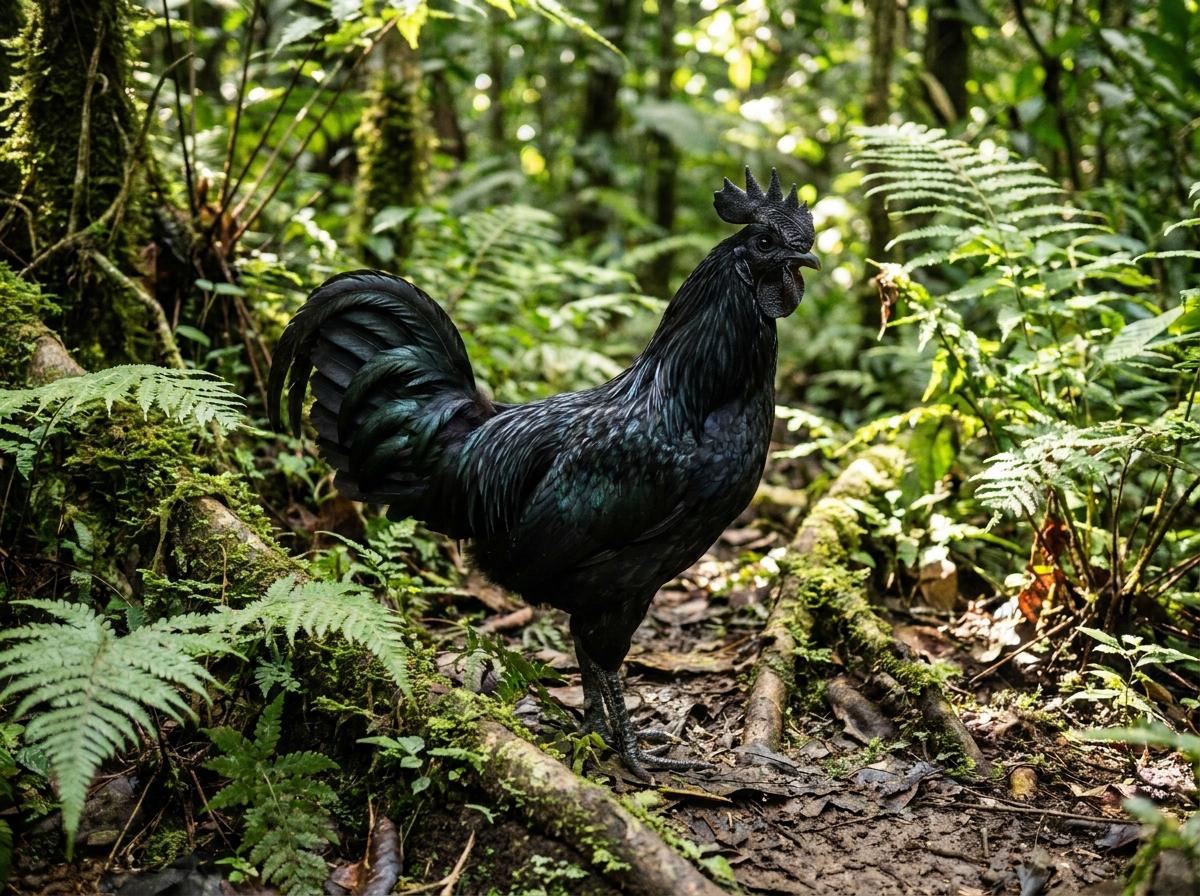
The Silkie is not the only black-skinned chicken, and its own club overstates this: the ASBC page says the Silkie is the only chicken with black skin, while the 2011 study found the identical rearrangement in four breeds on two continents, Silkie from China, Ayam Cemani from Indonesia, Black H’Mong from Vietnam, and Svarthöna from Sweden. Creatures has a hub for the Ayam Cemani, the breed most often compared with the Silkie for exactly this reason.
Feather color and skin color are also separate systems. The University of Kentucky’s poultry genetics primer explains that the visible result depends on Fm together with dermal melanin inhibitors such as the sex-linked Id mutation: a bird with Fm and without Id has dark skin and connective tissue, while Fm combined with Id gives no visible skin pigmentation. That is why fibromelanotic Silkies exist in black, white, blue, and partridge plumage alike, and why the same extension program can say Silkies have black skin, black meat, and black bones regardless of feather color.
Are Silkies good pets?
For most backyard keepers, yes, and temperament is why the breed traveled so far beyond the show ring. The American Silkie Bantam Club describes it as gentle and docile, quick to adapt to attention and handling, and adds a detail that surprises keepers of other breeds: Silkie males often show some maternal behavior too, calling chicks over when they find something good.
The honest counterweight is that a calm, small, ground-bound bird sits at the bottom of every mixed flock. The University of Minnesota Extension’s cold weather guidance advises keepers with a mix of breeds to consider separating them by size or dominance, because heavier or more dominant birds may peck at others and keep them from feed, water, or the roost. Treat that as a standing risk of keeping Silkies with heavy standard-size layers such as the Plymouth Rock, not only a seasonal one, and watch who is actually eating. They are also poor candidates for free ranging on open ground, because a bird that cannot fly cannot flush into a tree.
Eggs: what to actually expect

Silkies lay, and they are dependable while they are in lay. They are not a production bird, and no honest page will pretend otherwise.
The American Silkie Bantam Club puts it clearly: because they are so inclined to go broody they are not prolific layers in the way Leghorns or Rhode Island Reds are, since a hen does not lay while she is in a broody cycle, but within a laying cycle, which varies from hen to hen, they are very dependable layers. On the eggs themselves, the club says that since the American Silkie is a bantam the eggs are not large, describing them as about medium in size for the type and ranging in color from white to light brown.
Deliberately absent here: an annual egg count. The figures in circulation, generally somewhere between 80 and 220 a year depending which page you land on, do not trace back to any registry, extension service, or published production study that could be verified for this article. That spread is itself the finding. Expect a small, pale egg and a modest number, governed mostly by how often your hen sits, and measure your own birds rather than trusting a breed average. Our chicken egg laying guide covers what drives laying in any breed.
The broody hen everyone borrows
If the Silkie has a job, this is it, and both registries say so in their own words. The Poultry Club of Great Britain states that the Silkie’s persistent broodiness is a breed characteristic, whether the bird is pure or crossed. The American Silkie Bantam Club goes further: it calls the tendency unsurpassed, says Silkie hens will hatch and raise most any kind of poultry or game fowl, notes that quail and pheasant breeders who prefer natural hatching to an incubator keep a flock of Silkie hens for the purpose, and adds that once a Silkie hen has decided to sit there is very little that will move her off the nest until the eggs hatch. They will also go broody with no eggs present at all.
A reliable broody is a self-heating, self-turning, self-humidifying incubator that raises the chicks afterwards. It is a limitation if you wanted eggs, and a welfare consideration too, since a hen sitting an empty nest for weeks loses condition and needs a keeper to notice. Our broody hen guide covers reading the behavior and breaking a broody with nothing to hatch; the hatching eggs and incubator guide covers the artificial route. Either way the record that matters is the same: which hen sat, which eggs went under her, when they were set, and what hatched.
The care that is genuinely different
Most Silkie care is ordinary chicken care, and our chicken feeding guide covers starter, grower, and layer rations for any breed. Four things really are different, and all four trace back to the feathers.
Water and mud are the main hazard. Plumage that does not seal means a Silkie in cold rain gets wet through and loses heat fast. Penn State Extension’s small scale poultry housing guidance applies here with extra force: poultry require a dry, draft-free house, and the coop should sit on high, well-drained ground to prevent prolonged dampness and water saturation of the coop floor and outside run. Cover enough of the run that the birds always have dry footing, and expect to keep them in on genuinely wet days. Merck notes that show breeds often lack hybrid vigor and require heated or cooled housing, a reasonable frame for an ornamental bantam in a hard climate. Our chicken winter care guide has the seasonal detail.
A covered run is not optional. The Merck Veterinary Manual’s backyard poultry management chapter is blunt that domestic chickens are easy prey for cats, dogs, skunks, hawks, and foxes, and that covering the top of the enclosure is needed to stop predators that fly or climb. For a bird that cannot get airborne, that cover does double duty against rain. Our chicken predator guide has the rest.
Low roosts, or none, and dry bedding under them. A bird that cannot fly cannot land well either. The University of Minnesota Extension advises roosts generally starting at least 12 inches above the coop floor with about 9 inches of roost space per bird, avoiding metal or plastic because they hold the cold. Twelve inches is a floor for a normal flock and about the right ceiling for Silkies; many keepers use a low wide perch, or let them sleep in a heap on clean bedding, which is normal for the breed. Merck adds that litter should be dry and free of mold, ideally at 20 to 25 percent moisture, because wet litter encourages bacteria, fungi, and parasites and leads to footpad dermatitis. Heavily feathered feet drag whatever is on the floor.
Parasites hide in the foot feathering. Two mites matter, both in Merck’s mites of poultry chapter. The northern fowl mite is the most important parasite of layers and breeding chickens in the US and is typically found by parting the feathers around the vent, where skin may be thick, crusty, or scabbed. Scaly leg mite, Knemidocoptes mutans, tunnels under the leg scales; Merck calls it rare in modern poultry facilities but not uncommon in backyard flocks, mainly on older birds, producing thickened, encrusted legs with raised scales and lameness that can end in death if left untreated. On a feather-legged bantam you cannot see leg scales at a glance, so part the foot feathering and look, on a schedule. Merck also describes dust boxes of washed play sand and food-grade diatomaceous earth as an effective control, and our chicken parasites guide has the inspection routine.
One judgment call rather than a rule: a Silkie’s crest is small next to a Polish or Houdan crest, but it sits above the eyes and can obstruct vision on a heavily crested bird. Many exhibitors trim or tie back crest feathers on birds that are visibly impaired. Decide per bird, and deal with a soiled or matted crest before it becomes a skin problem.
Health: what the evidence supports, and what it does not
Two widely repeated claims about Silkies deserve correcting.
The skull and brain claim belongs to a different breed. You will read that Silkies have a vaulted skull that makes them prone to brain injury. The condition described is cerebral hernia, and the 2021 G3 study that identified the crest mutation is explicit about where it occurs: upregulated HOXC expression extends into skull tissue in Polish chickens, which carry a large crest, but not in Silkies, which carry a small one, even though both are homozygous for the same duplication. The paper records cerebral hernia in Polish, Houdan, Crevecoeur, and Sultan but not in Silkies, citing work from 1927, and states the crest mutation alone is not sufficient to cause it. The breed where crest size genuinely raises this question is the Polish.
The Marek’s disease claim is not established. Silkies are often called especially susceptible to Marek’s disease. No study demonstrating breed-level susceptibility could be found for this article. Merck’s Marek’s disease chapter lists host sex and genetics among the factors determining incidence, along with virus strain and dose, age at exposure, maternal antibody, vaccine, and environmental stress. Genetic resistance is driven substantially by the MHC-B region, and a 2020 survey of MHC-B diversity in a commercial Silkie breeder colony, published in Poultry Science, found 27 haplotypes of which 19 had never been described before. Silkies carry a large and largely uncharacterized amount of exactly the variation that governs this, which is reason enough not to make a confident breed-level claim in either direction.
Vaccination is what to act on. Merck states that Marek’s vaccines are given at hatch or in ovo on the eighteenth day of incubation, so it is a hatchery decision you cannot add later, and that efficacy is usually better than 90 percent. But vaccination reduces tumors and losses rather than preventing infection: once the virus is in a flock it spreads regardless of vaccination status, shedding is decreased but not prevented, and the virus survives months in litter and dust. Ask any seller whether the chicks were vaccinated at hatch and record the answer. Our chicken illnesses guide covers general warning signs; otherwise defer medical decisions to a veterinarian who can examine the bird.
Showgirls: the naked-neck Silkie

A Showgirl is a Silkie carrying the naked neck trait: full silky body plumage, crest, and feathered legs, but a bare or sparsely feathered neck. It is a recognized variety rather than a novelty label, since the American Bantam Association’s Active Breed and Variety list carries Bearded White Naked Neck as one of its 18 Silkie varieties, in the same Feather Legged class as the rest; it does not appear on the American Poultry Association’s accepted list, which is why a Showgirl may be shown under one association’s rules and not the other’s. The trait comes from a different gene entirely: a 2011 study in PLOS Biology mapped Naked neck to a large insertion whose effect is elevated expression of BMP12/GDF7 in embryonic neck skin, suppressing feather formation there while body feathering stays intact, and notes that loss of neck feathering is associated with heat tolerance. A bare neck sheds heat, which helps a bird otherwise wearing a fur coat in a hot climate and is a liability in a cold wet one.
Buying a Silkie
Expect not to know the sex for a while. This is the most common surprise for new buyers, and it has a mechanical explanation. The University of Kentucky’s sexing day-old chicks guidance states that sexing Silkies can be difficult, because the feather structure that makes the plumage look like hair also masks the sex-related differences in hackle and sickle feathers that let you sex most breeds by eye. Add a small dark comb that does not redden and enlarge as obviously as a single comb, and many Silkies are sold as unsexed chicks in good faith. Plan for cockerels before you buy, especially under an ordinance that limits or bans roosters.
Price shape, not price numbers. Silkie prices vary too widely by region, color, source, and quality to publish a figure that would be true for you. The pattern is consistent: unsexed hatchery chicks sit at the bottom, started and sexed pullets cost meaningfully more because someone carried the risk of raising cockerels, and exhibition birds with show placings sit well above both. Our how much does a chicken cost guide covers the ongoing costs that dwarf the purchase price, and how long chickens live covers how many years of them you are signing up for.
What to ask. Whether the chicks were vaccinated for Marek’s at hatch. Whether the bird is bearded or non bearded and what color variety it is claimed to be, since those are separate recognized varieties. Whether it has five toes on both feet. And whether the seller keeps records you can see. Browse current Silkie listings on the Creatures marketplace and search poultry breeders in the Creatures directory while you look.
Frequently asked questions
Are Silkie chickens good pets?
For most keepers, yes. The American Silkie Bantam Club describes them as gentle and docile birds that adapt quickly to handling. The caveats: they sit near the bottom of a mixed flock’s pecking order, and they need more protection from wet weather and predators than an ordinary chicken because they cannot fly.
How many eggs do Silkies lay, and what are they like?
Fewer than a production breed, and in interrupted runs, because laying stops during every broody cycle. The breed club describes the eggs as about medium in size for a bantam and white to light brown. No annual number in circulation traces to a registry, extension service, or published study, so this page does not give one.
Why do Silkies have black skin and bones?
A dominant allele called fibromelanosis, from an inverted duplication affecting the EDN3 gene, which drives pigment-cell precursors into the dermis and connective tissue. It affects skin, meat, and bone regardless of feather color, and the same mutation is found in the Ayam Cemani, Black H’Mong, and Svarthöna breeds.
How many toes does a Silkie have?
Five per foot rather than the usual four. The trait is autosomal dominant, mapped in Silkies to the ZRS limb regulatory sequence, and the extra toe develops as a new toe on the opposite side of the foot rather than as a restored ancestral digit.
Can Silkies fly?
Their plumage lacks the barbicel hooks that hold a feather vane together, so it cannot form the firm surface flight depends on. Plan for a ground bird: covered runs, low or no roosts with a ramp.
Is a Silkie a bantam or a large fowl?
It depends on the registry. The APA’s accepted list carries the Silkie only as a bantam, in the Feather Legged class. The Poultry Club of Great Britain lists it under Soft Feather Light and states it is regarded as a light breed.
Do this next on Creatures
Silkies generate exactly the information that gets lost: a hatch date, which hen sat, which eggs went under her, which chick turned out to be a cockerel four months later, which bird was treated for scaly leg last spring. Creatures is the records, marketplace, and directory layer for keeping all of it in one place. It is not a veterinary service, and nothing here replaces your vet.
Compare the breed. Start on the Creatures chicken species page to see the Silkie beside the other crested and feather-legged breeds, including the Polish and the Cochin bantam.
Add your birds. Keeping Silkies already? Create a free animal profile for each hen, so hatch dates, broody cycles, and lay records live per bird instead of in your head. No account needed to start, and the walkthrough is in adding an animal to Creatures.
Track treatments and care. Log a health record for a mite treatment, a vaccination, or a weight check. The record sheet opens for any visitor; saving it needs a free account. Medical record types are private by default, and you can download a printable packet of a bird’s records for the clinic, then import the vet’s PDF back into its history. See adding a record and health and medical records, and set reminders for upcoming care so seasonal parasite checks do not slip.
Find birds for sale. Browse Silkie listings on the marketplace and search trusted poultry breeders in the Creatures directory.
Get alerted when one is listed. Good Silkies sell fast and locally, so set a free Silkie listing alert and we will tell you when one is posted near you. No account needed to start, and saving searches and using your watchlist explains the rest.
List your flock. Breeding and selling Silkies? List your operation on Creatures so buyers looking for this breed can find you, and read getting listed in the breeder directory.