




Rhode Island Red
Author: Elliott Garber, DVM · Published
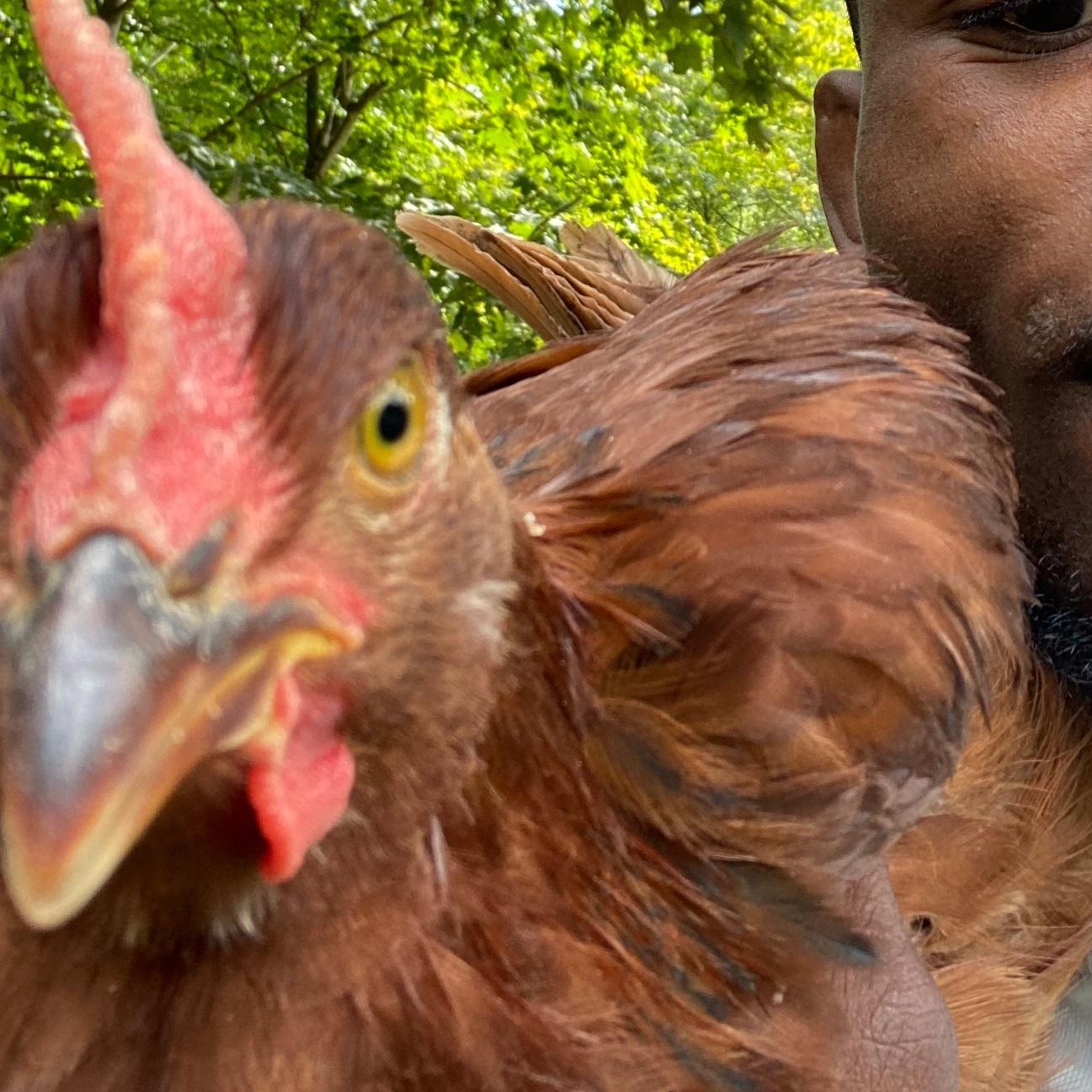
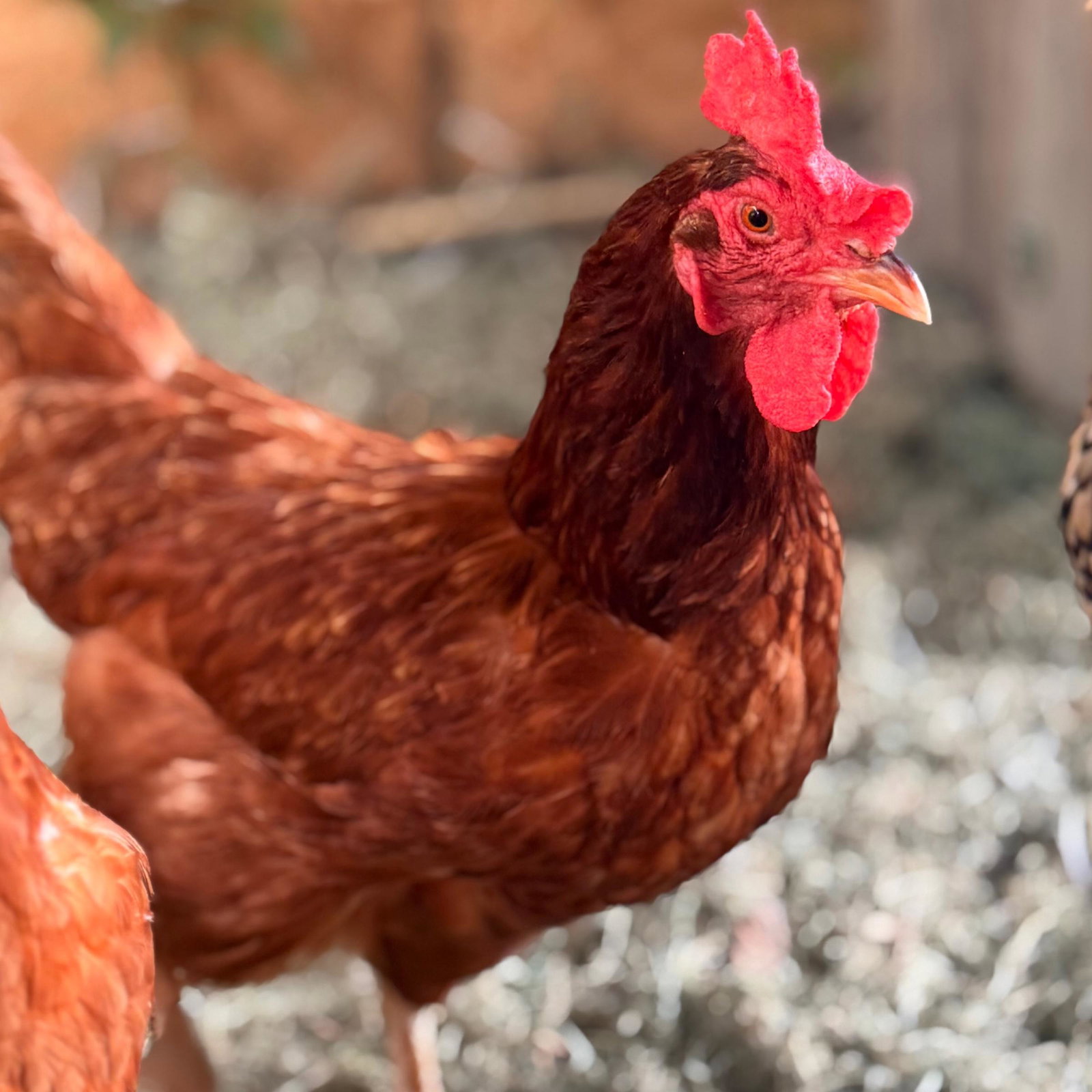
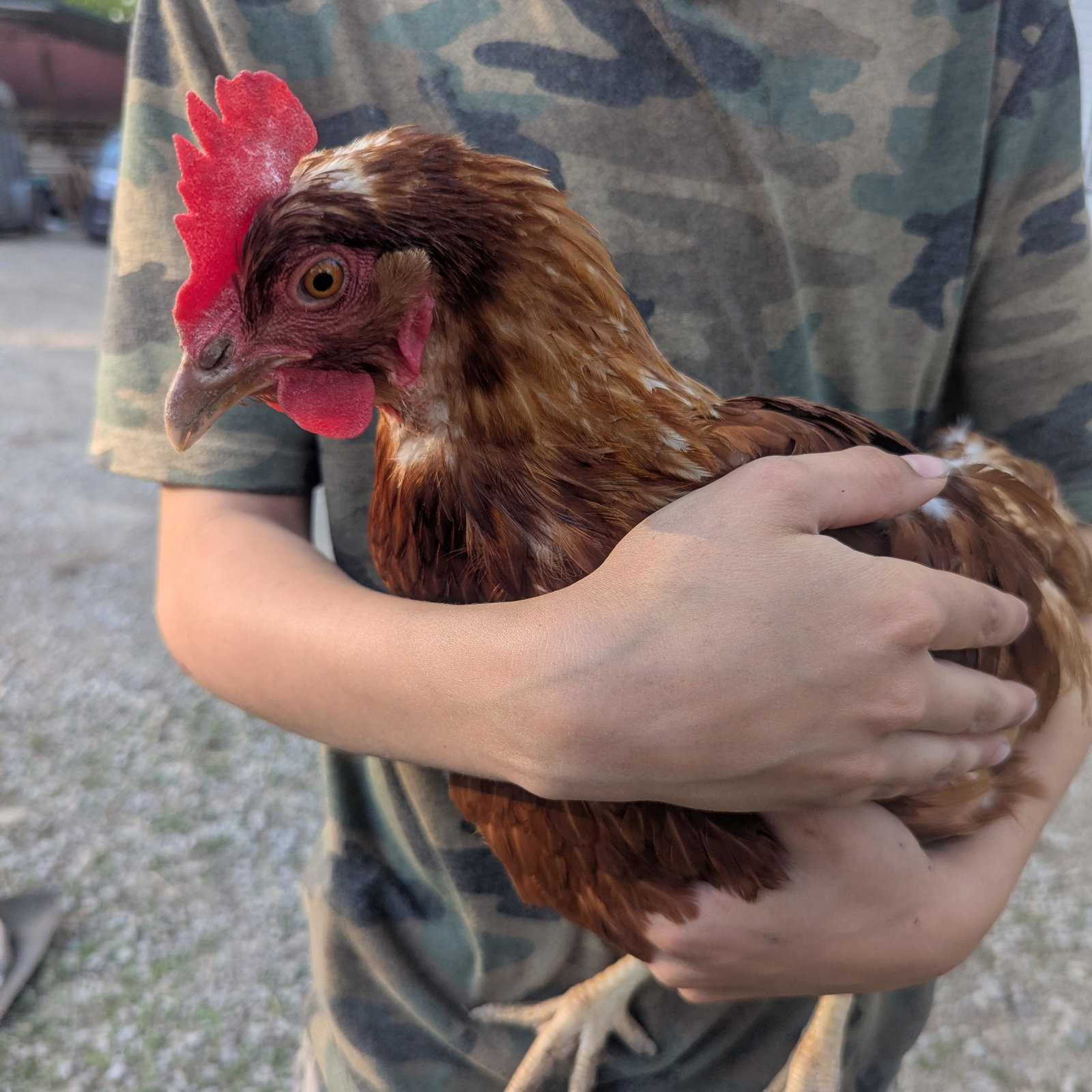
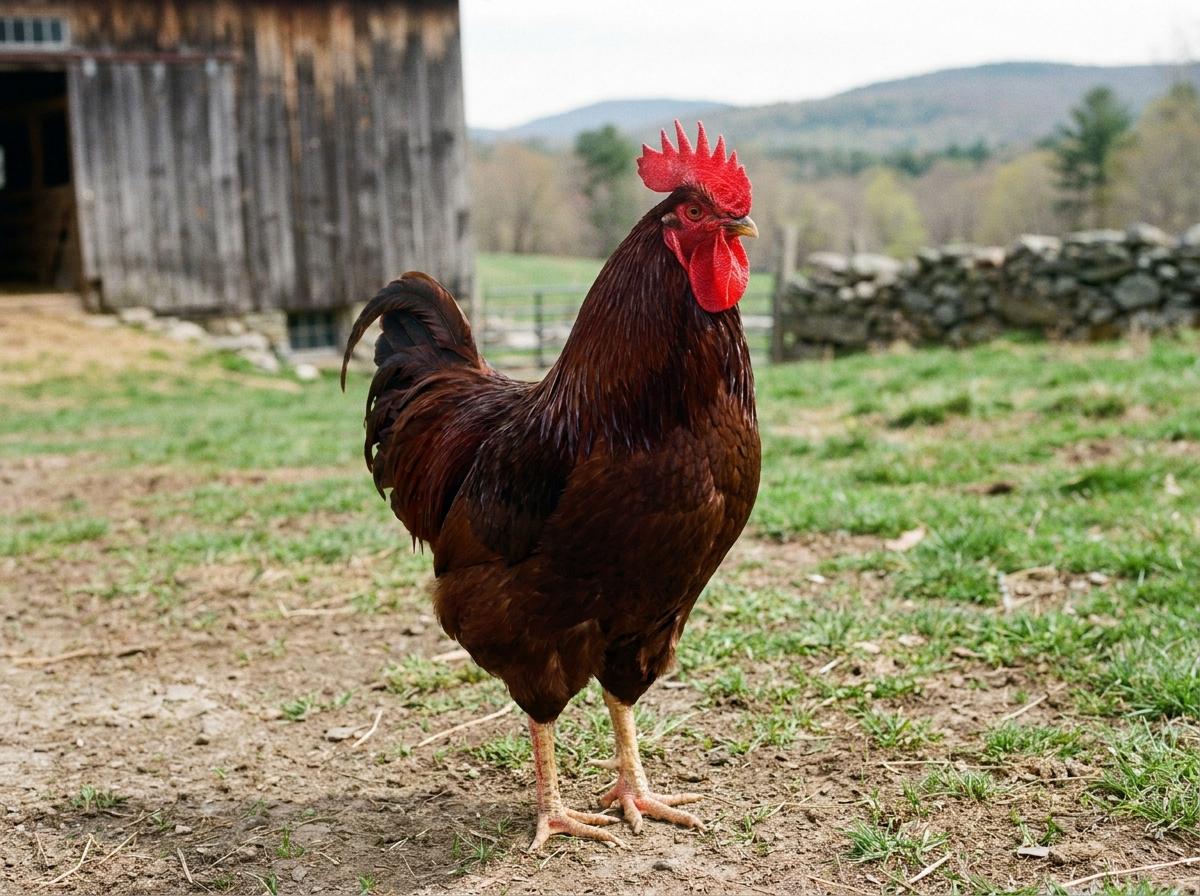
The Rhode Island Red is America’s best known farm chicken: a dark red, long bodied, dual purpose bird that lays large brown eggs and tolerates conditions that stop fussier breeds. It is the state bird of Rhode Island, the modern brown egg laying breeds were developed out of its stock, and it comes in two comb varieties most buyers never hear about. It is also the breed where the name tells you least about the bird, because two genuinely different chickens are sold under it.
That last point is what this page is for. A standard bred Rhode Island Red and a hatchery production red share a name and very little else, and the difference shows up in colour, size, broodiness and how long the hen keeps laying. If you are choosing birds now, Rhode Island Red listings on the Creatures marketplace show what sellers are actually offering.
Every standard, weight and recognised variety below is attributed to the registry that sets it, because the American and British standards are not identical and this breed is old enough that a lot of confidently repeated dates are wrong.

| Also called | RIR, Red; hatchery laying strains are often sold as Production Red |
|---|---|
| Origin | Adamsville, in Little Compton, Rhode Island, and adjoining Massachusetts farms around Westport |
| Recognised varieties (APA) | Single Comb and Rose Comb, in both large fowl (American class) and bantam |
| Standard weights (APA) | Cock 8.5 lb, hen 6.5 lb, cockerel 7.5 lb, pullet 5.5 lb |
| Standard weights (PCGB) | Cock 3.85 kg, hen 2.95 kg, cockerel 3.60 kg, pullet 2.50 kg; classed Soft Feather Heavy |
| Plumage, skin and legs | Dark red with black in the main tail and wing flights; yellow skin, yellow shanks, no leg feathering |
| Eggs | Brown to dark brown, large |
| Published annual lay | About 150 to 200 (Oklahoma State) up to 200 to 300 (The Livestock Conservancy); strain matters more than breed |
| Temperament | Extension sources class the breed good natured; some males can be quite aggressive |
| Conservation status | Graduated from The Livestock Conservancy’s priority list in 2023, though old type birds remain scarce |
Browse listings, public profiles, breeders, or add your animal.
The two different birds sold as “Rhode Island Red”
This is the single most useful thing to understand before you buy, and most breed pages skip it.
The Rhode Island Red was created as a dual purpose farm chicken: a hen that laid well and a cockerel that dressed out into something worth eating. From the 1940s onward it was selectively bred for more efficient egg production, and The Livestock Conservancy states plainly what that selection did. The birds became smaller, lighter coloured and less broody. Its Rhode Island Red page, which it titles “Rhode Island Red, Non Industrial Chicken”, says the birds of greatest conservation interest are the old type Reds, which are larger, darker and more broody, and that those birds are becoming rare as the breed is improved to meet industry needs.
So when you buy a “Rhode Island Red” today you are buying one of two things.
A standard bred or heritage Rhode Island Red. Bred to the American Poultry Association standard by people who show or conserve the breed. Darker, heavier, closer to the published weights, more likely to go broody, slower to mature, and usually bought from a breeder rather than shipped in a box. The University of Wisconsin’s extension publication draws the same line generally: exhibition type birds tend to grow more slowly and be more seasonal than hatchery production stock, and both are legitimate sources depending on your goal.
A hatchery production red. A commercial laying line carried under the same breed name, often listed as “Production Red”. Lighter red, smaller framed, earlier to lay, less likely to sit on eggs, and selected on eggs per hen rather than breed type. Mississippi State University Extension puts the industrial connection bluntly: the best brown shell egg production breeds are developed from Rhode Island Red stock. These are excellent layers. They are simply not the bird the standard describes.
Neither is a fraud. But the two answer different questions, and the words on a hatchery page will not tell you which you are getting.
Here is how to find out. Ask the seller three things: what the parent stock weighs, whether the birds are bred to the APA standard, and whether the hens go broody. A breeder working to the standard answers all three immediately. For a formal test, The Livestock Conservancy publishes a four part definition of Heritage Chicken, endorsed by named veterinarians and poultry scientists: an APA standard breed recognised before the mid twentieth century, reproduced through natural mating, genetically able to live a long vigorous outdoor life with breeding hens productive for five to seven years, and slow enough growing to reach market weight in no less than sixteen weeks.
What the American Poultry Association actually recognises
The APA’s own accepted breeds and varieties table lists the Rhode Island Red four times, and the detail matters:
- Large fowl, Rose Comb, American class
- Large fowl, Single Comb, American class
- Bantam, Rose Comb, in the rose comb clean legged class
- Bantam, Single Comb, in the single comb clean legged class
So both comb varieties are fully recognised, in both large fowl and bantam. That surprises people, because the single comb bird is what almost every photograph shows. The rose comb is genuinely scarcer, not less legitimate.

Standard weights come from the standard, and the two big standards do not use the same units or quite the same figures. Oklahoma State University’s breed page, which cites the APA, the Wisconsin extension publication and the sixth edition of British Poultry Standards, gives both:
- APA: cock 8.5 lb, hen 6.5 lb, cockerel 7.5 lb, pullet 5.5 lb
- Poultry Club of Great Britain: cock 3.85 kg, hen 2.95 kg, cockerel 3.60 kg, pullet 2.50 kg
Convert the British figures and the adult weights line up almost exactly with the American ones. The one real divergence is the cockerel, which the British standard sets about half a pound heavier. The University of Wisconsin’s Chicken Breeds and Varieties (A2880) prints the same four APA figures, and adds a practical note: rose comb birds tend to run smaller in practice, but the standard expects them to be the same size as the single combs. Treat those two as one source rather than two, since Oklahoma State lists A2880 among its references; what Oklahoma State adds is the British column, which it takes from the sixth edition of British Poultry Standards.
Classification differs too. In the United States the breed sits in the American class; the Poultry Club of Great Britain classes it as Soft Feather Heavy. Name the registry whenever you quote a number, because judges do.
Reading the bird: colour, body and what breeders cull for
The colour is what people get wrong, in both directions.
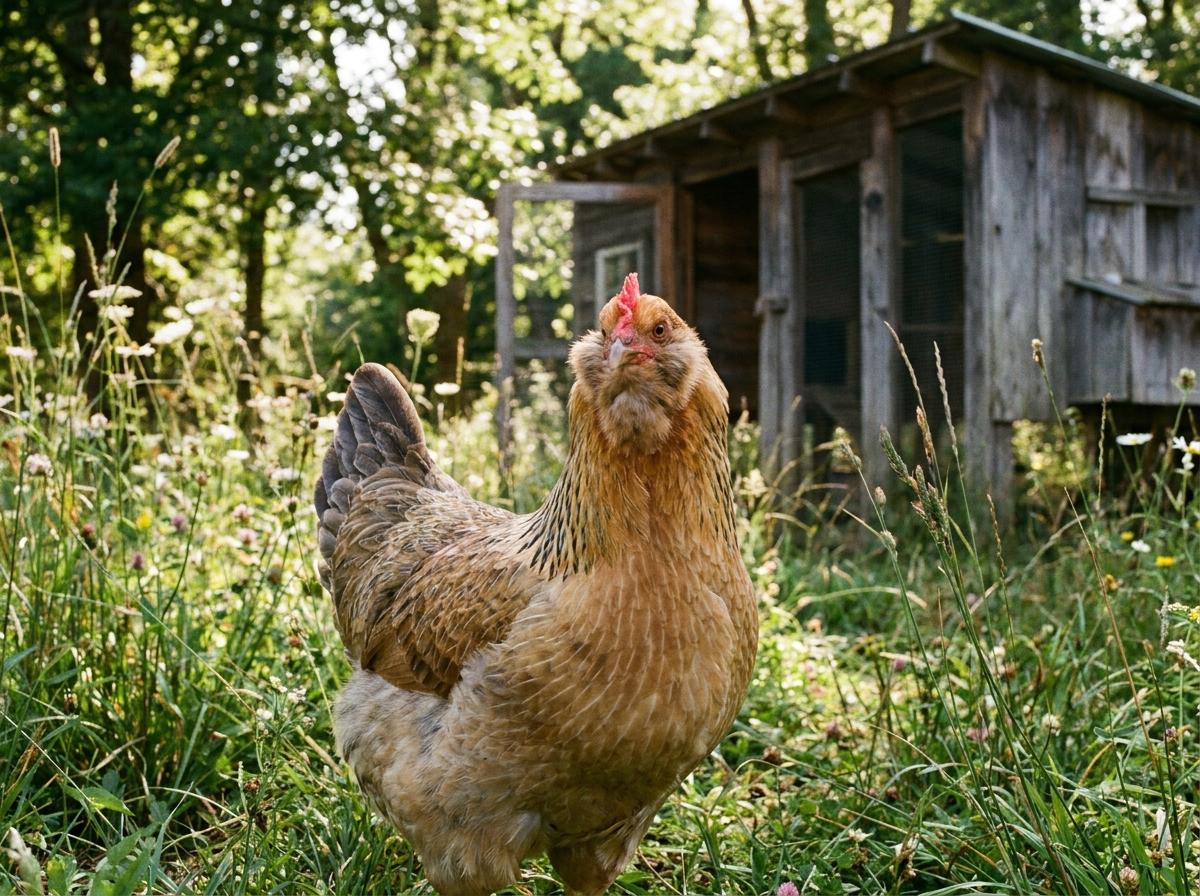
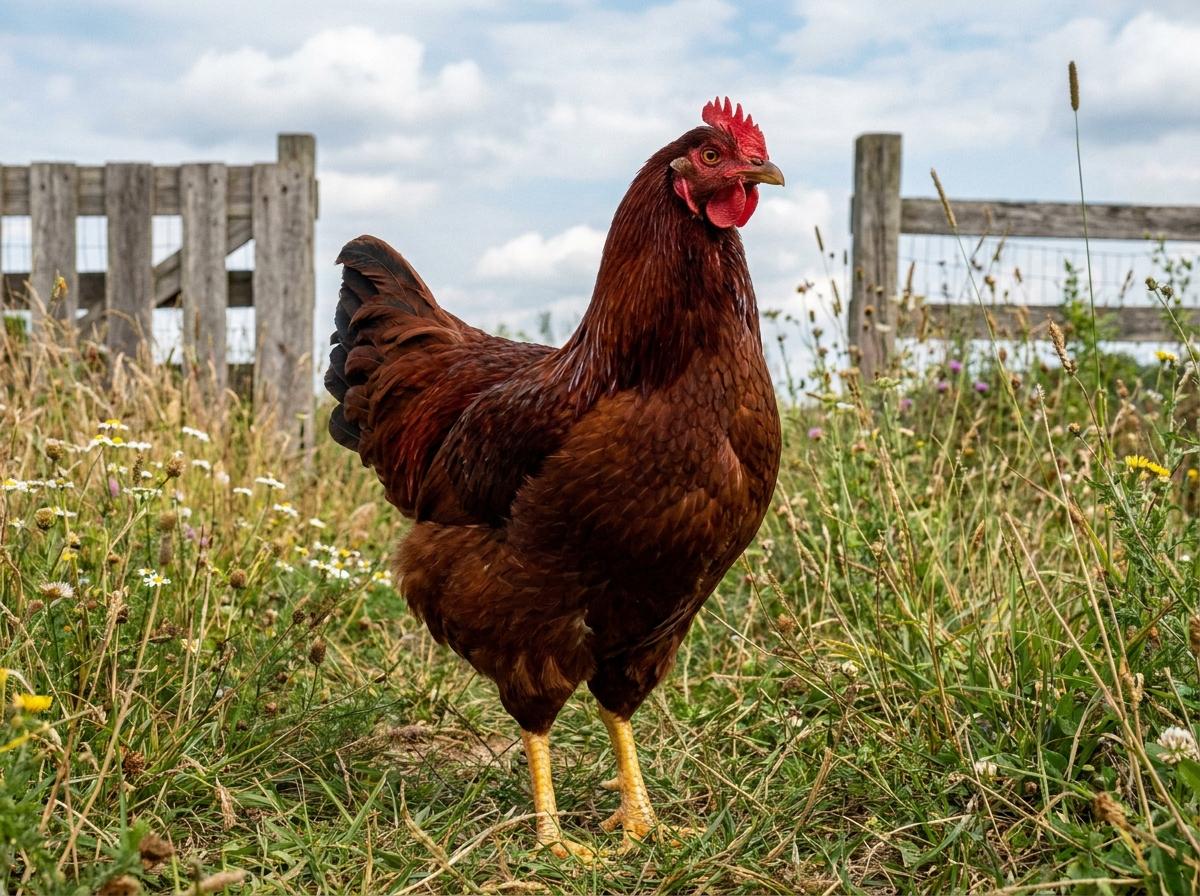
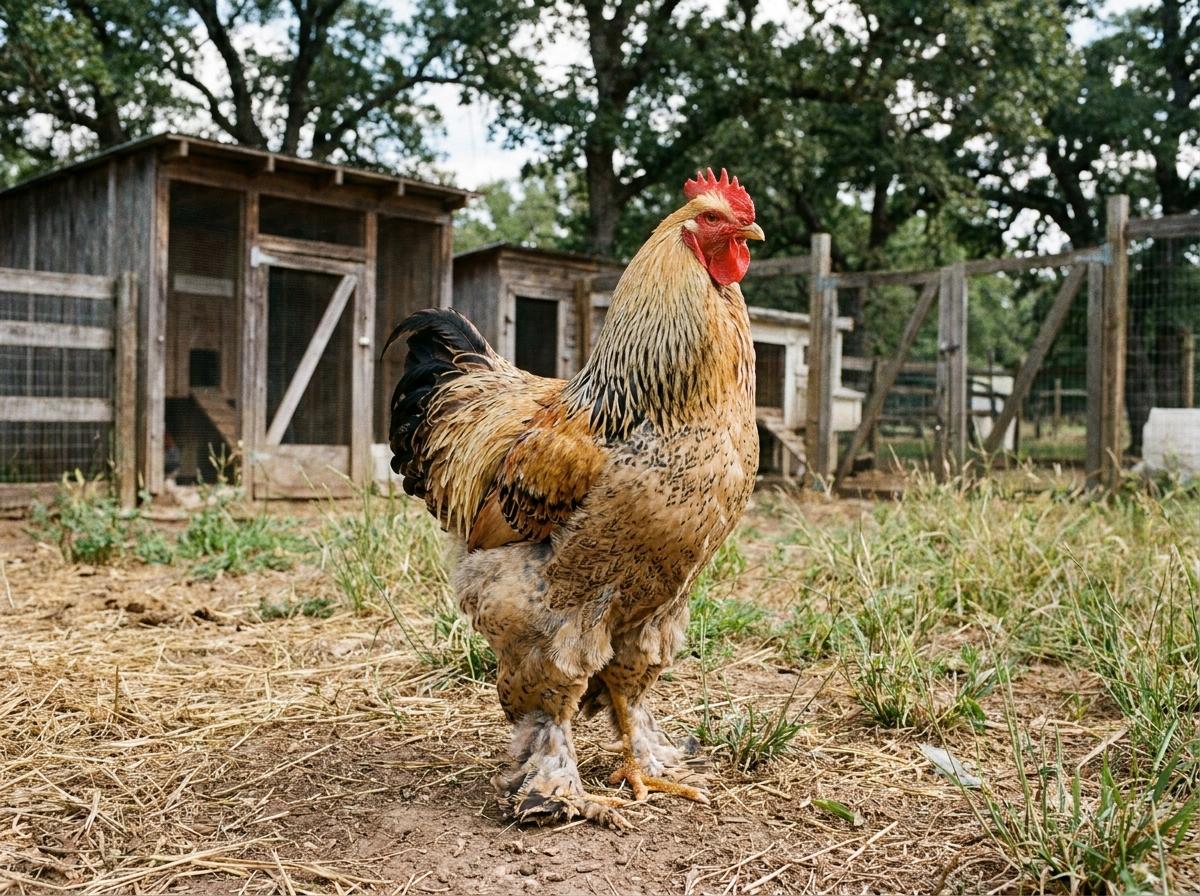
Wisconsin’s extension description is “typically dark red”, and it tells breeders to avoid using medium or brick red females because that is not in keeping with the breed. Oklahoma State says the same. Keepers call the correct colour mahogany, and a genuinely good standard bred Red is startlingly dark in the hand, closer to polished wood than to the orange brown most people picture. The red also fades after long exposure to sun, so a hen who has been ranging all summer will not photograph like a show bird.
Worth knowing, and almost never said: in the breed’s founding era “mahogany” was a criticism. The 1911 monograph Standard-Bred Rhode Island Reds, Rose and Single Comb, by Dwight Edward Hale and digitised by the US National Agricultural Library, records breeders complaining that extreme show matings were producing birds “much nearer brown or mahogany in color, than brilliant red”. Judge a bird against the standard your registry publishes, not against a word.
Body type is easier. The breed reads as a rectangle: long, broad, deep, carried horizontally, which is why keepers call it a brick. Skin and shanks are yellow, with no feathering on legs or feet. Black in the main tail and wing feathers is normal and correct. Black scattered through the body feathers, called smut, is what Wisconsin tells breeders not to breed from.
One caution about disqualifications, because the internet is full of confident claims here. Hale’s text shows the breed’s early club standards carried their own disqualification lists, including wholly white earlobes, feather or down on shanks or toes, more than four toes, wry or squirrel tails and badly lopped combs, and that when the APA admitted the breed in 1904 most of those were folded into the association’s general disqualifications rather than kept as breed specific ones. So what people call “Rhode Island Red disqualifications” are usually the general list. The current one lives in the current American Standard of Perfection, which the APA sells rather than publishes online. If you are showing, work from the current edition, and check whether the trait you are worried about sits on the fault list or the disqualification list, because they are not the same thing.
Eggs: what to actually expect
Start with the curve rather than the headline number, because the curve is what your flock will do. University of Florida IFAS Extension’s Factors Affecting Egg Production in Backyard Chicken Flocks describes a laying cycle of about twelve months: production begins at about 18 to 22 weeks depending on breed and season, rises sharply to a peak of about 90 percent six to eight weeks later, then declines gradually to about 65 percent after twelve months of lay.
Now the breed figures, and they disagree, which is the honest answer. Oklahoma State University gives around 150 to 200 eggs a year. The Livestock Conservancy gives 200 to 300, starting as early as six months of age. Do not split the difference. The spread is almost entirely the strain difference described above: standard bred birds at the lower end, hatchery production lines at the upper. Any single number quoted for “the Rhode Island Red” is really a number for one kind of Rhode Island Red.
The eggs are brown to dark brown and large. On laying ability against other dual purpose breeds the sources are unusually consistent: Wisconsin calls Reds probably the best egg layers of the dual purpose breeds, and The Livestock Conservancy calls them perhaps the best layers of all of them.
One source conflict to flag rather than hide. Wisconsin says the breed is used more for egg production than meat, because its dark pinfeathers spoil the appearance of a dressed carcass and its rate of lay is good. Mississippi State says the opposite. Wisconsin’s mechanism is specific and matches the rest of the literature, so this page follows Wisconsin, and says so rather than quietly picking a side.
For what drives production in any flock, the Creatures chicken egg laying guide and best egg laying chickens cover the wider comparison, and how long chickens live covers how few laying years sit inside a hen’s lifespan.
Temperament, and the rooster question
Rhode Island Red roosters have a reputation. It is worth separating what is supported from what is folklore.
What is supported is narrow and consistent. The University of Wisconsin publication and Oklahoma State both say, in the same words, that some Red males may be quite aggressive, and since Oklahoma State lists the Wisconsin publication among its references those two count as one source, not two. The genuinely separate one is The Livestock Conservancy, which says some roosters may be aggressive at times and that most hens are peaceful. So the breed specific evidence is two independent authorities saying “some males”, neither quantifying it.
What cuts the other way is also real. Mississippi State University Extension’s Choosing the Right Breed for Your Backyard Flock puts the Rhode Island Red in its “good natured” temperament category alongside the Orpington, and calls the breed docile and friendly. The same publication warns that Naked Neck roosters can sometimes be aggressive, so its authors do add that caveat where they think it belongs, and they did not add it here.

So no, this page will not tell you Rhode Island Red roosters are the meanest in poultry, because no source cited here measures aggression by breed. The veterinary literature is more useful. The Merck Veterinary Manual’s professional entry on behaviour problems of poultry notes that cockfighting is thought to have been a principal factor in the domestication of the chicken, that genetic traits linked to aggression and fighting behaviour persist in modern birds, and that the genetic propensity for aggression results in some highly aggressive individuals that might have to be removed from a flock. Aggression is an individual trait with a genetic basis, and it exists in every breed.
That reframes the practical advice:
- Judge the individual, not the label. Get a rooster from a breeder who keeps and handles his own males and will tell you honestly how they behave.
- Be prepared to cull. Merck’s framing is that some individuals may have to be removed. Deciding that in advance is kinder than deciding it after a child is hurt.
- Fix the environment first. Merck’s named interventions are foraging enrichment, because a beak busy foraging cannot peck, and perches, which give a bird being pecked somewhere to escape to.
- Keep no more males than you need. Mississippi State’s rule of thumb is roughly one rooster per ten to twelve hens where you want fertile eggs, and none if you only want table eggs.
Hens are a different conversation. In a mixed flock Reds are confident birds that tend to sit high in the pecking order, worth planning for if you are adding them to gentler breeds such as the Silkie.
Cold, heat, and the single comb
Hardiness is the breed’s real selling point and it is well attested. Wisconsin says Reds handle marginal diets and poor housing conditions better than other breeds and still continue to produce eggs, and The Livestock Conservancy says the same. Mississippi State calls them quite hardy and good foragers that keep laying into moderately cold weather, and notes that American breeds generally do better in cold climates while large combed birds do better in heat.
That last clause is the catch, because the common Rhode Island Red is single combed, and a large upright comb is exactly what freezes. Poultry Extension’s article on frostbite in chickens, by Dr Jacquie Jacob of the University of Kentucky, is clear that combs, wattles and toes are the vulnerable parts, that frostbite is most common in roosters because their combs and wattles are bigger, and that it is far less common in birds with smaller comb types. This is the practical argument for the rose comb: Wisconsin’s own Wyandotte entry notes that rose combs do not freeze as easily as single combs.

The prevention advice is management, not heat. Frostbite is most likely at night in a cold, poorly ventilated coop with damp bedding, so the fixes are keeping the litter dry and topped up through winter, and ventilating properly. If there is condensation on the windows or uninsulated walls in the morning, the coop needs more air, not less. Heat lamps are named as a fire hazard that also disrupts the birds’ light schedule, and Poultry Extension’s conclusion is that flocks can do well at sub zero temperatures on a deep litter system and an in bucket water warmer, with no external heat at all.
If a bird does get frostbite, the extension article above carries the treatment protocol, and the two things people get wrong are warming the tissue too fast and trimming the blackened part, which actually protects what is left of the comb. Anything infected or extensive is a conversation with your vet. Feeding is covered on the Creatures chicken feeding guide, housing on the chicken coop guide.
Broodiness, honestly
The common claim is that Rhode Island Reds do not go broody. That is true of some and false of others, and which you get is the strain question again.
Wisconsin states it precisely: most Reds show broodiness, but the characteristic has been partially eliminated in some of the best egg production strains. The Livestock Conservancy agrees from the other direction, saying most hens can become broody except within strains heavily selected for egg production. So a standard bred Red is a reasonable prospect for hatching her own chicks and a hatchery production red mostly is not, which is why broodiness is one of the three questions to ask the seller.
Where the breed came from
The origin is unusually well documented for a nineteenth century farm breed, because there is a monument and a federal nomination form describing it.
The National Park Service’s National Register of Historic Places registration form for The Rhode Island Red, a 1925 bronze relief of a rooster set into a granite boulder in the village of Adamsville in Little Compton, Rhode Island, states that the breed originated there, at William Tripp’s farm on Long Highway. The tablet was placed by the Rhode Island Red Club of America with contributions from Red breeders around the world, on land donated by Deborah Manchester, and the sculptor was Henry L. Norton.
Hale’s 1911 monograph carries the founders’ own account. A letter from Captain Benjamin E. Tripp of New Bedford, son of William Tripp, dated January 1900, records that as far back as 1854 John Macomber of Westport and his father, both market men running teams into New Bedford, set out to cross different strains and get better layers than the local fowls. Before they were Rhode Island Reds the birds were known as the Tripp or John Macomber fowl. Red Malay game birds brought home by sea captains went into the mix, which is where the deep colour, hard feather and strong constitution came from; red Javas are the usual explanation for the rose comb.
Sources date the work differently depending on what they are counting, so treat any single founding decade with suspicion: Hale’s letter puts the crossing at 1854, The Livestock Conservancy dates development to the 1880s and 1890s, and Mississippi State says the early 1900s. They are describing the start of the crossing, the emergence of a recognisable breed, and its standardisation.
The recognition dates are where almost everyone goes wrong. You will see both 1905 and 1906 quoted for the rose comb, and both describe something real. Hale, writing from the association’s own proceedings, records that the single comb bird was admitted at the APA meeting in Rochester, New York in January 1904; that at Minneapolis in January 1905 the rose combs were admitted under the name American Reds; that rose comb breeders objected so strongly to the renaming that a special meeting reconsidered and threw the American Reds back out of the standard; and that at the APA’s thirtieth annual meeting in Cincinnati in January 1906 the motion was withdrawn and the Rose Comb Rhode Island Reds were admitted under their own name. The Livestock Conservancy says 1905, Oklahoma State and the Poultry Club of Great Britain say 1906, and both appear in print because the variety really was admitted twice.
The 1901 club standard in Hale’s book also contains the best single sentence anyone has written about this breed. After the colour requirements it adds that because the promoters’ aim was to conserve vigour and prolificacy rather than immaculate perfection of colour, the gradual fading of the red in a mature hen’s plumage that naturally follows prolific laying shall not be discriminated against in judging. The people who made the breed wrote into their own standard that a hard working hen should not be marked down for looking like one.
What followed is the industrial story. The New Hampshire was developed out of Rhode Island Red stock by intensive selection for rapid growth and early maturity, and admitted in 1935. Rhode Island Red males became the standard gold parent in sex linked crosses, which is how commercial brown egg pullets are still sexed at a day old. Rhode Island General Laws section 42-4-5 designates the breed of fowl commonly known as the Rhode Island Red as the official state bird, enacted in 1954. And the National Register form, written around 2000, notes the breed is no longer as commercially important and has been replaced by more specialised breeds. The Livestock Conservancy graduated it from its priority list in 2023, while still describing the old type birds as becoming rare.
The Rhode Island White is a separate breed
It is not the white variety of the Rhode Island Red, and treating it as one is a common error.
The APA’s accepted breeds table lists the Rhode Island White as its own breed in the American class, recognised in rose comb only for large fowl, and separately as a bantam. Wisconsin lists it as its own entry among the American class breeds. Its ancestry is entirely different: The Livestock Conservancy records that John Alonzo Jocoy of Peacedale, Rhode Island developed it from 1888 by crossing White Wyandottes with Partridge Cochins and Rose Comb White Leghorns, introduced it publicly in 1903, and that the rose comb bird was admitted to the American Standard of Perfection in 1922 at Knoxville, Tennessee, with the single comb version never standardised. It was bred over time to resemble the Red’s brick shaped body, which is where the confusion comes from. Wisconsin does loosely call it the white form of the Rhode Island Reds, which pulls the other way, but it still lists it as a distinct breed, and the separate ancestry and separate admission settle it.
The two breeds do meet in the hatchery. Mississippi State lists the red sex link, sold as Red Star among other names, as a cross between a Rhode Island Red or New Hampshire rooster and a White Rock, Silver Laced Wyandotte, Rhode Island White or Delaware hen, and the black sex link as a Red or New Hampshire rooster over a Barred Rock hen. Poultry Extension’s article on sex linked traits in poultry explains the mechanism: the silver gene sits on the sex chromosome and inhibits red pigment, so pairing a gold male with a silver female produces chicks whose down colour reveals their sex on day one. The Poultry Club of Great Britain notes that Rhode Island Red males, being gold, are used extensively in these matings. Note before planning a breeding programme that the offspring of a sex linked cross cannot themselves be used in a second one.
Buying a Rhode Island Red
Price shape is honestly qualitative. Day old hatchery chicks are among the cheapest chickens you can buy, started pullets cost several times that, and standard bred stock from a breeder who shows costs more again and usually sells locally rather than shipping. Anyone quoting an exact national figure is guessing.
What to check:
- Which strain. Ask the three questions: parent stock weight, bred to the APA standard or not, and do the hens go broody.
- Comb variety. If you want rose combs, say so early. They are harder to find, and a real advantage in a cold climate.
- Colour, in daylight. A light or brick red hen is not a fault you can feed out. Wisconsin tells breeders not to breed from them.
- Vaccination. Ask whether the chicks were vaccinated against Marek’s disease, because it is given at the hatchery on day one or in the egg and cannot be added at home later. Write the answer down.
- Records. Ask for hatch dates, the source flock, and any health history. A seller who has them is telling you how the birds were kept.
Browse trusted breeders in the Creatures directory, filter by species and state, and compare what is listed against the chicken species hub.
Frequently asked questions
How many eggs does a Rhode Island Red lay?
Published figures run from about 150 to 200 a year (Oklahoma State University) to 200 to 300 (The Livestock Conservancy). The spread is the strain difference, not disagreement about the breed. Underneath any of those numbers is the same curve: first eggs at about 18 to 22 weeks, a peak near 90 percent rate of lay six to eight weeks later, and a decline to about 65 percent after twelve months in lay.
Are Rhode Island Red roosters aggressive?
Some are. Two independent authorities, Wisconsin extension (echoed by Oklahoma State, which cites it) and The Livestock Conservancy, say some Red males may be aggressive, neither quantifies it, and Mississippi State classes the breed as good natured. Merck treats aggression as an individual trait with a genetic basis that occurs in every breed and sometimes requires removing a bird. Buy from someone who handles his own males, and plan for the possibility.
What is the difference between a Rhode Island Red and a Production Red?
One breed name over two breeding programmes. Standard bred Reds are darker, heavier, broodier and bred to the APA standard. Hatchery production lines are lighter, smaller, earlier to lay and selected on egg numbers, the result of selection for egg production since the 1940s.
Is the Rhode Island White just a white Rhode Island Red?
No. It is a separate APA breed, recognised in rose comb only in large fowl, developed from White Wyandottes, Partridge Cochins and Rose Comb White Leghorns from 1888, and admitted in 1922.
How big does a Rhode Island Red get?
Under the APA standard a cock is 8.5 lb and a hen 6.5 lb. The British standard sets 3.85 kg and 2.95 kg. Hatchery production birds commonly run under those weights.
Do this next on Creatures
Creatures is the records, marketplace and directory layer for the whole job, from choosing between two strains of the same breed to keeping a laying flock’s numbers straight.
Find birds. Browse Rhode Island Reds on the marketplace and search trusted breeders and farms in the Creatures directory, filtered by species and state. New to it? Start with saving searches and using your watchlist.
Get alerted. Standard bred stock rarely sits on a listing page, so set a free Rhode Island Red listing alert and we will tell you when one is posted. No account needed to start.
Add your birds. Already keeping Reds? Create a free animal profile in a few minutes, no account needed to start. The walkthrough is in adding an animal to Creatures.
Keep the records that settle the strain question. Weight over time is what separates a standard bred Red from a production line, and it is the number nobody writes down. Add weights, vaccination dates and health records. The record sheet opens for any visitor to look around, and a free account saves what you enter. See adding a record and health and medical records, and note that medical record types are private by default.
Do not lose the Marek’s answer. Vaccination status is decided on day one and cannot be fixed later, so record it at purchase and set reminders for boosters and recurring care, then subscribe to them as a calendar feed. You can also import a vet PDF or a hatchery invoice straight into an animal’s record history, and download a printable packet of an animal’s records to take to the clinic.
List your flock. Breeding Reds to the standard? Create a free organization profile, then get listed in the breeder directory so buyers looking for standard bred stock can find you. Working with family or staff? See creating an organization and adding your team. Compare the breed against the rest of the field on the Creatures chicken species page.